How to Grow and Care for American Ginseng
Learn how to grow American ginseng in cool woodland shade: choose stratified seed or rootlets, prepare a well-drained bed, prevent disease, and harvest responsibly.
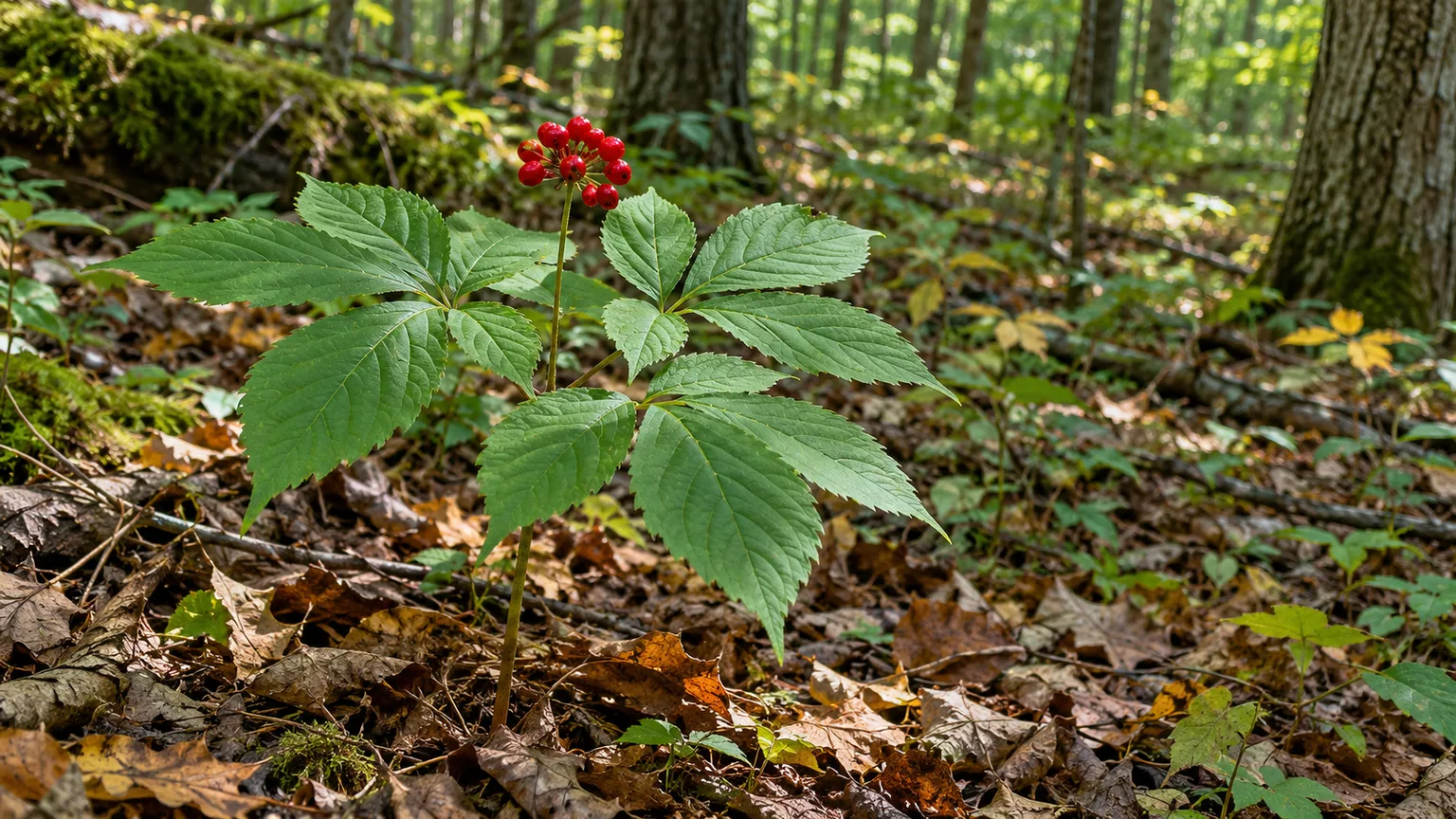
American ginseng is a woodland perennial that rewards a grower who can match its habitat and wait. It needs a cool, shaded site with moisture that drains away, and seed has an unusually long dormancy before it can sprout. If the site is right, routine care is fairly light; if the ground stays wet or the canopy is too open, watering and fertilizer will not fix the underlying problem.
This guide focuses on American ginseng, Panax quinquefolius. The common name “ginseng” can refer to other Panax species with different growing conditions, so check the botanical name on seed or rootlet labels. Plan first for the growing site and the seed’s treatment, then decide how much maintenance and harvest you want from a patch that may take years to mature.
Know Which Ginseng You Are Growing
American ginseng is a small, herbaceous perennial native to deciduous forests of eastern North America. It grows from a perennial root, sends up compound leaves during the growing season, flowers inconspicuously, and may produce red berries as it matures. The plant dies back above ground each fall and returns from its root the following spring. That seasonal disappearance is normal, not a sign that it needs to be dug up or moved indoors.
This is a forest-floor plant, not a windowsill herb. Its needs are closer to those of a woodland wildflower than to basil or a tropical houseplant: filtered shade, leaf-rich soil, steady but not stagnant moisture, and a genuine cool season. The American ginseng overview from United Plant Savers describes it as a long-lived forest perennial; Washington State University Extension’s forest-farming profile also stresses that local forest and climate conditions affect whether a planting site is suitable.
If you bought a plant sold as “ginseng,” confirm that its label says Panax quinquefolius before following woodland-care advice. A plant marketed as ginseng bonsai or ginseng ficus is a different kind of plant and does not share this perennial’s growth cycle.
Test the Site Before You Plant
The most useful first step is to watch a candidate site through part of a growing season before ordering seed. Notice where sun reaches the ground around midday and in the afternoon, how quickly puddles disappear after rain, whether the soil dries hard in summer, and which plants already grow under the canopy. This quick reconnaissance can save a year of waiting on seed that was planted in the wrong place.
Shade and winter chill
Look for a mature deciduous canopy that keeps the forest floor cool and shaded during summer. Extension and forest-farming guides commonly describe roughly 70 to 90 percent shade as a useful range, but you do not need to measure it with laboratory precision: avoid an open patch that gets strong afternoon sun, while keeping enough air movement that damp leaves do not sit in a stagnant pocket. United Plant Savers’ growing handbook and Johnny’s Selected Seeds’ grower’s notes both place ginseng beneath a hardwood canopy rather than in full sun.
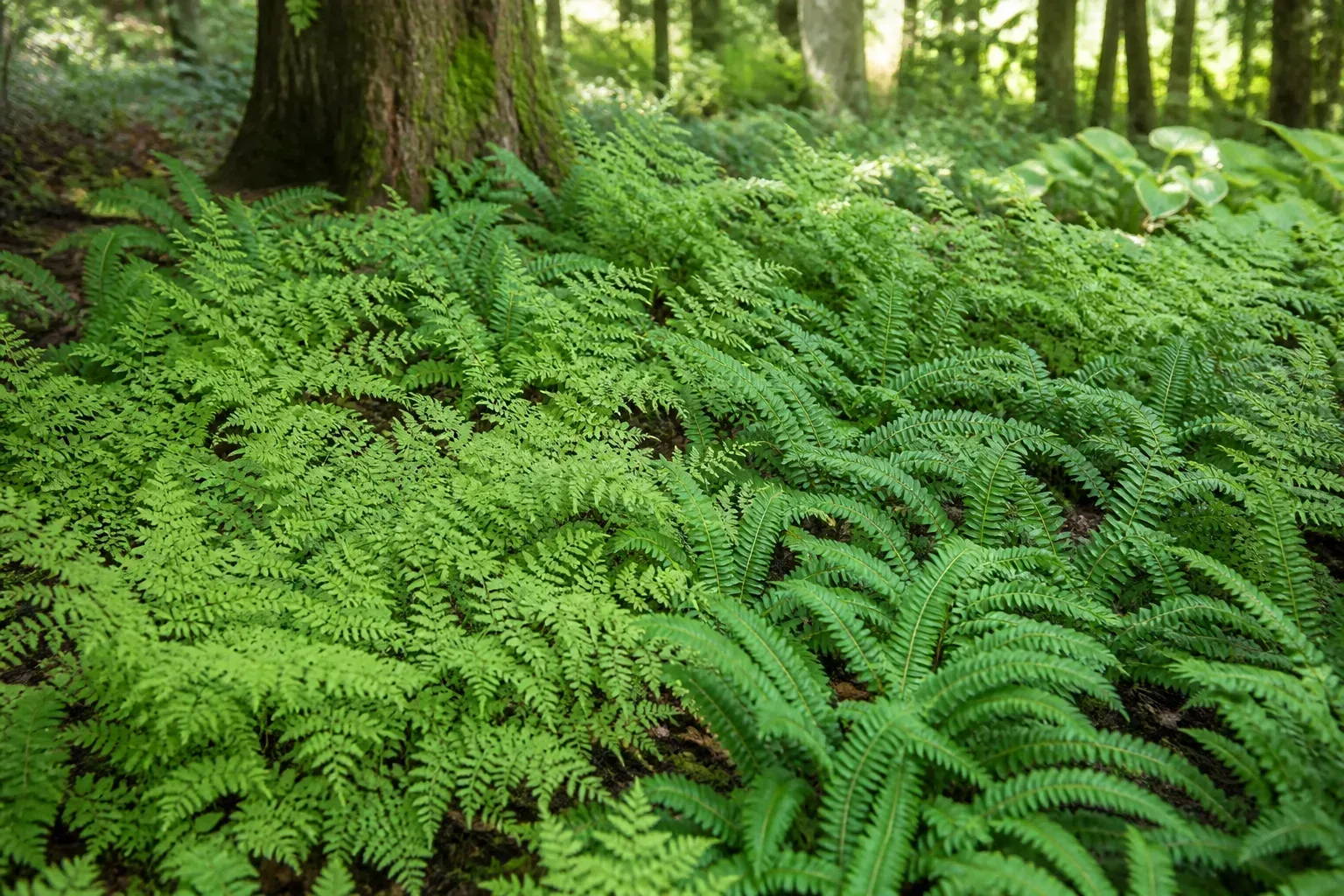
A gentle north-, northeast-, or east-facing slope is often a better bet than a flat, exposed bed because it tends to stay cooler and shed excess rain. Sugar maple, basswood, and tulip poplar are useful canopy clues, while ferns, spicebush, jack-in-the-pulpit, and other woodland herbs can suggest a compatible understory. These plants are indicators, not guarantees: the actual soil must still drain well, and a lush patch of ferns cannot compensate for a site that floods.
American ginseng needs winter dormancy, so a warm indoor room is not a substitute for its seasonal cycle. It is most dependable in temperate regions where winters are cold enough to complete dormancy and summers do not bake the forest floor. Outside its familiar eastern forest range, WSU Extension recommends small trial plantings because local canopy, soil chemistry, and climate can change the outcome.
Soil and drainage
Choose friable, humus-rich soil that stays lightly moist after rain but does not remain saturated. A shallow slope and an open path for air are useful defenses against root and foliar disease; heavy clay, compacted soil, a flood-prone hollow, or a bed beside a downspout are poor starting points. If a test hole still holds water long after surrounding ground has drained, move the planting instead of trying to correct it with frequent watering or a layer of gravel.
Leaf litter is part of the growing system, not garden debris to remove each spring. It protects seeds and shallow roots from drying and temperature swings, then adds organic matter as it breaks down. A soil test can help explain a problem site, especially if you are planning many plants, but avoid adding lime, manure, or concentrated fertilizer by guesswork. Ginseng is adapted to woodland soils, and improving the drainage or choosing a better location is often safer than reshaping the forest floor.
Choose Seeds or Rootlets
Stratified seed is the usual starting point for a wild-simulated planting and is the best choice if you want to establish a patch at modest scale. Fresh ginseng seed has a functionally underdeveloped embryo and a long natural dormancy; it needs seasonal warm and cold conditions before it can germinate. Ohio State University Extension explains that seed may lie dormant for 16 to 18 months, while the United Plant Savers handbook describes an approximately 18-month stratification period.
That is why a seed packet’s status matters. Ask whether the seed is fully stratified, when it was harvested, and when the seller expects it to germinate; do not assume a fresh red berry or “green seed” is ready to sprout the next spring. A field account by Jan Berry at Unruly Gardening likewise distinguishes fresh seed from commercially stratified seed and recommends planting in fall. Keep the supplier’s instructions with your planting record because dormancy methods and terminology can vary.
Rootlets—small dormant roots with a visible growth bud—skip the seed’s germination wait, but they cost more and can be damaged in transit or planting. They are a reasonable choice when you want a smaller number of established plants and can handle the roots carefully. Buy only from a reputable nursery or seed grower; never dig plants or seed from wild populations or public land without explicit permission.
Plant American Ginseng in Fall
Plant when the season cools and the canopy begins dropping leaves, but before the soil freezes. The exact week depends on local weather; the useful cue is that the ground is cool and moist, not baked by summer heat. Ohio State Extension recommends fall planting for wild-simulated seed, and Cornell Small Farms author Bob Beyfuss similarly advises planting stratified seed in autumn rather than holding it for a spring sowing.
Sow stratified seed
For a wild-simulated bed, rake aside the heaviest leaf litter, clear sticks and stones that would block seed contact, and scuff only the top quarter inch of soil. Scatter about four or five stratified seeds per square foot, press them into contact with the soil, then rake leaves back over the surface. Keep the cover light enough for shoots to emerge—Ohio State Extension advises no more than roughly three inches of leaf litter over a seeded plot—and mark the area so you do not weed out seedlings later.
Some growers prefer to place seeds individually rather than broadcast them. In a cultivated bed or container, that method lets you follow the seed supplier’s depth and spacing instructions; approximately half an inch deep is common for individually planted seeds. These are different methods, not conflicting rules: the broadcast approach relies on a thin soil surface and leaf litter, while individually planted seed is set into a small hole. Do not bury broadcast seed at the same depth as an individually planted seed and then add a thick mulch layer on top.
Plant rootlets
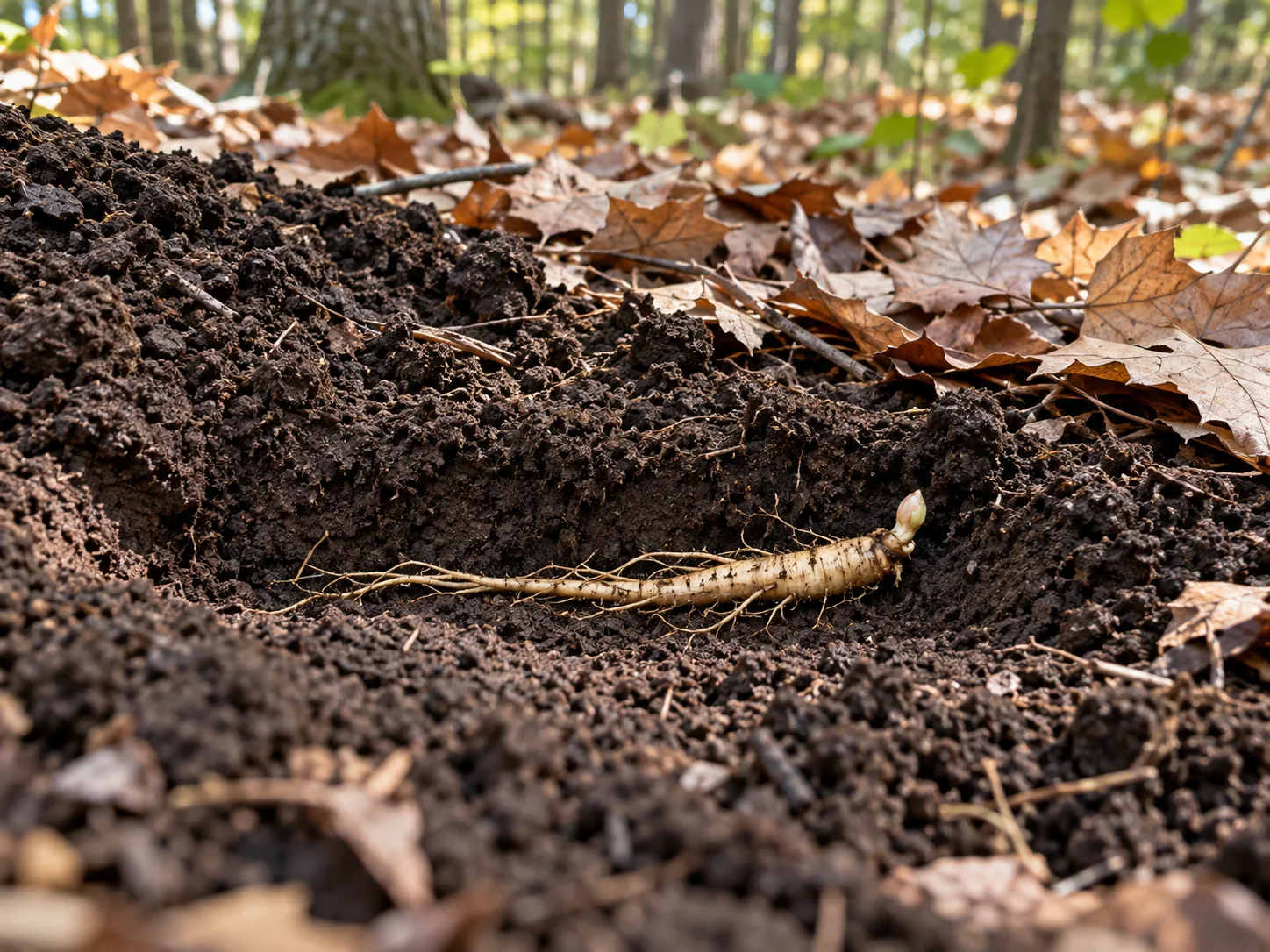
Dig a narrow hole or trench about three inches deep and lay the rootlet on its side, with the terminal bud tipped upward. Cover the bud with about a half inch of soil, then restore a modest layer of leaf litter. Keep rootlets about 10 to 12 inches apart so the patch has room to develop and air can move through it as the plants mature.
Handle the rootlet by the root rather than squeezing the bud, and do not force a bent or damaged root straight. Water once if the soil is dry and rain is not expected, then let the site manage its normal moisture. Leave the surrounding woodland plants intact where practical; thinning a few interfering shrubs or low branches can improve airflow, but opening the canopy too far creates a hotter, brighter bed.
Care for Ginseng Across the Seasons
Once established, a ginseng patch needs observation more than frequent intervention. Check it during dry spells, after heavy rain, and when new shoots emerge; avoid walking through planted plots or disturbing the soil around shallow seedlings. A small, dated map with the seed source, planting method, and number of seeds is more useful than relying on memory when a plant takes more than one season to appear.
Water and mulch
Keep the root zone evenly moist during germination and the first growing seasons, but let excess water drain away. In a dry summer, feel the soil below the leaf litter before watering; if it is still cool and damp, leave it alone. A brief dry spell may slow growth, while repeated soaking in compacted ground can create the conditions for root rot.
Maintain a thin, loose layer of fallen leaves over the site rather than using plastic mulch or removing every leaf. If leaves mat into a dense wet layer, gently loosen the surface around plants without exposing the seeds or roots. Leaf litter should insulate the soil and suppress competing weeds, not seal the bed into a soggy cover.
Weed, feed, and prune lightly
Pull competing weeds while they are small and work carefully around seedlings. A first-year ginseng seedling may have only one small leaf with three leaflets, not the fuller cluster seen on a mature plant; flags or a planting map help prevent accidental removal. Jan Berry’s practical guide notes that young plants can be mistaken for other woodland seedlings, so wait until you can identify a plant confidently before pulling it from a marked plot.
Do not fertilize on a routine schedule. In a suitable forest site, decaying leaves and established soil life provide the background fertility; a fertilizer surge is not a substitute for the shade, drainage, and winter conditions that ginseng needs. If growth is weak across a whole bed, check light, water, and soil first, then use a soil test before considering an amendment.
There is no regular pruning job. Remove dead or diseased foliage after it has naturally died back, and leave healthy leaves in place through summer so the plant can replenish its root. If you want berries and future seed, leave flowering stems and ripe red berries until the seeds mature; do not trim the plant merely to keep the patch tidy.
Grow Ginseng in a Container
You can grow ginseng outdoors in a pot if you do not have woodland soil, but container care is less forgiving. Use a deep, wide pot with several drainage holes, fill it with a loose, humus-rich mix that will not collapse into mud, and place it outside in bright shade under a tree or on a protected north-facing patio. A shallow decorative pot can restrict the root, and a saucer that holds standing water can keep the soil too wet.
Outdoor containers dry and freeze faster than garden beds. Check moisture below the surface during dry weather, and protect the pot in winter by sinking it into the ground or grouping it in a sheltered, insulated spot; do not move a dormant plant into a heated room. Repot only when the root has filled the space or the mix has broken down, and avoid repeatedly disturbing a plant that is still establishing.
Growing the plant in a container does not make it an indoor houseplant. Panax quinquefolius is a temperate perennial that needs an outdoor seasonal cycle; a warm apartment cannot provide the woodland shade and winter dormancy it expects. A container is a way to control the root zone outdoors, not a shortcut to faster growth or a mature harvest.
Troubleshoot Pests, Disease, and Slow Growth
Start with the site when plants look weak. Sparse shoots across the whole bed often point to too much sun, poor seed viability, compacted soil, or unsuitable moisture; a single plant that collapses after rain is more concerning for disease. Do not dig up every seed that has not sprouted: ginseng germination and survival are slow and uneven, and turning the bed over can damage seeds that are still dormant.
Slugs can chew tender shoots, while deer and other mammals may browse foliage or disturb seedlings. Check plots regularly in spring and after new damage appears; a low barrier or protective wire enclosure can help in a small garden, provided it does not trap moisture or block access for care. Cornell’s ginseng production guidance recommends monitoring slug pressure early rather than waiting until an entire first-year sowing has disappeared.
Fungal problems are more likely where foliage stays wet, beds are crowded, or water pools around roots. Ohio State Extension and the United Plant Savers handbook describe problems including Alternaria blight, damping-off, and Phytophthora root rot. Give plants air space, keep drainage open, avoid overhead watering where possible, and remove clearly diseased material carefully; if symptoms spread, ask a local extension office to identify the disease before applying any treatment.
Read the seasonal leaf cycle
Ginseng’s leaves naturally yellow and die back in autumn as the root enters dormancy. If a healthy plant greens up again the following spring, that seasonal cycle is expected. Mark its location before the leaves disappear so you will not mistake the bare spot for a dead plant and dig into the root.
Yellowing in midsummer is different, especially when it begins suddenly after rain and the stem wilts or collapses. Check whether the soil is waterlogged, whether other plants are affected, and whether the crown or root has softened; isolate a suspected diseased plant rather than spreading soil on your tools or shoes. A plant that is scorched on its sunny side but has firm roots may need a shadier site, although moving it while actively growing can create extra stress.
Harvest Carefully and Check the Rules
Treat ginseng harvest as a long-term decision, not the automatic last step of planting. Seed may wait through a long dormancy before emergence, and the root still needs several growing seasons to build size. Published guides give different harvest targets: Johnny’s Selected Seeds notes that some growers wait until the fourth or fifth year, while the United Plant Savers handbook describes wild-simulated roots being harvested after seven to ten years. Treat these as system-specific examples, not a guarantee; the number of leaf “prongs” can help show maturity, but plants develop at different rates, so record planting dates rather than using prongs as a precise age clock.
Harvest only plants you raised or have permission to collect. Before digging, ask your state wildlife or natural-resources agency what rules apply to wild and cultivated ginseng in your area; requirements may cover harvest dates, minimum plant age or size, seed replanting, or dealer records, and the details vary by jurisdiction. The United Plant Savers cultivation guide summarizes the conservation and compliance issues. Federal requirements can apply to commercial movement and export, so consult current U.S. Fish and Wildlife Service ginseng permit guidance before trade. Never assume a rule for wild plants is identical to the rule for your cultivated patch.
In a home planting, wait until berries have ripened and collect some viable seed before taking a mature root. Keep part of the patch as a seed source, spread seed back into suitable ground, and harvest selectively rather than clearing the bed. When you lift a root, begin several inches from the stem and loosen soil beneath it so fine roots and branches are less likely to snap; do not yank the stem as if it were a carrot.
Clean and dry roots without rough handling
If you harvest a root, rinse or briefly soak it in cool water to loosen soil, then remove only the loose dirt with your fingers. Avoid scrubbing grooves aggressively or using a hard jet of water, which can break root branches and damage the root’s surface. The United Plant Savers handbook recommends gentle washing because the natural shape and surface marks can be damaged by over-cleaning.
For drying, spread roots on a clean mesh screen in a dark, ventilated place with steady airflow and check them regularly for mold or spoilage. The United Plant Savers handbook describes a moderate warm drying setup—about 85 to 95°F—and testing a representative root for a clean snap when dry; drying time varies with root size, humidity, and airflow. If you plan to sell, transport, or use the roots, follow current rules and the receiving buyer’s handling requirements rather than treating this as a medicinal preparation guide.
Conclusion
Grow American ginseng only where the woodland conditions already do most of the work: deep summer shade, cool seasons, rich leaf-covered soil, and drainage that carries heavy rain away. Use correctly stratified seed or healthy rootlets, plant in fall, mark the patch, and give seedlings time instead of digging for answers too soon.
As the patch matures, keep care light but pay attention to moisture, wildlife, and disease. Record planting dates, leave seed-bearing plants in place, and check local rules before any harvest; a healthy, sustainable patch depends on patience as much as on the first planting.



