How to Grow Fuchsias Indoors: Light, Water & Winter Care
Grow fuchsias indoors with filtered light, cool temperatures, steady moisture, and a winter plan. Learn how to prevent bud drop and keep plants healthy.
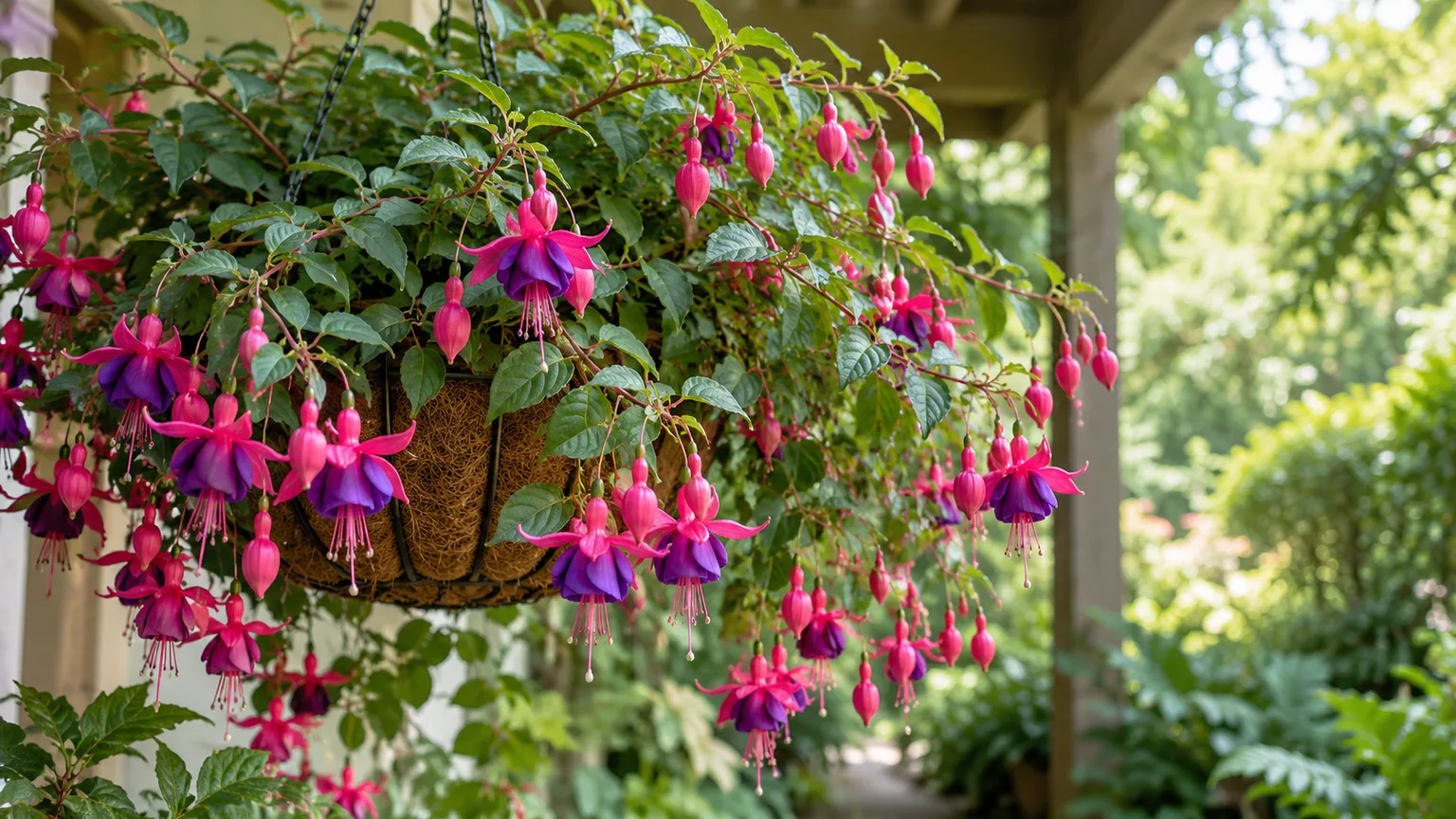
Fuchsias can grow indoors, but a typical warm, dry living room is harder on them than a cool, bright one. A plant may stay alive and leafy there yet drop buds before they open; strong indoor flowering depends on a steady supply of light, moderate temperatures, moisture at the roots, and enough humidity around the leaves.
Decide first what “indoors” means for your plant. You can keep it actively growing and try for flowers through winter, or use a cool indoor space to protect a tender fuchsia while it rests until spring. Those plans have different light, watering, and pruning needs, so choosing between them prevents many common care mistakes.
Can a fuchsia thrive indoors?
Yes. Fuchsia is a flowering shrub that can be grown in a container in a home, but it is not a plant that automatically adapts to central heating, low winter light, and dry air. It is more reliable as a seasonal outdoor container that comes inside for frost protection than as a carefree houseplant in every climate.
If you can offer a bright window, cool nights, and a room that does not dry out whenever the heat runs, active indoor growth is possible. If your home stays warm and dry, aim to keep the plant alive through winter in a cooler place and let it make its main display outdoors when temperatures are mild. This is a sensible adjustment, not a failure: fuchsia flowers best when its growing conditions suit the plant rather than the calendar.
Choose a year-round or winter-rest plan
There are two workable indoor strategies. Choose one based on the space you can provide, then keep light, water, and feeding consistent with that strategy.
| Indoor plan | Best fit | Winter conditions | What to expect |
|---|---|---|---|
| Active growth | A cool, bright room with some humidity | Bright indirect light, about 60–70°F by day and cooler at night; regular checks for moisture | Foliage and sometimes flowers continue, but flowering may pause in heat or low light |
| Cool rest | A frost-free garage, cellar, or cool spare room | About 45–55°F; water sparingly and stop feeding | Leaves may fall; the plant rests and is pruned or restarted in spring |
These ranges come from extension and botanical-garden guidance, but they are practical targets rather than a thermostat test. Fuchsia types vary, and a brief warm spell is not the same as weeks of heat. Clemson and Cornell guidance notes that cool nights matter during bud development and flowering can stop when average daily temperatures rise above roughly 76°F (Clemson Cooperative Extension’s fuchsia guide; Clemson’s fuchsia growing sheet hosted by Cornell Cooperative Extension).
Year-round display
Treat a leafy, actively growing plant like a cool-season bloomer. Keep it in the brightest suitable spot, maintain evenly moist but drained potting mix, and feed while it is producing new growth. A cooler room often works better than a sunny windowsill directly above a radiator, because warm roots and dry air can cancel out the benefit of extra light.
A year-round display is not guaranteed. Fuchsia may pause flowering when days are short, when the room is too warm, or after it has been moved and has to adjust. Avoid trying to force blooms with extra fertilizer: if the plant is not making strong new shoots, first correct light, temperature, or root conditions.
Cool dormant rest
Many tender fuchsias can be kept through winter in a cool, frost-free place instead of being pushed to grow in a heated room. Before storing it, check for pests, remove dead or damaged foliage, shorten unwieldy stems, and stop feeding. A dormant plant can lose leaves; this is expected, not proof that it has died.
Keep the potting mix only slightly moist while the plant is resting. Check every couple of weeks and add a little water if the root ball is becoming completely dry, but do not soak a leafless plant on a summer schedule. Chicago Botanic Garden recommends a cool room for dormancy and notes that leaf drop and a lack of flowers are normal; Clemson guidance likewise advises sparing winter water and restarting regular care in spring (Chicago Botanic Garden; Clemson Cooperative Extension).
Start with a healthy plant and realistic cultivar choice
Fuchsia includes many species and cultivated hybrids with different habits and tolerances. A label that says “hardy” describes performance in a particular outdoor climate and planting situation; it does not mean the plant prefers a warm indoor room. Ask the nursery whether the named cultivar is suited to container growing and to the temperatures you can provide, especially if you want to grow it indoors year-round.
Choose a plant with firm stems, even green leaves, and active tips. Look under the leaves and around flower buds for tiny insects, sticky residue, pale speckling, webbing, or distorted new growth. A plant that is already shedding leaves or has a soggy, sour-smelling root ball will be difficult to establish indoors because the move adds another environmental change.
A compact upright cultivar may fit a bright sill more easily than a large trailing basket, but shape is a space decision rather than a promise of better indoor performance. If you do not know the cultivar, plan conservatively: give it bright filtered light, avoid hot air and hard frost, and observe how it responds before pinching or repotting.
Give fuchsia bright, filtered light
Place the plant close to a bright east-facing window if possible. A south- or west-facing window can work when a sheer curtain softens intense afternoon sun or when the plant sits far enough back that foliage does not heat up against the glass. Clemson’s fuchsia guidance recommends bright, indirect light near an east, west, or south window (Clemson Cooperative Extension).
“Shade plant” does not mean “dark-room plant.” Fuchsia grown in very low light often produces long gaps between leaves, weak stems, and few flowers. If the plant leans strongly toward the window, rotate the pot a quarter-turn every week or so; daily turning is unnecessary and can repeatedly change the light direction just as buds are forming.
Watch the leaves and flowers instead of relying on compass direction alone. Pale or scorched patches, crisp edges, and flowers that wilt quickly point to too much direct heat; stretched stems and sparse buds point to too little usable light. Shift the plant gradually over several days so it does not move abruptly from deep shade into strong sun.
Keep temperatures cool and stable
Fuchsia grows and flowers best in mild conditions, not beside a radiator or above a heating vent. Clemson and Cornell recommendations put daytime growing temperatures around 60–70°F, with nights about 10 degrees cooler. The cooler night helps the plant avoid the constant warmth that can keep it leafy but reluctant to set or hold flowers (Clemson’s fuchsia guide; Clemson growing guidance hosted by Cornell Cooperative Extension).
The thermometer near the plant matters more than the thermostat across the room. A south window can become hot in afternoon sun, and a shelf over a radiator can be much warmer than the room’s center. Keep the pot away from heating and air-conditioning outlets, fireplaces, and cold drafts that blow directly across the leaves.
If your home regularly stays above the plant’s preferred range, you may still grow the fuchsia, but expect slower flowering or a pause during hot spells. Move it to the coolest bright room you have; do not chill the root ball with ice or put the plant against freezing glass. During a heat wave, protect it from sun and keep the root zone evenly moist rather than trying to compensate with a sudden heavy feed.
Raise humidity while keeping air moving
Dry indoor air is one of the main reasons a fuchsia looks fine in a cool greenhouse or garden but struggles after it comes inside. Low humidity can make tender buds shrivel or drop, and heated winter rooms often combine dry air with temperatures that are too high. A cool-mist humidifier near the plant is the most practical way to raise moisture in the air; use a hygrometer if you want to see whether the room conditions change.
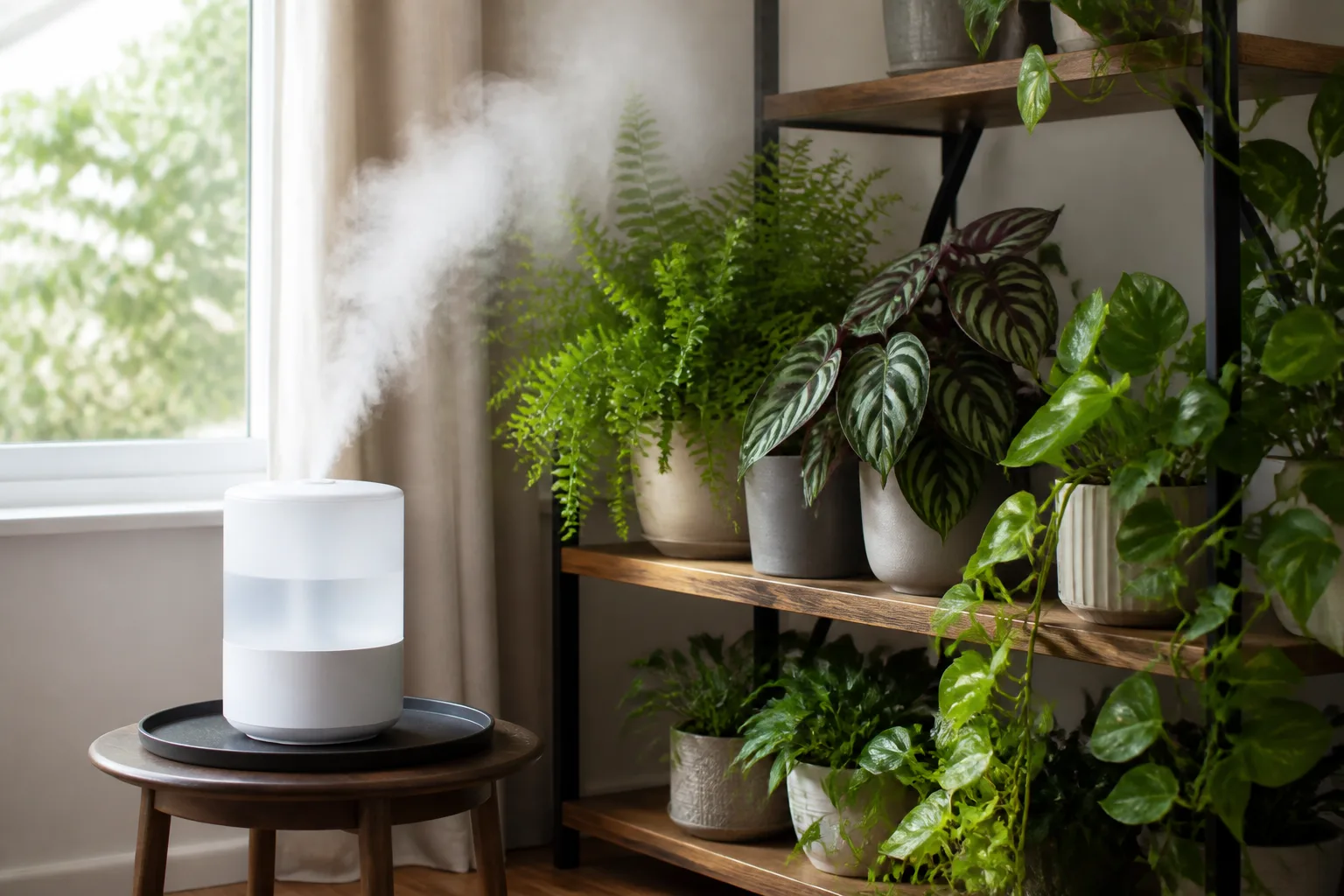
Keep airflow in the picture. Humid air around a plant should not mean stagnant, wet foliage packed against a wall or other leaves. Leave a little space around the fuchsia, avoid placing it in a constantly damp bathroom without ventilation, and keep humidifier mist from settling on leaves or furniture.
Misting the foliage can make it look refreshed, but the effect on room humidity is brief. A pebble tray may offer a small local buffer if the pot sits above the water on stones, but it cannot correct a very dry room or replace proper watering. If buds keep dropping, compare the room’s temperature and humidity with the plant’s position before increasing misting or moving the pot again. The American Fuchsia Society’s indoor-growing notes also caution that rooms kept too warm and dry can lead to leaf drop.
Water by checking the mix, not the calendar
During active growth, keep the root ball evenly moist but never waterlogged. Check the upper inch of potting mix with a finger: if it is beginning to dry, water slowly over the surface until excess runs from the drainage holes. Empty the saucer or cachepot after it drains so the roots are not left standing in water. The RHS recommends keeping container fuchsia moist rather than soggy and checking newly planted pots to avoid overwatering (RHS tender fuchsia growing guide).
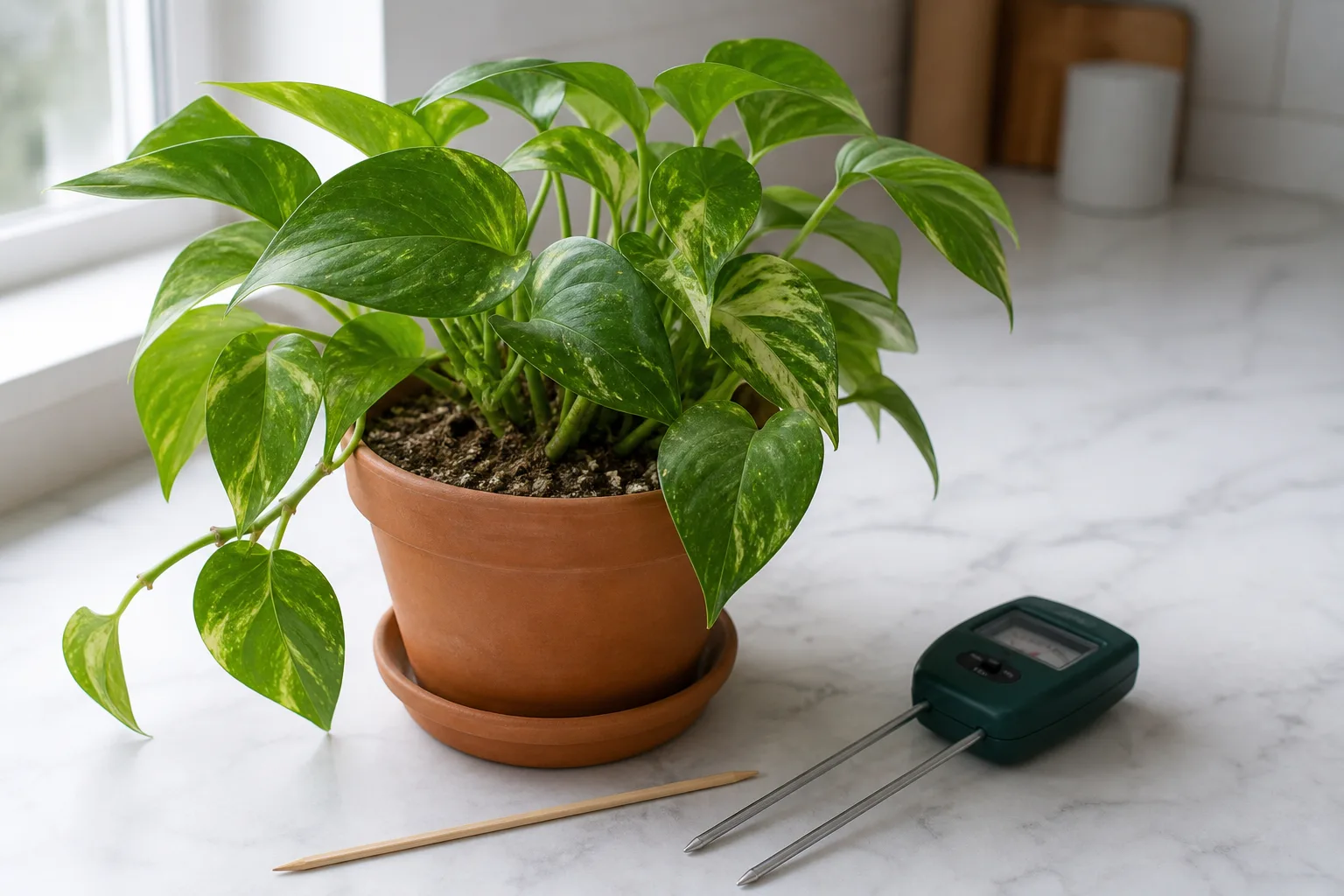
Watering frequency depends on the plant’s size, container, light, temperature, and whether it is blooming. A small pot in a bright warm room may need a check every day; a larger pot in a cool room may stay moist for several days. Use the mix and pot weight as your guide, not a fixed “twice weekly” rule. Once you learn how a watered pot feels, a quick lift can reveal when it has become much lighter.
If the mix has dried so much that water runs down the sides without wetting the center, apply water in two or three slow passes, allowing it to soak between passes. If the plant wilts while the soil is already wet, do not water again. Check that holes are open, remove standing runoff, and let the mix begin to drain before deciding whether the roots are damaged or the plant is simply overheated.
Choose a draining pot and airy medium
Use a pot with open drainage holes and a fresh, moisture-holding container mix. A good peat-free multipurpose mix is a useful starting point; if it feels dense or stays soggy, blend in perlite or fine bark to improve air space. Avoid garden soil, which is too heavy for a container and can compact around the roots. The RHS recommends container compost that retains moisture without becoming waterlogged (RHS tender fuchsia growing guide).
Repot when there is a reason, usually in spring as growth resumes. Roots circling the outer root ball, water passing straight through, or a plant drying out soon after each thorough watering are stronger signs than a calendar date. Move up only one pot size and keep the stem base at its previous depth; a much larger volume of unused mix can remain wet for too long.
Advice on whether fuchsias should be slightly pot-bound varies among growers. For an indoor plant, do not disturb a healthy root ball merely to give it a bigger pot; repot if the roots are crowded enough to make watering difficult or growth has stalled. If the plant needs to stay in the same pot, refresh the upper layer of mix and resume feeding once new growth starts.
Feed only during active growth
Fuchsias in containers use the nutrients available in a limited volume of mix, so a modest regular feed helps when the plant is making leaves and flowers. Use a balanced, complete liquid fertilizer at the diluted rate on its label, generally every two to four weeks during active growth. Clemson’s growing guidance gives a two-to-four-week interval for soluble fertilizer, while the RHS suggests feeding when growth or flowering shows a need (Clemson’s fuchsia growing sheet; RHS).
If your potting mix already contains slow-release fertilizer, wait until that supply is used rather than stacking multiple feeds. Apply fertilizer to damp mix, never to a plant that is badly wilted or bone-dry. Pale new growth can indicate low nutrients, but yellowing can also come from excess water, poor drainage, low light, or normal winter rest, so check those conditions before feeding.
Stop feeding as growth slows in autumn or when you put the plant into dormancy. A resting plant has little demand for fertilizer, and fresh fertilizer will not make it bloom in a dark, cool room. Begin again gradually after spring growth appears, following the product label rather than doubling the dose to compensate for a missed feed.
Pinch for shape, then let shoots flower
Pinching removes the soft growing tip and encourages side branches, creating more places for flowers to form. When a new shoot has produced about two pairs of leaves, nip off the tip just above a leaf pair. Repeat on young branches until the plant has the shape you want, but remember that every pinch delays flowering; RHS guidance notes that a fuchsia can take up to eight weeks to flower after the final pinch (RHS tender fuchsia guide).
Pinch early in the active growing season, then let the new shoots lengthen. If a plant already has buds or is flowering, avoid giving it a major haircut unless you are deliberately resetting it. Remove spent flowers and the small developing fruit behind them if you want the plant to keep directing energy toward new growth rather than berries.
Prune a leggy or overwintered plant in late winter or early spring as it is about to grow again. Remove dead, weak, or crossing stems with clean snips and leave several healthy nodes on the remaining framework. Fuchsia blooms on new growth, so a well-timed spring prune can renew a tired plant; heavy pruning during active bloom simply removes the shoots carrying the display.
Move it outside gradually, and bring it in before frost
Many fuchsias grow better outdoors in mild weather than in a heated room, especially if the outdoor position gives them bright shade, cooler nights, and moving air. Once frost risk has passed and nights are mild, acclimate the plant over about a week: begin in a sheltered bright-shade spot for a few hours, then extend its time outside. Avoid setting a plant that has spent winter indoors straight into strong midday sun or drying wind.
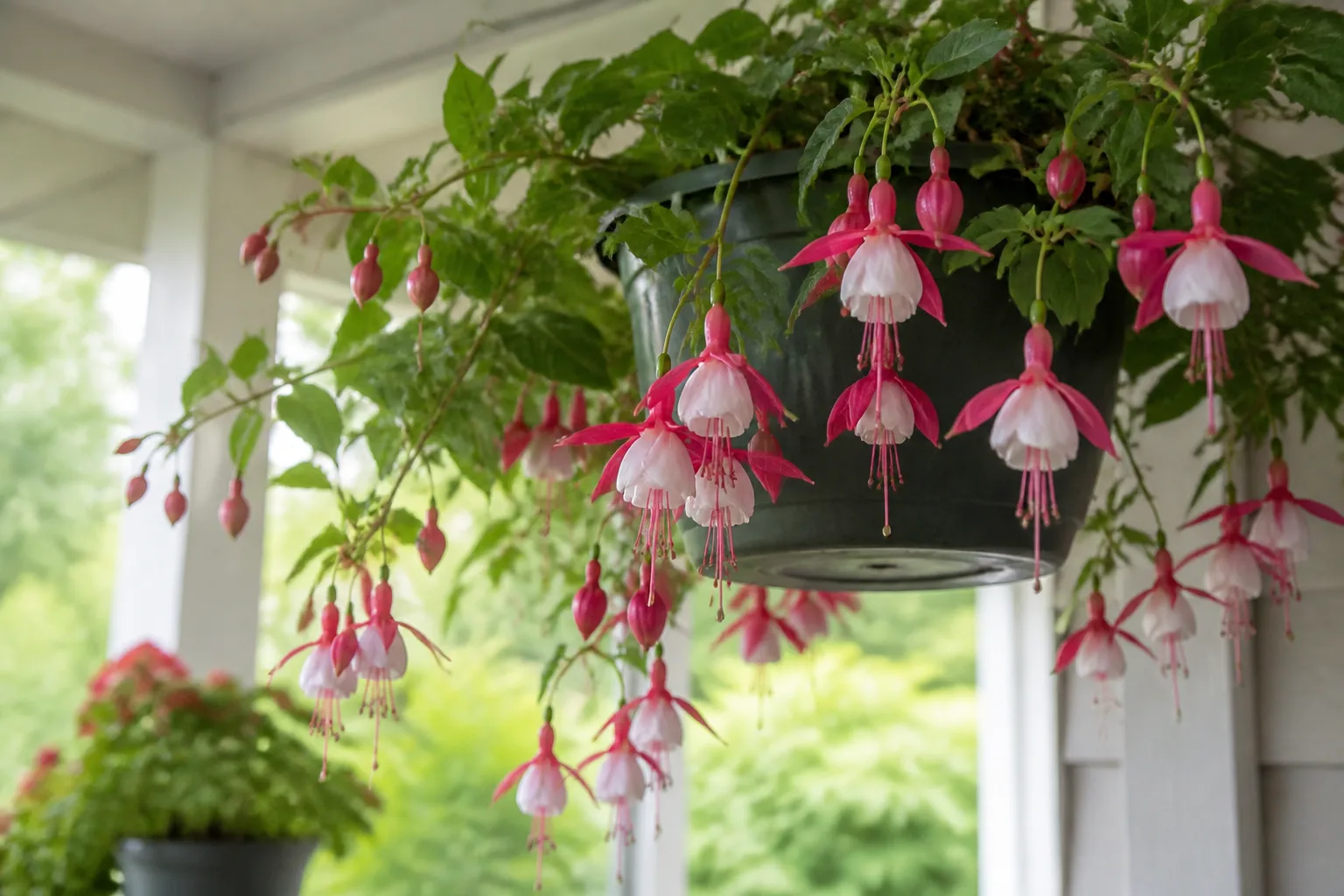
The move outside changes how quickly the pot loses moisture. Check the mix more often during the first week, particularly if the plant is hanging or the weather turns breezy. Morning sun with afternoon shade is a useful starting point; in a cool climate the plant may tolerate more gentle sun, while in hot weather it needs protection from heat and reflected pavement.
Bring tender fuchsias inside before the first frost forecast for your area, not after the leaves have been frozen. Inspect stems and leaf undersides for insects, remove fallen leaves and spent flowers, and isolate the plant from other houseplants while you monitor it. Hardy fuchsias may survive outdoors in the ground in suitable local climates, but a cultivar that is hardy in a border may still need protection in a small pot where roots chill faster.
Diagnose bud drop, leaf drop, and wilt
A fuchsia can react to a move or a sudden change in temperature by dropping buds, flowers, or leaves. Before pruning, repotting, or feeding, check four things in order: room temperature at the plant, light exposure, moisture inside the root ball, and signs of pests. Change the most likely problem first and give the plant time to respond; changing several conditions at once makes it hard to see what helped.
Buds drop or flowers fade
Unopened buds that shrivel often point to a warm, dry room, a sharp change in conditions, or roots that have swung between too dry and too wet. Harvest to Table’s fuchsia guidance notes that heat, dry air, and extremes of soil moisture can all cause buds and flowers to fall (Harvest to Table). Check whether a heating vent or afternoon sun warms the plant, then feel the mix below the surface before watering.
If the mix is dry, water it thoroughly and let the pot drain. If it is wet, move the plant away from heat and make sure drainage is clear instead of adding more water. If the room is warm and dry, improve the location or use a humidifier. Do not fertilize a fuchsia simply because the buds fell; fertilizer will not correct heat or root stress.
A move from a nursery greenhouse to a home can also cause a one-time loss of flowers while the plant adjusts. Keep the new location stable for a couple of weeks, remove spent blooms, and wait for new growth before pinching. A steady routine is more useful than repeatedly moving the plant to chase an ideal spot.
Leaves yellow, fall, or wilt
Leaf loss has different meanings depending on the season and soil. A leafless plant in cool winter storage may be resting normally. A leafy plant that begins dropping leaves during a warm indoor move may be reacting to low light, dry air, a temperature swing, or pests; inspect the undersides before deciding it needs water.
For wilt, test the mix. A dry, light pot needs a thorough drink; a wet, heavy pot needs drainage and time, not more water. Persistent wilt in wet mix, sour odor, or dark soft roots suggests root damage, so unpot only if the condition continues and remove clearly dead roots before moving it into fresh, airy mix.
Yellow mottling with orange dusty spots on the undersides of leaves can indicate fuchsia rust, not a watering problem. Isolate the plant, remove affected leaves, and avoid splashing foliage. The RHS describes rust as orange pustules beneath leaves that can lead to leaf drop and reduced vigor (RHS fuchsia rust advice).
Check for pests and rust before they spread
Whiteflies, aphids, spider mites, and mealybugs can arrive on a nursery plant or hitchhike indoors when a fuchsia comes in for winter. Inspect leaf undersides, soft new tips, stems, and buds weekly for white insects that flutter when disturbed, sticky honeydew, clusters of small aphids, cottony patches, pale stippling, or fine webbing. UC IPM recommends checking new plants carefully, monitoring them after they enter the home, and isolating a plant as soon as pests are found (UC IPM houseplant guidance).
Start with a close inspection and rinse reachable leaves and stems if the plant and room can dry promptly. Remove heavily infested tips and bag them rather than dropping them into another plant’s pot. If you use insecticidal soap or horticultural oil, choose a product labeled for indoor use and for the identified pest, test a small area first, and follow the label’s reapplication and safety directions. Delicate leaves can be damaged by an unsuitable spray or by applying it to a hot, wilted plant.
Rust is a fungal disease, so insect treatments will not solve orange pustules underneath the leaves. Isolate a suspect plant, clean up fallen material, avoid wetting its foliage, and remove affected leaves. If the diagnosis is uncertain or damage is spreading quickly, compare symptoms with a reliable plant-disease source before applying any product.
Root spring cuttings as insurance
A cutting is a useful backup if your home cannot support the parent through winter or if you want a smaller, easier-to-place plant. In spring, take a healthy soft tip about 4–6 inches long with two or three pairs of leaves. Remove the lowest pair, then insert the bare stem into a small pot of moist, well-draining rooting mix so at least one leaf node sits below the surface.
Cover the pot loosely with a clear bag or propagator lid to hold humidity, but keep plastic from touching the leaves. Place it in bright indirect light and warmth, not direct sun, and briefly open the cover each day for fresh air. Keep the medium lightly moist rather than saturated; a cutting has few roots and is easy to rot if the mix stays waterlogged.
Clemson’s fuchsia propagation guidance says spring softwood cuttings can root in about three to four weeks when kept warm, humid, and in bright indirect light (Clemson Cooperative Extension’s fuchsia sheet). Once a cutting resists a gentle tug and begins making fresh growth, pot it into regular mix and pinch only after it has established. Do not pull it out repeatedly to check for roots.
Conclusion
Fuchsia can grow indoors, but it rewards a cool, bright, attentive space more than a warm corner where it is treated like a typical foliage houseplant. Choose active growth when you can supply suitable light and temperature; choose cool winter rest when your home is warm and dry, and use outdoor shade during mild weather whenever the plant can be acclimated safely.
Keep the root ball evenly moist with free drainage, feed only while new growth is active, and pinch early enough that branches have time to flower. When buds or leaves fall, check the room and root zone before you change the routine. That simple sequence helps you keep a fuchsia alive through winter and gives it a better chance to flower again when conditions improve.



