How to Grow Pineapple Indoors: Full Care and Fruiting Guide
Grow pineapple indoors at home with a practical crown-rooting method, bright-light and watering advice, troubleshooting, and a realistic timeline for fruit.
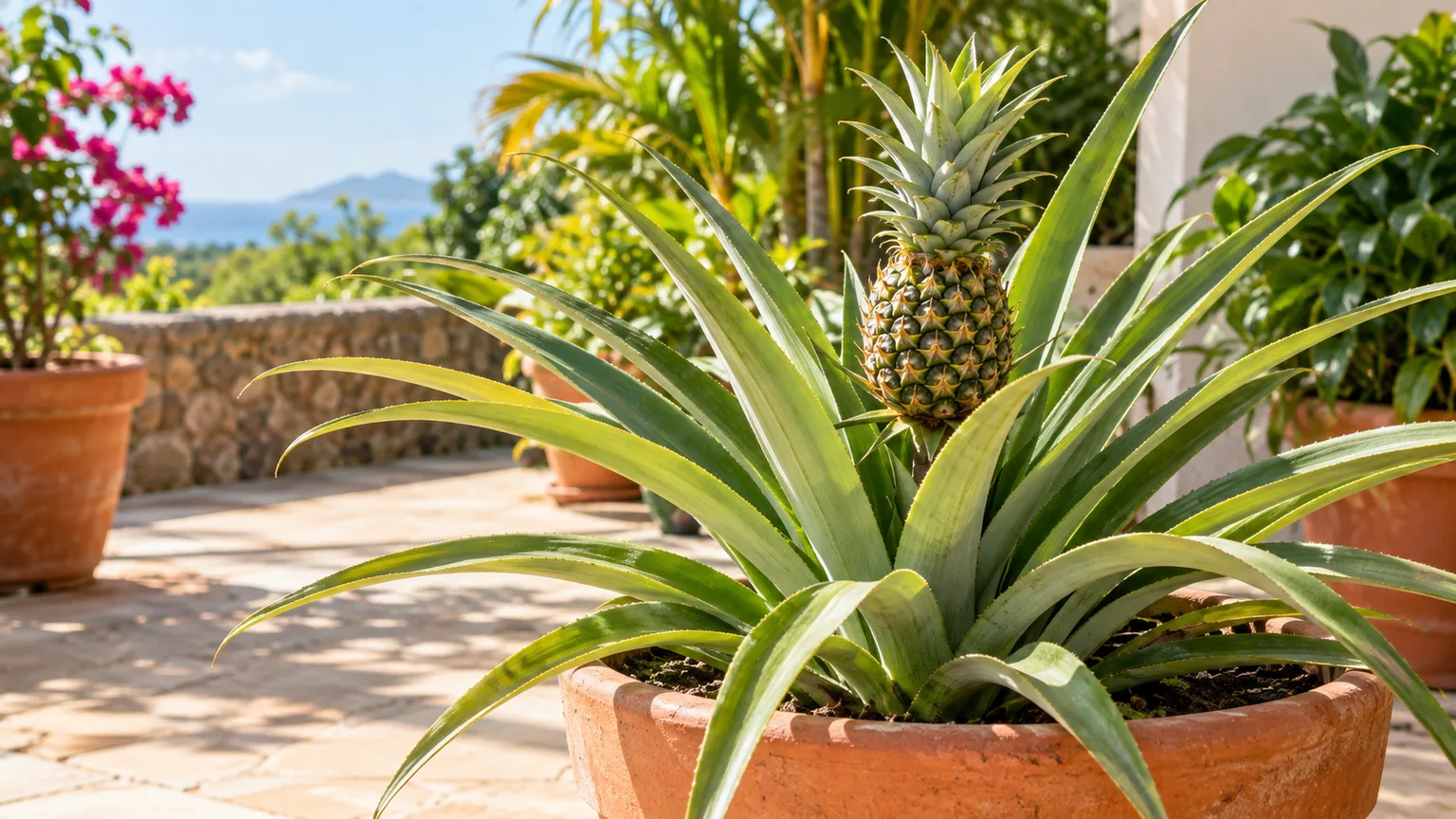
A pineapple crown can become a handsome long-lived houseplant, but it is not a quick indoor fruit crop. The plant needs sustained warmth, strong light, and room for a broad, spiky rosette; even in favorable conditions, fruit can take years, and a plant grown in a dim room may never flower. Treat the crown as a propagation project first and a possible harvest later.
Pineapple (Ananas comosus) is a terrestrial bromeliad: its roots grow in potting mix, and it does not use the deep central water tank found in some other bromeliads. Give it a very bright position, an airy container mix, and a thorough drink only when the upper soil begins to dry. A plant that keeps making firm new leaves is succeeding even if it never produces fruit.
Start With the Right Expectation: Foliage First, Fruit Later
A pineapple plant is an evergreen herbaceous perennial with long, rigid leaves arranged around a central growing point. Depending on variety and conditions, mature plants can spread roughly 3 to 4 feet, so plan for a floor stand or a broad, stable pot rather than a narrow shelf. The leaf margins may be smooth or spiny, but the tips are sharp either way; leave clearance around walkways and wear gloves when repotting. Pineapple sap can also irritate sensitive skin or eyes, so wash it off promptly and avoid rubbing your face while handling the plant. (North Carolina State Extension, UF/IFAS Extension)
Growing the plant is much more predictable than getting a pineapple from it. A crown often roots and resumes leaf growth, but flowering depends on the plant reaching maturity and receiving enough warmth and light over a long period. In a sunny, warm subtropical landscape, extension guidance puts planting-to-harvest at roughly 18 to 24 months; a crown-grown indoor plant may need two years or more just to flower, followed by several months for the fruit to ripen. In a cool, low-light home, the wait can be longer or fruit may not form at all. (UF/IFAS Extension, North Carolina State Extension, Martha Stewart)
If you mainly want an ornamental, you can focus on a healthy rosette and accept that it may never fruit. If a harvest matters, start with a well-rooted nursery plant or a vigorous crown and reserve your brightest, warmest spot for it. Either way, this is a slow-growing plant that rewards steady care more than frequent tinkering.
Choose a Nursery Plant or a Grocery-Store Crown
A nursery pineapple is the shorter route to a substantial plant. Inspect the base and leaf axils for mealybugs or scale, avoid specimens with a loose or collapsing center, and check that the pot drains freely. A larger plant may be closer to flowering, but size alone does not guarantee it is mature or ready to fruit; ask about its age and cultivar if that information is available. (Royal Horticultural Society, UF/IFAS Extension)
A grocery-store crown is inexpensive and satisfying to propagate, but it starts at the beginning of the plant’s long growth phase. Choose a fruit with a leafy crown that is firm and mostly green. Avoid tops with a soft, dark center, widespread dry leaves, or fruit tissue that smells fermented. The quality of the crown matters more than the fruit’s brand or color.
Pick a Crown With a Firm Center
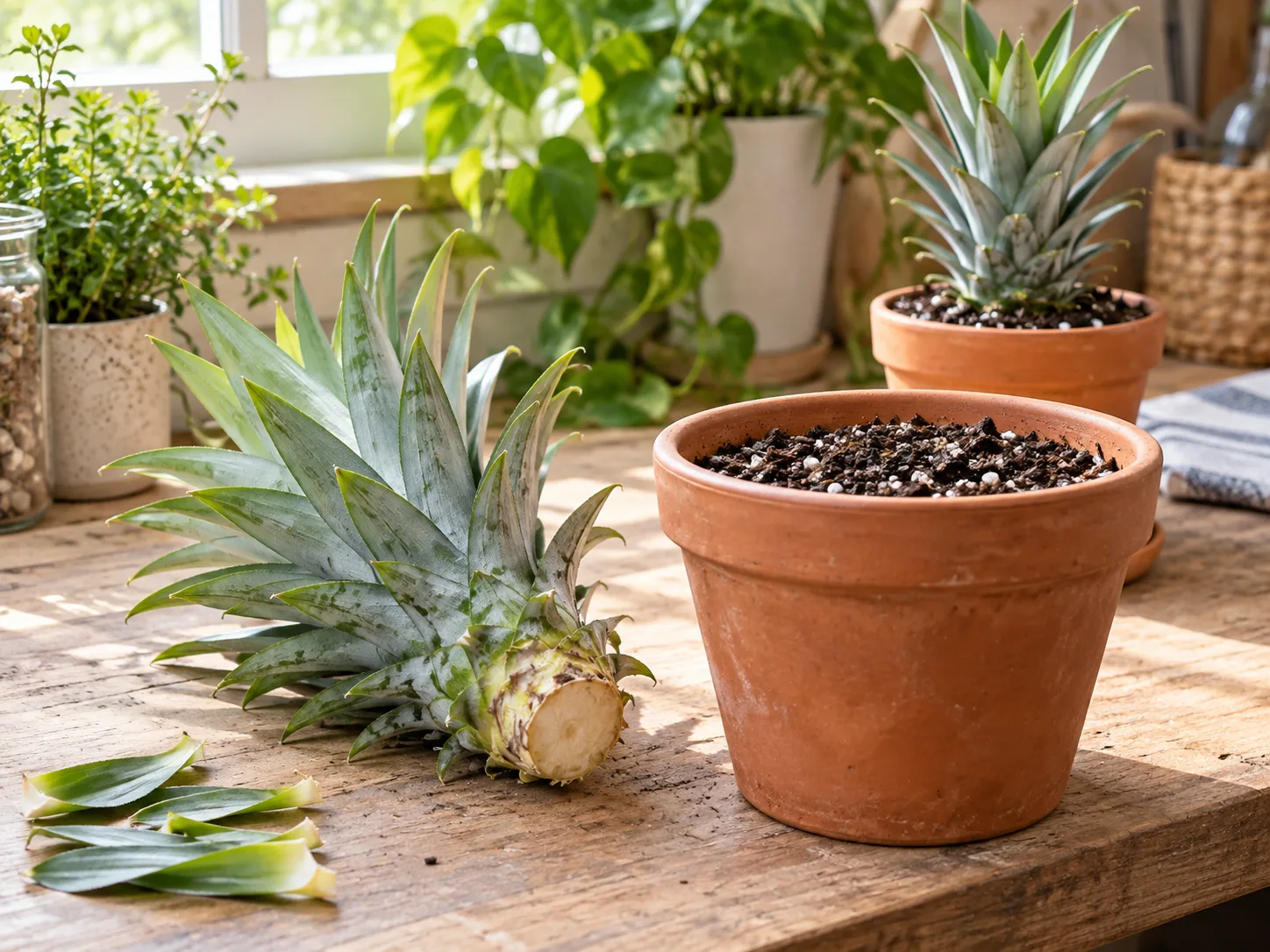
The crown is the leafy top plus a small amount of stem tissue at its base. Twist it off with a firm turn or cut it away with a clean, sharp knife. Remove all soft fruit flesh from the base; leftover pulp stays wet and can decay against the stem. Strip the lowest leaves until about an inch of bare stem is exposed, taking care not to cut into the central core where new growth emerges.
Let the prepared crown dry in a shaded, airy place until its cut surface feels dry rather than slick or fleshy. Published home-propagation advice ranges from a day or two to about a week, so judge the surface and room conditions instead of following an exact clock: a larger, wetter cut in humid air may need more time than a small, clean one. Do not dry it in hot direct sun, which can desiccate the leaves before roots form. (North Carolina State Extension, Empress of Dirt)
Root the Crown Before Potting It
Use a small pot with drainage holes and a loose, barely moist potting mix, or start the crown in water if you want to see roots form. Set the bare stem into the mix and firm it just enough to keep the crown upright; burying the leaf bases invites decay. Place it somewhere warm with bright, indirect light while it adjusts. Keep the mix lightly moist but never saturated, and avoid pulling the crown up to check for roots.
A crown can lose a few of its oldest leaves after planting. That is not automatically failure: the key question is whether the center stays firm and begins producing a new leaf. Rooting speed varies with warmth, crown condition, and light. Give it several weeks, and if the base turns soft, dark, or foul-smelling, restart with a cleaner crown and a drier, more open mix rather than adding more water.
Water Rooting or Direct Rooting?
Water rooting makes progress visible. Suspend only the bare stem in a clean glass so the leaf bases stay above the waterline, place it in a warm bright room out of harsh sun, and refresh the water every few days or whenever it becomes cloudy. When several roots have emerged and are long enough to handle without tearing, move the crown into potting mix. The roots can be fragile, so hold the plant by the base rather than tugging on the leaves. (Empress of Dirt, Martha Stewart)
Direct rooting skips the move from water to soil and avoids maintaining a jar, but you cannot see what is happening below the surface. Keep the crown stable in a small pot, water the mix lightly after planting, and then let the upper layer begin to dry before watering again. Both methods can work; choose one and keep its moisture and warmth steady instead of switching a struggling crown back and forth.
Choose a Pot and a Mix That Drain Fast
Use a container with several open drainage holes. For a new crown, a pot about 6 to 8 inches wide is easier to manage than a large tub full of wet mix; as the plant grows, move it up one size when roots fill the current pot or the plant becomes unstable. A mature fruiting plant can use a 3- to 7-gallon container, and a larger root zone may support a larger plant and fruit, but a huge pot is not a shortcut to flowering. (UF/IFAS Extension, North Carolina State Extension)
Choose a loose, well-drained potting mix that holds some moisture without staying heavy and wet. A commercial bromeliad or cactus mix is a convenient starting point; ordinary indoor potting mix can be opened up with perlite or fine orchid bark if it compacts after watering. Pineapple prefers slightly acidic to near-neutral conditions, but good drainage matters more at home than chasing a precise pH number. Skip dense garden soil, a pot without holes, or a decorative cachepot that traps runoff around the roots. (Royal Horticultural Society, UF/IFAS Extension)
Set the crown with its bare stem in the mix and its lowest healthy leaves just above the surface. After watering, empty the saucer once the pot has drained. Repot only when necessary; frequent root disturbance does not speed growth, and a wide, top-heavy plant benefits from a sturdy container that will not tip when its leaves spread.
Give Pineapple the Brightest Warm Window
Light is the main indoor bottleneck. Put the plant in the brightest position you have, ideally near a south- or west-facing window in the Northern Hemisphere, where it can receive several hours of direct sun. A bright room across the room from a window is usually not equivalent. Under weak light, a pineapple may stay alive but grow slowly, produce long, loose leaves, and lack the energy to flower. North Carolina State Extension describes pineapple as a plant for bright light, while Florida’s landscape guidance recommends full sun for strongest growth and fruit production. (North Carolina State Extension, UF/IFAS Extension)
Acclimate a crown or nursery plant to direct sun instead of moving it abruptly from shade into hours of hot window light. Start with gentler morning sun, then increase exposure over a week or two while watching for pale, dry patches on the leaves. Glass can intensify heat, especially in summer, so a plant may need a small step back from the pane during a heat wave even when it needs a sunny location overall.
Use a Grow Light When Winter Light Is Weak
If winter days are short or your windows are shaded, a full-spectrum grow light can supplement natural light. Position it at the manufacturer’s recommended distance and use a timer for a consistent daytime schedule, leaving the plant a normal dark period at night. Do not place the fixture so close that it heats the leaf tips, and do not expect a light to compensate for a cold room or waterlogged roots.
Watch the newest leaves rather than trying to measure success by how quickly the crown gets taller. Compact, firm leaves that emerge from the center suggest the plant is receiving useful light; increasingly pale, stretched leaves suggest the window or fixture is too weak. Stronger light also makes the potting mix dry faster, so recheck moisture when you change the plant’s location.
Water When the Mix Starts to Dry
Water the soil thoroughly when the top inch or two of mix has started to dry, then let all excess water leave through the drainage holes. The exact interval changes with pot size, light, temperature, and season, so a fixed weekly schedule can be too frequent in winter and too slow in a hot, bright window. Check the mix with a finger or wooden skewer and learn how a freshly watered pot feels compared with one that is ready for another drink.
Pineapple is more tolerant of short dry spells than of roots sitting in soggy soil, but prolonged drought slows leaf growth and can weaken a plant that is trying to mature. Do not wait until the whole root ball has pulled away from the pot or the leaves have curled; water before it reaches that point. In winter, when the plant grows slowly and the room may be cooler, the pot may take much longer to dry, so check the mix before repeating a summer routine. (UF/IFAS Extension, Royal Horticultural Society)
Pineapple is a bromeliad, but it is not one of the tank-forming types that needs a central cup kept full. The Royal Horticultural Society groups pineapples with bromeliads that have no central “well”: water the compost, allow it to drain, and never leave the pot sitting in water. That distinction helps prevent the soggy crown and root-zone conditions that can lead to rot. (Royal Horticultural Society)
Keep It Warm and Move It Outdoors Carefully
Aim for a warm, steady room. Pineapple growth is strongest around 68 to 86°F; growth may slow below roughly 60°F or above 90°F, and frost can kill the plant. Keep it away from cold windows in winter, drafty doors, and heat vents that blast one side of the rosette. Average home humidity is usually workable; if the air is very dry, grouping plants or using a room humidifier is more useful than misting the center of the crown. (UF/IFAS Extension, North Carolina State Extension)
A potted pineapple can spend warm months outdoors, where stronger light may improve growth. Wait until nights are consistently above about 50°F, then acclimate it over several days in a sheltered spot before giving it more sun. Check the pot more often outdoors because wind and heat can dry it quickly, but do not leave it in a rain-filled saucer. Bring it inside before chilly nights return and gradually restore its indoor light conditions to limit shock. (Royal Horticultural Society, UF/IFAS Extension)
Feed Lightly During Active Growth
A pineapple growing in a container benefits from modest feeding while it is actively producing new leaves. Use a balanced liquid houseplant fertilizer at about half the label strength every four to six weeks in spring and summer, then reduce or pause when growth slows in winter. Horticultural sources give different feeding intervals for bromeliads and landscape pineapples; the conservative approach for a houseplant is to start weak, watch the plant, and follow the product label rather than copying field-crop rates. (Royal Horticultural Society, Martha Stewart, UF/IFAS Extension)
Do not add extra fertilizer to force a flower. More nutrients cannot make up for an immature crown, low light, or cool winters, and concentrated fertilizer can burn roots or leave salts in the potting mix. If you see a pale crust on the soil or repeated brown tips after feeding, pause fertilizer and flush the mix with clean water that drains freely before resuming at a lower concentration.
Use Leaves and Roots to Track Establishment
After potting, the first sign of success is usually a new leaf emerging from the center, not a dramatic increase in plant size. The crown may take weeks to anchor itself. Keep it upright, avoid tugging to test the roots, and water only when the mix begins to dry; once new center growth appears and the plant resists a gentle nudge, it is settling in.
Some older leaves will eventually yellow and dry as the rosette grows. Remove only leaves that are fully dead or damaged, using clean scissors and avoiding the central growing point. Pineapple does not need routine shaping, and cutting green outer leaves simply to make the plant look smaller reduces the leaf area the plant uses to build energy. If space is tight, choose a smaller ornamental cultivar or a younger plant rather than repeatedly pruning healthy foliage. (Royal Horticultural Society, North Carolina State Extension)
What It Takes for an Indoor Pineapple to Fruit
A crown-grown plant must become large enough and stay in productive conditions long enough to flower. North Carolina State Extension notes that a crown is the slowest propagation route and may take at least 24 months to flower; its plant profile also describes fruiting-size plants as having many normal-sized leaves. Florida’s 18- to 24-month planting-to-harvest figure comes from warm subtropical growing conditions, not a low-light room. Use those timelines as context, not a deadline for your windowsill. (North Carolina State Extension, UF/IFAS Extension, Royal Horticultural Society)
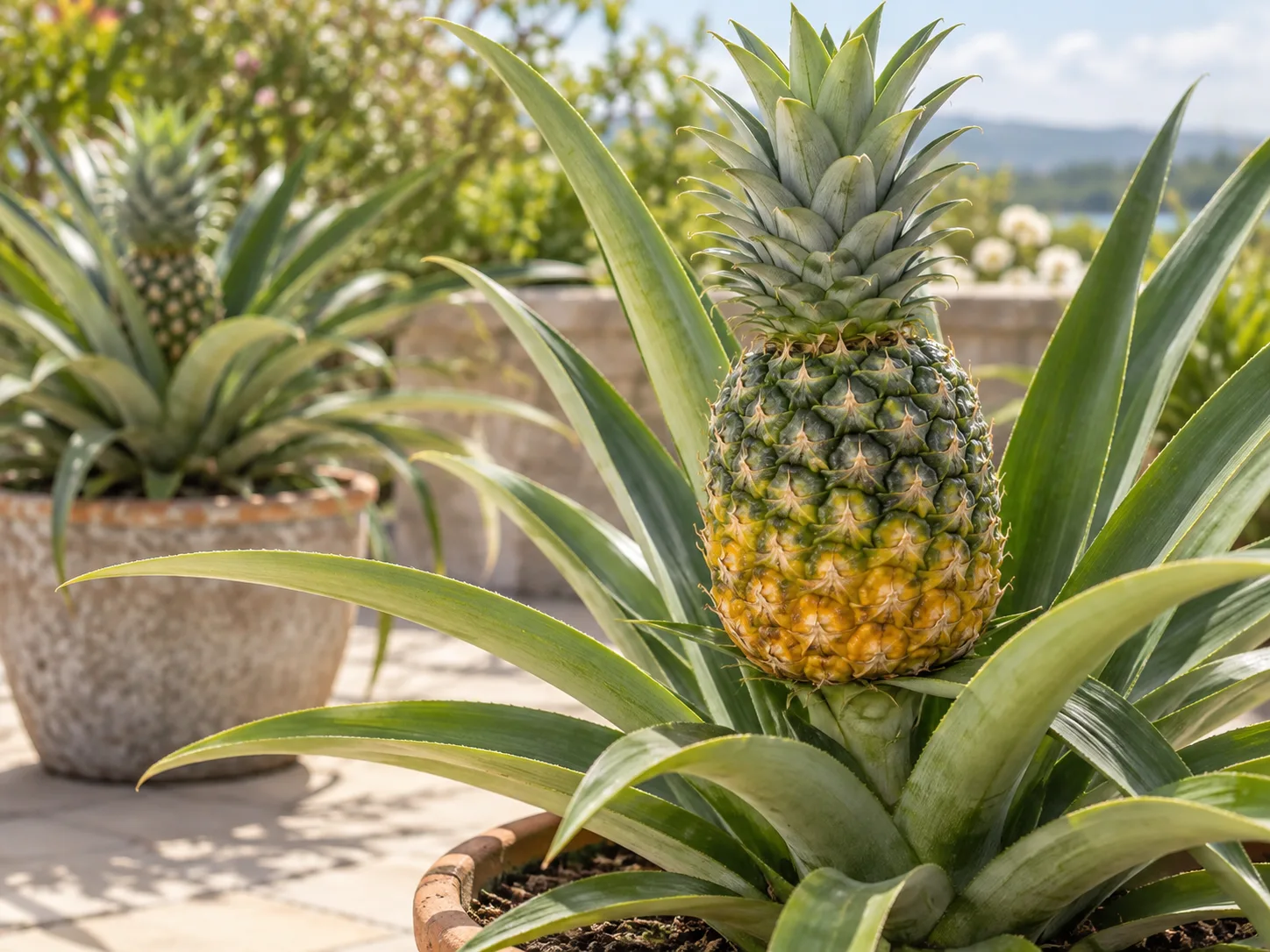
When a mature pineapple flowers, a compact cluster of small flowers forms at the center and develops into one compound fruit topped with a second small crown. Fruit can take another five to seven months to ripen after flowering. Indoor fruit may be smaller than commercial fruit, and some plants remain attractive foliage plants without ever making a fruit. If a plant has not flowered after a few years, first review its light, warmth, and overall size; more fertilizer is rarely the missing piece. (UF/IFAS Extension, Martha Stewart)
Ripe fruit changes gradually from green toward yellow, often starting near the base, and develops a sweet aroma. Color alone can mislead, so use the smell and the fruit’s fullness as additional cues. Pineapple does not continue to sweeten after harvest, so if you do get a fruit, wait until it smells fragrant and shows clear ripening before cutting it. (UF/IFAS Extension, Martha Stewart)
Harvest the Fruit and Raise the Next Generation
The rosette that produced the fruit will gradually decline afterward, but the plant is not necessarily finished as a growing project. Pineapples can produce offsets at the base and shoots near the fruit stalk; these are the next generation. Let the strongest offset grow until it is large enough to handle and has a firm base, then separate it with a clean blade and pot it in a small, free-draining mix. Larger slips, suckers, or crowns generally establish faster than tiny ones. (North Carolina State Extension, UF/IFAS Extension, Royal Horticultural Society)
Do not remove every new shoot as soon as it appears. If you want the mother plant to devote more energy to its first fruit, thinning some offsets is a trade-off; if you want another plant, keep one or two healthy pups and allow them time to size up. Continue caring for the old rosette while the young growth is attached, then remove the spent mother only when it is clearly declining and the offsets can stand on their own.
Troubleshoot Slow Growth, Rot, and Pests
Slow growth is often a light or temperature issue rather than a fertilizer problem. A crown that has not produced a new central leaf after several weeks may still be rooting, especially in a cool room, but a soft base or unpleasant odor points to rot. Check that the pot has drainage, the mix is not dense, and the plant is warm before you change several care variables at once.
Inspect the leaf bases and the undersides of leaves for mealybugs or scale, two pests noted on bromeliads by the RHS. Isolate an infested plant, remove visible insects with a damp cloth or cotton swab, and inspect nearby plants. If you use a treatment, choose one labeled for the pest and indoor plants and follow its label; do not spray a stressed plant in direct sun or apply a stronger mixture in the hope of speeding control. (Royal Horticultural Society)
Tell Rot, Sunburn, and Normal Crown Stress Apart
A few brown tips are not enough to diagnose a problem. Dry air, an overly dry root ball, waterlogged roots, fertilizer salts, and sudden sun exposure can all leave damaged leaf tissue, so look at the pattern and the recent care history. If only the oldest leaf tips are dry while the center is firm and growing, trim the brown portion with clean scissors and adjust gradually rather than replacing the whole routine.
A soft, blackened base or a center that collapses suggests rot: remove the plant from its pot, discard saturated mix, cut away only clearly dead tissue with a clean blade, and restart in a clean pot with airy mix if firm healthy tissue remains. Bleached patches on the window-facing side after a sudden move outdoors point more toward sun scorch; move the plant to bright shade and re-acclimate it slowly. If the entire rosette yellows and the center is soft, saving the mother may not be realistic, so check for a firm pup before discarding it. (North Carolina State Extension, UF/IFAS Extension, Royal Horticultural Society)
Conclusion
To grow pineapple indoors, give the plant the brightest warm spot you can, root a clean crown without burying its leaves, and use a draining mix that can dry slightly between thorough waterings. The foliage plant is a realistic reward; fruit is a long-term possibility that depends on plant maturity, light, warmth, and space, not a guaranteed result of following a calendar.
Watch the center for new leaves, use the soil rather than a schedule to decide when to water, and protect the sharp leaf edges when you handle the pot. If the plant flowers, enjoy the fruiting cycle and save a healthy offset for the next plant. If it stays leafy, you still have a striking tropical bromeliad that can keep growing for years.