How to Grow and Care for Centipede Grass Year-Round
Grow centipede grass with a regional planting timeline, seed and sod guidance, watering and mowing advice, and practical fixes for yellow or brown patches.
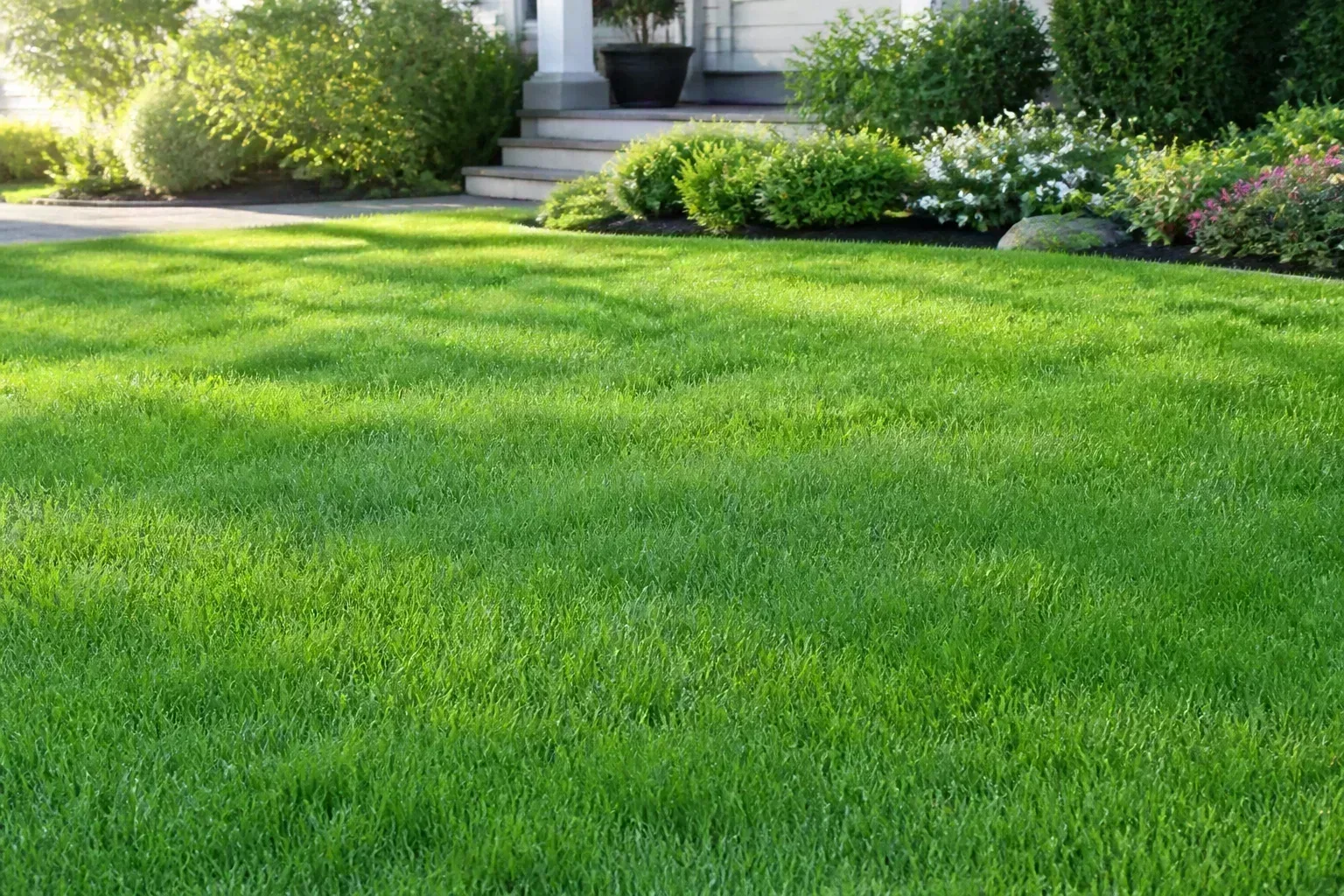
Centipedegrass (Eremochloa ophiuroides) is a warm-season lawn grass for the humid and coastal South. It spreads by aboveground runners called stolons, grows slowly, and naturally looks lighter green than many other turfgrasses. Its best feature is modest upkeep once established; its trade-off is slow coverage, limited wear tolerance, and a narrow comfort zone for soil and winter weather.
The most reliable way to grow it is to make the site and soil decisions first. Confirm that the lawn gets enough sun, test the pH and nutrients, choose seed or sod based on your patience and budget, then irrigate and fertilize according to actual conditions. Many struggling centipede lawns receive too much nitrogen or water because a naturally apple-green turf is mistaken for a hungry one.
Decide whether centipedegrass fits your yard
Centipedegrass suits homeowners in warm, humid parts of the Southeast who want a slow-growing, relatively low-input lawn for ordinary landscape use. It is commonly used across the Gulf Coast and lower South, but the exact northern limit depends on winter exposure, local cultivar, and microclimate; a map zone alone cannot guarantee that it will survive repeated freezes. Cold injury often shows up as dead patches after winter, especially where the grass entered dormancy with excessive top growth.
Be realistic about the word low-maintenance. Compared with a fast-growing bermuda lawn, centipedegrass usually needs less mowing and nitrogen, but it does not rapidly repair bare spots or tolerate a yard full of running, turning, and repeated foot traffic. It is a poor fit for a play field, active dog run, or sports area; a more wear-tolerant grass may recover better even if it needs more mowing or fertilizer. UF/IFAS compares centipedegrass with other Florida turfgrasses and rates its wear tolerance as limited. Alabama Extension likewise describes it as a low-input option for suitable warm-region yards, not a universal lawn grass.
Use the site itself as a pass-or-pause test. Centipedegrass performs best in sun or light shade, acidic soil that drains reasonably well, and a yard where the soil is not continually compacted or waterlogged. If the lawn is deeply shaded by mature trees, salty from coastal exposure, frequently saturated, or alkaline despite amendment, choosing another turf now is usually less costly than trying to rescue centipedegrass for years.
Choose a locally adapted cultivar
Centipedegrass is sold as common seed and as named selections that may be available only as sod, plugs, or sprigs. TifBlair, Centennial, Oaklawn, and other regional cultivars have been selected for different traits; some have better cold tolerance than common centipedegrass. Availability and performance change by producer and region, so buy from a local sod grower or extension-recommended supplier and ask which cultivar is grown in your county.
The cultivar name is useful only if the grass is correctly identified and suited to the area. A label that says centipedegrass seed does not necessarily mean a named cold-tolerant cultivar, and a variety selected for one part of the Southeast may not solve drainage, shade, or soil-pH problems in another. Clemson’s guide describes regional cultivar differences and the strengths and limits of centipedegrass.
If you are replacing an existing lawn, confirm what is already there before buying seed. Mixing centipedegrass with a faster or darker species can create a patchwork in color, texture, and mowing needs; a lawn that looks mixed may also simply contain weeds. A local extension office or turf specialist can help identify the grass from leaf blades, stolons, and growth habit.
Match the site and soil to the grass
Give centipedegrass at least about six hours of direct sun where possible. It tolerates some light shade, but shade from a dense tree canopy also competes for water and nutrients; a lawn that thins under tree limbs may be responding to the whole root-and-light environment, not just an insufficient fertilizer dose. If shade is the permanent condition, consider a more shade-tolerant turf or a planted groundcover instead of repeatedly reseeding bare soil.
Test the soil before planting and periodically after establishment. Centipedegrass prefers acidic soil, generally around pH 5.0 to 6.0 in extension guidance; above that range, iron becomes less available and leaves can turn yellow even when iron exists in the soil. A soil test also tells you whether phosphorus or potassium is actually needed. Do not apply lime, sulfur, or a phosphorus-rich starter fertilizer by habit: each can push soil conditions in the wrong direction if the test does not call for it. UGA Extension explains how pH and phosphorus can reduce iron availability and contribute to yellowing.
Drainage and compaction matter as much as the pH reading. Sandy soil drains quickly and may need more frequent irrigation during dry weather, while compacted clay can keep roots oxygen-starved and waterlogged. Before laying sod or sowing seed, correct standing-water problems, smooth major low spots, and loosen compacted soil when it is dry enough to work without smearing; adding a thin layer of topsoil over a bad site rarely fixes the underlying drainage.
Centipedegrass has shallow roots, so it can dry out faster than a deep-rooted lawn during a long hot spell. It can survive drought by becoming brown and dormant, but that brown color is not the same as a green, actively growing lawn. UF/IFAS makes this distinction between drought survival and maintaining turf color.
Choose how to establish the lawn
Centipedegrass spreads on stolons, so seed, sod, plugs, and sprigs are all possible. They are not interchangeable shortcuts: seed is less expensive but takes the longest to knit together, sod provides the fastest cover but costs more and demands careful watering, and plugs or sprigs reduce upfront material while leaving more soil open to weeds. Choose based on how quickly you need a usable lawn and how much establishment watering you can manage.
Install or seed in late spring after the soil has warmed and the risk of frost has passed, while the grass still has a long growing season ahead. Calendar dates vary from coastal Florida to the inland Carolinas, so use local soil and air conditions rather than a single national date. For most lawns, late spring planting gives slow-growing centipedegrass time to root and spread before cool weather returns.
Start from seed when you can wait
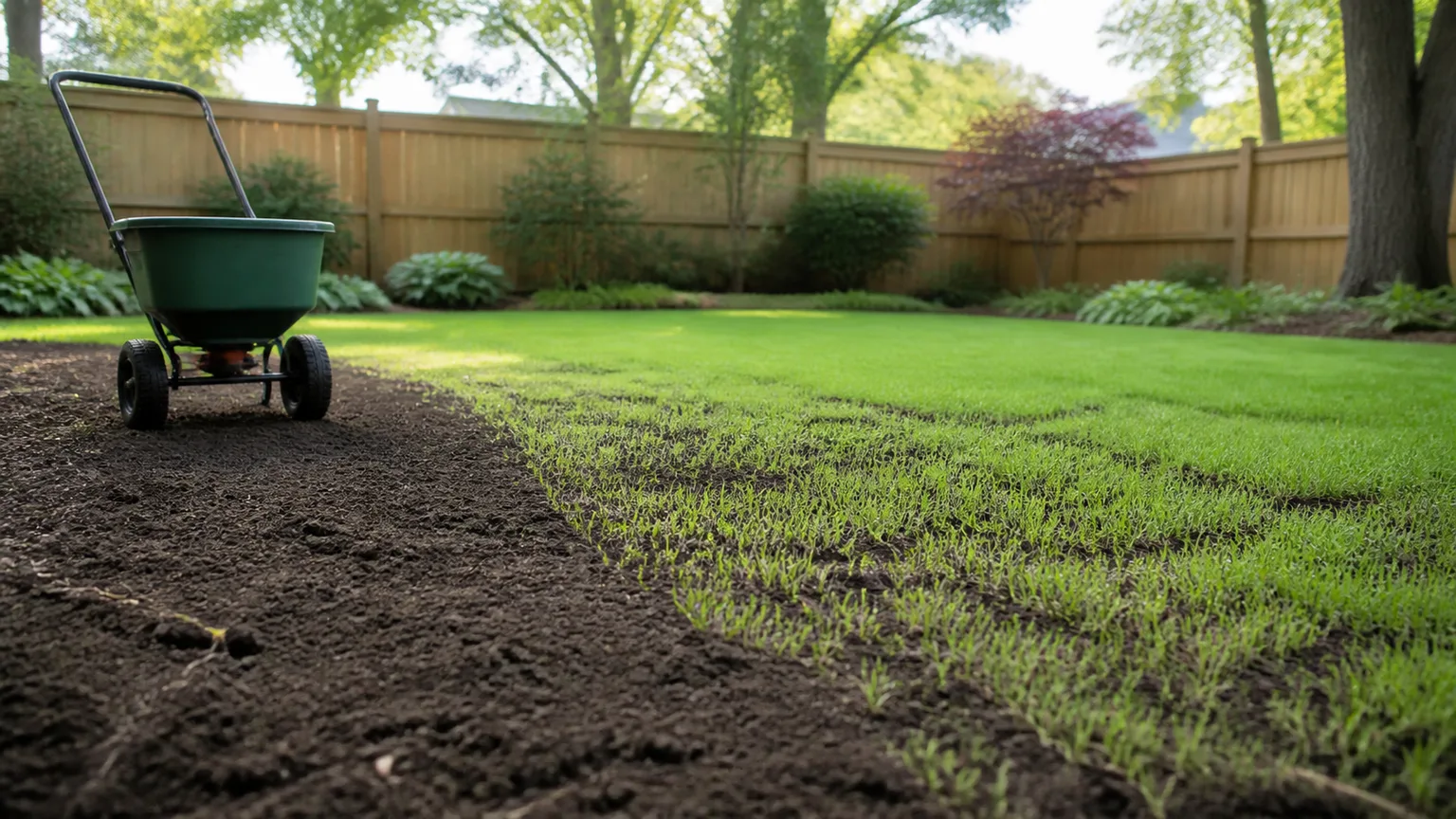
Prepare a smooth, weed-free seedbed and use the rate on the locally sold seed label or local extension calendar. Clemson and NC State guidance commonly falls around one-quarter to one-half pound of seed per 1,000 square feet; centipedegrass seed is tiny, so mixing it with dry fine sand can help spread such a small amount evenly. Rake it lightly for contact with the soil rather than burying it deeply, then roll or press the surface gently if needed.
Keep the upper soil surface consistently moist while seed germinates. That often means several light waterings a day in hot or windy weather, adjusted to prevent puddles, runoff, or a sodden seedbed; the goal is moisture at seed depth, not soaking the entire lawn each time. Once seedlings emerge and begin rooting, lengthen the interval between waterings and apply more water per session so roots start exploring deeper soil. NC State Extension advises frequent light irrigation during the approximately 28-day germination period.
Expect germination to take around four weeks under suitable conditions, and do not treat the first visible green as an established lawn. A seed-grown centipede lawn can take up to three years to become uniform and dense, depending on site, weather, weed pressure, and care. During that time, avoid heavy traffic, keep weeds from setting seed, and resist the urge to feed repeatedly because the thin appearance is normal early on. The Old Farmer’s Almanac emphasizes slow establishment and spring planting, as does Lawn Love.
Use sod, plugs, or sprigs for faster coverage
Sod is the clearest option when you need an immediately covered surface and can afford material and delivery. Buy fresh sod from a supplier that identifies the cultivar, install it over prepared, moist soil, fit the edges tightly without overlapping, and water the sod and soil beneath it promptly. Lift a corner after the first few days to check that the underlying soil has not dried; new sod can look green while its roots are still failing to connect to the ground.
Plugs or sprigs are a middle ground for smaller areas or a budget-conscious renovation. Plugs are small rooted pieces planted in a grid, while sprigs are stolon sections; both need close soil contact and enough moisture to root, and both leave gaps where weeds can establish. Follow the supplier’s spacing and planting directions, then keep the site lightly moist until the pieces root and begin sending runners across the gaps.
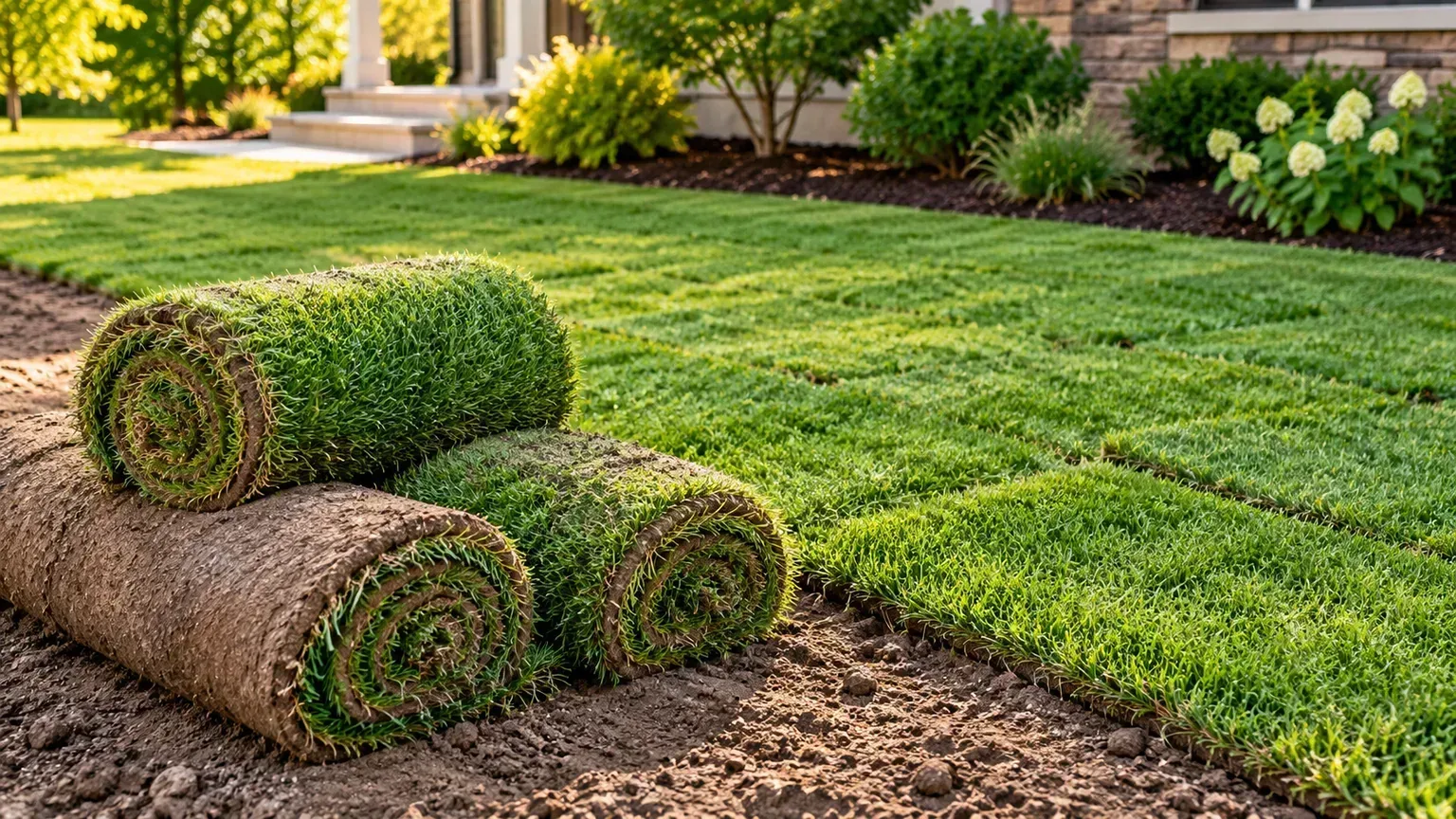
Whichever method you use, keep people and mowers off the new lawn until it resists a gentle tug and the roots have anchored. Centipedegrass spreads laterally, so a few weeks of patience at the start can prevent repeated repairs. Lawn Love notes that weeds remain a management issue while plugs and sprigs fill in.
Water for roots, not a fixed schedule
For an established lawn in active growth, about 1 inch of water a week from rainfall plus irrigation is a useful starting point—not a command to run sprinklers every Tuesday. Heat, wind, soil texture, slope, shade, and recent rain change the need. A rain gauge or straight-sided cans set around the yard show how much water your sprinklers actually deliver and whether coverage is even.
Water deeply enough to wet the root zone, then wait until the soil begins to dry before watering again. Centipedegrass has shallow roots, so “deeply” does not mean flooding it; check several inches below the surface with a screwdriver or soil probe and look for moisture rather than following a timer. If water runs off before it soaks in, use shorter cycles with breaks between them. Sandy soil may need more frequent applications than loam, while heavy soil needs time to drain.
Watch the grass for early drought stress: footprints linger, blades fold or lose their normal color, or the turf begins to look dull. Water in the early morning when practical, avoid keeping the canopy wet overnight, and do not keep watering simply because the dormant lawn has turned brown. Once centipedegrass is established, it can survive dry periods by going dormant, but the lawn may take time to regain color when rain returns; prolonged drought during active growth can still thin or kill turf.
Newly seeded ground needs a different pattern from mature turf: frequent, light moisture until germination, then a gradual shift to deeper, less frequent watering. New sod needs moisture at the soil-and-sod interface until roots attach, not endless surface sprinkling. Clemson and NC State both recommend adjusting irrigation to soil and weather while avoiding weak shallow roots from constant light watering.
Fertilize lightly and let a soil test set the rate
Centipedegrass needs less nitrogen than many popular lawn grasses. Many extension programs use about 1 pound of actual nitrogen per 1,000 square feet in a basic annual program, while local recommendations may range from roughly 0.5 to 2 pounds depending on soil texture, rainfall, and condition. That range is not a target to hit automatically; follow a current local calendar and soil test, and do not add nitrogen to chase a dark green color. Excess nitrogen creates rapid soft growth, more thatch, greater disease pressure, and lower cold tolerance. Clemson, NC State, and UGA explain why centipedegrass should not be treated like a high-input lawn.
Wait until the lawn has fully greened up and is actively growing before the first nitrogen application. Extension calendars often place this in mid-May or later for inland areas, with earlier timing possible in warmer coastal climates; applying nitrogen to partially dormant turf can push tender growth before a late frost. Stop nitrogen early enough in summer that the lawn is not producing lush new growth as fall and winter approach. The last safe calendar date differs by region, so use the local extension schedule rather than a fixed month.
Use a fertilizer analysis to calculate the amount of product only after you know the recommended amount of actual nitrogen. For example, if a local soil-based program calls for one-half pound of nitrogen per 1,000 square feet and the bag contains 15 percent nitrogen, divide 0.5 by 0.15 to get about 3.3 pounds of that product per 1,000 square feet. Calibrating the spreader and measuring the lawn prevent strips of overfed, dark turf and unused fertilizer from washing into storm drains.
Do not add phosphorus unless the soil test shows a deficiency. If the grass is pale yellow, adding nitrogen may make the canopy darker for a short time but will not correct iron chlorosis caused by high pH or excess phosphorus. Iron products can temporarily improve color, but first check soil pH and symptoms; persistent yellowing needs diagnosis, not a cycle of cosmetic treatments. Add potassium or make pH amendments only when a soil test and local recommendations support them.
Mow high enough to protect slow-growing turf
Keep established centipedegrass around 1.5 to 2 inches tall as a practical target. Start the season near 2 inches, then lower the deck gradually only if the lawn remains dense and does not look scalped; some local calendars recommend a lower height, so the correct setting depends on cultivar, mower, and local extension advice. Clemson and UGA give a 1.5–2-inch range, while NC State also advises keeping the lawn no taller than 2.5 inches.
Use the one-third rule: mow before the grass has grown so tall that removing one-third of the blade would force a severe cut. If the lawn is overgrown, lower it in stages over several mowings instead of taking it down to soil level in one pass. During high heat, drought, or the approach of winter, raise the cut slightly; more leaf surface helps protect the crown and reduces stress while the grass is growing slowly.
Sharpen the mower blade before the growing season and whenever the cut ends look ragged. A clean cut heals more readily and leaves fewer torn brown tips. Leave fine clippings on the lawn if they do not clump, but collect leaves and heavy debris that shade the grass; ordinary clippings are not the main cause of thatch when the lawn is mowed at the right height and not overfertilized.
Remove thatch only when it is excessive
Thatch is the layer of living and dead stems, stolons, roots, and other plant material between the soil and green blades. A thin layer is part of the turf system, but thick thatch can feel spongy, make mowing uneven, and keep water from reaching soil. Centipedegrass runners break down slowly, and excessive nitrogen can speed their production, so an overfed lawn may accumulate thatch faster than microbes can decompose it.
Measure before renting a dethatcher. Cut a small wedge through the turf and check the brown, spongy layer between soil and green growth; extension calendars generally recommend removal when thatch is about one-half inch thick, not whenever the lawn feels soft. Centipedegrass can be injured by aggressive vertical mowing, so remove thatch carefully while the turf is actively growing and able to recover. Clemson and NC State both use about one-half inch as the action point.
If the soil is compacted, core aeration may help air and water move into the root zone, especially on a lawn that gets repeated foot traffic. Aeration does not cure poor drainage or correct the wrong grass for a shaded site, and aggressive work on weak turf can add more damage. Fix the cause—compaction, drainage, or excessive fertility—before treating thatch as a stand-alone problem.
Follow a season-based care calendar
Use the calendar as a sequence, then shift dates for local weather and extension guidance. Centipedegrass may green up weeks apart between coastal and inland parts of the same state, and late frosts can damage new growth. Clemson’s calendar advises monitoring yearly weather and regional differences.
| Season | Main jobs | Avoid |
|---|---|---|
| Late winter to early spring | Clear heavy leaves; test soil; watch for green-up and frost; mow off winter debris carefully if needed. | Nitrogen before active growth; burning to remove debris; assuming all brown areas are dead. |
| Late spring | Once the lawn is fully green and soil is warm, make soil-test-based nitrogen application; seed or renovate bare areas; begin normal irrigation if rainfall falls short. | Planting seed too late to mature before cold; overfeeding a pale green lawn. |
| Summer | Mow at the target height, check soil moisture, irrigate during extended dry spells, and scout for insects and disease. | Frequent shallow watering; herbicide on drought-stressed turf; fertilizer after local cut-off dates. |
| Fall | Keep mowing while growth continues; raise the cut as nights cool; water a dormant lawn only during prolonged dry spells. | Late nitrogen; scalping; assuming every brown patch needs fungicide. |
| Winter | Remove leaves and debris; check for prolonged drying during warm spells; prepare to reassess at spring green-up. | Routine fertilizer, routine irrigation, or burning. |
The table deliberately avoids a universal treatment month. For example, the right time to fertilize or renovate a centipede lawn in coastal South Carolina may not be right for a cooler inland county, and local extension calendars may recommend different totals based on soil and weather. The NC State and Clemson calendars should take priority over a generic schedule.
Diagnose yellowing and brown patches before treating
A color change is a clue, not a diagnosis. First ask whether the whole lawn changed or only a section, whether the soil is wet or dry, whether the timing followed frost or fertilizer, and whether the turf has a pattern such as expanding circles. Take photos, note recent weather and treatments, and inspect both the leaf blades and the soil before applying fertilizer, fungicide, or weed killer.
Separate normal pale color from nutrient trouble
Healthy centipedegrass is naturally apple-green to yellow-green. If the turf is evenly pale but growing normally, that may be its normal color; do not force it to match a darker bermuda lawn. New spring growth can also look yellow while soil remains cool, then green as soil warms.
If the color is unusually yellow, first rule out pH or phosphorus problems with a soil test. Iron becomes less available in soil above the preferred acidic range, and extra nitrogen can worsen the long-term health of the lawn even if it makes new blades look darker temporarily. A test is particularly useful when pale color persists after spring warmth, follows repeated fertilizer applications, or appears in only part of the yard.
If the turf is brown during heat and drought, check soil moisture and look for folded blades or footprints that remain visible. Water deeply once the soil is dry and the lawn shows stress; do not drown dormant turf or expect it to green up overnight. If the affected patch stays dead after normal rain and active growth return, look for winter injury, disease, pests, compaction, or drainage trouble.
Check for large patch, winter injury, or decline
Large patch is a fungal disease that affects warm-season turf during cool, wet periods when the grass is entering or leaving dormancy. It often forms expanding circular or irregular patches with brown or smoky edges, particularly where dew lingers, drainage is poor, or shade keeps the canopy damp. The center can begin to recover while the edge moves outward, so the pattern may look like a ring. Mississippi State Extension describes the spring and fall cycle and the characteristic patches.
Centipedegrass decline is a broader pattern of patches that fail to green up or die, often after a history of excess fertilizer, unfavorable pH, thatch, weak roots, or drought. Winter injury can look similar, so do not label every bare spring patch “decline” based on one visual clue. Check whether the area follows a low, wet spot, a fertilizer spreader track, a shaded edge, or the same footprint year after year, then use a soil test or local turf diagnosis to narrow the cause. UGA Extension describes soil, roots, fertility, and thatch as connected contributors.
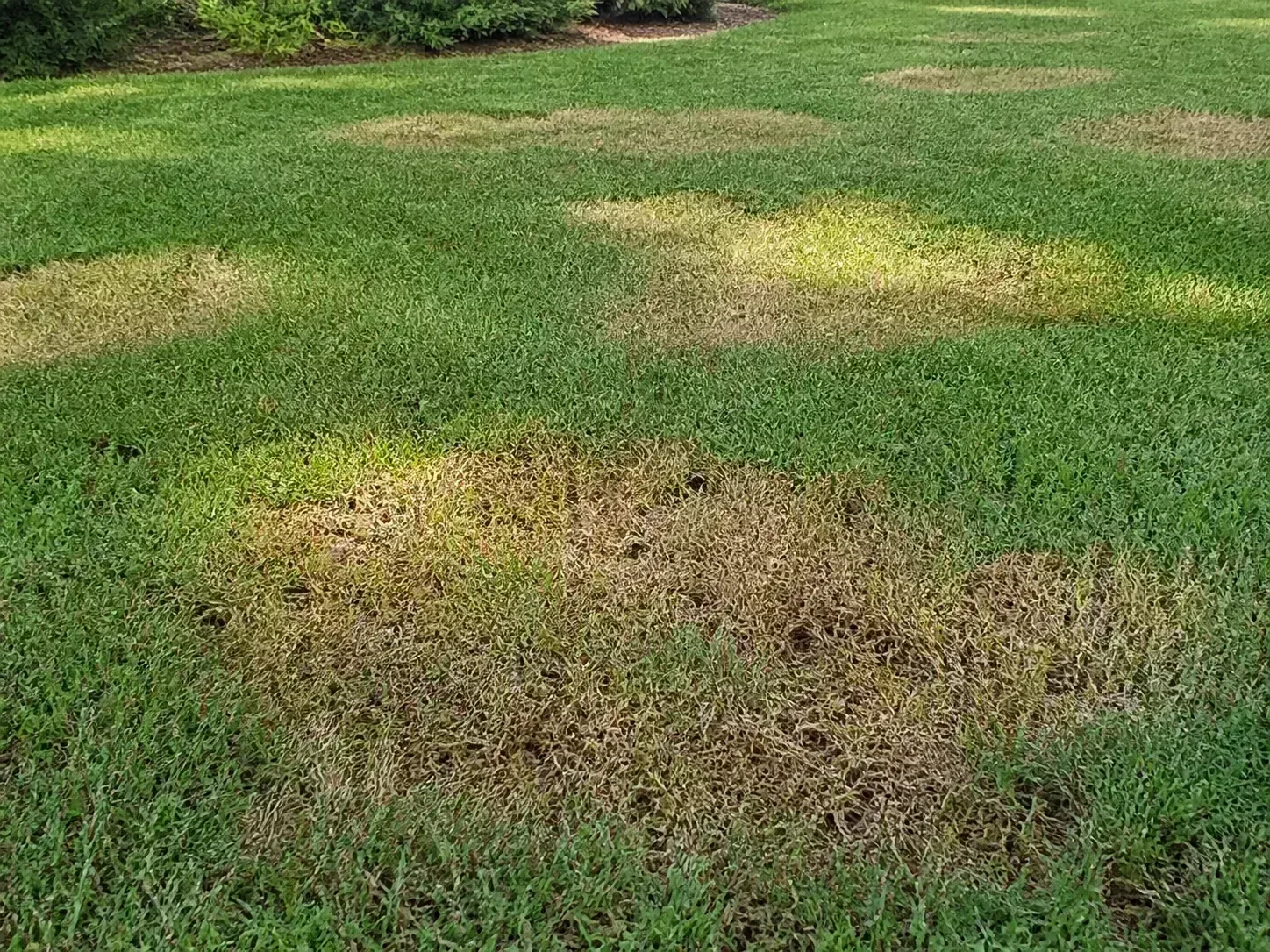
Correct cultural conditions first: improve drainage, avoid late-day irrigation that keeps foliage wet overnight, stop unnecessary nitrogen, and remove excessive thatch if it is confirmed. Fungicides are preventive or timing-sensitive tools, not a quick cure for all brown grass; if large patch recurs annually, ask your extension office about identification and a locally labeled product and timing. Follow the pesticide label exactly and do not apply a product unless the label includes the site and turf.
Scout weeds and insects before choosing a control
Thin centipedegrass opens space for weeds, especially while seed, plugs, or sprigs are still filling in. Hand-pull small outbreaks before they set seed, then identify the weed and the turf before using an herbicide. Centipedegrass is sensitive to some products used on other lawns, including some formulations of 2,4-D; the label must specifically allow use on centipedegrass and the stated application conditions.
Insects such as ground pearls, mole crickets, spittlebugs, and white grubs can also thin turf, but the correct response depends on the pest and its life stage. A brown patch by itself is not evidence of grubs; inspect roots and soil, look for loose turf or visible insects, and contact your county extension office if the cause is unclear. Clemson and UF/IFAS list pests that can damage centipedegrass and emphasize identifying the problem before choosing a control.
Conclusion
Centipedegrass is a good choice when you want a warm-season lawn that grows slowly, needs relatively little nitrogen, and suits a sunny, acidic, well-drained site in the South. It is a poor match for deep shade, heavy traffic, saline soil, or places where repeated freezes and saturated soil are routine. Expect a lighter green color and a slower fill-in than many homeowners expect.
Before buying seed or sod, test the soil and ask a local supplier which cultivar performs in your area. Plant in late spring, keep seed or sod moist while it roots, then shift to deeper and less frequent watering; mow around 1.5 to 2 inches, fertilize sparingly, and remove thatch only when it is truly excessive. When a lawn turns yellow or brown, identify the pattern and test the likely cause before reaching for more fertilizer or a pesticide. That measured approach is what keeps centipedegrass low-maintenance over the long term.



