How to Grow Earth Stars Indoors: Cryptanthus Care Guide
Grow Cryptanthus indoors with clear guidance on light, watering, soil, humidity, repotting, pup propagation, and signs that point to rot or normal decline.
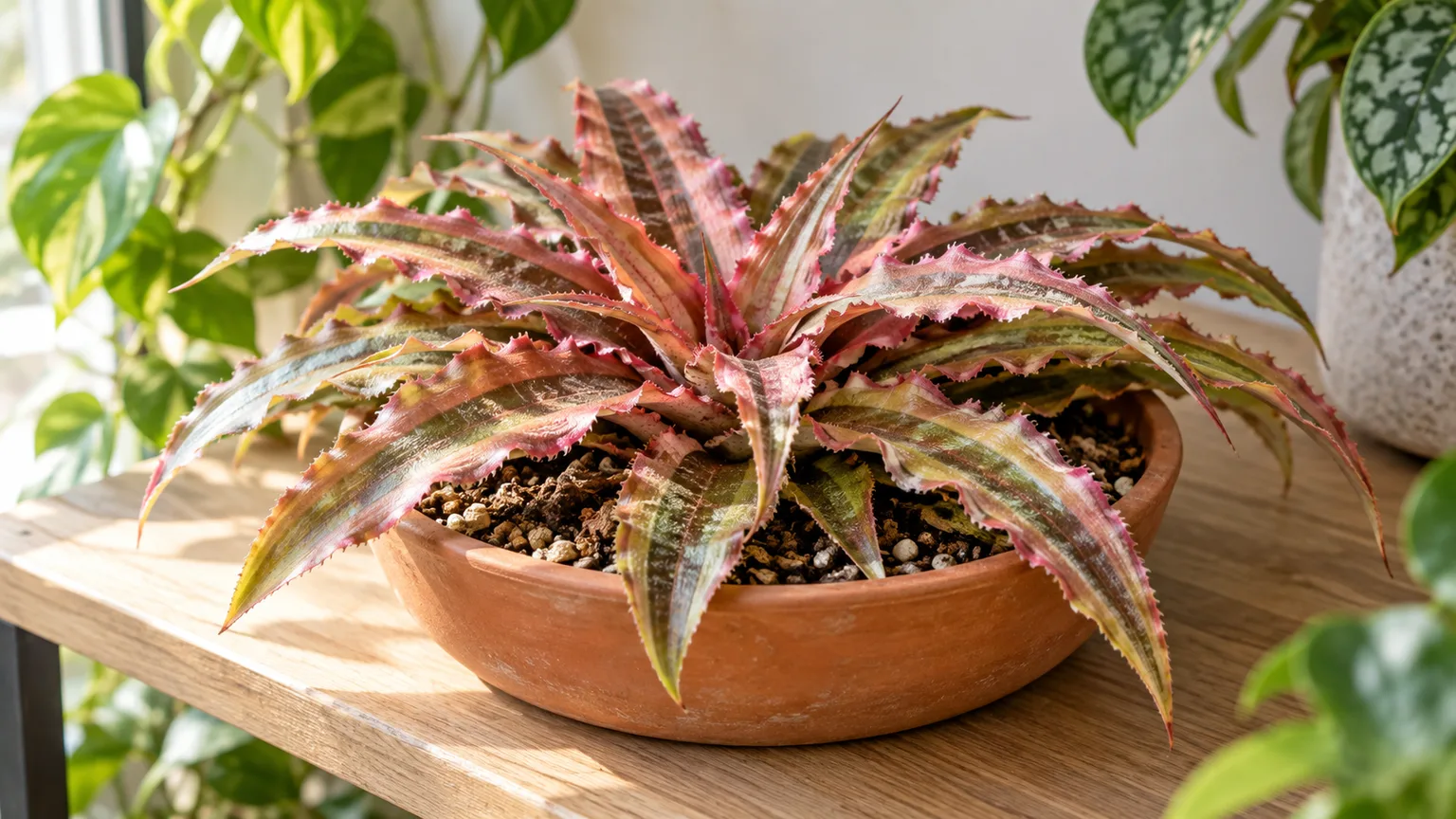
A Cryptanthus, or earth star, is a bromeliad with a low rosette of patterned leaves and roots that grow in a potting medium. That last detail changes the routine: unlike tank-forming bromeliads, an earth star does not rely on a cup of water at the center of its leaves. Give it bright filtered light, a loose mix that stays lightly moist, and a container that drains freely, and the plant can keep producing colorful leaves and offsets indoors. (NC State Extension Plant Toolbox; UF/IFAS Extension)
Use observable cues, not a calendar. A small Cryptanthus in a porous clay bowl under warm bright light dries faster than the same plant in plastic under a cool window; one fixed watering interval will not fit both.
Recognize an Earth Star and Its Growth Cycle
Cryptanthus belongs to the bromeliad family, but its growth habit is closer to a small terrestrial foliage plant than to a mounted air plant. The foliage forms a star-shaped rosette close to the soil surface; depending on the species or hybrid, leaves may be pink, red, bronze, green, cream, striped, cross-banded, or frosted. Some cultivars stay compact, while others widen as offsets fill the pot, so judge container size by the roots and clump rather than by a generic mature-height number. (University of Arkansas Cooperative Extension; NC State Extension Plant Toolbox)
The flowers are usually small and tucked into the center of the rosette, not displayed on a tall showy stalk. A mature rosette typically flowers once and then gradually declines, but it often produces pups before or around that point; those younger rosettes are how the planting continues. A browning mother plant can therefore be normal if the pups are firm and growing, while a soft, sour-smelling base in wet mix points to a different problem. (University of Arkansas Cooperative Extension; Gardening Know How)
Earth stars are sold as Cryptanthus bivittatus or as hybrids; size, color, and tolerance for direct sun vary, so follow a cultivar tag when available. Leaf edges can be bristly, so lift the plant by its base or root ball rather than squeezing the leaves.
The Indoor Setup at a Glance
| Care factor | Useful starting point | What to check |
|---|---|---|
| Light | Bright, filtered light; gentle morning sun may suit some plants | Fading color suggests too little usable light; bleached or crispy patches suggest too much direct heat |
| Water | Water the mix when its surface has begun to dry, then drain fully | The root ball should not stay saturated or become bone-dry for long |
| Potting medium | Humus-rich, moisture-retentive mix with air spaces and quick drainage | Water should pass through the pot; mix should not stay heavy and sour |
| Temperature | A steady comfortable room, roughly 60–85°F (16–29°C) | Avoid cold drafts, frost, and hot air blowing directly on the plant |
| Humidity | Average indoor humidity is often workable; add humidity if the room is very dry | A terrarium needs ventilation so trapped moisture does not keep the crown wet |
| Feeding | Dilute balanced fertilizer during active growth only | Excess fertilizer can dull color and leave salts in the small pot |
These are starting points because cultivars and rooms differ. Test light first when firm foliage loses color; investigate drainage when the crown softens and the mix stays wet. Change one factor at a time so you can see what helps.
For a broader comparison of tank-forming and terrestrial bromeliads, see this indoor bromeliad growing guide. The difference matters because a Cryptanthus takes up moisture through its roots and potting medium rather than depending on a water reservoir in the leaves. (University of Wisconsin–Madison Extension)
Choose Light That Preserves Color
Set an earth star near a bright window where a sheer curtain, a few feet of distance, or reflected light softens the strongest rays. An east-facing window often provides gentle morning sun; a bright north-facing window can work in a sunny climate or near the glass, while a darker north-facing room may not provide enough light for a pink or red cultivar to hold its color. A south or west window can be suitable if the plant is screened from hot midday and afternoon sun.
Use the leaves as feedback. When a colored cultivar gradually turns greener and growth becomes sparse, move it closer to bright natural light or add a grow light; do not jump straight into hours of strong sun. Pale, washed-out, tan, or crisp patches on the window-facing side point toward too much intensity or heat, so pull the pot back or filter the window. Extension guidance describes the same two-sided risk: excessive shade can mute color, while harsh sun can bleach and shrivel foliage. (NC State Extension Plant Toolbox; Joy Us Garden)
Move a plant from a dim shop or terrarium toward brighter light over several weeks, checking new leaves as you go. Gradual acclimation reduces bleaching risk; old pale leaves may not recolor. (University of Wisconsin–Madison Extension)
Water the Root Zone, Not a Tank
Cryptanthus is terrestrial and does not make the water-holding vase found in many other bromeliads. Water the potting medium around the roots, not the center of the rosette on a weekly routine; a wet crown that cannot dry can add to rot risk. NC State and UF/IFAS both distinguish earth stars from bromeliads that form tanks and describe root-zone watering for this genus. (NC State Extension Plant Toolbox; UF/IFAS Extension)
Check the top of the mix with a fingertip. When the upper ½ inch feels just dry—not dusty throughout—water slowly until a little drains from the holes, then empty the saucer or cachepot. The aim is an evenly damp root zone with air around it, not a permanently wet pot and not the long dry cycle you might use for a succulent. If water runs down the sides without wetting the root ball, apply it in two passes a few minutes apart so the mix has time to absorb it.
Light, temperature, pot material, mix, and season all change the interval. Check more often in warm bright conditions and less in cool winter light; a dry-climate grower likewise adjusts watering to season and pot conditions. (Joy Us Garden)
If the mix dries completely and pulls away from the pot, rewet it thoroughly and let excess water escape rather than leaving the pot to stand in water. If the mix remains wet for many days, pause watering and check for a compacted medium, an oversized container, blocked drainage, or a cool low-light position. Brown tips alone do not prove the plant needs more water; salt buildup, harsh sun, damaged roots, and natural aging can produce similar symptoms.
Most tap water is workable, but softened water can add sodium and mineral-heavy water may leave deposits. If crust or tip damage persists despite sound watering, try rainwater or another low-mineral source and flush the medium; Wisconsin Extension advises avoiding softened or alkaline water for bromeliads. (University of Wisconsin–Madison Extension)
Use a Moisture-Retentive but Airy Potting Mix
Because an earth star roots in soil, do not mount it on bark or use the very coarse, nearly soil-free mix chosen for some air plants. It needs a medium that holds enough moisture between waterings yet lets extra water move away and oxygen reach the roots. NC State describes well-drained, humus-rich soil for C. bivittatus; the University of Wisconsin guidance likewise warns that a tight or saturated mix can rot bromeliad roots. (NC State Extension Plant Toolbox; University of Wisconsin–Madison Extension)
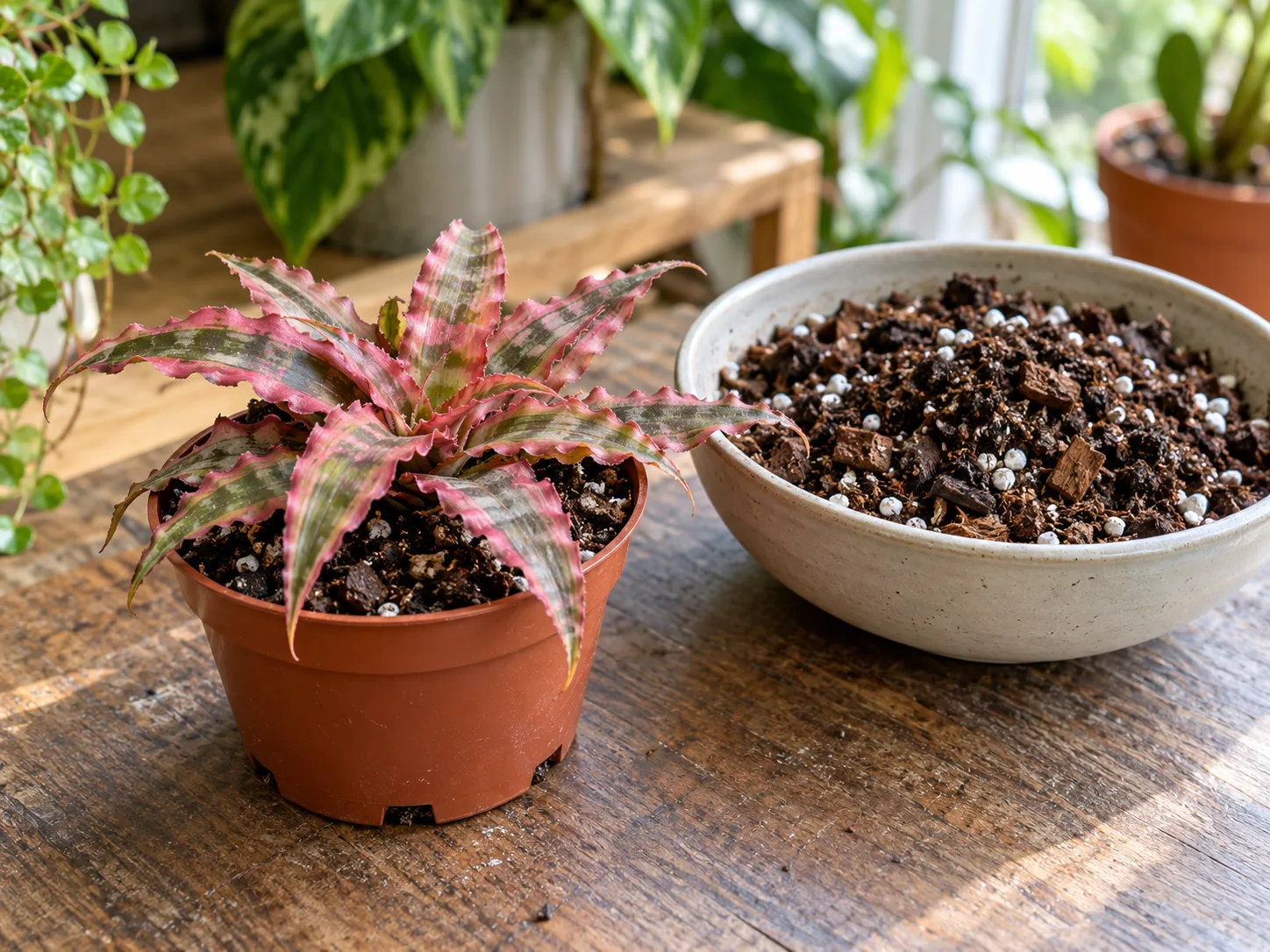
A practical starting blend is two parts quality indoor potting mix based on peat or coco coir to one part perlite or pumice. If the mix feels dense or stays wet too long in your home, add a modest amount of fine orchid bark; if it dries too fast, use a slightly larger share of the moisture-retentive base. This follows a grower-tested approach using potting medium, pumice or perlite, and coir, while preserving the drainage that Cryptanthus roots need. (Joy Us Garden)
Avoid garden soil, which can pack down, and a mix so airy that the root ball dries again the next day. A useful medium wets evenly, drains freely, and feels lightly moist—not sticky—after watering.
Match the Pot to the Roots
Choose a shallow or moderately deep pot with an unobstructed drainage hole. The rosette is low and often spreads sideways as pups form, so a stable bowl-shaped pot can display the plant well, but it still needs a hole; a decorative cachepot is fine only if you remove the nursery pot to water and pour away the runoff. Do not set the plant in a sealed terrarium or bowl with no drainage unless the container is designed for careful, controlled terrarium culture.
Keep the root ball snug; go up about an inch only when roots need room, not just because leaves reach past the rim. Clay dries faster, while plastic holds moisture longer—a useful trade-off to match to your watering habits. (University of Wisconsin–Madison Extension; Gardening Know How)
Keep Temperatures Steady and Humidity Moderate
A normal warm room suits most house-grown Cryptanthus. A practical range is roughly 60–85°F (16–29°C), with protection from cold drafts, a winter window that chills the pot, heating vents, and air conditioners that blow directly on the leaves. If you move the plant outside for warm weather, start it in bright shade, protect it from hot afternoon sun, and bring it indoors before frost; earth stars are tropical and are not freeze-tolerant outdoor perennials in most climates. (NC State Extension Plant Toolbox; Gardening Know How)
Humidity is helpful but does not need to become a daily misting project. Cryptanthus can adapt to ordinary indoor air if the roots are watered appropriately, although a very dry heated room may make leaf tips papery and the mix dry faster. A small room humidifier or a nearby group of plants can raise local humidity more consistently than misting, which evaporates quickly; keep air moving gently and avoid trapping wet leaves against a cold window.
A terrarium can slow moisture loss, and extension sources list earth stars as suitable for terrarium culture. Keep it vented and use a suitable draining mix; if condensation lingers all day or leaves touch wet glass, increase airflow. (NC State Extension Plant Toolbox; University of Wisconsin–Madison Extension)
Feed Lightly During Active Growth
Earth stars are grown mainly for foliage and generally do not need heavy feeding. During active spring and summer growth, use a balanced, water-soluble houseplant fertilizer at about one-quarter of the label strength every four to six weeks, applied to damp mix; if the plant is growing slowly in low light, feed less often or skip it. Wisconsin Extension advises diluted fertilizer for bromeliads and warns that overfeeding can reduce color and distort rosettes, while experienced indoor growers describe only a few light feedings during their growing season. (University of Wisconsin–Madison Extension; Joy Us Garden)
Do not use fertilizer to force a faded plant back to pink; correct the light first. Reduce or stop feeding when winter growth slows, and flush the pot if salts collect at the surface.
Repot Only When the Plant Needs It
Repot when roots fill the pot and water passes through too quickly, the clump becomes unstable, the medium has broken down or stays wet too long, or several pups are crowding the original rosette. A plant that is still growing in a sound, free-draining mix does not need to be disturbed just because a year has passed. Unlike a care rule that treats flowering as the end of the whole planting, a declining mother rosette can leave healthy pups in the same pot to continue growing.
Spring or early summer is a low-stress time to refresh the mix because the plant can resume growth in warmer, brighter conditions. Slide the clump out, loosen only enough old mix to check the roots, and trim roots that are clearly soft or dead with a clean blade. Set the plant at the same depth it was growing before; burying the leaf bases can hold moisture against the crown.
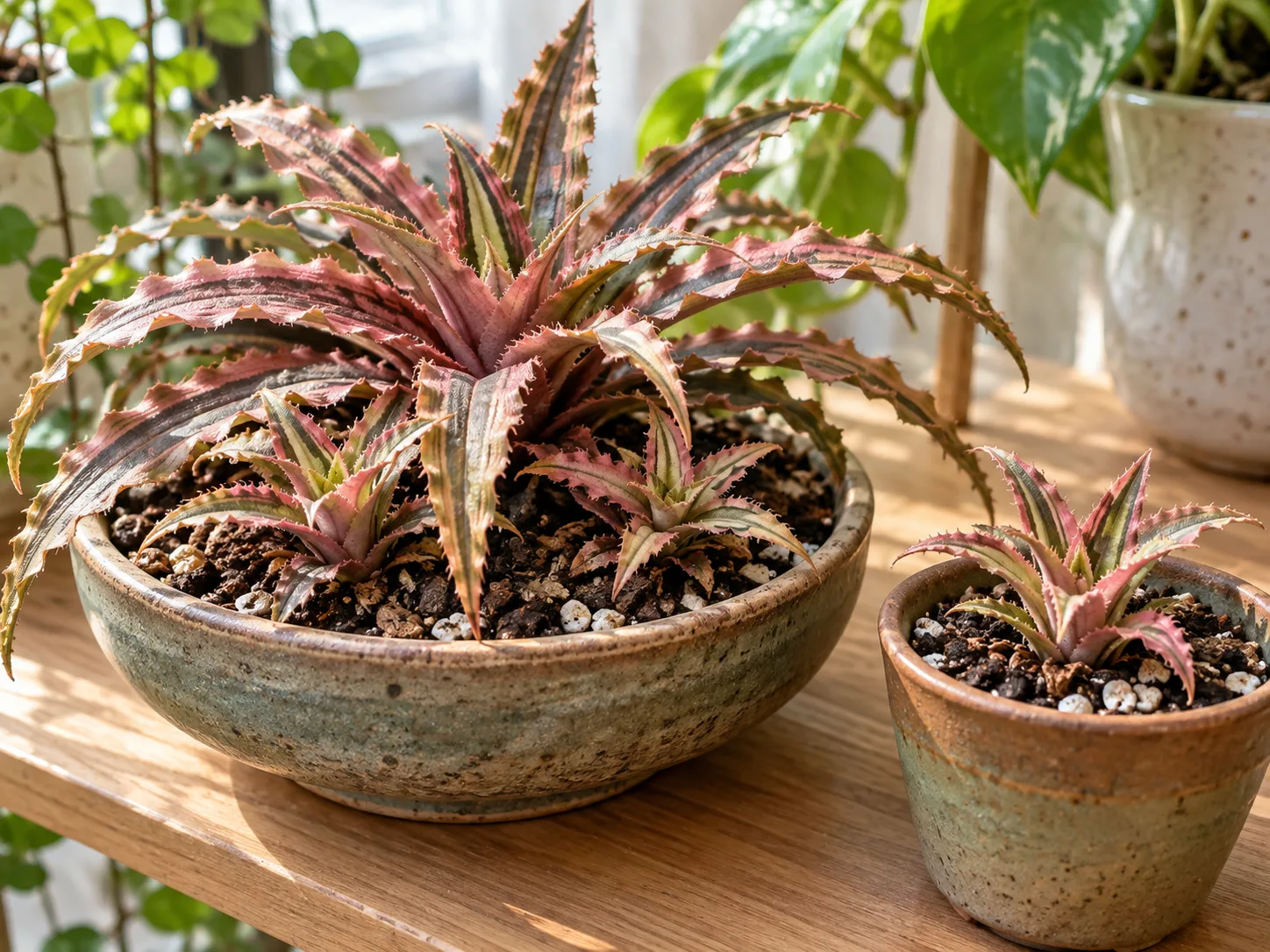
Move up only one pot size if the root mass needs more room. If you want a fuller display, keep rooted pups with the mother plant in the same shallow bowl; if you prefer separate plants, divide only the offsets that can stand on their own. After repotting, water the mix lightly enough to settle it, drain the pot, and wait for new growth before resuming fertilizer. A grower who repotted a mother plant and its pups together found that the offsets rooted successfully, showing that separation is a choice rather than a requirement. (Joy Us Garden)
Propagate Pups Without Losing Them
Most home growers propagate Cryptanthus by separating the small rosettes, or pups, that form around a mature plant. Seeds are possible but slower and less predictable for a home collection; pups are already small clonal plants and preserve the parent’s cultivar traits. Extension guidance says offsets can be potted once they reach a substantial fraction of the mother plant, and practical growers recommend waiting until they have roots. (NC State Extension Plant Toolbox; Gardening Know How)
Wait Until a Pup Can Stand on Its Own
Look for a pup that is about one-third the size of the parent rosette or larger and has begun making its own roots. It should have several leaves and a firm base, not just a tiny green nub. If the pup is still very small or tightly attached, leave it in place and check again later; separating too early turns a reliable offset into a weak cutting that must make roots while also recovering from damage.
You can leave pups attached if the mother is still healthy and the pot has room. If the mother has finished flowering and is declining, wait until a pup has enough size and roots rather than rushing to remove it as soon as the old leaves brown. University of Arkansas Extension describes the mother’s central whorl declining as a series of offsets replace it, and NC State gives roughly one-third of the adult’s size as a useful separation point. (University of Arkansas Cooperative Extension; NC State Extension Plant Toolbox)
Pot and Settle the New Offset
Start with a clean, small pot with a drainage hole and fresh, lightly damp mix. Slide the parent clump from its pot and expose the connection between the pup and the mother; use a sterile sharp knife to sever the offset while preserving its roots. If the roots are entangled, separate slowly and keep a small amount of attached root rather than tearing the pup away by its leaves.
Plant the rosette at its original depth, with the base supported and leaf bases above the mix. Firm gently, water enough to settle the roots, and let the pot drain. Keep it warm in bright filtered light with slightly moist mix while roots establish.
New growth can take time. Do not tug to test for roots; watch for a new leaf or gentle resistance. Once it grows steadily, use the adult light and watering cues and resume diluted fertilizer only after it is established.
Diagnose Color, Leaf, and Crown Problems
A single brown tip or fading leaf is not enough to identify a cause. Compare the pattern across the plant, feel the tissue, check the moisture in the root zone, and note whether new growth is affected; then change the factor that best matches those clues. NC State lists common greenhouse pests but describes earth stars as generally problem-free, while extension and horticulture references point to rot when the medium remains too wet. (NC State Extension Plant Toolbox; Gardening Know How)
| What you see | More likely explanation | First response |
|---|---|---|
| Red or pink leaves slowly become greener; plant stays firm | Light is too low for that cultivar | Move nearer to bright filtered light over time; do not add fertilizer as a color fix |
| One side has bleached, dry, papery patches | Strong direct sun or reflected heat | Filter the window or move the pot back from the glass |
| Lower outer leaves brown while the center and pups stay firm | Old foliage or the mother rosette’s post-flowering decline | Remove only fully dry leaves and keep the healthy pups growing |
| Several leaves turn soft or brown and the mix stays wet | Root stress or rot, especially in a dense or oversized pot | Stop watering, check drainage and roots, and repot only if the medium or roots are failing |
| Crown or base is soft, dark, or smells sour | Crown or root rot is likely | Isolate the pot, inspect the root ball, and save only firm, healthy pups |
| Tips turn crispy while the root ball is dry | Repeated drying, hot air, or low humidity may be contributing | Rehydrate the mix, move away from vents, and check the pot sooner next time |
Treat the table as a first sorting step, not a diagnosis from one symptom. Root damage can mimic drought, so check the mix before watering a limp plant. If the cause is unclear, review light, drainage, and root-zone moisture before changing several things.
Separate Natural Mother-Plant Decline from Rot
A flowering rosette gradually browns as part of its life cycle; firm green pups at the base show that the planting is continuing. Remove fully dry leaves with a clean blade, but let living pups remain attached while the mother still supports them.
Rot is more likely when the crown or base is soft and dark, roots are mushy, the pot smells sour, and the mix stays wet. Check drainage and pot size; if the crown has collapsed, keep only firm offsets with their own roots and pot them in fresh mix. (Gardening Know How)
That distinction matters: protect healthy pups on a naturally declining mother, but act quickly when wet, soft tissue is spreading.
Manage Pests Before They Spread
Inspect the leaf undersides, the tight bases where leaves overlap, and the surface of the potting mix when watering. Mealybugs look like white cottony flecks, scale appears as small fixed bumps, and spider mites can leave fine stippling or webbing; those pests are more likely to hide in the protected center and leaf joints than on the open leaf surface. NC State Extension lists mealybugs, scale, and mites among possible greenhouse pests on earth stars, and Joy Us Garden also recommends checking under leaves and at their bases. (NC State Extension Plant Toolbox; Joy Us Garden)
If you find a few insects, isolate the pot and remove visible pests with a damp cotton swab or a gentle rinse that does not leave the crown saturated. Recheck the plant and nearby houseplants every few days; one pass rarely catches insects hidden under leaf bases or newly hatched pests. For a persistent infestation, choose a product labeled for the specific pest and indoor ornamental plants, test a small area first, and follow the label exactly; delicate leaves and compact rosettes make improvised sprays a poor bet.
Conclusion
The care rule that makes Cryptanthus easier is simple: grow the earth star as a rooted terrestrial bromeliad, not as a water-tank bromeliad. Give it bright filtered light, keep the mix lightly moist but airy, let extra water drain, and adjust the pot and watering interval to the way your own room dries.
When color fades, compare the plant’s light before changing its food; when leaves brown, check whether the tissue is firm and the mix is drying or soft and staying wet. A mature rosette may decline after flowering, but healthy pups carry the planting forward, and you can keep them together or pot them separately once they have roots. With those checks in place, a compact earth star can remain a colorful, manageable indoor plant without a rigid schedule.