Fishtail Palm Care: A Complete Indoor Growing Guide
Grow a fishtail palm indoors with bright filtered light, a soil-based watering routine, draining mix, and clear steps for repotting and dividing healthy clumps.
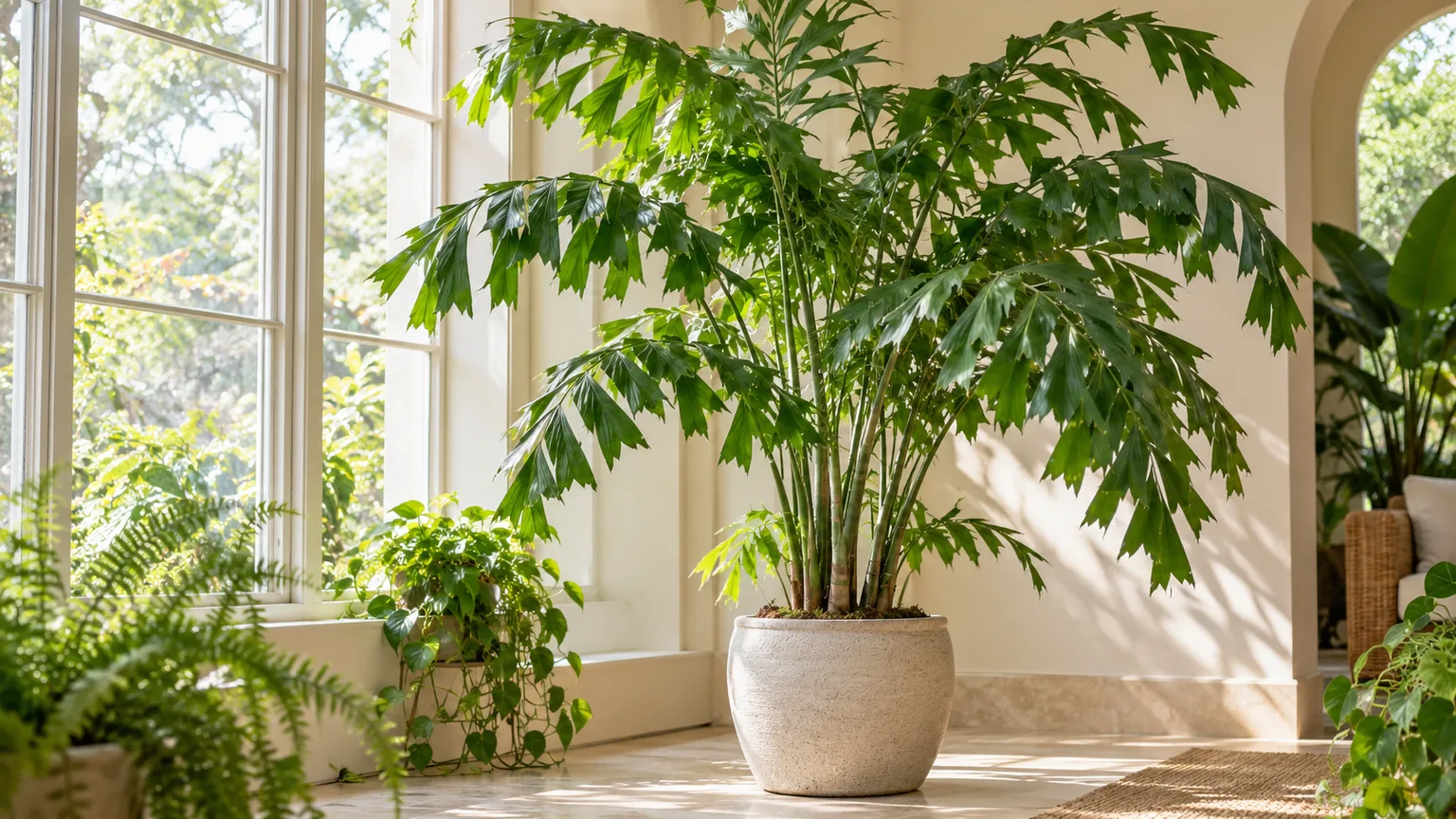
The fishtail palm earns its name from leaflets that look like small, ragged fish tails, but the name can refer to several species. The clumping palm most often sold for indoor growing is Caryota mitis, also called Burmese or clustering fishtail palm. It needs a bright position, a potting mix that holds some moisture without staying waterlogged, and enough room for a broad, gradually expanding clump.
The most reliable care routine is not a fixed watering schedule. Check the root zone, water thoroughly when it has partly dried, and let excess water drain away. That single habit prevents the common mistake of trying to keep a tropical palm constantly wet. Before following any care label, though, make sure the plant is actually the clumping species; a different palm sold under the same common name can have a very different mature size and life cycle.
Start by Identifying the Fishtail Palm You Bought
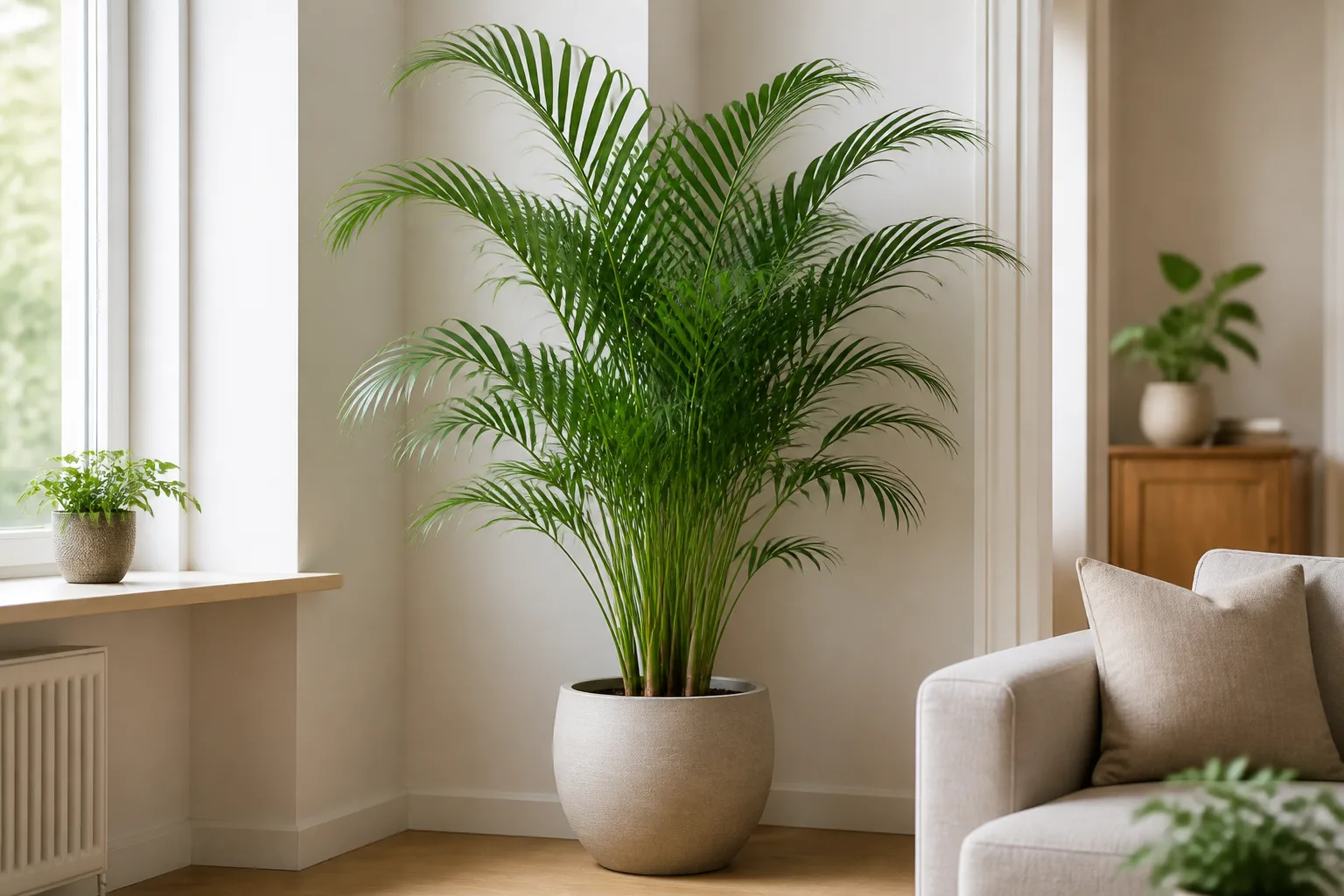
Look at the base of the plant before you choose a permanent spot. A typical Caryota mitis has several slender, upright stems emerging close together, with feathery-looking, bipinnate leaves made up of triangular leaflets whose outer edges are irregularly toothed. This clumping habit is why it is also called the clustering fishtail palm. North Carolina State Extension describes its basal shoots, distinctive leaves, and Southeast Asian origin; Gardenia’s profile likewise identifies it as a clump-forming palm.
A nursery pot may contain several young plants rather than one mature palm, so a crowded-looking clump is not necessarily a sign that it needs immediate division. Ask the grower or check the plant tag for the botanical name. The label matters most if you are planning to move it outdoors, buy a taller specimen, or propagate it.
Caryota mitis vs. Caryota urens
Caryota urens, often called giant fishtail palm, is a different species with a solitary trunk that can become a very large landscape palm. Caryota mitis usually forms a cluster of stems and is the more practical choice for a large indoor container. Some care pages use “fishtail palm” for C. urens specifically, so compare the botanical name before applying their temperature, size, or growth advice to a clumping plant. Gardening Know How illustrates why the common name alone can be ambiguous.
Even the clumping species is not a compact tabletop plant. Given time and strong conditions, it can grow beyond ordinary ceiling height and spread as new stems emerge, while a container and indoor light usually limit its pace and size. Plan for the span of the fronds as well as the height of the stems; leaves can extend well outside the pot’s footprint.
Set Up the Right Light and Space
Choose the brightest spot in the home that gives the fronds filtered or indirect light for much of the day. Near an east-facing window is often a forgiving starting point; a bright south- or west-facing room can work if the plant sits back from hot glass or behind a sheer curtain. The RHS recommends bright filtered light for plants grown under glass, while North Carolina State Extension describes C. mitis as adaptable to medium indoor light. In practice, “adaptable” does not mean that a dim hallway is a good long-term location: a palm can survive there while producing fewer or weaker leaves.
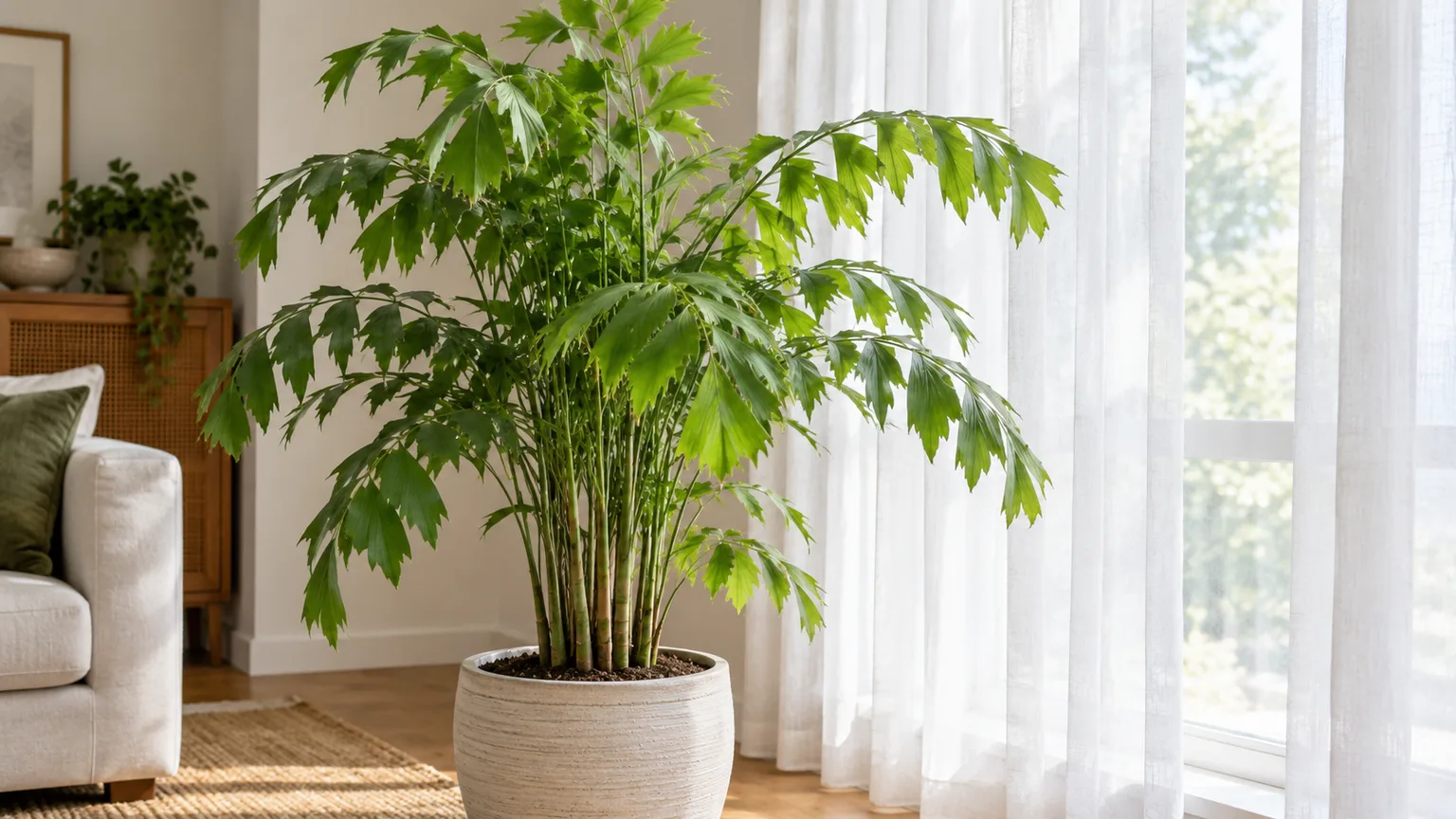
Watch how the newest fronds open after you place the pot. Healthy growth should remain reasonably compact and green; a plant that steadily leans toward one window or puts out smaller, sparser leaves may need more light. Rotate the container a quarter turn every few weeks if growth leans toward the window, but do not keep moving it between very different light levels.
Direct sun is not automatically harmful in every climate, yet sudden exposure is a common way to scorch leaves that grew indoors. If you summer the pot outside, begin in bright shade and increase the exposure gradually over a week or two. Keep the fronds away from a radiator, heating vent, or air-conditioning outlet as well; repeated hot or cold airflow can dry the foliage even when the room itself feels comfortable.
Water When the Root Ball Is Partly Dry
Fishtail palms like an evenly moist root zone during active growth, but their roots need air as well as water. A pot left sitting in runoff can stay oxygen-poor even when the surface looks acceptable. Water deeply enough to wet the whole root ball, then empty the saucer or cachepot; do not add small sips every day to compensate for poor drainage.
Indoor watering frequency changes with season, pot size, mix, light, and airflow. A palm in a warm, bright room and a small nursery pot may dry noticeably faster than the same plant in a cool room and a large decorative planter. North Carolina State Extension advises watering when the soil is dry, while the RHS recommends moderate watering during growth and less in winter. Taken together, these point to a check-and-adjust routine, not a weekly rule.
A Simple Soil-Check Routine
Once a week, check the mix rather than watering automatically. Push a finger or clean wooden skewer about an inch or two into the pot near the edge; if the mix feels cool and damp or clings to the skewer, wait and check again in a few days. If the upper layer has dried but the deeper root zone still feels slightly moist, that is a reasonable time to water.
When it is time, pour slowly over the surface until water runs freely through the drainage holes. Give the pot several minutes to finish draining, then empty standing water from its saucer. If water runs down the sides without wetting the center, the mix may have shrunk from the pot or become difficult to rewet; a slow second pass is better than leaving a dry core.
In winter, do not use the old summer interval as a target. Shorter days and cooler rooms slow water use, so the same amount of water can remain around the roots much longer. Reduce the frequency of checks only after you learn how slowly your particular pot dries, and never let the container sit in a cold puddle.
Choose a Moisture-Retentive Mix That Drains
The useful balance is a mix that absorbs water evenly but does not collapse into a dense, airless mass. The RHS suggests a peat-free, loam-based compost; a general indoor potting mix with added perlite or pumice and a little fine bark is a practical container alternative. As a starting blend, use roughly two parts indoor potting mix to one part perlite or pumice and one part fine orchid bark, then adjust if it dries unusually fast or stays wet for many days.
Use a pot with open drainage holes, and keep the palm in its nursery pot inside a decorative cachepot if the latter has no hole. After each watering, lift out the inner pot and pour away the collected water. A layer of stones at the bottom of a pot does not replace a drainage hole; it can leave the root zone perched above a saturated layer instead of helping it drain.
Avoid an extremely gritty cactus mix as the default. Fishtail palm roots should not be forced to dry completely between every watering, especially while the plant is pushing new growth. The right mix feels lightly damp after watering, then becomes progressively less wet from the surface down without staying slick or sour-smelling.
Keep Temperatures Warm and Humidity Steady
Treat this as a tropical plant, not a cold-tolerant patio palm. Keep it in a warm room with stable temperatures and protect it from chilly window glass, exterior doors, and direct blasts from heating or cooling vents. The species can tolerate brief light frost in a suitable outdoor climate, but North Carolina State Extension notes that it is not cold hardy; a potted root ball is especially vulnerable to a sudden cold snap.
Humidity guidance is less uniform than care labels often suggest. The RHS recommends high humidity under glass, while North Carolina State Extension lists low-to-medium relative humidity for indoor ornamentals. That difference is a reason not to chase a magic percentage: give the palm stable warmth and good light first, then consider a room humidifier if the air is very dry and the leaf edges continue to crisp despite an appropriate watering routine.
A hygrometer can tell you whether a room is consistently dry, but misting is not a dependable way to raise room humidity. It briefly wets foliage and then evaporates; it does not replace moisture in the root zone or create lasting humid air. If you use a humidifier, leave enough space around the fronds for air to circulate, and clean the device regularly according to its instructions.
Feed Lightly During Active Growth
A palm pushing new leaves can use a modest amount of fertilizer, but excess salts are more likely to create brown edges than to produce a better plant. During the warm, brighter growing months, use a balanced liquid fertilizer at the label rate; the RHS recommends monthly feeding while the plant is in growth. If a new potting mix contains fertilizer, wait until that supply is likely to be depleted before starting a regular feed.
Do not fertilize a palm that is waterlogged, severely stressed, or not growing. Fertilizer cannot repair damaged roots or compensate for weak light, and adding it to a failing plant increases the number of variables you need to diagnose. Pause feeding in winter when growth slows, then resume when the plant is actively making new leaves and the days are lengthening.
If a pale crust forms on the soil or pot rim, or several leaves develop brown tips after repeated feeding, pause fertilizer and review the label dose and watering habits. When practical, flush the mix by watering thoroughly and allowing it to drain completely, but do not do this if the pot lacks drainage or the root ball is already saturated. Correct the pot and drainage first.
Adjust Care for Winter and Outdoor Summering
For an indoor palm, winter usually means less water and no routine fertilizer, not a special dormant-storage treatment. Move it away from cold drafts and avoid placing it directly above a heater. Lower light and slower growth also mean the root ball may take longer to dry, so let the soil check—not the calendar—decide when to water again.
A container can spend warm weather outdoors if nights are reliably mild and the site is sheltered. Move it into bright shade first, then expose it gradually to stronger light over one to two weeks; an indoor-grown leaf can scorch even when a garden-grown palm would tolerate more sun. Choose a spot protected from strong wind because the species has shallow roots, and keep the pot stable so the wide crown cannot tip it.
Bring the plant indoors before cold nights become a concern, rather than waiting for visible frost damage. Inspect the fronds, stems, and pot surface for pests before carrying it back inside, and rinse the foliage if you see dust or insects. In South Florida, UF/IFAS places this species in a caution category in the southern zone and advises managing it to prevent escape; check local Extension guidance before planting it in a landscape there.
Repot Only When Roots Have Used the Pot
A fishtail palm does not need an annual pot change. Repot when roots are densely circling the root ball, a mass of roots is emerging from drainage holes, water has become difficult to move through the mix, or growth has slowed after light and watering problems have been ruled out. A few roots visible at the bottom alone do not prove that the whole clump needs a larger container.
Choose a pot only one size wider, with drainage holes and enough weight to steady the fronds. A container that is much larger than the root ball holds extra wet mix that the plant cannot use quickly. Repotting in spring or early summer gives the palm warmer, brighter conditions to re-establish roots, but wait if the plant is already stressed or the mix is waterlogged.
Slide the root ball out with support under the base of the stems; do not pull the palm upward by its fronds. Loosen only the outermost tightly circling roots, keep the root crown at the same soil level, and fill around it with fresh mix. Water once to settle the soil, drain the pot, and hold fertilizer until you see resumed growth.
Prune Dead Growth Without Topping Healthy Stems
Remove a frond only when it is fully brown or badly damaged. Use clean, sharp pruners and cut its stalk near the base without cutting into the trunk or neighboring stems. A partly green frond is still contributing energy, so trimming only its brown tip may improve its appearance, but cutting the entire frond while it still has substantial green tissue removes more than necessary.
Do not top a tall stem to control the palm’s height. Palms grow from a single growing point at the crown of each stem; cutting the top does not make that stem branch neatly or restart at a shorter height. If the clump has outgrown its room, move it, divide a rooted offset, or choose a smaller plant rather than shortening a healthy crown.
What Happens When a Stem Flowers
In a clumping fishtail palm, each stem follows its own life cycle. Flower clusters emerge sequentially along a stem over time; after that stem completes flowering and fruiting, the stem dies. The remaining stems and basal suckers can continue growing, so the death of one trunk is not necessarily the death of the whole plant. North Carolina State Extension describes this stem-by-stem flowering pattern.
Indoor palms rarely flower, so you may never need to manage fruit or remove a spent flowering stem at home. If one trunk begins declining after flowers or fruit have appeared, wait until it is fully dead before cutting it out. This avoids removing a healthy stem simply because one older stem is finishing its life cycle.
Propagate Clumping Types by Division
Division works only when the plant has separable basal shoots with their own roots. It is not the same as taking a stem cutting: a cut trunk without a rooted growing point will not develop into a new palm. The species profile lists division and seed as propagation methods, but division is usually the practical route for a container-grown clump.
Choose a warm period when the plant is growing. Water the parent palm the day before, slide the root ball out carefully, and look for a natural gap between a vigorous sucker and the main clump. Use a clean sharp knife or pruning saw to separate the offset with a useful portion of roots attached; do not pull or twist until the roots tear.
Pot the division in a small container with drainage holes and fresh, airy mix, positioning it at the same depth it grew before. Water it thoroughly, let it drain, and keep it in warm bright indirect light while roots recover. Do not divide a weak or recently repotted plant, and do not detach an offset with almost no roots just to make the clump look smaller. A large division may pause for weeks before it resumes visible growth.
Diagnose Yellow Leaves, Brown Tips, and Drooping
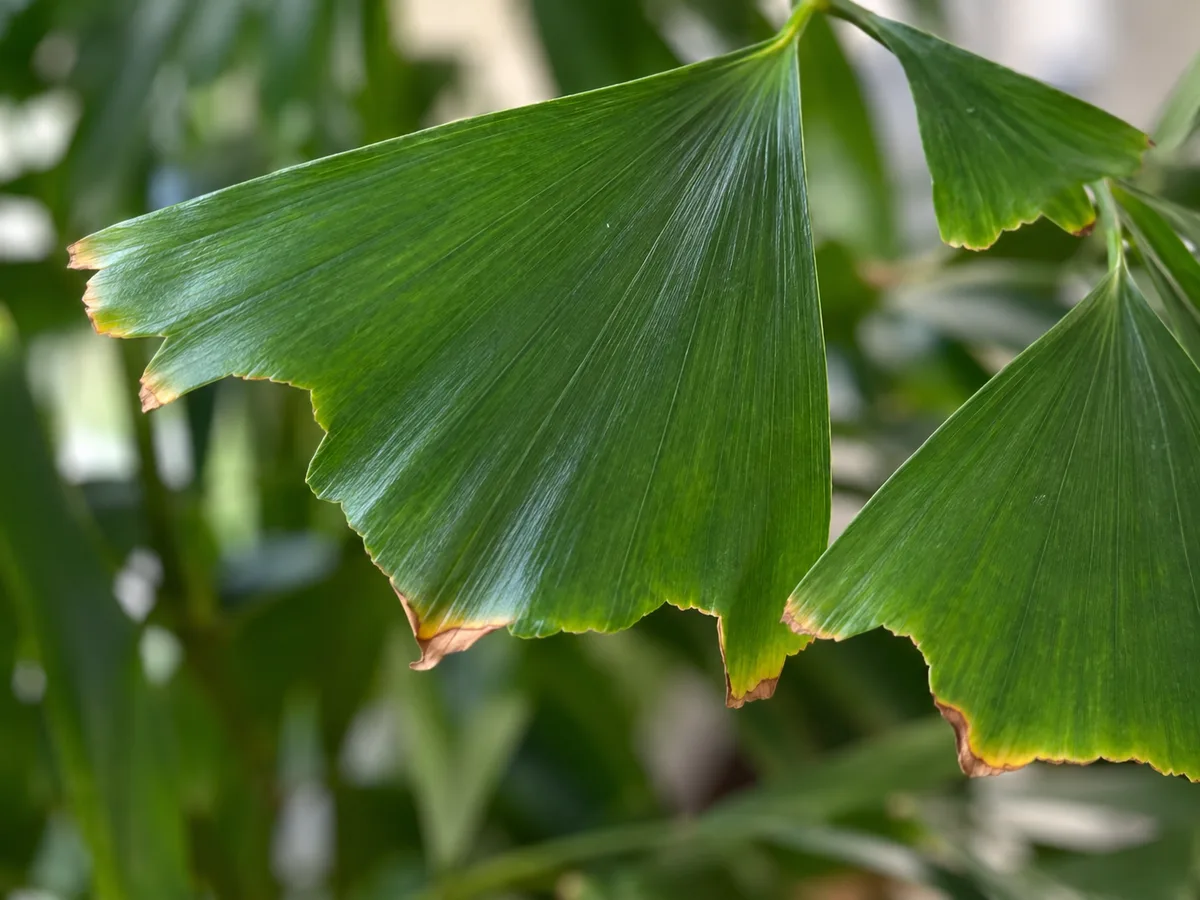
A single aging lower frond turning yellow and then brown can be normal, particularly on a plant that is still producing healthy new leaves. A pattern across several fronds deserves a closer look before you change fertilizer, increase humidity, and water more all at once. Check the soil, light, and new growth first so the cause does not get hidden by several simultaneous fixes.
| What you see | Check first | A useful first move |
|---|---|---|
| Several yellowing leaves and mix that stays wet | Drainage, standing water, and root condition | Empty the saucer, pause watering, and fix drainage; inspect roots if the mix smells sour |
| Crispy leaflet edges with a dry root ball | How deeply the mix has dried and how often you water | Water fully and let it drain; adjust the next check interval |
| Brown tips while the mix remains evenly moist | Room dryness, repeated fertilizer, and hard-water residue | Stop feeding temporarily; review humidity and salt buildup before adding water |
| Drooping fronds with wet soil | Waterlogged roots or a pot without drainage | Stop routine watering and inspect the root ball if decline continues |
| Sparse or smaller new leaves | Light level and seasonal growth | Move to brighter filtered light and wait for the next growth cycle |
Brown tips are not a diagnosis by themselves. Low humidity can contribute, but so can a root ball that repeatedly dries too far, fertilizer salts, physical damage, or roots that remain wet and cannot take up water normally. Correct the underlying pattern; trimming a few dead leaflet ends changes the appearance, not the cause.
Check for Spider Mites, Scale, and Root Trouble
Inspect the undersides of leaflets, the central leaf stalk, and the bases of stems. Spider mites can leave fine stippling or webbing; scale insects look like fixed bumps and may leave sticky residue. Isolate a pest-affected palm, rinse or wipe the foliage, and check neighboring plants. If the insects persist, identify them before choosing any treatment and follow only a product label that specifically allows use on indoor palms.
Root trouble is more likely when the mix stays wet for a long time, the plant declines despite watering, and the base smells sour or roots are dark and soft. Remove the root ball from the pot and inspect it only when those signs justify the disturbance. Trim clearly dead roots with clean tools, discard saturated soil, and repot into a draining mix; do not repeatedly unpot a palm whose roots still look firm and healthy.
Keep Children and Pets Away From Fruit
The strongest species-specific caution is about the fruit. North Carolina State Extension describes the fleshy berries as toxic and notes that crushed or broken fruit can irritate sensitive skin. Keep any fruit out of reach of children and pets, avoid handling damaged berries bare-handed, and wash skin that contacts them. The same source warns against allowing people or animals to eat the fruit.
Most indoor palms do not set fruit, but flowering can happen in mature plants and the risk should not be ignored if your plant is outside or in a greenhouse. If a child or pet may have eaten any part of the palm, contact a medical professional, veterinarian, or poison-control service for case-specific guidance; do not wait for symptoms or try a home remedy. When pruning a flowering or fruiting stem, wear gloves and collect dropped fruit promptly.
Conclusion
For a healthy indoor fishtail palm, start with the label: Caryota mitis is the usual clumping species. Give it bright filtered light, a warm spot, and a pot with open drainage; water thoroughly when the root zone has partly dried, then empty the saucer. Adjust that rhythm in winter rather than following a fixed weekly schedule.
Repot only when the root mass or poor drainage makes it necessary, and do not top healthy stems to limit height. If the clump has rooted offsets, division is possible, but it is a substantial root disturbance and best reserved for a healthy, actively growing plant. Brown leaf tips, yellowing, and drooping each have several possible causes, so check the mix and recent conditions before making one careful change at a time.