Thicker Lawns: Early-Spring Slit-Seeding Guide
Slit-seeding in early spring can thicken patchy cool-season lawns when soil hits 55–65°F. Learn timing, prep, pre-emergent conflicts, and when to wait for fall instead.
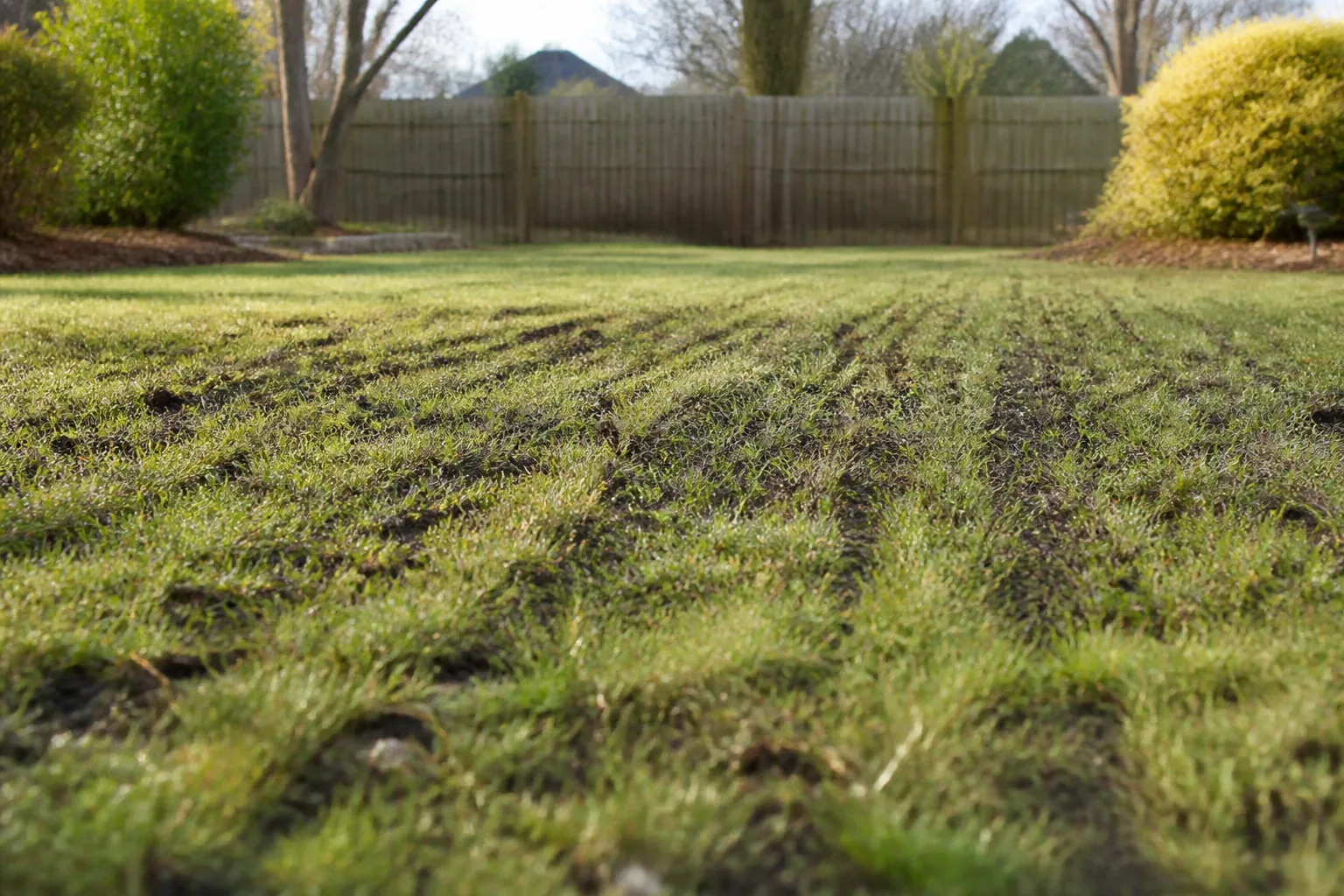
A patchy cool-season lawn does not fix itself. Broadcast overseeding can help a thin yard, but much of the seed never reaches soil—it sits on thatch, gets eaten by birds, or dries out on the first warm afternoon. Slit-seeding (also called slice seeding) cuts narrow grooves into the turf, drops seed directly into those grooves, and partially covers it as you water. On lawns that are thin, weedy, or full of bare spots larger than a dinner plate, that mechanical seed-to-soil contact is often the difference between a half-filled yard and a noticeably thicker stand before summer.
Early spring is not the ideal season for cool-season turf renovation—fall usually wins on weed pressure and establishment time. Life does not always cooperate with the extension calendar, though. If you missed last fall’s window, travel blocks late summer, or need the yard presentable before June, early-spring slit-seeding can still work when you respect two non-negotiables: soil temperature and a hard cutoff before summer heat shuts down cool-season growth.
What slit-seeding is—and when it beats broadcast overseeding
Slit-seeding is a renovation technique, not routine maintenance. A walk-behind slit-seeder uses rotating vertical blades or disks to slice ¼- to ½-inch grooves through existing turf and into the upper soil layer. A seed box meters grass seed into those grooves as the machine moves. When you irrigate afterward, dislodged soil falls back into the slits, burying seed more reliably than a spreader alone.
Broadcast overseeding scatters seed across the lawn surface. It is cheaper, faster, and fine for lawns that are already mostly healthy but slightly thin. The trade-off is contact: seed that lands on leaves, thatch, or hardpan struggles to germinate. Penn State Extension notes that spring and early-fall overseedings work best when seed contacts soil through aeration, dethatching, or a disk-type seeder that drops seed into slits. Slit-seeding builds that contact into every pass.
How a slit-seeder actually works
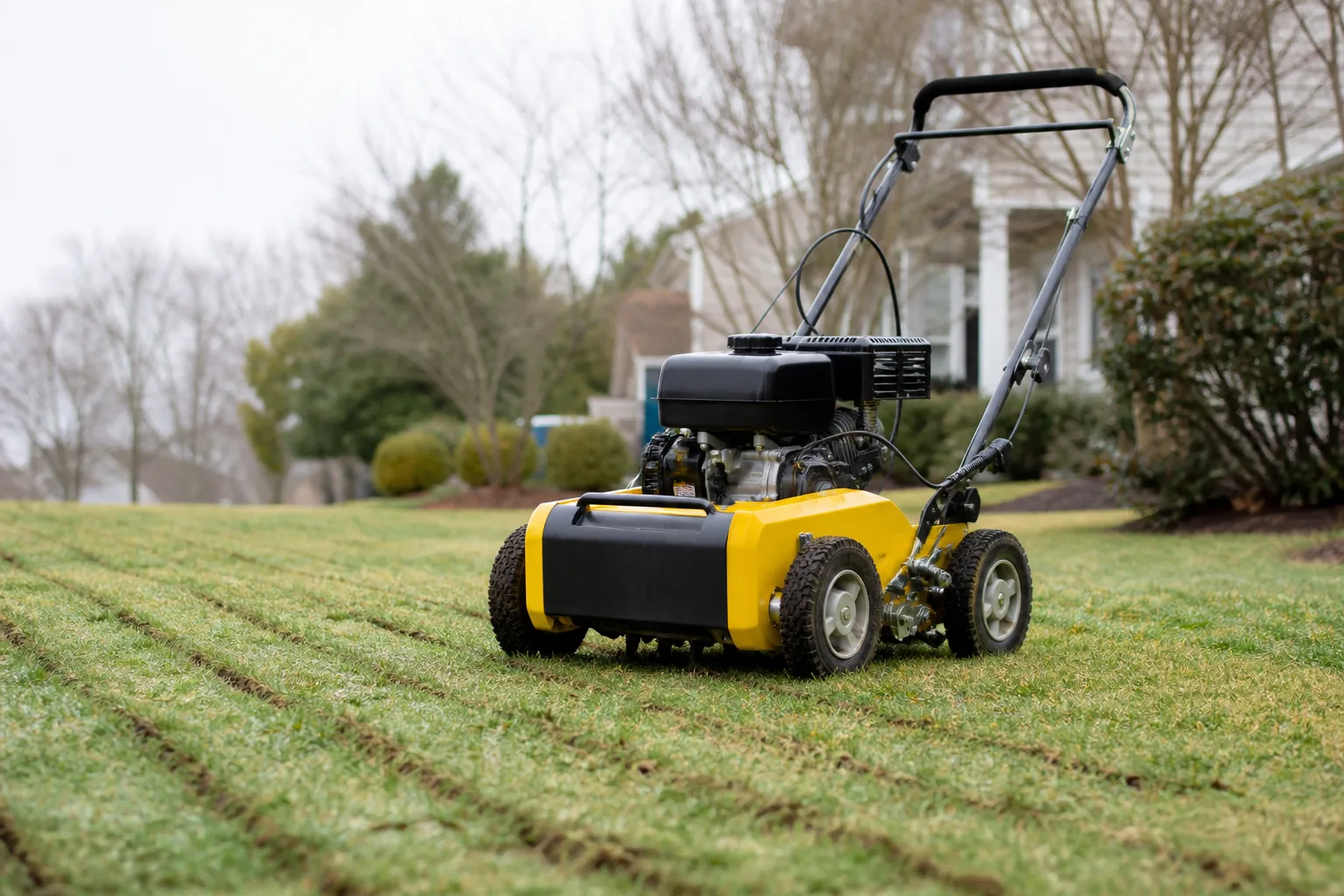
Most rental units combine a front roller, spinning blade assembly, and rear roller or drag that firms the groove. Brands such as Ryan, Bluebird, and Classen are common at equipment rental counters. You set the blade depth shallow on established turf—usually around ¼ inch—and calibrate the seed drop rate to your grass type and label recommendations.
Pass pattern matters. Pros often make two passes at half the seed rate, with the second pass perpendicular to the first, to avoid striped thin areas. Overlap slightly on each pass like mowing. The machine is heavy and loud; plan on a long day for anything beyond a few thousand square feet, and flag sprinkler heads before you start.
Fall is still the gold standard, but spring can work
For Kentucky bluegrass, tall fescue, perennial ryegrass, and fine fescue blends, late summer to early fall remains the best establishment window in most northern and transition-zone yards. Penn State Extension explains that fall seedings face less weed competition and give new plants two cool growing seasons—fall and spring—before their first serious summer heat stress. Spring soils can stay too wet for ideal seedbed prep, and crabgrass pressure is higher.
Spring slit-seeding is the backup plan when fall is off the table. You are racing summer: cool-season seedlings need enough mild weeks to root before air temperatures stay hot. Our guide on whether fall overseeding is worth the money walks through why fall usually returns more seed for less effort—but spring is valid when timing and prep are disciplined.
The early-spring deadline before summer heat
Think in weeks, not vibes. Cool-season grass seed often needs 7 to 21 days to germinate depending on species (perennial ryegrass fastest, Kentucky bluegrass slowest), then another 2 to 3 weeks of growth before it can handle routine traffic and mowing stress. That is roughly 5 to 6 weeks from seeding to a modestly established seedling.
UMass Extension’s turf establishment guidance places ideal air temperatures for cool-season establishment around 60°F to 75°F, with growth slowing as temperatures rise or fall outside that band. Once daily highs hold near 75°F for extended stretches, cool-season turf shifts toward survival mode. Work backward from your typical mid-June heat: in USDA zone 5, that often means finishing slit-seeding by late April to very early May. In zone 6, you may stretch into mid-May if spring stays cool. Past that cutoff, put the rental deposit toward weed control and plan a late-summer or early-fall renovation instead.
Soil temperature, not the calendar, starts the clock
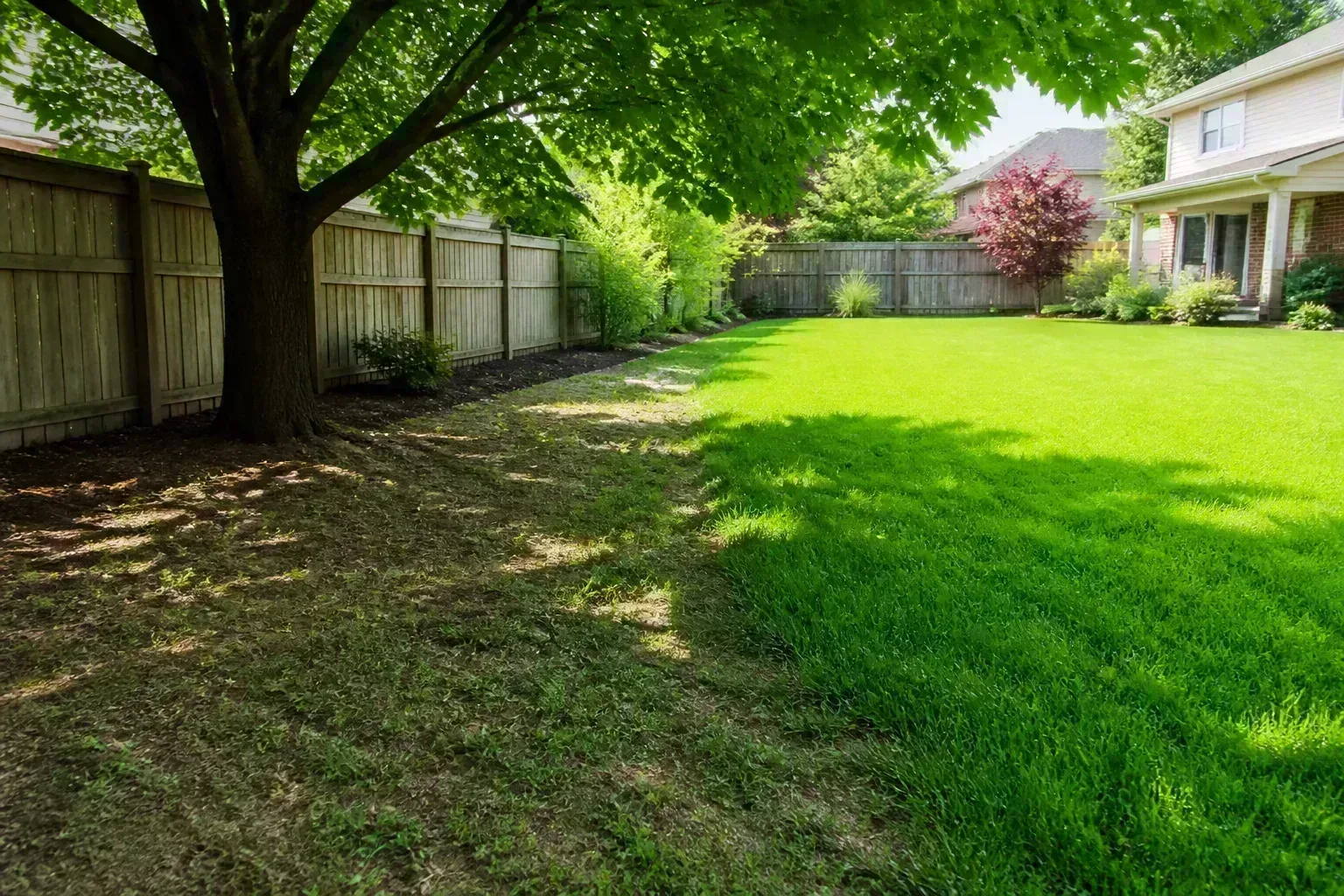
“Early spring” on a calendar means different things in Minneapolis and Richmond. Soil temperature at seeding depth—about 1 to 2 inches—is the signal that matters. For cool-season grasses, aim for 55°F to 65°F before you slit-seed. Below that range, germination crawls and seedling diseases such as pythium become more likely on wet, cold soil. Above it, you gain speed—but only if you still have runway before summer.
Buy an inexpensive soil thermometer and check in the morning before sun heats the surface. Shady north-side lawns lag sunny strips along the driveway; seed the warmest zones first if you are split on timing. Air frost after germination can damage tender shoots, so wait until hard freezes are unlikely in your area, not just until the first 60°F afternoon.
If soil is still cold but your calendar is screaming “seed now,” you are better off fixing weeds with post-emergent spot treatments and waiting two weeks than wasting premium seed in mud that will not warm for another month.
Why slit-seeding thickens struggling cool-season turf
The benefits boil down to contact, placement, and partial cover—three problems broadcast overseeding rarely solves on its own.
Germination, even coverage, and bird protection
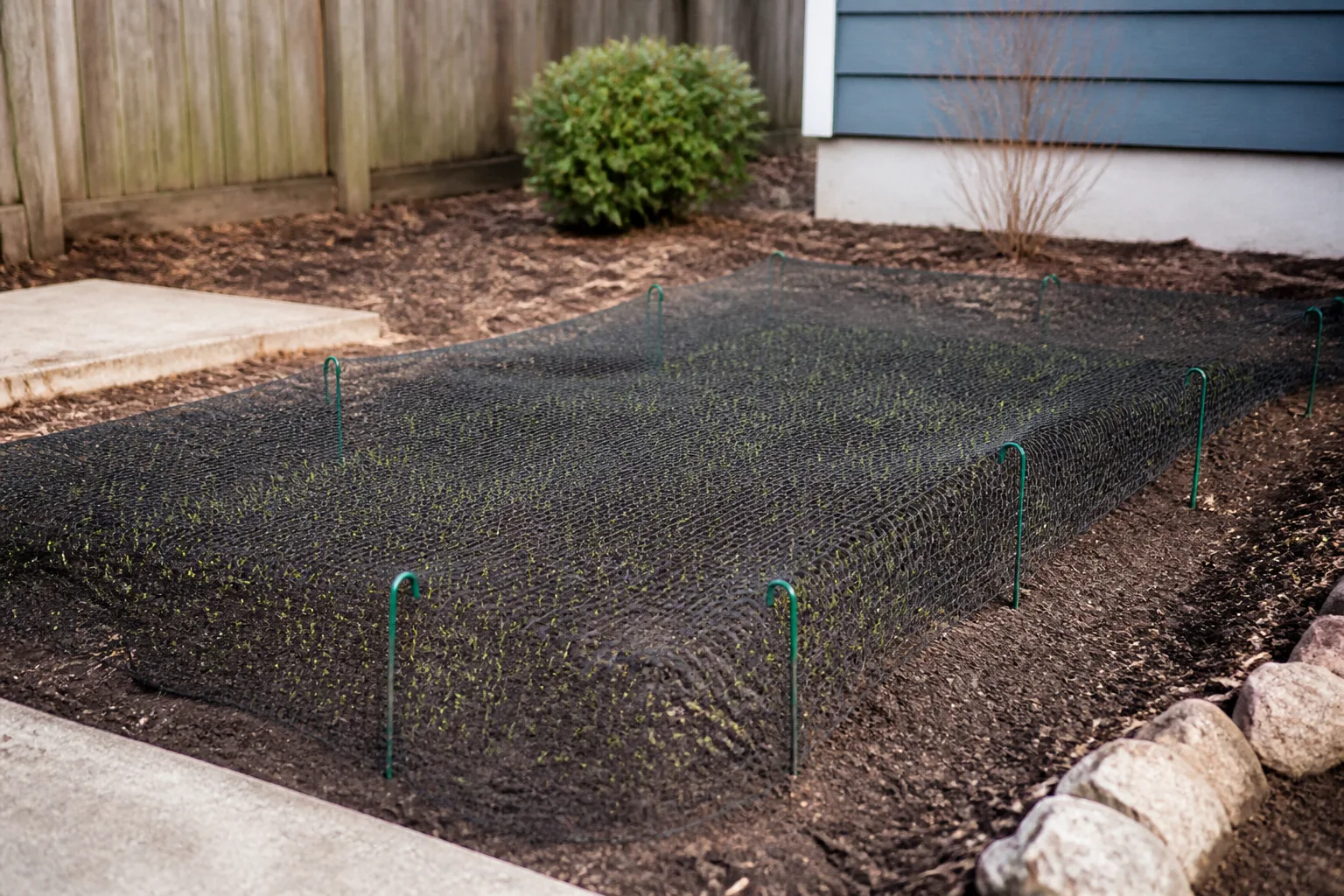
Seed that lands in a slit meets mineral soil and moisture at depth, which dramatically improves germination compared with seed sitting on thatch. Rental guides and turf educators often cite roughly 30% to 40% establishment from broadcast overseeding on unprepared turf versus 80% or higher from slit-seeding when moisture is maintained—your exact numbers vary with species, prep, and weather, but the direction is consistent.
The machine meters seed mechanically, so distribution is more uniform than hand or spreader work on windy days. After watering, soil kicked up by the blades partially covers seed in the groove, which reduces visibility to birds. If starlings and sparrows are a chronic problem in your yard, see our tips on keeping birds from eating grass seed—slit-seeding helps, but light straw or erosion matting on slopes still matters.
Light thatch disruption without a separate pass
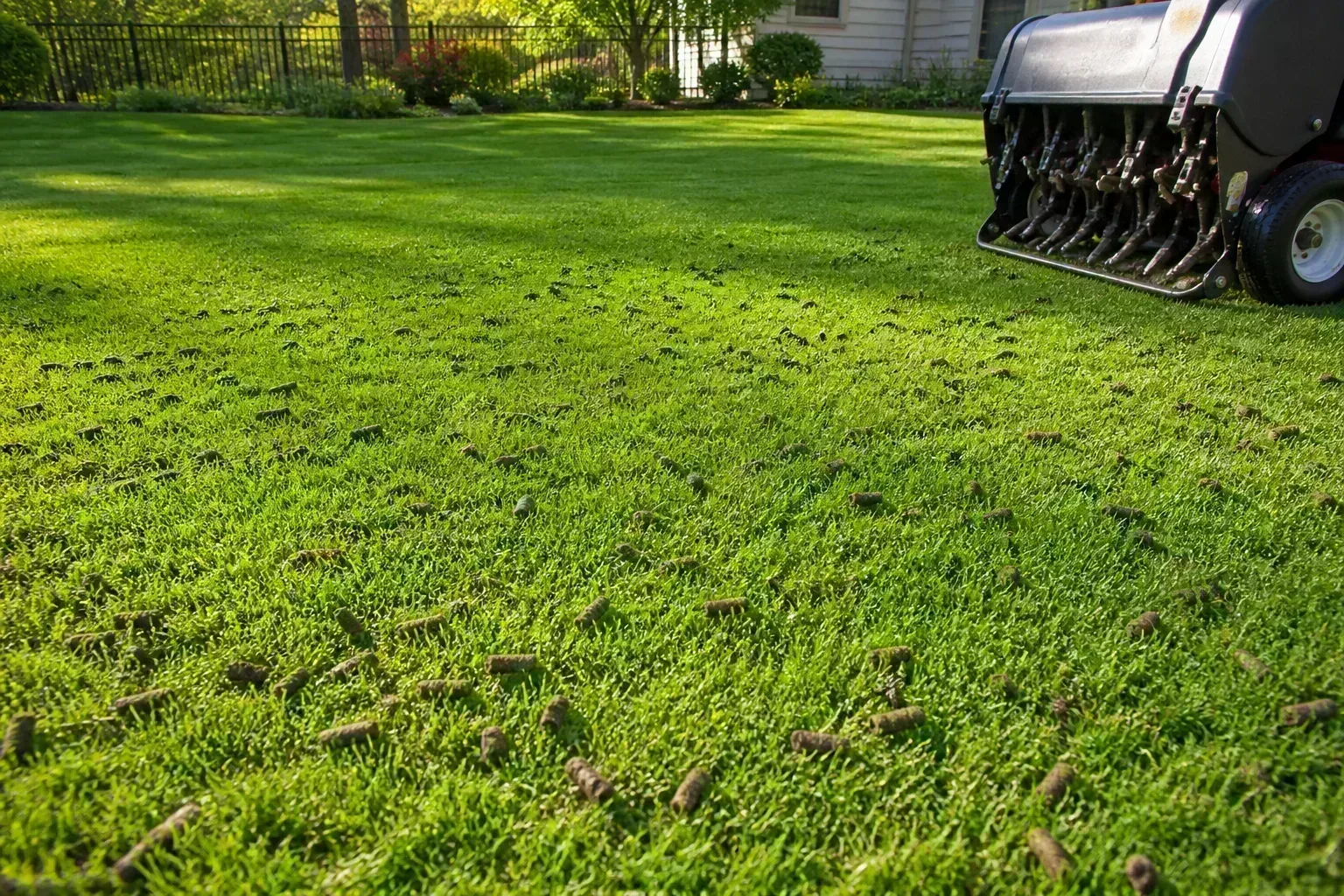
Slit-seeder blades slice through shallow thatch on their way to soil. That is not a substitute for deep dethatching when the layer exceeds about an inch, but on moderately thatchy lawns it opens pathways for water and air while you seed. If thatch is thick enough that a finger disappears into brown spongy material, dethatch or core-aerate first, then slit-seed within a day or two so open soil does not crust over. Our signs you need to aerate guide helps decide whether coring should precede seeding on compacted sites.
Is your lawn a slit-seeding candidate?
Slit-seeding is intentionally rough on existing turf. Blades cut crowns, tear runners, and leave the yard looking worked-over for a few weeks. Reserve it for lawns that need that level of intervention.
Good candidates include large thin areas, widespread bare patches, post-grub recovery zones, and older stands where desirable grass is still present but density has collapsed. If more than about 30% of the yard is bare soil or weeds, you may be past slit-seeding and into full renovation—sod, kill-and-reseed, or professional grading.
Poor candidates include healthy, dense lawns that only need a light top-up. Slit-seeding those yards damages what is already working. Likewise, skip slit-seeding on warm-season lawns in early spring; bermuda, zoysia, and centipede establish on a summer clock, not a March one. Match species to season before you rent.
When standard overseeding is enough
If turf is mostly green with scattered thin spots under an inch wide, core aeration plus broadcast seed may be all you need—especially when paired with fall timing. Read when to overseed bare patches for species-specific windows. Slit-seeding shines when broadcast seed bounces off thatch year after year and you are tired of feeding the birds.
Pre-emergent herbicides and spring seeding conflicts
Spring slit-seeding collides with crabgrass pre-emergent season in much of the country. Standard pre-emergents such as prodiamine and dithiopyr prevent weed seeds from establishing—and they stop turfgrass seed the same way. If you already applied a spring pre-emergent, assume slit-seeding will fail unless the product label explicitly allows seeding and you are inside that narrow exception window.
Your realistic options in a seeding spring are: skip conventional pre-emergent and plan aggressive post-emergent crabgrass control later, or use a labeled seed-safe product such as mesotrione (sold as Tenacity) or siduron-containing starter fertilizers according to label directions—not folklore rates from forums. Misapplied herbicide is one of the fastest ways to kill a renovation. Our pre-emergent timing guide explains how crabgrass preventers interact with establishment.
If crabgrass was severe last year and you are unwilling to skip pre-emergent, do not slit-seed this spring. Control weeds, then slit-seed in late summer when soil cools and pre-emergent from spring has broken down per label intervals.
Step-by-step early-spring slit-seeding for cool-season grass
Treat this as a short project with a two-week babysitting period afterward. Block time for prep day, seeding day, and daily irrigation checks.
Prep, mowing, and seed selection
One week before: Stop broadleaf weed killers unless the label allows seeding soon; many require a month or more before grass seed. Lower mowing height gradually to about 1½ to 2 inches without scalping to bare soil on the final cut. Rake out sticks, acorns, and thick debris. Mark irrigation heads, valve boxes, and shallow wires.
Seed choice: Match your existing lawn or improve weak areas deliberately. Tall fescue handles heat better than pure Kentucky bluegrass in transition zones; perennial ryegrass germinates fast for quick cover but may not persist alone in harsh winters. Buy named cultivars with high germination percentages and low weed-seed content—our best grass seed roundup covers label reading. Typical slit-seeding rates run 4 to 8 pounds per 1,000 square feet for renovation, following the bag and your species mix; more seed is not better if seedlings crowd each other out.
Soil test: If the lawn has chronically struggled, test pH and phosphorus before seeding. Cool-season turf prefers roughly pH 6.0 to 7.0. Lime or starter fertilizer adjustments belong before the machine pass, not after seedlings emerge.
Running the machine and watering through establishment
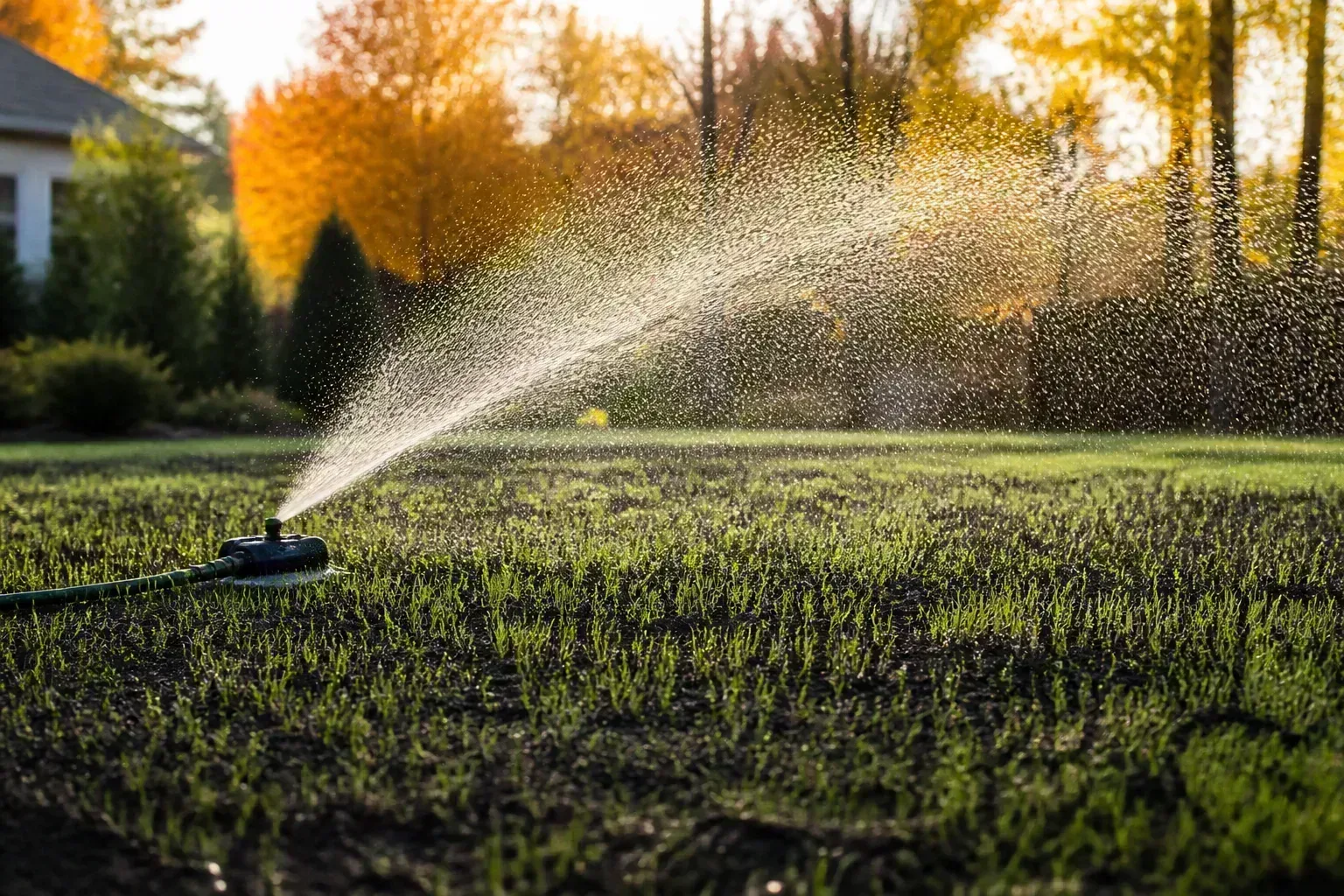
Rent the slit-seeder only when soil temperature and the summer cutoff both look favorable. Fill the hopper, set depth shallow, and test calibration on a driveway strip if the rental shop allows. Walk at a steady pace—too fast thins seed drop; too slow dumps excess.
Make two passes at half rate, second pass perpendicular to the first. Water immediately with light, frequent irrigation: enough to keep the upper soil moist, not flooded. New grass seed needs consistent moisture through germination—often 2 to 3 short cycles daily until blades are up, then taper slowly. Spring warmth plus moisture also invites fungus; watch for circular dead patches in young grass and avoid heavy nitrogen until mowing begins.
Keep foot traffic, pets, and mower wheels off the lawn until new grass reaches about 3 inches and you have mowed two to three times with a sharp blade. A starter fertilizer with modest nitrogen supports early growth; follow label rates rather than doubling “for luck.”
If spring rains are heavy, reduce irrigation to prevent puddling that floats seed out of slits. On slopes, a thin layer of weed-free straw or an erosion blanket prevents washouts—especially important because slit-seeding is often chosen precisely on thin, vulnerable turf.
Mistakes that waste a slit-seeding pass
Seeding too early into cold, wet soil produces weak stands and disease. Wait for the soil thermometer, not the first crocus.
Missing the summer cutoff leaves seedlings trying to root during heat waves they cannot survive. When in doubt, wait for fall.
Applying the wrong herbicide before or after seeding kills the crop you just paid to plant. Read labels; do not mix products from different seasons without checking seeding intervals.
Skipping irrigation for even one dry afternoon on bare spring days can erase germination on exposed slopes. Slit-seeding improves contact—it does not eliminate water need.
Using slit-seeding on a lawn that only needed aeration tears healthy crowns for no gain. Aerate and broadcast instead when density is the only issue.
Ignoring the underlying cause—grubs, dog urine, shade, or grade problems—means the new grass thins in the same spots next year. Fix drainage, adjust irrigation, or swap to shade-tolerant grasses before you seed again.
Conclusion
Early-spring slit-seeding can thicken a struggling cool-season lawn when fall renovation is not an option, but only if you treat soil temperature and summer timing as hard limits—not suggestions. Slit-seeding earns its rental fee on patchy, thin turf by placing seed in soil, not on thatch, and by giving seedlings a head start before weeds and birds take their cut. It is the wrong tool for healthy lawns and the wrong season for warm-season yards.
If your soil is in the 55°F to 65°F window and you still have 5 to 6 weeks of mild weather before sustained heat, prep low, calibrate the machine, water faithfully, and keep traffic off until the new grass can mow. If either condition fails, spend spring on weed control and soil testing, then slit-seed when late-summer nights cool again. That patience usually beats a rushed March pass that cooks off in July—and it is still faster than hoping broadcast seed on bare thatch will finally take.



