Why People Put Pennies in Plants—and Why It Fails
Putting pennies in plant soil won't feed or protect your houseplants. Learn why the copper theory fails—and what observation, fertilizer, and real fungicides do instead.
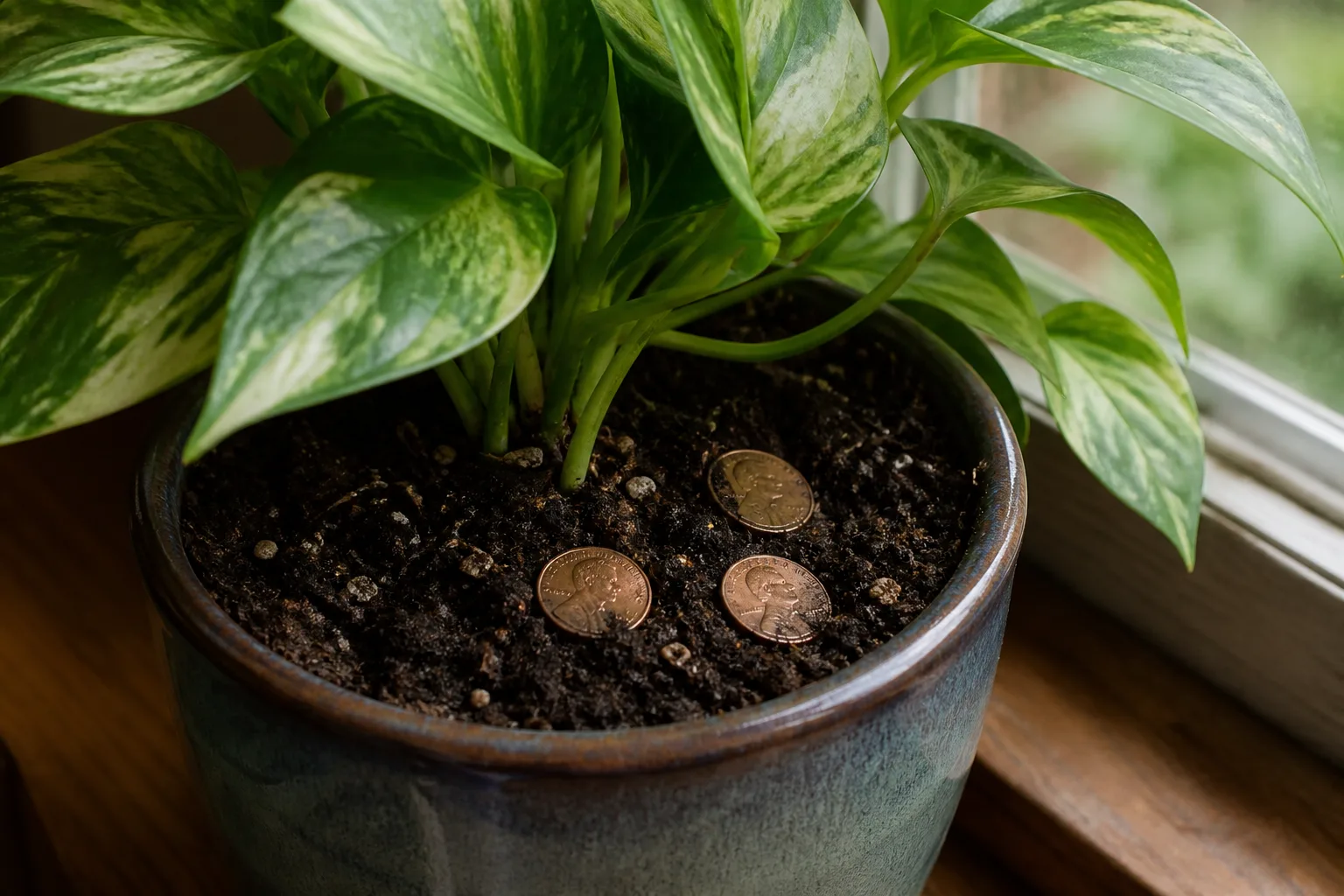
If you have seen pennies in plant soil on social feeds lately, you are not imagining a new obsession. Gardeners bury coins, press them into the top of the mix, or tuck them beside roots because someone promised copper would green up leaves, stop fungus, or keep pests away. The idea sounds efficient: free metal, slow release, no bottle to buy.
The trouble is that houseplants do not read TikTok. A coin in a pot is not a measured micronutrient dose, and it is not a fungicide. Extension educators who work with the public daily generally do not recommend the penny hack because the chemistry does not line up with how plants absorb copper or how copper products control disease. When a plant looks weak, your time is better spent on observation, drainage, light, and targeted care than on spare change.
The short answer: spare change is not plant food or medicine
Putting pennies in plants does not provide meaningful nutrition or reliable disease protection. Copper is a real plant micronutrient, but plants need tiny, plant-available amounts in forms they can take up through roots—not a corroding disk of mixed metals sitting in damp potting mix.
Modern U.S. pennies are copper-plated zinc. The U.S. Mint lists circulating cents as 2.5% copper with the balance zinc (U.S. Mint). Even older, copper-heavy cents corrode slowly in a small indoor pot. Any copper that dissolves may not become the ionic, plant-available form roots can use. Meanwhile, commercial copper fungicides are engineered as sprays that coat leaf and stem tissue at labeled rates—not as soil amendments.
A few coins probably will not poison a typical houseplant, but they also will not replace a balanced fertilizer, correct watering, or a labeled treatment when disease is present. If your plant is yellowing, molding on the soil surface, or dropping leaves, start with the basics. The penny can stay in your wallet.
Where the penny-in-the-pot trend came from
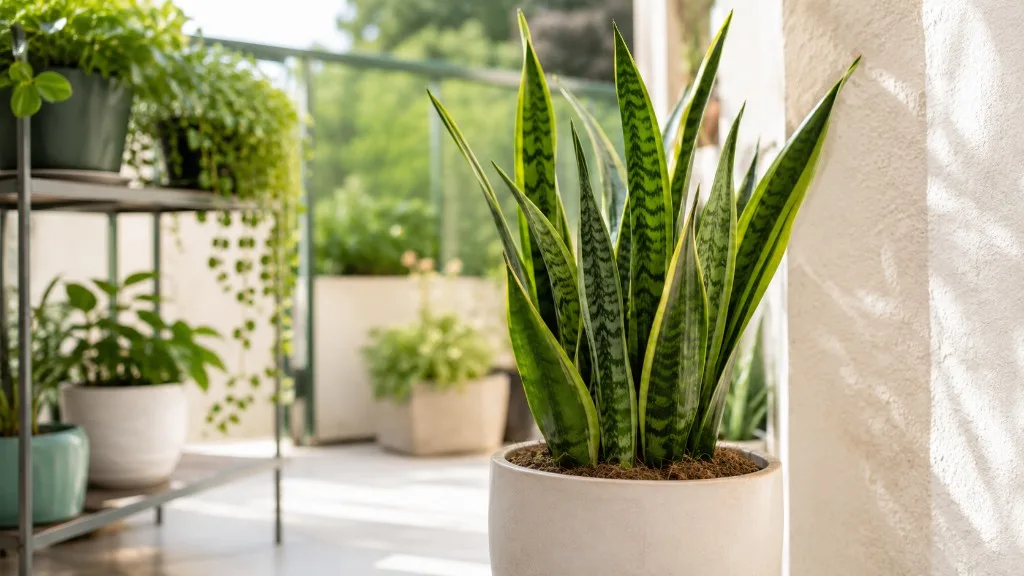
Coin-in-soil advice is old folklore dressed up for short-form video. The story always rhymes: copper helped crops in fields, copper kills microbes in labs, therefore a penny must help your pothos. Snake plant penny tricks spread the same template because Sansevieria is photogenic, forgiving, and already popular in beginner collections.
What viral posts claim pennies can do
The claims cluster into three buckets, and each one oversimplifies plant science.
Nutrition. Posts suggest copper leaches into the mix like a slow-release vitamin, fixing yellow leaves and weak growth. That assumes the coin supplies enough copper, in the right chemical form, at the right time—none of which a random cent guarantees.
Fungus and mold. Another claim says copper prevents mold on soil or stops fungal disease on leaves. Surface mold on indoor potting mix is common and often harmless; leaf and root diseases are different problems that need different responses. A buried coin does not create the contact barrier extension guides describe for copper sprays.
Pests. Some videos imply metal deters insects or slugs. Indoor pest control depends on identifying the pest, isolating the plant, and using mechanical removal or label-approved products—not on zinc disks near roots.
The penny hack persists because it is cheap, fast, and sounds scientific. It also lets a worried plant owner do something immediately. The better move is to do the right something.
Why copper matters to plants—in theory
Copper is not a gimmick nutrient. It is one of seven micronutrients field crops routinely need, alongside zinc, manganese, iron, boron, molybdenum, and chlorine. Purdue Extension’s micronutrient guide notes that crops use these elements in very small quantities, and that a deficiency can waste the value of water and fertilizer already applied to the crop (Purdue Extension AY-239).
What copper does inside a plant
Inside plant tissues, copper supports enzymes involved in photosynthesis and lignin formation. It helps build strong cell walls and supports reproductive growth in many species. That is why copper deficiency in agriculture can show up as stunted growth, distorted young leaves, or increased susceptibility to disease—symptoms that overlap with many other stresses.
The key word is available. Roots absorb specific chemical forms dissolved in soil water, not every metal object they touch.
When real copper deficiency actually appears
In farm fields, copper deficiency is diagnosed with soil tests, plant tissue analysis, and knowledge of local soils—not by guessing from a yellow leaf. Purdue Extension notes copper deficiencies in Midwest field crops are most likely on acid organic soils and certain black sandy soils, and correction in those systems uses measured broadcast or foliar applications of copper sulfate at pounds-per-acre rates—not pocket change (Purdue Extension AY-239).
Houseplants in commercial potting mix rarely mirror those field conditions. Most bagged indoor mixes are not acid organic mucks. When a pothos yellows on a windowsill, copper deficiency is far down the list after improper watering, low light, root rot, sudden temperature change, or simple aging of lower leaves. Jumping to “add copper” via a coin skips the diagnosis step extension services emphasize.
Why a penny in soil fails the chemistry test
The penny theory treats soil like a soup that passively absorbs whatever metal you drop in. Real root zones are dynamic: pH, organic matter, moisture, oxygen, and competing ions all change what dissolves and what roots can take up.
Modern pennies are mostly zinc with a thin copper coat
Since the early 1980s, U.S. circulating cents have been copper-plated zinc. The Mint’s specifications table lists 2.5% Cu, balance Zn (U.S. Mint). Historical cents were copper-rich, but even those are still a alloy object, not a fertilizer pellet.
Pre-1982 pennies contain far more copper than today’s cents, which is why some hack videos specify “old pennies only.” That admission already undermines the universal trick: if only one coin type might matter, the generic “add any penny” advice was never precise.
Zinc is also a plant micronutrient, but excess zinc can interfere with uptake of other metals, including iron and copper. You are not adding a single nutrient—you are adding a mixed metal slug whose release you cannot meter.
Plant-available copper is not the same as metal sitting in mix
Extension educators who answer public plant questions stress that not every form of copper in soil is plant-available. Copper can sit in the mix as compounds roots cannot use efficiently. If a penny releases material that roots ignore, it is just debris.
Soil pH and organic matter strongly control micronutrient availability. A coin cannot correct high pH, compacted mix, or a pot that never dries. It also cannot fix nitrogen or iron problems that produce similar yellowing.
Leaching is too slow and too random indoors
Corrosion needs moisture, oxygen, and time. A penny pressed into the top of a dry succulent pot may barely change. A coin buried in a constantly wet fern pot may corrode faster—but still unpredictably.
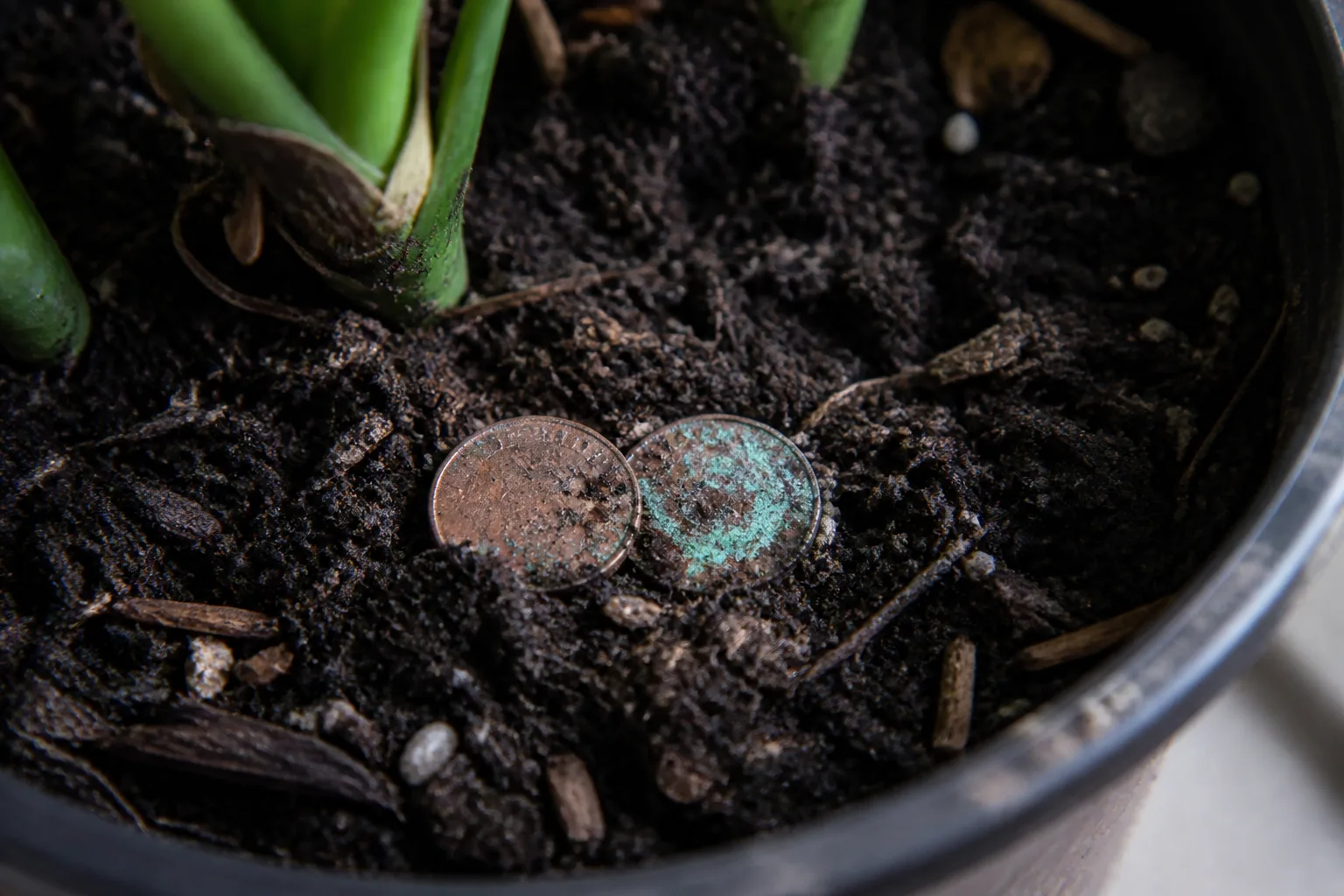
Journalists who ran side-by-side pot tests reported that penny pots looked the same as fed controls months later, with greenish corroded coins as the only obvious difference (The Guardian). That matches what soil scientists expect indoors: the limiting factor is almost always light, water, or roots—not a missing cent.
Pennies are not a fungicide or pest shield
This is where the hack collides hardest with how copper products actually work in horticulture.
Label copper sprays work by contact on plant tissue
Copper fungicides use copper ions to disrupt enzymes in bacteria and fungi, but application method matters. Epic Gardening’s copper fungicide guide explains that products are meant to coat stems and leaves so copper ions contact pathogens, often before infection spreads (Epic Gardening). Cornell’s vegetable disease notes describe copper fungicides as tools for organic disease management when used at formulated concentrations with full tissue coverage (Cornell Vegetables).
A coin under the soil line does not coat leaf tissue. It does not create the barrier between plant surface and airborne spores that contact fungicides provide. Full coverage is essential for success with sprays; a single buried disk provides none of that geometry.
Copper fungicides also carry real use limits. Overapplication can accumulate in soil, damage tender new growth, or harm beneficial insects if sprayed on flowers (Epic Gardening). Those risks are why labels specify rates, timing, and reapplication intervals—precision you cannot get from corrosion.
White mold on potting mix is usually a different problem
Fluffy white growth on the surface of indoor potting mix is often saprophytic fungus eating organic matter in damp conditions. It is startling but frequently harmless to the plant. It signals moisture and organic debris on the surface—not a copper shortage.
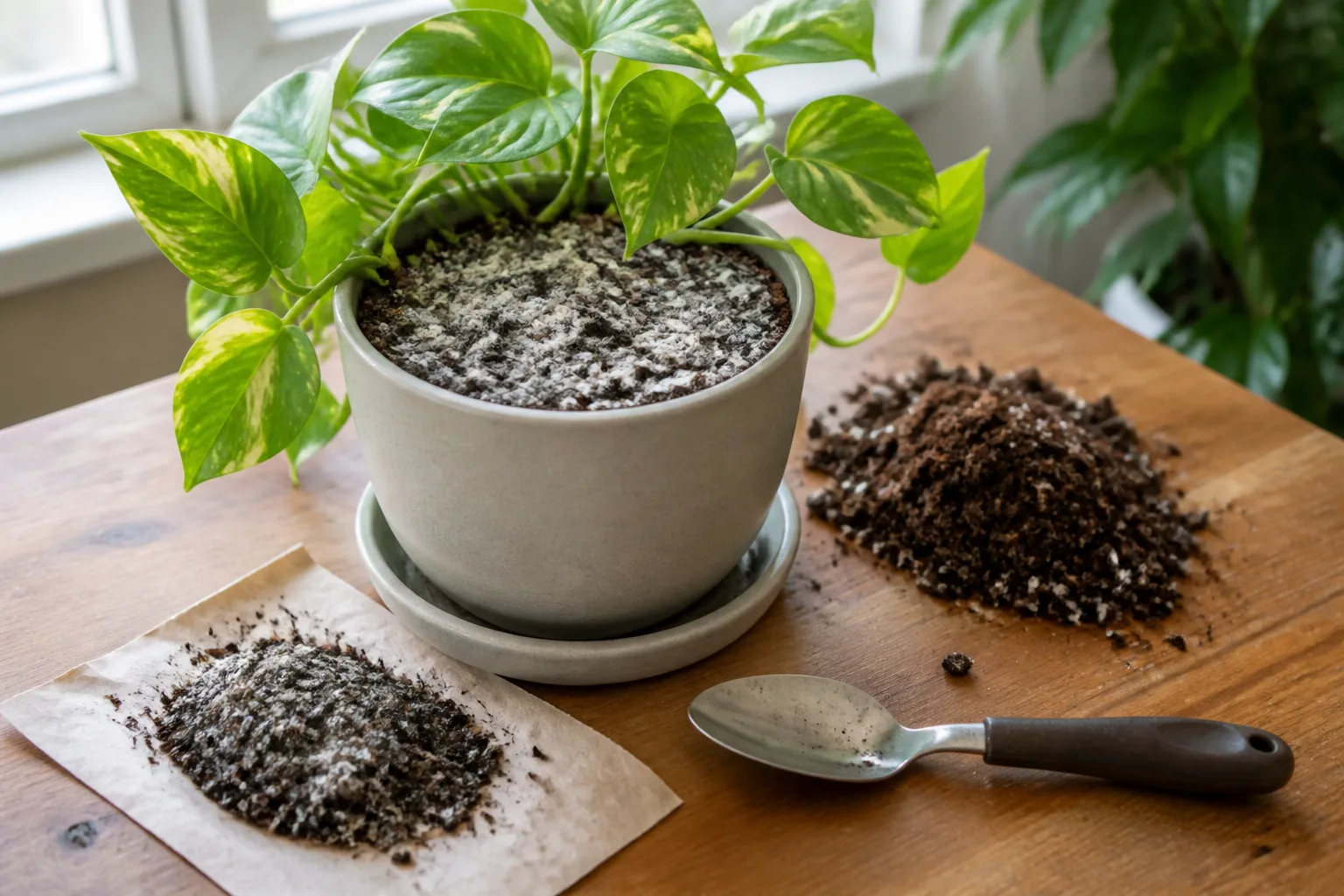
If you see mold on mix, scrape the top layer, improve airflow, let the surface dry slightly between waterings, and review whether water sits in the saucer. For a deeper walkthrough, see our guide on mold on houseplant soil. Adding a penny does not dry the mix or remove the food source that mold uses.
Leaf spots, stem cankers, black mushy roots, and widespread yellowing with wet soil are different alarms. Those patterns need diagnosis—sometimes culture or extension help—not folklore metal.
Can pennies harm your plants or potting mix?
A couple of cents in a six-inch pot is unlikely to catastrophically poison a houseplant. Copper toxicity is real at high concentrations: it can damage roots, stunt growth, and persist in soil longer than many other inputs (Epic Gardening). Field correction rates for copper deficiency use pounds per acre of formulated copper sulfate (Purdue Extension AY-239)—orders of magnitude more metal than a few coins, applied deliberately.
The more practical risks of the penny hack are indirect:
- False confidence. You delay fixing watering or light because you “already added copper.”
- Salt and metal debris. Corroded flakes in mix are not nutrients; they can clog pore space near roots in extreme cases if many coins are added.
- Zinc interactions. High zinc release from modern cents could theoretically affect micronutrient balance if someone buried a handful of pennies in a small pot—another reason not to scale a meme.
If you already dropped one penny in, you do not need to emergency-repot. Remove extra coins if you added several, then focus on real care metrics.
What to do instead when a houseplant looks off
Proven plant care is less cinematic than a coin trick, but it works because it matches how plants actually fail indoors.
Start with observation before you add anything
Extension outreach programs consistently recommend learning what your plant looks like when healthy, then checking frequently for early distress. The sooner you identify the pattern, the smaller the intervention.
Run a quick triage:
- Soil moisture — Is the mix soggy for days, or dust-dry several inches down?
- Light — Did the plant move windows, lose daylight in winter, or sit behind a sheer curtain that closed?
- Drainage — Are holes open, saucer water emptied, and roots circling a dense plug?
- Leaves and stems — Yellowing lower leaves only may be normal aging; widespread yellow with wet soil suggests roots.
- Pests — Webbing, sticky residue, or bumps on stems need isolation, not metal.
Yellow leaves have many causes. Our indoor plant yellow leaves guide walks through light, water, and nutrition patterns so you do not treat a drought-stressed plant like a copper-deficient field.
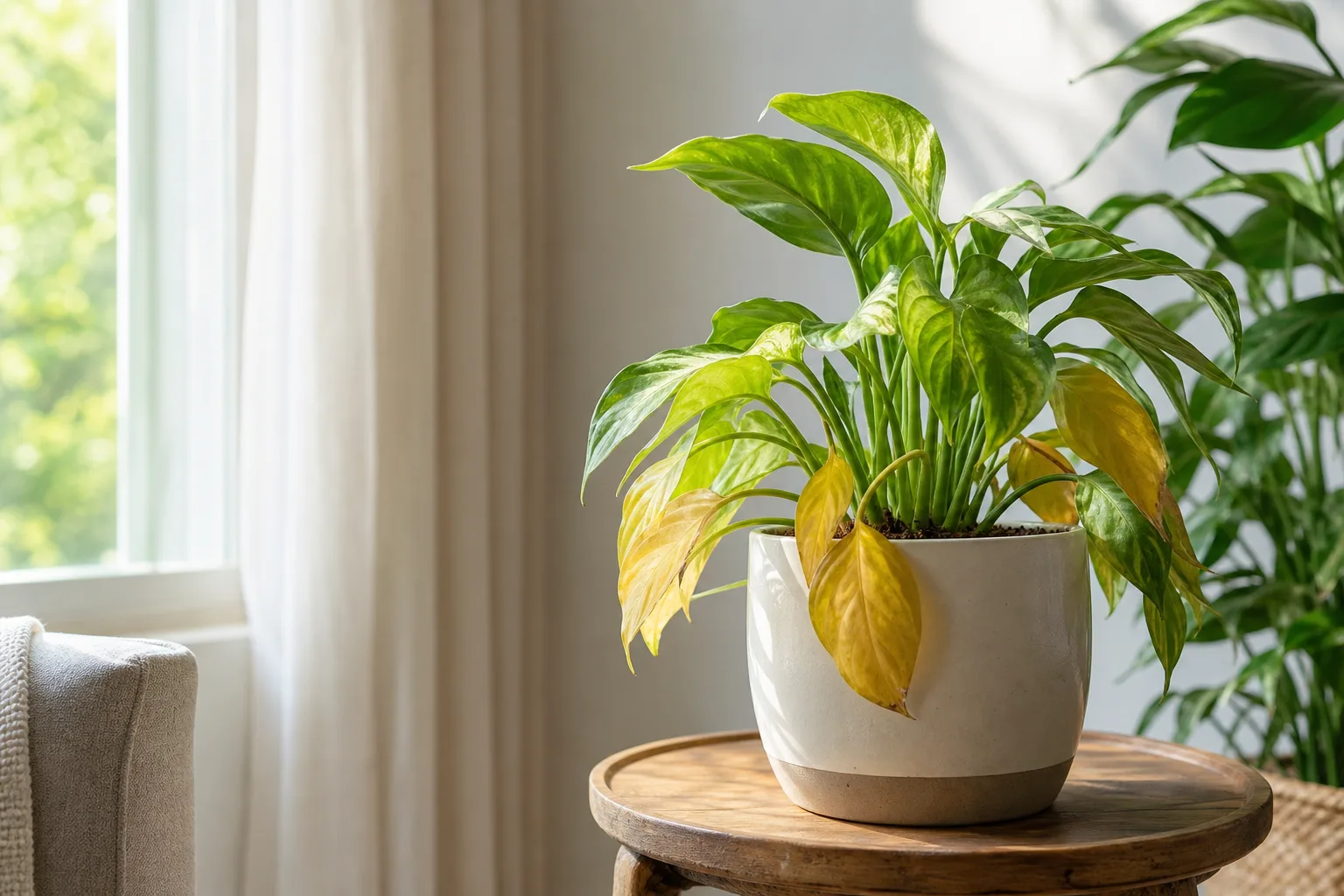
Feed with fertilizer when nutrients—not coins—are the gap
If the plant has grown in the same pot for years without fertilizer, pale new growth during the active season can reflect depleted nutrients. A balanced houseplant fertilizer at label dilution supplies measured nitrogen, phosphorus, potassium, and micronutrients—including copper—in forms meant for container culture.
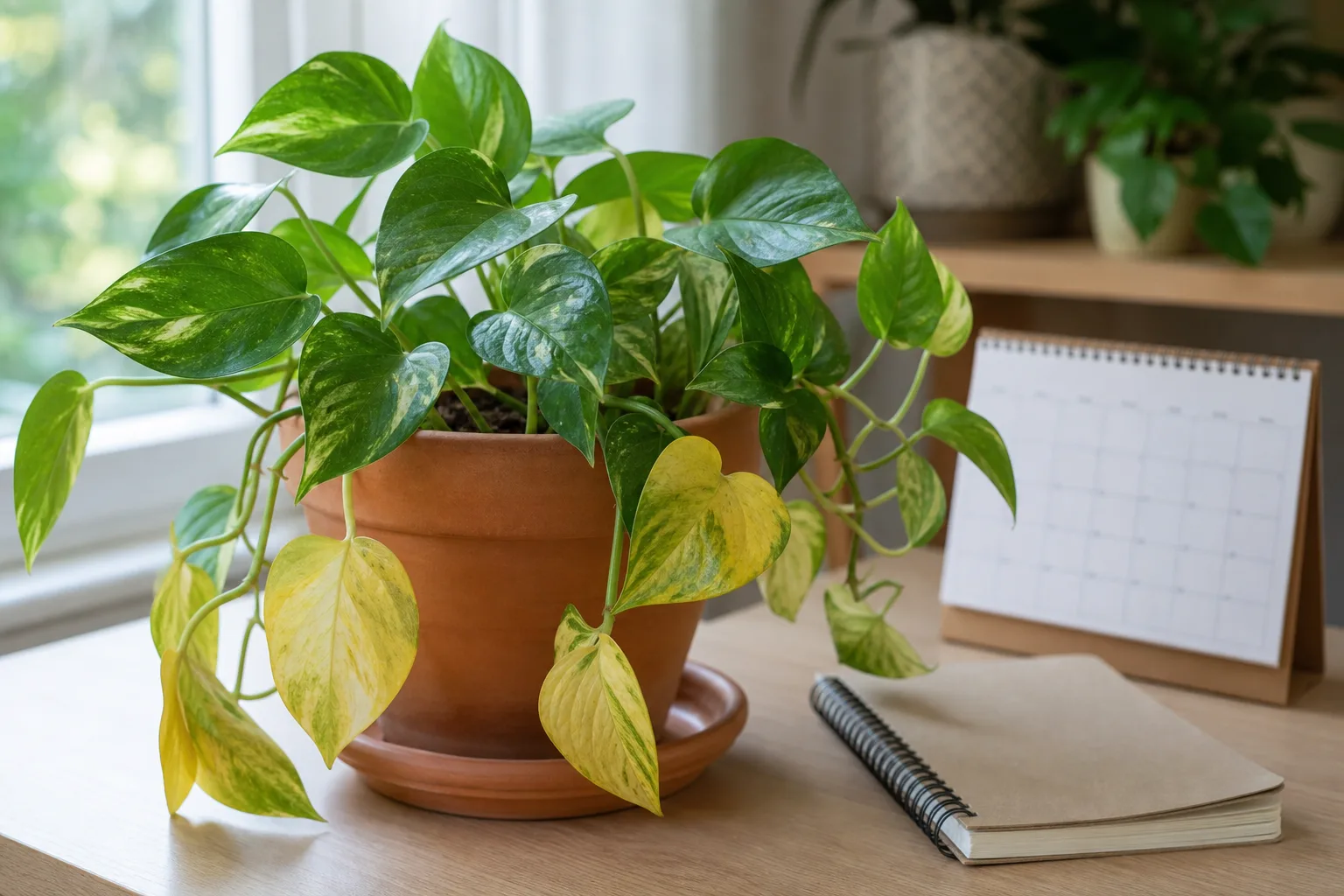
Follow the product label for dilution and frequency. Do not fertilize a plant sitting in soggy soil or immediately after repotting into fresh mix. Stressed roots cannot use extra salts. For a full indoor feeding framework, see fertilizing indoor plants.
Fertilizer is not magic either. It cannot fix low light or rot. It answers a specific question: “Is this plant starving for nutrients in a otherwise sound environment?”
Use copper fungicide only when the label matches the problem
If you have a labeled bacterial or fungal issue on leaves—powdery mildew on a susceptible outdoor succulent summering on the patio, for example—copper fungicide may be part of a management plan. Use a product registered for the plant and disease, mix at the label rate, spray in dry weather on mature tissue, avoid flowers when possible, and repeat only as the label allows (Epic Gardening).
That is fundamentally different from burying currency. Sprays are deliberate, measurable, and reversible. Soil coins are not.
For minor indoor mold on mix, physical removal and moisture adjustment beat any fungicide. For hydrogen peroxide dilutions sometimes suggested online, weigh benefits against root sensitivity; see hydrogen peroxide for plants before pouring pantry bottles into pots.
When you need help identifying an unfamiliar problem, a local cooperative extension office or Master Gardener volunteer line can guide photo submission and next steps—exactly the resource University of Connecticut’s Home & Garden Education Center and similar programs provide (UConn Home & Garden).
Penny hack vs proven care: a quick comparison
| Approach | What it actually does | Best use | Main limitation |
|---|---|---|---|
| Penny in potting mix | Slow, unmeasured metal corrosion | None recommended for houseplants | No reliable plant-available copper; no tissue coverage |
| Balanced fertilizer | Supplies known N-P-K + micronutrients | Pale growth in active season with sound roots/light | Won’t fix rot, pests, or darkness |
| Copper fungicide spray | Contact protection on stems/leaves | Label-listed diseases, preventative timing | Not a soil treatment; overuse harms soil and bees |
| Mold scrape + dry surface | Removes saprophytic growth; cuts moisture | Harmless white fuzz on mix | Not for root rot or leaf spot diseases |
| Observation + extension help | Correct diagnosis first | Any unclear decline | Takes patience vs instant hacks |
Use the row that matches the evidence, not the hack that is easiest to film.
Conclusion: fix the routine, not the folklore
People put pennies in plant soil because copper is real, plants do need trace amounts, and social media loves a one-step cure. The failure is not the existence of copper—it is the delivery system. A corroding zinc cent in a houseplant pot does not replicate extension-backed micronutrient programs or labeled fungicide sprays.
When your plant struggles, treat the penny trick as a distraction. Check water, light, drainage, and pests. Feed with fertilizer only when nutrients are the plausible gap. Handle mold on the soil surface with scraping and airflow. Reach for copper products only when a label lists your specific disease and application site.
Your houseplant’s health was never hidden in your change jar. It was in the daily routine you can actually control—and that is where lasting fixes live.