How Often to Water Roses for Healthy Growth and Blooms
Use a simple soil check to water roses at the right time. Get schedules for new, established, and container roses plus heat, rain, mulch, and drainage tips.
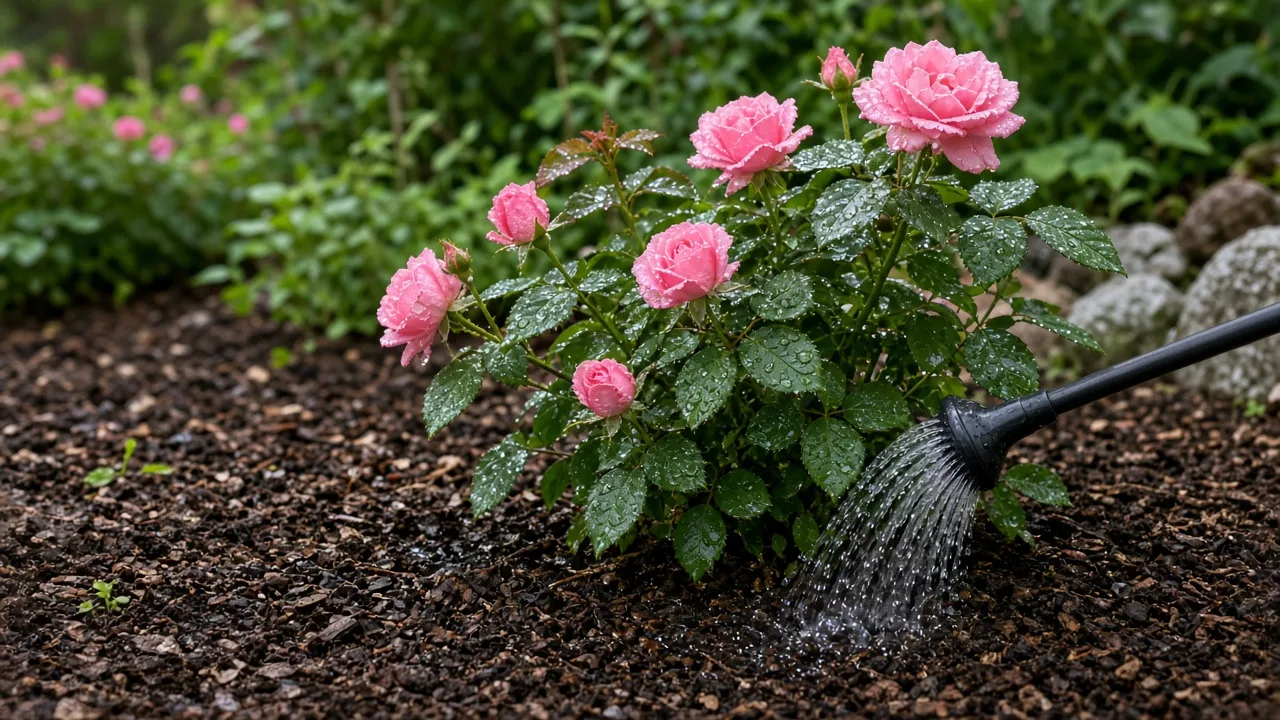
The best answer to “how often should you water roses?” is not a fixed number. For an established rose in the ground, a thorough soak about once a week during a hot, dry spell is a reasonable starting point; a new planting may need water every few days, while a pot may need checking every day. The deciding factor is whether the root zone is drying—not whether the calendar says Tuesday.
Roses want steady moisture and good air around their roots. They do not want a permanently wet bed, a quick splash that evaporates from the surface, or foliage that stays wet overnight. The routine below turns those competing needs into a simple system you can adjust for your plant, soil, weather, and container.
The short answer: water by soil moisture, not a calendar
Start with this rule: water when the soil is dry several inches below the surface, then water slowly enough to moisten the active root zone. For an established border rose, that often means one deep watering during a dry summer week, using roughly 5–10 liters (about 1.3–2.6 gallons) per plant as a starting range. The RHS guide to growing roses gives that range for established roses in borders during dry high-summer conditions, but it also emphasizes that new plants, sandy soil, and containers change the calculation.
That range is not a quota to pour onto every rose every seven days. If rain has already soaked the soil to root depth, skip the hose. If a rose is beside a hot wall, under an eave, in a small pot, or planted in very sandy soil, it may need water sooner. If the soil is clay-heavy and still cool and damp, adding more water can remove the oxygen roots need.
Think of a watering schedule as a starting hypothesis. Check the soil, apply water, and observe how long the root zone stays evenly moist. After two or three cycles, you will have a much more accurate routine for your own garden than any generic “water roses twice a week” instruction.
A practical watering schedule by rose situation
Use the table as a starting point, then let the soil check overrule it. The same rose can move from weekly watering in a mild, mulched bed to every two or three days during a heat wave, and a potted miniature rose can dry out between those two checks.
| Rose situation | Starting point in dry growing weather | What should change the schedule |
|---|---|---|
| Established rose in the ground | Deeply water about once a week when the soil is dry at depth | Heat, wind, sandy soil, exposed roots, and competition from trees may shorten the interval |
| Newly planted rose | Check every day; water every 1–3 days as needed | Water more often until roots move into surrounding soil; reduce only after the soil stays moist below the surface |
| Rose in a large pot | Check at least every day in warm weather; water when the upper inch is dry | Sun, wind, terracotta, a small root ball, and a dark pot speed drying |
| Miniature or patio rose | Check frequently because the root volume is small | A crowded pot or saucer that holds water can cause rot even when the surface looks dry |
| Standard tree rose | Check the root container or bed, not the elevated crown | Wind and the small planting area around the stem can increase drying; keep the grafted stem itself dry and stable |
Established roses in the ground
Once an in-ground rose has been established for a couple of growing seasons, its roots can draw from a wider volume of soil. The plant may still need supplemental water during a long dry spell, but it usually does not benefit from shallow daily watering. A deep soak followed by a partial dry-down encourages roots to explore downward and sideways rather than remaining in a thin, frequently watered surface layer.
The RHS describes established roses as deep-rooted and usually able to rely on natural soil moisture once settled. It recommends extra water during hot, dry spells or in dry, sandy soils, and says to water immediately if leaves or blooms begin to wilt. That is a useful distinction: established does not mean drought-proof, and a rose blooming heavily in full sun can use moisture faster than a dormant shrub in the same bed.
Newly planted roses
New roots are the reason a young rose needs a different routine. The root ball may be moist when planted, but the surrounding soil can be dry, compacted, or slow to accept water. For at least the first growing season—and often the first two summers—check new roses regularly and water the full root ball plus the soil immediately around it during dry weather. The RHS planting guidance specifically advises watering newly planted roses well during dry spells for at least two summers.
In hot weather, a newly planted rose may need a thorough drink every other day, but do not repeat that automatically if the soil is still damp. Water at the base, let the stream soak in, and inspect again before the next cycle. A small berm of soil around the planting area can keep water from running down a slope or across hard ground before it reaches the roots.
Bare-root roses deserve extra attention immediately after planting because their roots have been out of the ground. Keep them evenly moist while they establish, but do not leave the planting hole saturated. A rose planted into frozen, waterlogged, or extremely dry ground is already at a disadvantage; watering cannot compensate for poor timing or drainage.
Container, miniature, and standard tree roses
Container roses dry faster because their roots have access to a finite volume of mix exposed to warm air, sun, and wind. The RHS rose guide says potted roses may need daily watering in hot weather, with the important qualification that the compost should not be allowed to dry completely or remain waterlogged.
Miniatures and patio roses are especially sensitive to pot size. A plant that looks small above the soil may have a dense root ball filling a shallow container, leaving little reserve between watering events. Standard tree roses can also dry quickly when their container is small or their canopy catches wind. Measure moisture in the pot rather than assuming the top of the soil tells the whole story.
For a container, watering deeply means applying enough water that a little exits the drainage holes, then emptying any saucer or cachepot. If water runs straight down the side while the center of the mix stays dry, the root ball may have become hydrophobic; apply water in two or three smaller passes and check that the mix is absorbing it.
How to tell whether a rose actually needs water
Do not diagnose thirst from a dry-looking surface alone. Push a finger, chopstick, or narrow trowel 2–3 inches into the soil near—but not against—the root crown. If that layer is dry and crumbly in an in-ground bed, it is time to check deeper and likely water. If it is cool and cohesive, wait and check again tomorrow.
For an established rose, dig a small inspection hole or use a soil probe after watering. You want moisture down around 6 inches, where much of the active root zone sits, rather than a wet crust over dry soil. The RHS watering guidance recommends slow, thorough watering and checking that soil is moist at about 15 cm (6 in) for border plants.
Use the plant as a second signal, not the only one. Early-morning drooping leaves, faded foliage, limp flower stems, and buds that fail to open can indicate drought stress. A rose that wilts only in the hottest part of the afternoon but is firm again by morning may be responding to heat load rather than needing an extra daily soaking. Check the soil before acting.
Rain also needs interpretation. A short shower can wet leaves and the top half-inch of soil without reaching the roots. Insert your finger or trowel after the rain; if the soil is dry below the surface, the rose still needs a deep watering. Conversely, several days of heavy rain can leave clay soil saturated long after the foliage has dried.
How much water a rose needs at one time
Water quantity depends on the size of the plant, the wetted area, the soil texture, and the depth you are trying to reach. For an established rose in a normal border, 5–10 liters per watering is a practical starting range during a dry spell. A large climbing rose, a rose competing with tree roots, or a plant in free-draining soil may need more; a small rose in a compact bed may need less.
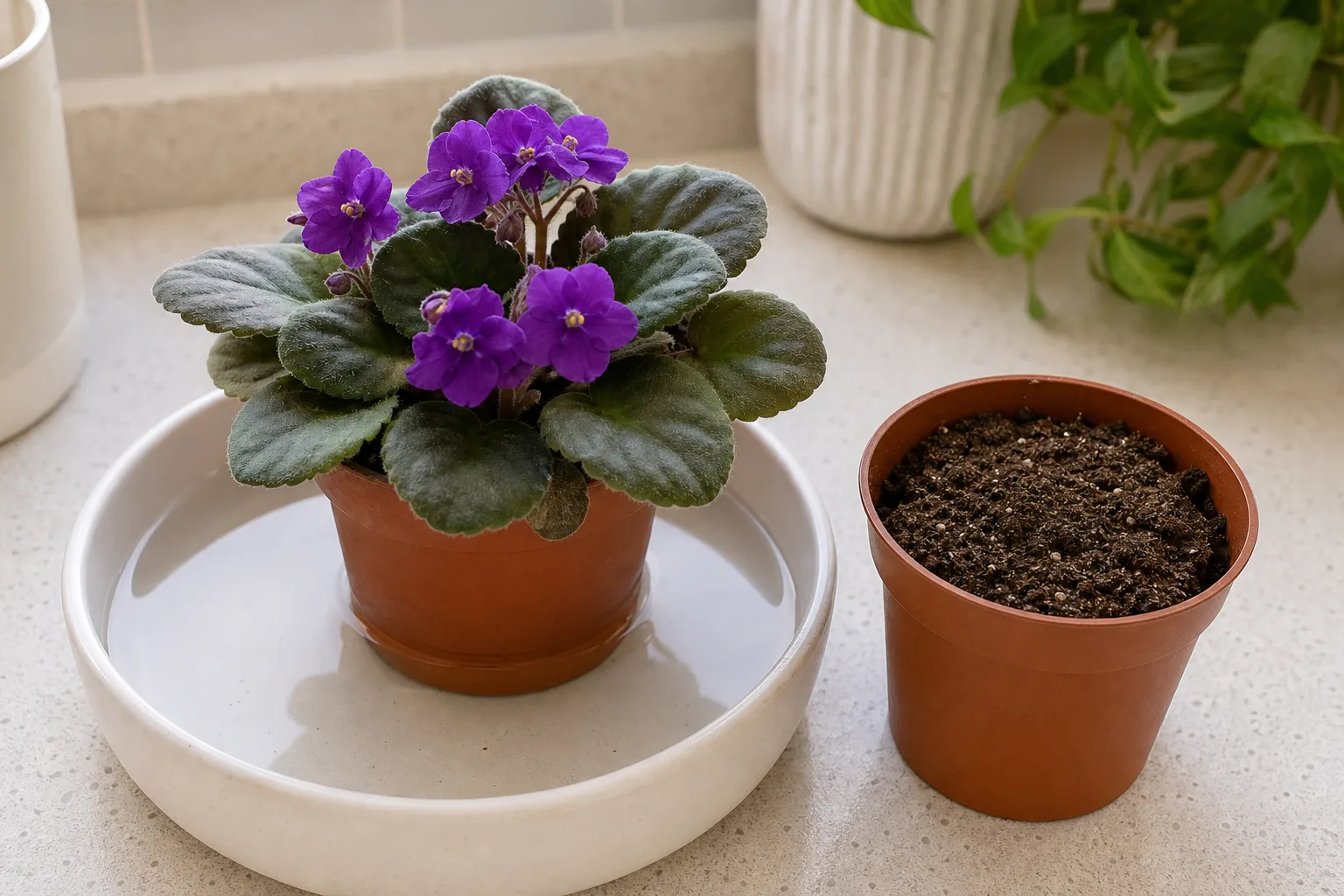
A better test than a universal gallon number is the depth test. Water slowly until the soil is moist to roughly 6 inches, then wait several minutes and check again. If water is pooling, running down a path, or disappearing beyond the root zone, pause and let it infiltrate. The University of Georgia Extension guide to ornamental plants explains that slow application at the base reduces runoff and that the amount needed depends on plant type, soil, existing moisture, and season.
You can calibrate a hose or drip system with a bucket. Time how long it takes to collect one liter from the same nozzle or emitter, then multiply by the desired volume. A timer tells you elapsed minutes, not how much water reached the rose; flow rate changes with pressure, hose length, and clogged emitters.
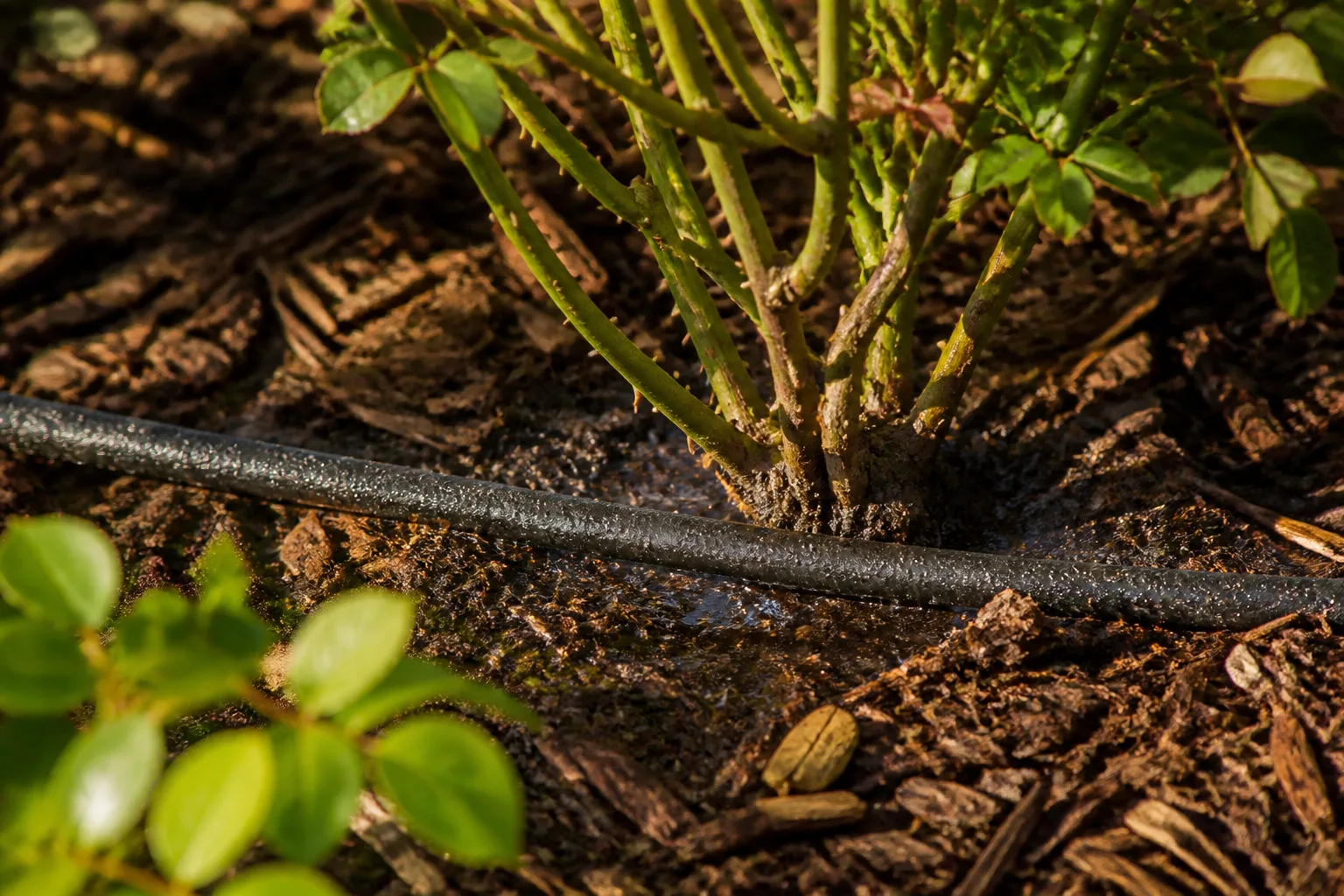
A drip line can keep water at the root zone and off the foliage; check the soil because one emitter’s run time is not a universal volume.
The slow-and-deep watering method
- Clear the target area. Move dense weeds and pull mulch back from the stem so water lands on soil around the root zone, not on the crown.
- Apply a gentle stream. Use a watering can, wand, drip line, or soaker hose. Avoid a high-pressure jet that washes soil away from exposed roots.
- Water in a wide ring. Start near the drip line of the canopy and work inward. Mature roses have roots beyond the stem, and wetting only the trunk area can leave much of the root zone dry.
- Pause when runoff begins. Let the first pass soak in for a few minutes, then apply another pass. This is especially useful on slopes, compacted soil, and dry beds that repel water.
- Check below the surface. Dig or probe after the water has had time to move. The soil should be moist to the target depth, not soupy.
- Keep the foliage dry when possible. Aim at the soil. If leaves get wet, morning is safer than late evening because the canopy has time to dry.
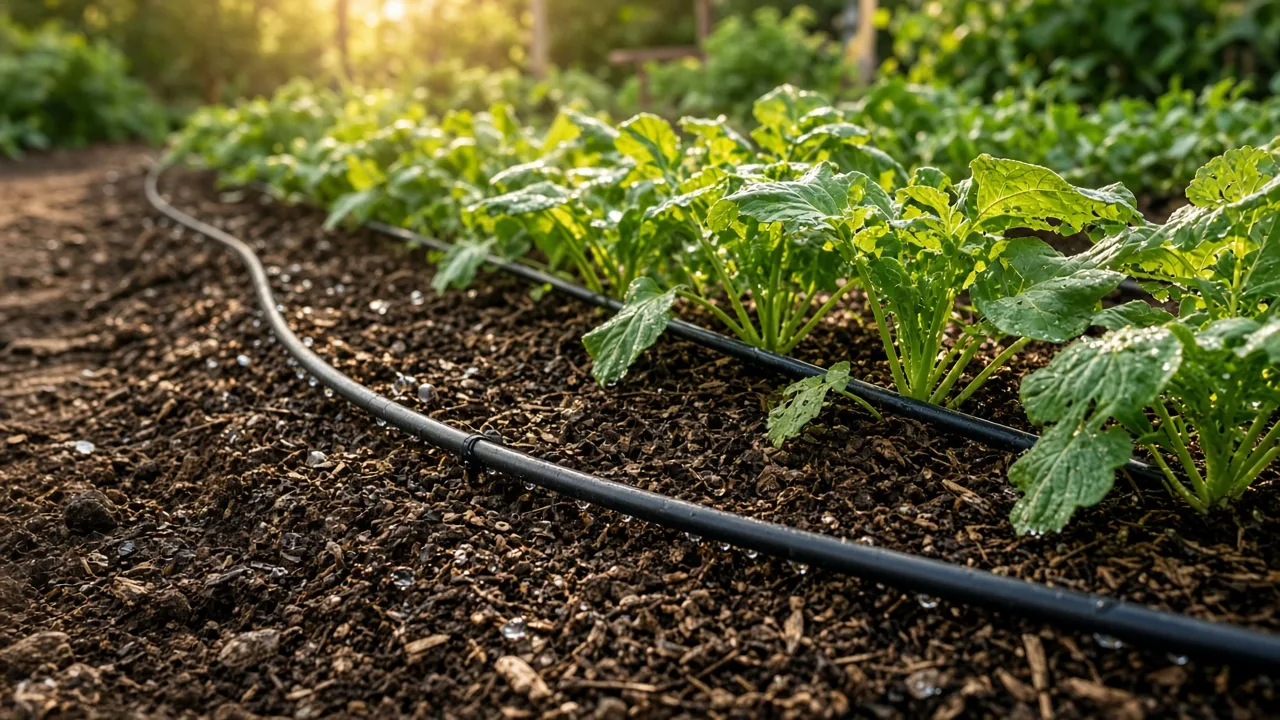
The goal is not to flood the bed. It is to make one deliberate watering count. The RHS garden-watering methods guide notes that drip lines deliver water slowly and directly to root zones, while sprinklers lose water to evaporation, runoff, foliage, and hard surfaces. For a row of roses, covered soaker hose or pressure-regulated drip can be more consistent than hand watering—provided you inspect emitters and do not let a timer overwater after rain.
Adjust the schedule for soil, weather, and exposure
Sandy or fast-draining soil
Sandy soil lets water move away quickly, so roses may need smaller, more frequent checks than the same cultivars in loam. Do not solve that by watering shallowly every morning. Add mature organic matter before planting, use a surface mulch, and water slowly enough for the soil to absorb each pass. A rose in sand may need water twice in a hot week while a rose in a moisture-retentive bed needs it once—or not at all.
Clay or compacted soil
Clay can hold water for a long time, but compacted clay may shed water across the surface instead of accepting it. Break up the pattern with slow pulses, organic matter worked into the bed before planting, and a mulch layer that protects the surface from crusting. Do not drill or dig aggressively around an established rose; its roots may be closer to the surface than you expect.
The warning sign is not just a puddle. If soil stays slick, sour-smelling, or saturated for days, roots may be short of oxygen even if the leaves droop. Improve drainage and reduce the watering interval before adding more water.
Heat, wind, rain, and slopes
Heat increases evaporation and the plant’s water use. Wind strips moisture from leaves and can dry a container on two sides at once. David Austin’s heat-wave rose guidance similarly puts soil inspection ahead of a rigid schedule: newly planted roses may need watering every other day, while established plants may manage with one or two thorough waterings a week when mulch and soil are doing their jobs. During a heat wave, check in-ground roses daily but increase the amount or frequency only when the soil test says the root zone is drying.
Rain shadows matter. Roses beneath eaves, against walls, under dense trees, or on the sheltered side of a fence may receive much less water than the open bed beside them. On a slope, place a shallow soil berm or use several short watering passes so water infiltrates instead of racing downhill.
After a cool, cloudy week or meaningful rainfall, extend the interval. In winter, dormant in-ground roses usually do not need a routine watering schedule unless the soil is unusually dry and workable. Potted roses still need occasional checks because rain may miss the pot under cover, while a waterlogged pot can stay cold and wet for too long.
A separate routine for roses in pots
Treat a container as a small climate system. Check the mix at least once a day during hot weather, especially if the pot sits on concrete, a balcony, or a windy terrace. Water when the upper inch is dry and the lower mix is not already saturated; then soak until drainage appears from the bottom.
The pot itself changes the interval. Terracotta loses water through its sides and usually dries faster than glazed ceramic or plastic. Small pots dry faster than large ones, black containers heat more in direct sun, and a root-bound rose may drink a fresh watering quickly but still have poor access to moisture. A pot with no drainage hole is not a watering challenge to finesse—it is a drainage problem to fix.
Choose a container large enough for the rose’s roots and canopy, with several drainage holes and a free-draining potting mix. Savvy Gardening’s container-rose guidance recommends large containers for standard roses, notes that terracotta dries quickly, and stresses that drainage is essential because persistently wet mix can rot roots. Its practical container guidance also supports checking daily in hot weather rather than treating “daily” as a command for every climate.
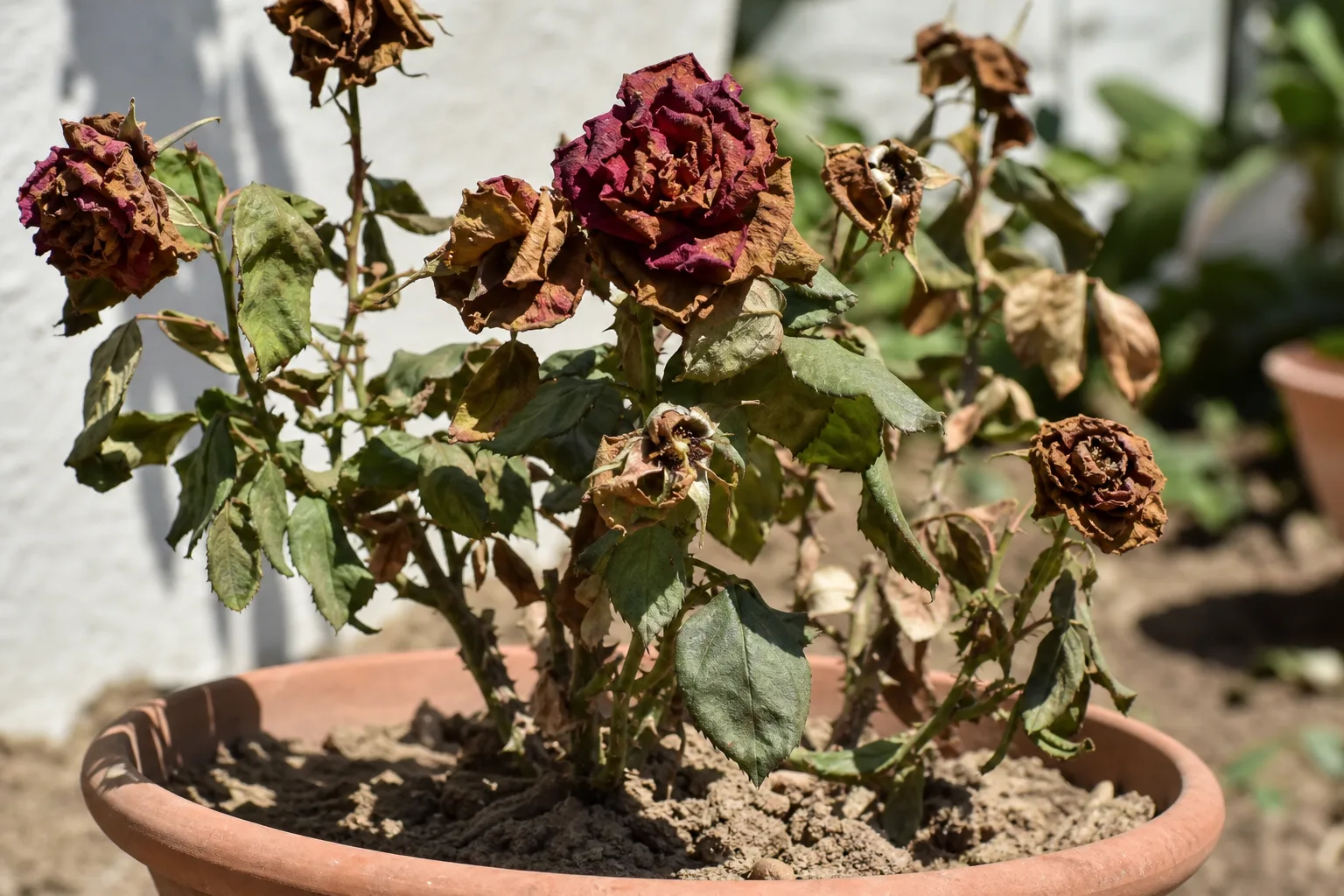 A dry container can move from healthy to severely stressed quickly; inspect the mix before the leaves reach this stage.
If a potted rose is wilted and the mix is bone-dry, water in stages. Apply a small amount, wait a few minutes, then water again until the root ball is evenly wet and water exits the drainage holes. If water immediately pours down the sides, the mix may have pulled away from the pot; soak more slowly and check the center rather than assuming the runoff means the roots are hydrated.
Mulch and soil improvements that make water last
Mulch is not a substitute for water, but it makes each watering more effective. Apply about 2–3 inches of composted bark, leaf mold, or well-rotted organic matter over the soil, extending toward the canopy while leaving a clear ring around the canes. The RHS planting advice recommends spring mulch up to about 3 inches and a gap around the stems; the gap keeps constantly damp material from sitting against the rose.
Organic matter improves the way soil handles water over time. In sandy ground it can increase moisture retention; in clay it can improve structure when incorporated before planting. Do not bury the graft union or pile mulch against the crown while trying to hold moisture. A damp, airless pocket at the stem is not a better root zone.
Mulch also suppresses weeds, which otherwise compete for the same water. Keep the bed free of large weeds and check beneath the mulch when deciding whether to water—its surface may look dry even while the soil below remains moist.
When to water during the day and what to avoid
Early morning is the best default. It reduces evaporation compared with midday and gives any splashed foliage time to dry. Evening watering is not automatically fatal, especially during a genuine heat emergency, but routinely leaving leaves and flowers wet overnight can favor fungal disease in still, humid conditions. The RHS recommends morning watering and directing water to the base rather than the foliage.
Avoid watering at noon during extreme sun when much of the water can evaporate before it enters the soil. Avoid relying on a sprinkler for established roses when a can, hose wand, drip line, or soaker hose can put water at the root zone. Sprinklers also wet leaves and flowers, which adds disease pressure without telling you how much moisture reached the roots.
Do not fertilize a drought-stressed rose simply because it has stopped blooming. The University of Georgia Extension cautions that fertilizer can injure roots under drought stress. Rehydrate the root zone, restore drainage and mulch, and wait for fresh growth before feeding according to the product label.
Overwatering, underwatering, and misleading symptoms
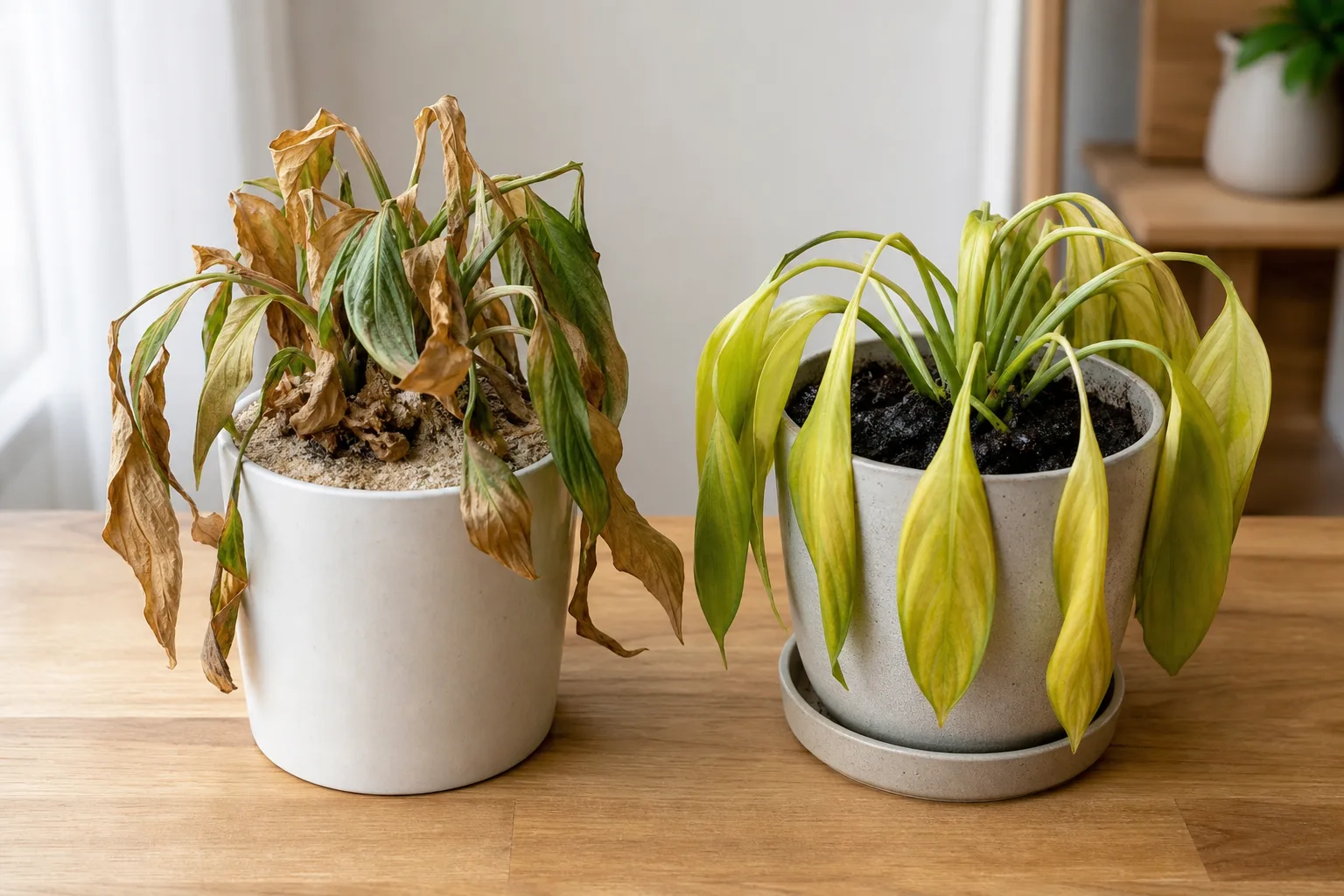
Watering problems often look alike above ground. A wilted rose may be thirsty, but it may also have damaged roots sitting in saturated soil. Yellow leaves can follow chronic wetness, drought, nutrient stress, disease, or normal aging. Diagnose the soil and roots before changing the schedule again.
Likely underwatering:
- Soil is dry several inches down, not just dusty at the surface.
- Flowers wilt quickly, buds abort, and newer leaves look limp or dull.
- Leaves may curl, crisp, or drop after a hot, windy spell.
- The pot feels unusually light and water runs through a dry channel instead of soaking in.
Likely overwatering or poor drainage:
- Soil remains wet for days between waterings.
- Lower leaves turn yellow while the mix is damp, or the plant wilts despite wet soil.
- The pot smells sour, drains slowly, or has standing water in its saucer.
- Growth stalls and roots become brown or mushy when inspected.
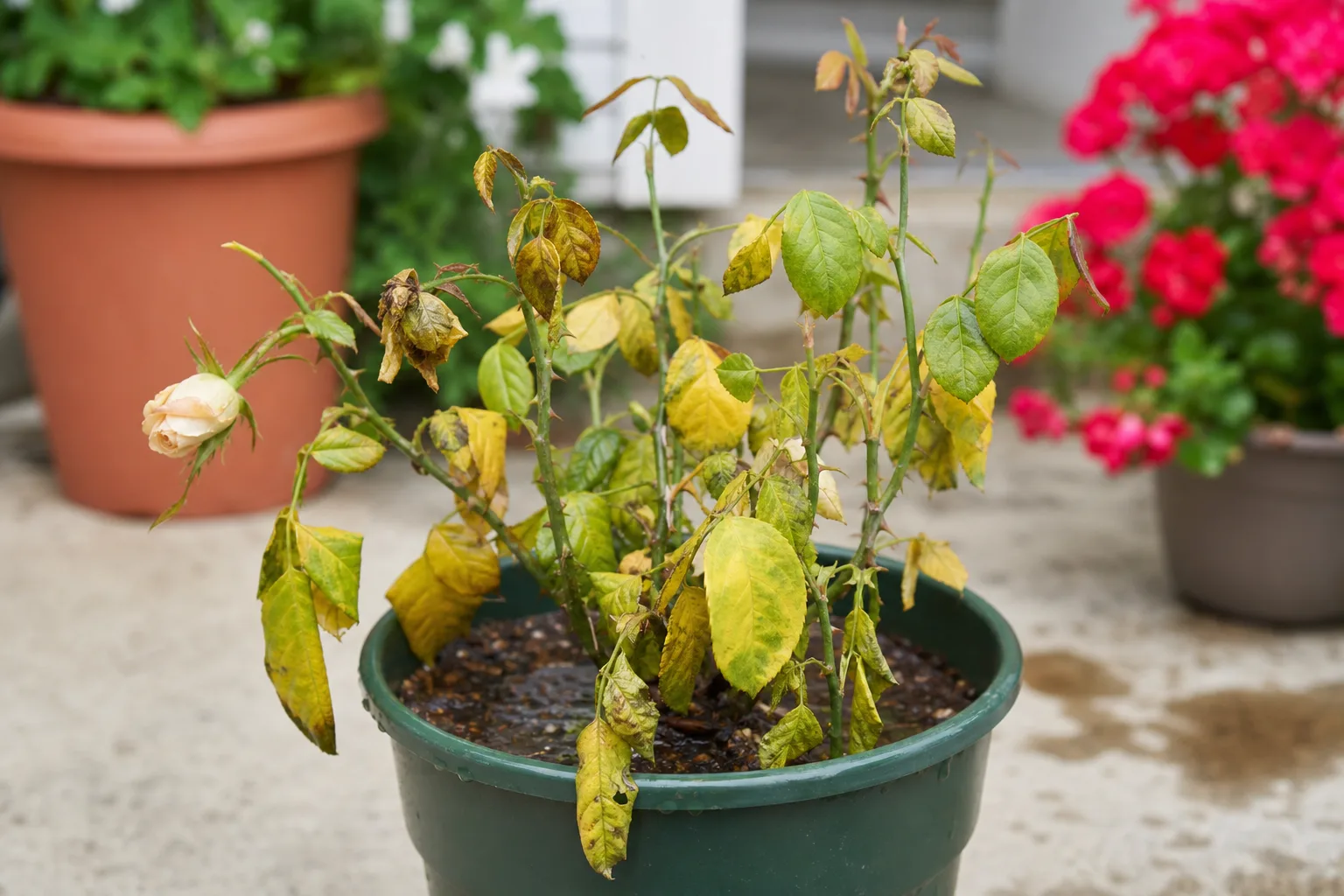 Yellowing and wilt can occur when roots are too wet to function; check drainage and soil moisture before watering again.
Black spots or powdery growth are not proof that you watered too much. Water on foliage can increase disease-friendly conditions, but rose diseases also depend on cultivar, airflow, weather, and existing infection. Remove badly affected leaves, improve airflow, water at the base, and follow local extension or product-label guidance before using any treatment.
If a rose is suddenly limp, perform this 60-second triage: check soil moisture at depth, inspect the drainage hole or saucer, look for recent heat or wind, and compare the plant’s morning condition with its afternoon condition. Water only if the root zone is genuinely dry. If it is wet, stop adding water and investigate drainage, root damage, compacted soil, or a disease problem.
Rose-care habits that make a watering routine work
Water is only one part of reliable bloom production. Give roses enough sun—many need at least four to six hours—while leaving room for airflow around the foliage. Keep competing weeds down, mulch the bed, and avoid planting a moisture-hungry rose in a rain shadow without a plan for irrigation.
Deadhead repeat-flowering roses when blooms fade if you want the plant to redirect energy into more flowers. Feed only when the plant is actively growing and the soil is not drought-stressed. Prune and train to open crowded centers, but do not interpret every weak bloom as a watering failure; insufficient light, root competition, pests, disease, and cultivar habit can all reduce flowering.
Keep a simple note for one month: date, rainfall, soil depth when checked, amount or run time applied, and the plant’s morning condition. That record exposes patterns quickly. If the rose is wet after every scheduled watering, the interval is too short; if it is dry by the next morning in a pot, the container, exposure, mix, or irrigation method needs attention—not just more optimism about the calendar.
Conclusion
Water roses when the root zone is drying, not because a generic schedule says it is time. Established in-ground roses often do well with a deep soak about once a week during a dry summer, new roses need more frequent checks while roots establish, and container roses may need daily attention in hot weather. Those are starting points, not rules.
Check several inches down, water slowly at the base until the active root zone is moist, keep foliage as dry as practical, and let soil texture, rainfall, sun, wind, mulch, and pot size change the interval. This moisture-first routine uses less water than shallow calendar watering and gives roses the steady, well-aerated root conditions they need for strong growth and repeat blooms.



