How to Dry Rose Petals for Tea, Crafts, and Storage
Learn how to dry rose petals by air, dehydrator, oven, microwave, or press. Choose safe blooms, prevent mold, and store petals for tea or crafts at home.
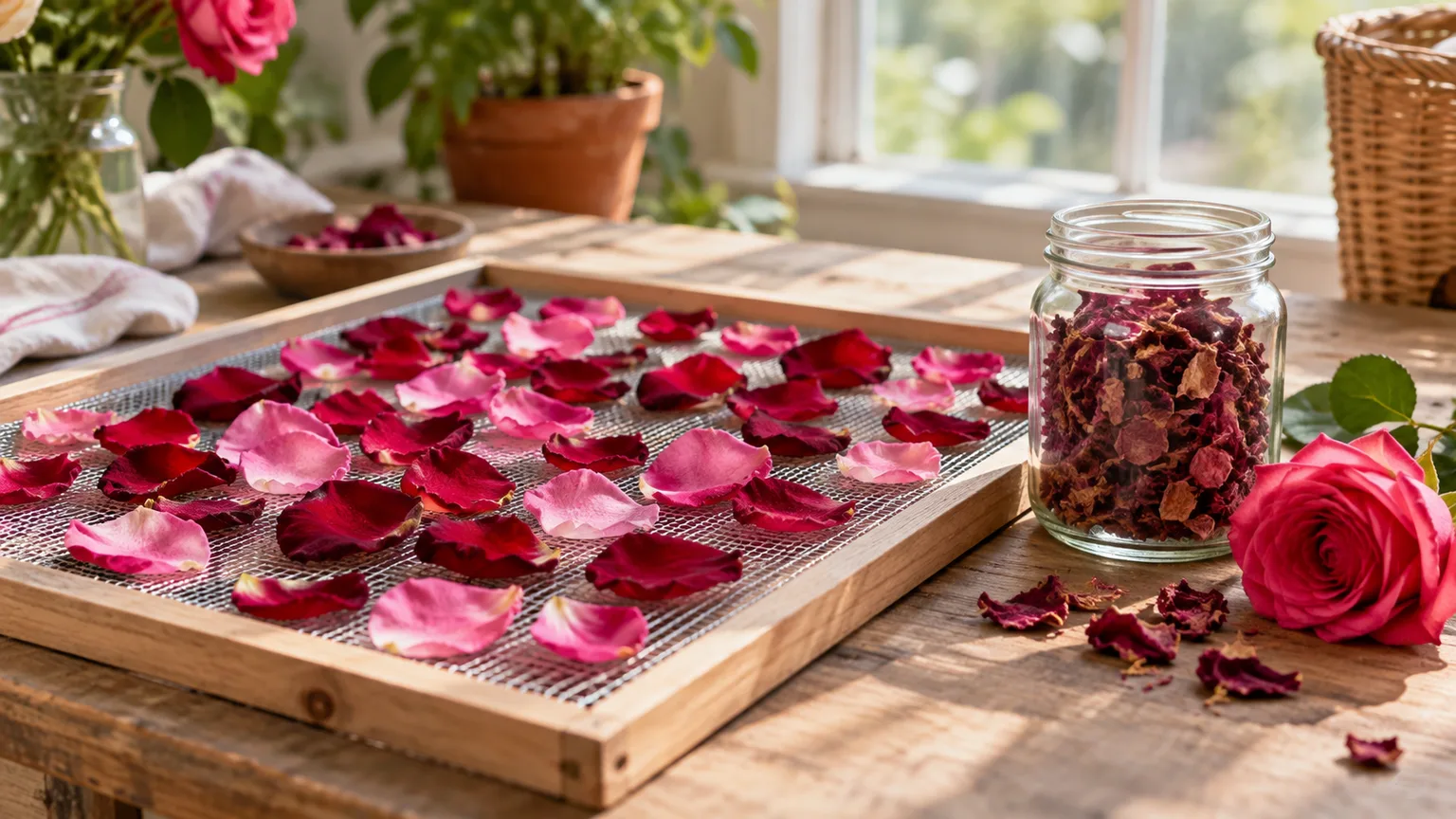
The best all-purpose way to dry rose petals is to separate clean, fresh petals and spread them in one layer on a mesh screen in a dry, shaded room with steady airflow. That slow approach gives you control: the petals are less likely to scorch, and you can see when damp spots remain. If time matters, a dehydrator or short microwave bursts can work, but speed comes with more risk of browning and uneven results.
Start by deciding what the petals are for. Tea or cooking requires a correctly identified rose grown without pesticides that are not labeled for edible crops; petals intended for potpourri or paper crafts can be dried with decorative methods, but should never be switched into food use afterward. A full rose head, loose petals, and pressed petals also need different treatment, so choose the finish before you harvest.
Choose a drying method by the result you want
For most people, a screen is the simplest choice because it dries a loose batch evenly without flattening it. It is especially useful if you want petals for potpourri, sachets, or an herbal blend and have a room where air can move. The trade-off is time: the petals need to stay undisturbed until their thickest parts are crisp, and damp weather can slow the process.
| Method | Best for | Main trade-off |
|---|---|---|
| Screen or rack | Loose petals for potpourri, sachets, or food-safe storage | Takes longer and needs a dry, airy place |
| Dehydrator | A more repeatable batch when indoor air is humid | Heat and fan placement can dry petals unevenly |
| Microwave | A small batch when you need it quickly | Easy to scorch; requires close checking |
| Low oven | A larger batch when the oven can hold gentle heat | Many ovens run too warm for delicate petals |
| Press or flower press | Flat petals for cards, bookmarks, and framed art | Petals lose their rounded shape |
| Silica gel | Preserving the shape of decorative blooms | Not a food-drying method; crystals must not mix with edible petals |
BBC Gardeners’ World Magazine notes that rose blooms are large and fleshy, so separating petals or using a method suited to the intended shape is more dependable than assuming every flower dries the same way. Its guide describes air drying, pressing, microwave drying, oven drying, and silica gel as distinct approaches, each with different timing and handling needs. For loose petals, treat published times as a starting point, not a guarantee: room humidity, petal thickness, and the appliance all affect the finish.
If you only want to try one method, use the screen. Choose the dehydrator when your room stays humid or you need more consistent airflow, the microwave for a tiny test batch, and pressing when a flat craft material matters more than a cup-shaped petal. Silica gel is for decorative preservation, not tea or other food.
Start with fresh, correctly grown roses
Drying preserves what is already on the flower; it does not make a questionable flower safe or clean. Choose a healthy rose from a plant you can identify and whose growing and spray history you know. Avoid blooms with mold, insect damage, bird droppings, roadside dust, or chemical overspray, and do not try to wash away a pesticide treatment after the fact.
Confirm the rose and the intended use
If you plan to eat the petals, confirm that the plant is a rose rather than relying on a common name or a photo. Colorado State University Extension lists Rosa species among edible flowers and notes that rose-petal flavor can range from perfumed and sweet to bitter; its guide also advises removing the sour petal base. Penn State Extension includes edible flowers as one option in an edible landscape, but that does not mean every ornamental flower is safe or grown for food.
People can react differently to unfamiliar foods. Colorado State University Extension recommends starting with a small amount of a new edible flower and increasing slowly so a sensitivity or stomach upset is easier to identify. If you have known flower or pollen allergies, are preparing petals for someone else, or cannot verify the plant, skip ingestion rather than testing an uncertain batch.
Keep florist and spray-treated flowers out of food
Do not use florist roses, grocery-store bouquets, nursery flowers, or ornamental roses with unknown treatment histories for tea, cooking, or edible gifts. Colorado State University Extension cautions that flowers from florists, garden centers, and nurseries may have been treated with chemicals not intended for food use. A label that says “natural,” a long-lasting bouquet, or a seller’s casual reassurance is not a substitute for a clear edible-crop and pesticide history.
The same separation is useful for non-food projects. Keep a food-safe batch and a craft batch in separate containers, label them, and dry the craft batch away from kitchen equipment. Petals that have touched silica gel, floral dye, glue, resin, potpourri fragrance, or craft surfaces should not later be steeped or eaten. Drying is a moisture-removal step, not a pesticide-removal or sterilization step.
Harvest petals when the bloom is fresh and dry
Pick roses when the bloom is fresh and near its prime, not after petals have browned, softened, or begun dropping. BBC Gardeners’ World Magazine recommends cutting flowers when they are coming into full bloom and waiting until dew or mist has dried; Better Homes & Gardens gives similar timing for garden flowers selected for pressing. For loose petals, use that same basic window: a dry flower with firm, clean petals is easier to sort and less likely to carry extra moisture into the drying tray.
Choose a dry day if possible. Wet petals take longer to dry and are harder to inspect for blemishes, while a hot, sun-baked bloom may already be wilted at the edges. Cut only the flowers you can process promptly; if you harvest more than you can spread in a single layer, keep the unprocessed blooms cool and airy rather than sealing them in a bag where condensation can collect.
Hold each bloom over a clean basket or tray and ease the petals away from the center without crushing them. For culinary use, avoid pulling the pale or white base into the batch if you dislike bitterness; it is easy to trim that small portion later with clean scissors. Sort by color and condition as you work. A few brown or bruised petals can discolor a whole group visually, and damaged plant material is not worth preserving for tea.
Prepare the petals without trapping moisture
Remove insects and loose debris by gently shaking the flower or brushing the petals with clean fingers. If the petals are visibly dusty and intended for food, rinse them briefly in cool running water, then blot them carefully and let the surface moisture evaporate before placing them on the drying screen. Colorado State University Extension recommends gently rinsing fresh edible flowers; for drying, the extra step is to make sure the rinse water itself does not prolong dampness.
Do not soak petals, wash a pesticide-treated flower in an attempt to make it edible, or use hot water to “sanitize” them. Those steps can bruise delicate tissue or create a false sense of safety. When petals are clean, separate any clumps and discard insects, damaged edges, and anything with a musty smell or visible growth.
Set up all trays before you pick, so the petals do not sit in a warm pile. Use a clean food-safe screen, dehydrator tray, or plate for edible batches; keep craft materials and decorative silica gel out of that area. Wash and dry the equipment after use, especially if a previous project involved fragrances, glue, resin, or floral preservatives.
Air-dry rose petals on a screen
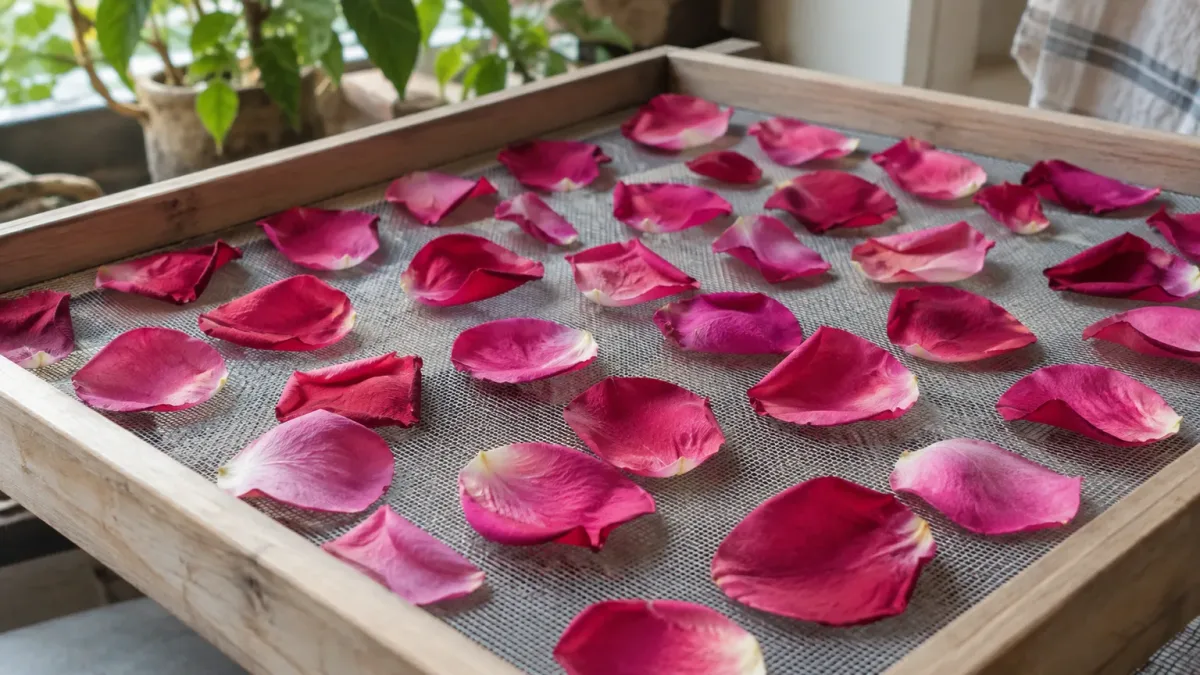
Air drying is the best default for a small home batch because it relies on shade and airflow instead of high heat. Place a clean mesh screen over a tray or use a drying rack that lets air pass both around and beneath the petals. Arrange each petal so it lies flat, with space around it; overlapping petals trap moisture and make it harder to spot a damp center.
Spread one layer and manage airflow
Keep the screen in a cool, dry room away from direct sun, steamy kitchens, and bathrooms. A shelf in a ventilated room or a shaded porch with protection from dust can work, as long as outdoor humidity is low and the petals are protected from rain, insects, and wind. Avoid sealing the screen under plastic or stacking trays tightly together, since trapped humid air works against drying.
Turn the petals once a day with clean, dry hands if the underside feels cooler or softer than the top. In very humid weather, move the tray to a drier room, run a dehumidifier nearby, or switch to a dehydrator rather than leaving petals exposed for many days. A fan can improve circulation, but keep it indirect; strong air aimed straight at the screen can blow petals away and does not compensate for a damp room.
Loose petals often dry in a few days under good conditions, but do not use the calendar as the readiness test. Thin outer petals may become crisp while thicker bases still bend. Leave the batch until the last soft pieces are dry, then cool it completely before storage. If some petals finish early, remove only the crisp ones and let the rest continue.
Use a dehydrator for a more controlled batch
A food dehydrator is useful when the room is humid, the harvest is larger, or you want to dry petals without waiting for still-room air. Use clean trays and arrange the petals in a single layer, with enough space that the dehydrator’s airflow can reach them. Follow the appliance manual and use its lowest suitable setting; rose petals are thin, so high heat can make the edges brown before the bases are dry.
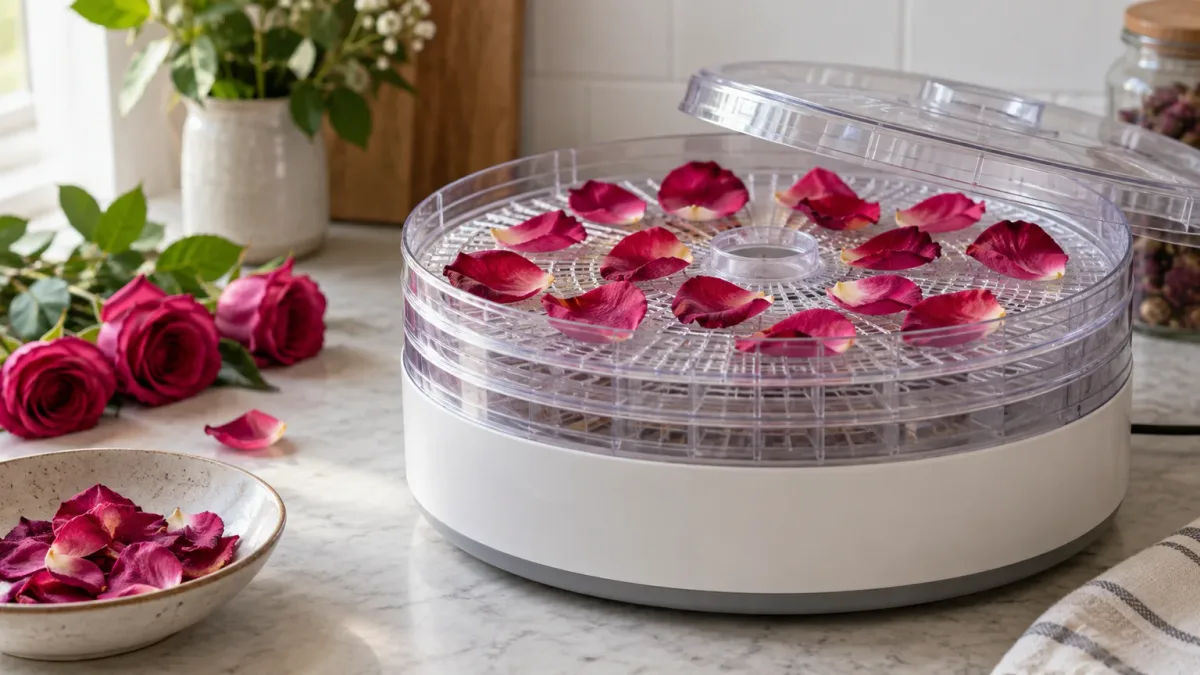
Rotate trays if the manual or appliance design calls for it, and inspect early rather than relying on a recipe’s fixed time. Petals near a fan or heating element may dry first, while a densely loaded tray or a model with weak airflow may leave soft patches. If the petals change rapidly from flexible to dark and brittle, lower the heat or remove the finished tray and continue the remainder more gently.
Use a food dehydrator only for petals intended for food, and keep its trays free of craft silica, scented oils, dyes, or floral preservatives. When a dehydrator is unavailable, a screen in a dry room remains a safer, simpler option than turning the oven to a temperature it cannot reliably hold.
Microwave petals in short, checked bursts
The microwave is a fast option for a small sample, not the easiest way to preserve a large harvest evenly. Place a single layer of petals between clean absorbent paper on a microwave-safe plate. Use a low or medium-low setting if your microwave offers one, and heat in short bursts—start with about 15 to 30 seconds, then inspect the petals and let them cool before deciding whether to continue.
Do not judge a hot petal by touch alone. Warm petals can feel limp even when they are close to dry, and microwave heat is uneven: one part of the plate may be crisp while another remains damp. Let the sample cool for a minute or two between bursts, then test the thickest petal. Stop as soon as it feels dry and crisp; another long burst can quickly turn it brown or brittle.
Test a few petals before drying the entire harvest. If the sample scorches, smells cooked, or loses the color you wanted, switch to a screen or dehydrator. Never leave the microwave unattended, and do not use metal, sealed containers, or any book or press that is not explicitly microwave-safe.
Use the oven only when you can control the heat
An oven can dry petals, but many household ovens do not maintain a truly gentle temperature at the bottom of their range. If your oven cycles hot or cannot be set low, use the screen or dehydrator instead. BBC Gardeners’ World Magazine describes oven drying at the oven’s lowest setting with ventilation and occasional turning, but the exact time depends on the oven and material; a rose petal is much thinner than a whole flower head.
To test the method, spread a small batch on parchment over a baking tray and use the lowest setting the oven can reliably hold. Check frequently, keep the oven attended, and remove petals as soon as they are dry rather than waiting for every piece to become dark and crisp. Do not copy a high-temperature setting intended for cooking food: direct heat can brown or bake the petals and reduce the aroma.
If your oven only has a high minimum setting, do not try to compensate by leaving the door open unless the appliance manufacturer specifically permits that use. It can create a burn or fire hazard and still will not guarantee even heat. For a larger edible batch, a food dehydrator or a well-ventilated screen is easier to control.
Press petals flat for cards and framed art
Pressing is best when you want flat petals for cards, bookmarks, framed compositions, or a paper keepsake. Separate the petals, arrange them between clean absorbent sheets, and leave space so they do not overlap. Put the sheets inside a flower press or between the pages of a sturdy book with extra paper protecting the pages, then add even weight.
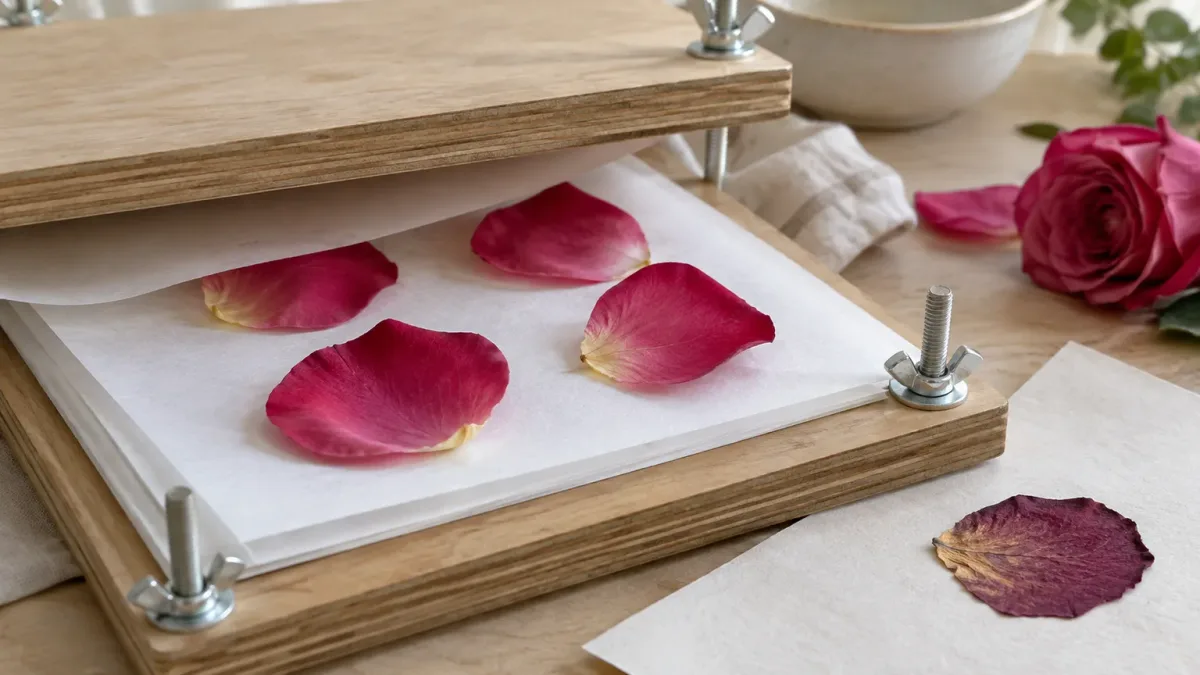
Better Homes & Gardens recommends absorbent paper, avoiding wet flowers, and checking pressed material after about a week; complete drying can take two to three weeks depending on the flower and conditions. Rose petals are thinner than an intact multipetal bloom, but they still need inspection. Replace damp paper if necessary and keep the press somewhere cool and dry rather than on a sunny windowsill.
The result is a flattened, sometimes slightly translucent petal, not a fluffy one for potpourri or tea. Use only clean, pesticide-free petals if you want to preserve them for culinary use, and do not add glue, paint, hairspray, or paper-craft supplies to an edible batch. If the paper smells musty or develops spots, discard the affected petals and clean the press before using it again.
Use silica gel for shape, never for edible petals
Silica gel is a desiccant used to pull moisture from decorative flowers while helping them hold their shape. It can make sense for a whole rose head or a display piece, but it is not necessary for loose petals and should never be treated as a food-drying ingredient. Flower-preservation products may include indicators or other additives, and the crystals can remain in folds of petals even after brushing.
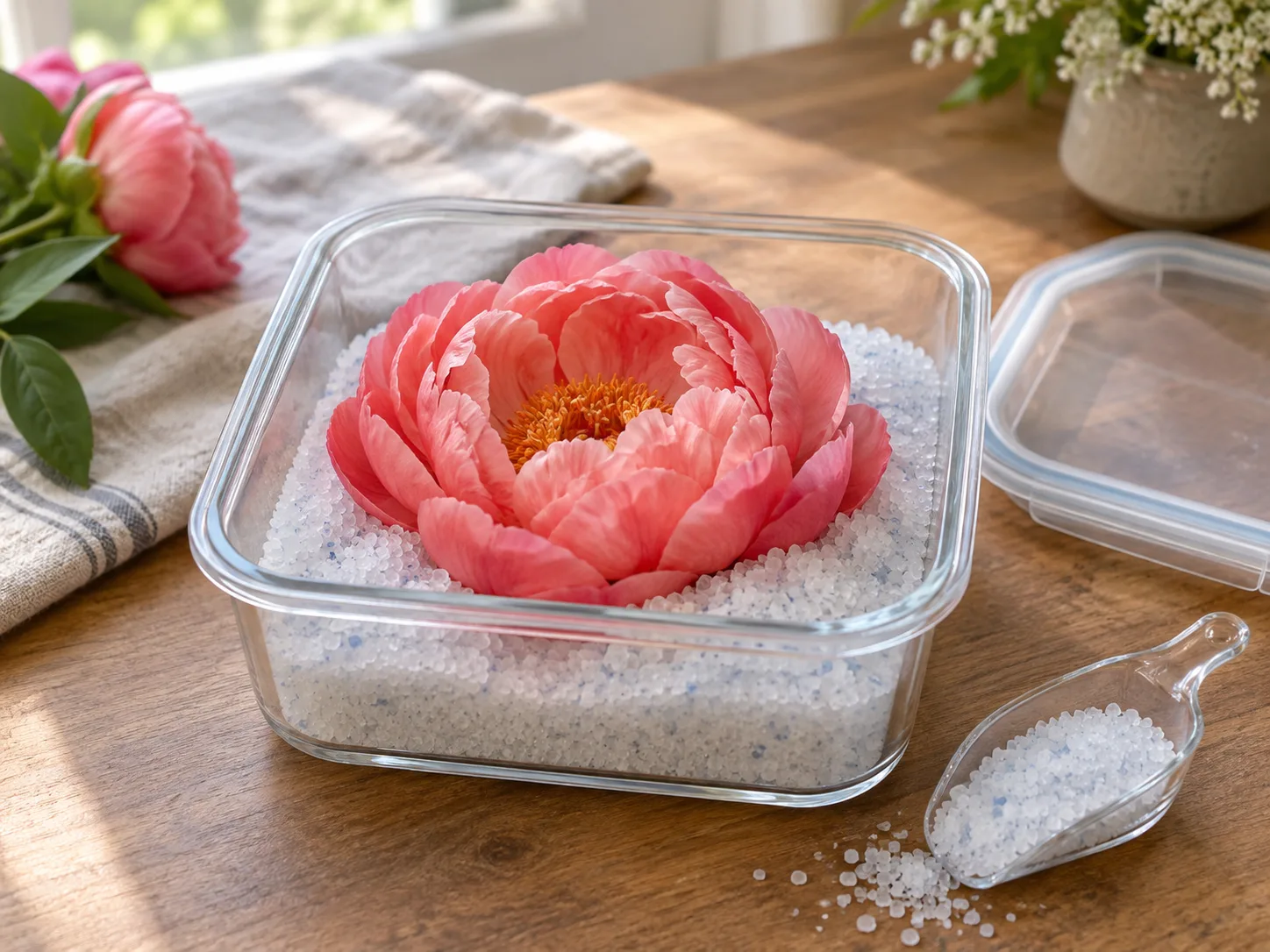
For craft use, follow the product label, use a lidded container, and avoid breathing dust when pouring or removing the crystals. Keep the container and all tools away from food-preparation surfaces; label the finished petals “decorative only.” Do not use silica gel from a flower project in tea, cooking, bath products, or anything intended for skin contact.
BBC Gardeners’ World Magazine describes silica gel as a way to retain the shape and color of whole flowers such as roses, while its guidance on loose petals points to microwave or oven drying. That distinction is practical: choose silica when shape is the priority, and choose a clean food-safe drying method when the petals might be eaten.
Check that the petals are dry all the way through
Let the petals cool before testing them. Fully dried petals should feel crisp or papery rather than cool, leathery, or soft at the thick base; a petal that folds without cracking may still contain moisture. Do not crumble the entire batch to test it—check a few of the thickest pieces from different parts of the screen or dehydrator.
For a cautious home check, put the cooled batch in a clean, completely dry glass jar and close it for a day. If you see condensation, feel moisture on the glass, or find that petals have softened, take them back out and continue drying if they are otherwise clean and smell normal. A jar check helps reveal uneven drying, but it does not replace the texture check or make a questionable batch safe.
If you are uncertain, leave the petals out longer in a dry, shaded place or return them to the dehydrator at its lowest suitable setting. Do not store warm petals: residual heat can create condensation inside the jar. And never “save” petals that have visible mold, a musty or fermented odor, slime, or unexplained spotting by drying them again; discard them instead.
Fix fading, browning, and mold-prone batches
Some color change is normal. Fresh petals contain moisture and pigments that can shift as the tissue dries, so the dried color may look deeper, duller, or less saturated than the bloom. The aim is not to lock in a perfect fresh-flower shade; it is to avoid unnecessary sun exposure, heat, bruising, and prolonged dampness that accelerate fading or browning.
| What you notice | Likely cause | What to do |
|---|---|---|
| Pale or faded petals | Direct sun, long exposure, or an already fading bloom | Keep future batches shaded and choose fresher petals |
| Brown, crisp edges | Too much heat, a thin petal over-dried, or bruising | Lower the heat and check more often; use browned petals only for non-food crafts if they remain clean |
| Soft or leathery centers | Petals overlap, airflow is weak, or the room is humid | Separate pieces, improve indirect airflow, and continue drying |
| Musty odor, fuzzy growth, or wet spots | Moisture remained trapped or storage began too soon | Discard the affected batch; do not taste or try to rescue it |
| Aroma seems faint | Cultivar, age, heat, or storage has reduced the volatile scent | Use fresh, fragrant blooms next time and choose air drying or gentle heat |
If mold appears, do not pick out the visible spot and keep the rest of the jar. Fine growth or spores may not be limited to what you can see, and a damp batch can contaminate nearby petals. Throw it away, wash the storage container thoroughly, and fix the underlying cause—usually damp petals, crowded layers, humid air, or a jar that was closed before the batch cooled and dried.
When petals are only slightly soft and there is no mold or off odor, you can continue drying them. Spread them out again rather than returning a clump to heat, and keep edible batches separate from any decorative material. If the color has changed but the petals are dry, clean, and correctly sourced, the batch may still be usable for a craft or a mild floral blend; appearance alone is not a freshness guarantee.
Store dried petals to protect aroma and texture
Once completely dry and cool, store petals in a clean airtight glass jar or another dry food-safe container. Keep the container in a dark cupboard away from a stove, sink, bathroom, sunny shelf, and other places where heat or humidity swings are common. Light and warmth can fade color and aroma, while moisture can soften the petals and invite mold.
Store whole petals rather than crushing them in advance. Larger pieces are easier to inspect, handle, and remove from a blend; crush only the amount you need when making tea or potpourri. Label the jar with the rose source, harvest date, and intended use, especially if your household also dries craft flowers. Do not use an unlabeled jar if you cannot confirm it contains food-safe petals.
There is no reliable single shelf-life promise for every home-dried batch. Dryness, room humidity, container seal, and storage temperature vary, and scent usually fades before the petals look unusable. Check the jar before each use: the petals should remain dry and free of condensation, spots, insects, and off odors. If they have softened, re-dry only when they are otherwise clean and normal; if there is mold or a musty smell, discard them.
Put dried rose petals to practical use
For tea, use only petals that passed the food-safety check and were dried on clean food-contact equipment. Rose flavor differs by plant and may be subtle, floral, or bitter; Colorado State University Extension notes that variation and recommends removing the sour petal base. Start with a small amount in a familiar tea blend, taste, and adjust gradually rather than expecting every rose to taste like a sweet rosewater dessert.
Dried petals also work in potpourri, drawer sachets, paper crafts, and seasonal decorations. Better Homes & Gardens highlights potpourri, framed displays, and other decor as common ways to use dried flowers; rose petals are especially practical where loose pieces or a flat shape are more useful than a whole bloom. Store fragrant craft blends away from food, and keep any added fragrance oils, glue, paint, or resin out of culinary materials.
For bath or skin projects, treat the petals as a cosmetic ingredient rather than assuming “natural” means irritation-free. Use only clean, known petals, keep fragrance oils and additives appropriate for the product, and avoid applying a new blend to irritated or sensitive skin. Skip the project if you cannot verify the flower or its treatment history, and never reuse petals from a decorative preservation setup.
Conclusion
To dry rose petals well, begin with a fresh bloom from a known source, remove debris without leaving the petals wet, then choose the method that matches the finished use. A shaded mesh screen is the best starting point for most loose batches; a dehydrator is more predictable in humid air, while microwave and oven methods need close attention to prevent scorching. Pressing creates flat petals for art, and silica gel is reserved for decorative shape preservation.
The most important final step is checking the petals after they cool and before you seal them away. Keep edible and craft batches separate, store fully dry petals in a dark airtight container, and discard anything moldy or musty rather than trying to rescue it. That small amount of care protects the batch—and makes it much more likely the petals will still be useful when you are ready to use them.