How to Grow and Care for an Edamame Plant
Grow edamame from seed with practical timing, spacing, watering, and pest advice, plus clear signs that the fresh green pods are ready to pick.
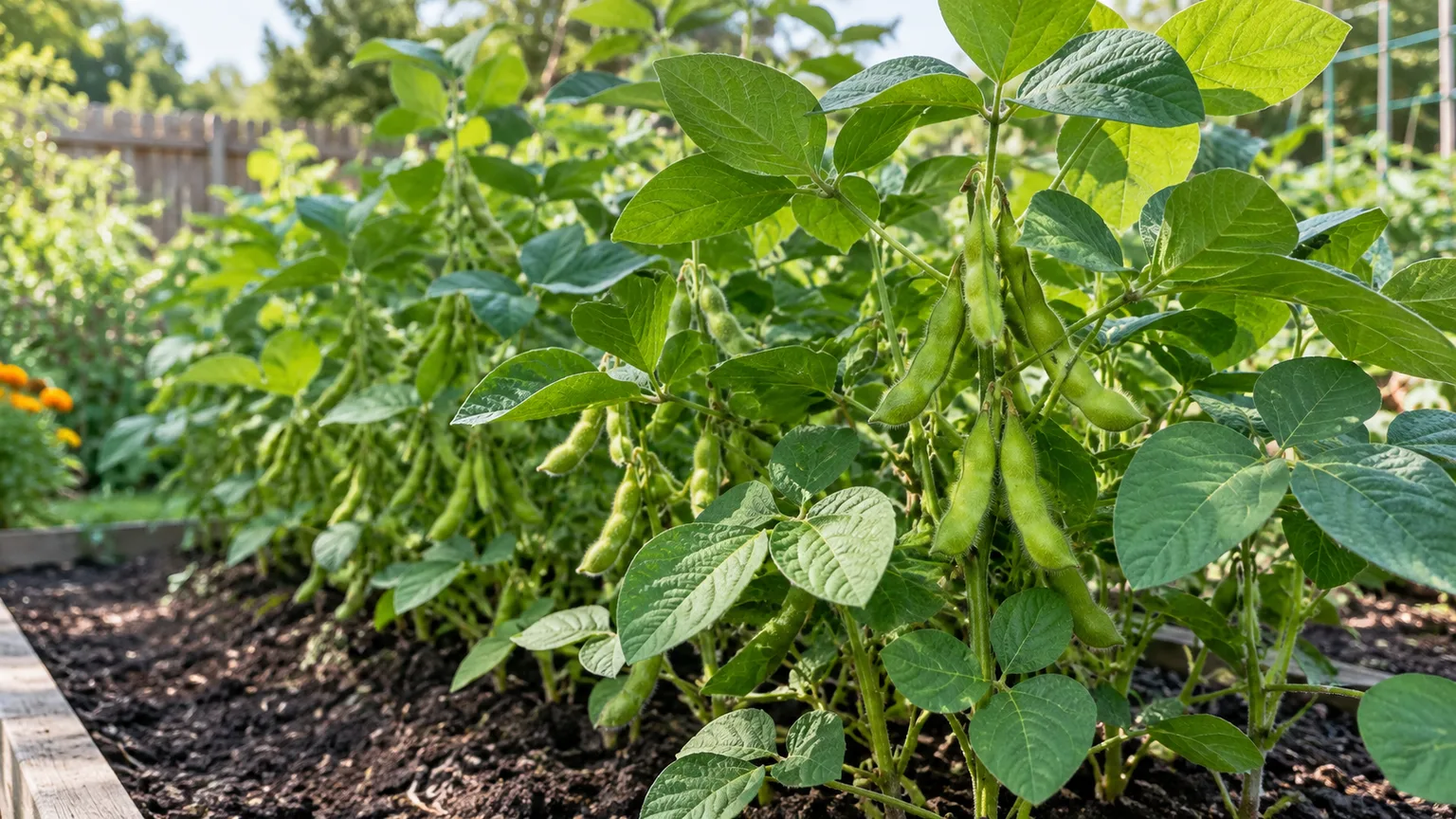
Edamame is a soybean grown for its tender, green seeds. The plant is a compact warm-season annual, so the main challenges are sowing into warm soil, choosing a cultivar that matures before your weather turns, and picking pods while the beans are still green and plump.
You do not need a large plot or a trellis. A sunny bed, direct-sown seed, steady moisture during flowering and pod fill, and a habit of checking the plants as pods swell are enough to get started. The details that vary most are planting dates and harvest timing, because both depend on cultivar and local conditions.
| Growing decision | Practical starting point |
|---|---|
| Site | Full sun, ideally six or more hours of direct light |
| Sowing | After frost danger, when soil is consistently warm; about 65°F is a useful home-garden target |
| Seed spacing | Sow 2–3 inches apart, then thin to 4–6 inches; rows 18–24 inches apart |
| Water | Keep soil evenly moist, especially during flowering and pod filling |
| Harvest cue | Bright green pods with beans that visibly fill most of the pod |
What edamame is—and what part you eat
Edamame is the name commonly used for fresh, immature soybeans. The botanical crop is soybean, Glycine max; edamame describes the green harvest stage, not a separate species. Washington State University’s vegetable soybean overview uses both names and links to its extension publication on cultivar selection, planting, growth, and harvest.
The beans inside the fuzzy pods are the edible part. The pods themselves are fibrous and are usually discarded after the beans are squeezed or shelled out. Edamame plants resemble bush beans at a glance, but their pods, seed, and crop timing belong to soybean, so choose seed sold specifically for vegetable soybean or edamame rather than planting a random dried soybean from the pantry.
Most home-garden cultivars form upright, branching plants roughly 18–30 inches tall, although size depends on cultivar and growing conditions. They generally support themselves. Treat them as a summer vegetable crop, not as a climbing bean that needs a pole or a perennial that will return next year.
Choose a cultivar that can finish in your climate
Start with the length of your warm growing season. Seed catalogs often list days to maturity, but the number is an estimate tied to a particular cultivar and set of growing conditions; cool soil, a late sowing, or weather stress can stretch the calendar. In a short-season garden, choose an early cultivar recommended for your region and compare its stated days with the frost-free time you actually have.
Envy, Chiba, and Midori Giant are examples of varieties grown for fresh pods. Savvy Gardening describes Envy and Chiba as early options and gives variety-specific maturity estimates, but those figures should be treated as a comparison within that seed source—not a guarantee for every garden. Check the current seed packet for the cultivar’s own estimate, and ask a local seed supplier or extension office which varieties reliably reach the green-pod stage in your area.
A useful way to extend picking is to combine cultivar choice with planting date. In a Virginia field project, SARE reported that maturity groups and different production systems spread harvest over a longer period, while a conventional planting could have a harvest window of only a few days. That research was conducted for regional production, not as a universal home-garden calendar, but it shows why one variety’s harvest can be concentrated while another garden’s picking lasts longer. The SARE project report describes the cultivars and planting systems tested.
If your warm season is long enough, sow a small second row about three weeks after the first. Succession planting can stagger the crop, but do not sow another batch if the remaining warm weather is unlikely to carry it through flowering and pod fill. In hot regions, follow a local vegetable calendar: in Arizona’s low desert, for example, Growing in the Garden’s edamame guide describes spring and late-summer planting windows rather than assuming that midsummer is suitable everywhere.
When to plant edamame
Wait until the last frost has passed and the soil has warmed. A practical target for home gardens is soil near 65°F (18°C), measured a few inches below the surface in the morning for several days. Savvy Gardening notes that cold, wet soil can cause soybean seed to rot; sowing into a warm bed is more reliable than planting by a fixed date on the calendar.
The outdoor planting window may be late spring in a cool climate and earlier in a mild one. What matters is not the month but the combination of frost risk, soil warmth, and enough remaining season for the selected cultivar. In regions with very hot summers, gardeners may need to avoid the hottest stretch and use locally recommended spring or fall windows instead.
Do not hurry the first sowing because the air feels warm on one sunny afternoon. Soil can stay cold under a dry-looking surface, especially in heavy ground or a shaded bed. If a cold spell is forecast, waiting several days is usually a better trade than losing seed to slow germination or rot.
Give edamame full sun and loose, drained soil
Choose the sunniest part of the vegetable garden. Six or more hours of direct light is a reasonable minimum for a productive crop; more sun helps the plants grow sturdy and flower well, provided the soil does not dry out. In partial shade, plants may stay alive but grow more slowly and produce fewer or later pods.
Edamame does best in soil that drains freely and holds moisture without remaining saturated. Work in a modest layer of finished compost if the bed is low in organic matter, then loosen the upper several inches so roots can move through it. Growing in the Garden describes a slightly acidic to neutral soil range, around pH 6–7; a soil test is more useful than adding lime or sulfur by guesswork.
Avoid a low spot where water stands after rain. Soybean seed needs oxygen as it germinates, and a saturated seed row can fail even when the soil is warm. Raised beds can help where native soil drains poorly, but edamame does not require a raised bed if the existing garden drains well.
Sow seeds directly and space the plants
Direct sowing is straightforward and avoids an unnecessary transplant step. Place seed about 1 inch deep—up to 1½ inches in loose, dry soil—and 2–3 inches apart in rows spaced 18–24 inches apart. Cover gently, water the row, and keep the surface from crusting while seedlings emerge.
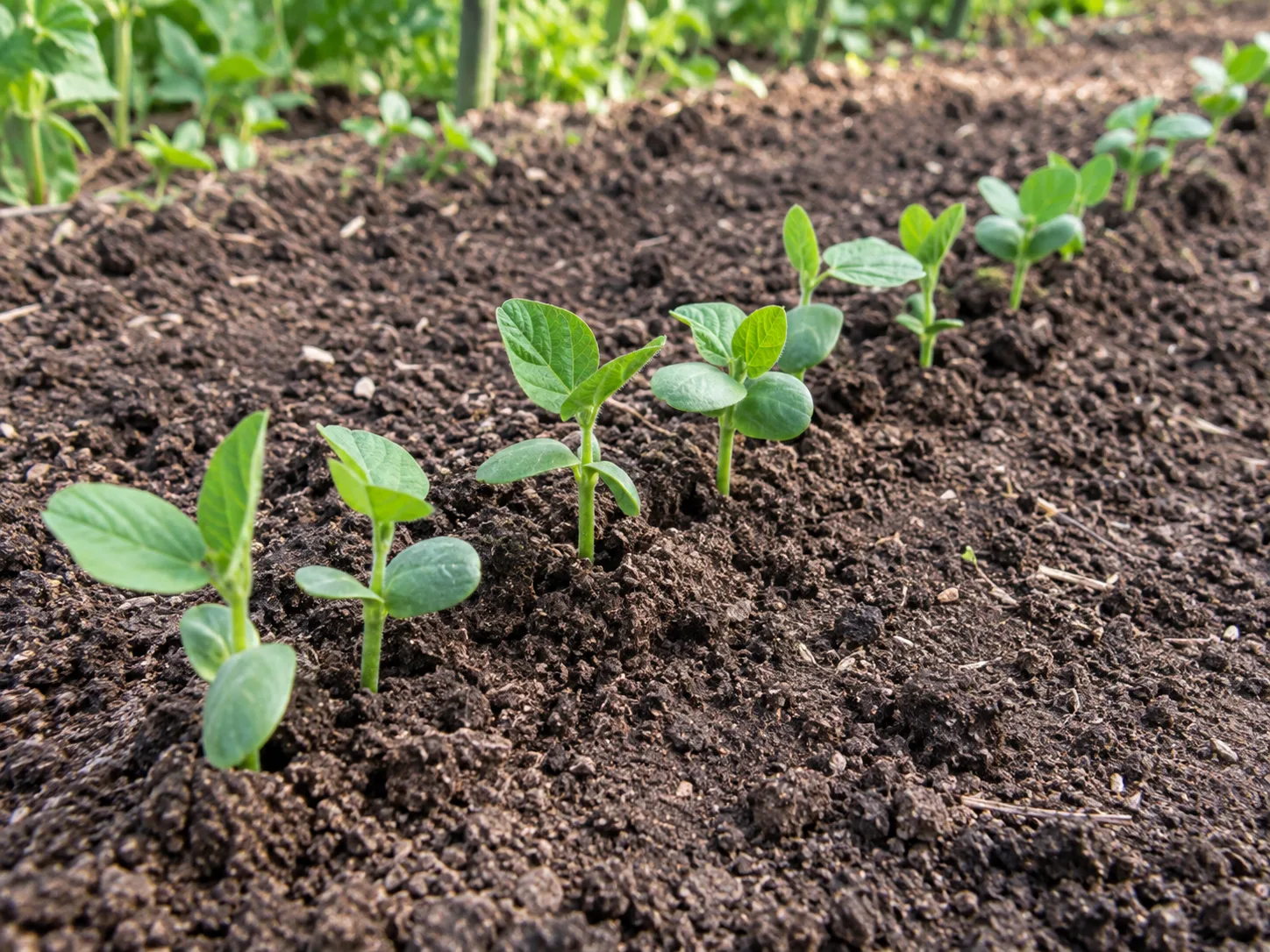
Once the seedlings are established, thin them to about 4–6 inches apart. This gives the bushy plants room to branch and leaves enough air movement for foliage to dry after rain. If you leave the initial close spacing in place, crowded plants compete for light and moisture, and harvesting pods through the foliage becomes harder.
Protect the new row if birds or other animals routinely dig up large seeds in your garden. A light row cover or netting secured along the edges can keep seed and seedlings from being disturbed. Remove or vent covers during unexpectedly hot weather and inspect underneath so the bed does not dry out unnoticed.
Savvy Gardening’s seed-to-harvest guide gives a similar direct-sowing sequence: sow closely, then thin, with wider spacing between rows. Use your packet’s instructions if they differ for a particular cultivar or a specialized planting system.
Can edamame grow in a container?
Yes, if the container is wide and deep enough to hold several plants at their mature spacing. Growing in the Garden suggests a pot about 12–18 inches across and deep, with drainage holes. Use a quality container mix rather than dense garden soil, and leave roughly 4–6 inches between plants so the foliage does not become a solid, wet mass.
Containers dry faster than garden beds, especially in wind or summer heat. Check the mix with a finger every day or two during warm weather and water when the upper layer begins to dry, rather than waiting for the whole pot to wilt. A smaller pot can produce a few pods, but it will buffer less against heat and missed watering, so it is a less forgiving choice.
Water consistently through flowering and pod fill
Keep the root zone evenly moist from emergence onward, with extra attention once the plants begin flowering and forming pods. A prolonged dry spell at that stage can reduce the number or fullness of pods. Rainfall may cover the crop’s needs, but check the soil rather than assuming a quick shower wetted the root zone.
Water slowly at soil level so moisture reaches the roots. A finger test a few inches down is more useful than judging only the dry surface. If the soil is still cool and damp below, wait; if it is dry, water deeply and then allow excess water to drain.
Mulch can reduce how quickly the surface dries, but do not pile it against stems or apply a thick blanket over cold soil. Straw or shredded leaves work as a light cover after the seedlings are up and the bed has warmed. In a rainy spell, ease back on irrigation and make sure containers and beds are draining rather than staying waterlogged.
Feed lightly and treat soybean inoculant as optional
Edamame is a legume and can form nitrogen-fixing nodules when compatible soil bacteria are present. That does not mean every bed automatically supplies all the nitrogen the crop needs, or that a plant with poor roots should simply be given more fertilizer. Start with healthy soil, moderate compost, and a soil test if the bed has a history of weak growth.
Avoid adding a high-nitrogen lawn fertilizer or repeated rich feeds by default. Too much available nitrogen can push leafy growth without solving a problem with cold soil, poor drainage, drought, or the wrong cultivar. If plants are pale or stunted, first check moisture, root health, sunlight, and whether the plants have begun to nodulate before deciding that fertilizer is the answer.
Soybean-specific inoculant is an option when edamame is new to a bed or the seed supplier recommends it. If you use one, make sure the label identifies soybean or edamame and follow its storage and seed-coating directions; inoculant products are not interchangeable just because both crops are legumes. Savvy Gardening recommends a soybean-specific product, but a healthy established crop does not need repeated inoculation as a routine midseason treatment.
Mulch, weed, and support only when needed
Keep young beds free of weeds until edamame plants have filled out. Early weed competition matters most because seedlings are small and can be overtopped. Pull weeds shallowly near the row so you do not disturb soybean roots, and avoid hoeing deeply once plants are established.
A light organic mulch helps conserve moisture and makes later weeding easier. Leave a small open ring around each stem so mulch does not hold wet material against the plant. In a dry climate, this can reduce watering swings; in a cool, wet bed, too much mulch can keep the soil colder and prolong dampness.
Most garden edamame is bushy and self-supporting, so a trellis is usually unnecessary. Add a short stake or loose support only if plants lean after strong wind, become top-heavy under pods, or grow in an unusually exposed spot. Tie loosely and check the tie as stems thicken; tight ties can rub or constrict a stem.
Watch for pests and disease without spraying by default
Inspect the underside of leaves and new growth every few days once plants are established. Soybean pests vary by region, so identify what is feeding before choosing a response. Small infestations are easier to manage early, and a photo or sample sent to a local extension service can prevent treating a harmless insect as a serious crop problem.
Give plants enough room, water at the base when practical, and rotate the bed so soybean is not planted repeatedly in the same place. These habits improve airflow and reduce some recurring pest and disease pressure, but they cannot prevent every problem in a humid summer or a garden with heavy wildlife pressure.
Pests: protect seedlings and inspect new growth
Aphids may cluster on tender tips, while larger animals can browse or flatten young plants. If you see a few aphids and the plant is otherwise healthy, a firm stream of water can knock them off; repeat after checking the new growth. Avoid blasting seedlings so hard that they break or become buried.
Row covers can protect a newly sown crop from birds and some insect visitors, and fencing is more reliable than a light cover against rabbits or deer. Secure a cover at the edges, monitor temperature underneath, and remove it if it traps excessive heat. For heavy or unfamiliar feeding damage, get a local identification before using any treatment on an edible crop.
Disease: reduce prolonged dampness and crowding
Dense, persistently wet foliage is more vulnerable to fungal problems such as white mold or stem diseases reported on soybean. Space the crop as recommended, water near the soil rather than repeatedly wetting leaves, and avoid handling plants while they are wet. Remove badly diseased material from the garden rather than leaving it among healthy stems.
Rotate soybean with unrelated crops and clean up diseased debris at the end of the season. Rotation is not an instant cure for a soilborne problem, but repeating soybeans in the same small bed can maintain conditions that favor recurring disease. If a patch develops a spreading stem or root problem, ask a local extension office to confirm the diagnosis before saving seed or replanting the same site.
Troubleshoot poor germination, growth, or pods
Look for a pattern before changing several care practices at once. Edamame problems often trace back to the stage when the crop stalled: seed that sat in cold wet soil, plants crowded by weeds, a dry period during flowering, or a harvest left too long on the plant. Correct the likely cause and observe new growth rather than expecting damaged tissue to recover.
Seeds failed or seedlings disappeared
If few seeds sprout, check the soil first. Cold, waterlogged ground can cause seed to rot, while a dry crust can stop seedlings from reaching the surface. Re-sow into warm, well-drained soil, keep it gently moist, and cover the row if birds have been digging.
If the seedbed conditions looked good but germination remains poor, check the seed packet date and storage history. Soybean seed can lose vigor when stored in damp or hot conditions. Use fresh seed from a reliable supplier rather than doubling the sowing rate indefinitely; overcrowding survivors can create a second problem later.
Plants flower but set few pods
Check moisture and heat first. A plant that dries repeatedly during bloom and early pod development may drop flowers or fail to fill as many pods. Water deeply when the root zone is dry, and use a mulch layer to reduce sharp swings rather than keeping soil constantly saturated.
Next, look at the crop’s basic growing conditions. Heavy shade, repeated nitrogen feeding, or a cultivar poorly suited to the local season can produce a leafy plant with disappointing pod set. If several plants show the same pattern, change the site or cultivar next time rather than adding a trellis or fertilizer to every plant.
Pods are flat, yellow, or uneven
Flat pods may simply be young; give them a little time and check again. If many pods remain flat while others yellow, the crop may have experienced drought, heat, or uneven maturity. Keep watering steady and begin picking the pods that are already full instead of waiting for every pod on every plant.
Yellowing pods have moved past the best green harvest stage. Pick any remaining pods that are still bright green and full; leave only the pods you intentionally want to dry for seed or dry soybeans. The next planting should be timed so the cultivar reaches its green stage before frost or a likely stretch of stressful heat.
Harvest edamame at the green, full-seed stage
Begin checking pods when the cultivar’s expected harvest window approaches, but let the plant—not the calendar—make the final decision. Pick when pods are bright green, feel plump, and contain beans that nearly fill the pod. Savvy Gardening describes typical ripe pods at about 2–3 inches long; size varies by cultivar, so fullness and color matter more than a single measurement.
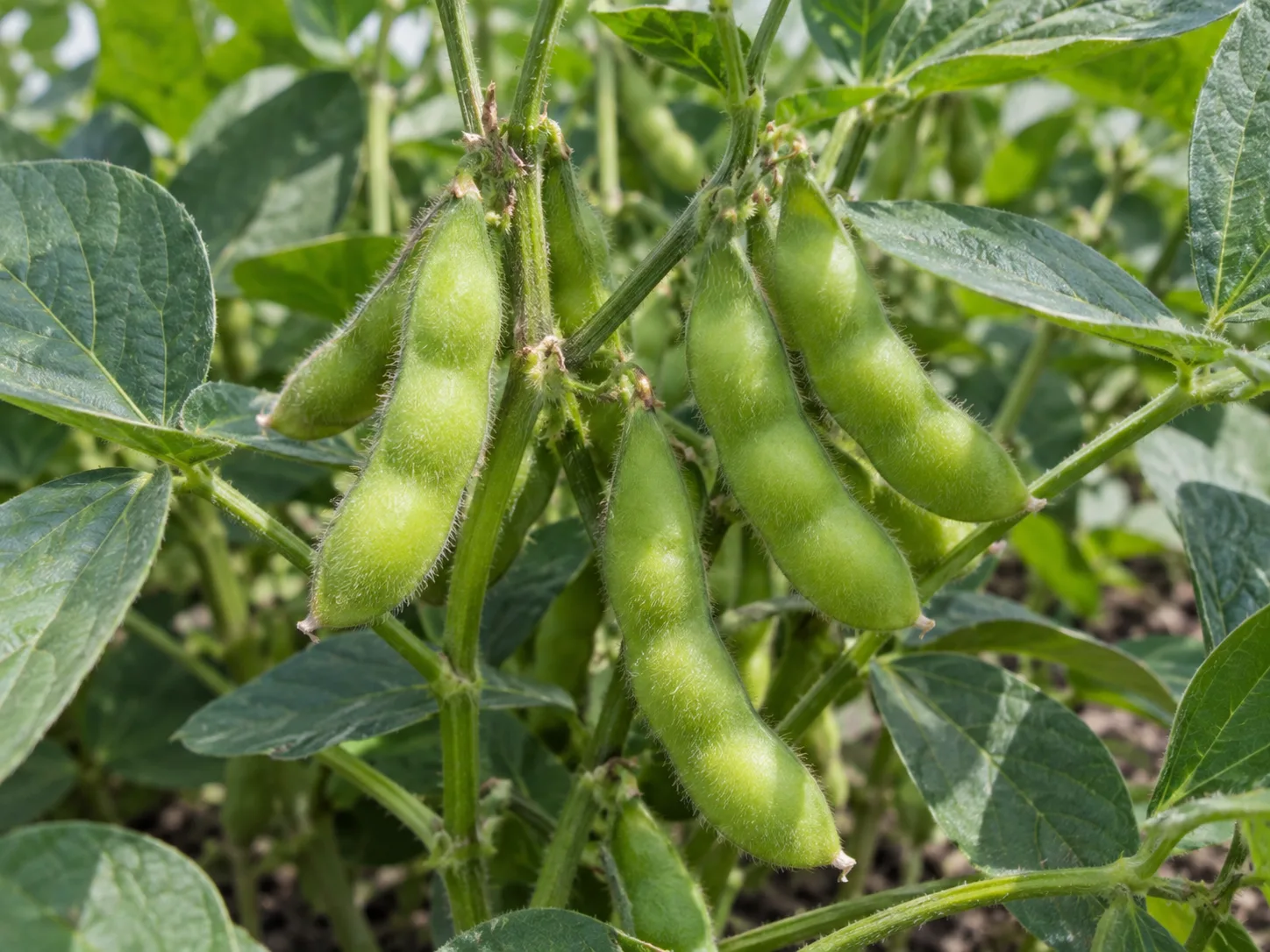
The research term for fresh edamame harvest is around the full-seed stage, commonly described as R6 to early R7, while the seeds are still green. The SARE project report uses that stage and also documents why the harvest window can be short under conventional field conditions. In a home garden, cultivar and sowing date can spread picking out; start checking every day or two as soon as most pods begin to swell.
Snap pods off carefully or use clean snips so you do not pull branches from the plant. Some gardeners pick in several passes; others cut a plant when most pods are ready. Both approaches can work. If pods are already plump, do not wait for the leaves to yellow just to make the whole crop look uniformly mature.
For dry soybeans or saved seed, leave selected pods on the plant until they turn yellow-brown and dry. That is a different harvest from edamame: the beans will be firmer and no longer have the fresh, sweet texture prized in green pods. If saving seed, keep track of the cultivar and whether it is a hybrid, because seed saved from a hybrid may not resemble the parent plant.
Keep the fresh harvest sweet
Use or cool freshly picked pods soon after harvest. Keep them refrigerated in a breathable or loosely closed bag and plan to cook them within several days; prolonged warm storage speeds quality loss. If the harvest is larger than you can use fresh, blanch the pods briefly, cool them quickly in ice water, drain well, and freeze them in meal-size portions.
For a simple snack, boil or steam the pods until the beans inside are tender, then salt them and squeeze the beans out of the pod. The pod is generally not eaten. Savvy Gardening describes a short boil or steam for serving and a brief blanch before freezing; cooking time depends on pod size and whether the beans are fresh or frozen, so check for tenderness rather than relying only on a timer.
Conclusion
Grow edamame as a warm-season soybean: choose a cultivar suited to your growing season, sow after frost into warm, well-drained soil, and give the bushy plants room, sun, and steady moisture. Do not assume every garden follows the same planting date or harvest calendar; local seed recommendations and the plants’ own pod development are better guides.
The clearest harvest signal is simple: pods are still bright green, and the beans inside have filled them out. Check frequently once pods begin to swell, pick in stages if needed, and cool the crop promptly. Those few timely decisions make edamame a manageable vegetable-bed crop rather than a guessing game.