The 8 Best Pruning Shears, Tested and Reviewed
We tested 14 pruning shears over two seasons. Compare our 8 top picks for bypass, ratchet, and anvil cuts—plus type guide, sizing, and sharpening rules.
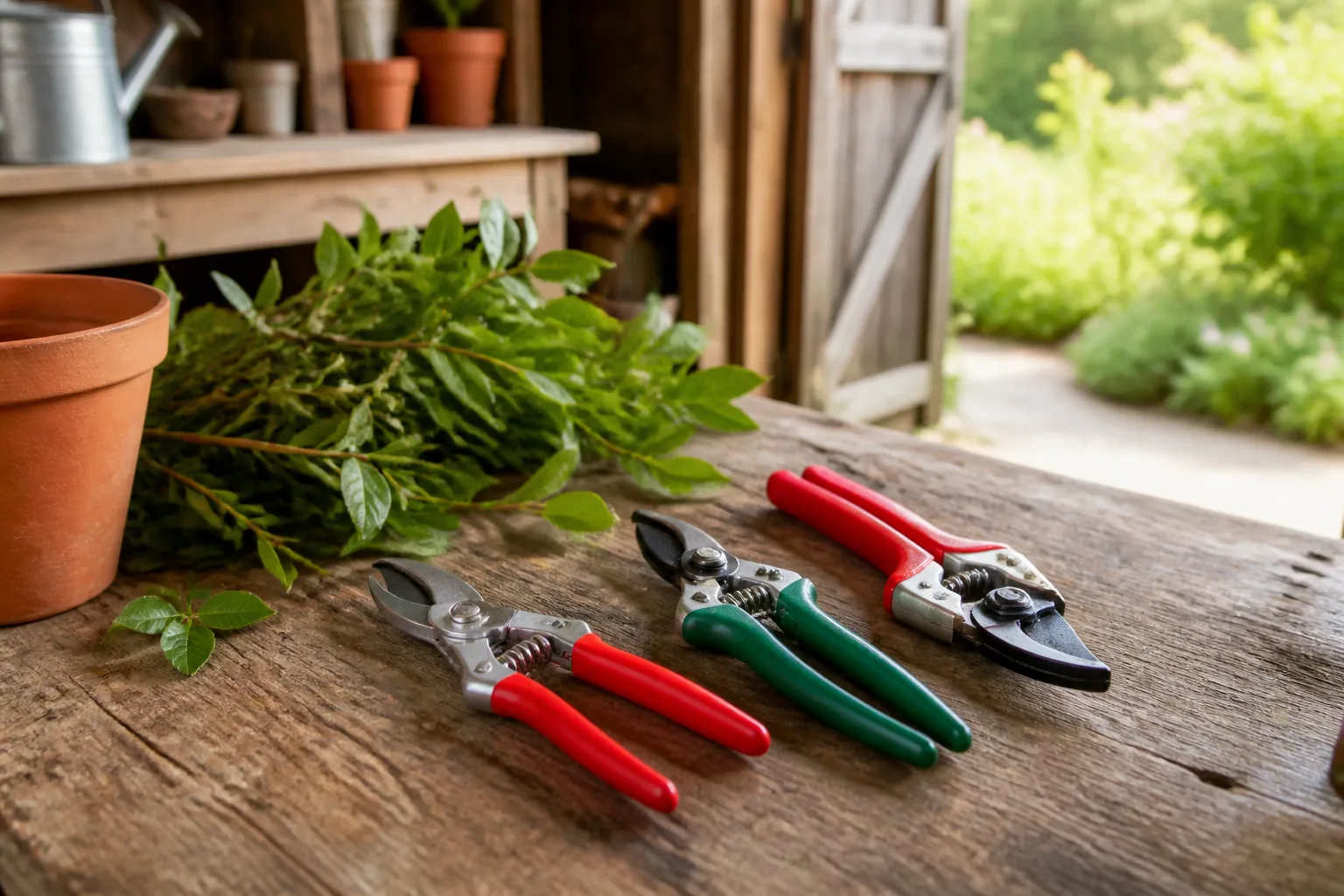
A pair of pruning shears is one of the few garden tools you reach for every week—deadheading annuals, shaping shrubs, harvesting herbs, cutting out diseased wood. Cheap pairs feel fine for ten cuts, then the pivot gums up with sap, the latch sticks, and live stems get crushed instead of sliced. We tested more than 14 hand pruners across two growing seasons in vegetable beds, rose borders, hedge lines, and vine-covered fences across several U.S. regions. These eight picks are the ones we would buy again: sharp enough for clean healing cuts, comfortable past the ninety-minute mark, and honest about their limits.
This is not a “buy all eight” list. Most gardeners need one excellent bypass pruner first, then optionally a ratchet or anvil pair for dry wood or weaker grip strength. Read the type guide below before you click checkout—and pair any pruner with gloves when thorns are involved (RHS safe gardening guidance).
Quick picks by pruning job
Match the tool to the stem, not the marketing photo.
Best overall bypass for live wood: Felco F-2 One-Hand Pruning Shear — replaceable hardened steel blades, sap groove, wire notch, and a pivot that still feels precise after hundreds of cuts.
Best budget bypass: Gonicc Titanium Bypass Pruning Shears — sharp out of the box, comfortable for average hands, and priced low enough to keep a backup pair in the potting shed.
Best for stubborn green branches: Fiskars PowerGear 2 Pruner — geared bypass action that reduces hand force on thicker stems up to about three-quarter-inch.
Easiest for weak grip or arthritis: The Gardener’s Friend Ratchet Pruning Shears — stepped ratchet cuts through woody material without a single crushing squeeze.
Best for small-to-medium hands: Felco F-6 Classic Pruning Shears — same Swiss build quality as the F-2 in a shorter, lighter frame.
Best for roses and thorny shrubs: ARS HP-VS8Z Signature Heavy Duty Pruner — scalpel-sharp bypass blades with offset geometry that reduces wrist strain on repetitive cane work.
Best ratchet starter pair: EZ-Kut Ratchet Pruner — simple all-metal build, wide cut rating, and forgiving leverage for newer gardeners tackling deadwood.
Best adjustable hand fit: Corona ComfortGEL FlexDIAL Bypass Pruner BP-4214D — dial adjusts how far the handles open without swapping tools mid-job.
How we tested pruning shears
We purchased pruners from mainstream retailers—no manufacturer samples—and used each through at least three weeks of normal garden maintenance before long-listing finalists. Strong performers stayed in rotation for two full seasons, covering spring shaping, summer deadheading, and fall cleanup.
Each pair was scored on cut quality (clean slice vs crush on green and dry wood), comfort during sessions longer than 90 minutes, durability after sap exposure and occasional drops, and value relative to replacement parts availability. We cut hydrangea stems, tomato suckers, rose canes, ivy runners, and dead raspberry canes. We noted latch ergonomics, spring tension, whether the tool could be disassembled for cleaning, and how quickly blades dulled on abrasive wood.
Cut quality, comfort, and value scoring
Cut quality meant a flat, smooth wound on live tissue—ragged edges or torn bark disqualified a pruner for precision work even if it felt strong. Comfort covered handle diameter, grip texture with gloves on, spring return speed, and whether small-handed testers could reach the safety latch without shifting grip. Value weighed warranty terms, spare parts catalogs, and expected lifespan—not sticker price alone. A $75 Felco that lasts fifteen years with $12 blade replacements often beats three $20 pairs with loose pivots.
We also tracked failure modes: springs popping out, non-replaceable blades going dull permanently, ratchet mechanisms skipping under load, and locks that pinch gloved fingers. Those weaknesses appear in each review below.
Bypass, anvil, and ratchet: which type you need
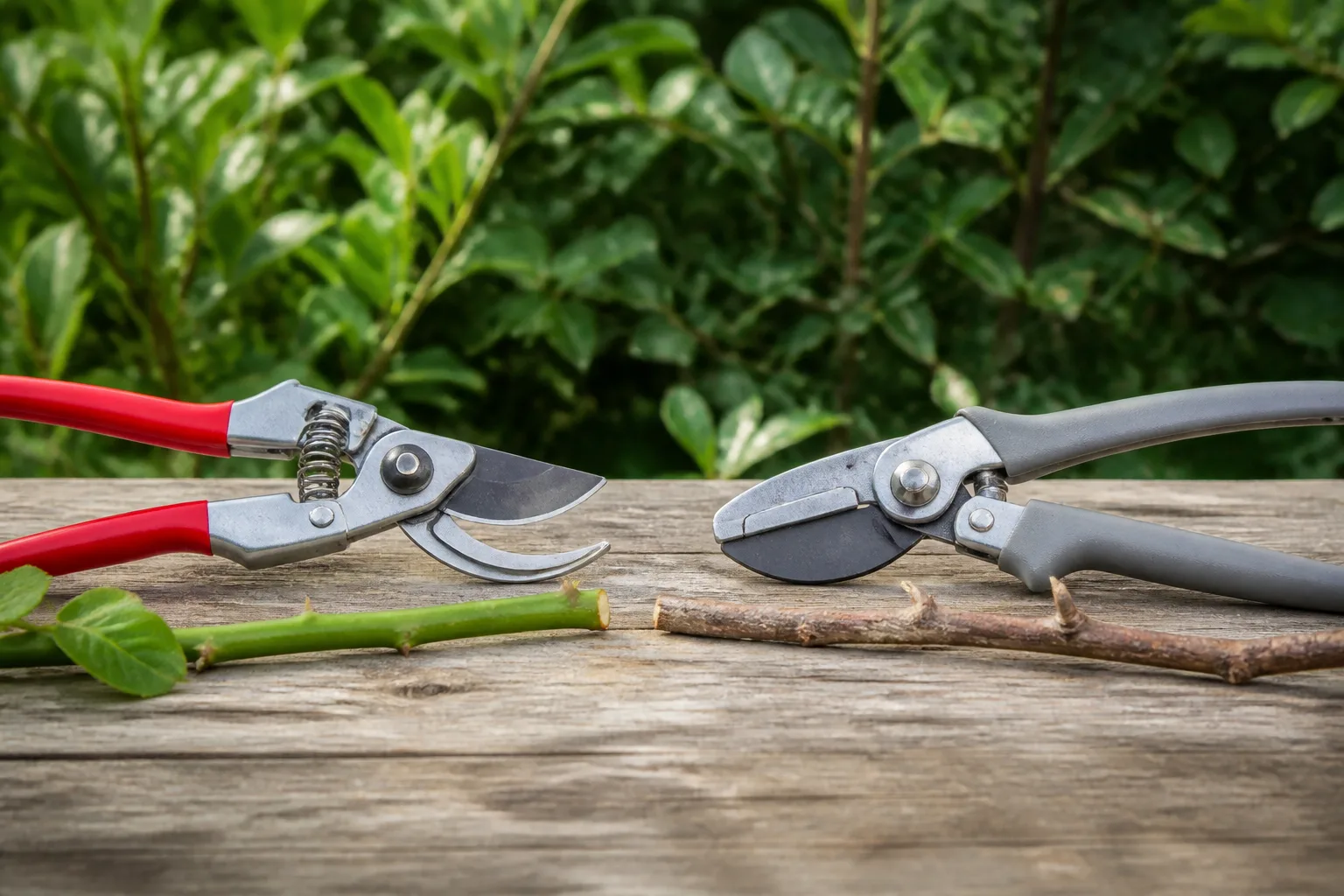
Bypass pruners work like scissors: two curved blades pass each other, slicing live stems cleanly. The bypass action minimizes tissue bruising, so healing is faster and disease entry points are smaller. For live wood, flowers, herbs, and green shrub growth, bypass is the default choice—editorial tool reviewers and arborists overwhelmingly recommend bypass as the first pruner in any kit (Gardening Products Review).
Anvil pruners press a straight blade against a flat plate, crushing the stem. That crushing action is acceptable on dead, dry branches but damages live tissue by bruising cambium and leaving ragged wounds. Use anvil pruners for firewood-sized cleanup of already-dead material, not for shaping live roses or fruit wood.
Ratchet pruners are usually anvil-style with a geared latch that lets you close the cut in several short squeezes instead of one powerful grip. They trade speed for leverage—excellent when grip strength is limited or when cutting half-inch-plus dry wood that would stall a standard bypass.
When ratchet pruners earn a place in your kit
If you already own a sharp bypass pair, a ratchet pruner becomes the second tool—not a replacement. Ratchets shine on woody stems, old hydrangea canes, and dead raspberry floricanes where bypass blades would require two hands or shoulder force. They are slower on soft green stems and herbaceous growth; reach for bypass first on tomatoes and perennials.
Our two-tool recommendation: one quality bypass for live cuts, plus either a ratchet anvil (The Gardener’s Friend or EZ-Kut) or a geared bypass (Fiskars PowerGear 2) if your main struggle is thick green wood rather than dry branches.
When hand pruners are not enough
Manufacturer cut-capacity ratings (often 3/4 inch to 1 inch) assume ideal wood, sharp blades, and straight access. In real gardens, angled canes, bark inclusions, and tired arms mean practical limits are lower. If you are forcing the handles together, twisting the wrist, or leaving a partial cut that you finish by yanking, the stem belongs to loppers or a folding saw—not hand pruners.
As a rule: hand pruners handle stems up to about pencil-thick reliably, up to three-quarter-inch with a geared or ratchet model on green wood, and one inch only occasionally on soft growth with a fresh bypass blade. Anything thicker, or any dead branch you cannot cut in one clean motion, deserves longer handles for leverage. Forcing oversized wood dulls blades fast and risks hand strain.
Best overall bypass: Felco F-2 One-Hand Pruning Shear
The Felco F-2 is the reference bypass pruner for good reason. Swiss-made hardened steel blades meet with surgical alignment, the sap groove sheds sticky exudate before it glues the pivot shut, and a wire-cutting notch at the blade base handles floral wire and plant ties without nicking the main edge.
In our tests across hydrangeas, laurel, and mixed shrub borders, the F-2 sliced green wood up to about one inch when the blade was fresh—though we still prefer loppers at that size for ergonomics. Handles are aluminum with cushioned red grips; at 8.5 inches overall, the tool fits medium-to-large hands best. Smaller gardeners should jump to the F-6 instead of tolerating handle stretch.
Every component is replaceable: springs, blades, pivot bolt, and cushions ship from Felco parts catalogs. That repairability is why professional crews run the same model for decades. Downsides: premium price (typically $70–$80), and the classic latch takes practice with gloves. Left-handed gardeners should choose the Felco F-9 mirror model instead.
Type: Bypass | Max cut (rated): 1 in. | Weight: 0.53 lb. | Length: 8.5 in. | Replaceable parts: Yes
Best value bypass: Gonicc Titanium Bypass Pruning Shears
The Gonicc GPPS-1003 punches far above its price. Blades arrive sharp, the sap groove works as advertised, and the spring return is brisk without snapping fingers shut. Our testers used it heavily on ivy, fence-line vines, and soft shrub tips for a full summer; live green wood cut cleanly, while dry, hard branches were the weak point—expect some crushing once blades dull.
At roughly $15–$20, this is the pair to stock as a backup, loaner, or first pruner while you save for Felco. The titanium-coated blade resists rust better than stamped steel budget pairs, and the latch is standard if not exceptional. Spring longevity under daily commercial use is questionable; home gardeners who clean and oil the pivot should get several seasons.
Grip fits average hands comfortably; very large palms may feel cramped. For left- and right-handed users the symmetrical handles work fine. When the spring eventually fatigues, replacement is cheaper than repair—treat this as a high-value consumable, not an heirloom.
Type: Bypass | Max cut (rated): 0.75 in. | Weight: 0.4 lb. | Length: 8 in. | Replaceable parts: Limited
Best for thick green wood: Fiskars PowerGear 2 Pruner
Fiskars PowerGear 2 adds a patented geared bypass mechanism that amplifies hand force—our testers cleared thick ivy and stubborn green stems with noticeably less wrist strain than standard bypass pairs. The rolling lower handle moves slightly with your fingers; it feels odd for the first dozen cuts, then becomes intuitive and reduces fatigue on long sessions.
Titanium-coated steel blades resist sap buildup, and the top-mounted latch is glove-friendly. Rated cut capacity is 0.75 inch, but the gearing helps on slightly larger soft stems when blades are sharp. Trade-off: the design is right-handed only, and the 11.5-inch length can feel bulky in tight shrub interiors.
This is not the prettiest pruner for precision rose work—choose ARS or Felco for show-quality cuts—but for heavy cleanup of green vines and shrub regrowth, the PowerGear 2 is the most capable standard bypass we tested under $35.
Type: Geared bypass | Max cut (rated): 0.75 in. | Weight: 0.55 lb. | Length: 11.5 in. | Replaceable parts: Blade available
Easiest on weak hands: The Gardener’s Friend Ratchet Pruning Shears
The Gardener’s Friend ratchet pruner uses a stepped anvil mechanism: squeeze, release slightly, squeeze again—the ratchet advances through tough wood without demanding one crushing closure. Testers with arthritis, tendonitis, and reduced grip strength completed cane cuts that stalled standard bypass pairs.
Soft rubber grips and an 8-inch frame suit a wide hand-size range. Included cleaning sponge is a nice touch for sap removal. Downsides: blades are less razor-sharp than Felco or ARS out of the box, and the anvil action is wrong for live rose shaping—use this on woody or dead material, not delicate green stems you want to heal invisibly.
Maximum rated cut is one inch, though dry hardwood still benefits from loppers. Blades are replaceable. If grip strength is your bottleneck, this ratchet pair delivers more completed cuts per afternoon than any standard bypass we tested at a similar price.
Type: Ratchet anvil | Max cut (rated): 1 in. | Weight: 0.5 lb. | Length: 8 in. | Replaceable parts: Blades yes
Best for smaller hands: Felco F-6 Classic Pruning Shears
The Felco F-6 is the compact sibling of the F-2—same hardened steel, sap groove, wire notch, and full parts support in a 7.68-inch frame that fits small-to-medium hands without handle splay. Testers with petite grips finished hedge trimming faster because they were not fighting oversized loops.
Rated capacity is 0.8 inch, slightly below the F-2, which matters only when you routinely cut at the upper limit. For typical shrub tips, herbs, and flowers, the F-6 is indistinguishable from the larger model in cut quality. Price lands near the F-2; you are paying for fit, not lesser steel.
If you have large hands, skip the F-6—the handles will pinch at full open. Everyone else who found the F-2 awkward should start here rather than buying a discount pair that will not last.
Type: Bypass | Max cut (rated): 0.8 in. | Weight: 0.46 lb. | Length: 7.68 in. | Replaceable parts: Yes
Best for roses and clean cuts: ARS HP-VS8Z Heavy Duty Pruner
Japanese ARS pruners occupy the sweet spot between Felco heirloom pricing and mid-tier home-store brands. The HP-VS8Z ships scary sharp: bypass blades slice rose canes and thorny stems without tearing bark, and offset blade geometry keeps wrists straighter during repetitive deadheading.
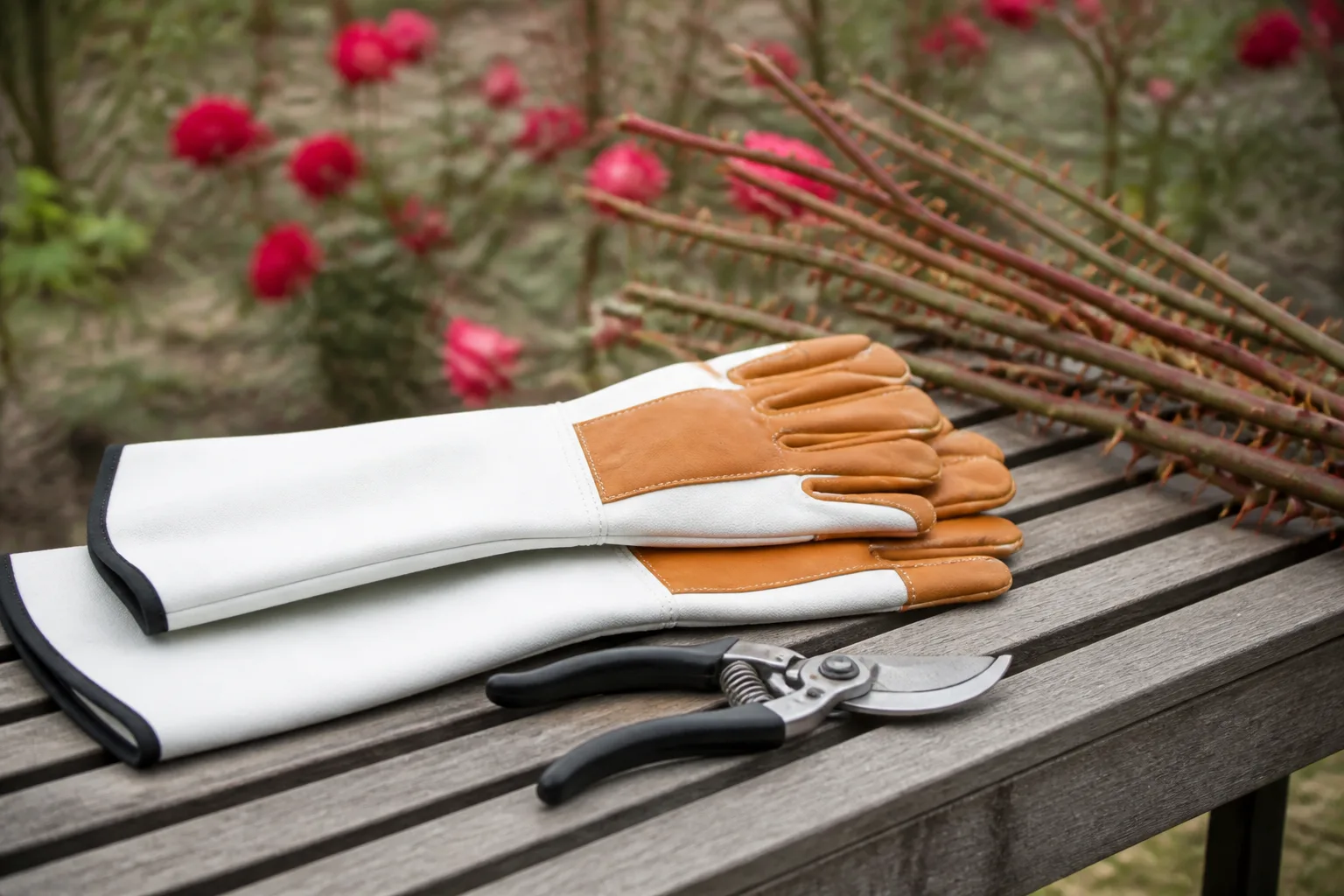
Chrome plating resists sap and corrosion; testers ran a full rose season before sharpening. Aluminum handles with rubber coating stay grippy with gauntlet gloves—worth pairing with our gardening gloves guide for thorn work per RHS recommendations on gauntlet protection. Lock release is squeeze-to-open, which most testers loved; occasionally the latch sticks until you wipe sap from the mechanism.
At 8 inches, fit is best for average hands. Rated 0.75-inch capacity is honest—do not force older hardwood canes. For rose collectors and anyone who judges success by invisible pruning wounds, ARS is the best cutter per dollar in this roundup.
Type: Bypass | Max cut (rated): 0.75 in. | Weight: 0.47 lb. | Length: 8 in. | Replaceable parts: Yes
Best ratchet for beginners: EZ-Kut Ratchet Pruner
EZ-Kut targets gardeners who want ratchet leverage without deciphering complex mechanisms. The all-metal build feels substantial, handles are coated for grip, and the 1.5-inch rated capacity handled dead branches that would intimidate a first-time pruner—though we still recommend loppers at that size for safety.
Leverage is excellent; beginners completed cleanup cuts with confidence. The green finish blends into grass—set it on a tarp or choose the pink colorway if you misplace tools. Anvil ratchet action suits deadwood and renovation pruning more than soft herbaceous deadheading.
At under $40, this is a smart second pruner paired with a bypass Gonicc or Felco. Gift-worthy for older gardeners who want to keep pruning without joint pain.
Type: Ratchet anvil | Max cut (rated): 1.5 in. | Weight: 0.4 lb. | Length: 8.26 in. | Replaceable parts: Limited
Best adjustable opening: Corona ComfortGEL FlexDIAL Bypass Pruner
Corona BP-4214D solves a niche problem: one pruner that adjusts handle spread via the FlexDIAL—eight settings from narrow to wide opening—so the same tool works for tight deadheading and reaching around thicker stems. ComfortGEL grips cushion palms, and coated high-carbon steel blades cut cleanly through citrus, vines, and shrubs in mixed testing.
Rated 0.75-inch capacity is standard; palm fronds and oversized stems still need loppers. The dial can stick when sap-coated—squeeze handles lightly while turning to free it. At 0.6 lb., it is the heaviest bypass here, which tired small hands on all-day sessions.
Corona sits between budget and pro tiers: parts exist, disassembly is possible, and price (~$27–$32) beats Felco. Choose this when hand fit variability matters more than ultimate edge retention—multiple household gardeners sharing one shed tool will appreciate the dial.
Type: Bypass with adjustable opening | Max cut (rated): 0.75 in. | Weight: 0.6 lb. | Length: 8 in. | Replaceable parts: Yes
What to look for when buying pruning shears
Blade steel: Hardened or high-carbon steel holds an edge longer than soft stamped metal. Coatings (titanium, chrome, nonstick) reduce sap adhesion but do not replace steel quality. Avoid pruners that cannot be sharpened because blades are riveted shut.
Cut capacity: Treat ratings as optimistic. Test on your actual shrubs; if you routinely max out the tool, step up to loppers.
Ergonomics: Handle diameter should let you close fully without the loops hitting palm creases. Rotating handles (Fiskars) and offset blades (ARS) reduce fatigue; try before committing if wrist pain is an issue.
Serviceability: Felco, ARS, Bahco, and Corona sell replacement blades and springs. Disposable pairs make sense only at backup price points.
Left-handed use: Felco F-9 and several symmetrical budget pairs work; geared models like PowerGear 2 may be right-hand-only—check before buying.
Safety latch: Must lock blades closed in a pocket or belt holster. Top-latch designs are easier with gloves.
For the rest of your kit—trowels, hoses, shovels—see our broader best gardening tools roundup.
Sharpening, cleaning, and storing your pruners
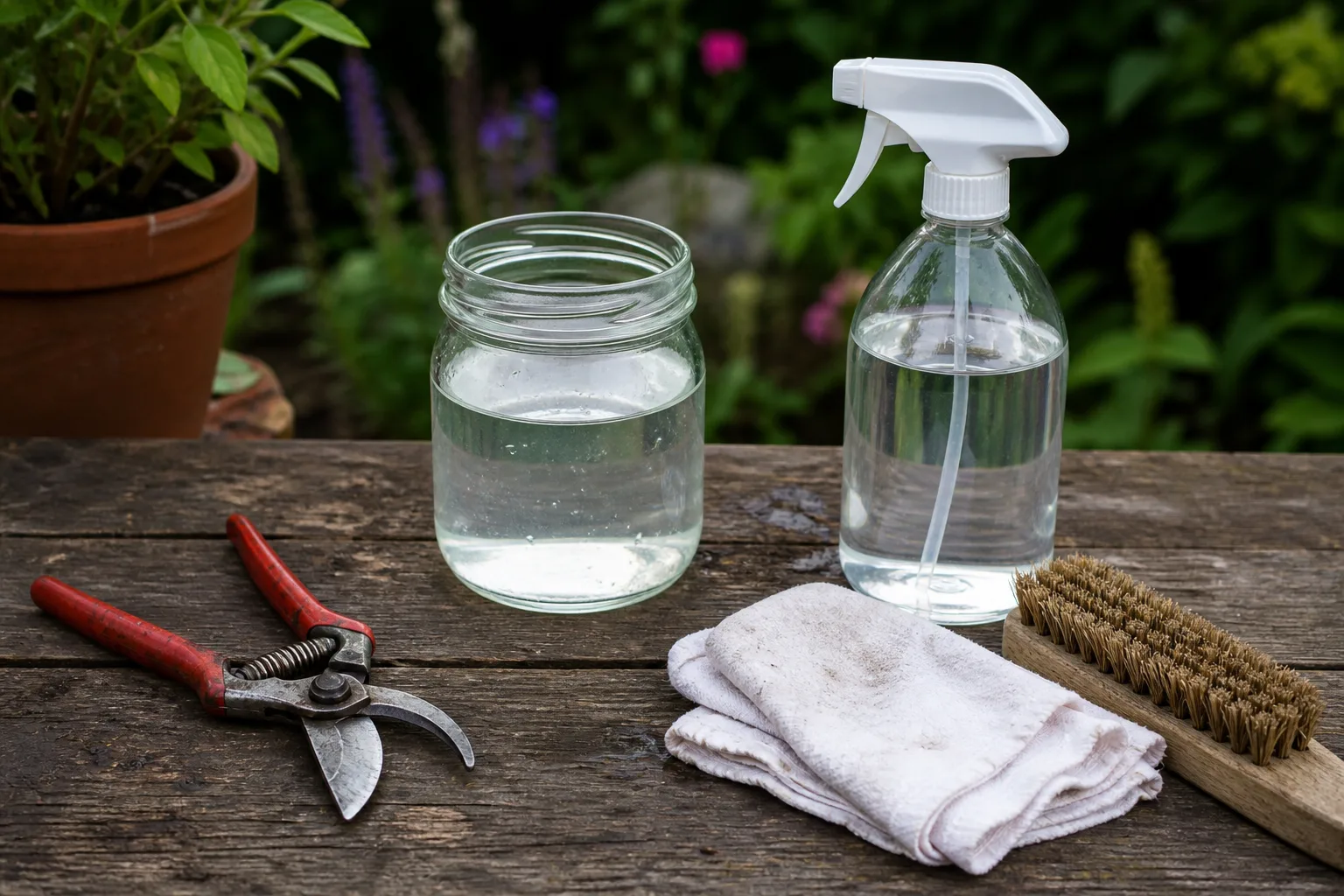
Dull pruners crush stems, slow healing, and demand more hand force—raising slip risk. Oregon State University Extension recommends periodic sharpening with a whetstone or diamond hone matched to the bevel, plus light oil on metal after filing (Oregon State sharpening guide). Sharpen bypass pruners at least once per growing season, or immediately when green stems fold instead of slicing.
Between plants—especially after diseased wood—clean sap and soil, then disinfect. Colorado State Extension Master Gardeners emphasize sharp, clean, sterile tools to avoid spreading pathogens (Colorado State Extension tool care). A quick 70% isopropyl alcohol wipe works between healthy plants; confirmed bacterial or viral issues call for a fresh 10:1 water-to-bleach soak (ten minutes, rinse, dry, oil). Full step-by-step protocols live in our how to clean garden tools guide.
After each session: knock off debris, open the pivot, wipe blades, oil the spring and bolt, and store locked closed on a hook—not buried in a damp tub with trowels. Winter downtime is ideal for disassembly, full sharpen, and handle conditioning so spring pruning starts sharp.
Conclusion
The right pruning shears turn maintenance from a chore into quick, satisfying work—and the wrong pair leaves ragged wounds on your plants and blisters on your palms. Start with a sharp bypass: the Felco F-2 if you want a buy-once tool with full parts support, the Gonicc if budget matters more than decades of service, or the Felco F-6 and ARS HP-VS8Z when hand size and rose-quality cuts dictate fit. Add Fiskars PowerGear 2 when thick green stems outmuscle your wrist, or a ratchet from The Gardener’s Friend or EZ-Kut when grip strength—not plant type—is the limiting factor. Corona FlexDIAL wins shared-tool households that need adjustable handle spread.
Whichever pair you choose, sharpen it, disinfect between suspicious plants, and graduate to loppers when stems fight back. Your shrubs will heal faster, your hands will thank you, and you will stop buying the same $15 pruner every other spring.