9 Best Electric Lawn Mowers for 2026
Compare nine electric lawn mowers by yard size, battery runtime, deck width, and price so you can choose corded, cordless, riding, or robotic with confidence.
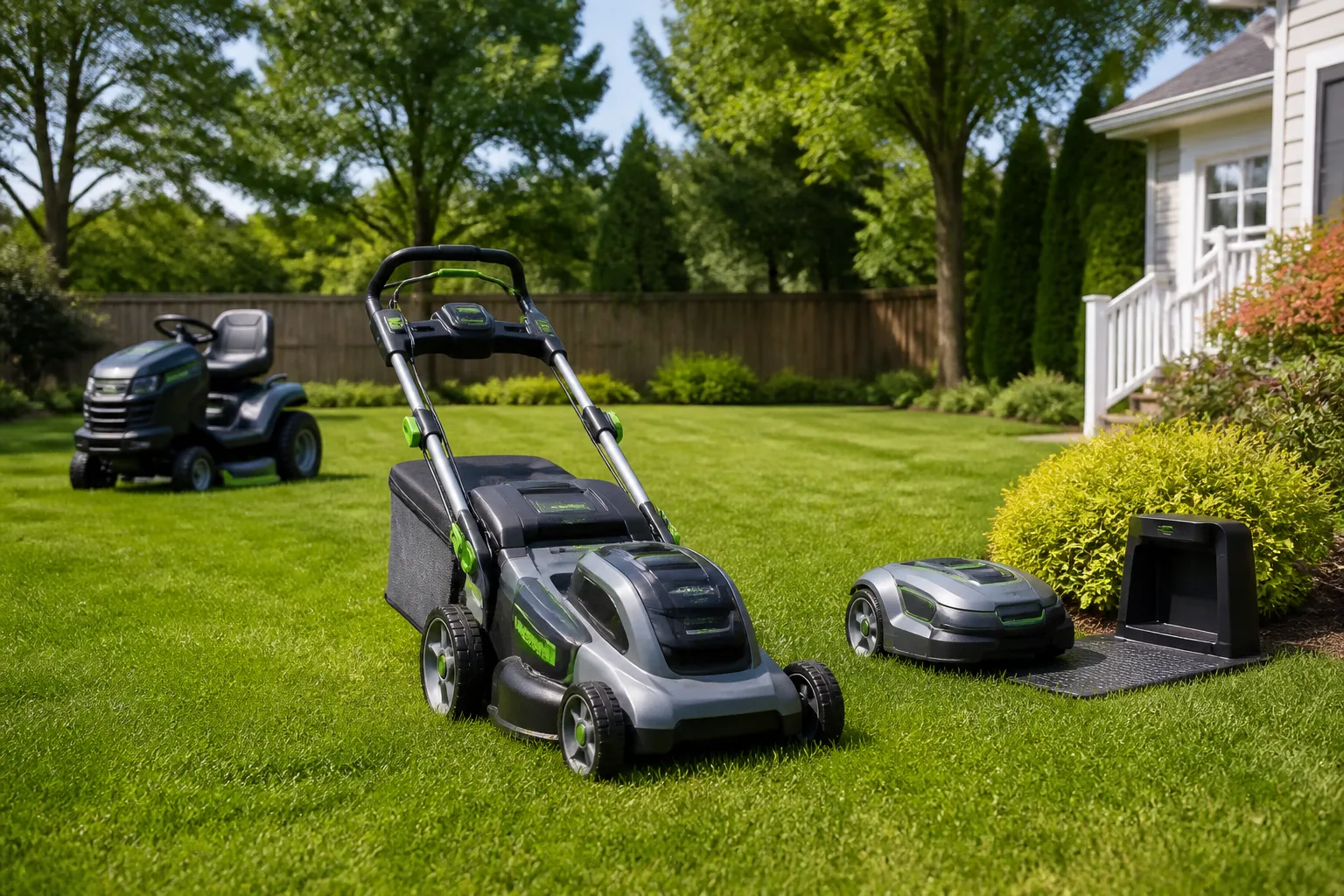
The best electric lawn mower is not the one with the highest voltage on the box. It is the one that can finish your route—gates, beds, slopes, storage space, and clipping habits included—without turning every mow into a logistics problem. Electric mowers remove fuel, oil changes, and most cold-start headaches, but they introduce new constraints: battery runtime, cord length, charging location, and whether the deck you want can actually turn around your obstacles.
This guide compares nine electric models across walk-behind, corded, riding, zero-turn, and robotic formats. Recommendations are built from current product specifications, published feature sets, and the lawn-management context extension services provide—not from a claim that one test yard represents every property.
Quick answer: match electric format to your lawn
Use the table as a first filter. Manufacturer acreage and runtime figures assume maintained grass, a particular battery, and often flat ground; treat them as planning ranges, not promises.
| Best for | Electric format | Example pick | Why it fits | Main compromise |
|---|---|---|---|---|
| Typical suburban lawn with slopes | 21-inch self-propelled battery | Ego Power+ 21-Inch Self-Propelled | Strong cut, long runtime class, fold-flat storage | Higher price than push or budget self-propelled models |
| Natural walking pace on hills | 22-inch self-propelled battery | Toro 60V Flex Force Personal Pace | Drive speed follows your stride | Heavy; per-wheel height adjustment |
| Value-focused self-propulsion | 20-inch budget battery | HART 40V Self-Propelled | Self-propelled at a lower price point | May need a second battery on larger lawns |
| Flat, medium lawns you can push | 21-inch push battery | Ryobi 40V HP 21-Inch Push | Wide deck without drive-system cost | More effort on thick grass or soft ground |
| Open acreage with obstacles | 42-inch electric zero-turn | Ryobi 80V 42-Inch Zero-Turn | Tight turns and fast coverage | High price, storage, learning curve |
| Tiny reachable lawn | 13-inch corded push | Ryobi 13-Inch Corded Electric | Unlimited runtime, low cost, very light | Cord management and limited width |
| Hands-off frequent light cuts | Robotic battery | WORX WR147 Landroid | Scheduled mowing on maintained turf | Boundary setup, edge trimming, Wi-Fi needs |
| Large lawn, steering-wheel comfort | 42-inch riding battery | Ryobi 42-Inch Electric Riding Tractor | Ride the route; front and rear hitches | Accessories often sold separately |
| Premium electric tractor feel | 42-inch Ego riding | Ego Power+ T6 TR4204 | Cruise control, strong cut, long runtime class | Rear hitch only; bag/mulch kits extra |
Walk your mowing route before you compare brands. Note the narrowest gate, the steepest section, where you must reverse, and whether the grass is usually short or overdue. That survey often eliminates a mower faster than a feature list. A 42-inch riding deck that cannot reach the back lawn is not a time-saver, and a battery mower that must stop at the charging shelf halfway through the route is not “cordless freedom.”
How these electric mower picks were evaluated
These recommendations weigh cutting width, power source, propulsion, height adjustment, clipping options, included battery or charger, weight, storage footprint, and the likely failure point for a homeowner. Electric mowers should also be judged on platform economics: whether you already own compatible batteries, what a second pack costs, and where you will charge and store packs through winter.
The Consumer Product Safety Commission notes that walk-behind power mowers sold in the U.S. must meet a federal safety standard and carry required labeling. That is useful compliance context, but it is not a performance ranking—a mower can meet the standard and still be wrong for a steep yard or a long, wet lawn. Review the CPSC walk-behind mower guidance and the exact owner’s manual before operating any model.
Voltage, amp-hours, brushless-motor claims, and “gas-equivalent horsepower” describe different parts of the system. Compare the complete machine under the conditions you face: a modest-voltage mower with a large amp-hour pack and sharp blades may outperform a higher-voltage machine cutting too low through damp growth.
The 9 best electric lawn mowers
1. Ego Power+ 21-Inch Self-Propelled — Best Overall Electric Mower
The Ego Power+ 21-inch self-propelled mower is the strongest all-around electric walk-behind for a maintained suburban lawn around a quarter- to half-acre, especially when slopes or long routes make pushing tiring. Its 56-volt platform, self-propelled drive, 21-inch deck, and included battery kit target the most common upgrade path from gas: enough power and runtime for repeated weekly cuts without fuel.
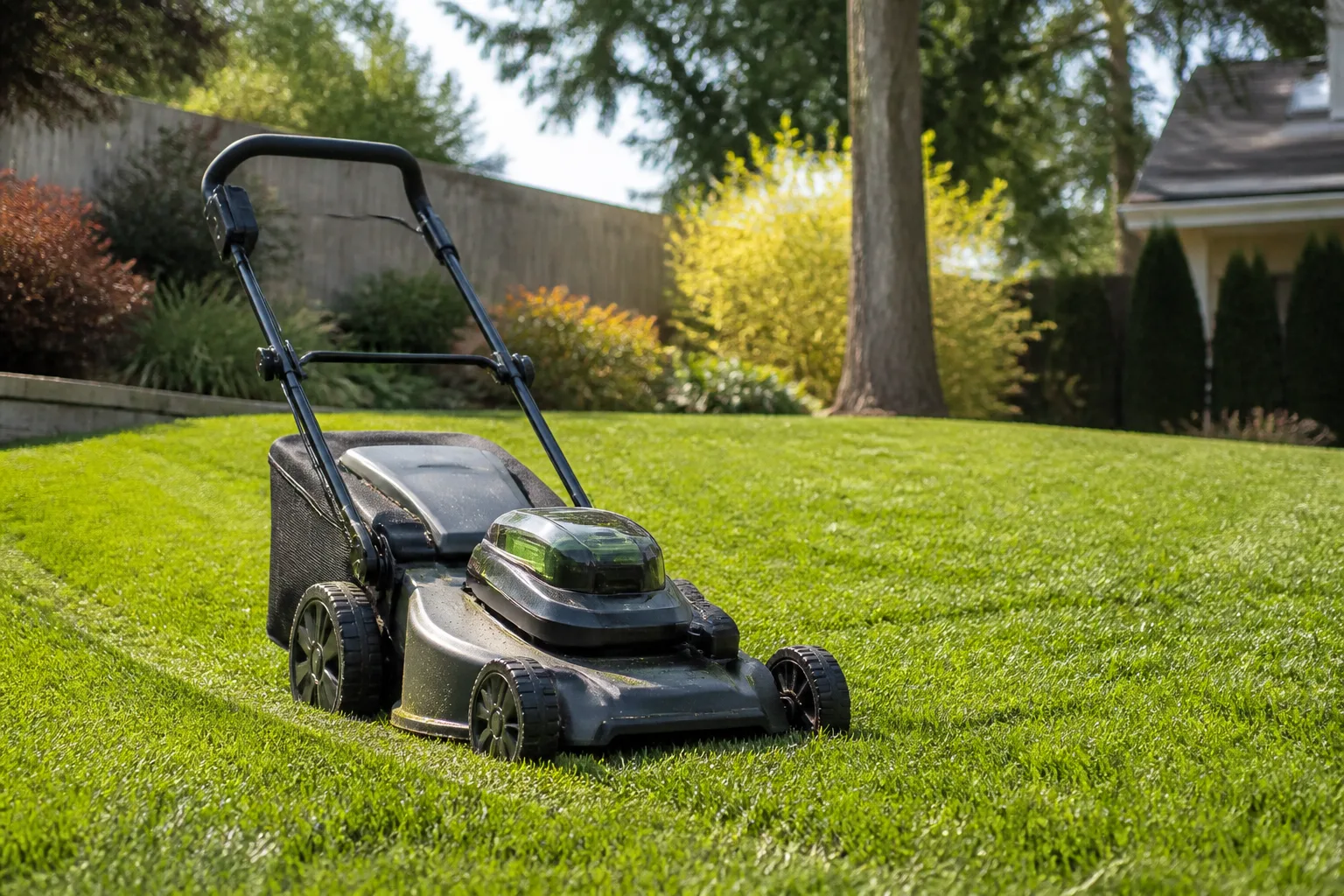
Ego’s advantage is the combination of cut quality, runtime class, and storage. The fold-flat handle helps in tight garages, and the brand’s 56V ecosystem shares batteries with blowers and trimmers if you are building a cordless yard lineup. Tradeoffs are real: self-propelled models take practice on tight turns, the collection bag can be finicky to mount, and wet grass can trigger protective shutdowns until the deck moves to drier turf—behavior that is common across electric mowers, not unique to this model.
Choose it when you want one electric walk-behind that can handle hills, thick spring growth, and bagging, mulching, or side discharge without feeling underpowered. Skip it if your lawn is tiny and flat—a lighter push or corded mower will be cheaper and easier to maneuver—or if you already invested heavily in another battery platform.
2. Toro 60V Flex Force Personal Pace — Best Self-Propelled
The Toro 22-inch 60V Flex Force self-propelled mower is the pick when drive feel matters more than headline runtime. Toro’s Personal Pace system adjusts propulsion to your walking speed, which reduces the “mower running away from me” learning curve some fixed-speed self-propelled models create on slopes and turns.
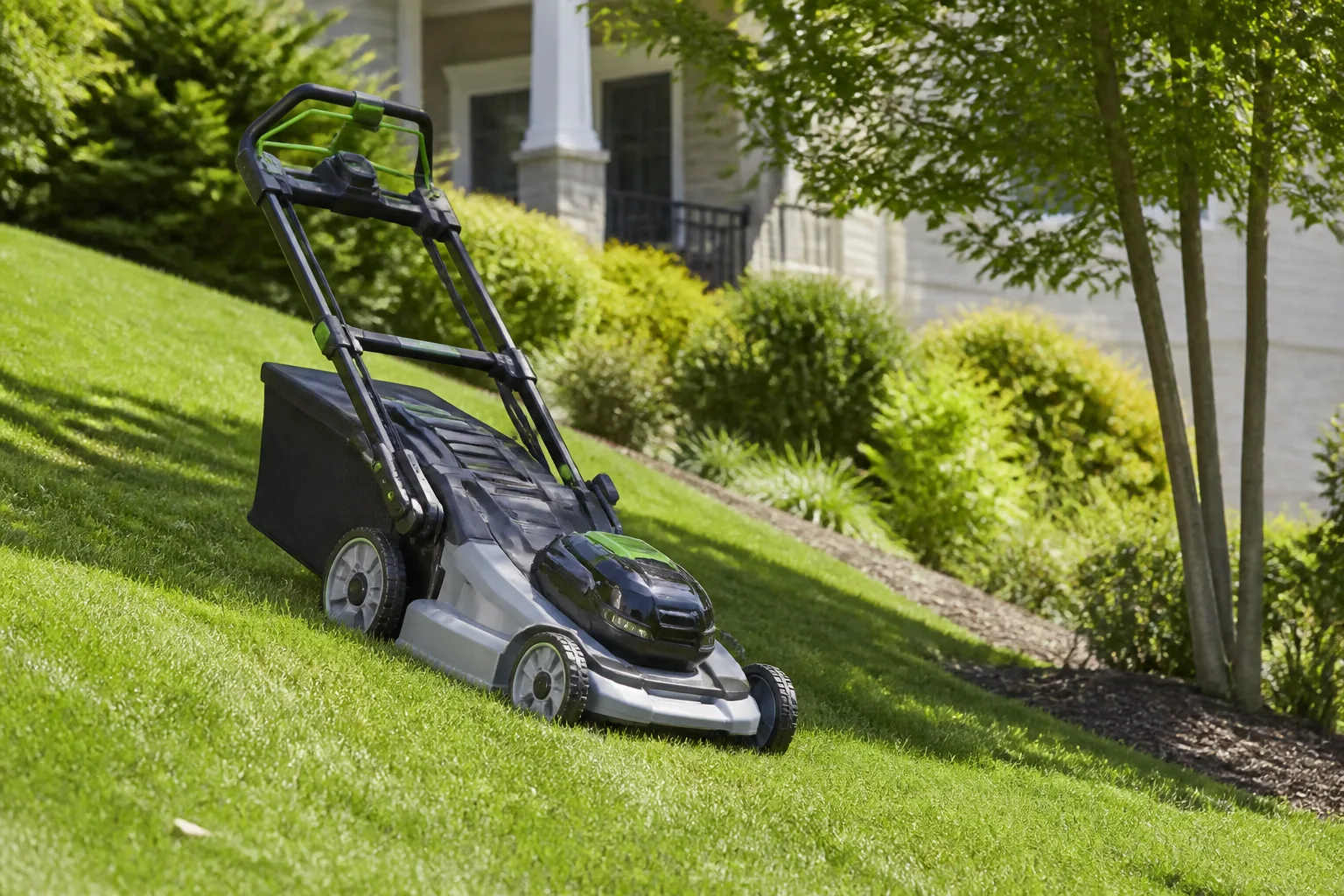
The 22-inch Recycler deck, nine height positions, and quick-connect bagging are suited to standard lawns up to about a third of an acre in one session, depending on grass height and drive setting. Lower cutting heights and aggressive self-propel speeds drain the pack faster, so treat published runtime as a ceiling. The mower is heavy, and height changes require adjusting each wheel separately—a annoyance if you switch heights often.
Compared with the Ego overall pick, Toro wins on intuitive propulsion; Ego often wins on recharge speed and runtime per dollar for owners mowing larger areas. If your lawn has varied slopes and you dislike fighting drive speed, start here.
3. HART 40V Self-Propelled — Best Budget Electric Mower
The HART 40-volt self-propelled mower kit is the budget anchor for homeowners who want self-propulsion without premium-brand pricing. Its 20-inch deck, single-lever height adjustment, headlights, and onboard space for a second battery address the main pain points of low-cost electric mowing: hills, dusk mowing, and runtime anxiety.
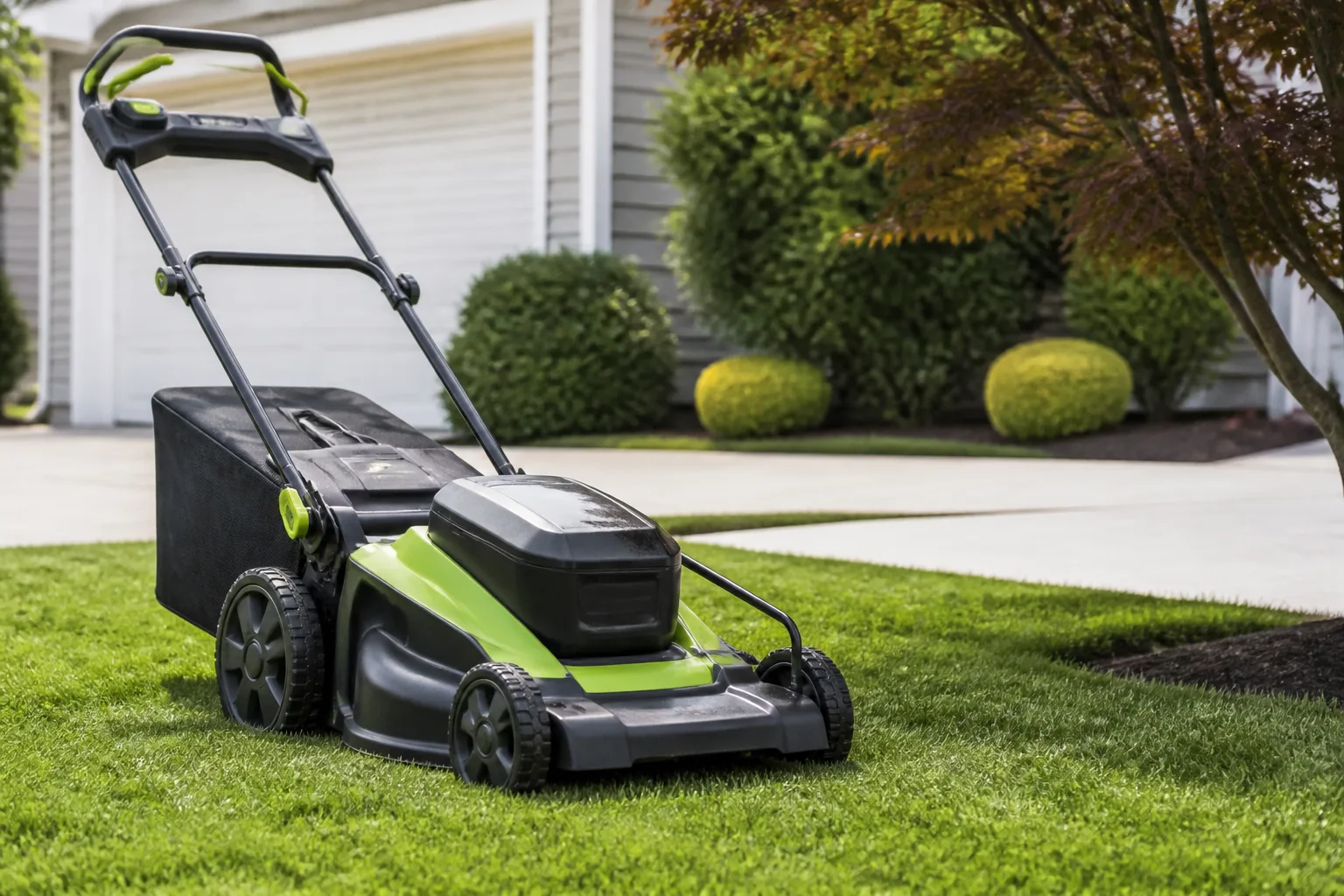
At this price, expectations should stay proportional. The 40V class is closer to a capable push mower than to a heavy-duty pro platform, and steep, overgrown ditches can still overload the drive. For small- to medium-sized lawns with moderate slopes, though, it delivers a lot of convenience per dollar—especially if you value single-point height changes over the Toro’s per-wheel system.
Verify whether the listing includes battery and charger, and price a second pack if your route is borderline. A budget self-propelled mower plus an extra battery often still undercuts a premium single-battery kit.
4. Ryobi 40V HP 21-Inch Push — Best Push Mower
The Ryobi 40V HP brushless 21-inch push mower is the value choice when the lawn is mostly flat and you would rather not pay for a drive system. The 21-inch deck, 8.0 Ah battery class, turbo mode for thick patches, and bagging, mulching, and side-discharge flexibility cover typical weekly maintenance on roughly half-acre routes in dry, maintained turf.
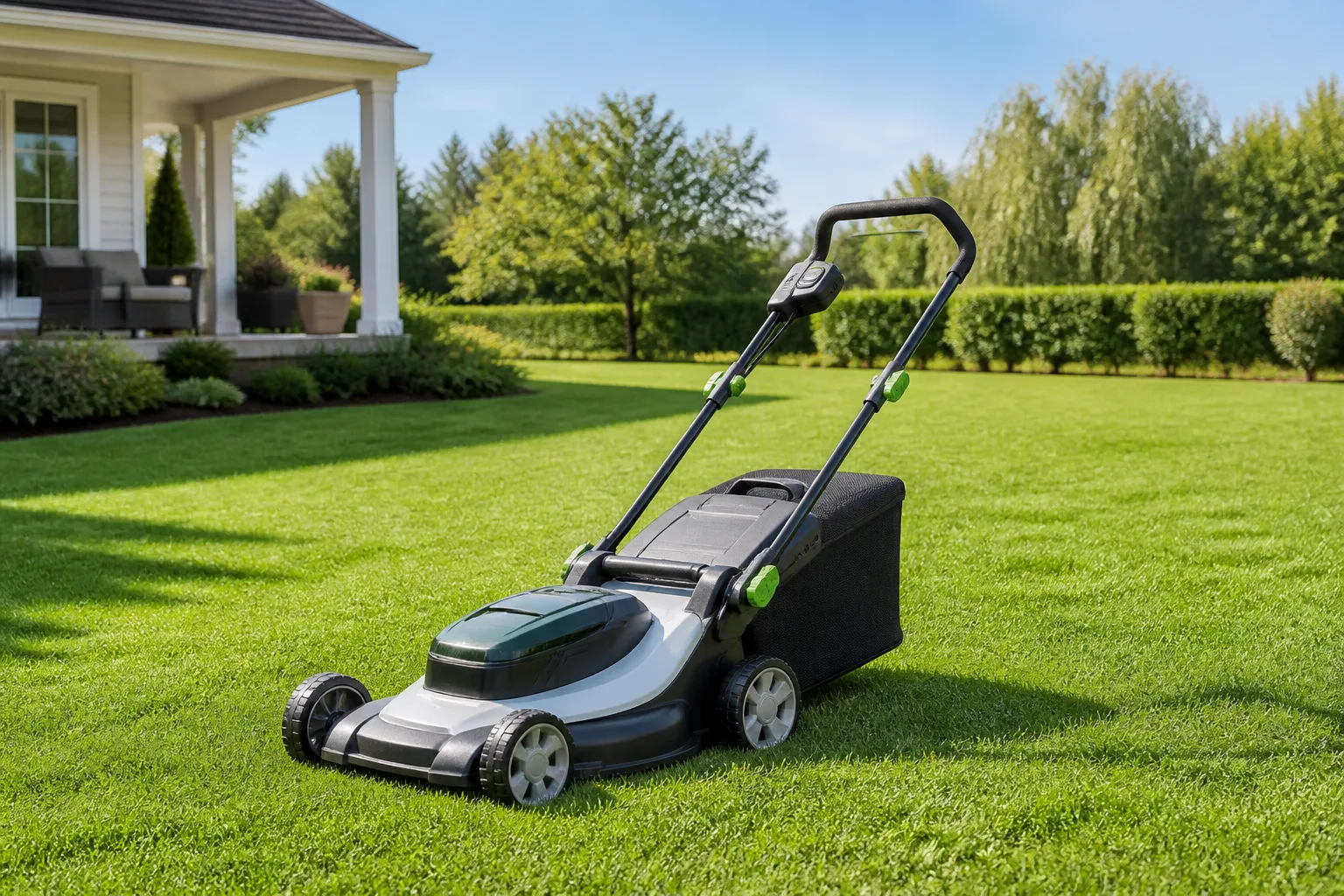
Push mowers reward honest self-assessment. If you finish mowing winded, avoid the job when grass gets long, or fight soft ground, self-propulsion will feel like a upgrade, not a luxury. If you already own Ryobi 40V outdoor tools, this mower becomes more attractive because packs and chargers may be shared across the lineup.
Turbo mode and low cutting heights consume battery faster. Use turbo sparingly, raise the deck for the first pass on tall grass, and remember that a push mower on a hill is still a hill workout—electric power does not change gravity.
5. Ryobi 80V 42-Inch Zero-Turn — Best Electric Zero-Turn
The Ryobi 80V HP 42-inch electric zero-turn mower is for open properties where walking time is the bottleneck and you can learn joystick steering. Zero-turn maneuverability shines around trees, beds, and fence lines that force many passes with a tractor-style rider.
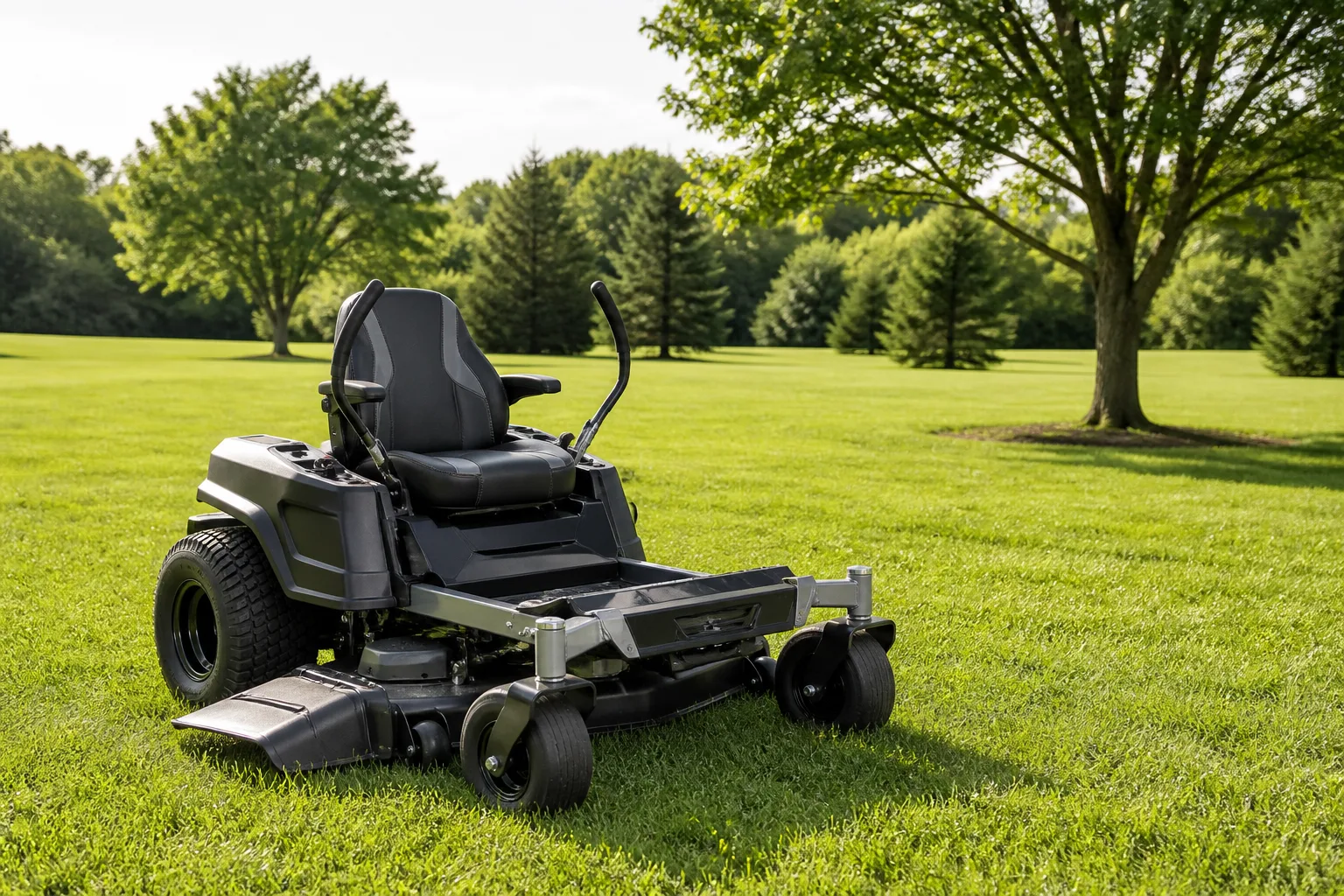
Ryobi’s high-voltage pack architecture, onboard charging, LCD screen, and app battery monitoring target large lawns—manufacturer materials cite multi-acre potential with expanded battery bays. This is not a casual upgrade from a walk-behind: confirm gate width, trailer or delivery access, storage height, and charging location before buying. Baggers are often sold separately, so include accessories in the true cost.
Electric zero-turns reduce noise and fuel handling versus gas ZTRs, but they do not make slopes safe when wet. Practice in an open area, start at low speed, and treat quiet operation as unrelated to traction on hillsides.
6. Ryobi 13-Inch Corded Electric — Best for Small Yards
The Ryobi 13-inch corded electric push mower is the right tool when the lawn is small, the outlet is reachable, and you want the lowest-cost electric option. At roughly 29 pounds with a 13-inch deck, it is easy to lift, turn, and store, and it never runs out of charge mid-mow—only mid-cord.
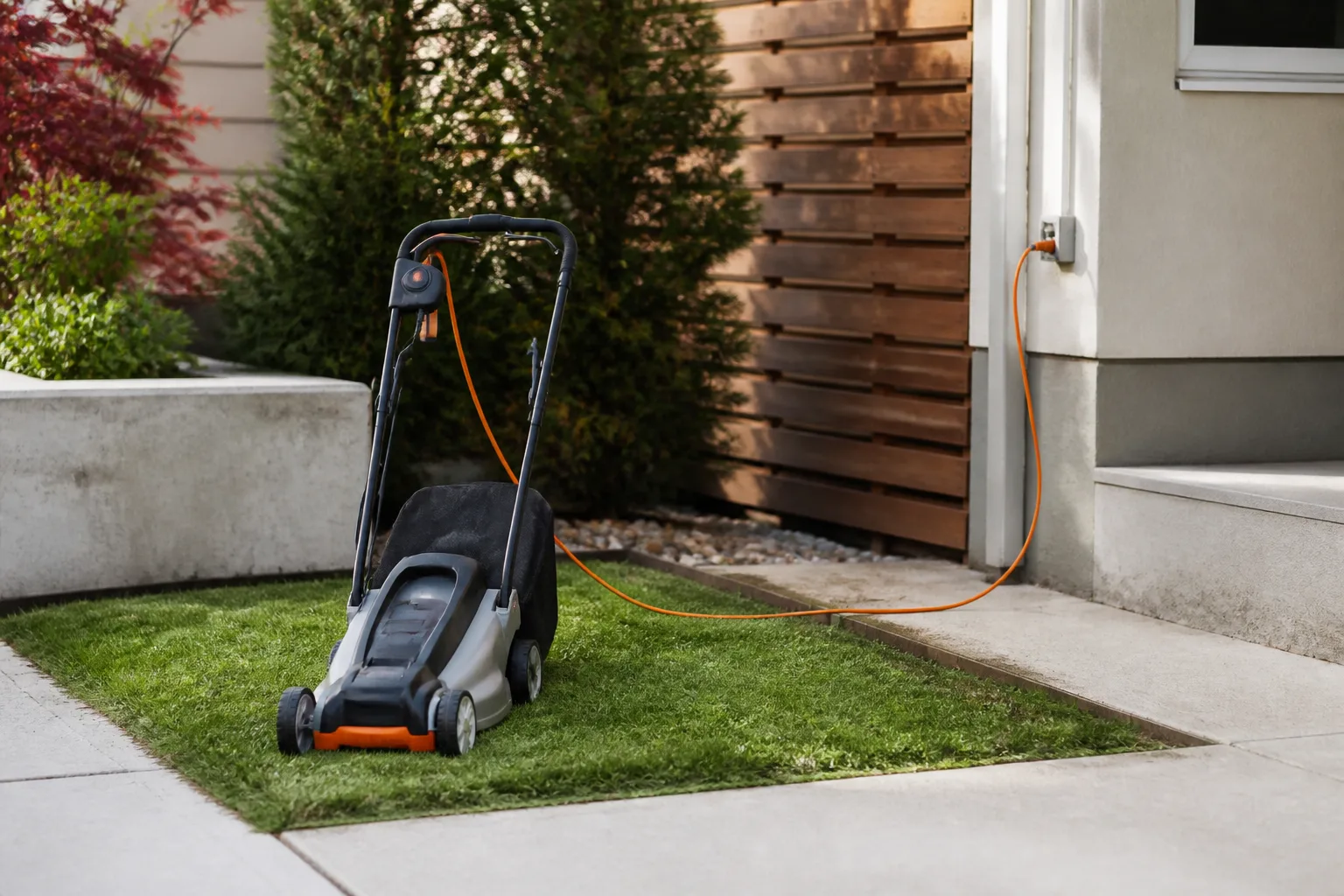
Corded mowers fail in predictable ways: snagging around trees and beds, voltage drop on undersized extension cords, and frustration on any lawn that needs more than about 100 feet of cord routing. Follow the owner’s manual for cord gauge versus length; an undersized cord overheats and starves the motor. Use a bright outdoor-rated cord and plan a mowing pattern that keeps the cord on the already-cut side.
For a 10-by-30-foot front strip or a townhome patch, this is rational. For a winding quarter-acre, a cordless 18V or 21-inch push mower is usually less mentally taxing even if the upfront cost is higher.
7. WORX WR147 Landroid — Best Robotic Electric Mower
The WORX WR147 Landroid robotic mower trades deck width for automation. It is built for maintained lawns up to about a quarter acre where you want frequent light cuts instead of a weekly heavy session. The 8-inch cut path is narrow, so coverage is slow—but that is the point when the machine runs on a schedule while you are doing something else.
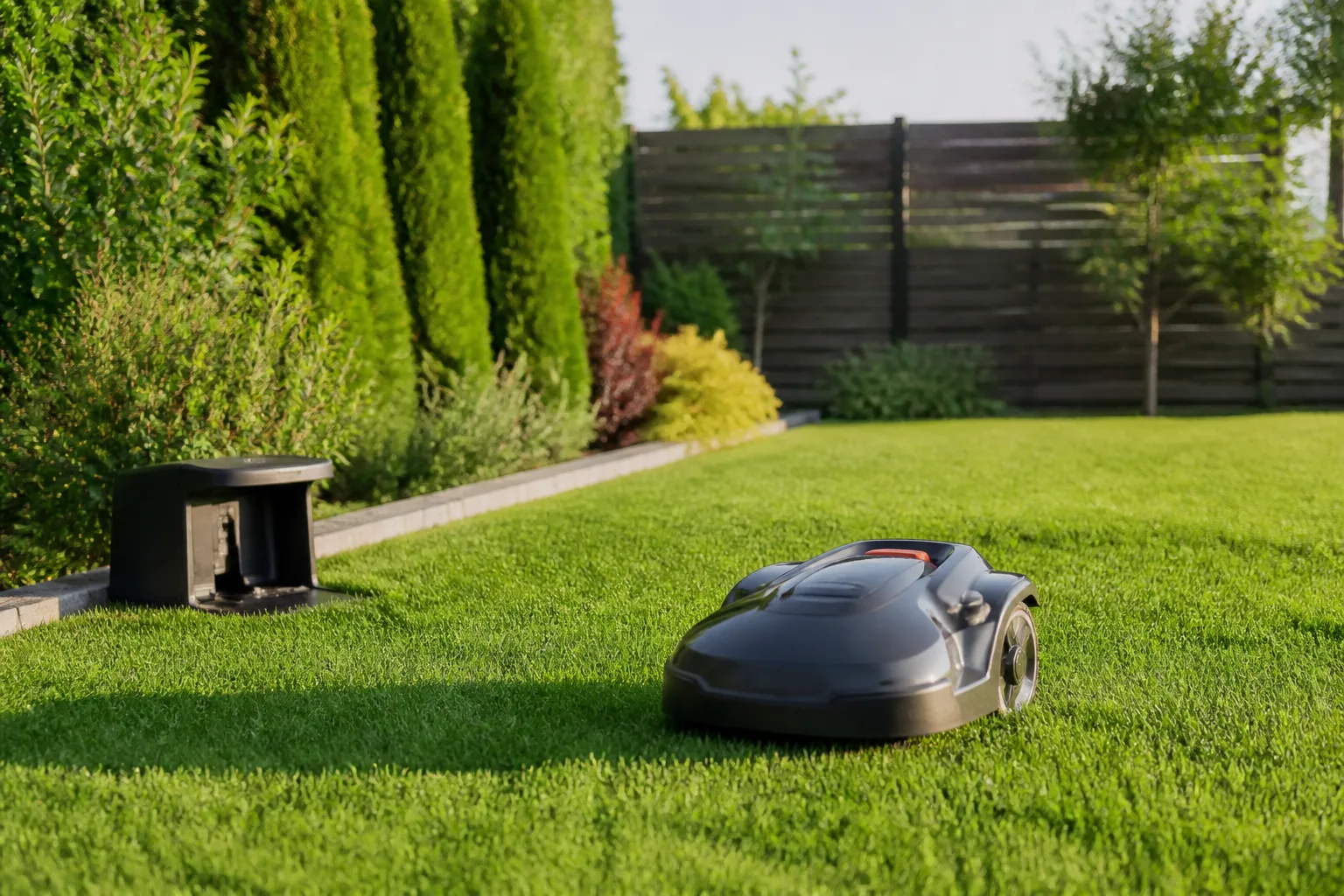
Setup is the job. Boundary wire, base-station placement, app pairing, and obstacle planning take more time than unpacking a push mower. Robots excel on simple, continuous lawns; they struggle with disconnected zones, steep grades beyond their rating, toys and hoses left out, and edges that need a string trimmer anyway. GPS-assisted navigation helps, but it does not eliminate perimeter work.
Choose a robotic electric mower when the lawn is already under control and your goal is consistency, not reclaiming a meadow. Stick with a walk-behind or rider if the grass routinely grows taller than the robot’s designed range or if the yard is a patchwork of beds and gates.
8. Ryobi 42-Inch Electric Riding Tractor — Best Riding Mower
The Ryobi 80V HP 42-inch electric riding lawn tractor fits homeowners stepping into riding electric mowing without zero-turn steering. The steering wheel, accelerator pedal, 13 height settings, LCD display, and front and rear tow hitches suit large, open lawns where walk-behind time adds up.
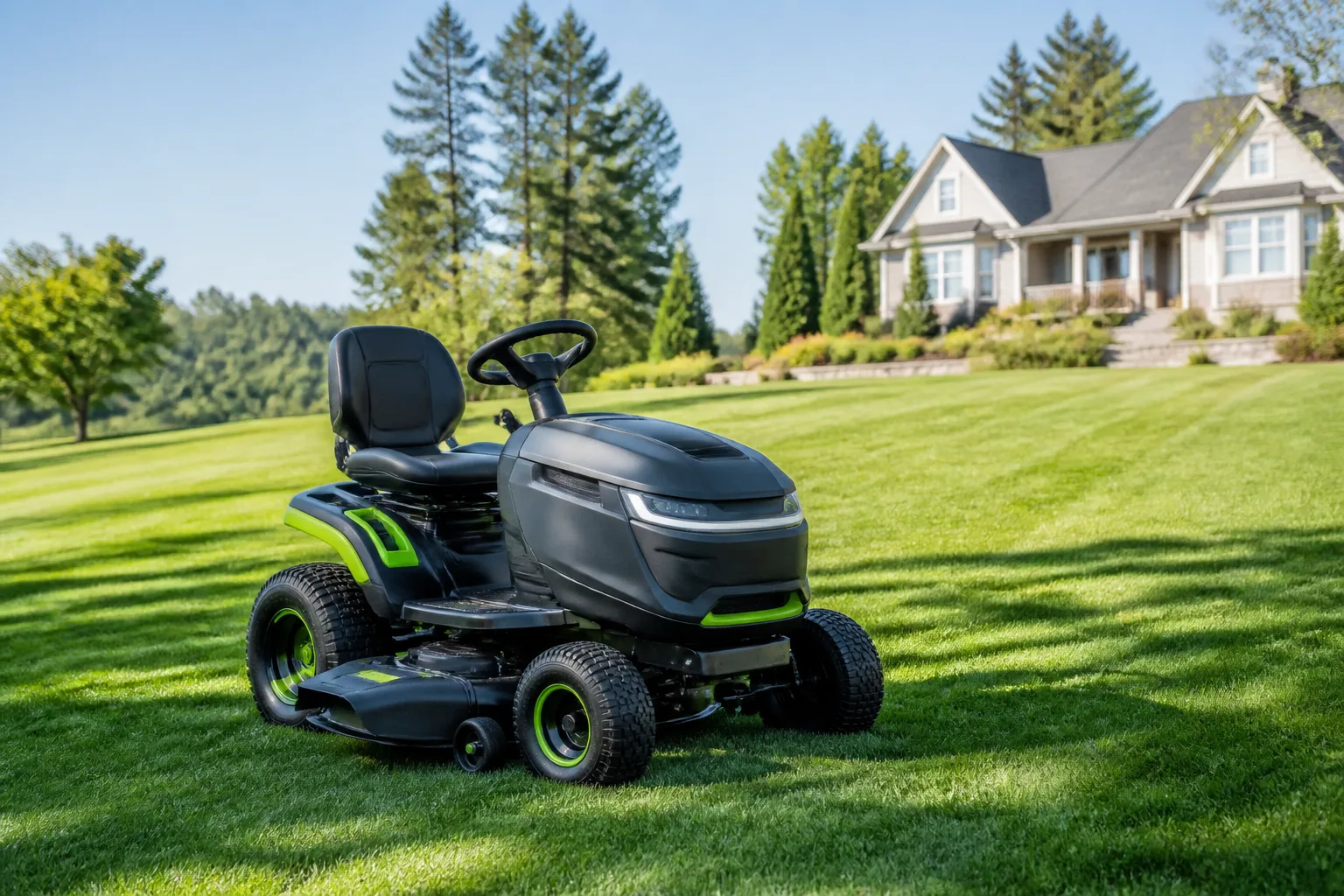
Ryobi positions this tractor for up to about two acres depending on terrain and battery configuration, with onboard charging and app monitoring similar to its zero-turn sibling. Bagging and mulching kits are often extra—budget for the clipping setup you will actually use. The backup beeper and tight left-side deck reach are common complaints in owner-style reviews; plan trimming passes along fences and trees.
This is the better Ryobi pick if you prefer familiar tractor controls and need hitch points for small yard carts or spreaders. Choose the zero-turn instead when obstacle density and turning time dominate the job.
9. Ego Power+ T6 TR4204 — Best Electric Lawn Tractor
The Ego Power+ T6 42-inch riding mower is the premium electric tractor for owners who want cruise control, a polished dash, and strong performance in damp or uneven turf within its design limits. Six 56V packs feed a system marketed with gas-equivalent power for large lawns, with a rear tow hitch rated for substantial loads.
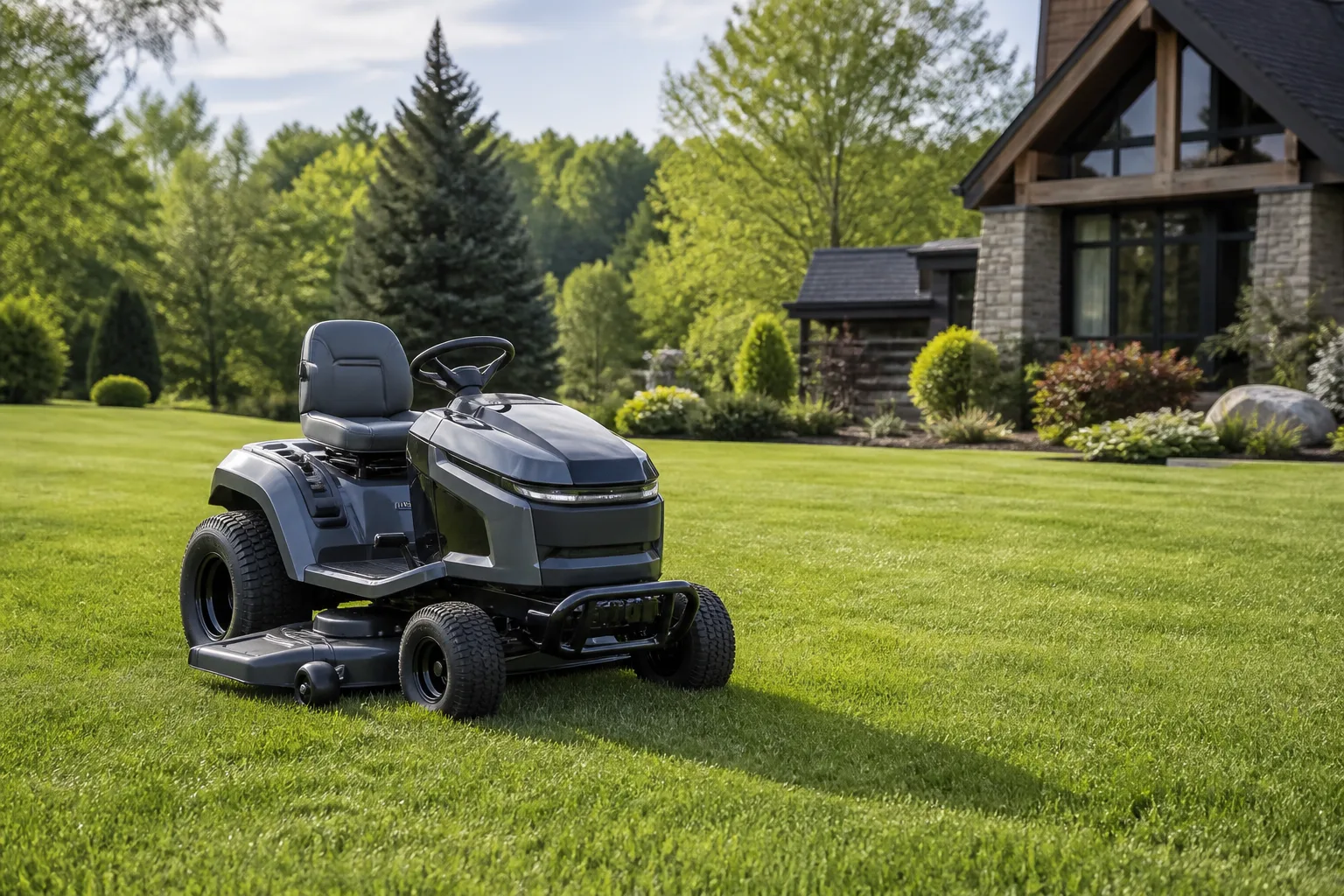
The T6 feels more refined than many first-generation electric riders: clearer controls, comfortable operation on long passes, and a top mowing speed that matters on flat acreage. Limitations include a low seat back for tall operators, rear-hitch-only attachment layout, and separate purchases for bagging or mulching kits. It also competes directly with Ryobi’s riders on price—your decision may come down to battery ecosystem, hitch layout, and whether you value cruise control over front-attachment flexibility.
For half- to one-and-a-half-acre lawns with mixed terrain, the T6 is a credible gas replacement if storage, charging, and delivery are solved first.
Corded vs. battery vs. riding: choose the right electric format
Corded mowers win on purchase price, weight, and infinite runtime. They lose on reach and cord choreography. Buy corded when the grass area is compact and continuous from one outlet.
Battery walk-behinds win on flexibility and noise. They lose when runtime is undersized for the route, when you cut very low through thick grass every week, or when you cannot store batteries in a dry, moderate-temperature space.
Riding and zero-turn electrics win on time across open ground. They lose on purchase price, storage footprint, and learning curve. They are rarely the right answer for a 2,000-square-foot lawn.
Robotic electrics win on scheduled light maintenance. They lose on setup labor, edge quality, and complex layouts.
Runtime, voltage, and battery-platform math
Voltage influences torque and motor design; amp-hours (Ah) influence how long the pack can sustain that work. A 56V 7.5 Ah battery is not “better” than a 40V 8.0 Ah battery in every scenario—it depends on mower efficiency, deck width, grass height, and whether self-propulsion is drawing power too.
Practical planning steps:
- Time one normal mow with your current setup or estimate from property size and walking speed.
- Add margin for spring growth, hills, and self-propelled drive.
- Compare that session to the manufacturer’s stated conditions—not their headline “acres per charge” alone.
- Price a second battery if your route is within 15–20 minutes of the pack’s practical limit.
Platform lock-in is real. A mower that shares batteries with your trimmer, blower, and snow tool may cost more upfront yet less over five years than a bargain mower on a proprietary small pack.
Deck width, motors, and clipping modes that matter
Deck width sets how many passes you make. A 13-inch deck on a large open lawn is tedious; a 42-inch rider on a gate-limited side yard is impossible. Measure the narrowest opening first.
Brushless motors are standard on modern electric mowers worth buying. They run cooler and more efficiently than brushed designs and avoid brush replacement—still check the spec sheet on budget models.
Clipping modes should follow the grass, not the marketing icons:
- Mulch when clippings are short, dry, and disappear into the canopy. Penn State Extension notes returned clippings can recycle substantial nitrogen over a season.
- Bag when grass is wet, diseased, excessively long, or clumping.
- Side discharge when you need to clear volume quickly without repeated bag dumps.
Fine Gardening’s eco-friendly lawn-care guidance also argues for taller mowing and lower-input lawns—electric mowers make that easier when you raise the deck and mulch light clippings instead of scalping.
Mowing height and turf health with an electric deck
Electric mowers cut the same grass as gas models; they do not forgive poor mowing practices more than gas does. Colorado State University Extension recommends keeping common Colorado lawns around 2.5 to 3 inches, never removing more than one-third of the blade height in a single pass, and returning clippings when they do not pile up. Read Colorado State lawn-care basics for the full context.
Penn State Extension explains that higher mowing heights thicken the canopy, shade weed seeds, and support deeper roots—especially valuable heading into summer heat. See Penn State mowing and weed pressure guidance for why a higher deck can matter as much as mower brand.
Operational rules that protect both turf and motor:
- Raise the deck before attacking tall grass; make a second pass if needed.
- Mow dry grass when possible; wet clippings clump, overload bags, and trigger thermal protection on electric decks.
- Keep blades sharp; dull blades tear leaf tissue and stress the motor. The BBC Gardeners’ World mowing guide stresses regular servicing for a clean cut.
Electric mower buying and maintenance checklist
Before checkout, confirm for the exact model number:
- Kit contents: Battery, charger, and all handles included—or tool-only pricing?
- Mowing area: Measure grass only; exclude house, driveway, and beds.
- Gate and storage: Folded dimensions and weight with battery installed.
- Drive type: Push on flat ground; self-propelled for hills and long routes.
- Clipping setup: Are bag, mulch plug, and side chute included or extra?
- Cord plan (corded): Outdoor-rated cord gauge for your longest reach.
- Battery plan (cordless): Second pack, winter storage location, replacement cost.
- Riding delivery: Access path, charging outlet, and turning space at storage.
- Robot setup: Boundary wire path, base-station sun/rain exposure, Wi-Fi reach.
- Parts availability: Blades, bags, chargers, and drive belts in stock locally or online.
After purchase, remove the battery or safety key before clearing the deck, blow or brush clippings from the housing and vents, and store lithium-ion packs in a dry location away from extreme heat or cold. Inspect cords for nicks on plug-in models, and sharpen or replace blades on the schedule the turf—not the calendar—demands.
Conclusion
For most suburban homeowners going electric, the Ego Power+ 21-inch self-propelled mower is the strongest overall walk-behind balance of power, runtime, and storage. The Toro 60V Flex Force Personal Pace is the better self-propelled pick if drive feel on slopes matters most, while the HART 40V self-propelled kit and Ryobi 40V HP push mower cover budget and flat-lawn value niches.
Scale up to the Ryobi 80V zero-turn, Ryobi electric riding tractor, or Ego T6 tractor only when acreage and storage truly justify a rider. For the smallest patches, the Ryobi 13-inch corded mower still makes sense, and the WORX Landroid is the electric choice when automation—not deck width—is the goal.
The winning electric mower is the one that matches your grass area, terrain, clipping habits, and charging reality. Get that fit right, keep the blades sharp and the deck high enough for healthy turf, and the power source will feel like the easy part.



