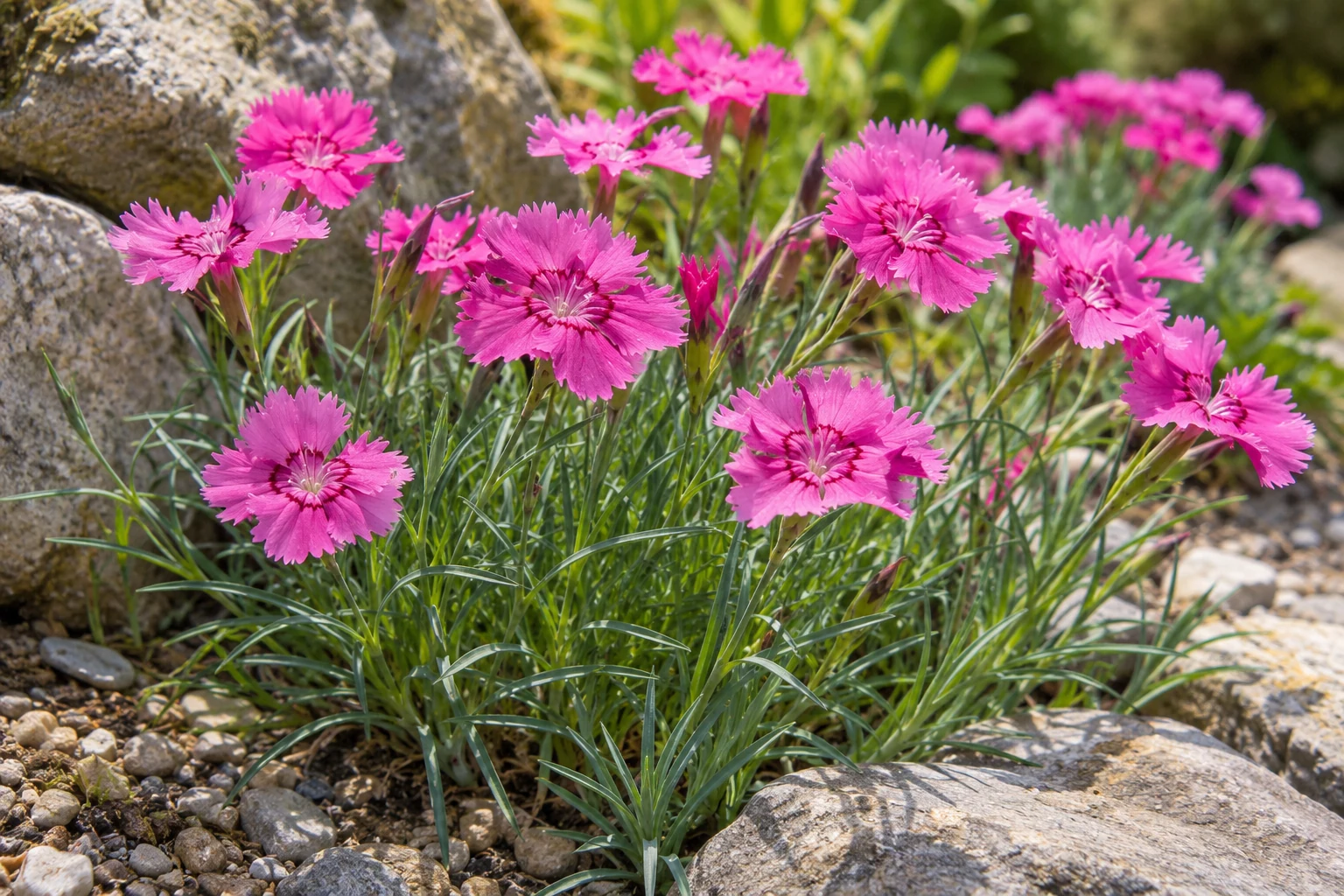
It depends on the species or cultivar. Dianthus includes annual, biennial, and perennial plants, so check the botanical name on the label before expecting a plant to return after winter.
How much sun does Dianthus need?
Most garden types bloom best in full sun, around six or more hours of direct light. Many tolerate partial shade, and light afternoon shade can help in very hot climates; deep shade usually reduces flowering.
How often should I water Dianthus?
Water a new plant after planting and while it establishes, then check the soil before adding more. Established bed-grown plants often need extra water only during prolonged dry spells, while containers need more frequent checks in warm weather. Avoid waterlogged crowns.
Why are my Dianthus leaves yellowing or drooping?
Feel the soil before watering. If it is wet, poor drainage or a persistently damp crown may be stressing the roots; if it is dry, the plant may need a thorough drink. Heat, shade, and species differences can also affect growth, so do not add fertilizer until you have checked moisture and drainage.
Is Dianthus toxic to cats and dogs?
Do not treat an unidentified Dianthus as pet-safe. NC State Extension flags the genus as a problem for cats, dogs, and horses, while the ASPCA specifically lists carnation (Dianthus caryophyllus) as toxic to those animals. Check the plant label and contact a veterinarian or animal poison control service if a pet chews it.
What light does Dianthus need?
Dianthus grows best in full sun, ideally six or more hours of direct light for flowering. It also tolerates Partial shade, Light afternoon shade in hot climates. Avoid deep shade, which can reduce flowering.
How do I propagate Dianthus?
Propagate Dianthus from healthy stem or root divisions during active growth.
Written by Sai AnanthLead content writer at LeafyPixels. B.Pharmacy graduate from Andhra University with a background in pharmacognosy, turned indoor gardening writer after a long-time plant hobby became a research-led resource for home growers.View Sai Ananth's profile · Reviewed by LeafyPixels Review Board
This Dianthus problems problem guide was researched and written by Sai AnanthLead content writer at LeafyPixels. B.Pharmacy graduate from Andhra University with a background in pharmacognosy, turned indoor gardening writer after a long-time plant hobby became a research-led resource for home growers.View Sai Ananth's profile. Problems symptoms on Dianthus, lookalike causes, and step-by-step fixes are cross-checked against extension pest, disease, and care references before publication.
We prioritize sources that hold up under scrutiny:
University cooperative extension bulletins and fact sheets (Penn State, Clemson, UMD, NC State, and similar programs)
Botanical garden and horticultural society publications
Peer-reviewed plant science and veterinary toxicology references where pet safety matters (including ASPCA Animal Poison Control)
Established reference works on indoor plant culture
The LeafyPixels editorial team then reviews the draft for clarity, step-by-step usefulness, and fit with real apartment and home conditions-not ideal greenhouse setups. When guidance changes materially, we update the page and note the revision date.
Epic Gardening — How to Plant, Grow, and Care for Dianthus (n.d.) Practical growing and propagation advice, sunlight, watering, drainage, and post-flowering pruning. [Online]. Available at: https://www.epicgardening.com/dianthus/ (Accessed: 1 March 2024).
Harvest to Table — How to Grow Pinks (Dianthus) (n.d.) Practical cultivation notes, typical size variation, light, watering, and differences among Dianthus hybrids. [Online]. Available at: https://harvesttotable.com/how-to-grow-pinks-dianthus/ (Accessed: 1 March 2024).
NC State Extension Plant Toolbox — Dianthus (n.d.) Genus identity and family, native range, species-varying life cycles and size, light, soil drainage and pH, and risk flags for cats, dogs, and horses. [Online]. Available at: https://plants.ces.ncsu.edu/plants/dianthus/ (Accessed: 1 March 2024).
Royal Horticultural Society — How to Grow Dianthus (n.d.) Planting depth, full-sun placement, free-draining soil, container care, watering, feeding, winter wet, and differences among Dianthus groups. [Online]. Available at: https://www.rhs.org.uk/plants/dianthus/growing-guide (Accessed: 1 March 2024).
UF/IFAS Gardening Solutions — Dianthus (n.d.) More than 300 species, distinctions among carnations, Sweet William, and pinks, warm-climate planting and bloom season, light, soil, irrigation, and deadheading. [Online]. Available at: https://gardeningsolutions.ifas.ufl.edu/plants/ornamentals/dianthus/ (Accessed: 1 March 2024).