7 November Gardening Mistakes That Cost You in Spring
Stop watering too early, skipping bulbs, or shearing every perennial. This November gardening guide explains what to do—and what to leave alone—before winter.
November feels like an off-ramp. Frost has nipped the basil, leaves are down, and the urge to close the garden books is strong. That instinct is understandable—and dangerous. The chores you skip or mishandle this month do not disappear. They show up in March as hollow tulip rows, patchy turf, weedy beds, and perennials that woke up weaker than they should have.
These seven November gardening mistakes are the ones experienced growers flag most often: stopping water too soon, letting weeds go to seed, neglecting the lawn, missing the last bulb window, shearing every perennial, stripping the garden of winter food for birds, and trying to “help” plants with too much water, feed, or mowing. None of them require heroic effort. They require knowing what to do, what to leave alone, and when “done for the season” is a lie.
Why November quietly decides your spring garden
November sits between two biological states. Above ground, most herbaceous plants are shutting down. Below ground, roots are still active until the soil freezes—and in mild winters, that window stretches longer than you expect. Decisions about moisture, mulch, cutback, and lawn height all land in that in-between zone.
The three November outcomes that show up in March
Root hydration determines whether shrubs, evergreens, and newly planted trees enter winter with enough stored moisture to survive desiccating winds. Weed seed on the soil surface becomes next year’s carpet of chickweed and bittercress. Bulb planting depth and timing decides whether spring flowers emerge on schedule or rot in saturated clay. Get those three right and most of the other mistakes take care of themselves.
Mistake 1: Shutting off water because the calendar says fall
The most common November error is treating “fall” as “dry season over.” Cool air hides dry soil. Evergreens do not go fully dormant, and their needles lose moisture on sunny winter days. Newly planted trees and shrubs—anything put in the ground in the last two years—still need periodic deep watering until the ground freezes hard.
Utah State University Extension recommends hand-watering landscape plants during prolonged dry fall spells, especially evergreens and recent transplants. The goal is not to keep soil soggy. It is to prevent roots from entering winter dehydrated—a problem that often appears as brown needle tips or branch dieback in late winter, long after you forgot to water.
The finger test and who still needs a drink
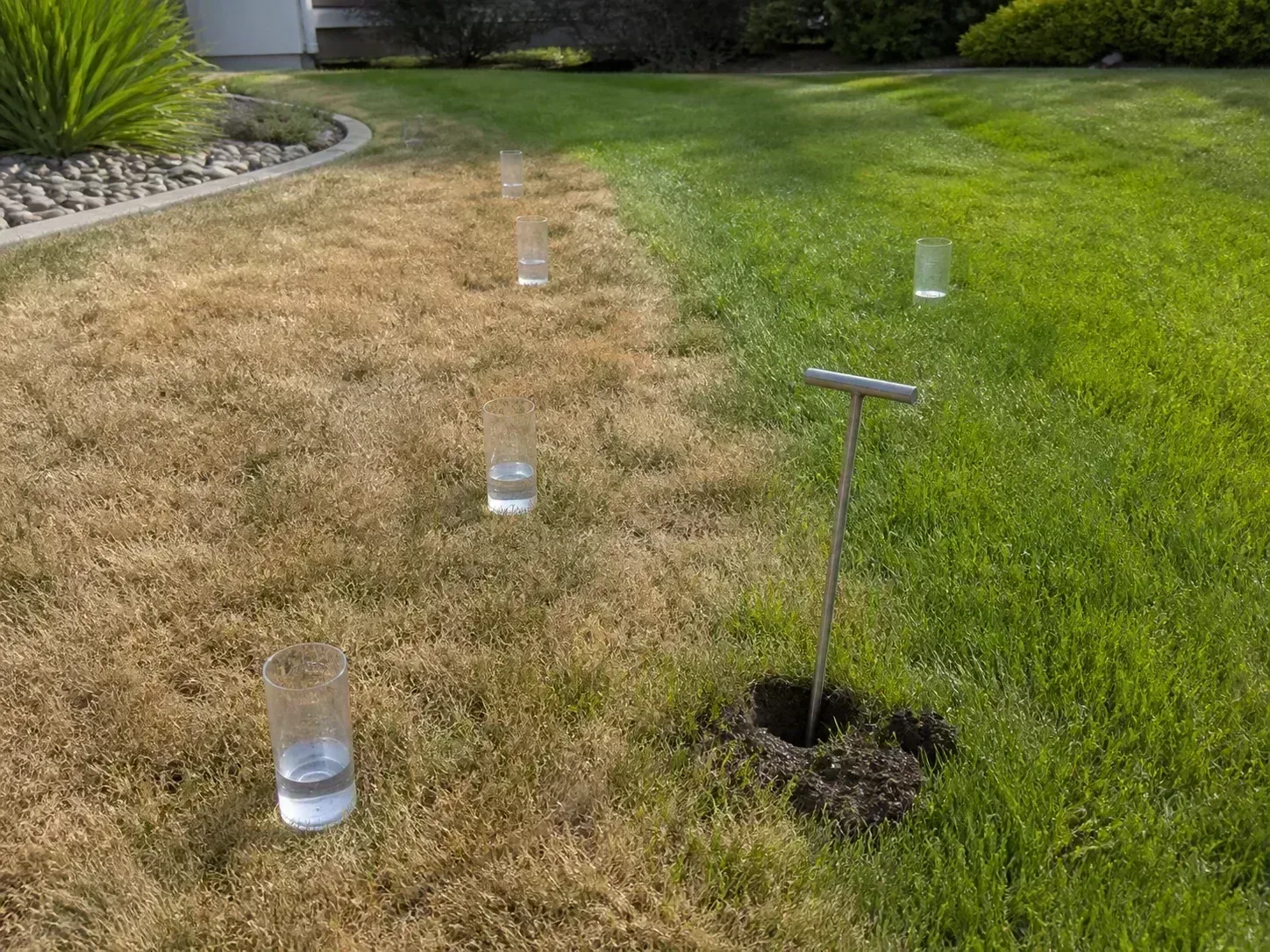
Before you roll up the hose, check soil moisture at 4 to 6 inches deep. Push a finger, trowel, or soil probe into the root zone. If it comes out dusty and dry, water slowly until the top 8 to 12 inches moisten. Water at the drip line of trees and shrubs, not against the trunk.
Prioritize: evergreens (pine, spruce, arborvitae, holly), broadleaf evergreens (rhododendron, boxwood), anything planted this year or last, and perennial beds that have not received rain in two weeks. Deprioritize: established drought-tolerant natives that have gone fully dormant and lawns in consistently wet soil.
In regions with irrigation restrictions, November often means reduced weekly schedules. The Washington County Water Conservancy District lists November through February as minimal watering months—but minimal is not zero when weather is warm and dry.
When November watering does more harm than good
Lawns are the exception. Saturated turf in cool weather invites compaction, fungal patches, and spring mud. If your lawn stays spongy after rain, stop sprinkling it. Containers and raised beds need a different read: they dry faster than in-ground beds and may need occasional water even when border perennials do not.
Rule of thumb: water plants, not the calendar. Skip watering when soil is already moist, when a hard freeze is forecast within 24 hours (wet crowns freeze more readily), or when drainage is poor and the soil smells sour.
Mistake 2: Quitting weed control when the garden looks done
Weeding is nobody’s favorite November task. It is also one of the highest-return jobs you can do. Late-season weeds are finishing their life cycle and dropping seed. One mature henbit or bittercress plant can supply thousands of seeds that germinate the moment soil warms in early spring.
The National Gardening Association stresses that fall is prime time for weed seed proliferation—not the time to stop. You do not need perfection. You need to prevent mature seed set in beds you will cultivate next year.
Late-season weeds that seed your spring headache
Focus on weeds that are flowering or forming seed heads: annual bluegrass, chickweed, hairy bittercress, shepherd’s purse, and any perennial weed with green top growth (dandelion, thistle, bindweed). Hoe or pull before seeds mature. Mow or string-trim weedy edges along paths and fence lines.
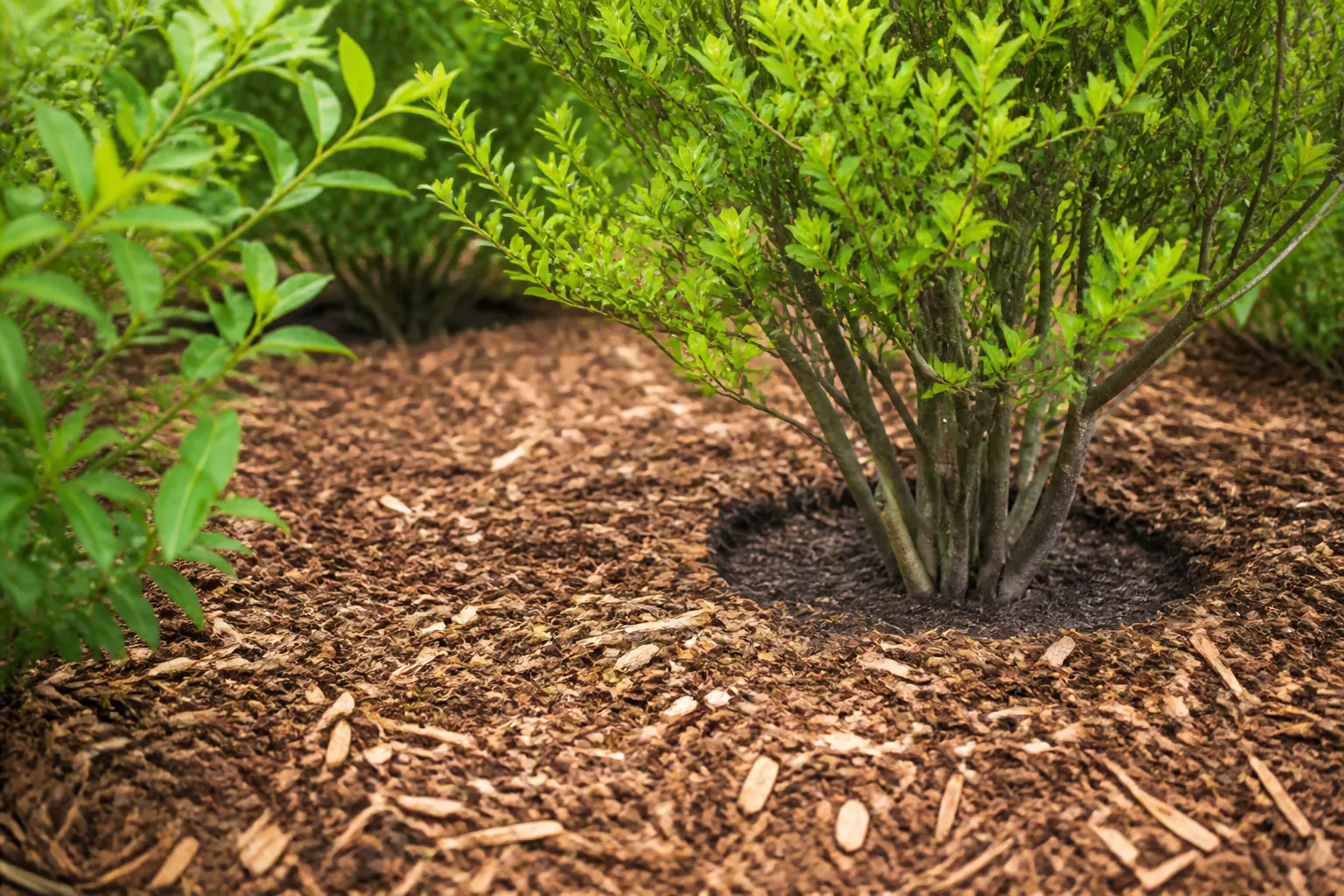
After weeding, apply 2 to 4 inches of shredded bark, leaf mold, or compost over bare soil. Mulch suppresses germination and moderates soil temperature swings. Keep mulch a few inches away from stems and trunks to avoid rot and rodent nesting—no mulch volcanoes.
For a deeper look at using leaves as mulch versus hauling them away, see our guide on mulching vs. bagging vs. leaving leaves.
Mistake 3: Treating the lawn like it is already asleep
Grass growth slows in November. It does not stop until the ground freezes. Walking away from the lawn now invites snow mold, winter weeds, and thin patches where foot traffic compressed dormant crowns.
Last mow height and timing
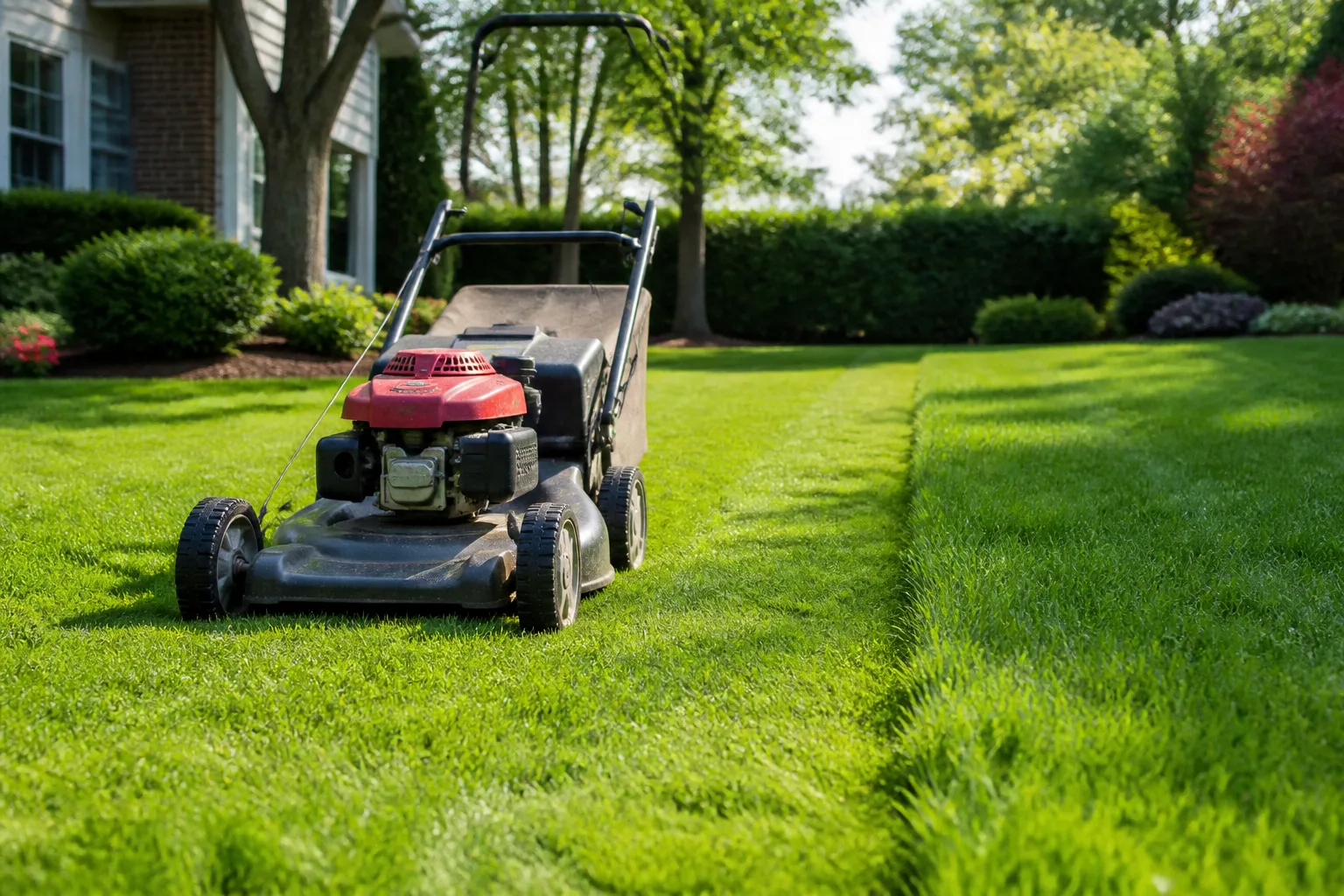
Your last mow of the season should happen when growth is still visible but slowing—often late October into November in cold climates. Utah State University Extension recommends lowering the mowing height to 1½ to 2 inches for that final cut. Shorter—but not scalped—turf is less likely to mat under snow and develop pink or gray snow mold.
Bag or rake excessive leaf cover on turf. A thin layer of shredded leaves is fine; a wet blanket is not. Our right way to cut your lawn before winter guide walks through blade height, timing, and cleanup in more detail.
Stay off the lawn when it is frosted or soggy. Repeated foot traffic on dormant grass creates bare lanes that fill with weeds in spring.
Late nitrogen and when to skip it
A late fall nitrogen application—after the last mow but before the ground freezes—can help cool-season lawns store carbohydrates in roots for early spring green-up. Extension guidance suggests roughly 1 pound of actual nitrogen per 1,000 square feet, using quick-release forms such as urea (46-0-0) or ammonium sulfate (21-0-0). Read your product label and measure your lawn area; over-application burns turf and leaches into waterways.
Skip late fertilizer if: the ground is already frozen, your lawn is mostly warm-season grass going fully dormant, or regional regulations restrict fall nitrogen on turf. When in doubt, a soil test beats guessing.
Mistake 4: Assuming you missed bulb-planting season
November is late for bulbs in the coldest zones—but “late” is not “never.” Spring-flowering bulbs (tulips, daffodils, crocus, hyacinth, allium) need a cold dormancy period in the ground. What they cannot tolerate is sitting in warm, wet soil or being planted into frozen ground you cannot penetrate.
Depth, spacing, and the workable-soil test
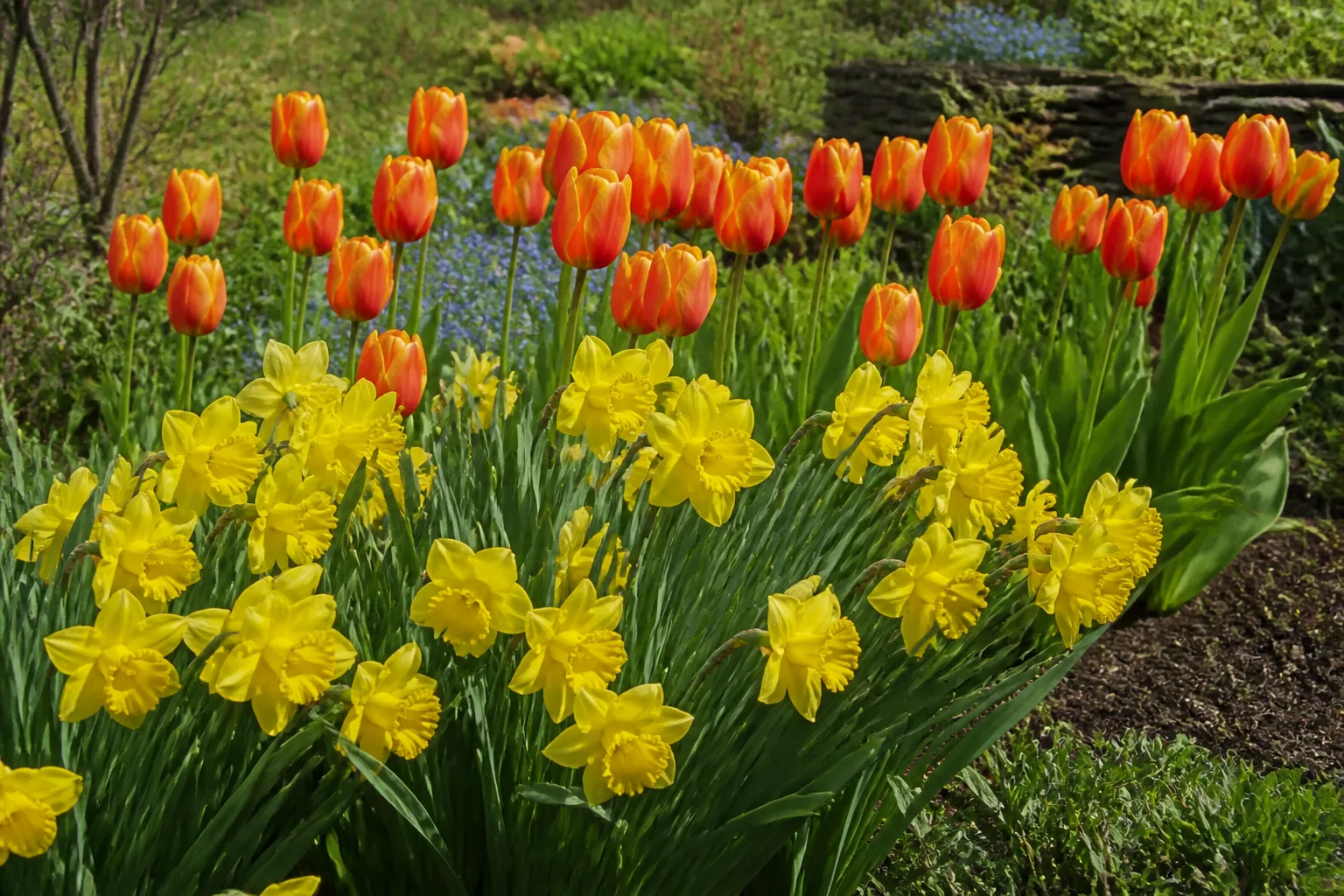
Workable-soil test: If you can push a trowel 6 to 8 inches deep without hitting ice, you can still plant. Utah State University Extension advises planting bulbs 3 to 4 weeks before the ground freezes so roots establish first.
Depth rule: plant at 2 to 3 times the bulb’s height. Small bulbs (crocus, snowdrops) go 3 to 4 inches deep; larger daffodils and tulips go 6 to 8 inches. Space bulbs at roughly twice their width. Plant pointed end up, water in once, and mulch lightly.
Tulips are more forgiving of late planting than daffodils in many gardens—though very late planting in heavy clay risks rot. If November is consistently wet in your yard, plant on a raised berm or wait for a dry stretch. For more November planting options beyond bulbs, see flowering perennials to plant in November.
Mistake 5: Cutting back every perennial for a tidy bed
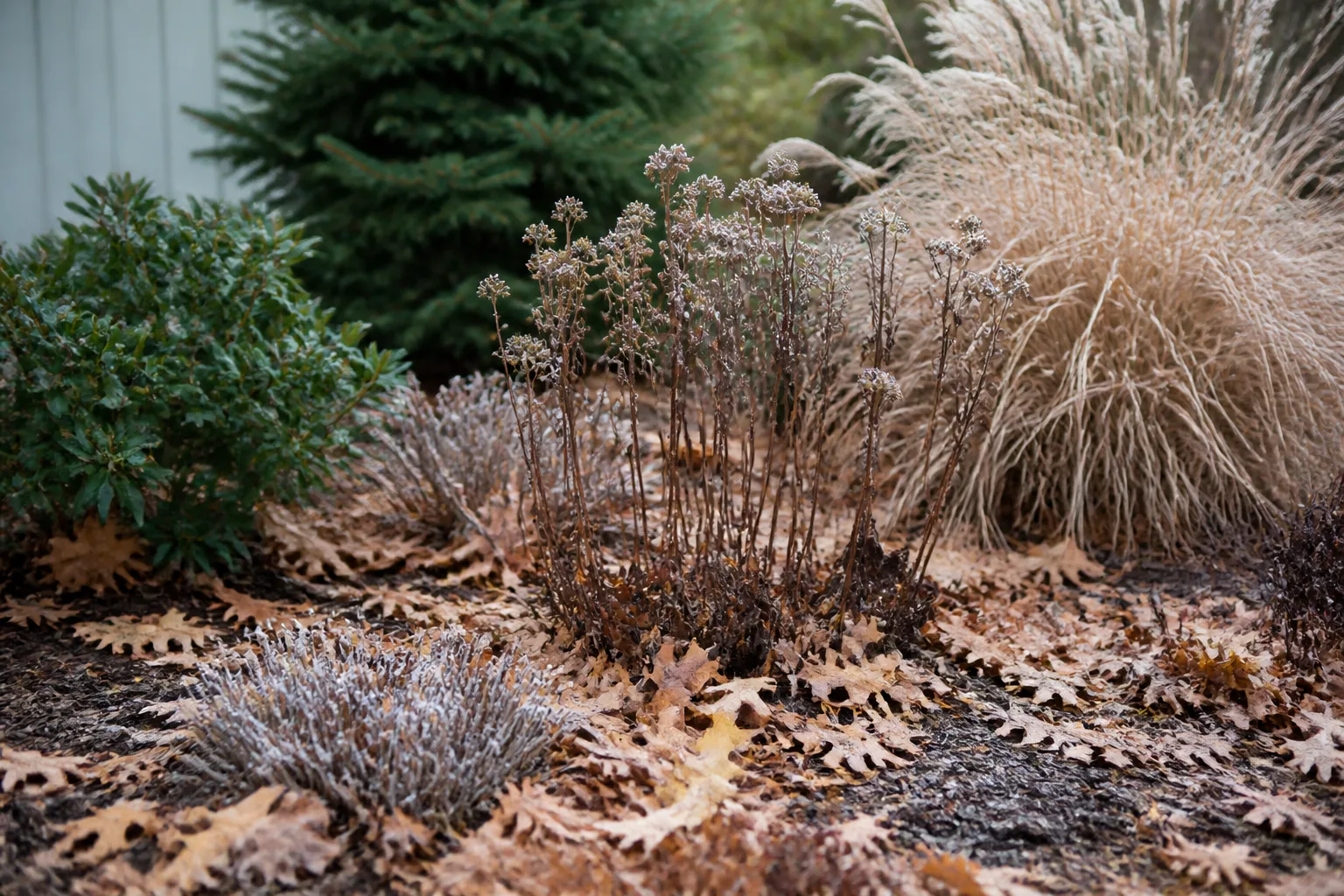
Fall cleanup should be selective, not wholesale. Shearing every perennial to the ground feels productive and often removes the insulation, seedheads, and hollow stems that carry your garden through winter—along with the beneficial insects nesting inside them.
Utah State University Extension warns that fall pruning stimulates growth or delays dormancy, leaving plants vulnerable to freeze damage. The same logic applies to herbaceous perennials: cut for disease, mush, and seed control—not for bare-bed aesthetics.
Plants to leave standing through winter
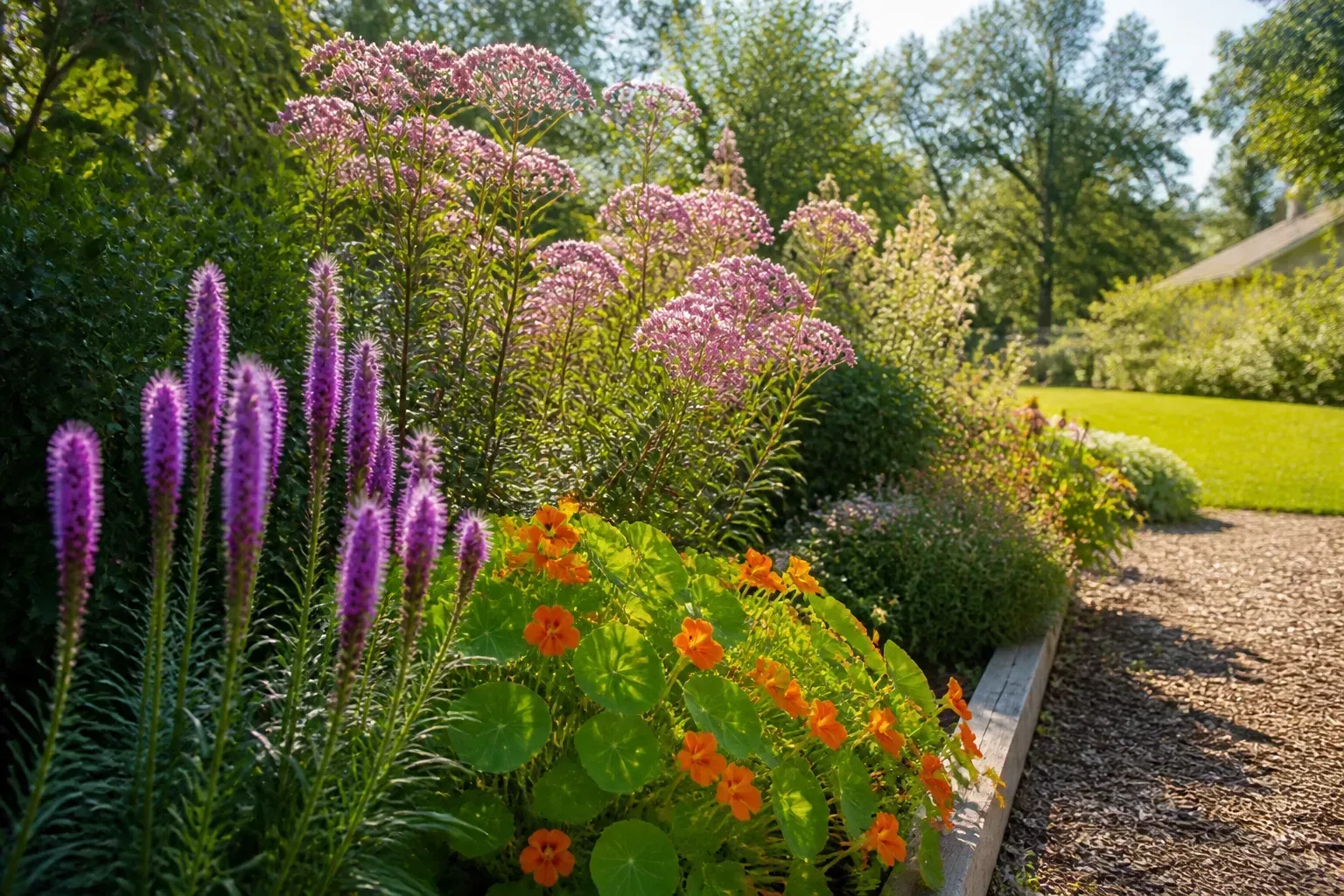
Leave these unless diseased: coral bells (Heuchera), Russian sage, peonies, globe thistle, coneflowers, black-eyed Susans, upright sedum, ornamental grasses, and any perennial with attractive seedheads. Their foliage and stems protect crowns from freeze-thaw heaving and feed birds.
Cut in spring, not November: peonies and globe thistles often fare better with spring cleanup once new growth appears. Heuchera’s semi-evergreen leaves buffer the crown.
What to cut now before disease carries over
Cut and remove (do not compost) foliage with powdery mildew, leaf spot, iris borer damage, or botrytis—common on peonies, phlox, bee balm, and iris. Bag diseased material for trash. Cut collapsed, slimy stems that lie wet against crowns after hard frost.
Our perennials to cut back in fall guide lists 33 species that commonly benefit from fall sanitation, and our is it too late to prune perennials in November guide covers timing when you are deciding at the last minute.
Mistake 6: Cleaning the garden so thoroughly that wildlife loses lunch
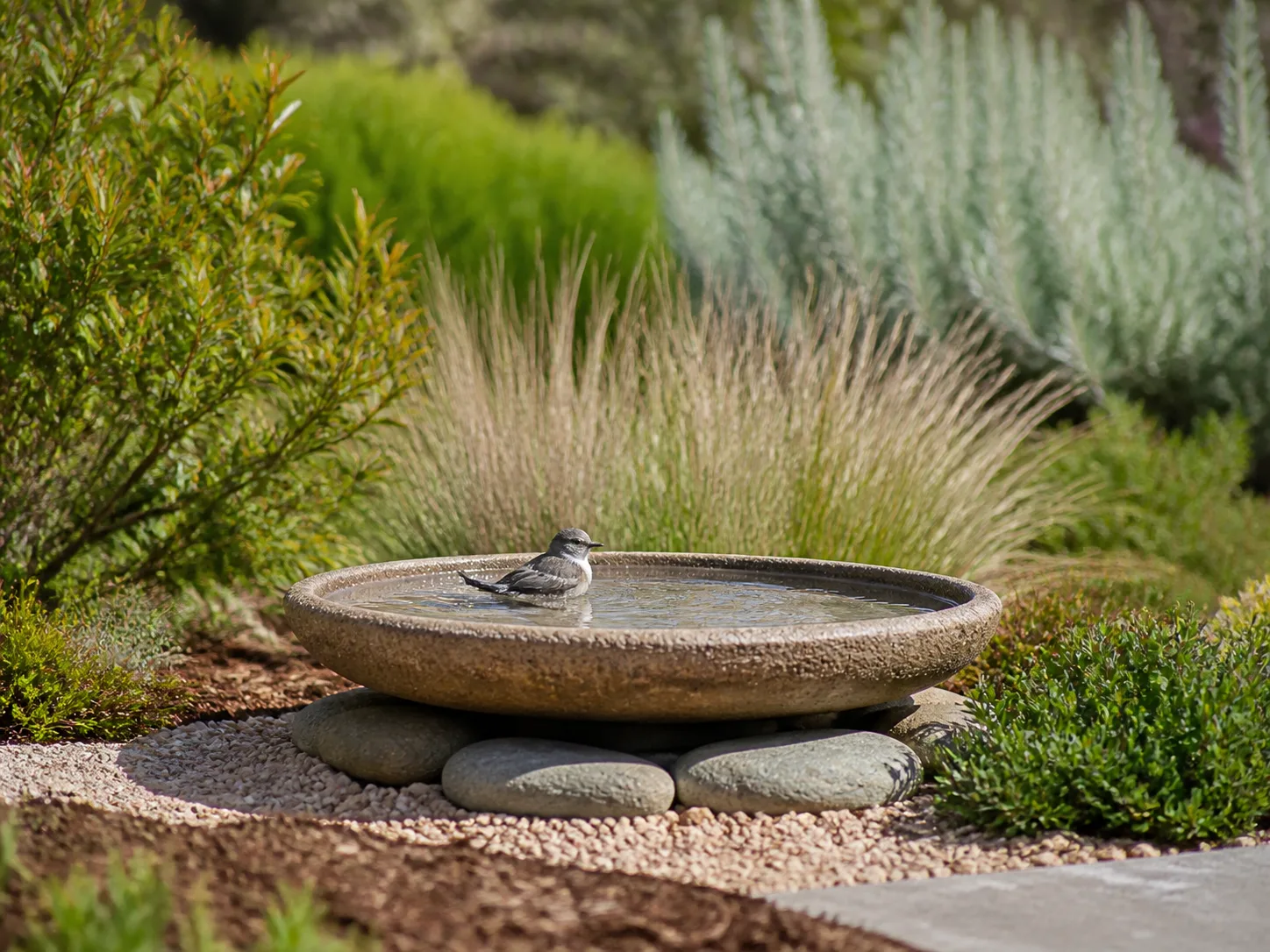
A sterile November bed is not a healthier bed. Seed-producing perennials—coneflowers, black-eyed Susans, sunflowers, upright sedum—feed finches, juncos, and chickadees when insects are scarce. Hollow stems shelter native bees and beneficial wasps.
The National Gardening Association recommends leaving sunflowers and similar seed crops for winter birds unless you harvest the heads yourself. If tidiness matters along a front walk, cut those plants in the back border and leave a few clusters in less visible areas.
Pair habitat with hygiene: remove diseased tops; leave healthy seedheads. Add a birdbath heater or maintain a feeder if you want to support birds beyond what the garden provides—see should you leave your bird feeder up this winter for placement and hygiene tips.
Mistake 7: Overdoing late-season care
The flip side of neglect is anxious over-care: daily watering, heavy nitrogen on dormant plants, repeated mowing on grass that is not growing, and piling mulch against trunks. All of it pushes growth when plants should be hardening off.
Bees and Roses notes that over-mulching bare soil without addressing weeds first can smother crowns and create rodent habitat. Over-watering lawns in cool weather produces boggy patches that take until June to recover.
Apply fertilizer and fresh compost after dormancy, not while plants still have green top growth. National Gardening Association guidance warns that high nitrogen on actively growing tissue in fall can stimulate tender shoots that freeze. Let the garden transition. Your job in November is setup and protection—not one last growth spurt.
Your November garden checklist by climate
Cold climates (Zones 3–5): Final mow at 1½–2 inches; plant remaining bulbs urgently; drain irrigation lines; water evergreens before freeze; cut diseased perennials; mulch beds after soil cools; stay off frozen lawn.
Mild climates (Zones 7–9): Weed and mulch before winter weeds establish; continue occasional deep watering in dry spells; plant tulips and cool-season annuals; skip heavy lawn nitrogen if grass stays green all winter; leave seedheads for birds unless fire risk is high.
All climates: Do not prune spring-flowering shrubs now—you remove next year’s flower buds. Finish tool cleaning, sharpen pruners, and note what failed this year in a garden journal while memory is fresh.
Conclusion
November rewards gardeners who read the soil instead of the calendar. Water until the ground freezes where roots are still active—not on a schedule that made sense in July. Pull weeds before they seed. Give the lawn one last proper cut and sensible nitrogen if your grass type and climate call for it. Plant bulbs while soil is workable. Cut back only what disease or mush demands. Leave seedheads for birds. Stop short of overwatering, overfeeding, and over-mulching.
Spring growth is not won in March. It is protected in November. Handle these seven mistakes with a lighter hand and a sharper eye, and you will start next season with fuller beds, cleaner turf, and fewer surprises pushing up through the thaw.