How to Grow and Care for Princess Flower
Learn how to grow and care for princess flower with practical light, watering, soil, pruning, propagation, pest, bloom, and winter guidance.
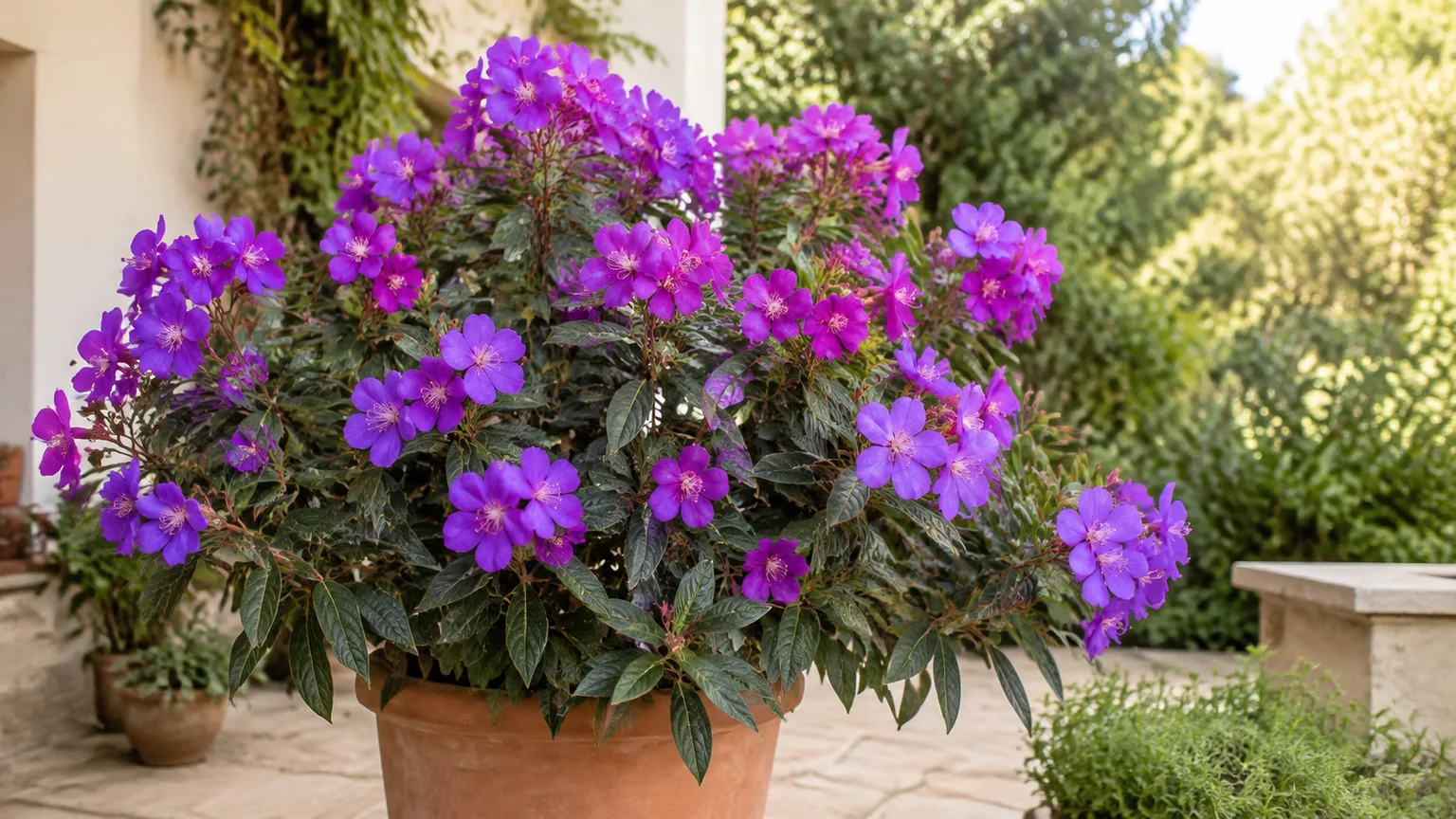
Princess flower (Tibouchina urvilleana) earns its name with large royal-purple flowers, soft hairy leaves, and a long bloom season in warm climates. It is also a plant that tells the truth about your climate: in a frost-free garden it can become a generous shrub or small tree, while in a cold region it is better treated as a movable container plant than as a shrub you hope will tolerate winter.
The most dependable care plan is built around four decisions. Give it strong light without baking the foliage, keep the root zone evenly supplied with water but never stagnant, prune in relation to flowering rather than by a fixed month, and make the winter plan before the first cold night. Get those decisions right and the plant is remarkably rewarding; get even one badly wrong and it can become leggy, leafless, or flowerless.
Princess Flower at a Glance
Princess flower is a broadleaf evergreen tropical shrub in the Melastomataceae family, native to Brazil. It is also sold as glory bush, purple glory bush, lasiandra, or under older taxonomic names related to Pleroma. The North Carolina Extension Gardener Plant Toolbox lists it as a perennial with a typical outdoor height of 6 to 8 feet and a width of 3 to 5 feet, while warm, long-season sites can produce much larger plants. Its dark green, softly hairy leaves are usually 4 to 6 inches long, and purple flowers about 3 to 4 inches wide appear in terminal panicles.
The useful summary is not “tropical plant equals constant moisture.” It is warmth plus oxygen at the roots. North Carolina State Extension describes princess flower as suited to USDA zones 9a through 11b, with moist, acidic, well-drained soil, full sun to partial shade, and some afternoon protection in hot summer areas (NC State Extension plant profile). That range is a starting point, not a guarantee for every cultivar or exposed garden.
Is Princess Flower Right for Your Garden?
Choose princess flower when you want a conspicuous flowering shrub, patio specimen, or warm-climate focal point and can give it room to spread. It is not a miniature bedding plant: even a regularly pinched young specimen may quickly fill a large container, and an unpruned shrub can lean or arch outward as stems lengthen.
The plant is particularly useful where a long season of purple flowers matters more than a rigid formal outline. It can be trained as a standard, supported on a trellis, or allowed to make a rounded shrub. That flexibility is a strength, but it means you should decide on the final form early. Trying to turn an old, sprawling plant into a tidy tree in one severe cut usually creates bare wood and a long recovery period.
Choose In-Ground or Container Culture
In USDA zones 9 through 11, plant it in the ground if your site has fertile soil, good drainage, and protection from hard freezes. In zone 8, expect top growth to die back after freezing weather even if the roots survive and send up new shoots in spring. In zones colder than that, an in-ground planting is usually a seasonal experiment rather than a dependable perennial display.
A container is the better choice when winter frost is normal, when you are uncertain about your microclimate, or when the local environment makes spread a concern. Container culture also lets you place the plant in morning sun, move it away from a heat-reflecting wall during a heatwave, and bring it inside before cold damage. The trade-off is more frequent watering, faster nutrient depletion, and the need for a bright winter location.
Choose a Site That Balances Sun and Shelter
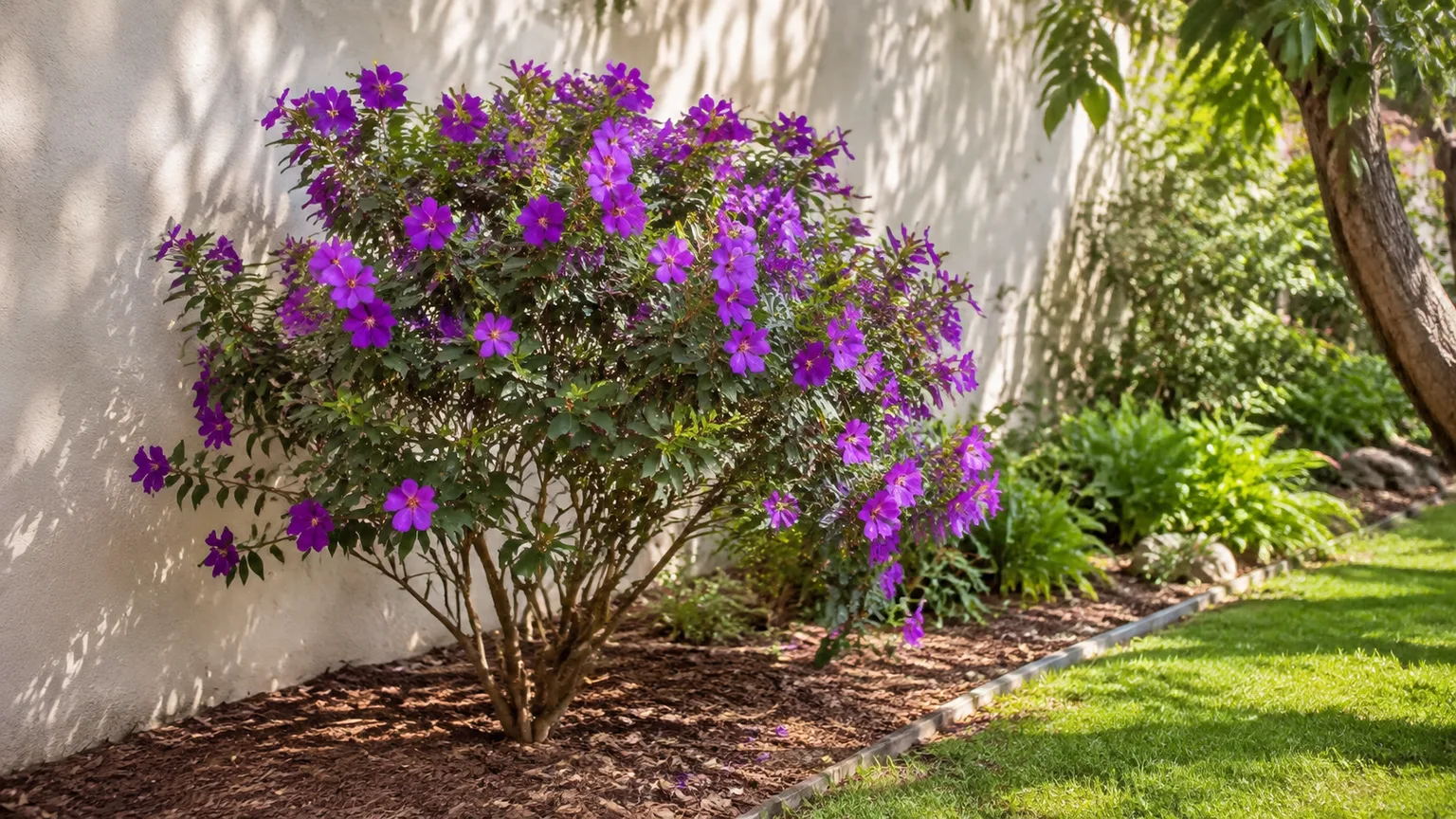
The ideal location is bright, warm, and protected from drying wind. A south- or east-facing position near a wall can provide useful reflected warmth, but avoid a narrow heat trap where afternoon masonry turns leaves crispy. Leave enough air space around the canopy for leaves to dry after rain and for you to inspect stems and leaf undersides.
Light for Flowers Without Scorch
Aim for at least six hours of direct sun for the strongest flowering and sturdier branching. Bright partial shade can keep princess flower alive and attractive, but it usually produces looser growth and fewer flowers. Gardenish’s plant reference makes the same practical distinction: several hours of direct sun support a compact, floriferous habit, while brighter filtered light is more forgiving but less productive.
In a hot, dry climate, morning sun followed by light afternoon shade is often a better compromise than all-day exposure beside concrete or glass. Watch the newest leaves rather than judging the site by the plant’s first week. Pale, bleached, or crisp patches on the sun-facing side suggest excess heat or an abrupt light change; long internodes and a canopy that leans toward one direction suggest inadequate light. This is consistent with Gardenish’s practical care summary, which separates the plant’s direct-sun preference from its tolerance for bright filtered light.
For a container moved outdoors after winter, acclimate it over about 7 to 14 days. Start in bright shade, add gentle morning sun, and delay harsh midday exposure until new leaves have adjusted. Moving a plant straight from a dim room to full summer sun can scorch leaves even when the final outdoor position is appropriate.
Protect Stems From Wind and Heat
Princess flower’s stems can become tall and somewhat flexible, especially when growth is fast. Strong wind can split branches, abrade leaves, and dry a container before the roots can replace lost water. Use a sheltered wall, a courtyard, or a sturdy support, but do not wedge the plant into a corner with no air movement.
Mulch the outdoor root zone with a few inches of composted organic mulch, keeping it away from the main stems. Mulch buffers soil temperature and slows evaporation; it does not make poorly drained soil safe. In salty coastal sites, the plant’s moderate salt tolerance can be useful, but salt spray and salt accumulation in a pot still deserve periodic flushing with plain water and good drainage.
Build Rich Soil With Reliable Drainage
Princess flower performs best in soil that is rich in organic matter, moisture-retentive, and free-draining at the same time. Those traits are not contradictory. Compost or leaf mold can add water-holding capacity to sandy soil, while coarse organic matter and a properly prepared planting bed can prevent heavy soil from sealing around the roots.
Before planting, dig a broad bed rather than creating a narrow pocket of amended soil. Mix finished compost through the existing soil, then test drainage by filling the hole with water and watching how quickly it empties. If water remains for hours after ordinary rain, plant on a slight mound or choose a container instead; adding a little perlite to the surface will not fix a saturated planting basin.
In a pot, use a high-quality container mix amended with composted material and a drainage component such as perlite or fine bark. Do not use garden soil by itself. It compresses in a container, reduces air at the roots, and makes the moisture swing from waterlogged to hard and dry. Choose a pot with several drainage holes and a saucer that can be emptied rather than allowing the pot to sit in runoff.
Princess flower generally prefers acid-leaning soil, and the NC State profile records high organic matter and acid soil as cultural conditions. A soil test is more useful than adding an acidifier by guesswork. If the pH is already suitable, extra peat, sulfur, or acidic fertilizer can create a different imbalance without solving the actual problem.
Water by Root-Zone Signals, Not a Calendar
Water new plantings deeply enough to wet the full root ball, then let the surface begin to dry before watering again. During active growth and flowering, check the soil every few days in a container and weekly in the ground; frequency will increase in hot, windy weather and decrease after rain or during cool winter storage.
Use your finger or a wooden stick to check below the surface. For a container, water when the top 1 to 2 inches feel dry but the mix beneath is not bone dry. For an established outdoor shrub, water when the upper few inches dry and the plant is approaching wilt, then soak the root zone slowly rather than sprinkling the foliage for a few minutes.
The goal is a full wetting followed by air returning to the pore spaces. Water until a little drains from the container, empty the saucer, and do not repeat simply because the top looks pale. Yellowing leaves, a sour-smelling mix, fungus gnats, or wilt that persists while the soil is wet point toward root stress—not thirst. Conversely, limp leaves that recover soon after a thorough drink, dry potting mix pulled from the container edges, and crispy tips indicate that the interval has become too long.
Established plants can tolerate short dry spells, but drought tolerance is not the same as drought performance. Princess flower may survive a missed watering while producing fewer buds, dropping older leaves, or pausing growth. Even moisture matters most during a heatwave, immediately after planting, and while a container is carrying a large flowering canopy.
Feed for Growth Without Sacrificing Flowers
Feed during active growth with a complete fertilizer labeled for flowering shrubs or acid-loving plants, and follow the product label for the container size or bed area. A light, repeatable program is safer than a large dose intended to force flowers. Apply fertilizer to already-moist soil, keep granules away from stems, and water afterward if the label calls for it.
Spring is a sensible time for the first feeding, with additional applications in summer and early autumn where the plant continues growing. Stop or reduce feeding when the plant is cold, dormant, recently frost-damaged, or being kept in a dim winter room. Fertilizer cannot replace light, and a nitrogen-heavy program can produce lush leaves with disappointing flowers.
If leaves are pale, compare new and old growth and inspect the roots before increasing the dose. Pale new leaves in bright, well-drained soil may justify a soil test; pale older leaves on a plant sitting wet may reflect root dysfunction instead. A thin compost mulch each spring supports soil structure, but it should supplement—not replace—a balanced fertilizer when the plant is growing vigorously in a container.
Prune for a Fuller, More Flowering Shrub
Prune princess flower to control size, remove damage, and create branches that can carry flowers. Pinch the tips of young shoots during active growth when you want a bushier plant. Make each cut just above a healthy pair of leaves or a strong node, and avoid shearing the whole canopy into a flat ball; that removes the plant’s natural outline and can leave dense outer growth shading weak inner stems.
For major shaping, prune immediately after a flowering flush in a frost-free climate. This timing gives the plant a long warm season to make new shoots before the next display. The exact calendar varies by region and cultivar: the Queensland Gardening Pages notes that pruning in summer can delay the main display, while Gardenia’s plant profile describes princess flower as blooming on previous or current year’s growth and needing only light pruning in many landscapes.
Remove dead, broken, or diseased stems whenever you see them. Sanitize pruners between suspicious cuts, especially when moving between plants. If a shrub has become dangerously large or badly damaged, reduce it in stages when possible. A hard cut may be tolerated, but the plant still needs light, water, and warmth to replace the removed canopy.
Training a Single Trunk or Trellis
To create a standard, select one upright stem or a small group of stems and remove competing shoots from the lower section over several seasons. Stake the chosen trunk loosely, and keep pinching the crown so it branches rather than making one long whip. The plant will need follow-up pruning; a standard is a training project, not a one-time haircut.
For a trellis, support flexible stems before they flop. Tie them loosely with soft ties and spread them across the support so light reaches multiple shoots. This is especially helpful in a container, where a top-heavy canopy can tip the pot. Do not force old woody branches into sharp bends; guide new growth while it is still pliable.
Propagate Princess Flower From Softwood Cuttings
Softwood cuttings are the most practical way to reproduce a good flowering plant. They make a genetic copy, so a cutting from a vigorous, floriferous parent is more predictable than seed for flower color and habit. Gardenish identifies cuttings as the standard propagation method, and Gardenia recommends softwood cuttings in late spring or semi-hardwood cuttings in summer with bottom heat. A practical growing account from Backyard Botanics also reports that late-summer cuttings are useful insurance in a borderline climate.
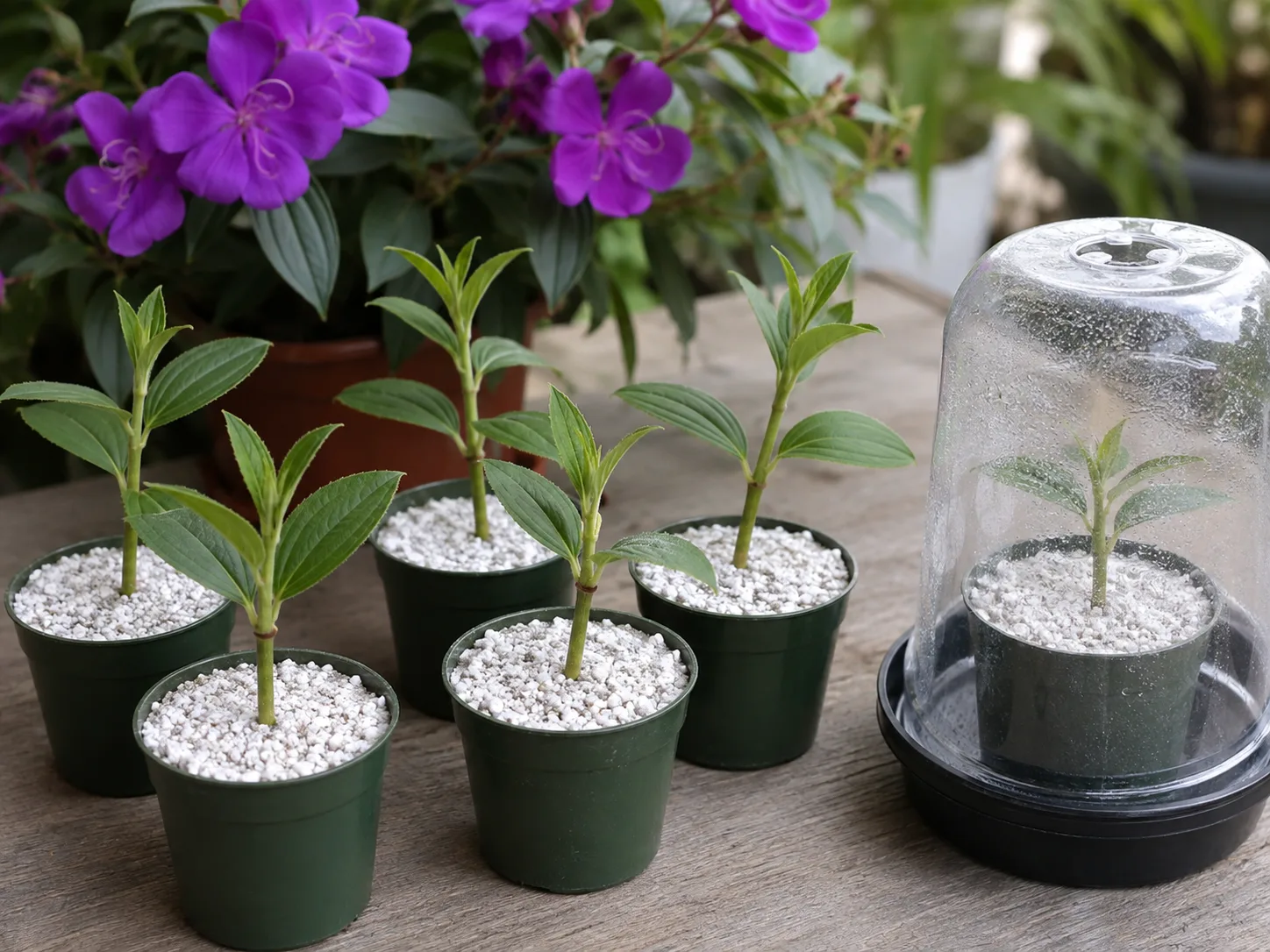
Take several 4- to 6-inch cuttings from healthy, non-flowering shoots. Use a clean blade to cut just below a node, remove the lower leaves, and keep one or two pairs of leaves at the top. If the remaining leaves are large, trim them slightly to reduce water loss, but do not strip the cutting bare.
Insert the cuttings into a sterile, lightly moist medium such as perlite mixed with seed-starting mix or fine coir. Rooting hormone is optional; if you use it, follow the label and avoid contaminating the container. Cover the pot with a clear humidity dome or loose clear bag, keeping plastic off the leaves, and place it in bright indirect light with steady warmth.
Open the cover daily to exchange air and check moisture. The medium should be damp, never muddy. After several weeks, test one cutting with a gentle tug; resistance suggests roots, while a loose cutting needs more time. Once roots fill the small plug, pot it into a modest container and gradually introduce brighter light. Keep new plants evenly moist while they establish, but do not move them into a larger pot prematurely.
Grow Princess Flower From Seed
Seed is possible when you have fresh, correctly identified seed capsules, but it is less predictable than cuttings. Plants raised from seed may vary in vigor, flowering time, and exact appearance, and nursery names within the Tibouchina group are not always used consistently. If preserving a particular purple-flowered plant matters, take cuttings instead.
Sow fresh seed in a shallow tray of pre-moistened seed-starting mix. Cover it lightly or press it into the surface according to the seed’s size; do not bury tiny seed deeply. Keep the tray warm and bright but out of direct, drying sun, and use a clear cover only while germination requires high humidity. Remove the cover as seedlings emerge so stagnant air does not encourage damping off.
Pot seedlings individually once they have several true leaves and a root ball that holds together. Harden them gradually before outdoor planting. Because seed-grown plants take longer to reveal their final habit, give each one more space than you would a cutting, and do not assume a young seedling will stay compact simply because it looks small in its first pot.
Pot and Repot Without Stressing the Roots
Select a container only 1 to 2 inches wider than the current root ball or pot. An oversized container holds wet mix around a small root system and makes overwatering more likely. A heavy, stable pot is helpful for a tall plant, but weight is not a substitute for drainage holes.
Repot when roots circle the container, water runs straight through the sides, or the plant dries out unusually fast despite a healthy canopy. Slide the plant out with the root ball intact, loosen only clearly circling outer roots, and set it at the same depth. Backfill with fresh mix, water thoroughly, and keep it out of harsh afternoon sun for several days.
Repotting is also a chance to inspect for root rot. Healthy roots are firm and light-colored to tan; mushy, dark roots and a sour smell signal trouble. Remove only the soft damaged tissue with a sterilized tool, refresh the mix, and correct the watering pattern. Do not jump from a wet, root-damaged pot into a much larger one.
Overwinter a Container or Zone 8 Plant
Move a container indoors or into a frost-free greenhouse before the first frost, not after leaves have blackened. Inspect stems and leaf undersides for scale, aphids, mealybugs, and spider mites, then rinse or clean the plant before it joins other houseplants. A bright window or grow-light setup is better than a dark garage if you want it to remain leafy and possibly flower.
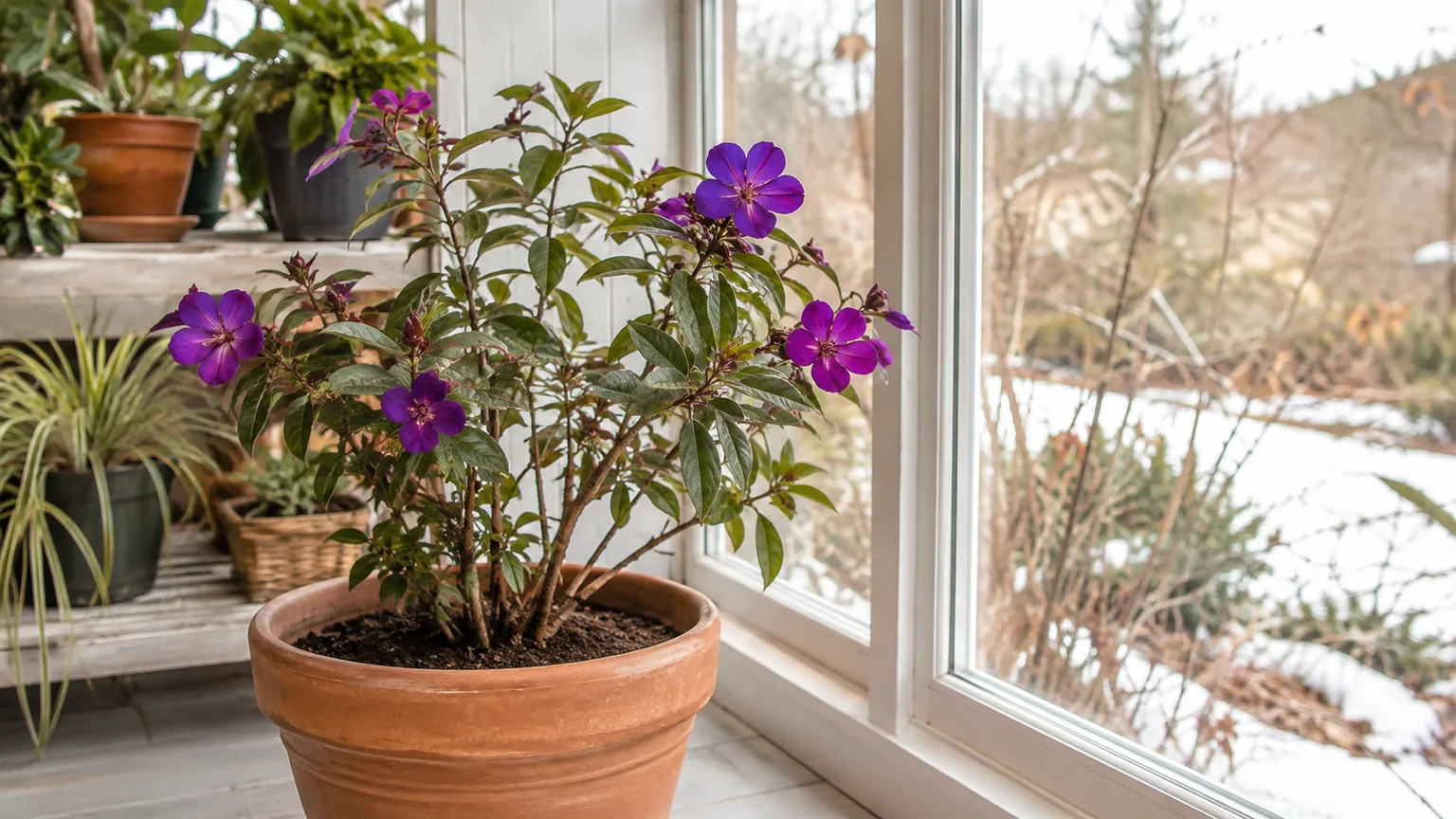
Winter care is a slower version of summer care. Water when the upper mix dries, but expect longer intervals because low light and cool temperatures reduce demand. Stop routine feeding while growth is minimal, keep the plant away from hot radiators and cold glass, and rotate it so one side does not stretch toward the window.
If the plant must be stored in a cool, dim space, cut it back modestly and water only enough to keep the root ball from becoming completely dry. This is survival storage, not ideal growth. Bring it back into brighter conditions gradually in spring, wait for new growth before feeding, and harden it off before returning it outdoors.
In zone 8, a protected in-ground plant may die back after a freeze and return from the roots. Cut away clearly dead stems once new growth shows where the live tissue ends. Do not call the plant dead in midwinter simply because the top growth is bare, but do not promise recovery after every freeze either; soil moisture, duration of cold, wind, and the plant’s protection all matter.
Diagnose Pests, Root Problems, and Leaf Changes
Princess flower is not usually difficult because of a single exotic disease. Problems more often follow stress: tender growth attracts sap-feeders, dry indoor air favors mites, and saturated soil deprives roots of oxygen. NC State Extension lists scale, mealybugs, and nematodes among potential pests; Gardenish also flags spider mites, while Gardening Know How highlights aphids and mealybugs.
Inspect new shoots and leaf undersides weekly. Sticky residue, curled new leaves, clusters of small insects, cottony patches, or a fine stippling pattern all deserve attention, but first isolate an infested container from other plants. Start with a firm water rinse or hand removal where practical, then use an insecticidal soap or horticultural oil only as labeled for the crop and site. Test a small section first, avoid spraying during heat, and repeat according to the label because one treatment rarely reaches every life stage.
Root trouble looks different from a pest problem. A plant that wilts while the mix is wet, drops leaves after repeated watering, or smells sour at the pot often has damaged roots. Stop automatic watering, improve drainage, and inspect the root ball. Brown leaf edges with bone-dry mix call for a slow, thorough watering and a review of wind and sun exposure, not an immediate pesticide.
Get More Princess Flower Blooms
When flowers are scarce, start with light and temperature before fertilizer. Use this order:
- Check direct light. Fewer than roughly six hours, or deep shade for most of the day, is a common reason for leggy growth and sparse flowers.
- Check the root zone. Wet soil can stop healthy growth; severe drying can cause bud drop even if the plant later recovers.
- Check the pruning date. A late cut can remove shoots that would have carried the next flush.
- Check winter damage or chill. Frost, cold drafts, and a sudden indoor move can pause flowering for weeks.
- Check feeding balance. Heavy nitrogen may favor leaves; a soil test is more useful than blindly adding bloom booster.
Deadhead spent flowers if you want a tidier display and to limit energy going into fruit capsules. Deadheading is not a cure for shade or cold, but it keeps the plant’s energy directed toward continued growth in a long warm season. A young plant may also need time to establish a larger root system before it flowers heavily.
Use Princess Flower as a Focal Point
Give princess flower room to be seen. One specimen near a patio, pool, entry court, or sheltered wall usually has more impact than several crowded plants competing for light and water. In a bed, allow at least 3 feet around a small shrub and considerably more for a full-size form; check the nursery tag because mature spread varies by cultivar and training.
The purple flowers combine well with plants that enjoy similar warmth and moisture, including canna, ginger, jasmine, and tropical foliage plants. Use lower plants around the base only if they will not steal water through dense tree roots. If you want a related flowering plant with a different growth habit, compare its needs with our complete jasmine growing guide rather than assuming every plant sold as tropical has the same winter tolerance.
The flowers attract butterflies, bees, and hummingbirds, according to Gardening Know How. That makes princess flower useful in a pollinator-friendly garden, but local conditions still determine which visitors arrive. Also check regional guidance before planting large numbers: Gardenia notes that Tibouchina urvilleana has naturalized and is considered a noxious weed in Hawaii. A container can be the responsible choice where escape or sucker growth is a concern.
Conclusion
The best way to grow princess flower is to match the plant to the climate you actually have. Give it strong morning or full sun, rich soil that drains freely, steady moisture during active growth, and a sheltered position where wind and heat do not punish the leaves. Pinch young tips for a fuller shape, prune majorly after a flowering flush, and use softwood cuttings when you want dependable new plants.
If frost is part of your normal winter, make the container plan before autumn: inspect for pests, move the plant to bright protection, reduce water as growth slows, and return it outside gradually in spring. That small amount of planning turns princess flower from a fragile impulse purchase into a repeatable flowering feature.