Pot vs Planter: How to Choose the Right Container
Learn the difference between pots and planters, when to use nursery pots and cache pots, and how drainage, size, and material affect plant health.
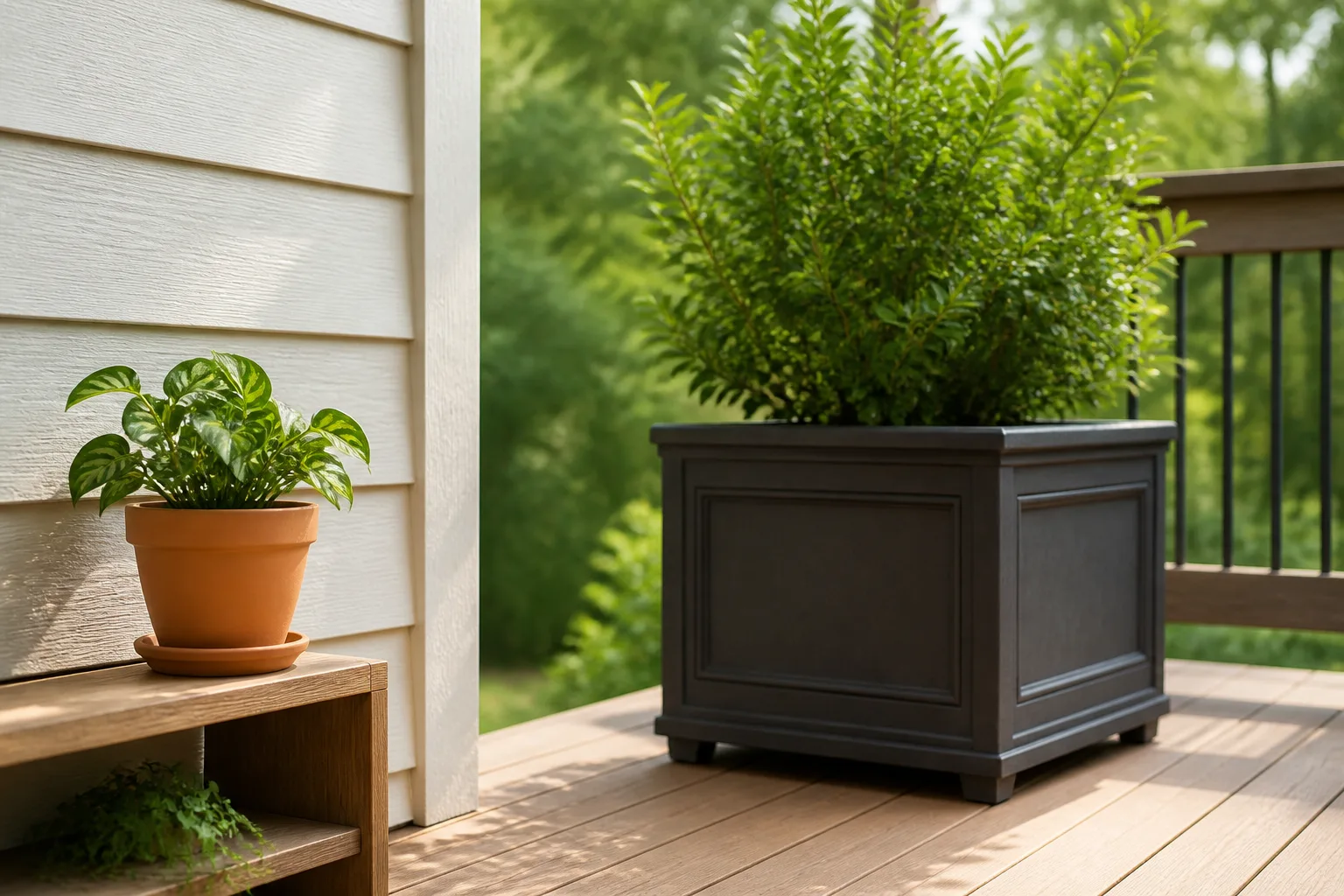
The label on the shelf rarely matches the question you are actually trying to solve. You might need a small vessel for one houseplant, a weather-tough box for a patio shrub, or a decorative outer pot that hides the utilitarian plastic your plant already lives in. Pot and planter get used interchangeably in conversation, but they point to different scale, drainage expectations, and placement. Choosing the wrong one does not just look awkward—it changes how fast soil dries, how roots breathe, and how often you fight root rot.
The short answer: pots and planters solve different jobs
A pot is usually a round, single-plant container sized for one root ball, most often indoors or on a small shelf. A planter is a larger or more architectural vessel meant for outdoor display, multiple plants, or a statement placement on a patio, porch, or entryway. Planters are often heavier, wider, and built to tolerate sun, rain, and temperature swings. Pots prioritize fit, drainage, and day-to-day watering rhythm.
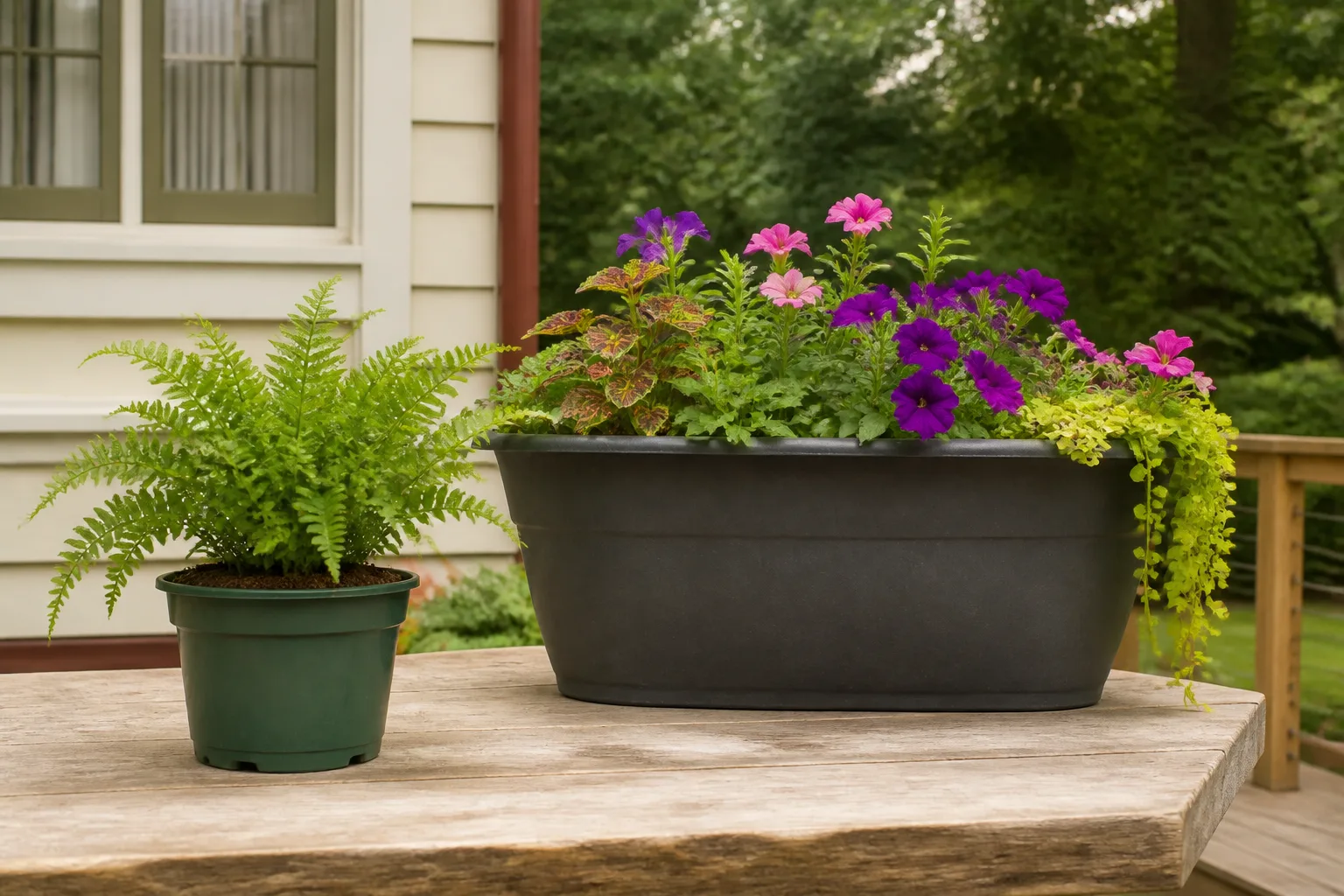
The overlap is real: a big terracotta pot on a front step functions as a planter, and a compact floor planter can hold a single fiddle-leaf fig indoors. The useful distinction is not rigid taxonomy—it is root volume, drainage path, and where the container will live. If you start there, the shopping label matters less than the setup you are building.
What gardeners mean by pot, planter, and container
Container is the umbrella term for anything that holds potting mix above the ground. Retailers mix the words freely, which is why extension guides talk about “plant containers” rather than enforcing one vocabulary. Iowa State University Extension groups quality container selection around drainage, durability, weight, and insulation—factors that apply whether the vessel is called a pot or a planter. Iowa State University Extension
Pots: single-plant growing vessels
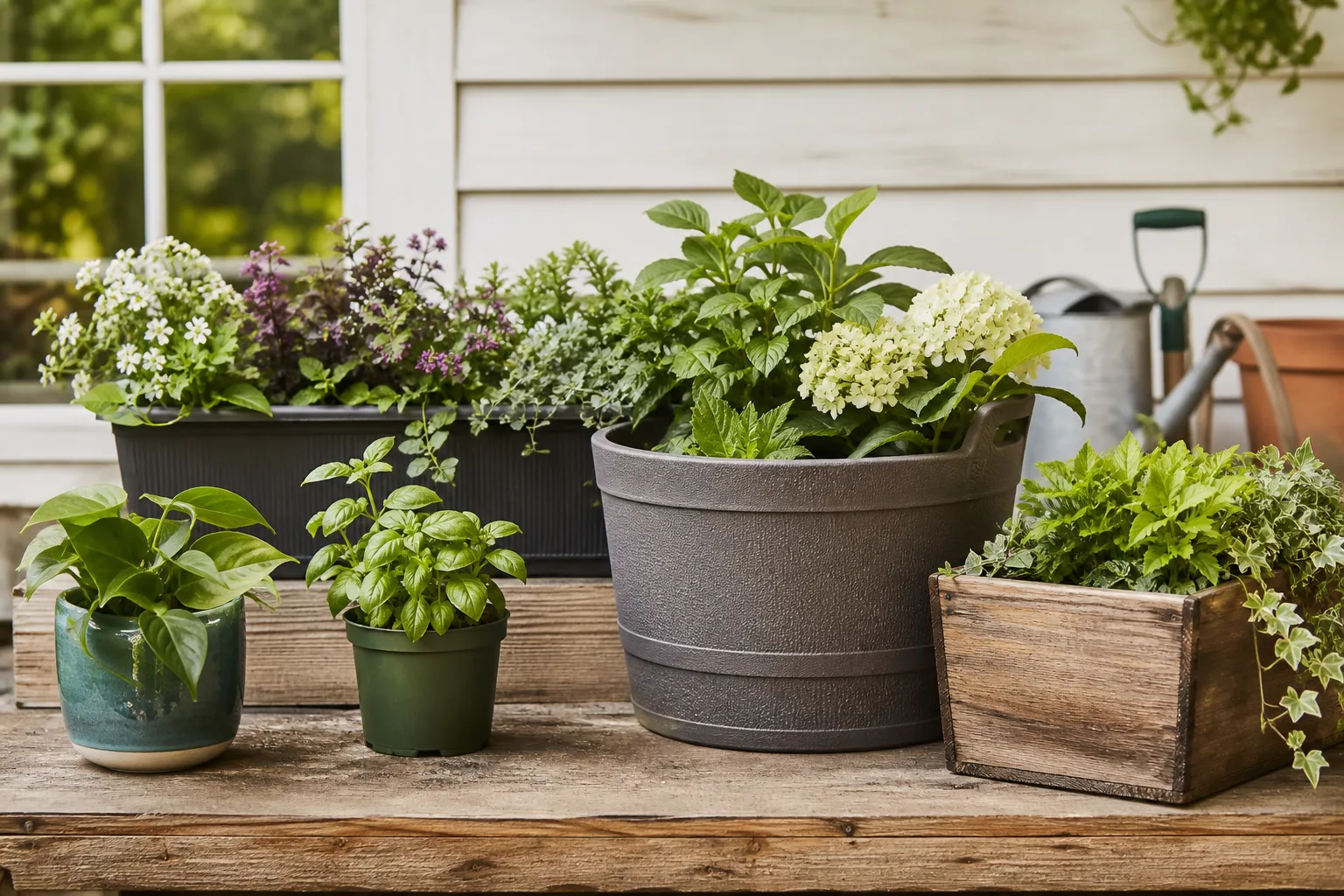
Houseplant pots are typically measured in inches of diameter and sold for one plant. They may be plastic nursery pots, terracotta, glazed ceramic, or lightweight composite. The job is straightforward: hold enough mix for the current root mass, let excess water exit, and match the plant’s drying preference.
Pots are easier to move, easier to repot, and easier to slip inside a decorative outer shell. That is why most indoor growing workflows—repotting, bottom watering, checking for rootbound roots—assume a portable single-plant pot with holes.
Planters: scale, display, and multi-plant setups
Planters emphasize visual mass and placement. Think window boxes, trough planters, large resin tubs on a deck, raised planter beds, and floor-standing containers grouped at an entrance. Many are sold without expecting frequent moves.
Because planters often hold more soil and more plants, they dry differently than a 6-inch houseplant pot. A mixed container garden can look lush on planting day yet fail by midsummer if sun, water, and root competition do not align. Planters also face weather: UV breakdown on plastic, frost cracking on ceramic, and corrosion on uncoated metal. Outdoor material choice is a durability decision, not only a style decision.
Nursery pots, grow pots, and cache pots
The thin plastic pot your plant arrived in is a nursery pot or grow pot. Nurseries use them because they are cheap, lightweight, and always drilled for drainage. Keeping that pot is not lazy—it is often the most stable setup for the plant until you have a reason to change mix or root room.
Why the plastic nursery pot is a useful base
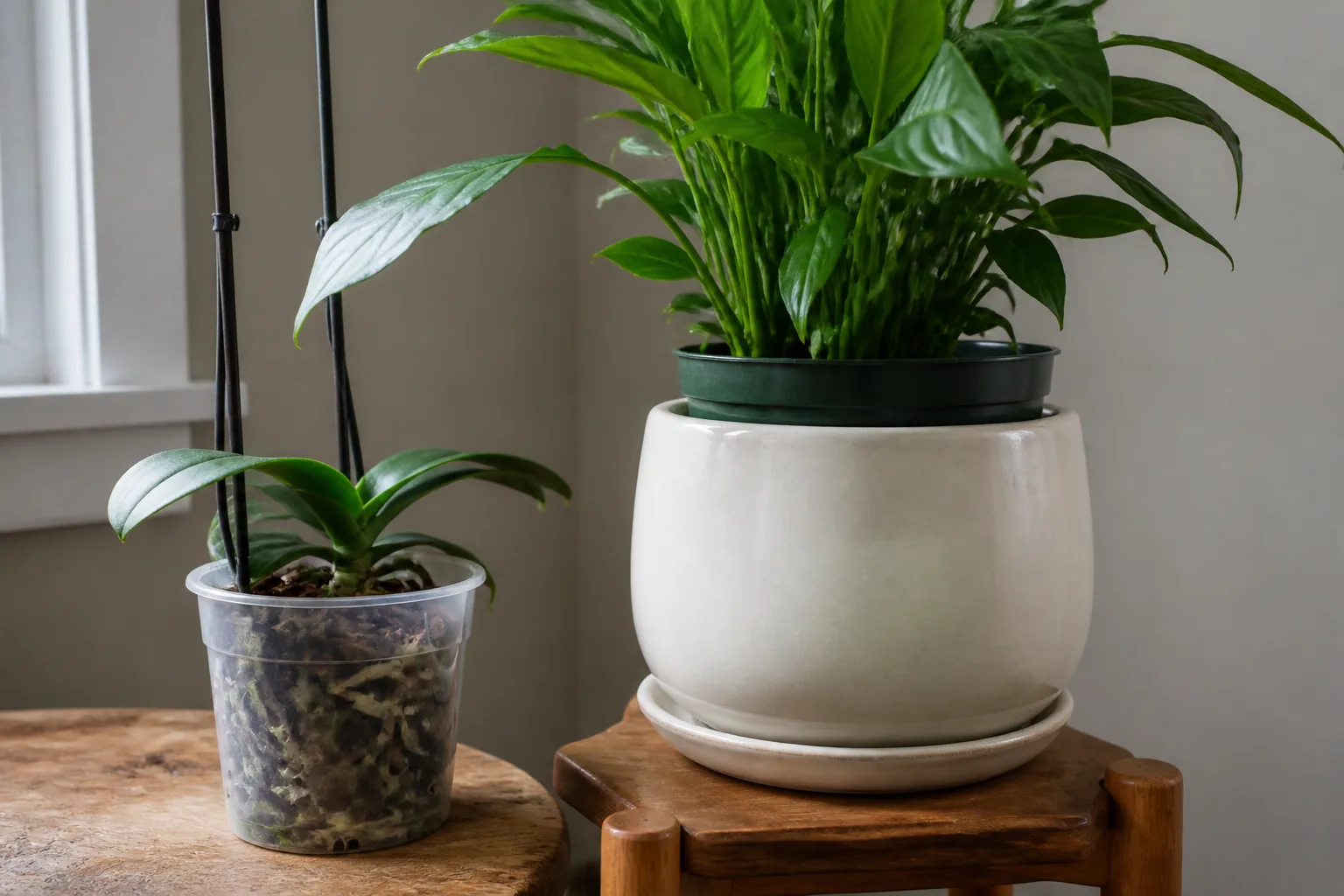
Nursery pots let you lift the plant, inspect roots, and water until runoff without committing to a heavy decorative vessel. For fast growers, the nursery pot is a stepping stone: you repot when roots circle the bottom or water runs through in minutes, not when the plastic offends your aesthetic.
Clear or semi-clear nursery pots also help with moisture checks on orchids and other plants where root color signals thirst. A decorative pot hides that signal, which is one reason many orchid growers keep a transparent inner pot even when a cache pot covers it.
Cache pots: style without repotting every season
A cache pot (sometimes called a cachepot) is a decorative outer pot without drainage holes. You drop the nursery pot inside so the pretty vessel never touches wet mix directly. Swap the outer pot when your decor changes; the root ball stays put.
The cache system works when you treat watering as a two-step job: water the inner pot until a little runoff appears, then empty the cache pot or drip tray before you walk away. Water that sits in the outer shell keeps the root zone saturated and invites the same anaerobic conditions extension services warn about for houseplant root rot. University of Wisconsin-Madison Division of Extension
If you prefer planting directly into a decorative pot, choose one with holes and a tray—or drill holes if the material allows. Direct planting is simpler daily care; cache pots are simpler seasonal restyling. Neither works if standing water is ignored.
Drainage is the rule, not the exception
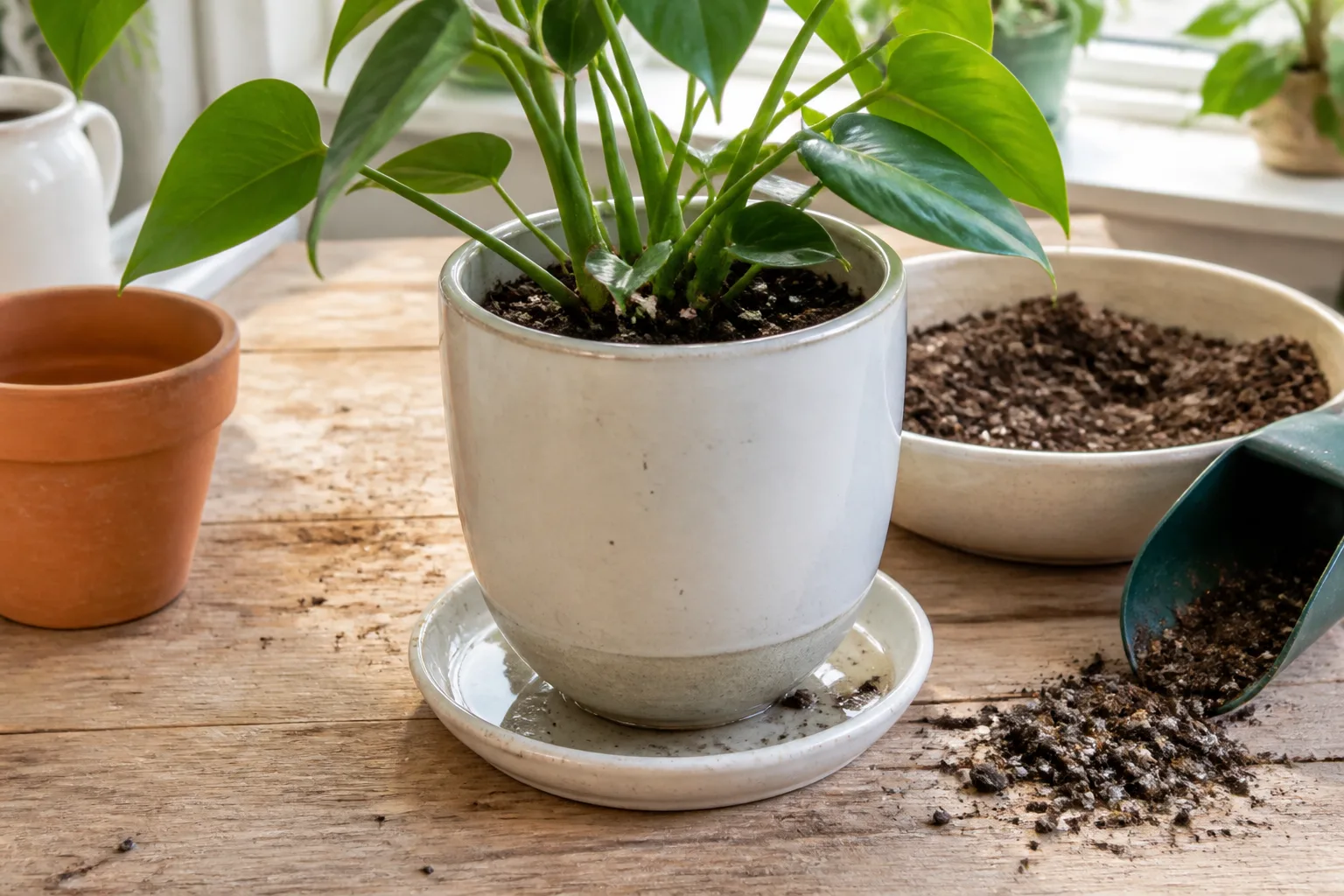
Most ornamental indoor and patio plants need a path for excess water to leave the root zone. Soggy mix reduces oxygen around roots, and oxygen loss is the core mechanism behind many “mystery” declines that show up as yellow leaves, wilting on wet soil, or soft brown roots.
Perched water and why holes matter
Even with holes, potting mix does not drain like a free-flowing liquid. Water clings to particles through capillary action and leaves a perched water table—a band of saturated mix at the bottom that gravity cannot pull out. Deep Green Permaculture explains that smaller pores and finer mix hold more perched water, while larger particles and more air space let water exit faster. Deep Green Permaculture
Drainage holes do not eliminate perched water entirely; they set the lowest exit point so the band does not rise into the entire root ball. A holeless decorative pot traps runoff at the bottom and raises that saturated zone around roots—exactly where you do not want it.
University of Illinois Extension is explicit that gravel beneath mix does not fix that physics problem. Water perches above the gravel until the soil above is saturated, then drains into the gravel below—so the saturated layer often sits higher, not lower. University of Illinois Extension
Making no-drainage containers safer
If you must use a holeless vessel, keep the plant in a nursery pot inside it and never pour water into the outer shell. Some gardeners add a thin layer of lava rock or pebbles between pots to create an air gap, but that is a cache-pot convenience, not a substitute for holes when planting directly.
For direct planting in a holeless pot, the safer pattern is a very lean, fast-draining mix and extremely conservative watering—yet even then, one overwatering event can be catastrophic because there is no exit. Holeless containers are a discipline choice, not a beginner default.
Self-watering and reservoir pots change the rules again: they rely on a wick or chamber design. They can work well for steady drinkers but are a poor fit for plants that need a full dry-down between waterings unless you understand the reservoir rhythm.
Pick pot size before you pick pot style
A beautiful planter that is two sizes too large will still hurt the plant. Oversized containers hold excess wet mix around a small root ball, which slows drying and encourages rot—especially in cool seasons when the plant is not pulling water quickly.
How inch sizes actually work
When a pot is labeled 6-inch, that refers to inside diameter, not plant height. A cactus and a fern can both live in a 6-inch pot with wildly different top growth. Retail “4-inch plant” language means the plant is growing in a 4-inch-diameter pot today.
When upsizing at repot time, Penn State Extension recommends moving to a container only one size larger—typically 1–2 inches wider in diameter for pots 10 inches or smaller, and about 2–3 inches wider for larger containers. Penn State Extension That increment gives roots new room without drowning them in unused mix.
When upsizing causes more problems than roots
Skip upsizing if the plant is stressed, recently brought home, or entering winter dormancy. Also skip it when the issue is old depleted mix but the roots still fit the current pot—refresh the mix in the same size instead. See repotting houseplants for the full repot-versus-top-dress decision.
Planters for shrubs or small trees need a different sizing lens: choose enough depth for root development and enough width that the plant will not topple in wind. A dwarf citrus on a windy balcony may need a wider base more than a taller decorative planter.
Material choices change watering and weight
Material changes drying speed, weight, and temperature at the root zone. No single material wins every plant and every room.
Terracotta, plastic, and glazed ceramic indoors
Terracotta is porous. It breathes, which helps fast-draining lovers and reduces waterlogging risk, but it also pulls moisture from mix and can stress plants that want steady humidity at the root zone. Plastic is nonporous, lightweight, and dries more evenly on the sidewalls—often better for moisture-loving tropicals if drainage is good. Glazed ceramic behaves like plastic on the inside while offering heavier weight and more design options.
The Royal Horticultural Society notes that houseplant growing media should be free-draining and open, and that container material interacts with how often you need to water. Royal Horticultural Society For a deeper material comparison, see terracotta vs plastic pots.
Dark plastic and metal pots can overheat roots in hot afternoon sun—relevant if you move houseplants outdoors in summer. Black plant containers in heat deserve a separate check before you park a pot on sun-baked concrete.
Wood, resin, metal, and fiberglass outdoors
Wood and composite planters insulate somewhat and suit many patio setups, but longevity depends on sealants and drainage—standing water rots wood feet and liners. Resin and fiberglass are popular for large planters because they mimic ceramic weight visually while staying movable at scale. Metal is sleek but conducts heat; line or shade it in hot climates.
Frost is the hidden failure mode: glazed ceramic and thin plastic can crack when wet soil freezes. In cold zones, store sensitive containers empty, choose frost-rated resin, or plan to overwinter plants in a sheltered spot.
Indoor pots versus outdoor planters
Indoor pots prioritize fit with furniture, stable moisture rhythm, and manageable weight on shelves and windowsills. Outdoor planters prioritize weather resistance, wind stability, and evaporative demand from sun and breeze.
A houseplant pot on a humid bathroom shelf may dry slowly even in terracotta, while the same pot on a windy balcony loses moisture twice as fast. Outdoor planters also deal with rain—another reason drainage holes and empty saucers matter. A planter that fills with rainwater for days is functionally a swamp.
When you summer houseplants outside, treat the move as a container decision: often the nursery pot plus a heavier outdoor planter for wind stability, or a larger outdoor pot with fresh mix and strict drainage checks.
Container gardens need compatible neighbors
A planter holding three or four species is one shared root zone. Plants that need blazing sun and constant moisture will not coexist peacefully with drought-loving companions in the same soil mass. Match light, water, and fertilizer appetite before you match colors.
Thriller-filler-spiller design is useful, but biology beats layout. Put aggressive spreaders alone in wide planters, and give deep-rooted plants enough depth. Refresh mix when performance drops; old planter soil compacts and loses structure faster than in-ground beds.
For soil structure itself, pair container choice with the right mix—see best potting mix for indoor plants and avoid filling a premium planter with heavy garden soil that suffocates roots in a small volume.
Window boxes, hanging baskets, and raised planters
These are planter categories with extra physics. Window boxes bolt to facades and dry from three sides in sun. Hanging baskets lose moisture from bottom and sides and can heat quickly. Raised planters behave like elevated beds: they drain well but can still overheat on dark surfaces.
All three need drainage holes or a liner pot with holes, and all three punish inconsistent watering. If the setup is decorative first, use a liner basket inside the pretty shell so you can water, drain, and swap plants without destroying the mount.
Weight limits matter for hanging hardware—wet mix is heavier than dry mix, and a soaked basket after rain stresses brackets. For raised planters on decks, verify load limits and keep runoff from staining wood beneath.
Skip the gravel layer at the bottom
Putting rocks, shards, or gravel under potting mix is one of the most persistent container myths. It feels logical—create a “drainage layer”—but the physics do not cooperate. Water does not move freely from fine mix into coarse gravel until the fine layer above is saturated, so the perched water table often sits higher in the pot, closer to roots. University of Illinois Extension
Better drainage comes from holes plus appropriate mix, not from a decorative stone band that steals root space. If mix stays wet too long, add perlite or bark to the blend, upsize cautiously, or switch to a more porous pot—do not add a gravel false bottom.
A decision framework before you buy
Work through these steps in order when you are staring at a garden-center wall of containers:
- Location: indoors, patio, full outdoor bed edge, or hanging? Sun, wind, and frost exposure follow from location.
- Plant count: one root ball or a designed grouping? Single-plant pot versus multi-plant planter.
- Drainage path: holes, nursery-plus-cache, or self-watering reservoir—and how you will empty standing water.
- Size: current pot diameter, rootbound signs, and the 1–2 inch (or 2–3 inch) upsize rule—not the biggest pretty vessel.
- Material: drying speed, weight, heat absorption, and frost tolerance for your climate.
- Maintenance: will you move it for watering, winter storage, or repotting every year?
If two containers tie on style, pick the one with clearer drainage and a size closer to the next true repot step. Style upgrades are cheap; root rot recovery is not.
Common container mistakes that stall growth
Leaving water in cache pots and saucers is the fastest way to rot roots while believing you are “watering correctly.” Empty external reservoirs every time.
Oversized decorative pots after repotting leave wet margins that roots never reach. Match size to roots, not to future fantasy growth.
No holes in direct-planted setups turns one overwatering into a crisis. Drill, liner-pot, or cache—pick a system and follow it.
Wrong material for the watering habit pairs thirsty tropicals with fast-drying unglazed terracotta in hot sun, or succulents with nonporous plastic in dim, cool rooms—without adjusting mix or schedule.
Garden soil in a small pot compacts, holds water unevenly, and introduces pests. Use container mix suited to the plant group.
Ignoring outdoor heat on dark containers cooks roots before leaves show stress. Move, shade, or double-pot before midsummer peaks.
Each mistake shares a theme: the container changed the water-and-oxygen balance around roots without the gardener updating care.
Conclusion
Pots and planters are tools, not synonyms. A pot fits one plant’s root ball and daily care rhythm; a planter fits placement, scale, and often the outdoor environment. Nursery pots plus cache pots can be a smart system when drainage runoff is removed; direct planting into holed vessels is simpler when you commit to proper mix and saucer discipline.
Drainage holes, appropriate mix, and right-sized upsizing do more for plant health than any gravel layer or trendy shape. Choose material for how it dries and how heavy it will be when wet, then match the container to where it will actually live. When those pieces align, the label on the shelf—pot or planter—becomes a detail, not a gamble.



