9 Ornamental Grasses to Cut Back in Fall
Learn which ornamental grasses to cut back in fall, which to leave standing, how far to cut, and how to avoid damaging next season's new growth.
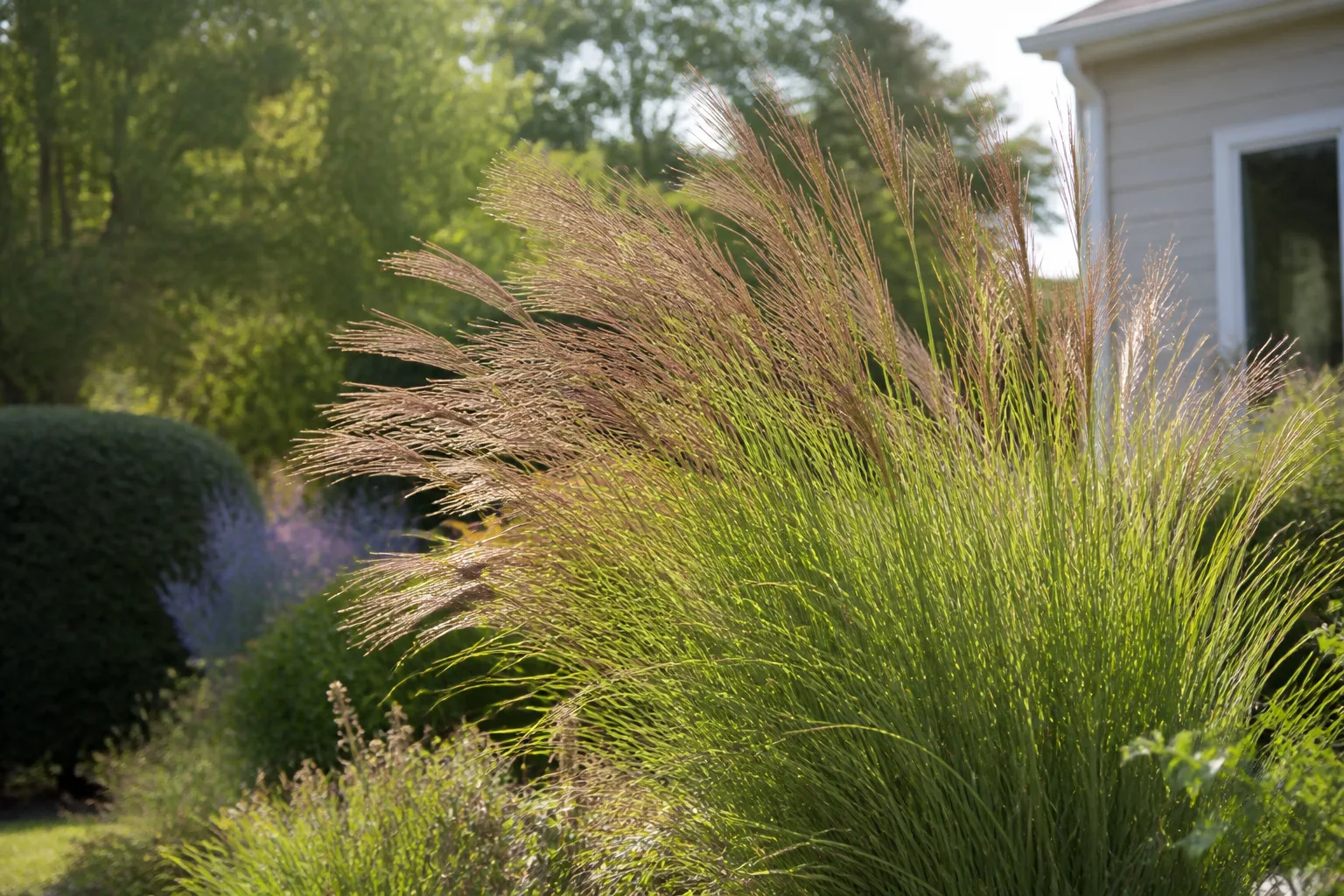
Ornamental grasses can look better after a haircut, but fall is not automatically the right season to give every clump one. The best choice depends on whether the plant is a warm-season perennial, a cool-season grass, an evergreen grass-like plant, or a tender annual that will not survive your winter anyway.
For most deciduous perennial grasses, late winter or early spring is the safest default. You get the winter structure, let seed-eating birds and small creatures use the foliage, and remove the old stems before fresh shoots become tall enough to catch under a blade. Fall cutback is useful when a warm-season clump is fully dormant, regularly collapses into wet mulch, is spreading by seed, or sits where local fire-safety guidance calls for less dry fuel.
The nine plants below are candidates for fall cleanup, not a command to shear them all in October. Use the table and the individual notes to decide what fits your grass, your climate, and the job you want the cutback to accomplish.
The short answer: fall is optional, spring is the default
The Royal Horticultural Society’s cutting-back guidance places the main cleanup for deciduous ornamental grasses in early to mid-spring, before new shoots emerge. That is a sound rule for most gardens because the dry stems protect the crown, add movement to the winter bed, and provide cover and food opportunities for wildlife.
Fall cutting is reasonable when the grass has finished growing and turned completely brown, and you have a specific reason to remove it. A tidy border, seed control, snow collapse, or dry material near a structure can outweigh the winter display. If the plant is still green at the base, leave it alone; cutting active foliage is a different job from removing dormant stems.
| Your situation | Better choice | Why |
|---|---|---|
| A warm-season grass is fully brown and the bed must be tidy | Fall cutback is acceptable | The plant is dormant and can regrow from its crown |
| You like winter texture and the grass is stable | Wait until late winter or early spring | You keep structure, habitat, and seedheads longer |
| The clump is near a building in a fire-sensitive area | Follow local fire-safety guidance | Dry foliage can be part of a larger fuel-management decision |
| The plant is cool-season, evergreen, or still green | Wait or comb selectively | A hard fall cut can remove living foliage or expose the crown |
| The grass drops unwanted seed | Remove seedheads before they scatter | Timing for containment may matter more than the haircut itself |
The goal is not to force a bare winter bed. It is to remove old material at a moment when the crown is safe and the cleanup solves a real problem.
Warm-season, cool-season, and evergreen grass: why timing changes
The name “ornamental grass” describes appearance, not one care schedule. Many plants sold as grasses are true grasses in the family Poaceae; others, such as sedges, are grass-like plants with different responses to pruning. Growth habit gives you a much more useful clue than the common name.
Warm-season grasses wake slowly in spring and make most of their height during summer heat. Miscanthus, switchgrass, fountain grass, muhly grass, and little bluestem fit this broad pattern. Once they are fully dormant, they usually tolerate a low cut, typically leaving 3 to 6 inches above the crown. They are the best candidates for a fall cut if you have a reason to remove the old foliage early.
Cool-season grasses grow strongly in spring and again when temperatures moderate in fall. Feather reed grass and many fescues are examples. They often need an earlier spring cleanup and a lighter cut; removing about two-thirds of the old height and leaving a third standing is a useful starting point. The RHS growing guide separates cool-climate grasses from warm-climate types partly by when they begin growth and when they should be cut.
Evergreen grasses and grass-like plants keep living green blades through winter. Carex, Luzula, and many sedges usually need dead leaves combed out, not a hard shearing. A green clump that looks a little ragged is not the same thing as a brown, dormant clump. The important exception in this article is pampas grass: large plants can need a hard annual tidy, but in many climates early spring is the safer window.
Do not let the phrase “cut back to the ground” tempt you into cutting into the crown. The crown is the dense base where roots and new shoots meet. It is the part you must protect; the old blades above it are replaceable.
Three checks to make before you pick up the shears
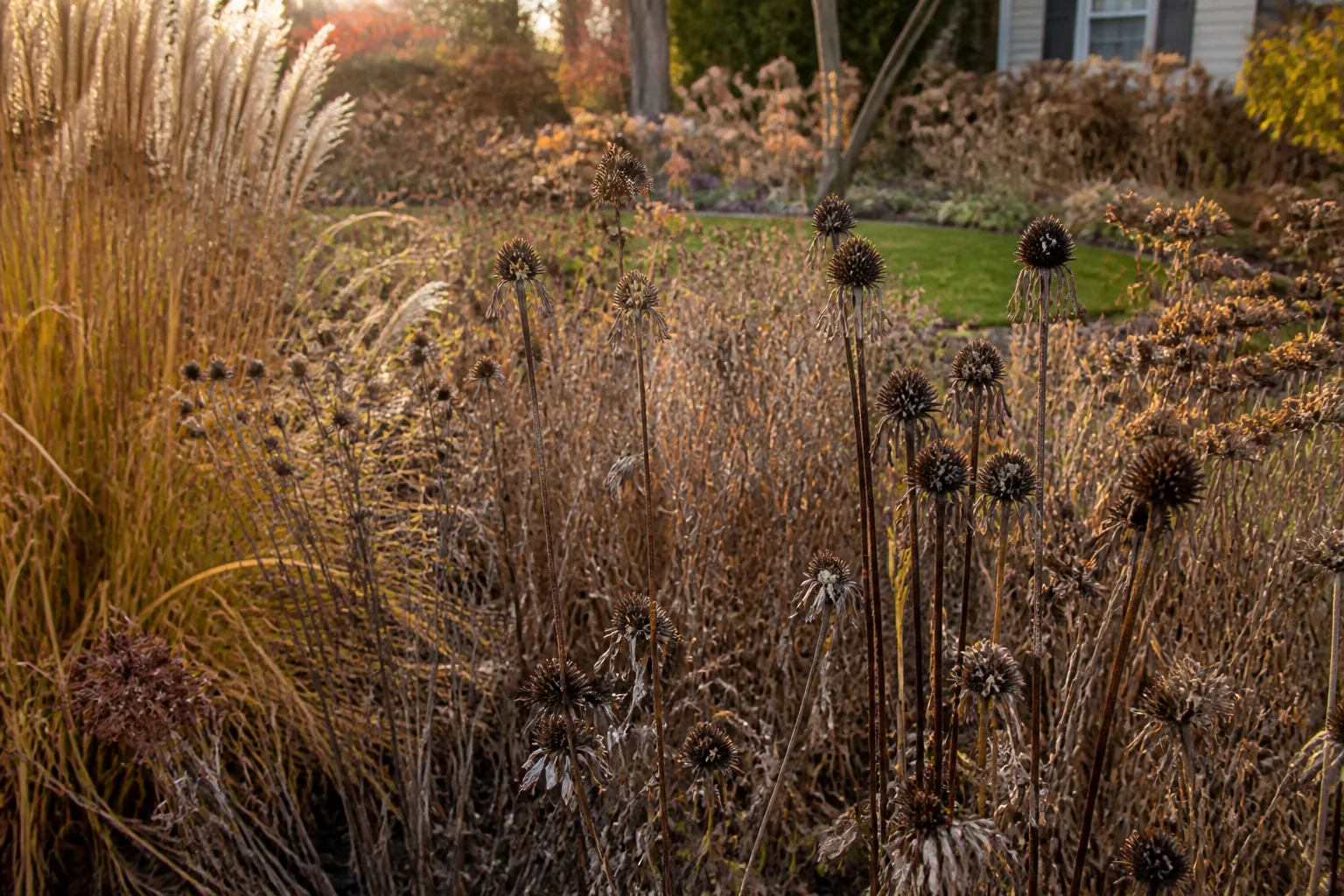
First, read the plant label or confirm the botanical name. “Fountain grass,” “reed grass,” and “pampas grass” can describe several species or cultivars with different hardiness and growth habits. A cultivar that survives winter in one region may be grown as an annual in another, and a grass-like sedge may be damaged by the same hard cut that a Miscanthus handles easily.
Second, inspect the base. If green shoots are already rising from the crown, you are approaching or already in the spring growth window; cut promptly and carefully rather than waiting for a convenient weekend. If the whole clump is brown and dry, a warm-season cut is less likely to remove living tissue. For a grass that remains partly green, remove only dead material unless reliable species-specific guidance says otherwise.
Third, decide what problem you are solving. If the only reason is that the plant looks untidy, you can preserve winter interest and move the job to late winter. If seed is landing in paths or beds, remove the seedheads before they are shaken loose. If the grass is near a house, fence, deck, or access route in a wildfire-prone region, check local defensible-space rules; one haircut does not replace an overall fuel-management plan.
Nine ornamental grasses that may benefit from fall cutback
The heights below are practical starting ranges, not measurements carved into the crown. A smaller cultivar, a newly planted clump, or a grass growing in a cold, wet site may need a higher cut than a mature, vigorous plant.
1. Chinese silvergrass (maiden grass)
Chinese silvergrass, or maiden grass (Miscanthus sinensis), is a tall warm-season grass with arching blades and persistent plumes. Its height alone makes it a reasonable fall candidate when a narrow bed, path, or winter view cannot accommodate a collapsing clump. In a spacious border, leaving it standing until late winter preserves a strong silhouette and lets you enjoy the seedheads.
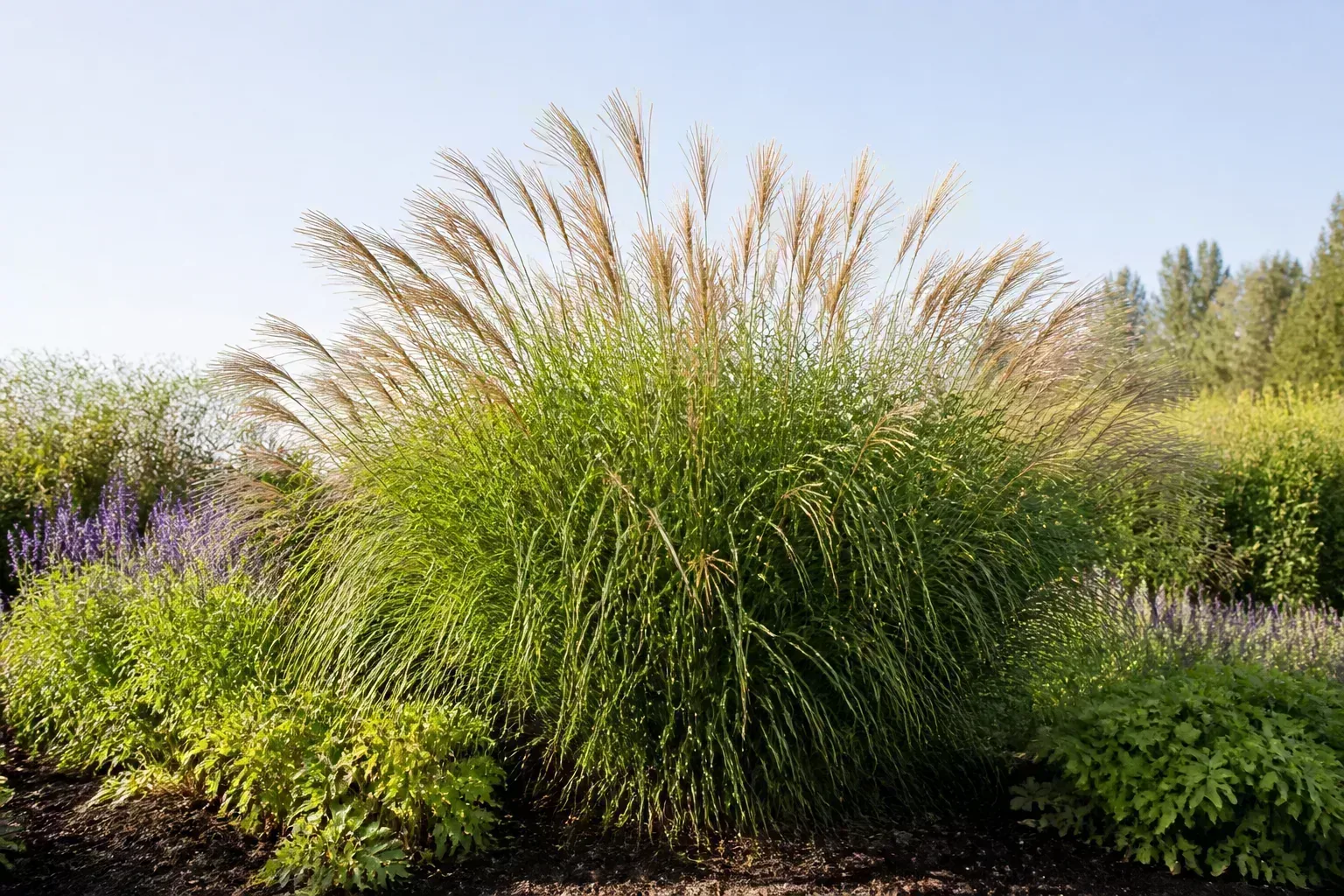
Cut fully dormant plants to about 3 to 6 inches above the crown. A slow-starting Miscanthus can benefit from some old foliage left through the coldest part of winter, so fall cutting is a choice rather than a requirement. If you wait for spring, finish before the new blades are threaded through the old stems.
There is also a regional stewardship question. A peer-reviewed study of M. sinensis reports that the species had naturalized in 25 U.S. states by 2014, with wind-dispersed seeds and meaningful variation among cultivars in establishment potential. That does not mean every named maiden grass cultivar behaves identically, but it does mean you should check your state or local invasive-plant list before encouraging seedheads near natural areas. The study is available through PubMed Central.
2. Zebra grass
Zebra grass is the striped cultivar Miscanthus sinensis ‘Zebrinus’, so use the same warm-season logic as maiden grass. Its banded leaves and tall flower stems provide excellent winter structure, but a large clump can flatten, shed dry blades, and hide spring shoots under a heavy mat.
If you want a clean winter bed, wait until the foliage is completely tan and cut it to 3 to 6 inches. Tie the stems first; the stiff leaves are much easier to carry away in one bundle. If the clump is not in the way, postpone the cut until late winter and keep the striped form through frost.
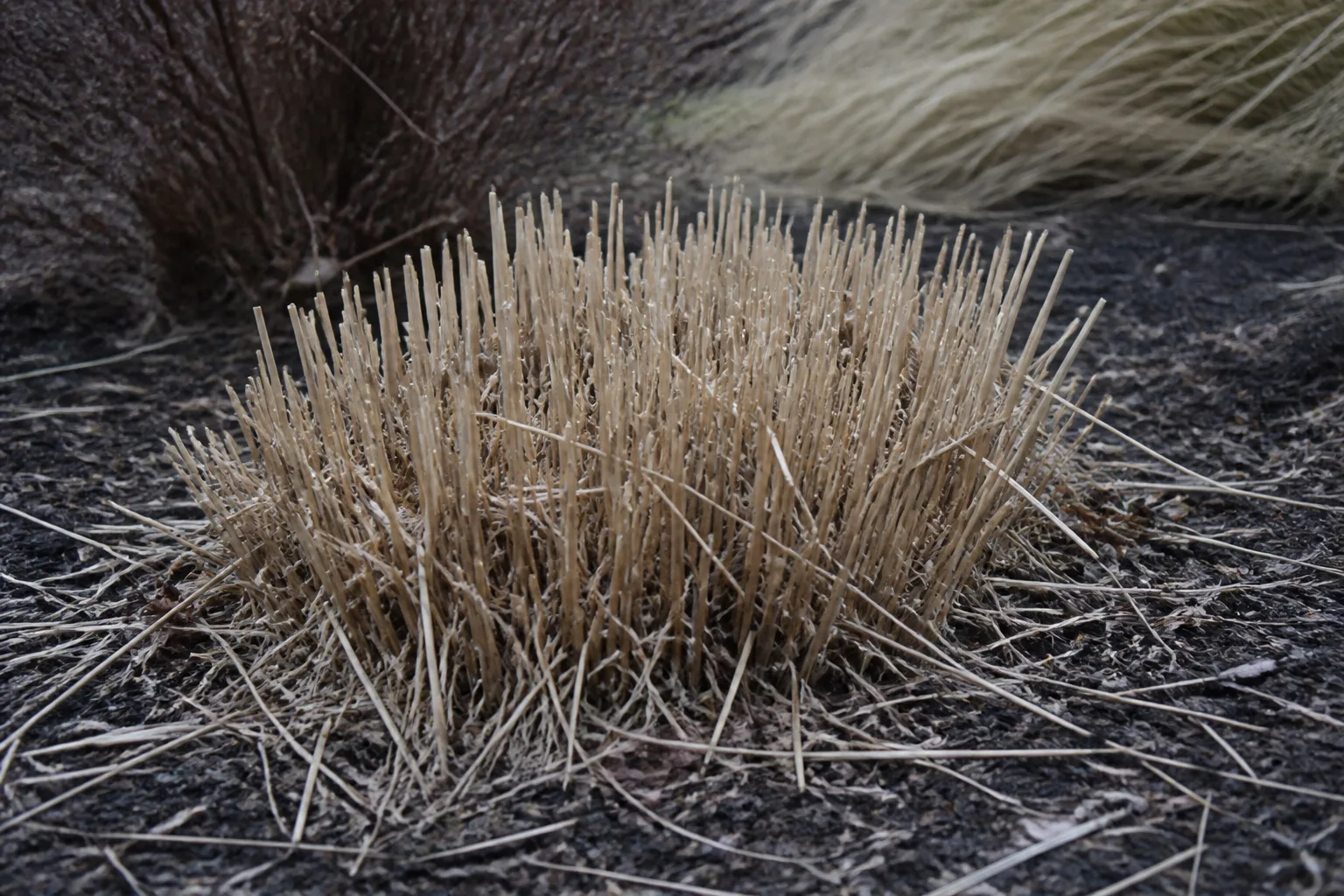
Cultivar behavior matters here, too. The same peer-reviewed research found differences among Miscanthus cultivars, including differences related to growth and seed viability. Treat the botanical identity and local conditions as more important than a generic rule that every zebra grass should be cut on the same date.
3. Pampas grass
Pampas grass (Cortaderia selloana) is a special case because large plants can be evergreen or semi-evergreen in mild climates and have extremely sharp leaf edges. Its dramatic plumes can also create a substantial volume of dry material. The RHS recommends hard pruning large pampas grass in early spring, as low as possible without damaging emerging green growth, rather than treating it like a small deciduous clump.
In a mild climate, do not make a hard fall cut just because the plumes are fading. Leave the plant until early spring, when you can see where new shoots are emerging. In a colder climate where the top has turned fully brown, or where local fire guidance calls for removing dry fuel, a late-fall cut may be justified; leave a short protective stub and avoid cutting into the crown.
Wear thick gloves, long sleeves, and eye protection. Use loppers for woody stems and keep your face and hands out of the falling bundle. Never burn a pampas clump as a shortcut: the RHS warns that burning can damage the crown, and dry grass fires are difficult to control around mulch, fences, and structures.
4. Fountain grass
“Fountain grass” covers several Pennisetum species and cultivars, so identify the plant before you decide whether it has a crown worth protecting through winter. Purple fountain grass (Pennisetum setaceum ‘Rubrum’) is commonly grown as a tender annual in colder climates, while hardy fountain grass cultivars are treated as warm-season perennials.
For a hardy, fully dormant clump, cut to about 3 to 5 inches after the foliage browns. For purple fountain grass grown as an annual, the practical fall job may be to remove the spent plant after frost and save or discard the seedheads according to your plan. In a mild climate, or when you are overwintering a container, cut back in early spring instead and protect the crown from excess winter wet.
The Epic Gardening guide to ornamental grass cutback notes that purple fountain grass is hardy only in warm zones and may need shelter above freezing elsewhere. That distinction prevents a common mistake: cutting an annual to a stubble and expecting a plant that was never winter-hardy to return.
5. Switchgrass
Switchgrass (Panicum virgatum) is a warm-season North American native that ranges from compact cultivars to tall, upright forms. It often holds its shape well through winter, but a tall selection can catch snow and lean onto paths or neighboring perennials. Cut fully dormant plants to 3 to 6 inches above the crown, adjusting higher if the crown is exposed or the clump is young.
Spring is usually the better choice when the stand is stable and wildlife value matters. Switchgrass seedheads can feed birds, and the dry leaves create structure in an otherwise quiet bed. Fall cutback is more defensible when the stems are blocking a walkway, the clump repeatedly mats over its center, or you need to reduce dry material around a structure under local fire guidance.
Do not fertilize heavily just because the cutback looks severe. Established ornamental grasses generally need little feeding, and excessive nitrogen can produce floppy foliage that collapses faster next season. Let the crown re-establish its normal growth pattern.
6. Cordgrass
Cordgrass (Spartina spp.) is a genus rather than one uniform garden plant, and the name can refer to species used in wet soils, rain gardens, coastal plantings, or restoration work. That makes local identification particularly important. A garden clump can be cut for appearance, but a wetland or shoreline planting should not be mowed or disturbed casually.
If your identified cordgrass is an established ornamental planting and the local guidance allows maintenance, remove seedheads before they scatter, then cut dormant foliage to about 4 to 6 inches. Keep the cut material out of waterways and do not drag a seed-bearing bundle through natural areas. If you are unsure whether the plant is part of a permitted restoration project, ask the land manager or local extension office before cutting.
Cordgrass is a good example of why a species name and a landscape setting belong in the same decision. “Cut it back in fall to stop spread” is too broad for a genus that can be ecologically important in one location and troublesome in another.
7. Northern sea oats
Northern sea oats (Chasmanthium latifolium) is a shade-tolerant, warm-season native with attractive, dangling seedheads. It earns winter interest, but it can also distribute seed into places where a gardener does not want more seedlings. If you have seen young sea oats appearing outside the original clump, fall seed control may be more useful than preserving every seedhead.
The cleanest approach is to clip the seedheads before they become loose and scatter, then cut the remaining dormant foliage to about 2 to 4 inches. Bag or contain the seedheads rather than shaking them over the compost pile if you are trying to reduce volunteer plants. If self-seeding is not a problem and the clump is stable, leave it standing and cut in late winter.
The RHS growing guide notes that some ornamental grasses are enthusiastic self-seeders and recommends deadheading before seeds fall. Use that principle here instead of assuming that every plant needs a full fall haircut. You can preserve the basal clump and still remove the part most likely to travel.
8. Pink muhly grass
Pink muhly grass (Muhlenbergia capillaris) is valued for its airy pink cloud of late-season flowerheads. Once the display fades and the fine leaves turn brown, the plant is a warm-season candidate for a neat fall cut. Still, waiting preserves the soft seedhead effect through winter and avoids turning a colorful late-season planting into a bare patch too soon.
When the plant is fully dormant, cut to 3 to 6 inches above the crown. In warm regions, spring may arrive before the calendar suggests it, so inspect the base for new green growth before making the cut. A fall cut is most useful when the dried foliage looks ragged, the bed needs a clean edge, or you want to prevent old material from tangling with spring shoots.
Do not confuse a thin, airy muhly clump with a dead plant in early spring. It is naturally slower to fill than a dense Miscanthus. If the crown is firm and shows new shoots, give it time rather than cutting lower or adding strong fertilizer.
9. Bunny tail grass
Bunny tail grass (Lagurus ovatus) is often grown as an annual for its soft, rounded seedheads. Its fall maintenance is therefore more about seed management and reuse than about protecting a perennial crown. If you want dried stems for arrangements, cut the plumes while they are still attractive and before they shed mature seed. If you do not want volunteers, remove the plant and bag the seedheads rather than composting them loosely.
Where bunny tail grass has overwintered or reseeded in a mild climate, cut it back after the season finishes, leaving a small amount above the soil. Do not assume it will return as a tidy perennial just because it survived one mild winter. A few surviving plants can still be annuals completing their life cycle, not crowns that need a hard perennial pruning schedule.
How to cut tall ornamental grasses with less mess
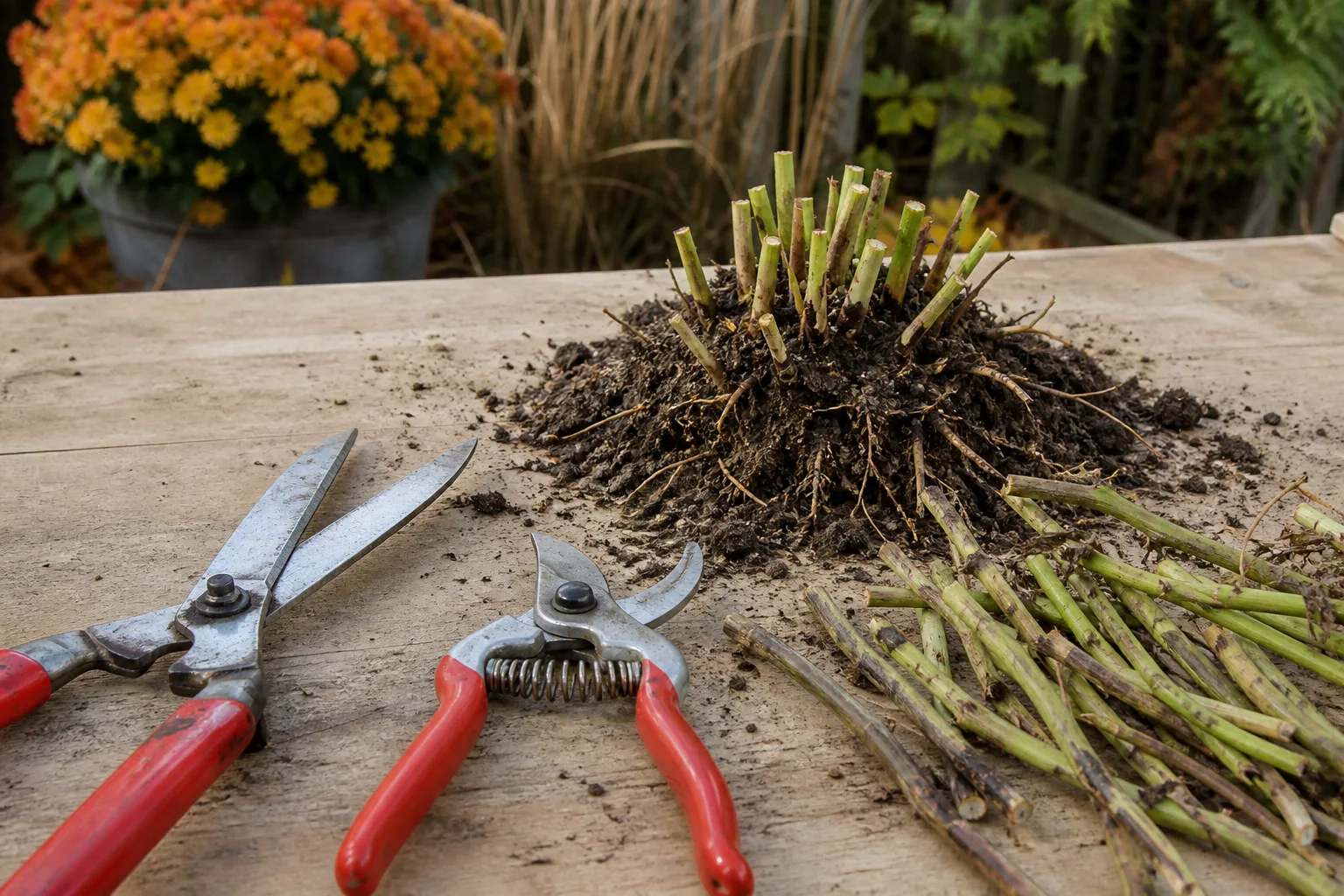
Choose a dry, calm day. Wet blades cling together, obscure the crown, and make the cut material heavier. Before starting, clear pets and children from the work area, put on thick gloves and long sleeves, and add eye protection when the clump is taller than your shoulders or has sharp leaves.
The Savvy Gardening pruning guide recommends tools ranging from hand pruners and hedge shears to loppers and a string trimmer for very large, woody clumps. Match the tool to the stem rather than forcing a small pruner through a thick bundle.
- Confirm the target height. Mark an imaginary line above the crown: usually 3 to 6 inches for a dormant warm-season grass, higher for a cool-season plant, and no hard line for an evergreen sedge.
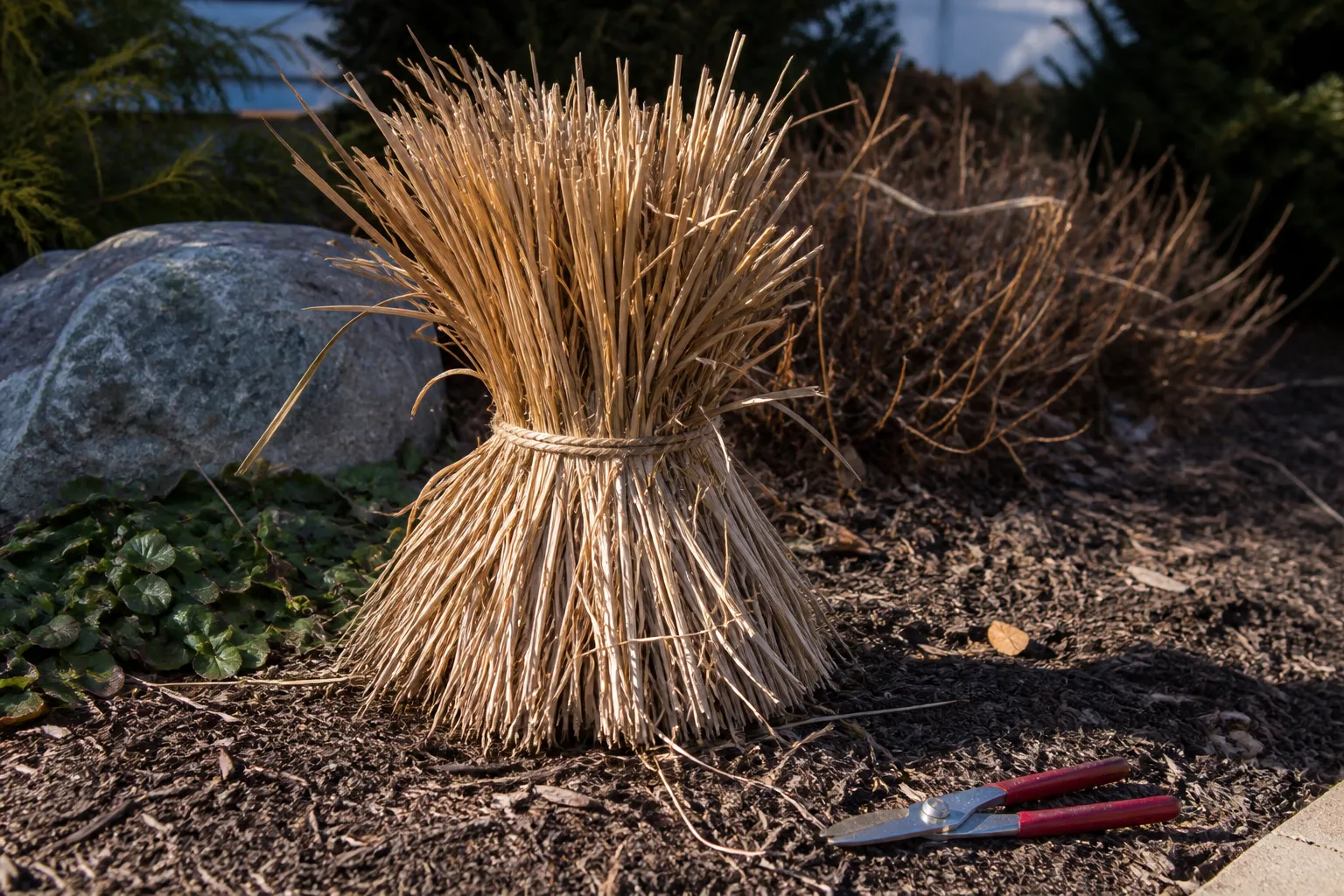
- Bundle the stems. Wrap twine, wide tape, or a reusable bungee around the clump at waist height. For a very wide plant, make two or three smaller bundles instead of one tight, unwieldy mass. Keep the tie snug enough to hold stems upright without crushing living shoots.
- Cut in sections. Start on one side and cut through the bundle with hedge shears, a sharp sickle, or a trimmer. Use loppers for thick pampas or giant Miscanthus stems. Keep the cutting edge pointed away from your body.
- Lift the bundle away. Pull the tied stems slightly outward as you finish the cut so the debris falls away from the crown. Remove the bundle before cutting the next section; it exposes missed stems and keeps the work area manageable.
- Finish by hand. Pull loose thatch from the crown and remove green shoots that were accidentally cut only if they are already detached. Do not rake aggressively through a crown that is beginning to grow.
- Clean the bed. Rake scattered leaves from paths and hard surfaces, but do not bury a thick layer of wet grass directly over the crown. If the material contained mature seedheads, contain it before transporting it through the garden.
The bundle is not just a cleanup trick. It gives you a visible, stable mass to cut and reduces the temptation to keep shearing lower when loose blades are still lying across the soil.
Mistakes that lead to thin or slow regrowth
Cutting by the calendar alone. “October” or “November” does not tell you whether a grass is dormant in your garden. Use color at the crown, recent frost, and the plant’s growth habit. A warm autumn can leave a supposedly fall-ready grass partially active.
Cutting green blades because brown tips look untidy. Brown tips on an evergreen or semi-evergreen plant are a selective-trim problem, not a reason to shear the whole clump. Comb out dead material and cut individual damaged leaves instead.
Scalping into the crown. A short cut does not create a fuller plant if it removes the basal growing points. Leave a few inches, keep the blade above the soil line, and err high when you cannot see the crown clearly.
Treating a tender annual like a hardy perennial. Purple fountain grass and bunny tail grass may be grown as annuals depending on climate. If the root system is not winter-hardy, no pruning height can make it return next spring. Check the cultivar and overwintering plan first.
Hard-pruning cool-season grasses in fall. Cool-season types may still be actively growing or may rely on living foliage for their best cool-weather display. Save the main cut for early spring and leave a taller stub if the plant’s growth habit calls for it.
Burning the clump. Fire can move from dry leaves into mulch, fences, or nearby vegetation faster than a gardener expects. It can also injure the crown. Cut, bundle, and remove the material instead, and follow local fire rules if the grass is near a structure.
Assuming a cutback fixes a weak plant. Thin growth next season may come from shade, poor drainage, crown rot, overfertilizing, drought during establishment, or a cultivar that is not hardy in your location. Pruning removes old foliage; it does not correct a poor planting site.
What to do with cut stems and seedheads
Dry, leafy grass can be compostable, but whole bundles of tough Miscanthus and pampas break down slowly. Chop them into shorter pieces or use only the soft leaves in a home compost pile. Woody stems can be saved as temporary plant supports if they are clean and dry.
Seedheads deserve a separate decision. If you are preserving a self-seeding plant for wildlife, leave the heads in place through winter or move a small number to a sheltered spot. If you are trying to contain northern sea oats, bunny tail grass, or any grass already appearing where it was not planted, bag mature heads and do not shake them into the bed or add them to unfinished compost.
After cleanup, inspect the crown again in late winter. Remove any remaining windblown thatch, look for rot in persistently wet sites, and cut just before new shoots become tall. That second look is especially useful for plants you chose not to cut in fall; winter weather can flatten a clump even when it looked stable in October.
Conclusion
The best ornamental grasses to cut back in fall are not simply the ones that turn brown first. They are the fully dormant, warm-season, seed-spreading, snow-collapsing, or site-sensitive plants for which early cleanup solves a clear problem. Chinese silvergrass, zebra grass, hardy fountain grass, switchgrass, cordgrass, northern sea oats, pink muhly, and bunny tail grass can all fit that description in the right setting; pampas grass needs more caution because its leaves are sharp and its ideal hard-pruning window is often early spring.
When there is no urgent reason to cut, leave the dry display standing and make late winter your default. When you do cut, identify the plant, protect the crown, bundle tall stems, choose a height that matches the grass type, and contain seedheads before they travel. That measured approach gives next season’s shoots room to emerge without trading away winter habitat or damaging a plant that was never meant to be scalped.



