Do Black Plant Pots Get Too Hot in Summer?
Learn when black plant pots overheat roots, which plants are most vulnerable, and how shade, pot size, mulch, and watering can prevent summer damage.
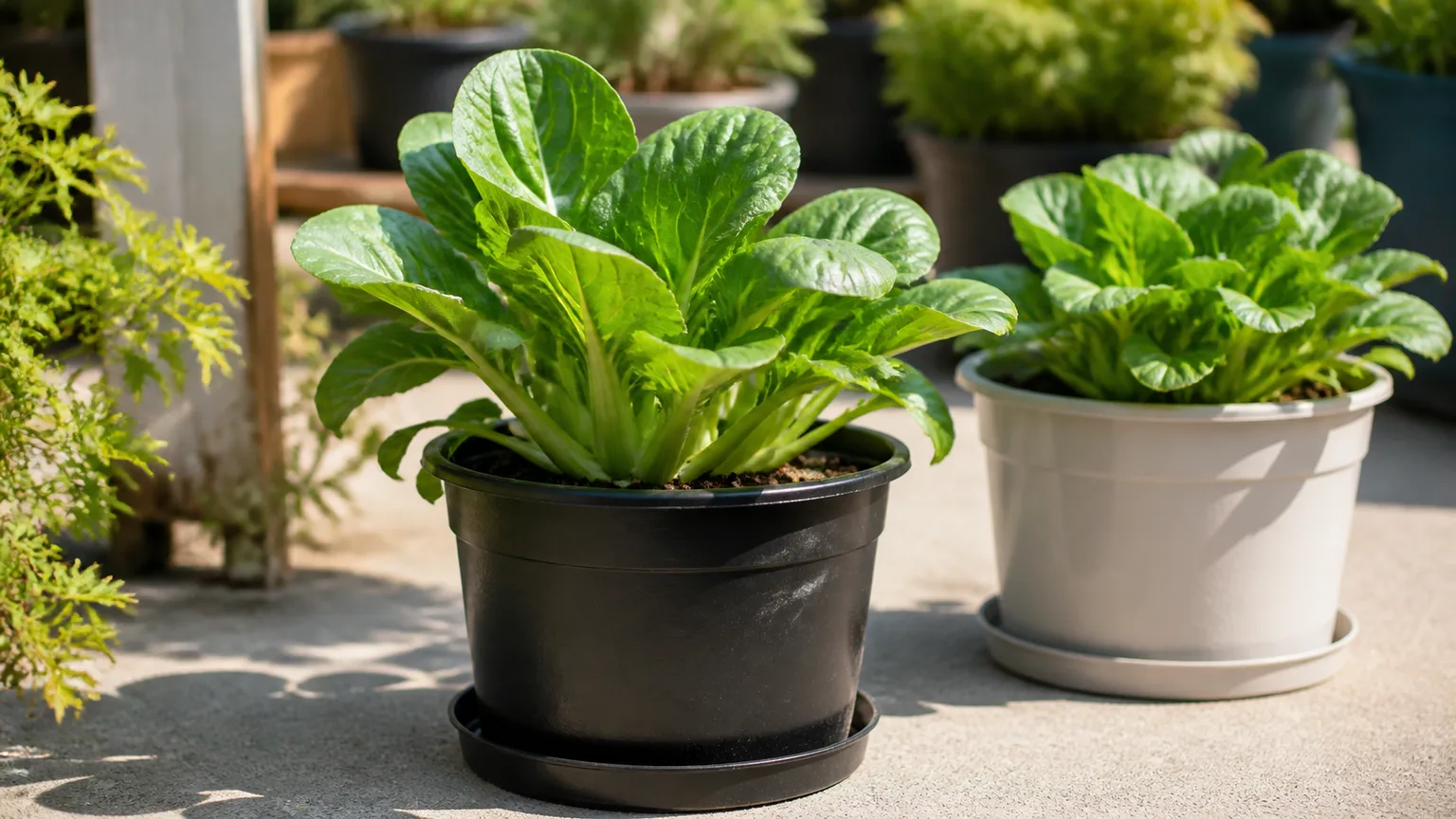
Black plant pots are not automatically harmful, but a black container in hot afternoon sun can create a real root-zone problem. Dark sidewalls absorb solar energy, and a container has far less soil to buffer that heat than the ground does. The danger is highest when a small, dark pot sits on sun-baked concrete, dries quickly, and holds a plant that prefers cool or evenly moist conditions.
That makes the useful answer more specific than “never use black pots.” Check the pot, the location, the plant, and the moisture together. If several of those factors point toward heat stress, move the container into afternoon shade or shield the pot before you reach for a hose or start repotting.
The short answer: black pots can raise root-zone heat
Roots do not experience the same conditions as the leaves. A plant may look fine in the morning while the sunny side of its container heats up for hours, drying the mix and stressing roots before the foliage shows obvious damage. Washington State University Extension specifically cautions that darker and metal containers can become very hot in hot climates, while the University of Kentucky identifies direct solar radiation on container sidewalls as a major driver of high root-zone temperatures. Washington State University Extension and University of Kentucky Cooperative Extension
Color is only one part of that chain. A thick, large, light-colored resin pot in bright sun may be less risky than a thin black nursery pot, but a black pot in morning sun with afternoon shade may be perfectly manageable. Think of black as a risk multiplier when the rest of the setup already favors heat, not as a plant-killing material by itself.
What actually makes a container overheat
The roots are most exposed when sunlight strikes the container wall, the pot holds little mix, and the mix is already dry. The best decision comes from understanding those three conditions rather than relying on the air-temperature forecast alone.
Sun on the sidewall matters more than air temperature
The side of a pot facing the sun can become much warmer than the surrounding air. Dark plastic, dark metal, and thin-walled containers take on that heat; a pot against a south- or west-facing wall can also receive reflected heat after direct sun moves. The University of Kentucky’s container-heat guidance puts the emphasis on reducing direct sunlight on sidewalls, which is why shade, pot grouping, and shielding are so effective. University of Kentucky Cooperative Extension
This is also why an outdoor container on a paved balcony can struggle while the same pot under a leafy shrub does not. Air movement helps, but wind does not erase solar heating; it can increase water loss from the potting mix and leaves at the same time.
The color of the surface is not the same thing as the temperature of the root ball. A pot wall can be hot to the touch while the center of a large, damp container remains less affected, or the entire root zone can heat quickly when the plant has filled a small pot. That difference explains why two gardeners can report opposite results with black pots and both be observing something real.
Small pots and dry mix lose the buffer
A large container has more mix around the root ball, so temperature and moisture change more slowly. A tiny black pot has almost no reserve: the heated wall is close to the roots, and a sunny, windy afternoon can turn a moist mix into a dry one before the next scheduled watering. University of Maryland Extension recommends using containers larger than you think for summer growing because additional root space reduces stress and the need for frequent watering. University of Maryland Extension
The pot’s shape matters, too. A shallow, wide container exposes a lot of mix and sidewall to sun, while a deeper pot may give roots more thermal and moisture buffering. Neither shape is universally better, but a shallow black container deserves closer monitoring during a heat wave.
Which plants are most vulnerable
Plant choice can turn a manageable setup into a losing battle. A dark pot is most troublesome when the plant already dislikes heat, afternoon sun, or rapid swings between dry and wet soil.
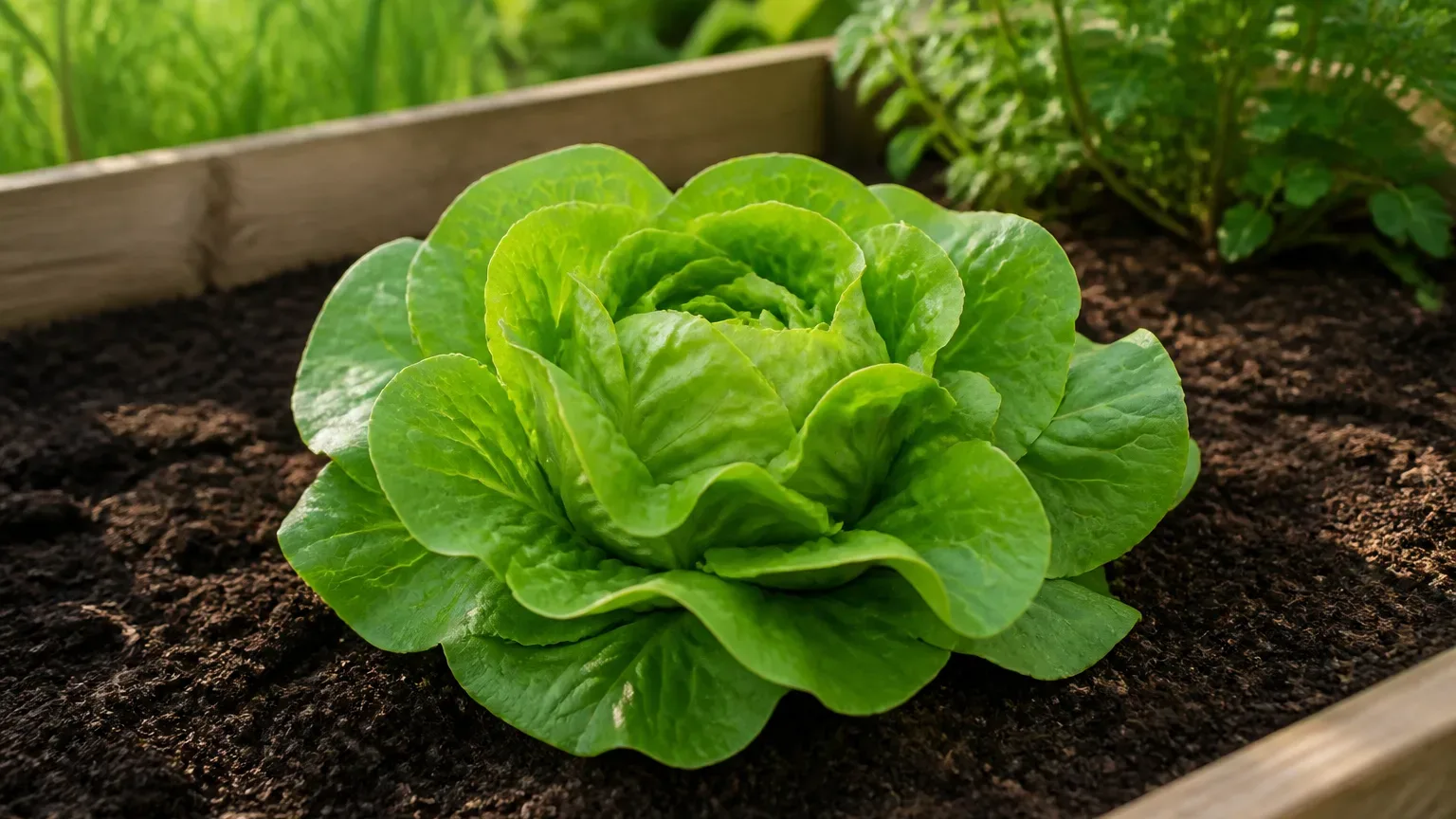
Lettuce is a cool-season crop that can struggle when a container combines hot sun with fast-drying soil.
Cool-season crops and shade lovers
Lettuce, spinach, cilantro, and dill are poor candidates for a small black container in full afternoon sun during hot weather. They tend to perform better with mild temperatures, consistent moisture, or protection from the strongest part of the day. A dark pot does not create all of their summer problems, but it can remove the small amount of root-zone relief they had.
Shade-preferring ornamentals deserve the same caution. Hostas, impatiens, caladiums, many ferns, fuchsias, and some begonias can wilt, scorch, or stop growing when their roots and leaves are exposed to intense heat. Pansies may survive a cool season in a container yet fail to deliver a strong fall comeback if they spend late summer in a hot, dark pot.
The practical move is not to memorize a banned-plant list. Read the plant’s light and temperature preferences, then give a cool-season or shade plant the gentlest location available. Even a few hours of afternoon shade can make a larger difference than changing the pot color while leaving it on a heat-reflecting surface.
Heat-tolerant plants still have limits
Chili peppers and other plants adapted to hot weather generally have a better chance in a sunny container than lettuce or fuchsia. That does not make them immune to root stress. A heat-tolerant plant still needs adequate root space, drainage, and moisture, and its leaves can wilt when the root system cannot replace water quickly enough.
Treat “full sun” on a plant label as a statement about the plant’s light needs, not a guarantee that every container in full sun will stay healthy. Full sun in a large, well-watered bed is a different environment from full sun in a small black pot on concrete.
A simple risk check before you move the pot
Use this quick check on the hottest afternoon you expect, preferably before the plant wilts:
- Location: Does the pot receive strong afternoon sun, sit beside a hot wall, or rest on dark pavement or a balcony surface?
- Container: Is it black, dark-colored, metal, thin-walled, shallow, or noticeably warm on the sunny side?
- Root space: Is the plant crowded in a small pot, or does the mix dry within a few hours of watering?
- Plant: Does it prefer partial shade, cool weather, or steady moisture?
- Symptoms: Is the plant wilting even though the mix is damp, developing scorched edges, dropping flowers, or stalling after hot afternoons?
If you answer yes to three or more, protect the pot before the next peak-heat period. If the plant is already collapsing and the mix is bone-dry, water it thoroughly first, then move it. If the mix is wet but the plant is limp, assume heat or root damage is possible rather than adding more water automatically.
For example, a black 6-inch pot of fuchsia on a west-facing balcony is a high-priority move even if the day’s official temperature is only moderately hot. A large black resin planter holding a pepper on a breezy patio may be a lower priority, especially if it receives morning sun and the mix remains moist through the afternoon. The point of the check is to rank the pots that need help first, not to apply one rule to every container.
How to cool a black container without repotting
Most gardeners can reduce the risk in minutes. Start with the least disruptive change that blocks peak sun and keeps the pot from sitting against a hot surface.
Give it afternoon shade
Move the container to morning sun and afternoon shade, or place it where a building, trellis, shrub, or shade cloth blocks the strongest rays. University of Maryland Extension recommends afternoon shade for container plants during summer heat and also suggests shade cloth for plants suffering from excessive sun. University of Maryland Extension
A shade structure can reduce the peak solar load without forcing a plant into deep shade all day.
Shade cloth should sit above the plant with room for air to move; do not wrap it tightly around foliage or trap hot air against the pot. If you move a sun-loving plant into a much darker spot for the entire day, watch for weaker growth over time. The immediate goal during a heat wave is to reduce the afternoon peak, not to erase all useful light.
Add an insulating outer pot or screen
A light-colored outer container can shield a dark nursery pot from direct sun. Set the growing pot inside a larger decorative pot or planter, but make sure the inner pot still drains freely and that rainwater cannot collect around it. An air gap is useful; packing the space tightly with wet material can create a different drainage and pest problem.
You can also use a reed screen, a piece of untreated wood, or another breathable barrier to shade the sunny sidewall. Keep any shield several inches away from the foliage and leave the drainage opening clear. The point is to block radiation, not to seal the plant in a warm box.
Use mulch and monitor moisture
A thin layer of bark or another suitable organic mulch over the mix slows surface evaporation and helps the root zone change temperature less abruptly. Keep mulch away from the stem or crown, and do not use it as a substitute for drainage. University of Maryland Extension recommends mulching to keep soil moist and cool, while Fine Gardening emphasizes a high-quality potting mix, drainage holes, and the ability to move a container when conditions change. University of Maryland Extension Fine Gardening
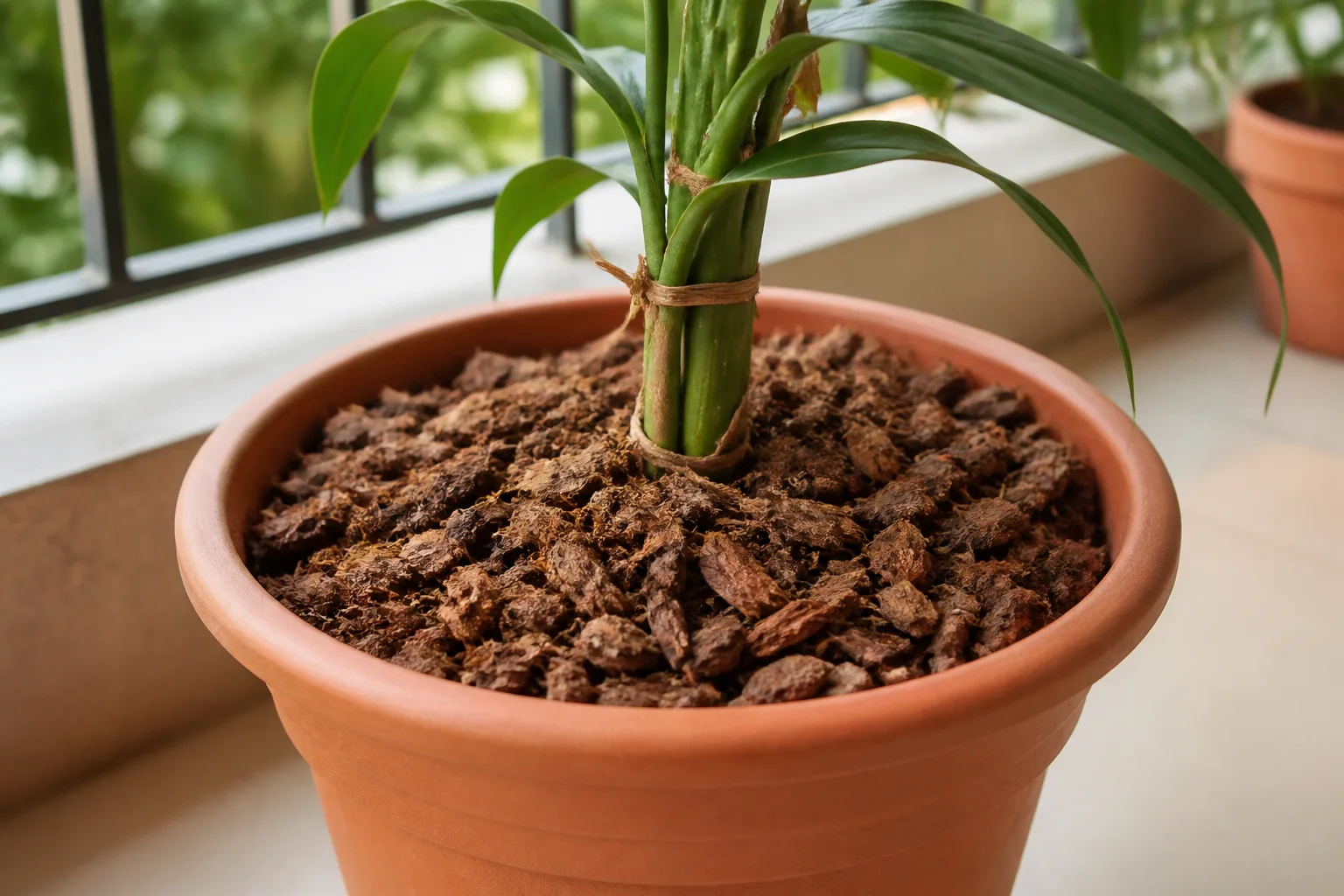
Mulch can slow moisture loss at the surface, but it cannot fix a pot that is too small or sitting in all-day reflected heat.
Check the mix with your finger or a moisture meter rather than watering by the calendar. If the container is drying every day, the long-term fix may be a larger pot, more shade, a different plant, or a self-watering setup—not simply more frequent shallow watering.
When changing the pot is the best fix
Repot when the container is consistently hot, the plant is crowded, the mix dries immediately after watering, or the pot has no practical way to escape peak sun. A light-colored plastic or resin container is often a good compromise because it reflects more light than black plastic without drying as quickly as porous terracotta.
Terracotta has real advantages, including weight and air exchange, but it can lose moisture quickly in hot, dry weather. Metal containers can be especially unforgiving in full sun. Wood, thick resin, and larger double-walled planters may offer more buffering, but the material alone does not matter if the container is small or the drainage is poor.
Use the least disruptive repotting plan that solves the problem. If the root ball is healthy and the plant is not crowded, you can often slip the existing pot into a larger, lighter cover pot rather than disturbing the roots. If roots circle densely, water runs straight down the sides, or the mix has collapsed and become difficult to rewet, a properly timed repot into fresh, well-drained mix may be justified—but give the plant shade while it settles.
Self-watering containers can reduce the frequency of drought stress when their reservoir is used correctly. They do not make a black sidewall cool, and a reservoir should not be treated as permission to keep a heat-stressed plant sitting in saturated mix. Choose the container for the whole setup: enough root space, reliable drainage, appropriate moisture, and a location that matches the plant.
Watering without making heat stress worse
Water when the root zone needs it, ideally in the morning so the plant starts the hottest part of the day hydrated. Apply water slowly enough to wet the full mix, and continue until a little drains from the bottom when the container has a normal drainage setup. Empty a saucer that stays full after watering.
Do not use a fixed daily schedule as your only signal. A black pot on an exposed balcony may need checking twice a day, while the same pot under shade may stay moist longer. Fine Gardening recommends moving portable containers as needed and notes that lettuces can be kept productive longer when protected from intense summer sun. Fine Gardening
Watering is not the answer to every wilt. If the mix is already wet, adding more water can reduce the air available to roots and turn heat stress into a root problem. If a plant wilts in the afternoon but recovers overnight and the mix is moist, begin with shade and sidewall protection; if it stays wilted and the mix is dry, hydrate the root ball and then reduce the next day’s heat load.
Look at the pattern as well as the symptom. Heat-related stress often appears on the exposed side of the plant or peaks at the same time each afternoon, while simple thirst improves fairly quickly after a thorough watering. Scorched, papery patches will not turn green again, so judge the success of a fix by new growth, overnight recovery, and how long the mix stays usable—not by trying to reverse old leaf damage.
Avoid pushing fertilizer during the worst heat. A stressed plant cannot use an extra dose as a substitute for cooler roots, and concentrated fertilizer in a drying container can increase root stress. Stabilize light, water, and temperature first, then resume feeding when the plant is actively growing.
Are black pots useful in spring?
Sometimes. Dark containers can help warm the root zone early in the season when soil is slow to warm and seeds or transplants need a little extra heat. Oregon State University Extension’s work on smarter nursery containers and soil-warming practices reflects the broader point: heat is not always the enemy; timing and intensity matter. Oregon State University Extension
The seasonal boundary is important. A black pot that helps a spring transplant get moving can become a liability when the sun is high, the air is hot, and the plant has filled the container. Keep the pot if you like it, but plan to add afternoon shade, move it, or use a light-colored sleeve as summer arrives.
Common mistakes that keep roots hot
Watering on autopilot. A schedule ignores changing sun, wind, rain, and root volume. Check the mix and the plant, then adjust the interval.
Treating full sun as a guarantee. A plant label describes light preference, not the temperature of a dark sidewall on a concrete patio.
Putting a cachepot on a hot surface. A decorative pot can hide the growing pot but may also trap heat and water. Keep drainage open and use feet, a stand, or a cooler surface when possible.
Filling the space around a double pot with wet material. The goal is insulation and shade. A permanently damp, sealed gap can limit airflow and create standing water.
Repotting a wilting plant at the hottest moment. If the plant is not rootbound and the mix drains, shade and hydration are usually less disruptive than repotting during peak heat. Repot when the container itself is the problem or the roots have no room.
Assuming one fix solves every summer. A larger pot may still overheat beside a wall; a white pot may still dry in strong wind; shade may solve heat but reduce light too far. Recheck the whole setup after each change.
Conclusion
Black plant containers deserve caution in hot weather, not an automatic ban. The greatest risk comes from the combination of a dark or metal sidewall, intense afternoon sun, limited root volume, drying mix, and a plant that prefers cool or evenly moist conditions.
Start with the fastest useful intervention: protect the pot from afternoon sun, move it away from hot pavement or walls, and check the mix before watering. If the problem repeats, choose a larger, lighter, better-buffered container or a location that matches the plant. A black pot can be useful in cool spring weather; it just needs a different strategy once summer heat becomes the dominant growing condition.



