Best Low-Maintenance Shrubs for Curb Appeal
Virginia sweetspire tops many pro lists for curb appeal — but only when your sun, soil, and spacing fit. Compare eight native shrubs with zones, maintenance, and skip-if rules.
Roses, hydrangeas, and sheared arborvitae dominate front-yard photos — and they can look spectacular for a season. They also demand deadheading, pH tweaks, winter protection, or monthly trimming to stay presentable from the street. If you want low maintenance shrubs for curb appeal, the better question is not “what looks prettiest in a catalog” but “what will still look intentional when you have not touched it for three weeks in July.”
The answer that horticulturists and native-plant advocates keep returning to across the Eastern and Midwestern U.S. is Virginia sweetspire (Itea virginica). It is not the only option, and it is not magic in every bed. It is, however, the shrub most often cited when pros want graceful form, fragrant late-spring flowers, strong fall color, and tolerance for both sun and partial shade without a fertilizer schedule. Below is why sweetspire leads the list, how to know if it fits your yard, and seven native alternates when your soil, climate, or design calls for something else.
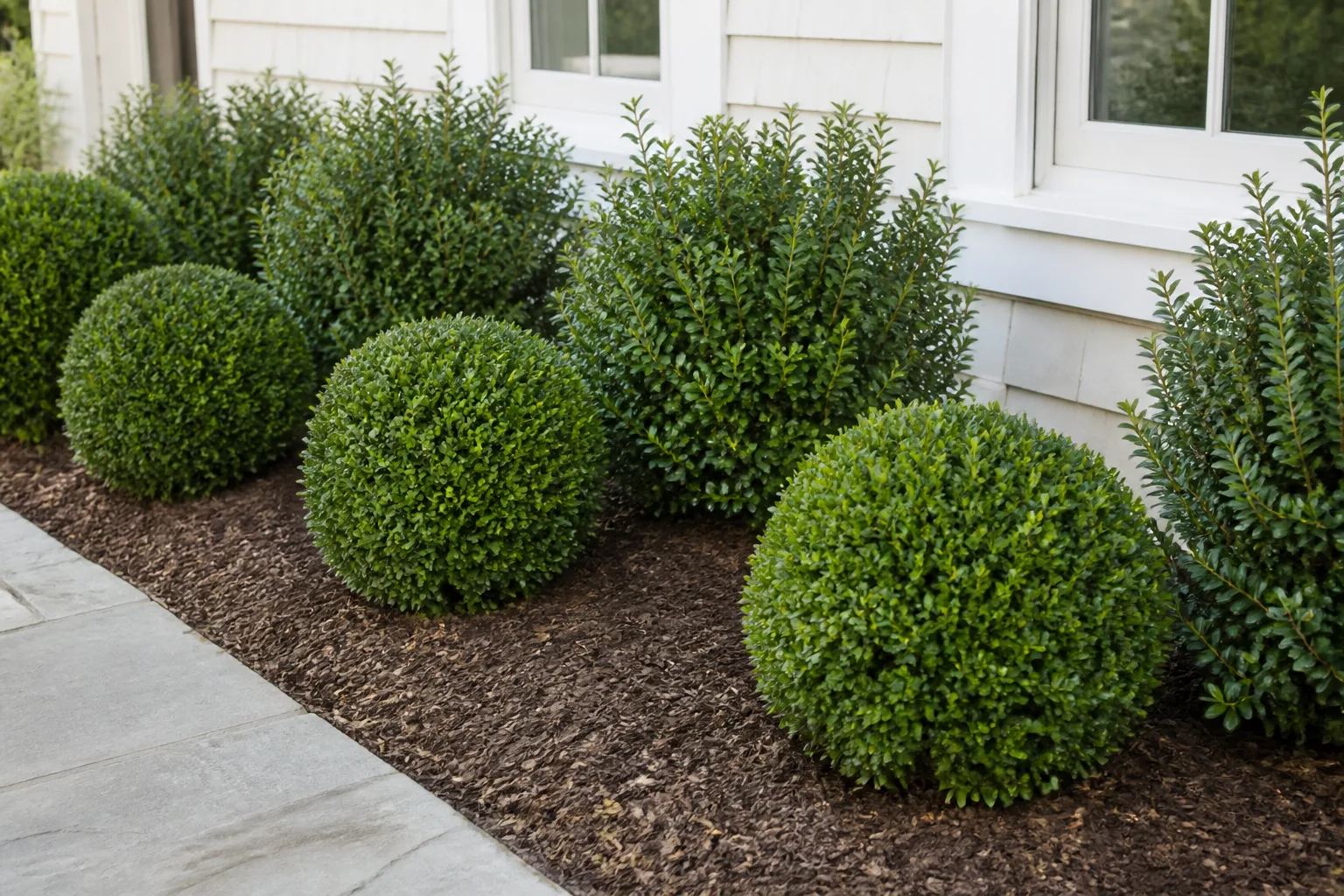
What “Low Maintenance” Means at the Curb
Low maintenance at the mailbox is not zero maintenance. It means the plant’s natural habit already matches the job: it does not outgrow a 3-foot foundation strip in four years, it does not need shearing to look neat, and it does not sulk unless you micromanage water and soil chemistry every weekend.
Curb appeal specifically adds two requirements. First, the shrub must read clearly from the street — through flowers, fruit, fall color, evergreen foliage, or winter stem color. Second, it must cooperate with the architecture: repeating along a walk, framing a door, or anchoring a corner without blocking windows or scraping siding.
The three-part curb appeal test
Before you shop, run every candidate through three filters Penn State Extension groups under right plant, right place: hardiness zone and regional adaptation, sun and moisture at the actual planting hole, and mature width at year five (not the tag’s cute juvenile size). A shrub that passes all three will look “designed” with mulch and edging alone. One that fails will cost you years of corrective pruning — no matter how many experts praised it on a podcast.
Walk the site after a hard rain. Note where downspouts dump water, where reflected heat off pavement bakes the soil, and whether the bed faces south (bright and dry) or north (cool and shaded). Measure the bed depth from the foundation to the walk. If the usable strip is under 90 cm (3 ft), you need a cultivar that stays under 1.2 m (4 ft) wide — not a species that wants to arch to 2.4 m (8 ft).
Why Virginia Sweetspire Wins for So Many Front Yards
Ask extension horticulturists and native-landscaping educators which underused shrub delivers the most visual return per hour of care, and Virginia sweetspire keeps surfacing. NC State Extension describes it as a deciduous to semi-evergreen shrub native from New Jersey to Florida and west to Missouri and Texas, naturally found in moist woods and along stream banks — which explains why it handles clay, sand, and occasional soggy spells better than many foundation favorites.
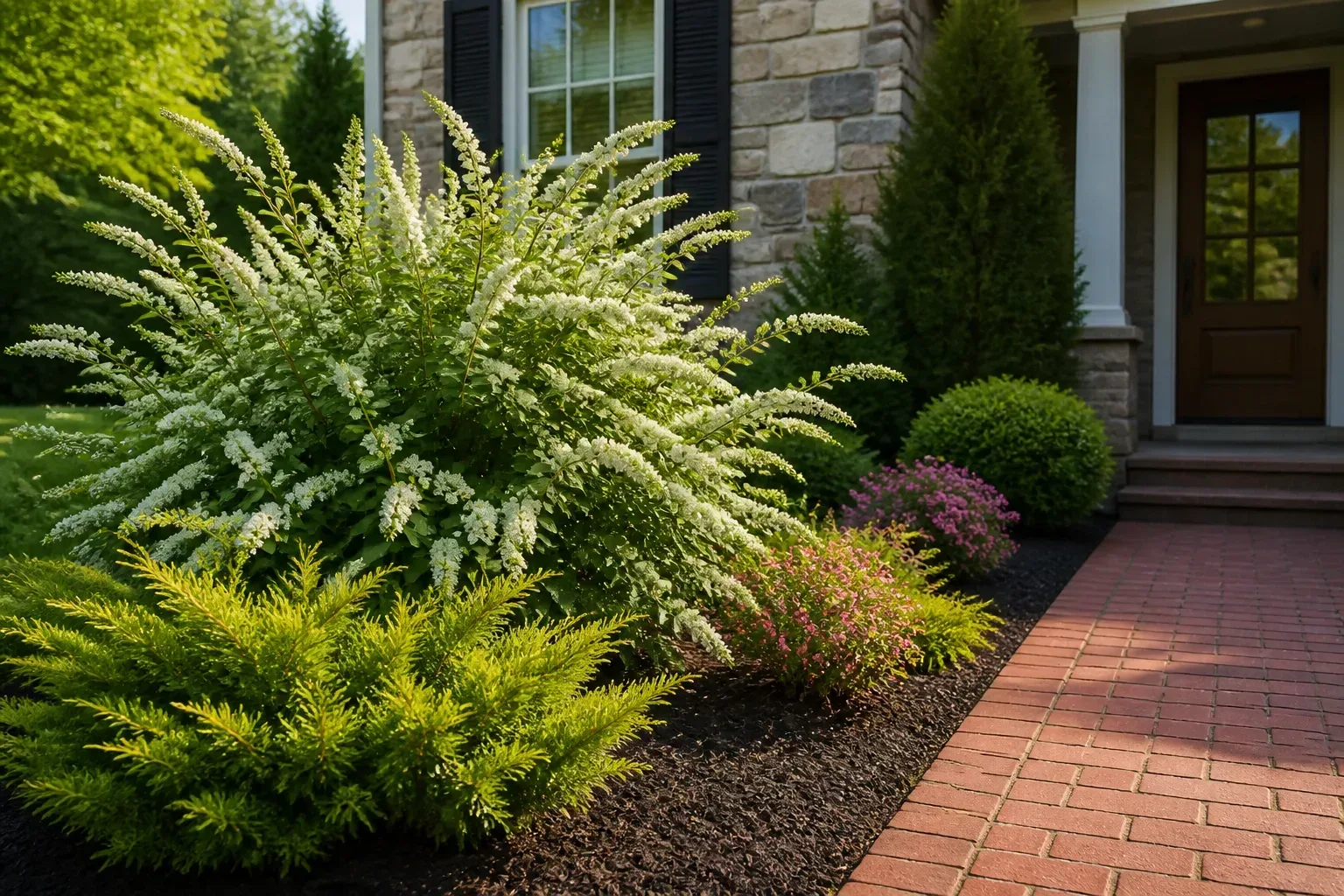
From the curb, sweetspire’s value is layered interest. In late spring, 8–15 cm (3–6 in) racemes of fragrant white flowers open along arching stems, drawing bees and butterflies. Summer foliage stays clean and glossy without the mildew battles common on some hydrangeas. Fall color runs copper, orange, gold, and purple-red — often holding into early winter in mild zones. Even after leaves drop, the fine branching silhouette stays elegant rather than messy.
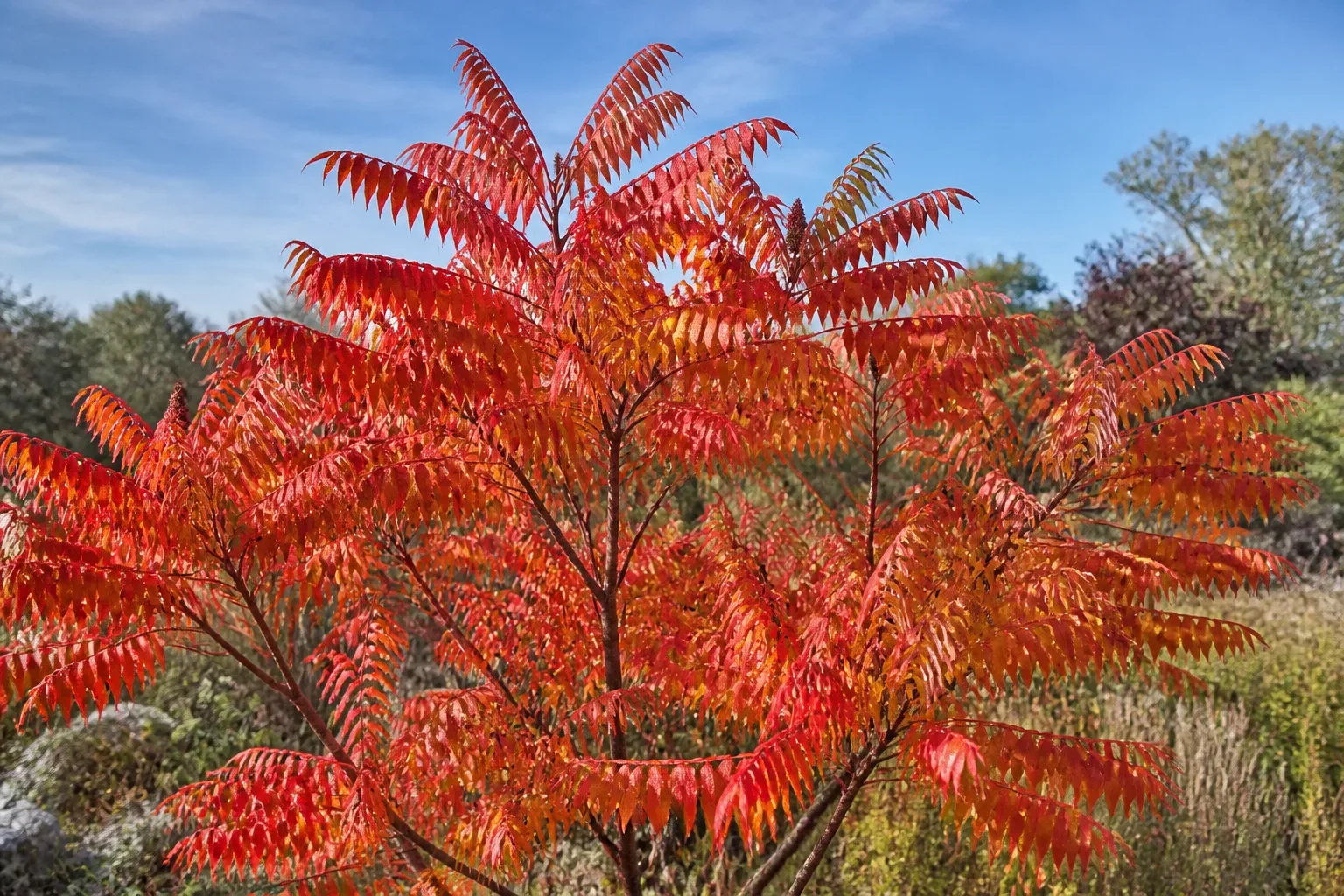
Four seasons of structure without weekly shearing
Sweetspire’s arching form is the secret to its low-care curb appeal. You do not need to cube it into a green lump. Plant it where the branches can weep slightly over a low border or repeat in a gentle drift along a front walk; the repetition reads as intentional design from the street.
Culture is forgiving when the site is honest. NC State’s plant profile recommends moist, slightly acidic, fertile soil and full sun for best flowering, fall color, and density, with tolerance for partial shade. It withstands drought once established, wet soil, deer browsing, and low flammability ratings useful near structures in fire-conscious regions. Over-fertilizing is a mistake — lush floppy growth is not curb appeal.
Prune after flowering, before late-summer bud set, because sweetspire blooms on previous season’s wood. Periodic renewal — removing a few of the oldest, thickest stems at the base every two or three years — keeps flowers and fall color vigorous without shaping every month.
Cultivars, size, and sucker control
Species plants can reach 1.2–2.4 m (4–8 ft) tall and spread by root suckers into colonies — fantastic for a woodland edge, frustrating if you need a tight foundation dot. Choose cultivars for smaller beds:
- ‘Henry’s Garnet’ — about 1.2–1.8 m (4–6 ft) tall and wide; deep red-purple fall color; the most widely available improved form.
- ‘Little Henry’ (Itea virginica ‘Sprich’) — roughly 60–90 cm (2–3 ft) tall and wide; suited to narrow foundation strips.
- ‘Merlot’ — compact habit with burgundy-tinged new growth; useful when you want darker foliage contrast near pale siding.
Manage suckers by mowing the lawn side of a bed, edging annually, or planting where a gentle colony is welcome. If you cannot tolerate any spread, sweetspire is the wrong shrub — pick a clumping alternative below instead.
Match the Shrub to Your Site Before You Buy
No single shrub wins every yard. Hydrangeas struggle in dry shade; manzanita rots in a downspout path. Use your site data to shortlist before falling for flower photos.
Sun, moisture, and soil pH
Full sun (6+ hours) favors dense growth and best bloom on sweetspire, winterberry, red twig dogwood, buttonbush, and manzanita. Partial shade (3–6 hours) still works for sweetspire, fothergilla, and currant, but expect fewer flowers and softer fall color.
Moisture splits the list cleanly. Buttonbush and sweetspire tolerate wet feet; manzanita demands sharp drainage; blueberries need consistent moisture but not standing water. Soil pH matters most for blueberries and fothergilla (acidic, roughly 4.5–5.5 for blueberries per standard extension guidance). Test before promising the family an edible front hedge.
Quick picker table by yard condition
| Your front-yard condition | Strongest native picks | Reconsider if |
|---|---|---|
| Moist clay near a downspout | Sweetspire, buttonbush, winterberry | Manzanita, lavender |
| Average soil, mixed sun | Sweetspire, fothergilla, red twig dogwood | Blueberry without pH adjustment |
| Narrow 90 cm (3 ft) foundation strip | ’Little Henry’ sweetspire, compact winterberry cultivars | Species sweetspire, large dogwood |
| Acidic soil, full sun | Highbush blueberry, fothergilla | Buttonbush in dry sand |
| Dry, hot, Western exposure | Manzanita (zones 7–10) | Sweetspire in desert heat without irrigation |
| Winter interest priority | Winterberry, red twig dogwood | Deciduous-only summer bloomers |
| Pacific Northwest mild climate | Red flowering currant, manzanita selections | Heat-loving Southeastern natives |
For broader border design context, see our low-maintenance garden border ideas and low-maintenance shrubs for front yards guides — they cover edging, spacing, and evergreens this native-focused list does not repeat.
Seven Native Shrubs That Earn Their Front-Yard Spot
Sweetspire is the headline, not the whole story. These seven natives solve different curb jobs — winter berries, red stems, edible fruit, wet soil, drought, or early spring color — with similarly modest upkeep when matched correctly.
Winterberry holly for winter berry color
Winterberry (Ilex verticillata) replaces fussy English holly in many native plans. Female plants load up with scarlet berries after leaves drop, giving you a neon focal point visible from the street through January — exactly when most foundation beds look empty.
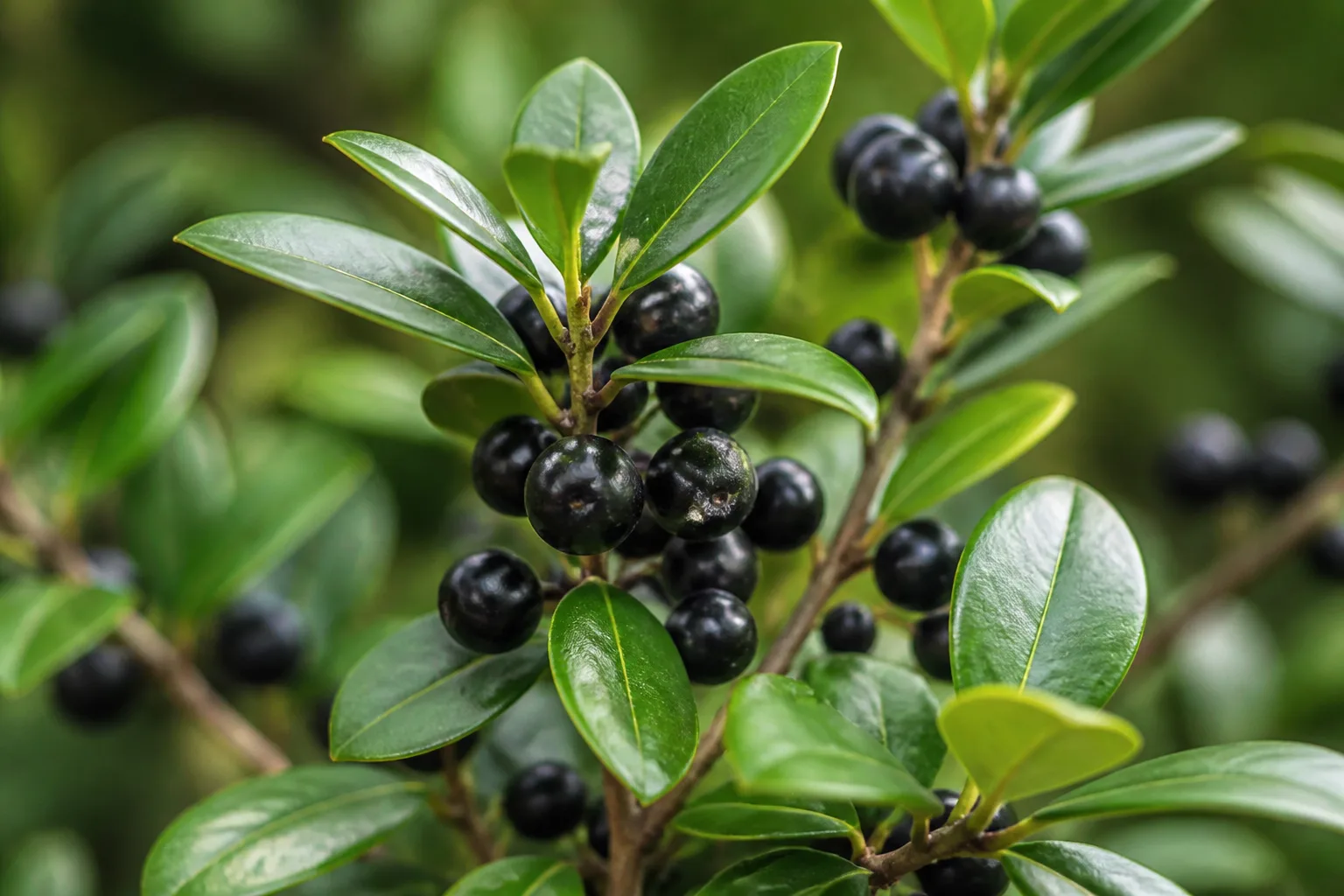
Winterberries are dioecious: you need at least one compatible male pollinator for every five to ten female shrubs, planted within bee range and matched for bloom time. ‘Southern Gentleman’ and ‘Jim Dandy’ are common male pairings; verify nursery tags rather than assuming red berries on every plant in the tray.
Best use: Hedgerow along a fence, corner accent, or mailbox island where winter structure matters. Skip if: You only have room for one shrub, or your soil is alkaline and chlorotic. Zones: 3–9. Maintenance: Light compost mulch in spring; remove dead wood before new growth; no heavy shearing. Our plants for wet areas guide pairs winterberry with other moisture-tolerant natives.
Red twig dogwood for stem drama
Red twig dogwood (Cornus sericea and cultivars) is the winter stem-color workhorse. Summer green leaves turn reddish-purple in fall; after leaf drop, young stems glow cherry-red against snow or dormant grass — high contrast at the curb with zero flowers to deadhead.
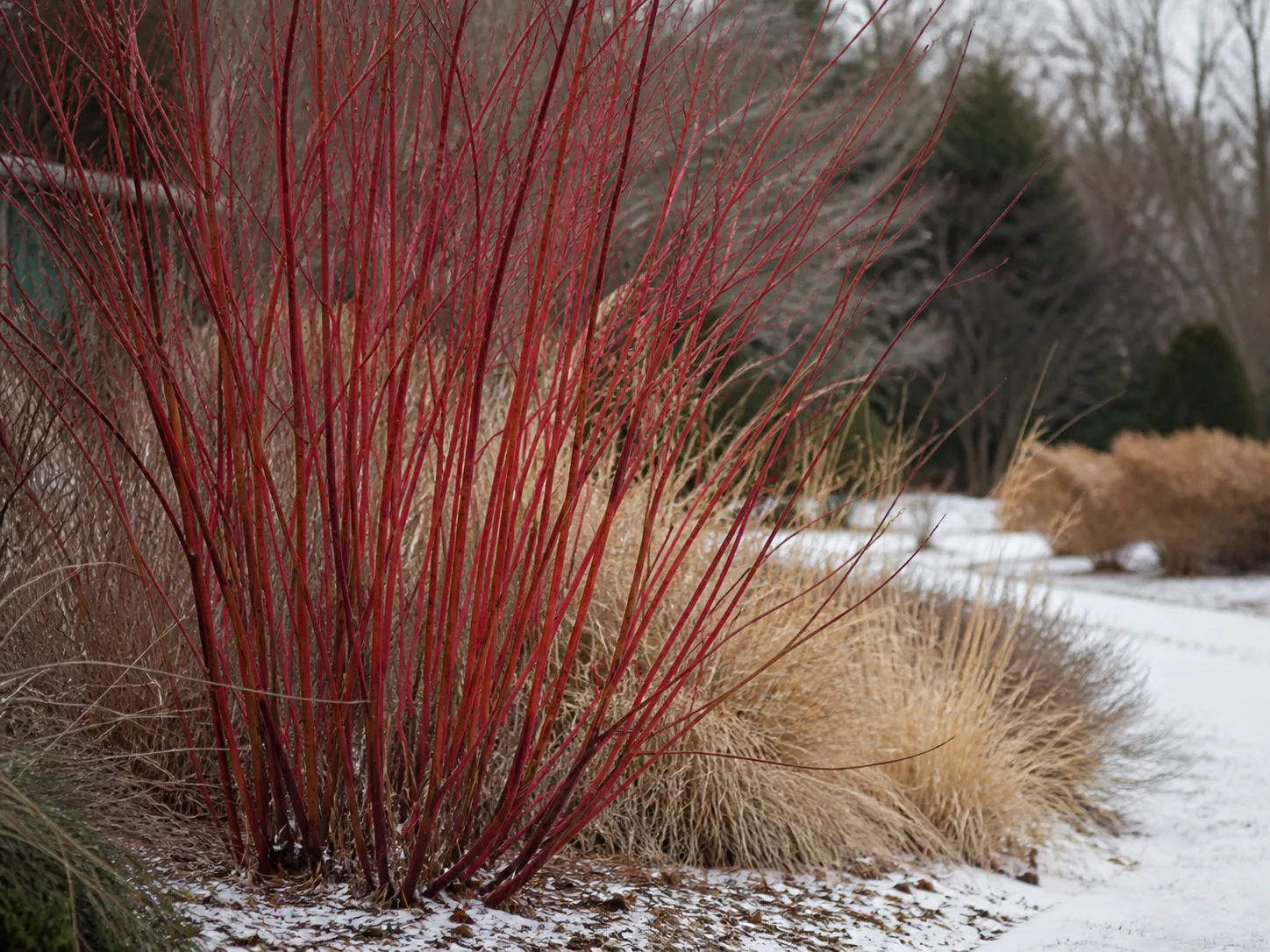
Color fades on old wood. Renewal pruning is the entire maintenance program: in late winter, cut out one-third of the oldest stems at ground level, keeping a mix of ages. Tight spaces call for compact cultivars like ‘Arctic Fire’ rather than species that want to spread.
Best use: Massed drift along a property line, behind lower evergreens, or in a rain-garden margin with moist soil. Skip if: You hate pruning every few years or need a dry, sandy strip. Zones: 2–8. Sun: Full sun to partial shade; brighter stems in more light.
Highbush blueberry as an edible hedge
Highbush blueberry (Vaccinium corymbosum) is the rare edible that genuinely competes with ornamentals: pink-tinged spring bells, blue summer fruit, and crimson fall foliage. Along a front walk, a uniform row reads as polished as any hydrangea drift — with pancakes as a side benefit.
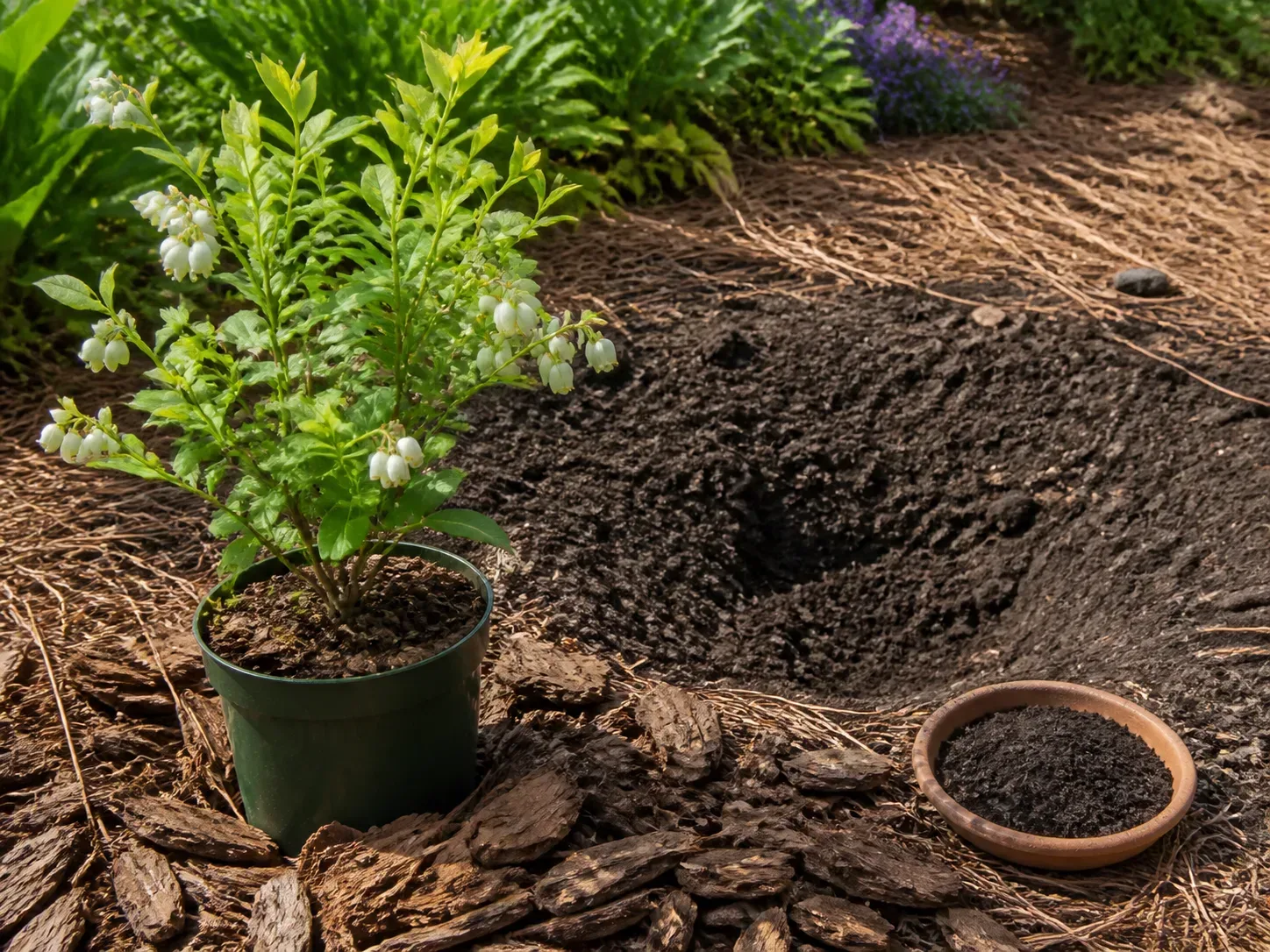
The catch is acid soil. Blueberries want pH around 4.5–5.5 and consistent moisture during fruiting, per standard extension blueberry guidance. If your front yard is alkaline urban fill, grow them in raised beds with peat-free acidic mixes or choose fothergilla instead. Plant two or more cultivars for cross-pollination and heavier crops.
Best use: Sunny side yard, raised planter, or acid native soil sites. Skip if: You will not test and amend pH. Zones: 3–8. See our growing blueberries guide for planting depth, mulch, and harvest timing.
Buttonbush for wet edges and rain gardens
Buttonbush (Cephalanthus occidentalis) thrives where lawn dies — low spots, swales, and downspout basins. Spherical white flowers in summer attract butterflies; foliage is clean and rounded. NC State Extension notes tolerance for frequent standing water, making it a honest rain-garden shrub rather than a temporary fix.
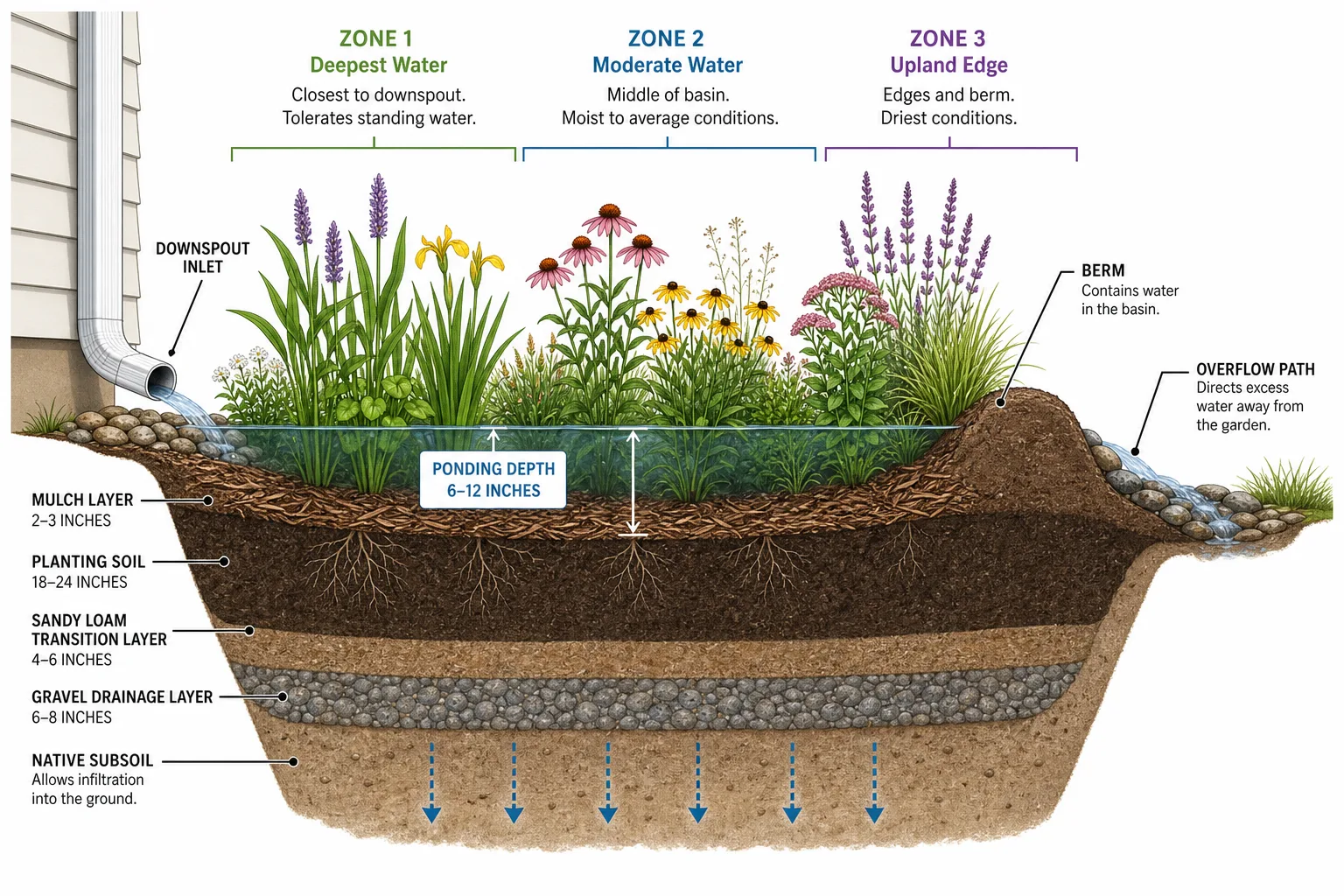
Best use: Basin center or mid-zone in a rain garden design, pond edge, or chronically soggy corner. Skip if: The site dries completely in summer unless you can irrigate. Zones: 4–10. Maintenance: Mulch to hold moisture; minimal pruning except removing dead stems.
Fothergilla for spring bottlebrushes and fall fire
Fothergilla (Fothergilla spp.) delivers honey-scented white bottlebrush flowers in spring and some of the loudest fall color in the shrub world — yellow, orange, and red on the same plant. It fills the understory layer without the dense crowding of older foundation junipers.
Prefer acidic, well-drained soil and partial shade to full sun. Deer resistance is a practical curb-appeal plus in suburban plots. Keep pruning minimal; shape only after spring bloom.
Best use: Part-shade foundation corners, woodland-edge transitions, pairing with sweetspire for staggered white blooms. Skip if: Soil is alkaline or baked dry on a south-facing wall. Zones: 4–9.
Manzanita for dry, sunny Western beds
For arid and Mediterranean-climate front yards, manzanita (Arctostaphylos spp.) is the low-water evergreen anchor English laurel wishes it could be. Sculptural reddish bark, small urn-shaped flowers, and berries support native bees and birds. Emerging queen bumblebees often visit early blooms — a useful detail if you want pollinator value without a meadow aesthetic.
Establishment is the hard part: plant small, water deeply but infrequently the first year, then back off. Sharp drainage is non-negotiable; no clay swales.
Best use: Dry Western sun, gravel mulch, rock-garden framing near entry paths. Skip if: You are in the humid Southeast or have heavy clay without amendment. Zones: 7–10 depending on species. Maintenance: Minimal pruning; avoid rich fertilizers that push weak growth.
Red flowering currant for early West Coast bloom
Red flowering currant (Ribes sanguineum) is the Pacific Northwest signal that winter is ending: pendant pink racemes in early spring, fragrant enough to notice from the walk, followed by blue-black fruit birds relish. Golden currant (Ribes aureum) extends hardiness for colder interior West sites with yellow blooms.
Best use: Mild-summer climates, mixed borders, naturalistic front yards under deciduous trees. Skip if: You need a formal sheared hedge or live where hot humid summers stress currants. Zones: 6–9 for R. sanguineum. Maintenance: Prune immediately after flowering to shape; remove oldest canes periodically.
Planting and Spacing for Curb Appeal That Lasts
Buying the right shrub still fails when it is planted too deep, too tight to the siding, or at the wrong season. Front-yard plantings are investments neighbors see daily — give them a proper start.
When to plant and first-year watering
Spring and fall are the safest planting windows in most climates: cool air, warm soil, and moderate evaporation. Avoid planting in summer heat waves or when soil is frozen. Dig a hole twice as wide as the root ball and no deeper than the root flare; backfill with native soil, not a rich pocket that holds water against the trunk.
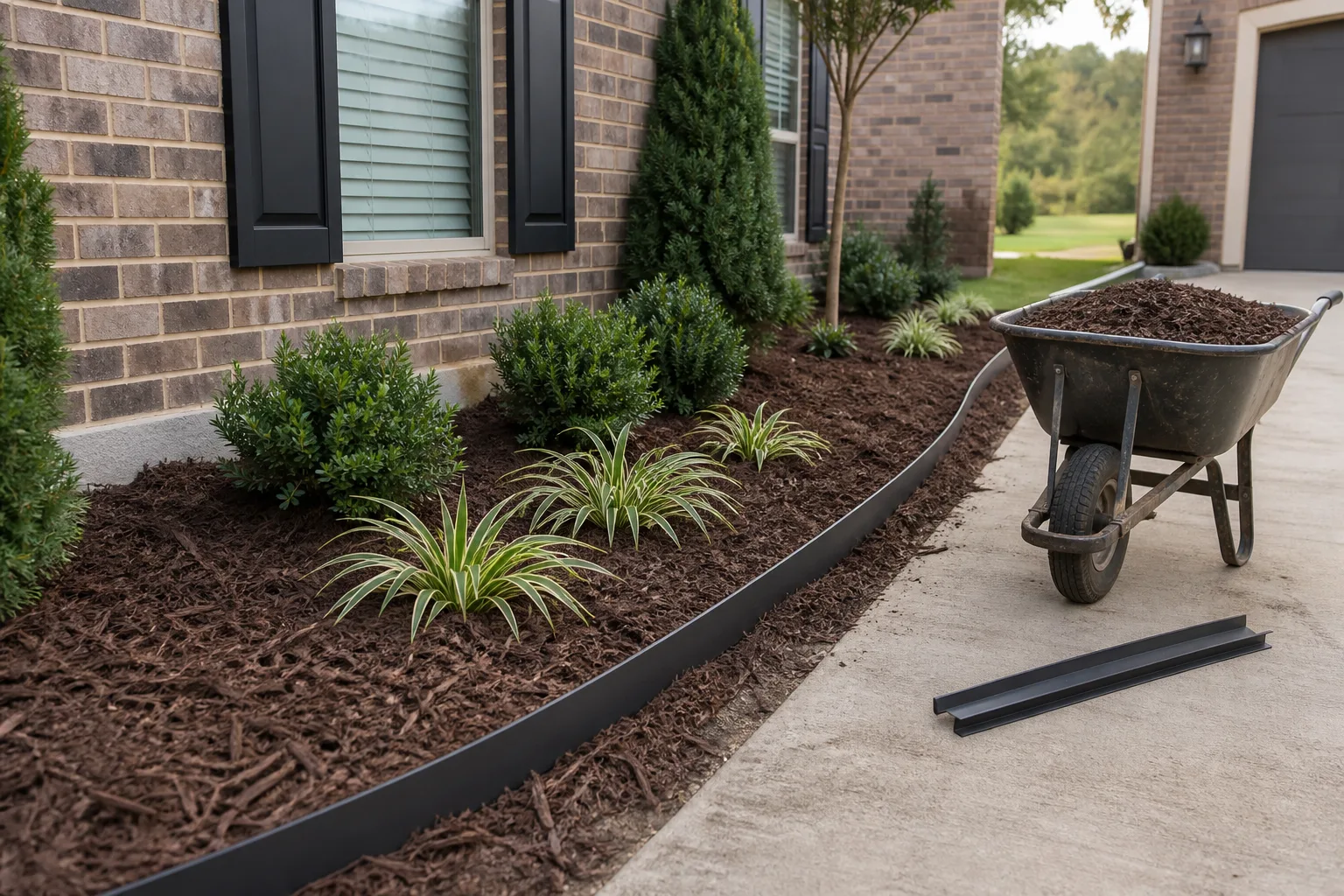
Water deeply once or twice a week the first growing season rather than sprinkling daily. A 7.5 cm (3 in) mulch ring — pulled back from the stem — cuts evaporation and weeds. Stake only if the site is windy and the root ball rocks; remove stakes after one year so trunks strengthen.
Foundation bed depth and sight-line rules
Measure mature width, not container size. Place the center of the shrub at least half the mature width from the foundation, then add 30–45 cm (12–18 in) for air circulation, painting access, and roof drip line. A 1.5 m (5 ft) wide sweetspire needs its center roughly 1 m (3+ ft) from the wall before walkway clearance.
Layer heights so taller shrubs sit behind lower fronts — sweetspire or dogwood behind dwarf inkberry or low perennials. Repeat one species in odd-numbered groups (three, five, seven) along a fence or walk; repetition is the fastest cheap trick for upscale curb appeal, as designers note in our plants that make a yard look more expensive guide.
Keep the mailbox and front door sight lines clear. A shrub that blocks the house number or hides the entry reads as neglect even when it is healthy.
Conclusion
Virginia sweetspire earns its reputation as the best low-maintenance shrub for curb appeal across much of the eastern U.S. because it combines fragrant spring flowers, clean summer foliage, and reliable fall color in an arching habit that does not demand monthly shearing — provided you match cultivar size to the bed and manage suckers where spread is unwelcome.
It is not universal. Wet, acidic spots may call for buttonbush or winterberry; winter stem drama points to red twig dogwood; edible curb appeal needs acidic soil for blueberries; dry Western sun favors manzanita; early Pacific bloom belongs to red flowering currant. Run the site checklist first, plant in spring or fall with honest spacing, and let native habits do the styling work. The lowest-maintenance front yard is the one where you stopped fighting the conditions and started repeating shrubs that already belong there.