7 Shrubs to Plant Now for Fall Color
Seven shrubs you can plant in late summer and fall for foliage, flowers, bark, and berries that carry color into winter—plus planting timing and zone tips.
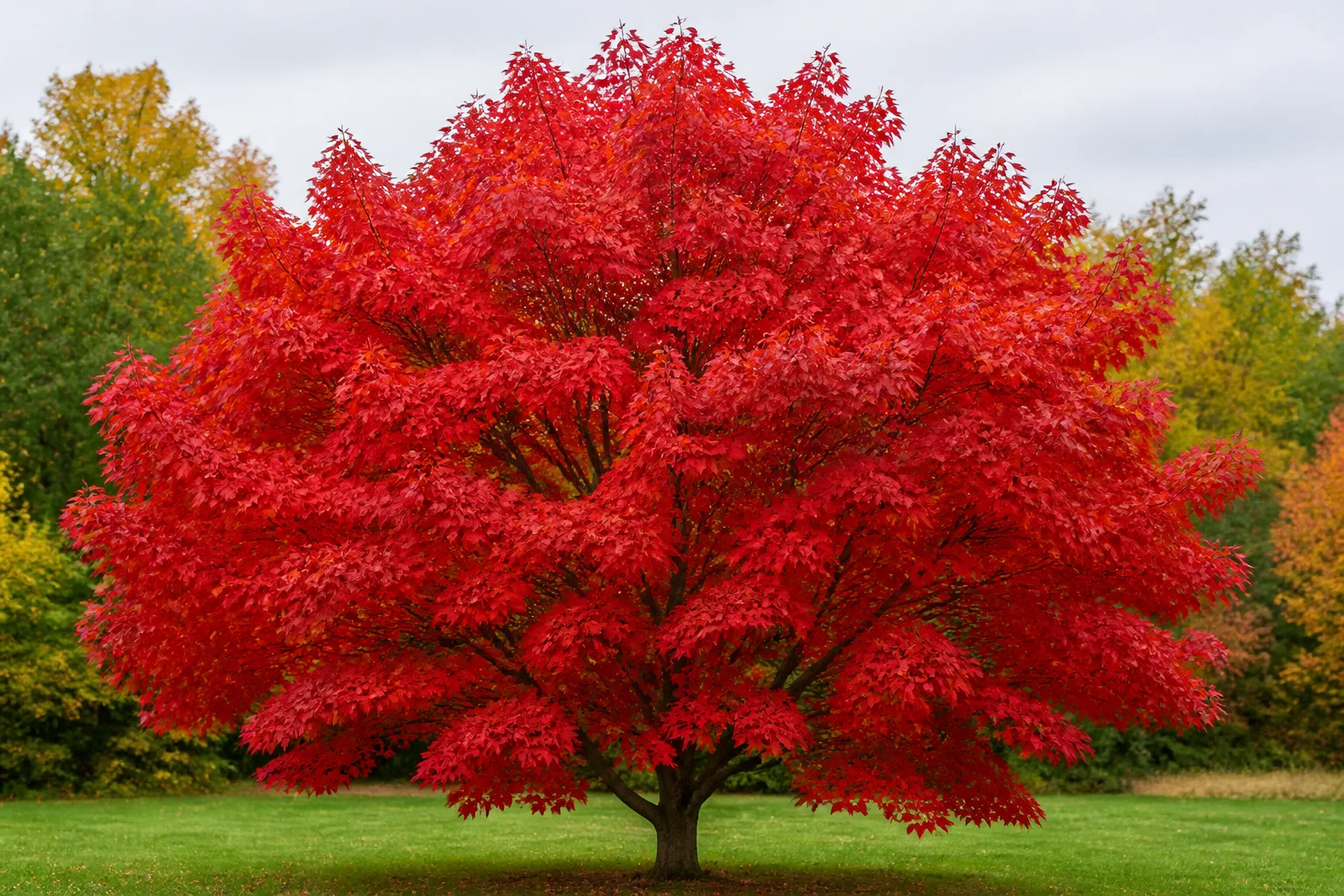
When the garden starts looking tired in late summer, the fix is not always more annuals. Shrubs give you structure year-round, and the right ones deliver fall foliage, late flowers, berries, or colored bark that keeps the yard interesting after the first frost. Late summer and early fall are also one of the best windows to plant them: the air cools, the soil stays warm enough for root growth, and at the nursery you can often see the plant’s autumn color before you buy.
The seven shrubs below are not interchangeable. Some are evergreen with seasonal leaf shifts; others are deciduous and drop leaves after a bright show. Some need moist woodland soil; others want sharp drainage and full sun. Match the plant to your site first, then use this list to pick the color story you want.
Why late summer and fall are ideal for planting color shrubs
Fall planting works because roots grow while top growth slows. Cooler days reduce transplant stress, yet soil temperatures often remain warm enough for new root tips to expand for weeks after you dig the hole. That head start matters: a shrub that roots in autumn enters spring with a larger root system than the same plant planted in a rush next April.
Autumn is also the honest shopping season for fall color. Labels and online photos can mislead in spring, when every shrub looks green and eager. In September and October, you can walk the nursery row and see whether a nandina is bronzing, whether a dogwood’s stems are already reddening, or whether a fuchsia is still flowering. Buy for the habit and size you see, not the idealized catalog shot.
The six-week rooting rule
A practical benchmark used by many gardeners and extension educators is to get woody plants in the ground about six weeks before the soil freezes hard in your area. That gives roots time to contact native soil, take up water, and begin anchoring before winter dormancy. In USDA zones with early freezes, that can mean planting in late August through September. In milder climates, October plantings are often still fine if the ground remains workable and you keep new shrubs watered through dry spells.
The rule is a guide, not a deadline carved in stone. If your forecast shows a warm fall and the soil drains well, a carefully planted shrub in early October can still succeed. If an early cold snap is coming and the plant is root-bound in a pot, waiting until spring may be smarter than sticking it in frozen ground. The goal is workable soil plus time to root, not racing the calendar because an article said “plant now.”
What “fall color” actually means on a shrub
Not every “colorful” shrub changes leaf pigments the way a maple does. Understanding the type of color you are buying prevents disappointment next year.
Foliage color develops when chlorophyll breaks down and yellow, orange, or red pigments show through—a process the RHS describes as typical of many deciduous shrubs in autumn. Sun and cold nights often intensify reds and purples. Late flowers extend the season with blooms when summer perennials are finished—fuchsia, caryopteris, and some hebes work this way. Bark and stem color appears after leaves fall; red twig dogwood is the classic example, with stems that glow against snow. Berries and persistent fruit add dots of color and feed birds; nandina can contribute red fruit clusters where fruiting cultivars are allowed.
A strong fall garden mixes at least two of those layers. Foliage alone is beautiful for three weeks; bark and late flowers carry the bed through the months when everything else is brown.
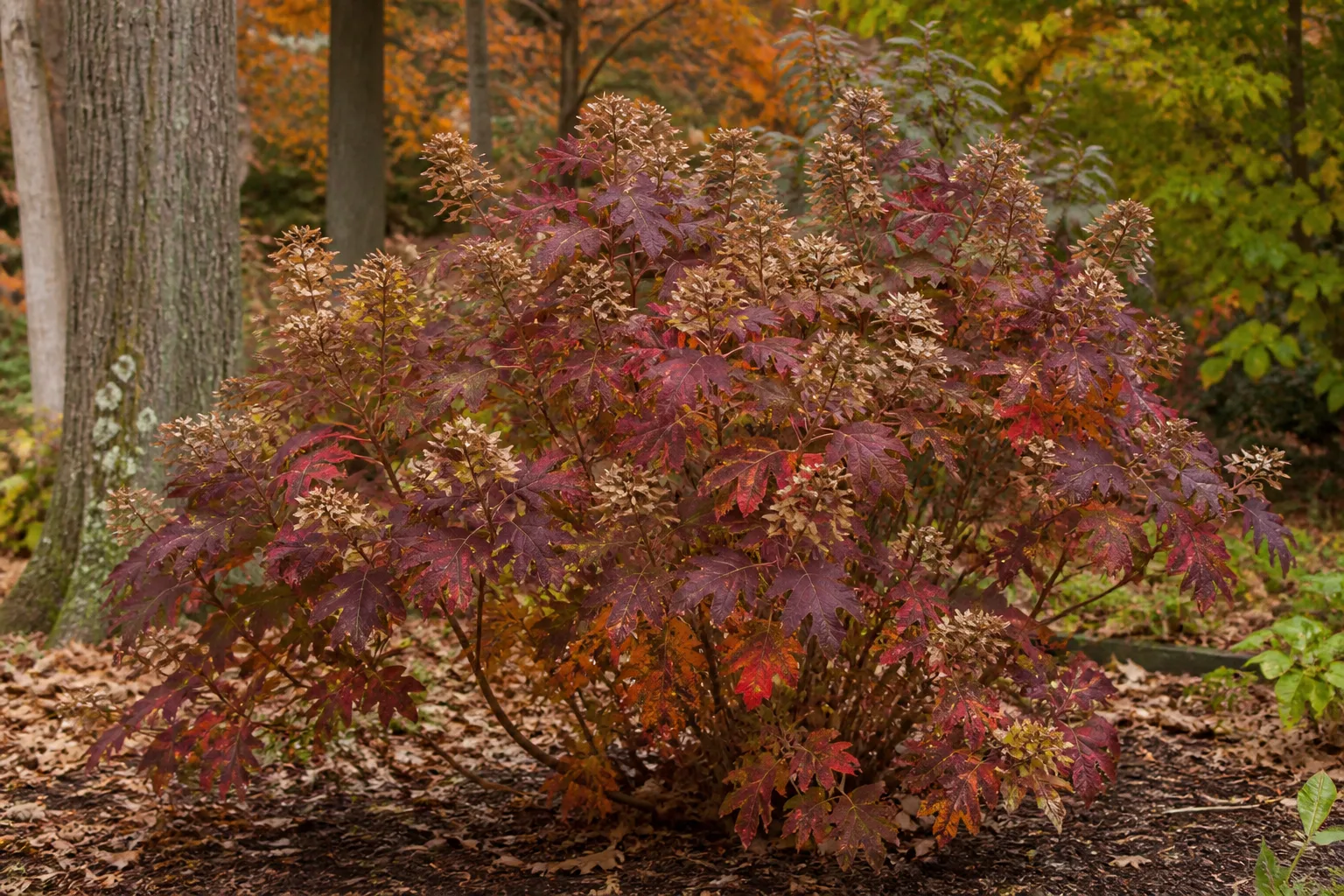
How to shop and plant with autumn color in mind
Before you choose among the seven shrubs, decide what the planting spot offers. A shrub that wants moist shade will never color well in a hot, dry foundation bed, no matter how pretty it looked in someone else’s yard on social media.
Match the shrub to sun, soil, and mature size
Read the tag for mature height and spread, not the size in the pot today. Red twig dogwood can fill a wet corner quickly; nandina stays upright and narrow; witch hazel needs room for its natural vase shape without constant shearing. Undersized beds lead to constant pruning, and pruning at the wrong time—especially on witch hazel—can remove the very flowers you planted for.
Drainage is the silent deal-breaker. Hebe and caryopteris tolerate drought once established but rot in soggy clay. Red twig dogwood is the opposite: it thrives where many shrubs fail in wet soil. pH matters for heath and hebe, which prefer slightly acidic conditions; a quick soil test beats guessing.
When planting in fall, dig a hole no deeper than the root ball and two to three times wider, set the plant so the trunk flare or crown sits at grade, backfill with native soil (amend only in heavy clay or pure sand), water deeply to settle, and mulch 2–3 inches over the root zone while keeping mulch off the stem. Skip high-nitrogen fertilizer at planting; roots, not new top growth, are the priority.
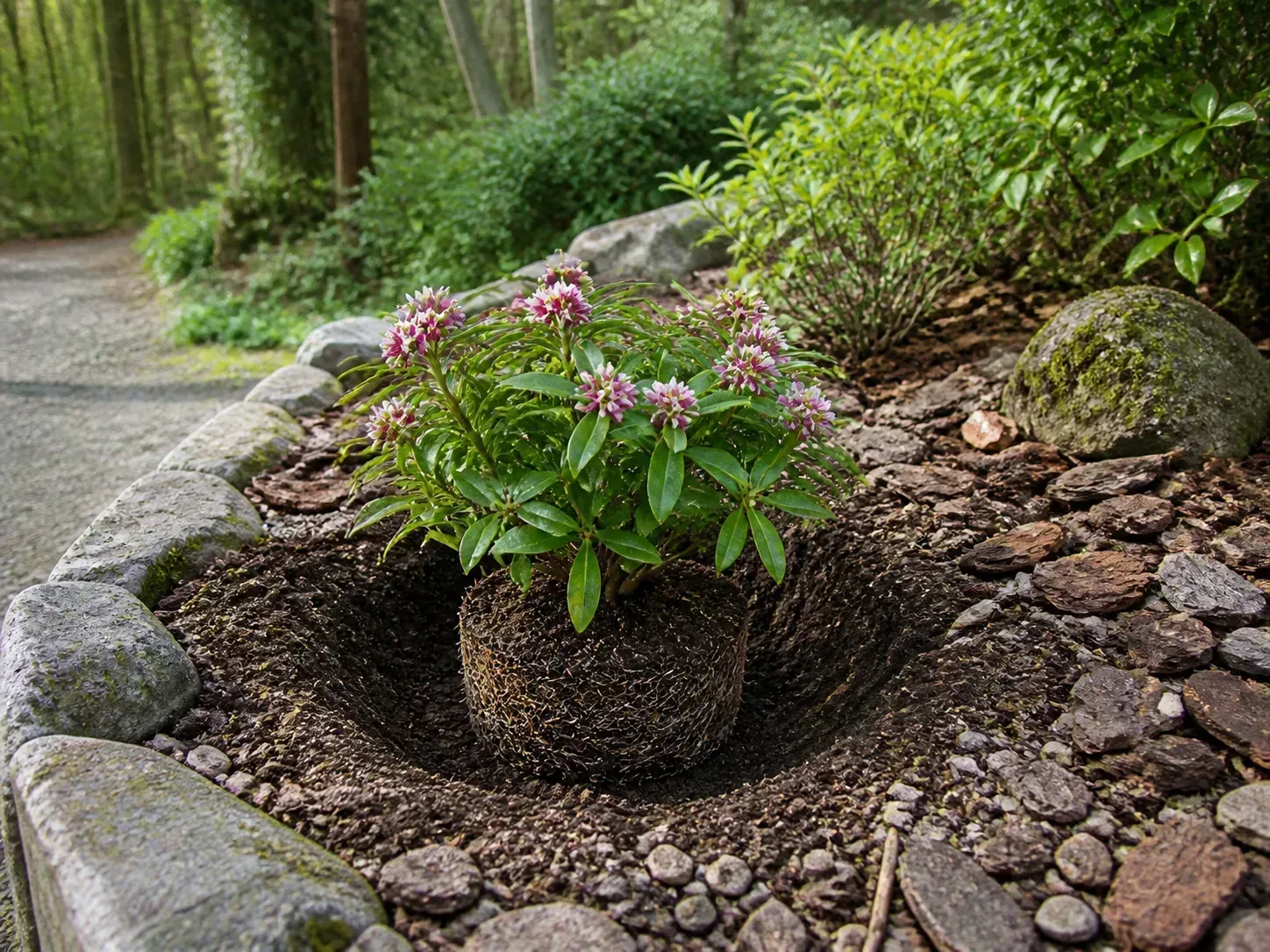
1. Heavenly bamboo (Nandina) — foliage that turns bronze and red
Heavenly bamboo (Nandina domestica) is not a bamboo at all. It is an upright, often evergreen shrub with compound leaves that flush purplish-red when young and can turn bronze, orange, and deep red in cold weather—sometimes holding color through winter in mild climates. Flat clusters of small white summer flowers can be followed by bright red berries on fruiting cultivars.
The RHS lists heavenly bamboo for full sun, moist but well-drained soil, and hardiness around H5 (roughly USDA zones 6–9, depending on exposure). In the landscape it works as a vertical accent, a foundation plant where deer pressure is moderate, or a container specimen in cold regions where you move pots to shelter.
Cultivars, cold zones, and invasive-plant caution
Compact forms such as ‘Fire Power’, ‘Gulf Stream’, and ‘Obsession’ stay shorter and color heavily in autumn without the legginess of old, unpruned specimens. In colder parts of zone 6, treat nandina as semi-evergreen: expect leaf drop after hard freezes, with stem color still useful in winter.
Important regional note: Fruiting nandina cultivars have spread into natural areas in parts of the Southeastern United States, where berries are eaten by birds and seedlings can displace native understory plants. Several states list nandina as invasive or problematic. If you garden in those regions, choose non-fruiting or sterile cultivars where available, or select a native alternative with similar red winter interest, such as red chokeberry (Aronia arbutifolia) for berry color or Virginia sweetspire for red fall foliage. The RHS also notes that nandina is harmful if eaten and can affect pets; do not assume berries are safe because birds consume them.
Pruning: Remove old, bare canes at the base in spring rather than shearing the plant like a hedge. Shearing encourages dense top growth and a naked lower stem. A sunny winter position and mulch over the root zone help the richest leaf color in cold regions.
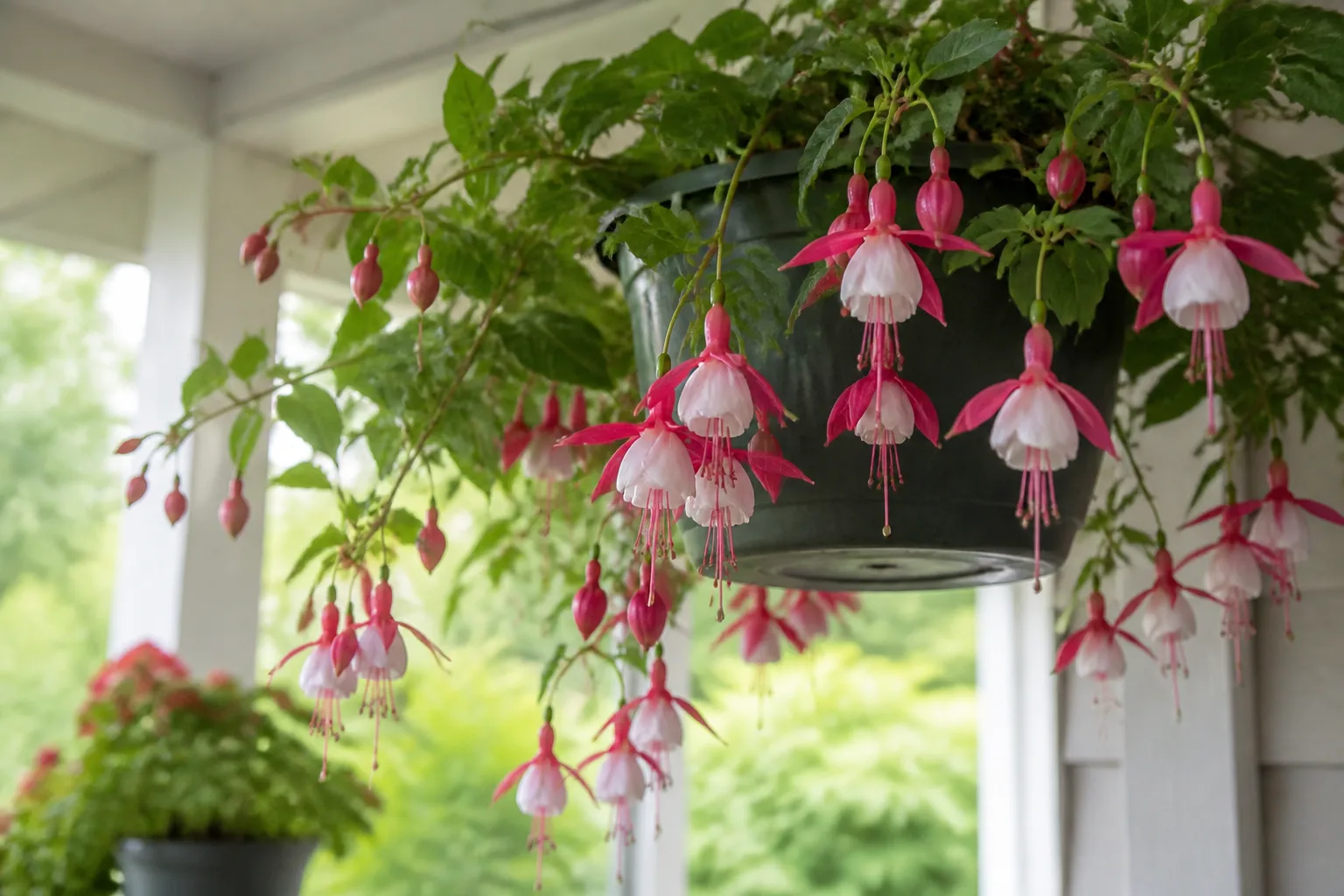
2. Fuchsia — flowers when other color is fading
Hardy and half-hardy fuchsias bridge the gap between summer containers and the first frosts. Many shrubby types flower heavily from late summer into autumn in shades of red, purple, and pink, hanging like earrings above green or bronzed foliage. That late bloom is exactly why fuchsia earns a spot on a fall-color list: it supplies living color when leaf change has not yet peaked elsewhere.
The RHS recommends fuchsias such as ‘Riccartonii’ for autumn interest but notes that cold or exposed sites can challenge them. Hardy fuchsias (often Fuchsia magellanica hybrids) survive in USDA zones 6–7 with protection and good drainage; tender types behave as annuals or need overwintering indoors in colder climates.
Plant fuchsia in partial shade with moist, humus-rich soil. Morning sun with afternoon shade is ideal in hot regions; cooler climates tolerate more sun if soil stays evenly moist. Work compost into the planting hole, mulch before winter, and cut back old stems in spring to encourage vigorous new flowering wood. In dry autumns, consistent moisture matters more than extra fertilizer—fuchsias abort buds when stressed by drought.
If your winters are harsh, grow fuchsia in a large pot you sink or move to a cool frost-free porch. The autumn show is still worth it; you simply treat the plant as a seasonal performer rather than a permanent hedge.
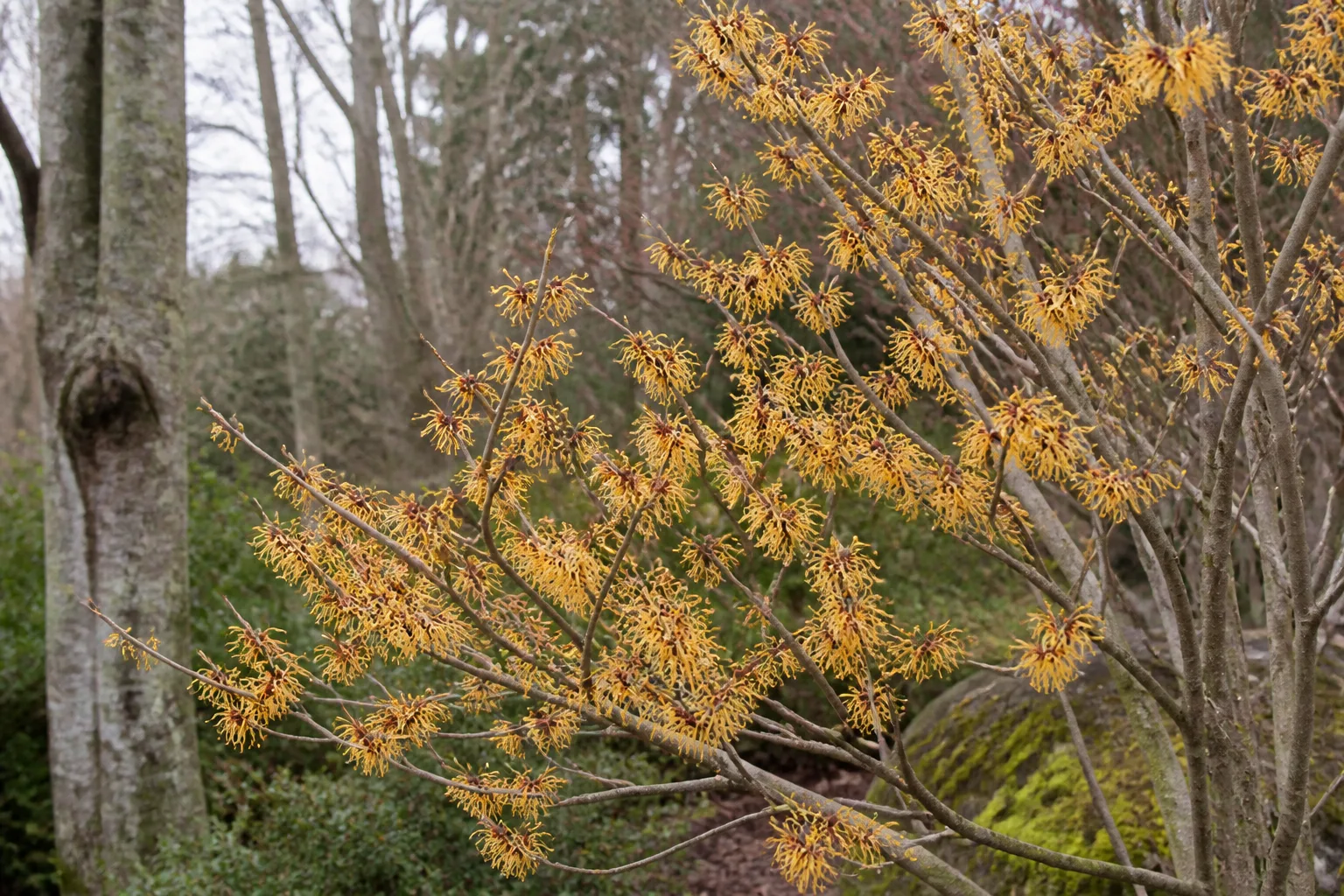
3. Witch hazel — foliage show plus winter flowers
Witch hazels (Hamamelis spp.) are the four-season shrubs many gardeners discover too late. In autumn, leaves turn yellow, orange, or red depending on species and cultivar. After leaves drop, Chinese (H. mollis) and Japanese (H. japonica) hybrids—and crosses such as H. × intermedia—often produce spidery, fragrant flowers on bare branches from late fall through winter into early spring. The effect is subtle from a distance and magical up close.
Most witch hazels are cold-hardy (often USDA zones 5–8), prefer moist, acidic, well-drained soil, and tolerate part sun to full sun once established. Mulch the root zone to keep soil evenly moist; drought during bud formation can reduce flowering.
Hybrid vs native species and pruning traps
Native American witch hazel (H. virginiana) blooms in late fall with yellow flowers and golden autumn leaves—excellent for eastern woodland edges. Ozark witch hazel (H. vernalis) blooms in late winter with orange-scented flowers. Hybrid witch hazels (H. × intermedia) combine the best flower forms and fall leaf color from parent species; cultivars such as ‘Diane’ (copper-red flowers), ‘Jelena’ (copper-orange), and ‘Arnold Promise’ (yellow) are landscape standards.
Do not habitually prune witch hazel after leaves fall. Flowers form on older wood, and careless cutting removes the winter display you planted for. Limit pruning to suckers, dead wood, or crossing branches right after flowering finishes in late winter or early spring. If size control is essential, choose a cultivar with a known mature height rather than fighting a 15-foot plant with shears.
4. Winter heath — bells that carry into winter
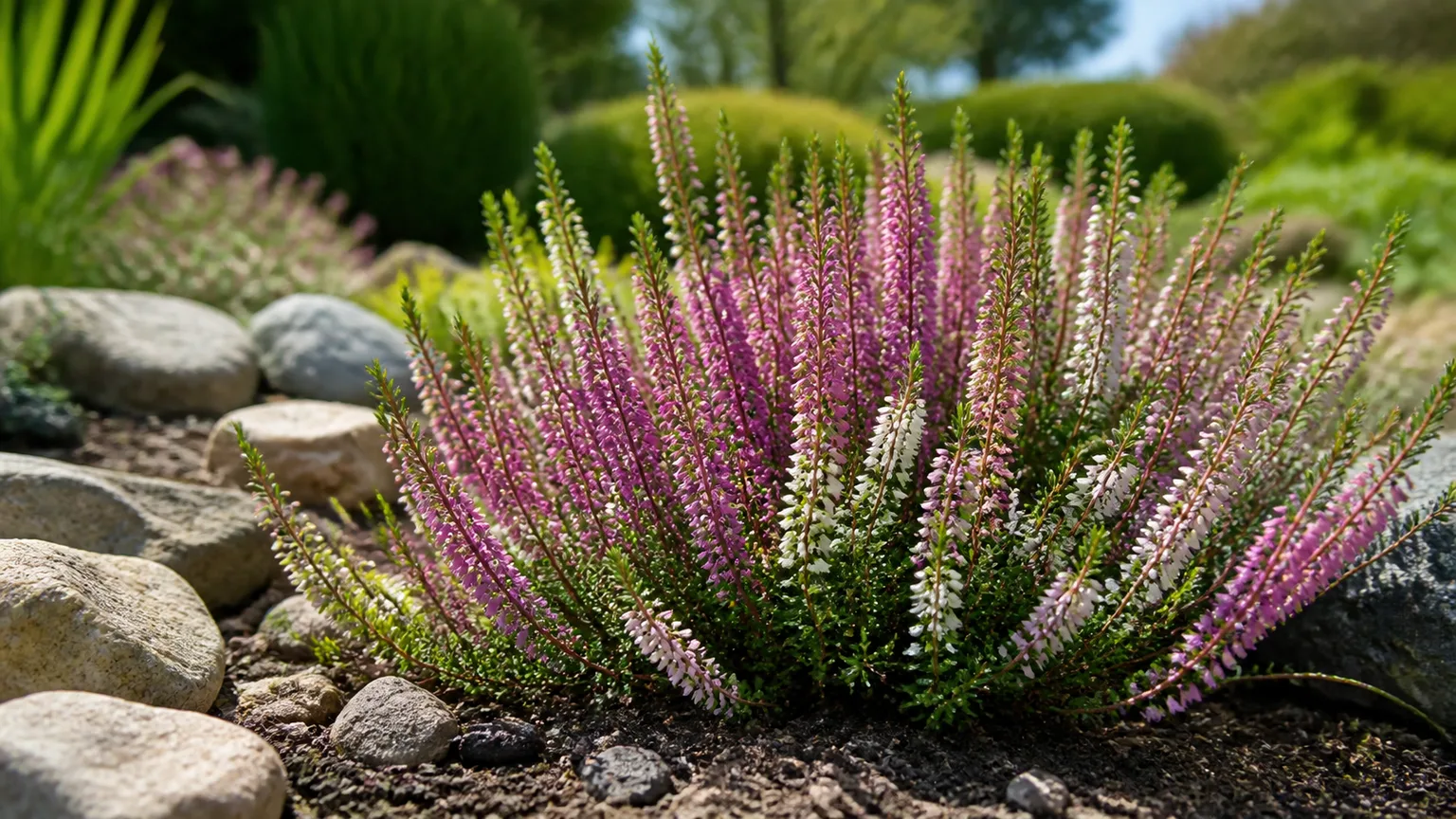
Winter heath (Erica carnea and related hybrids such as Erica × darleyensis) is a low, needle-leaved evergreen that erupts with tiny bell flowers in white, pink, magenta, or purple from fall through winter and into spring in mild climates. It is the shrub that makes a slope or rock garden look alive when lawn and herbaceous beds have gone quiet.
Winter heath wants full sun in winter, excellent drainage, and acidic soil. It struggles in heavy clay unless you amend with compost and grit on a slope or raised bed. USDA hardiness is typically zones 5–8, with cultivar variation; in zone 5, plant in a sheltered spot away from drying winter winds.
Flowers fade and blow away naturally—no deadheading required. Light shearing after bloom keeps plants compact and prevents the leggy, bare-center look that develops after several years without maintenance. Do not confuse winter heath with Scottish heather (Calluna vulgaris), which blooms in summer; both are heaths/heathers in common speech, but winter heath is the one delivering cold-season bells.
Pair winter heath at the front of a border with taller shrubs behind it for layered fall and winter color. It is especially effective near paths where you notice the flowers at eye level on gray days.
5. Hebe — evergreen structure with late-season flowers
Hebes are tidy, often evergreen shrubs valued for glossy foliage and late-summer to autumn flowers that attract late pollinators. Flower spikes in white, pink, or purple rise above mounding leaves, and many cultivars keep a neat, dome-shaped habit without heavy pruning.
Hebes need well-drained soil and full sun to light shade. They dislike waterlogged conditions; on heavy clay, plant on a mound or mix grit and compost into the backfill. Most garden hebes suit USDA zones 7–9; in zone 6 they may survive in sheltered microclimates but should be treated as borderline, with winter mulch and protection from northwest winds.
After flowering, a light trim removes spent spikes and encourages bushiness. Avoid hard fall pruning in cold zones—it can stimulate tender growth that freezes. Hebe is a strong choice for coastal gardens, container plantings, and mild-climate courtyards where fuchsia and caryopteris also thrive.
If your climate is too cold for hebe, substitute dwarf fothergilla or low growing caryopteris for a similar mounded shape with autumn interest.
6. Caryopteris (bluebeard) — blue flowers into fall
Caryopteris, commonly called bluebeard, is a sun-loving, drought-tolerant shrub that blooms when many gardens have only mums left. Blue to purple flower clusters cover the ends of stems from late summer into fall, and the gray-green foliage smells faintly aromatic when brushed. Butterflies and bees visit heavily; deer usually pass it by.
Plant caryopteris in full sun and well-drained soil. It is a natural fit for slopes, hell strips, and dry borders once established. Hardiness is generally USDA zones 5–9 for Caryopteris × clandonensis hybrids; newer yellow-leaved forms such as those in the Proven Winners lineup add foliage contrast all season before blue flowers open.
The key maintenance move is hard pruning in early spring—cut stems back to live wood or roughly 12–18 inches depending on cultivar. Caryopteris flowers on new growth, so spring cutback keeps the plant dense and floriferous. Skipping pruning leads to a loose, floppy skeleton with flowers only at the tips.
Do not plant caryopteris in wet clay or deep shade; it will survive poorly and never deliver the autumn blue that justifies its place. Pair it with ornamental grasses and sedums for a late-season border that still looks designed after the first light frost.
7. Red twig dogwood — bark color after leaves drop
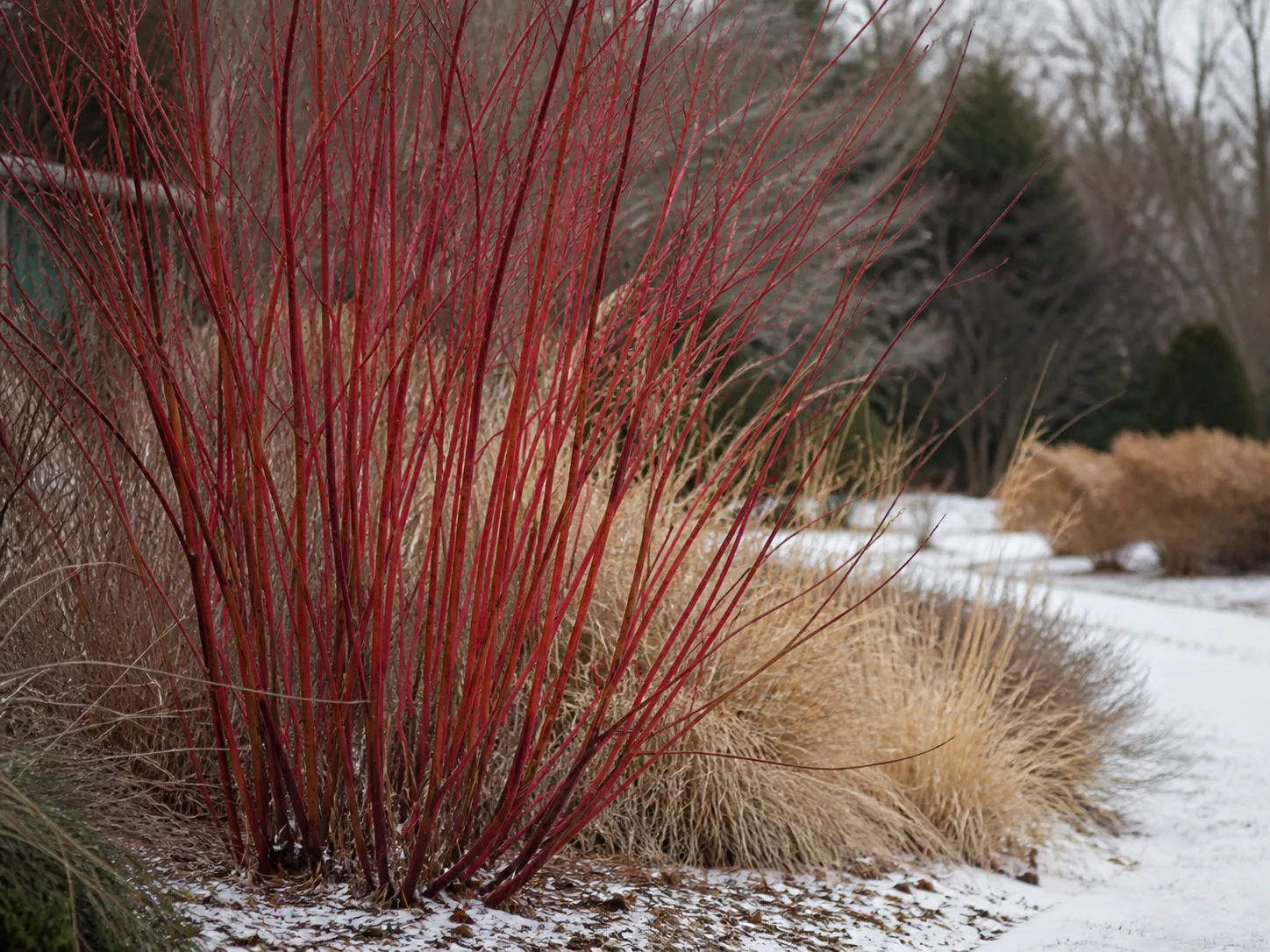
Red twig dogwood (Cornus sericea and related red-stemmed Cornus alba cultivars) is the shrub you plant when you want winter architecture, not just autumn leaves. Oval leaves turn red to purple in fall, then drop to reveal brilliant red or coral stems that intensify in sun and young wood. In wet yards it is a problem-solver: it accepts moist to wet soil where many shrubs rot.
Use red twig dogwood for rain garden edges, stream banks, naturalistic hedges, and privacy screens—it grows quickly and fills space within a few seasons. Mature height is often 6–9 feet unless you choose compact cultivars such as ‘Arctic Fire’ or ‘Bailhalo’ (Ivory Halo®).
For the brightest stem color, remove about one-third of the oldest stems each year in early spring, cutting them to the ground. Young stems color more intensely than gray, three-year-old wood. Full sun produces the best bark; plants in deep shade leaf well but stems stay duller.
Red twig dogwood spreads by stolons in ideal conditions. That is an asset for erosion control and a liability in tight formal beds—plan space accordingly or choose clump-form cultivars with less spread.
Planting checklist for fall shrub success
Use this sequence whether you are planting one fuchsia or a row of dogwoods:
Choose the plant in person when possible so you see autumn color, stem quality, and whether the pot is root-bound. Reject plants with circling roots unless you are willing to tease or slice the root ball at planting time.
Dig wide, not deep. Set the shrub at the same depth it grew in the container. Planting too deep is a common killer of woody plants.
Water at planting, then water again when the top inch of soil dries. Fall rain is helpful but uneven; new shrubs cannot rely on it alone.
Mulch to insulate soil and reduce heaving from freeze-thaw cycles, but keep mulch off the trunk.
Skip heavy fertilizer until spring unless a soil test shows a specific deficiency.
Protect from deer if your neighborhood has pressure—nandina berries and young dogwood stems can attract browsing when other food is scarce.
Watering and mulching through the first winter
The mistake that kills fall-planted shrubs is not cold—it is desiccation. Frozen ground locks up water while sunny, windy winter days pull moisture from evergreen leaves and bare twigs. Water deeply when soil is not frozen and temperatures are above freezing, especially for evergreens (nandina, hebe, heath) and broad-leaf plants.
Refresh mulch after the ground cools; do not pile it against stems. In exposed sites, a windbreak or burlap screen on the north or west side can reduce leaf burn on hebe and fuchsia without wrapping the plant like a mummy. Container plants need cold protection in zones where their species is borderline hardy.
Shrubs to skip or swap for better long-term value
Fall color lists used to recommend burning bush (Euonymus alatus) for reliable red foliage. Decades of landscape planting showed it seeds aggressively and displaces native vegetation; it is restricted or banned in several northeastern and midwestern states. Skip it and choose Virginia sweetspire, fothergilla, black chokeberry, or red twig dogwood for red fall interest without the ecological debt.
As noted above, fruiting nandina is problematic in warm, humid regions—swap to sterile cultivars or natives. Japanese barberry is another former fall-color staple now widely restricted for invasiveness and tick-habitat concerns.
Choosing responsibly does not mean dull borders. It means the color you enjoy this autumn will not become a maintenance or regulatory headache five years from now.
Conclusion
Fall color from shrubs comes in more forms than red maple impersonators. Heavenly bamboo bronzes and reddens in cold weather; fuchsia and caryopteris flower when summer beds fade; witch hazel and winter heath extend the show into the cold months; hebe adds evergreen structure with late spikes; red twig dogwood saves its best act for bare-stem season.
Plant them in the late-summer to early-fall window while soil is warm and workable, match each shrub to its sun and drainage needs, and water through the first winter like the establishment year it is. Shop nurseries now, while you can see autumn color with your own eyes, and you will build a yard that looks intentional in every season—not just the week the maples peak.



