Tomato Sun Requirements: Direct vs Indirect Light
Tomatoes need direct sun—not bright shade. Learn how many hours, how to test your site, shade-tolerant varieties, and when afternoon protection helps.
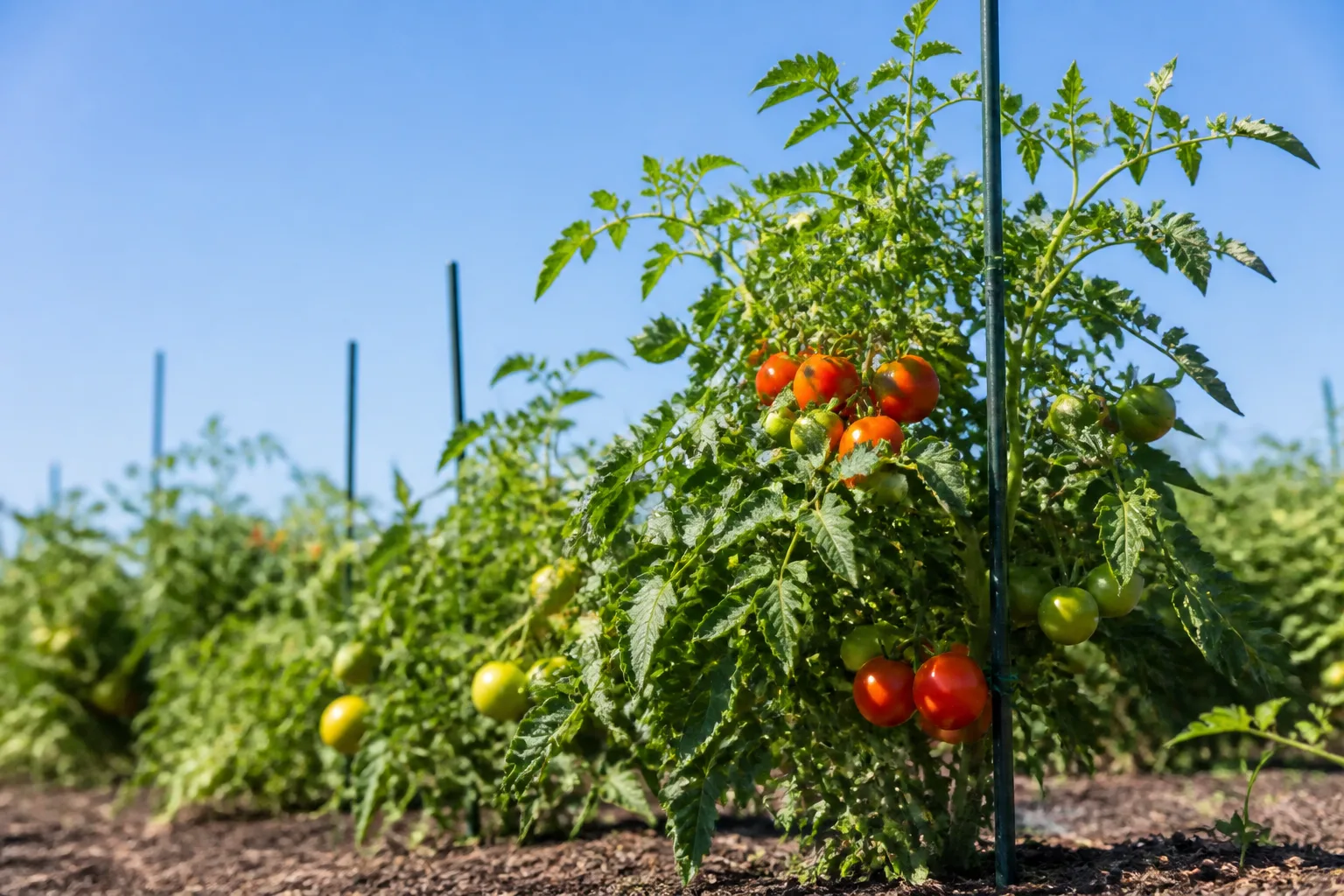
Tomatoes belong in direct sunlight—not in the bright shade of a north-facing porch or under a tree canopy that never lets a ray hit the leaves. Gardeners who grow reliable harvests agree on the baseline: most slicing and paste tomatoes need six to eight hours of direct sun daily, and they perform best with even more when your climate allows it. Indirect light might keep a houseplant alive; it rarely delivers the energy budget a fruiting tomato vine needs.
If your only available spot is dappled shade or a window that never sees direct beams, you are not doomed—but you need a different plan: smaller-fruited cultivars, movable containers, reflective walls, or supplemental grow lights. This guide walks through how to choose, test, and fix your light situation before you blame fertilizer or watering for empty vines.
The Short Answer: Tomatoes Need Direct Sunlight
Grow tomatoes in direct sun. That means unobstructed sunlight falling on the leaves for most of the day—not light that bounced off a wall, filtered through sheer curtains, or slipped through tree leaves for an hour at noon. UF/IFAS Gardening Solutions lists at least four to six hours as a minimum for Florida gardens, while Gardening Know How and most northern guides cite six to eight hours for dependable fruit. Treat six hours as the floor for in-ground beds; aim for eight where summers are short or clouds are frequent.
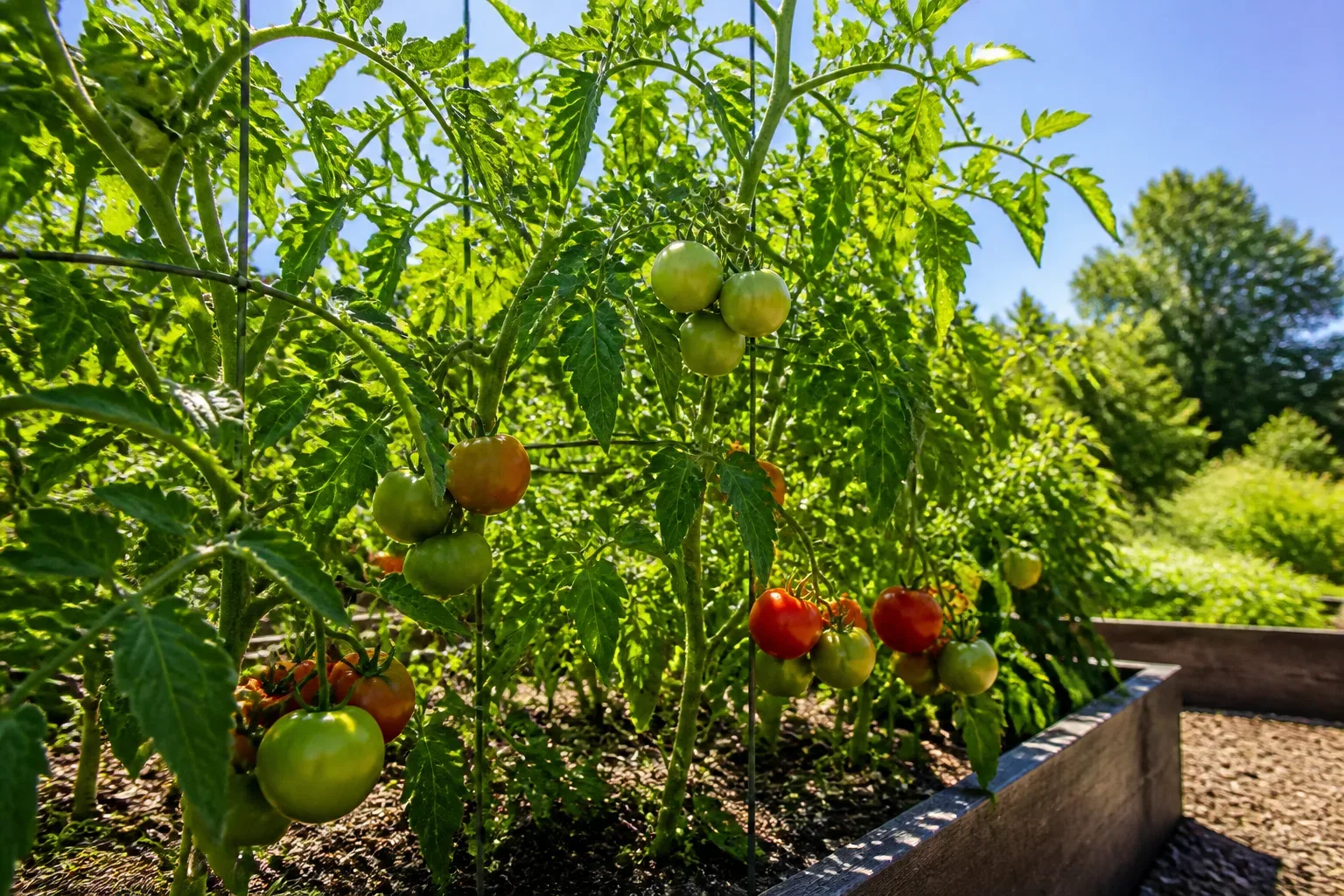
The RHS puts outdoor tomatoes in a warm, sunny, sheltered site and notes that containers outdoors should sit in full sun. Texas A&M AgriLife Extension classifies tomatoes among vegetables that require bright sunlight, not those that merely tolerate partial shade. Indirect light is a compromise for marginal sites—not the target for a main crop.
Why “Bright Indirect Light” Is Not a Tomato Strategy
Indoor plant advice blurs the line. A fiddle-leaf fig near an east window gets “bright indirect light” and thrives. A tomato on the same sill gets weak, stretched stems and few flowers because the photon budget is wrong. Tomatoes convert light into sugars through photosynthesis; flowering and fruit set demand a surplus of that energy. RHS advice on how plants use light notes that plants in rapid growth or heavy fruiting need plenty of sunshine—weak light produces spindly, pale growth and reduced flowers.
If someone tells you tomatoes do fine in “indirect sun,” ask whether they mean filtered light all day (usually bad) or full morning and afternoon sun with brief midday shade during a heatwave (a different story). The second is still a direct-sun garden with tactical protection—not an indirect-light growing method.
Direct Sun vs Indirect Light—What Those Terms Mean in a Garden
Confusion starts with vocabulary. “Full sun” on a seed packet means direct rays for six or more hours. “Partial shade” means three to six hours of direct sun or dappled light longer than that. “Full shade” is less than three hours of direct sun. Tomatoes are full-sun crops in almost every seed catalog; partial-shade listings describe the least bad option when you have no better bed.
What Counts as Direct Sun on a Plant Label
Direct sun hits the leaf surface without passing through tree canopy, porch roofs, or window glass. Morning sun counts. Late-afternoon sun counts. Midday sun counts. Light that reaches the plant only after bouncing off a mirror or white wall supplements direct sun—it does not replace it.
Indirect light is ambient brightness without a direct beam. Open shade on the north side of a house, light through closed blinds, or the glow under a dense maple are indirect. A spot can look bright to your eyes while delivering a fraction of the photosynthetically useful light a tomato needs.
Why Indirect Light Fails the Fruit-Set Test
Tomatoes are energy hogs at peak season. Roots, stems, leaves, flowers, and swelling fruit all draw on the same photosynthetic income. When light is indirect, the plant prioritizes survival: taller internodes searching for sun, fewer side branches, and aborted flowers. Gardeners describe the result as “all leaves, no tomatoes”—often a light problem misread as a fertilizer problem. Our tomato light care guide walks through the same early warning signs on balconies and small plots.
How Many Hours of Direct Sun Tomatoes Actually Need
There is no single magic number because latitude, cloud cover, and heat matter. Still, hour counts give you a usable site-selection filter before you dig.
The 6-to-8-Hour Baseline Most Guides Cite
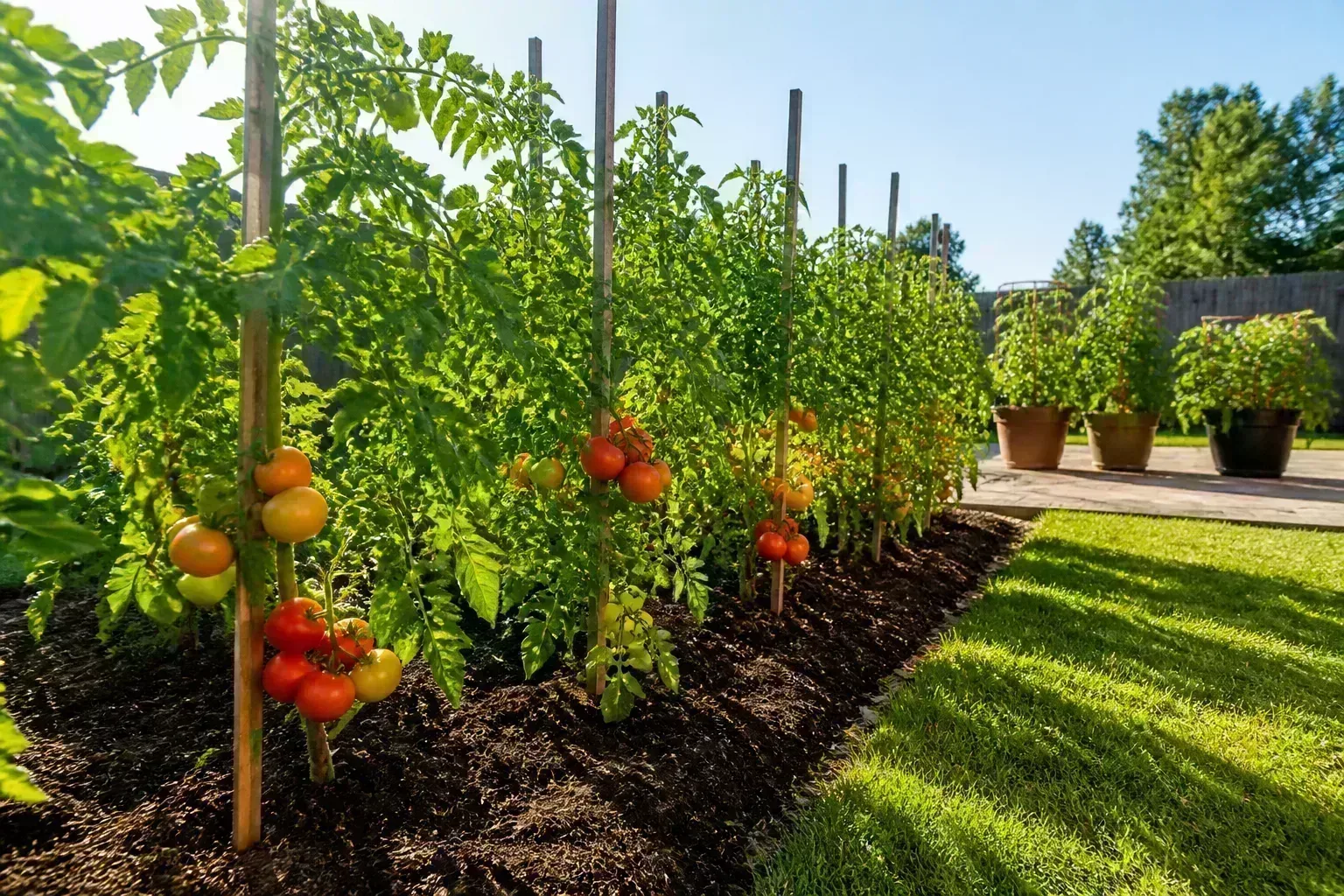
Minimum for fruit: about six hours of direct sun per day during the growing season. Gardening Know How states that six hours can produce fruit, but eight or more yields the best harvest volume. Below six hours, expect smaller yields even from healthy-looking vines.
Extension floor: UF/IFAS recommends four to six hours as a minimum—reflecting intense southern sun where fewer hours still deliver high light intensity. In cool, cloudy regions, lean toward the upper end of every range.
Containers: UF/IFAS container guidance specifies at least six hours for potted tomatoes, plus consistent watering because pots dry faster in hot sun. If you are growing on a patio, see our container tomato feeding guide for how light and nutrient loss interact.
When Eight or More Hours Pays Off
Extra direct sun helps when:
- Your season is short and you need early fruit set.
- Cloud cover is common (coastal or Great Lakes gardens).
- You grow large beefsteak or paste types that need longer to mature.
- Plants are indeterminate vines that keep flowering until frost.
More sun is not unlimited upside. When heat exceeds roughly 85–90°F for days, flowers drop and fruit stalls even with strong light—that is a temperature problem, not proof that shade is better. Afternoon protection during heat spikes is compatible with a full-sun site; our patio umbrella heat-shade guide explains when temporary shade saves fruit without turning the bed into an indirect-light zone.
How to Test Whether Your Yard Gets Enough Light
Guessing from memory fails. Trees leaf out. Neighbors build fences. A spot that was sunny in April may be shaded by July.
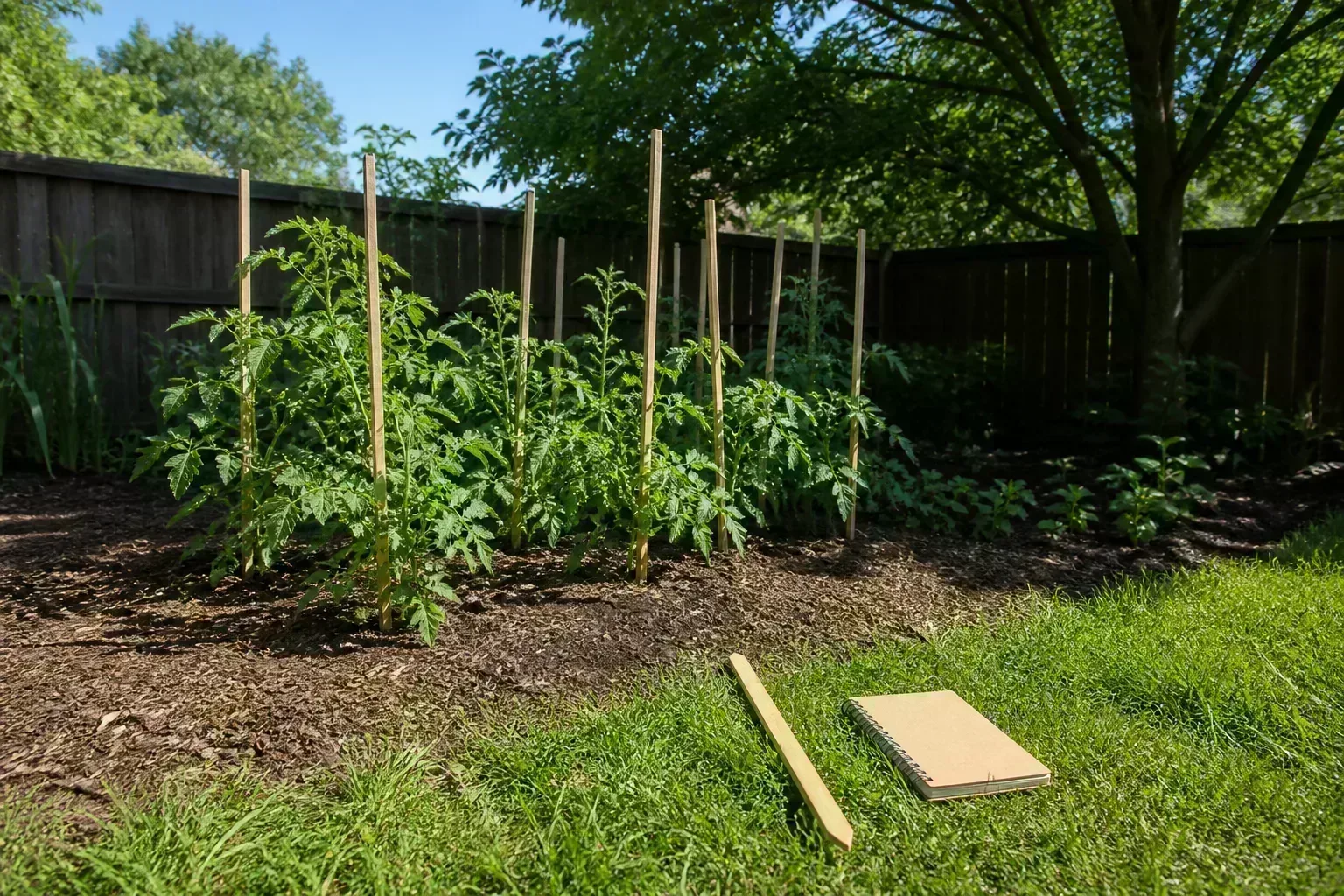
A Simple Sun Map You Can Draw in One Afternoon
On a sunny growing-season day, check your candidate bed every hour from mid-morning through late afternoon. Mark each hour as direct sun, dappled/filtered, or shade. Count only direct hours toward your tomato total.
Quick rules:
- Pass: six or more direct hours, with both morning and some afternoon sun.
- Marginal: four to six direct hours—cherry or compact determinates only; expect smaller harvests.
- Fail: under four direct hours—move containers, prune overhanging branches, or switch to grow lights indoors.
Photograph the bed at 10 a.m., 1 p.m., and 4 p.m. Midday shade from a tree line is the surprise killer: morning sun alone rarely suffices. South- or southwest-facing walls reflect heat and light; the RHS recommends sheltering container tomatoes against a sunny wall when wind is an issue—wall heat can boost growth if roots stay watered.
What Happens When Tomatoes Get Too Little Sun
Insufficient direct light produces predictable symptoms. Catching them early lets you relocate pots or add supplemental lighting before the season is lost.
Leggy Vines, Pale Leaves, and Flowers That Never Become Fruit
Leggy growth: internodes stretch; stems lean toward the brightest direction. Seedlings on a dim windowsill show this in days. RHS tomato guidance tells growers to place seedlings in as much light as possible after germination to prevent thin, leggy transplants.
Pale or yellow-green foliage: chlorophyll production drops when light is inadequate. Lower leaves may yellow while the plant keeps stretching upward—a pattern easily confused with nitrogen deficiency.
Poor flowering and fruit set: flowers open, then abort, or never appear on side branches deep inside a shaded canopy. Without enough energy, the plant cannot support multiple fruit clusters.
Disease pressure: dense, shaded foliage stays wet longer after rain or overhead watering. Combined with weak growth, that invites foliar problems. Water at the base and improve airflow through careful pruning—but pruning cannot fix a bed that never gets direct sun.
If leaves curl in full sun, check heat and water before assuming light is the issue; our tomato leaf curl guide separates heat stress from other causes.
Can Any Tomatoes Tolerate Indirect or Partial Shade?
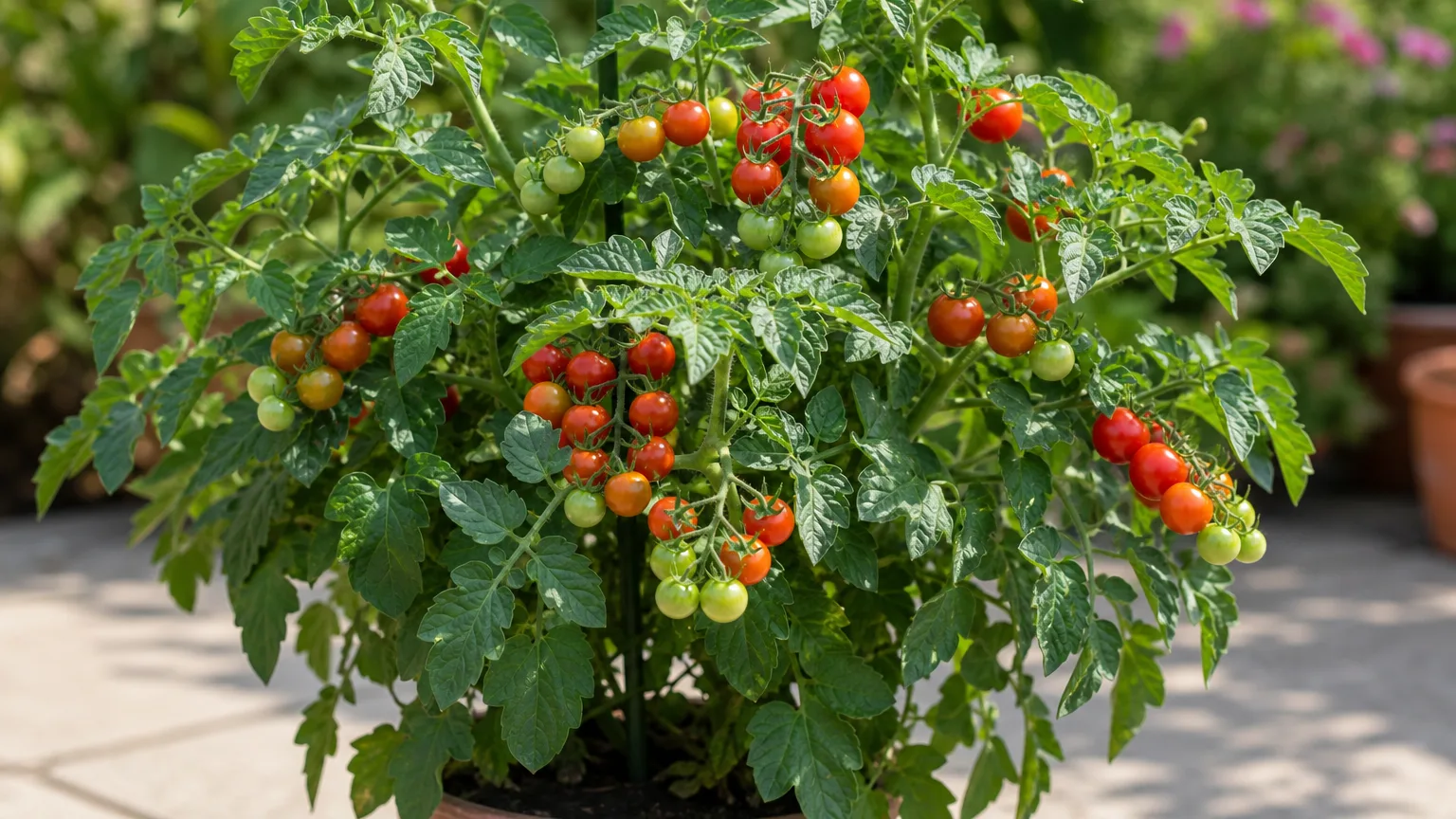
No tomato thrives in true indirect light all day. Some cultivars tolerate partial shade—meaning four to six hours of direct sun plus bright ambient light—better than large heirlooms. That is damage control, not an equal swap.
Cherry Types and Cultivars Worth Trying on Marginal Sites
Cherry and grape tomatoes often set fruit with slightly less sun than beefsteaks because individual fruits are smaller and mature faster. UF/IFAS notes that cherry types such as Sweet 100 continue performing in Florida heat when larger types stop setting—heat tolerance is not shade tolerance, but smaller fruiting habits help on marginal sites.
Names gardeners try in partial sun: Black Cherry, Juliet, Sungold, and compact determinates bred for containers. Gardening Know How lists partial-shade heirlooms including Cherokee Purple—worth a trial if you have five direct hours, not three. Our Cherokee Purple growing guide covers the cultivar’s full needs when you do have adequate sun.
Do not expect shade-tolerant marketing to overcome a north-facing alcove. If your sun map fails, choose lettuce—not a Roma.
When Direct Sun Becomes Too Much Heat
Tomatoes are sun lovers that still burn. Sunscald bleaches fruit shoulders to white or yellow patches that turn papery and invite rot. It appears when fruit is exposed to intense direct sun—often after leaf loss from disease, aggressive pruning, or heat-thinned canopies.
Sunscald, Blossom Drop, and Afternoon Shade That Still Counts as “Full Sun”
Sunscald: most common on green or ripening fruit suddenly exposed after pruning or leaf damage. Good leaf cover shields fruit; stripping a plant bare for “more air” can backfire in July sun.
Heat vs light: above roughly 85°F days and 72°F nights, blossom drop increases even with plenty of light. Afternoon shade cloth or a repositioned umbrella lowers leaf and fruit temperature without converting the site to indirect light—plants still get morning and late-day direct sun. Read the distinction in our heatwave umbrella guide.
Ripening myth: once fruit is full size, color change does not require direct sun on the tomato skin. Ripening runs on warmth and ethylene gas. Overhead leaves can slow color even when fruit is mature—another reason balanced pruning beats bare vines.
How to Maximize Light Without Moving the Whole Garden
When your site passes the sun map but harvests still disappoint, light may be reaching the yard without reaching all parts of the plant.
Prune for penetration, not baldness: remove suckers and lower leaves that touch soil, and thin dense interior stems so lower clusters see dappled direct light. Never remove more than a third of foliage at once; sunscald follows over-pruning.
Stake early: sprawling plants shade themselves. Vertical training exposes more leaf area to the same six hours of yard sun.
Use reflective surfaces: white walls, light fences, or purpose-built reflectors bounce additional photons onto the canopy. Reflection helps; it does not create six hours where you have two.
Move containers: UF/IFAS suggests shifting lightweight pots to follow sun through the day—a practical fix on patios with mixed morning and afternoon exposure.
Avoid competition: Texas A&M AgriLife Extension warns against planting vegetables near trees and shrubs that steal light, nutrients, and water. A tomato bed under the drip line of a mature oak will fail the hour count even if the lawn nearby looks sunny.
Space plants so leaves do not overlap neighbor vines by midsummer. Indeterminate types need 45–60 cm (18–24 in) between plants per RHS spacing guidance—crowding creates self-shade and disease pockets. Pair vertical training with a south-facing wall for radiated warmth in cool climates; in hot climates, ensure roots stay mulched and watered so reflected heat does not desiccate the root zone.
Growing Tomatoes Indoors When Outdoor Sun Is Not Enough
When the sun map fails, full-spectrum LED grow lights replace direct sun—not desk lamps or weak “plant bulbs.”
Seedlings: after the first true leaves, provide roughly 14–16 hours of strong artificial light daily; Gardening Know How cites 18–22 hours for very young seedlings under LEDs. Keep fixtures 15–30 cm (6–12 in) above tops and raise them as plants grow.
Mature indoor plants: 14–16 hours on a timer mimics a long summer day. Intensity matters as much as duration—a dim fixture running sixteen hours still produces leggy plants.
Windows alone rarely deliver enough direct beams through glass, especially in winter. Treat a south window as a supplement, not a guarantee. For deeper light guidance tied to daily care, see /plants/tomato/light/.
Conclusion
Tomatoes should be grown in direct sunlight, not indirect light, for any serious harvest. Plan on six to eight hours of direct sun as your default baseline—eight or more where seasons are cool or cloudy—and drop to cherry or partial-shade cultivars only when a sun map proves your best bed is marginal. Test the site before you plant, train vines vertically to use the light you have, and add afternoon shade during heat spikes without confusing heat protection with shade growing.
If your yard cannot pass the hour count, movable containers, reflective walls, or grow lights beat fighting biology in a dark corner. Light is the non-negotiable input; everything else—water, fertilizer, pruning—only works once the plant is actually harvesting photons.



