9 Flowering Perennials to Plant in November
Nine flowering perennials you can still plant in November for spring color—plus zone timing, late-fall planting steps, and what to expect next year.
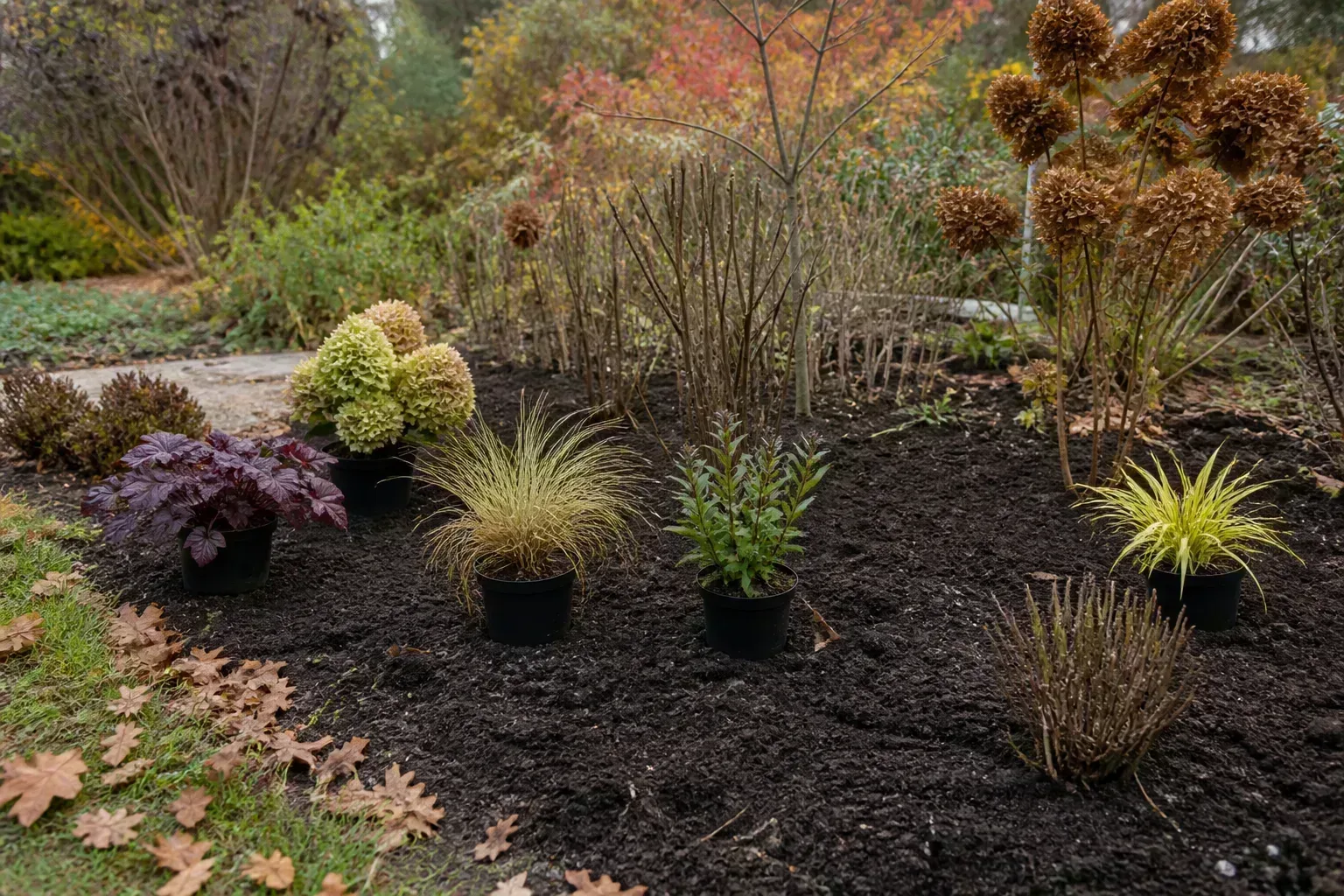
November feels like the garden’s closing credits, but for hardy flowering perennials it is often still a usable planting window. The goal is not to squeeze in one more chore before snow—it is to put roots in cool, moist soil so spring arrives with structure, pollinators, and color already in motion. Done right, a November transplant can outperform the same plant installed in a rushed spring heat wave.
The catch is timing. November planting only works when the plant is cold-hardy in your USDA zone, the soil is workable (not frozen or waterlogged), and you still have enough weeks before sustained hard freeze for roots to anchor. Miss that window and you are better off heeling plants in a protected spot or waiting until spring.
When November Planting Actually Works (and When It Does Not)
November is a conditional yes, not a calendar rule. Herbaceous perennials that go fully dormant can be planted late if their crown stays hardy through your winter and the ground still accepts a shovel.
How many weeks you need before the ground freezes
Penn State Extension recommends planting container-grown trees, shrubs, and hardy perennials early to mid-fall so roots have at least six weeks before the first frost to establish. That guideline is your north star: count backward from your average first frost date. If you are inside that window and the soil drains well, planting is still reasonable.
Roots grow until soil temperatures drop consistently into the low 40s °F. Above-ground growth may be finished, but underground establishment continues in cool weather—one reason fall planting often beats spring for long-term vigor. If your forecast shows only two weeks before hard freeze and the plant is a stressed, pot-bound clearance special, spring is the safer bet.
Zone-by-zone November planting windows
Zones 7–9 (and mild Zone 6): November is often ideal. Daytime highs are moderate, nights are cool, and soil stays workable deep into the month. Many gardeners in the Mid-Atlantic, Pacific Northwest, and South can plant through November if frost is still weeks away.
Zone 6: Early to mid-November is usually fine for the nine perennials below. Late November works only if the ground is unfrozen and you can water during dry spells until freeze-up.
Zones 4–5: Treat November as early-month only. Focus on the hardiest entries—coneflower, catmint, coreopsis, salvia—and skip fussy or slow-to-establish choices. Have frost protection and extra mulch ready.
Zone 3 and colder: November field planting is rarely worth the risk unless you are in a protected microclimate. Overwinter potted plants in an unheated garage or plant in spring.
Southern Gulf Coast (Zones 9b–10): November can still be excellent, but watch for warm spells that push tender new growth before a cold snap. Water deeply after planting and avoid heavy nitrogen that stimulates soft top growth.
Why Fall-Planted Perennials Outperform Spring Transplants
Cool air reduces transpiration stress while warm soil encourages root growth—a combination spring often lacks once summer heat arrives. Weed pressure is lower, rainfall is more reliable in many regions, and nurseries discount stock that has sat in pots all season.
Fall planting also aligns with how many perennials naturally cycle. They finish top growth, store energy, and extend roots before dormancy. A plant installed in November may look quiet all winter while building the root mass that supports an earlier, stronger spring show than a May transplant fighting heat and drought at the same time.
The trade-off is visibility. You will not get instant gratification in November. You are investing in next year’s display—and sometimes the year after that for slow starters like foxtail lily.
How to Find Perennials When Nursery Shelves Are Empty
By November, garden centers have often cleared spring and summer inventory. That does not mean you are out of options.
End-of-season pots: Scan the “damaged” or clearance racks. A tired-looking coneflower or catmint with healthy white roots (not circling the pot in a solid mat) is a bargain November candidate. Reject anything with mushy crowns or severe drought stress.
Divisions from established gardens: Fall is prime division season for many clump-forming perennials. Ask gardening friends, check local Master Gardener plant swaps, or browse community groups for free divisions of coneflower, catmint, coreopsis, or phlox.
Mail-order bare-root or plugs: Some specialty growers ship fall-planted perennials until stock runs out. Order only if you can plant upon arrival—not leave boxes on the porch.
Your own garden: If you already grow these plants, November is a fine time to split and replant divisions, provided you follow the same frost-window rule.
The Late-Fall Planting Checklist
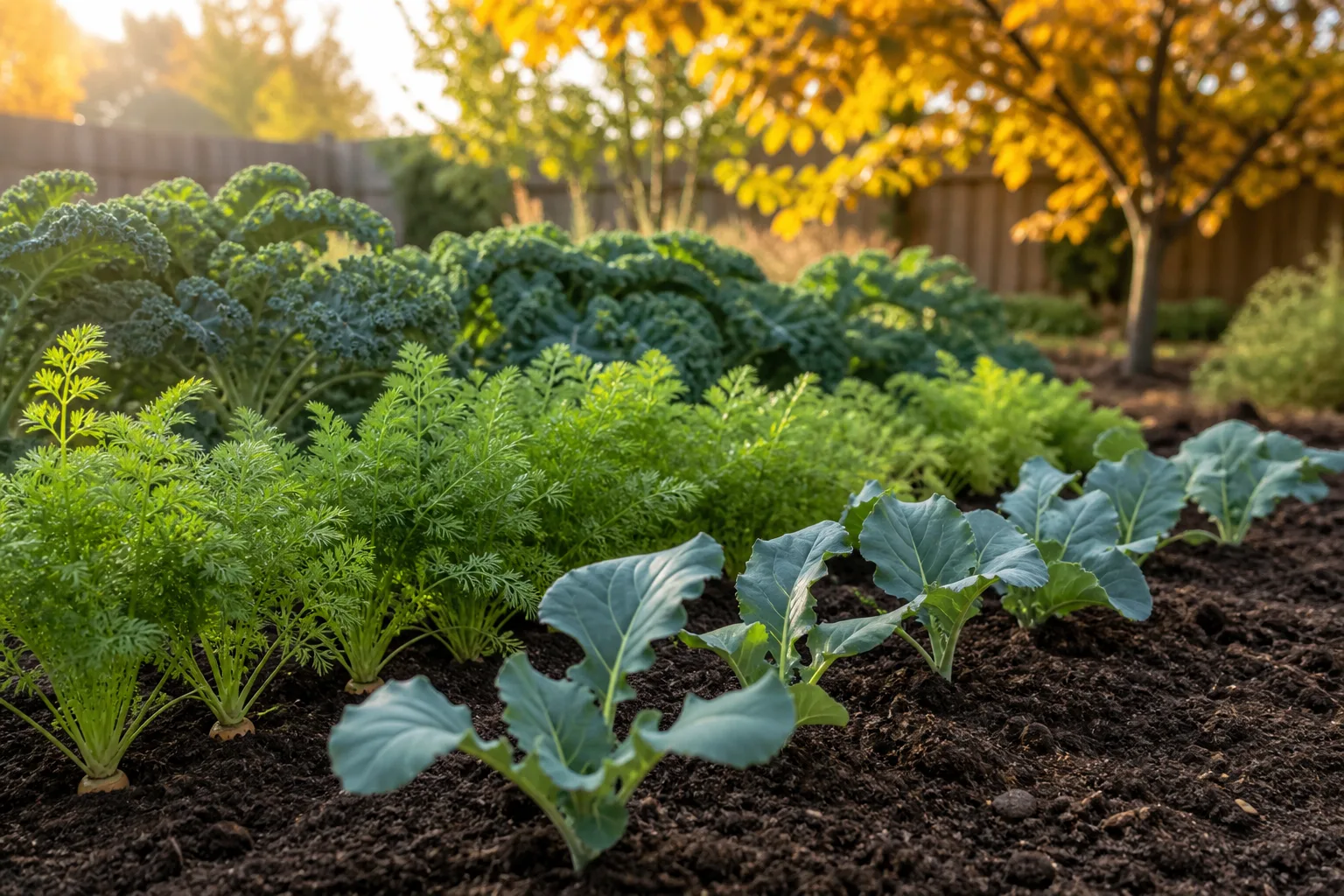
Treat November planting as a short protocol, not a casual stick-in-the-ground moment.
Soil prep and planting depth
Work compost into the planting hole only if your native soil is poor or heavy clay. The priority is drainage, not fertility spikes that push soft late growth. Dig a hole twice as wide as the root ball and no deeper than the plant sat in its pot. Penn State Extension advises loosening pot-bound roots—cut an X in the bottom of severely circling root balls and tease outer roots outward.
Set the crown at the same level it grew in the container. Slightly high is safer than buried; sunken crowns rot in wet winter soil. Water deeply immediately after backfilling to settle soil and eliminate air pockets.
Mulch timing: after the ground freezes, not before
Mulch is essential for November plantings, but timing matters. A thick layer applied while soil is still warm can hold moisture against the crown and invite rot. The better pattern: apply 2–3 inches of shredded bark, leaves, or straw after the ground has frozen lightly for the first time. That mulch moderates freeze-thaw cycles that heave new plants out of the soil.
Pull mulch a few inches back from the crown itself. You want root-zone protection, not a wet blanket on the plant’s growing point.
Winter watering for new transplants
Evergreen hellebores and semi-evergreen salvias may need occasional winter watering in dry, windy climates. Check monthly when soil is not frozen and the weather has been unusually dry. Dormant deciduous perennials need little once established, but first-year November transplants should enter winter with moist (not soggy) soil from that initial deep soak.
Colorado State University Extension’s PlantTalk notes that winterizing perennials includes monitoring moisture during dry winters—advice that applies doubly to late-fall newcomers.
9 Flowering Perennials Worth Planting in November
Each plant below is cold-hardy enough for late-fall planting in appropriate zones, offers meaningful spring or early-summer color, and rewards the extra mulch and patience November demands.
Coneflower (Echinacea purpurea)
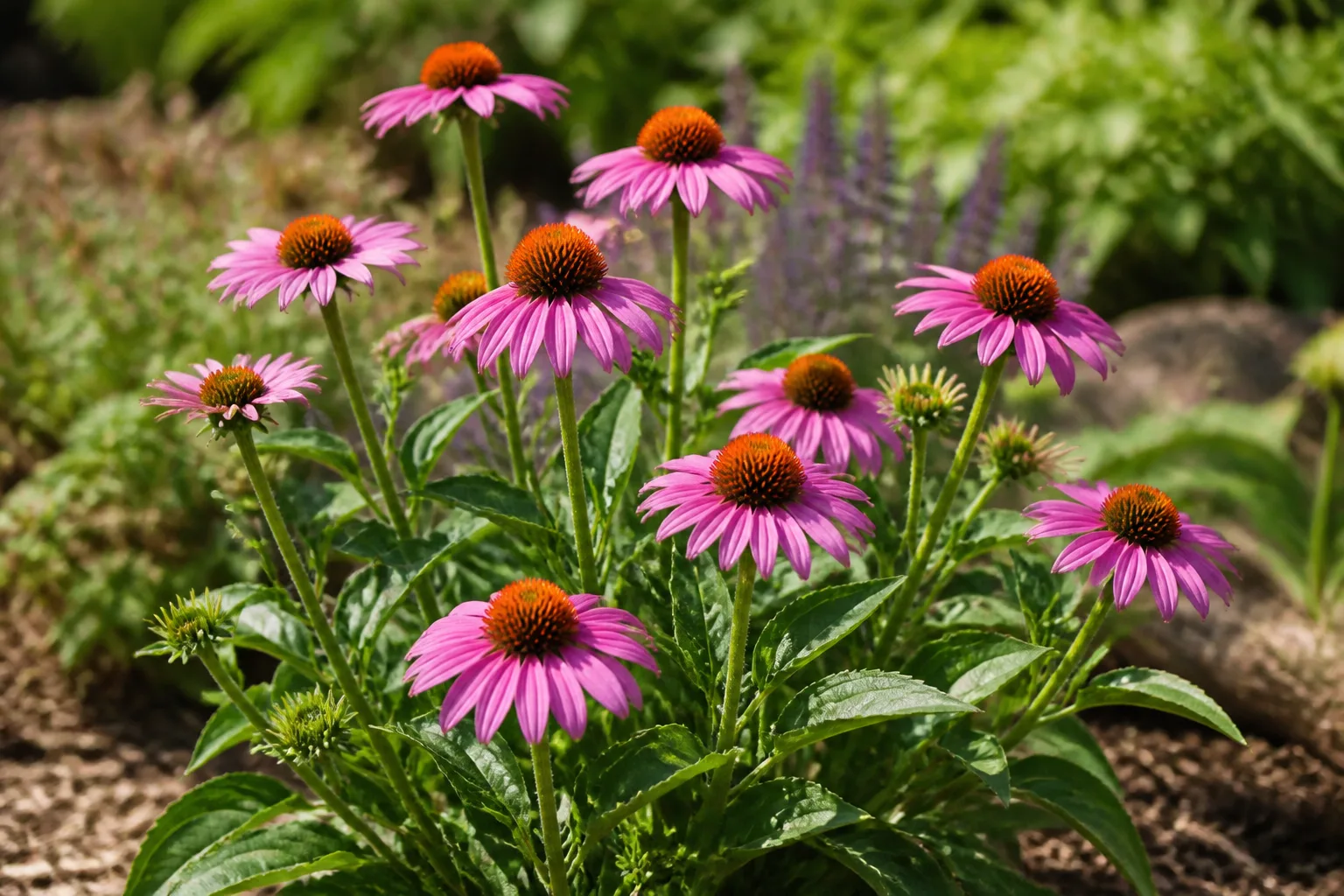
Purple coneflower is one of the most forgiving November candidates. NC State Extension’s Plant Toolbox lists it hardy in Zones 3–9, thriving in full sun to light shade with average to dry, well-drained soil. It blooms mid-summer, attracts butterflies and bees, and tolerates drought once established.
November divisions or potted plants should be mulched after the ground freezes. Leave dried seedheads standing if you want winter bird food and vertical interest—cut them in late winter if you prefer a cleaner bed. Cultivars like ‘Magnus’ and ‘PowWow Wild Berry’ are widely available; species plants are tough and self-sow modestly.
November edge case: In Zone 5, plant by mid-month and skip waterlogged clay sites without drainage improvement.
Coreopsis
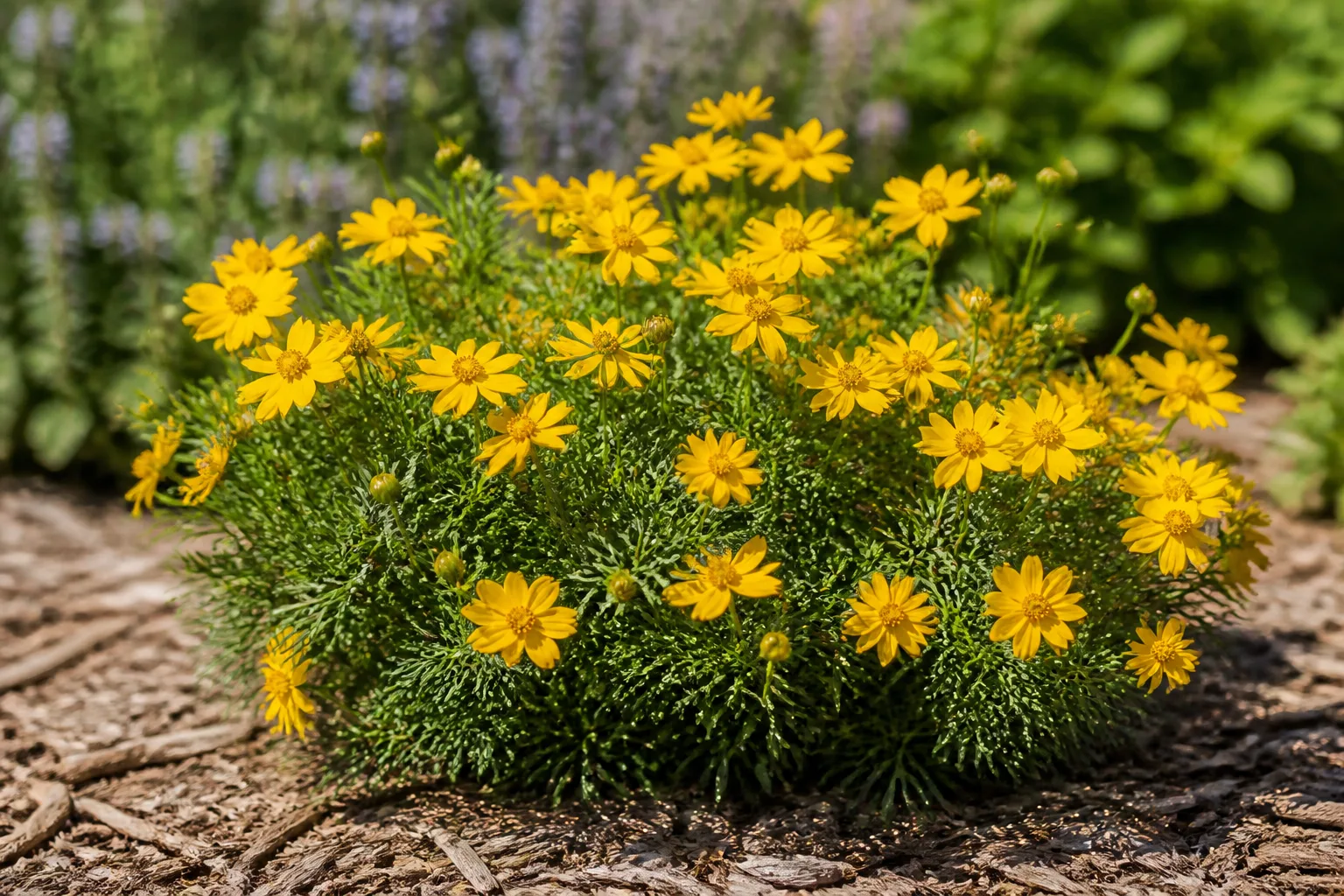
Threadleaf coreopsis (Coreopsis verticillata) and large-flowered types (C. grandiflora hybrids) handle late-season transplant well. NC State rates threadleaf coreopsis Zones 3–9 in full sun with well-drained soil. It blooms from late spring through frost with deadheading and spreads politely in lean soils.
Nurseries sometimes still have coreopsis on clearance in November because it blooms until frost. That is a feature, not a flaw—the roots are alive even when flowers finish. Cut back browned stems after planting if they flop, but leave the crown alone.
Pair with: Salvia and catmint for a sunny, low-maintenance pollinator strip.
Foxtail Lily (Eremurus)
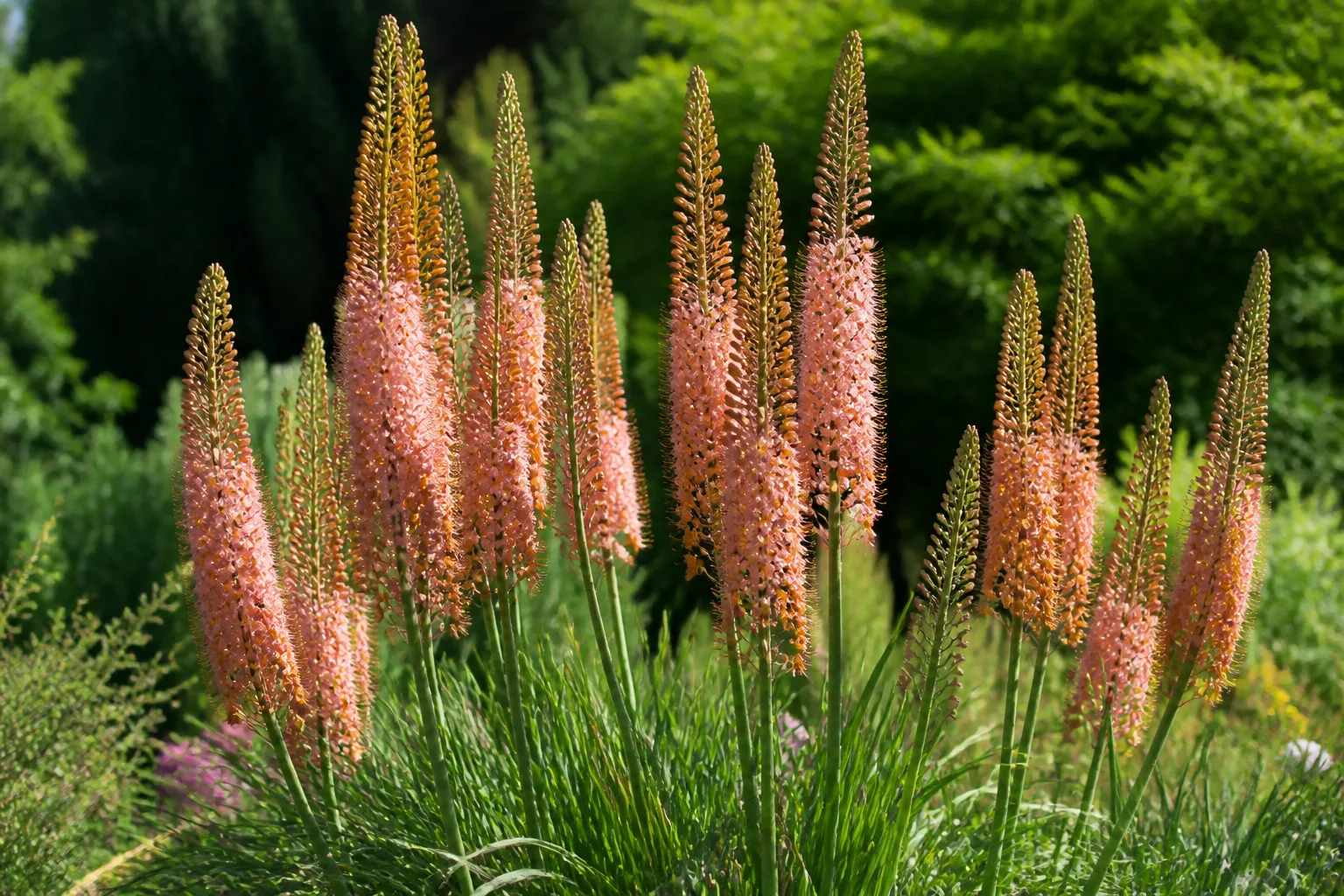
Foxtail lily is the drama pick on this list—tall spires of tiny flowers in pink, orange, yellow, or white rising above strap-like foliage. It is less common in nurseries but worth seeking for vertical contrast in spring borders.
Plant bare tuberous roots in fall (the usual shipping window) in full sun with sharp drainage and protection from strong wind. Tubers must not dry out before planting; soak if they feel brittle. Set them shallow per supplier depth guidance—typically 4 inches deep and 12–18 inches apart. Mulch after freeze-up.
Foxtail lily may not bloom its first spring after a late-November install. You are building a long-term focal point. Skip heavy clay unless you amend with grit on a raised berm.
Flowering Catmint (Nepeta)
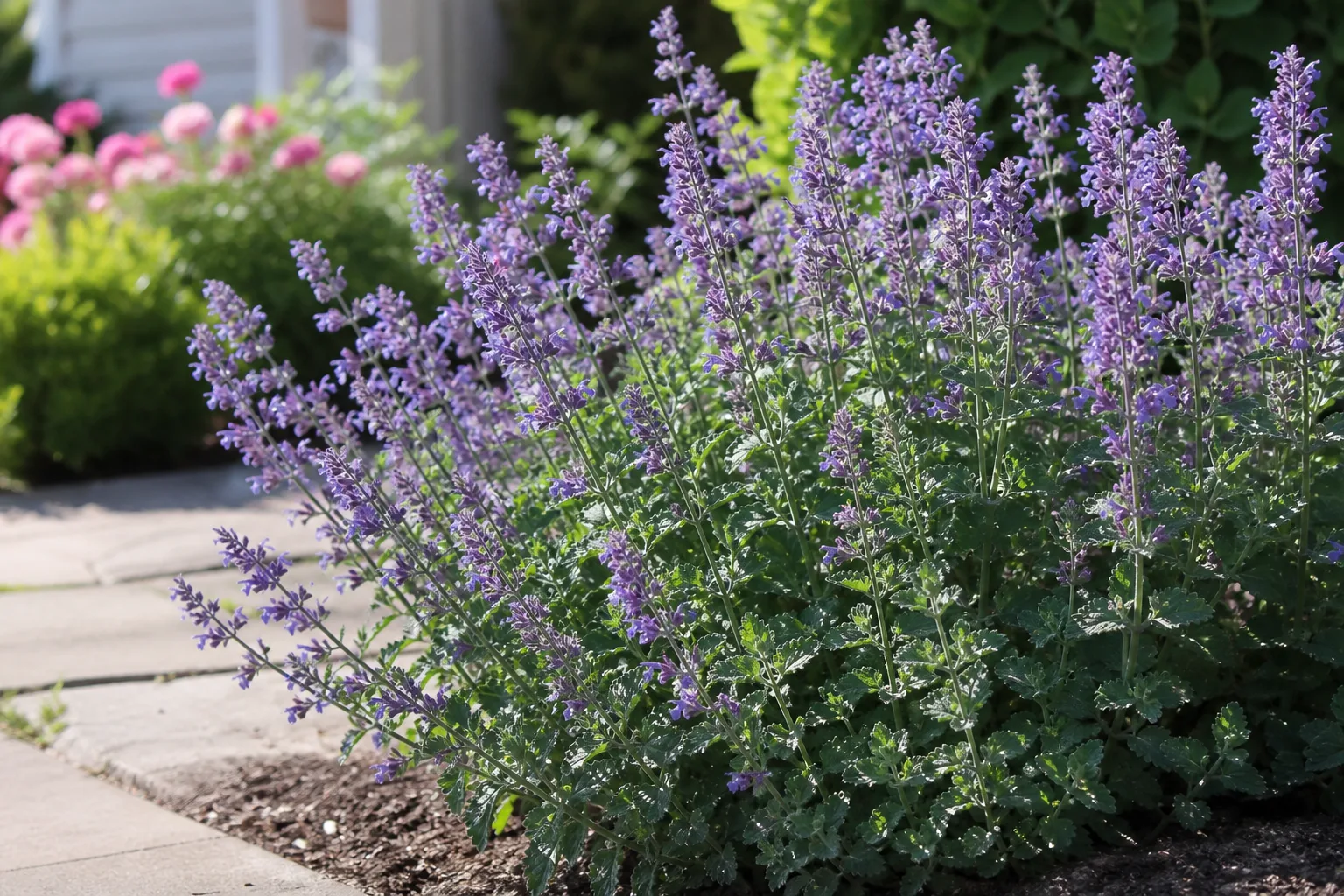
Catmint (Nepeta × faassenii and cultivars) is a workhorse: long bloom, drought tolerance, deer resistance, and easy division. NC State lists ‘Walker’s Low’ and similar hybrids for Zones 3–8 in full sun to part shade with well-drained soil.
November is an excellent time to split overcrowded clumps and replant edges. Shorter cultivars like ‘Cat’s Meow’ suit front-of-border placement; taller types anchor mid-border drifts. Shear lightly after planting if stems are ratty—fresh growth appears in spring.
Pollinator note: Bees and butterflies visit catmint heavily from late spring onward. Leave room—it spreads wider than its first-year footprint suggests.
Hellebores (Lenten Rose)
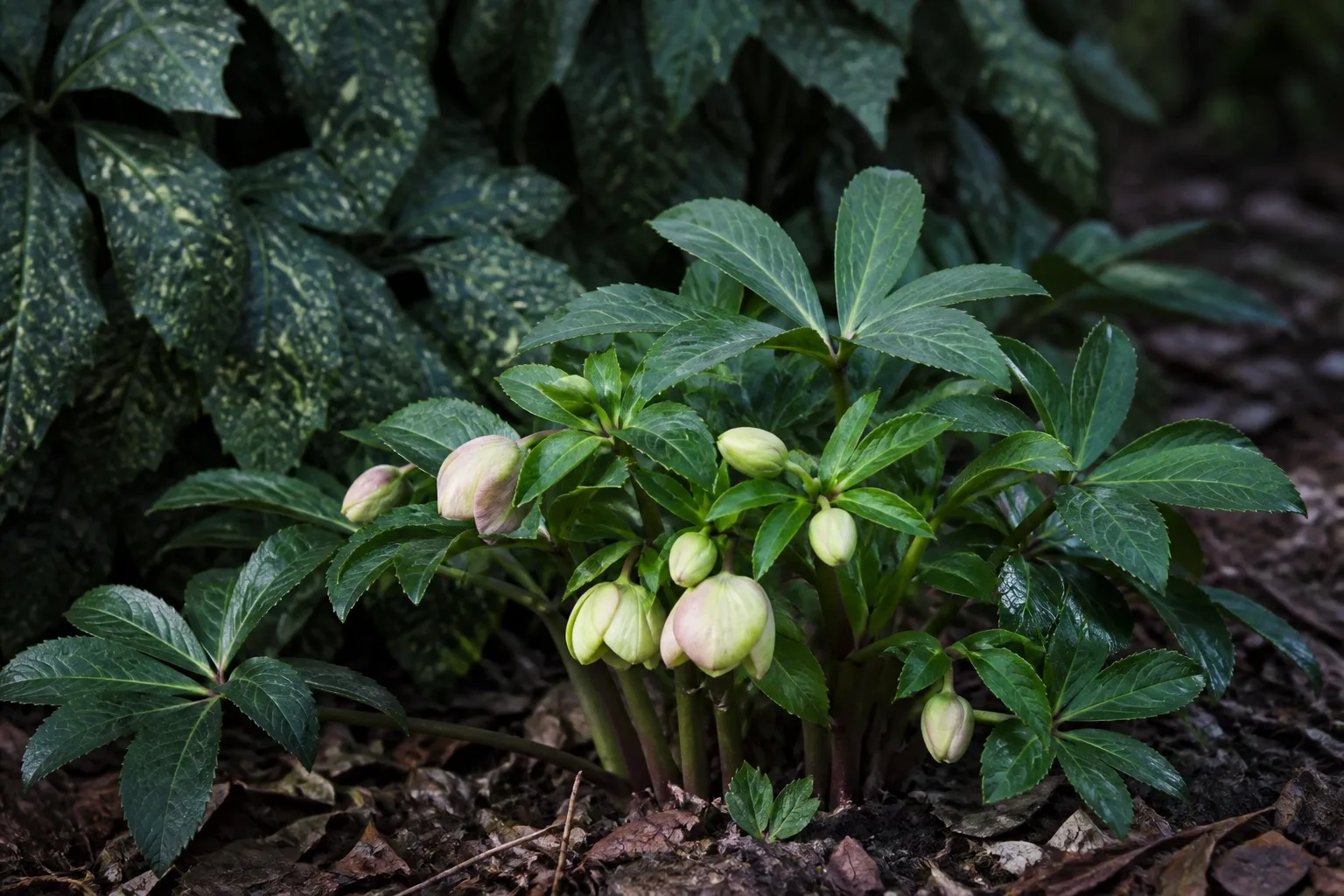
Hellebores (Helleborus orientalis hybrids) answer the “something blooming before anything else” problem. NC State places Lenten rose in Zones 4–9, preferring part to full shade and rich, well-drained soil. Flowers open in late winter to early spring—often while snow still lingers.
Fall planting is traditional for hellebores. Larger divisions are more likely to flower their first spring than tiny seedlings. More morning sun in cool climates can increase bloom count; deep shade produces fewer flowers but healthier foliage in hot regions.
Caution: Hellebores are toxic if ingested. Wear gloves when handling sap during division. Do not confuse them with edible hellebore relatives.
Spiked Speedwell (Veronica spicata)
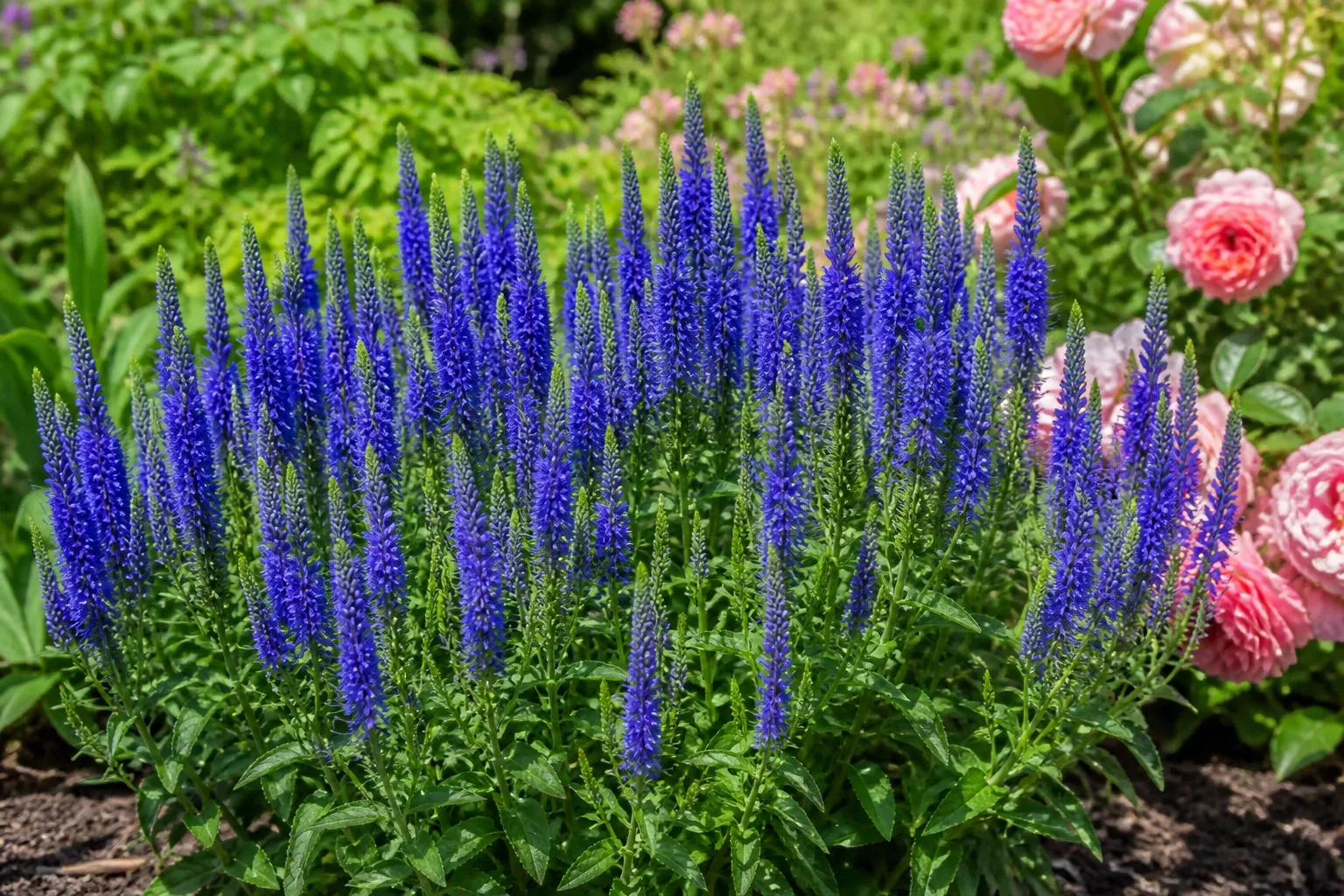
Spiked speedwell sends up dense blue, pink, or white racemes in late spring and summer. It is compact, deer-resistant, and excellent for front-of-border structure. Plant in full sun with average moisture and well-drained soil; hardy roughly Zones 3–8 depending on cultivar.
November planting works well for potted ‘Royal Candles’ or ‘Sunny Border Blue’ if you mulch properly. Deadhead spent spikes to encourage summer reflowering. Speedwell pairs cleanly with coreopsis and salvia in sunny beds.
Design tip: Use speedwell’s vertical spikes against horizontal catmint mounds for texture contrast without height chaos.
Woodland Phlox (Phlox divaricata)
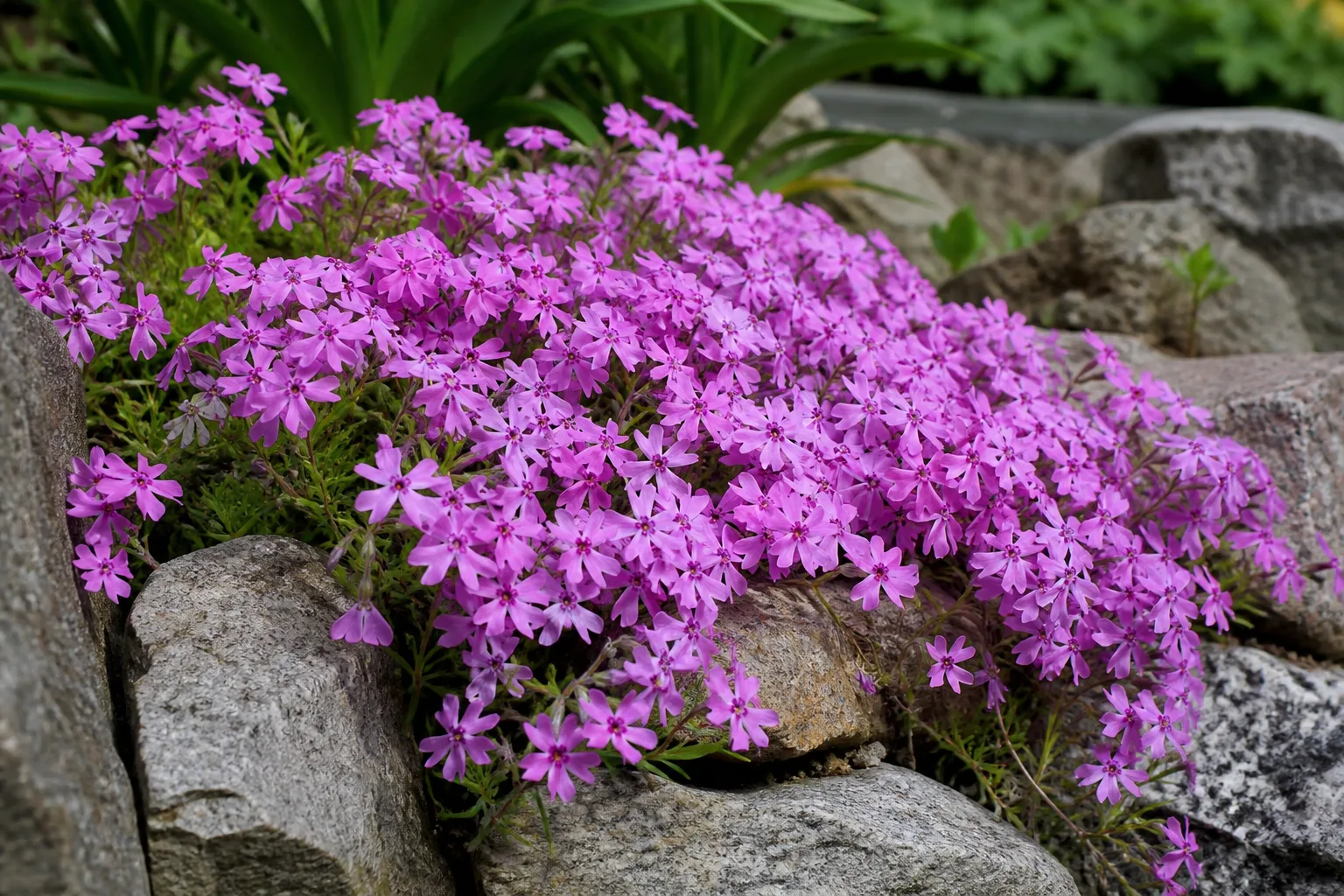
Woodland phlox is the shade-side spring star—low mats of blue, lavender, or white flowers above evergreen-ish foliage. NC State lists Zones 3–8 in part shade to shade with moist, humus-rich, well-drained soil.
It is harder to find in nurseries in November unless you source divisions. Under deciduous trees is ideal: spring sun before canopy leaf-out, summer shade, and steady soil moisture. Mulch with shredded leaves after freeze-up to mimic woodland duff.
Avoid: Planting into dry, root-compacted soil under mature maples without watering the first dry spring—woodland phlox sulks in drought.
Agastache (Anise Hyssop)
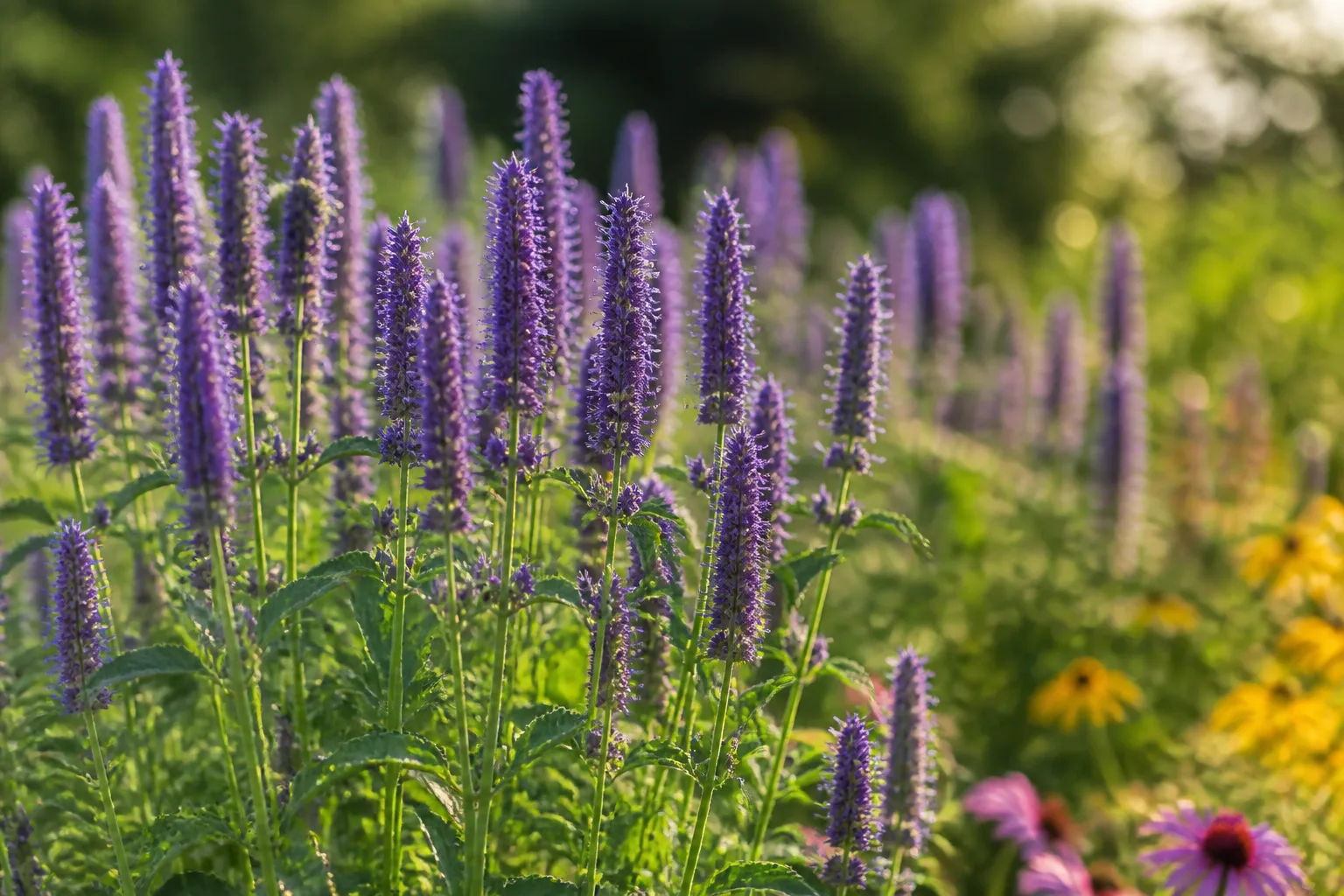
Agastache—anise hyssop or hummingbird mint—brings mint-scented foliage and tubular flowers in white, pink, orange, and purple from mid-summer into fall. It thrives in full sun, well-drained soil, and Zones 5–9 for most cultivars. Peach-toned selections like ‘Mango Tango’ glow in evening light.
November planting lets roots develop before the heat stress of the following summer—a real advantage in hot, humid regions. Do not overwater dormant crowns in winter; agastache hates wet feet. Deer usually pass it by.
Hot-climate note: In Zone 9, verify cultivar heat tolerance; some hybrids underperform in humid Gulf summers.
Salvia nemorosa (Woodland Sage)
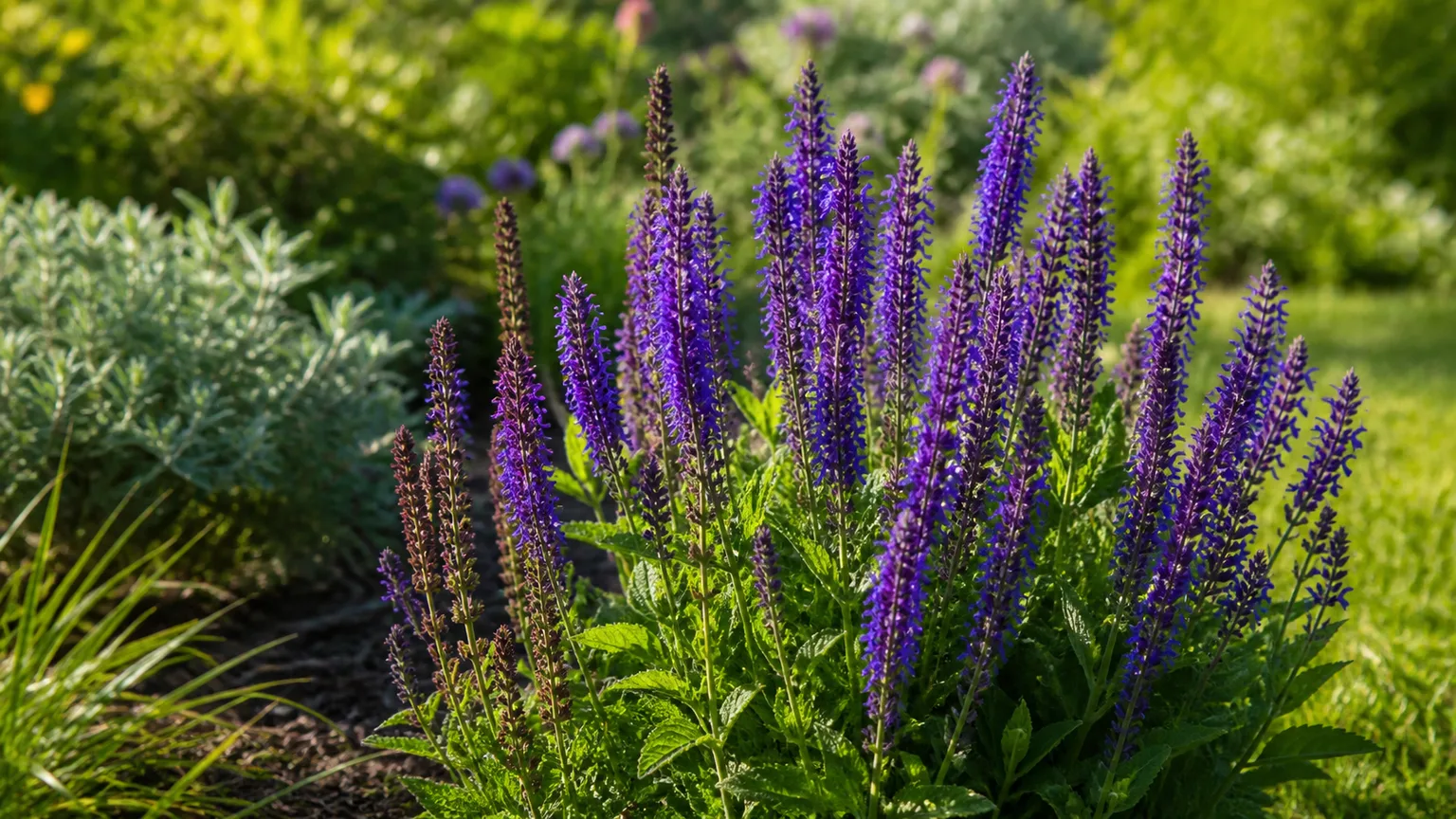
Woodland sage bridges the gap between fading spring bulbs and peak summer perennials. NC State describes Salvia nemorosa for Zones 4–8 in full sun with dry to medium, well-drained soil. It blooms early summer, tolerates poor soil, and responds well to deadheading.
‘Caradonna’ (deep purple) and ‘May Night’ are proven performers. November divisions establish quickly; mulch after freeze. Cut back old stems in late winter before new basal growth emerges.
Why it made the list: Early bloom sequence, pollinator value, and toughness in lean soils—exactly what a fall-planted border needs for next year’s rhythm.
Perennials to Skip in November
Not every flowering perennial belongs in a November hole. Tender or marginally hardy plants (many gaillardia cultivars in cold zones, dahlia tubers not yet lifted, frost-tender salvias) should wait. Late-spring ephemerals that need a full fall root cycle—peonies moved without care, bare-root bleeding hearts—do better with an earlier fall window or early spring.
Skip November planting when:
- Soil is frozen, saturated, or compacted from machinery
- The plant is actively pushing lush new growth from late fertilizer
- Roots are severely pot-bound with little soil left in the container
- Your first hard freeze is fewer than three weeks out and the plant is stressed
- You cannot water until freeze-up in a dry, windy site
When in doubt, heel in plants in a sheltered trench—bury pots or roots lightly in a shaded spot—and transplant properly in early spring.
What to Expect Next Spring
Fall-planted perennials often leaf out on schedule but may bloom lightly the first year while rebuilding roots. Hellebores from large divisions can flower late winter; coneflower and coreopsis may wait until mid-summer for a full show. Foxtail lily might skip year one entirely.
Do not panic if growth looks slow in April. Check crowns for firmness, not speed. Remove winter mulch gradually as soil thaws. Hold fertilizer until active spring growth is 4–6 inches tall—overfeeding stressed transplants invites soft growth and disease.
By year two, fall-planted stock typically matches or outpaces spring-planted peers: deeper roots, earlier establishment, and less transplant shock during the first hot week of summer.
Conclusion
November is not a gardening afterthought—it is the last high-value window for putting hardy flowering perennials in the ground before winter. If your zone still offers workable soil and roughly six weeks before sustained freeze, coneflower, coreopsis, catmint, hellebores, speedwell, woodland phlox, agastache, and salvia are strong bets for spring and summer color. Foxtail lily rewards patient fall planters with unforgettable height.
Plant at the right depth, loosen confined roots, water in well, and mulch after the ground freezes. Source divisions when nurseries are bare, and set realistic expectations for first-year blooms. Do that, and next spring’s garden will not start from zero—it will start from roots you placed while everyone else was putting tools away.



