7 Perennials to Plant in October for Spring Blooms
Discover seven October perennials for spring color, from creeping phlox to Virginia bluebells, plus the frost-window and planting rules that help them settle in.
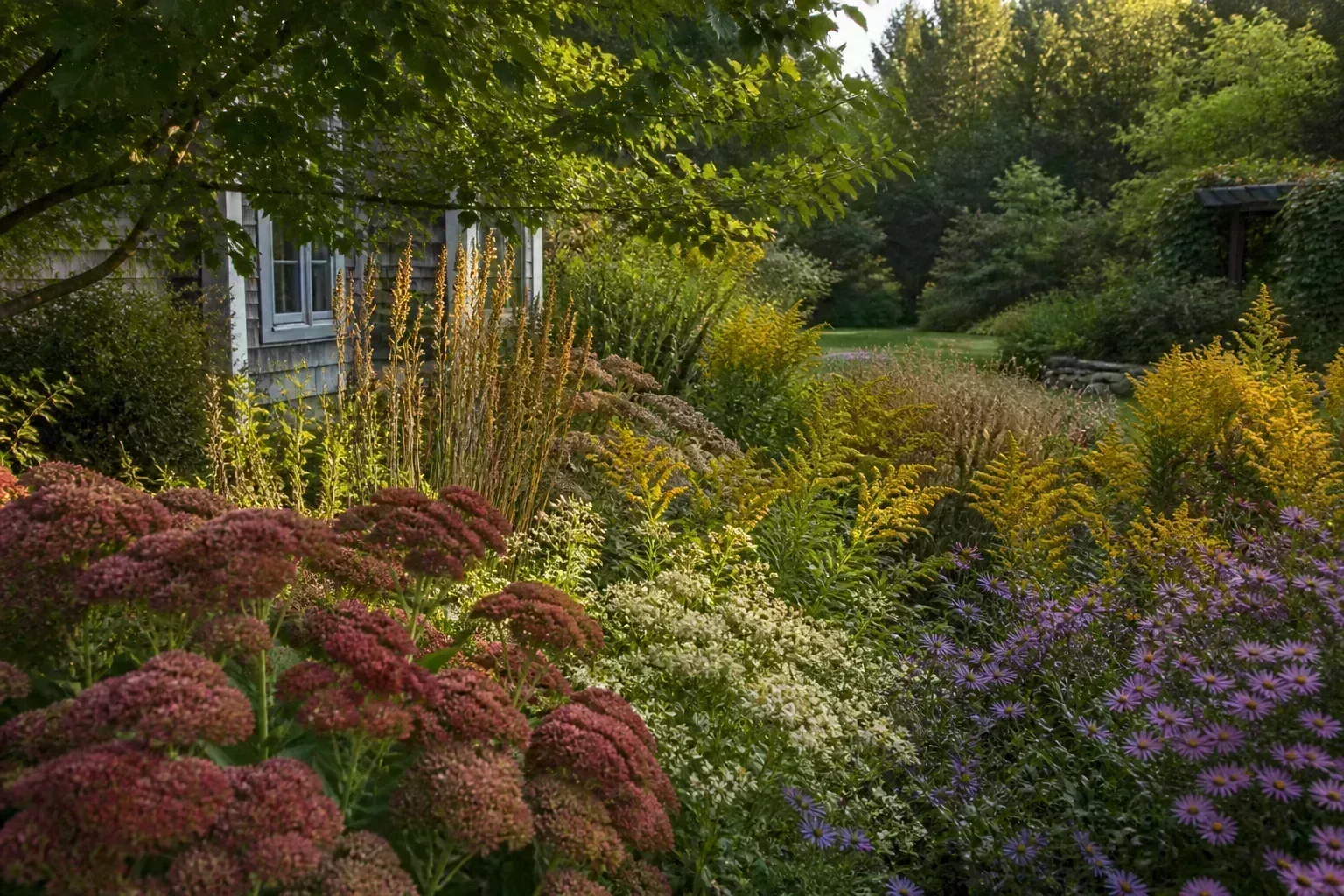
October is a useful planting month because the garden is entering a quieter phase while the soil can still be warm enough for root growth. That combination gives a new perennial time to settle below ground before the demands of spring arrive. It does not mean every perennial should be planted on the same date, in every climate, or in any patch of available soil.
The seven plants below cover sunny edges, moist borders, woodland shade, and pollinator-friendly beds. Several bloom in early spring, while bee balm and eastern bluestar extend the handoff into late spring or summer. Treat the list as a design palette, not a promise that every plant will flower at the same time.
Why October planting can improve spring performance
Fall planting works when the air is cooling faster than the soil. Leaves and stems are no longer trying to make the same amount of new top growth, but roots can continue exploring moist soil. That lets a transplant spend autumn building contact with the surrounding ground instead of immediately coping with hot sun, rapid evaporation, and a full flush of foliage.
The advantage is practical rather than magical. A plant with a settled root system can wake up in spring ready to use water and nutrients from a larger volume of soil, while a same-season spring transplant is still recovering from being moved. The result may be stronger growth and better flowering, but the outcome still depends on the species, the cultivar, the weather, and whether you gave it the right site.
The RHS perennial planting guide lists spring and autumn as the main planting seasons and stresses that container-grown plants can be planted outside those windows only when the ground is neither frozen nor waterlogged. That exception matters: a damp October is helpful; saturated October clay is not.
Pick your October window by frost and soil condition
Use the calendar as a prompt, not as the final decision. A good rule of thumb is to plant roughly four to six weeks before your area’s first expected hard frost, while the soil is workable and local weather is still likely to provide some moisture. In a mild coastal climate, that may extend beyond October; in a cold inland garden, October may be the last practical opportunity.
Start by checking your local frost calendar, then look at the soil. If a spade enters easily, the bed is moist but not sticky, and the forecast offers a stretch without extreme heat or a sudden deep freeze, conditions are favorable. If the ground is frozen, standing in water, or baked into a hard crust, wait for a better window or move the plant into a sheltered container until spring.
When October is too late or the site is wrong
Planting late is not automatically fatal, but it reduces the time roots have to anchor before freeze-thaw cycles. A small dormant division or a bare-root clump may need more protection than a well-rooted container plant, and a marginally hardy cultivar has less room for error than a plant comfortably suited to your zone.
Choose spring instead when the perennial is tender for your zone, when the site stays waterlogged, or when you cannot water the new planting during dry autumn spells. Spring is also the safer choice for plants that need a long warm season to bulk up, and for a plant you would be heartbroken to lose because its winter hardiness is uncertain. The goal is not to win a race against the calendar; it is to give the roots a realistic establishment window.
Prepare the bed before you buy plants
Match the bed to the plant before you match the plant to the photograph. Watch the area through a sunny day and note whether it receives six or more hours of direct sun, a few hours of sun with dappled shade, or very little direct light. Then check how quickly water disappears after rain. “Moist” should mean soil that holds water while still draining excess, not a puddle that remains around the crown.
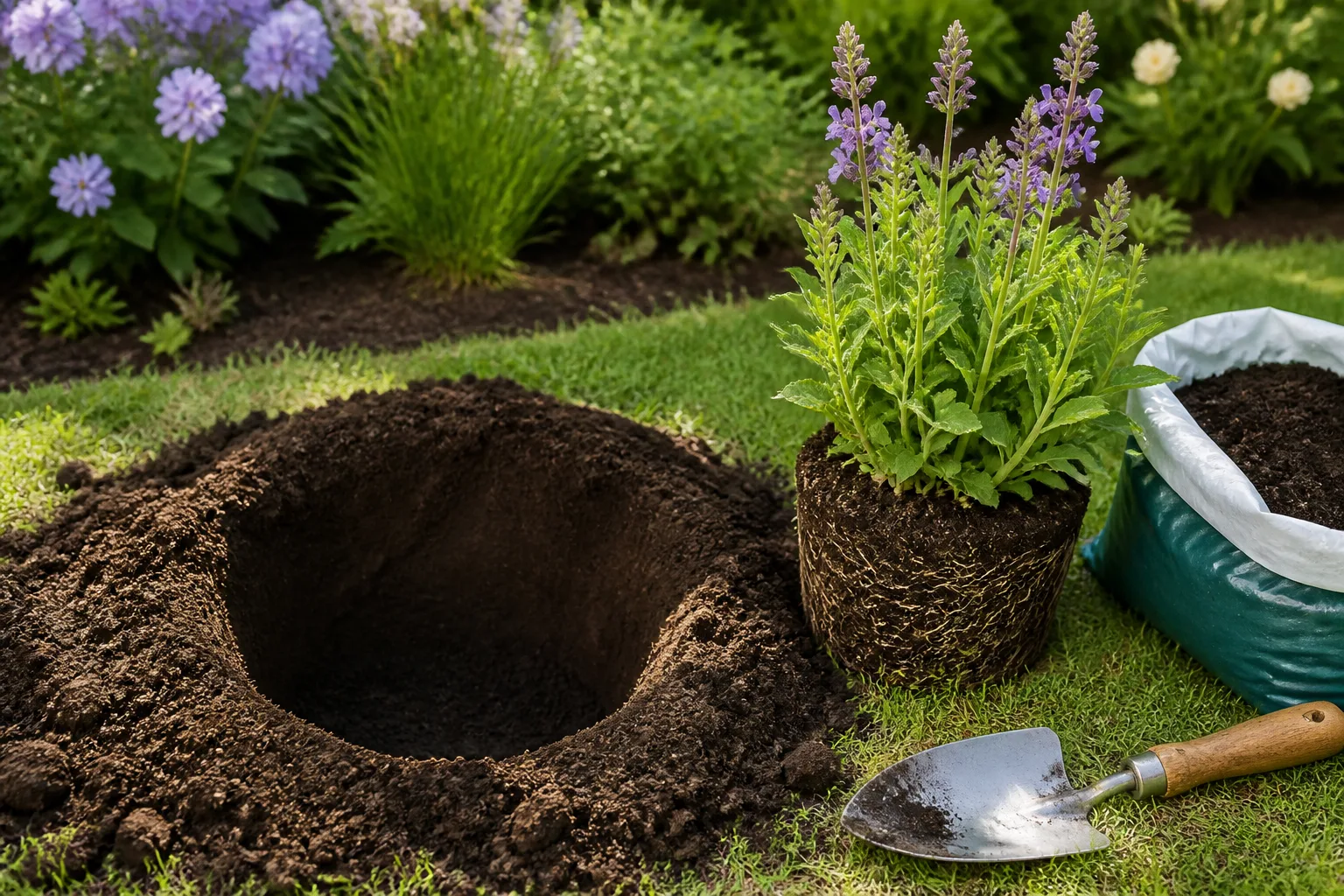
Improve soil broadly rather than filling each planting hole with a pocket of rich compost. Break up compacted ground across the bed, remove perennial weeds, and mix in finished organic matter where the soil needs better structure. Do not create a soft, wet bathtub around a root ball by adding a large amount of fine amendment to one hole inside heavy clay.
Lay plants out in their containers before digging. Use the mature width on the label as your spacing anchor, leaving enough room for the clump or groundcover to expand. The RHS guidance on spacing notes that overcrowding creates competition for light and water; planting slightly closer than mature spread can help a border knit together, but only if you accept that future division may be needed.
Choose plants from three stock types
The word “plant” hides three different October jobs. A container-grown perennial gives you the quickest visual result and usually the broadest planting window. A division is a piece of an established clump with roots and a crown; it is economical, but it must be large enough and have a viable growing point. Seed is the slowest option for a spring display, though it can produce many plants and preserve useful genetic diversity in a naturalized garden.
For a container plant, slide it out before planting and inspect the root ball. If roots are circling tightly, loosen a few at the outer edge so they can move into the bed. Set the plant at the same depth it grew in its pot unless the species has a special crown or rhizome requirement, then water thoroughly to settle soil around the roots.
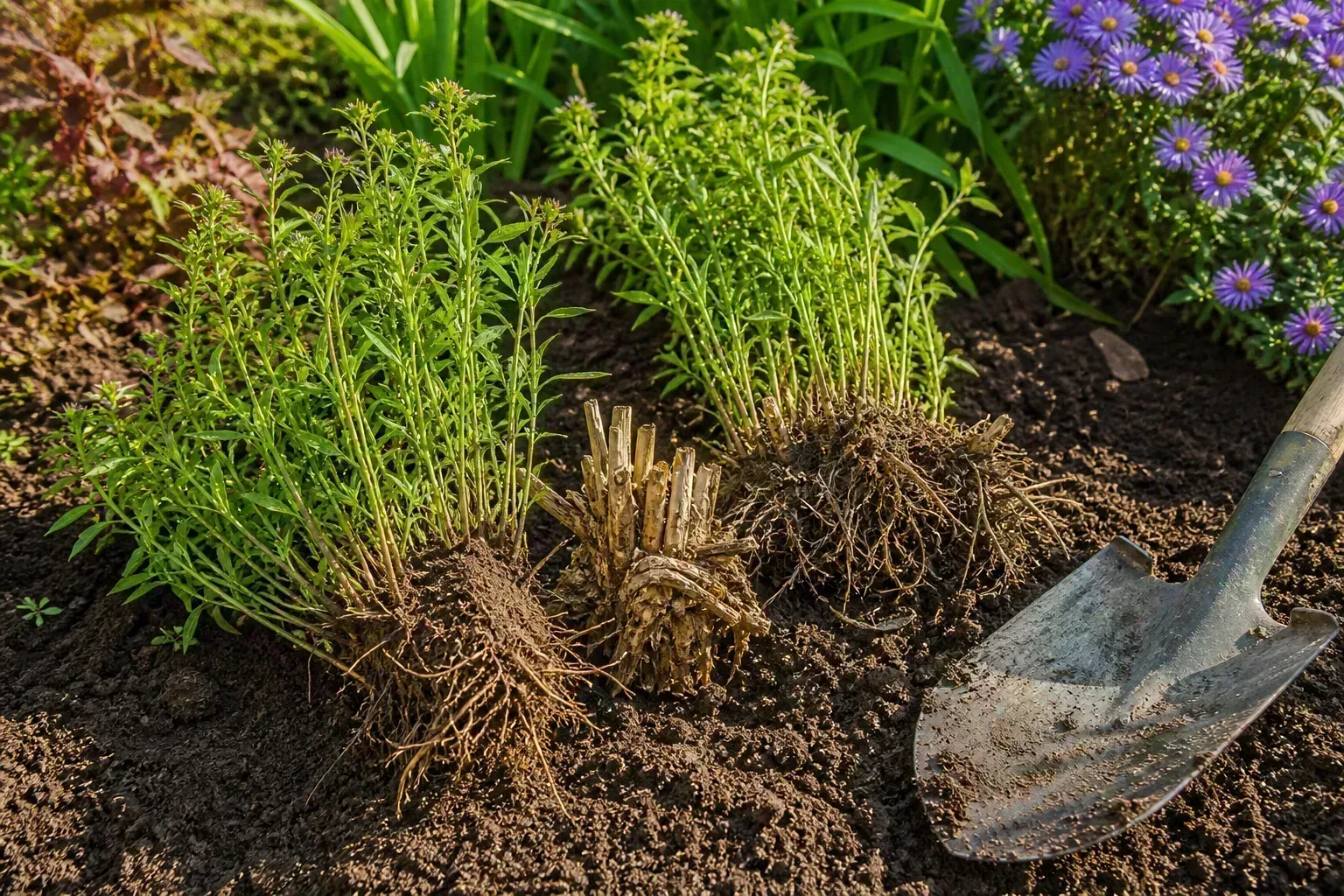
For a division, work with a healthy dormant clump and keep roots from drying while you replant. Divide only where each piece has roots attached to a crown or eye. The University of Minnesota Extension’s division guidance is a useful reminder that timing and plant-specific recovery matter; not every perennial should be hacked into tiny pieces simply because a shovel is available.
Seeds need the most patience. Some can be sown outdoors in fall so natural winter conditions help break dormancy, but germination and flowering depend on the species and the seed source. Label the bed, keep competing weeds out, and expect many seed-grown perennials to make leaves first and flowers later.
The seven perennials to plant in October
Use this quick map before reading the individual profiles. Bloom windows are approximate because latitude, elevation, winter severity, cultivar, and spring weather can move flowering by weeks.
| Perennial | Best October site | Typical spring or seasonal bloom | Main trade-off |
|---|---|---|---|
| Creeping phlox | Full sun, sharp drainage | Late April to early May | Can thin in old centers |
| Columbine | Partial shade, moist rich soil | March to May | Self-seeds and fades in heat |
| Amsonia | Sun to part shade, moist soil | April into late spring | Can flop in too much shade |
| Bee balm | Full sun, moist well-drained soil | Usually late spring to summer | Not an earliest-spring bloomer |
| Virginia bluebells | Shade, moist humus-rich soil | March to May | Goes dormant in midsummer |
| Golden Alexander | Sun to part shade, adaptable moisture | April to May | Can naturalize beyond a formal edge |
| Foamflower | Cool shade, moist humus-rich soil | April to June | Dislikes drought |
1. Creeping phlox for a sunny, well-drained edge
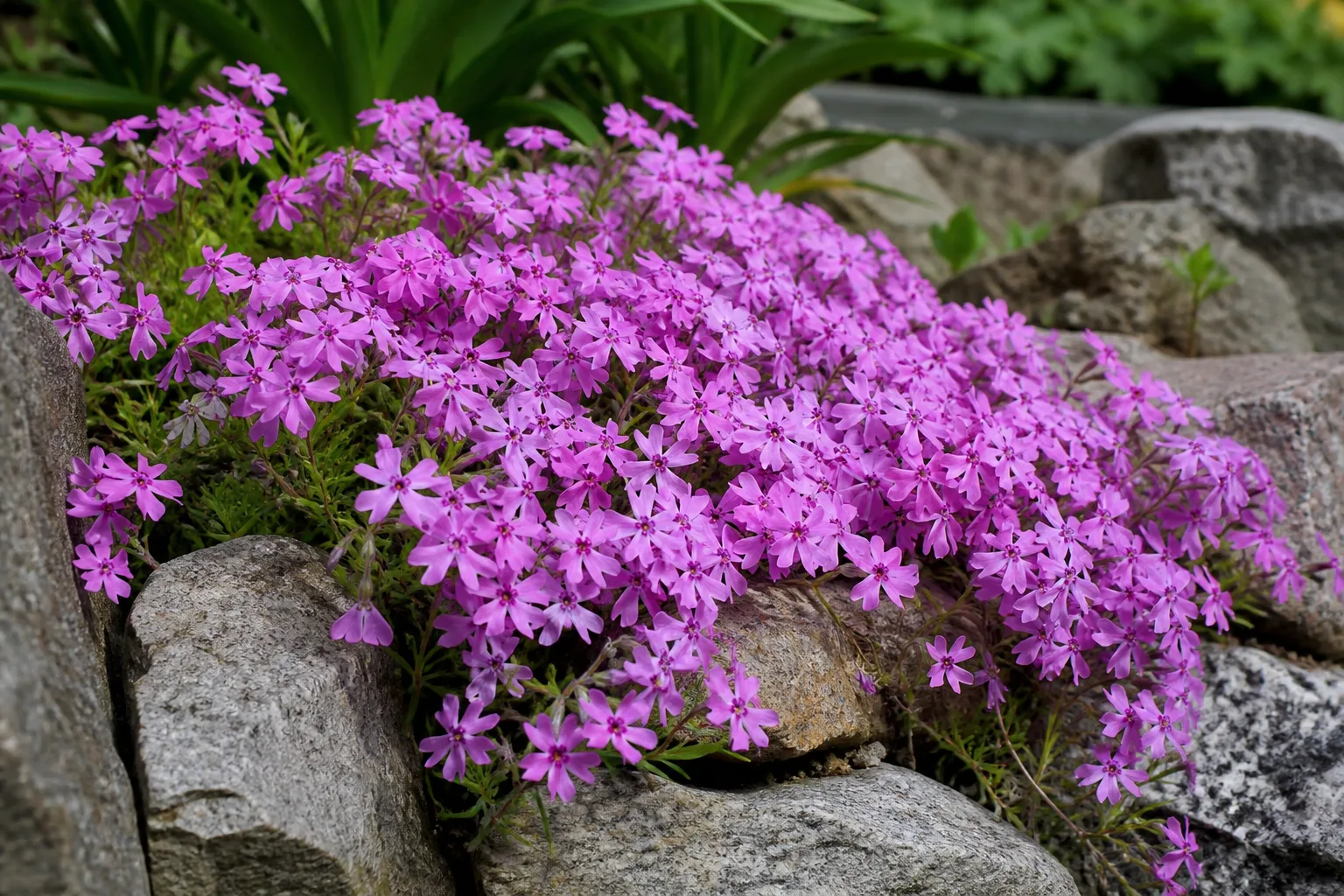
Creeping phlox (Phlox subulata) is the low, spreading choice for the front of a border, a rock garden, a slope, or the top of a low wall. It forms a dense mat only a few inches high and can spread two to three feet wide. In late April and early May, flowers in pink, lavender, red-purple, or white can cover the mat so thoroughly that the foliage nearly disappears.
Give it full sun and soil that drains freely. It tolerates heat and dry conditions better than many other phlox species once established, but a newly planted clump still needs consistent moisture while roots move outward. The NC State Extension profile for moss phlox describes its native relationship with rocky and sandy habitats and notes that older plantings can thin in the center as new growth travels outward.
October is a good time to plant a container clump or divide a vigorous mat, provided you do not bury the stems or smother the foliage with a deep blanket of wet mulch. Set the root mass level with the surrounding soil, water deeply, and use a light surface mulch around—not over—the plant. Choose it when you want the earliest, most concentrated color in a sunny bed; skip it for a low, poorly drained spot where the crown will stay wet.
2. Columbine for early color in partial shade
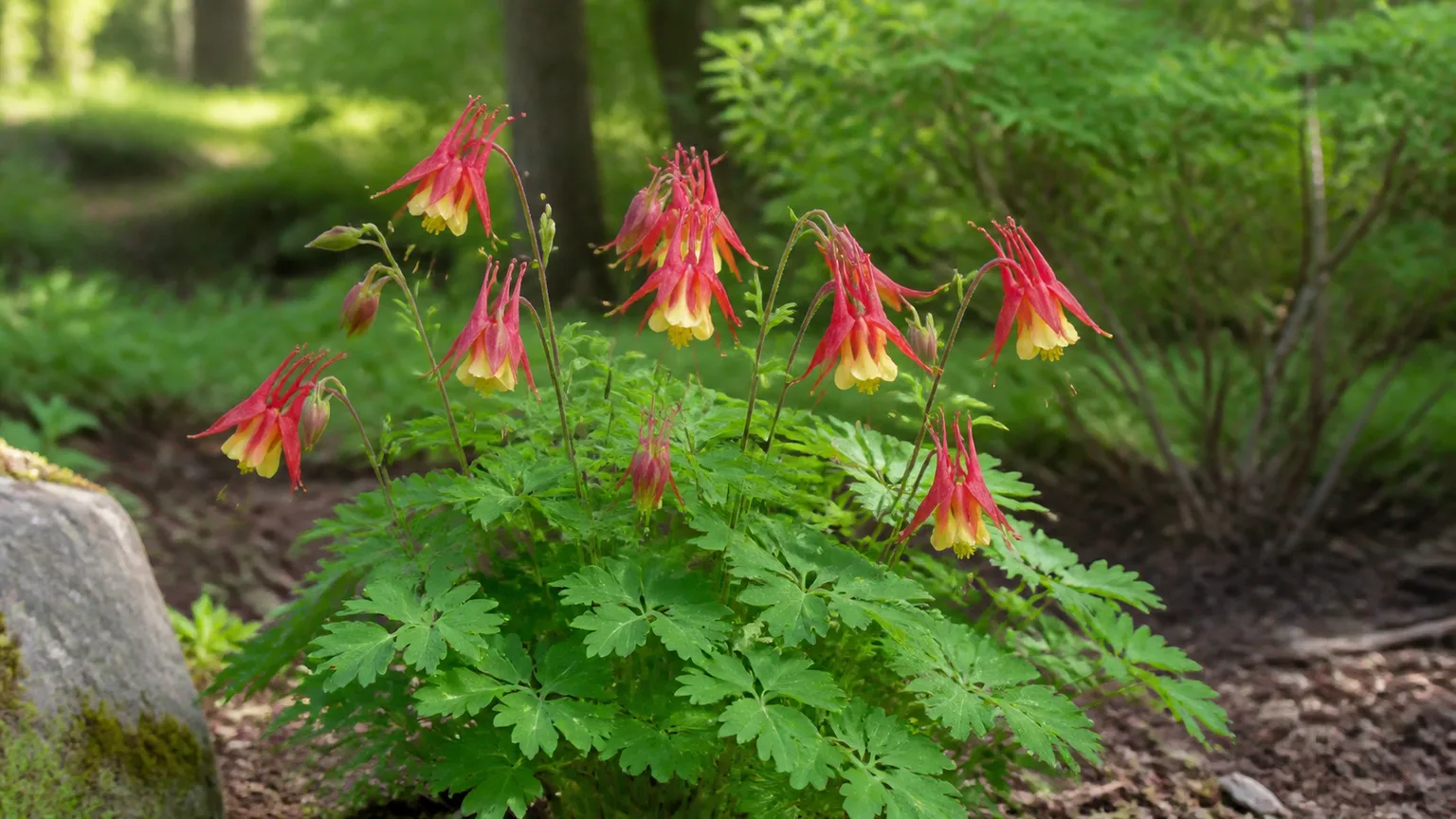
Eastern columbine (Aquilegia canadensis) earns its place in an October planting because its nodding, red-and-yellow, spurred flowers arrive early, often from March through May. It grows roughly one to three feet tall and about one to one and a half feet wide, making it useful between woodland shrubs and lower groundcovers. The tubular flowers are shaped for long-tongued pollinators and can draw hummingbirds, bumblebees, and butterflies.
Site it in partial shade with organically rich, moist soil. It tolerates more sun when moisture is dependable, but hot, exposed conditions shorten the show and can make the foliage look tired by midsummer. NC State Extension’s eastern columbine profile also notes that the plant can self-seed and that new seedlings commonly wait until their second year to bloom.
Use a container plant or a mature division for the quickest spring presence. Fall-sown seed is a different project: it is an inexpensive way to naturalize a patch, but it is not the right choice if you need a guaranteed flower display next spring. Leave a few seedheads where you want more plants, and remove them where you want a tightly controlled design.
3. Amsonia for blue flowers and long-term structure
Eastern bluestar (Amsonia tabernaemontana) is a sturdy clumping perennial for gardeners who want more than a short burst of flowers. It forms a two- to three-foot mound, produces clusters of small light-blue star-shaped flowers in spring, and can finish the season with yellow fall foliage. The narrow leaves and upright stems also give a border structure after the flowers have passed.
Plant it in full sun to partial shade in moist, well-drained soil. Sun gives the stems a more compact shape; too much shade can make them flop and may require support. It is a stronger choice for a rain garden edge or average-moisture border than for bone-dry gravel, though established plants handle occasional dry periods.
October is particularly useful for planting a dormant container clump or a division. The NC State Extension profile for eastern bluestar notes that divisions can be made in spring or fall when the plant is dormant, while seed-grown plants generally flower in their second year. Choose it for a dependable blue bridge between early spring flowers and the fuller summer border; do not judge it as a fast, one-season filler.
4. Bee balm for a pollinator-rich late-season handoff
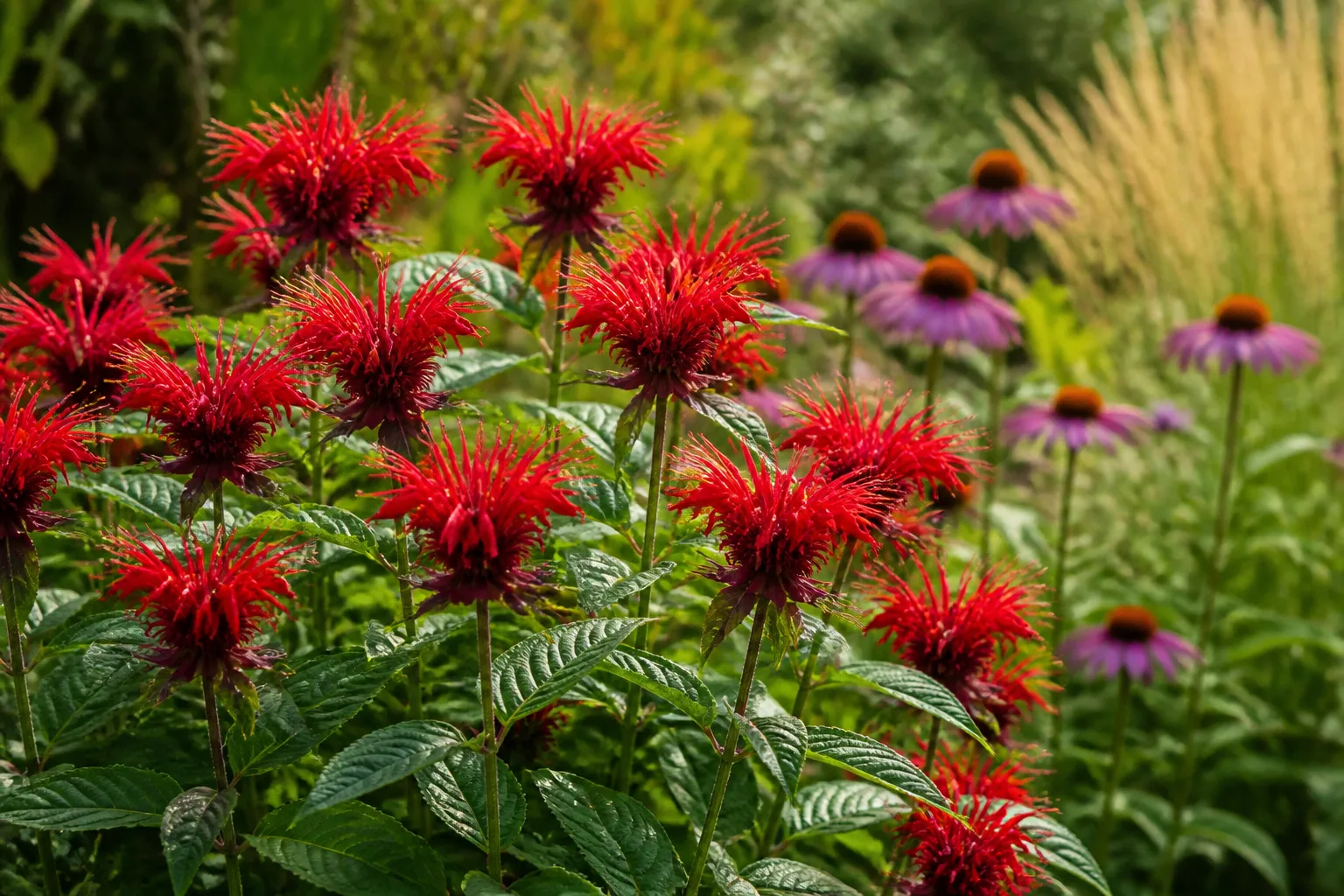
Scarlet bee balm (Monarda didyma) is the plant on this list that needs the clearest expectation-setting. Its scarlet, tubular flowers are excellent for bees, butterflies, and hummingbirds, but the main show is generally late spring through summer rather than the first weeks of spring. That makes it valuable in an October bed because it takes over after columbine, bluebells, and phlox, not because it is the earliest bloomer.
Give bee balm full sun and moist, well-drained soil. It can reach two to four feet tall and spread by underground stolons, so place it where a broad clump is welcome or where you are willing to divide it. Air movement matters: the plant is susceptible to powdery mildew and rust, and wetting the foliage repeatedly with overhead irrigation makes the problem easier to trigger.
The NC State Extension bee balm profile recommends a moist site and notes that dead hollow stems provide nesting material for native bees. Instead of cutting every stem to the ground in autumn, leave some standing through winter unless disease cleanup requires removal, then trim and clear affected material appropriately. Plant a healthy container or division in October, but choose another perennial if your only goal is April flowers.
5. Virginia bluebells for a moist woodland garden
Virginia bluebells (Mertensia virginica) are made for the soft light beneath deciduous trees. Pink buds open to pendulous blue, slightly fragrant, bell-shaped flowers from March to May, usually for about three weeks. The plants can reach about two feet tall, then retreat into dormancy by midsummer.
Choose a moist, humus-rich bed in partial to deep shade. This is not the perennial for a hot, dry foundation strip or a sunny raised bed that loses water quickly. The NC State Extension profile for Virginia bluebells describes its natural habitat as nutrient-rich, moist soils in floodplain forests and thickets, which is a useful clue to its garden preferences.
Plant dormant roots, divisions, or well-rooted containers in October, keeping the crown at the soil surface and watering the bed before the ground freezes. Plan the surrounding planting at the same time. Bluebells leave an open space after summer dormancy, so combine them with a later-emerging fern, hosta, sedge, or other shade plant if you want the bed to remain visually full.
6. Golden Alexander for a sunny native planting
Golden Alexander (Zizia aurea) brings flat-topped clusters of tiny yellow flowers to a spring border, meadow edge, rain garden, or naturalized planting. It usually grows one to two feet tall and wide, handles full sun to partial shade, and can tolerate both moist conditions and drier summer soil once established. The foliage is useful before and after bloom, while the plant’s flowers attract bees and butterflies.
This is a practical October choice when you want a native perennial that bridges a formal border and a looser wildlife planting. The NC State Extension profile for golden Alexanders notes that it can grow in wet soils yet tolerate dry summer conditions, and that it serves as a larval host for the black swallowtail butterfly.
Give it enough room to form its clump, and do not confuse “naturalizes” with “invasive.” A plant that reseeds or slowly broadens can be welcome in a meadow and annoying in a rigid geometric bed. Use a container plant for a predictable first-year footprint, or sow seed in a prepared naturalized area if you are comfortable waiting for the planting to mature.
7. Foamflower for cool, moist shade
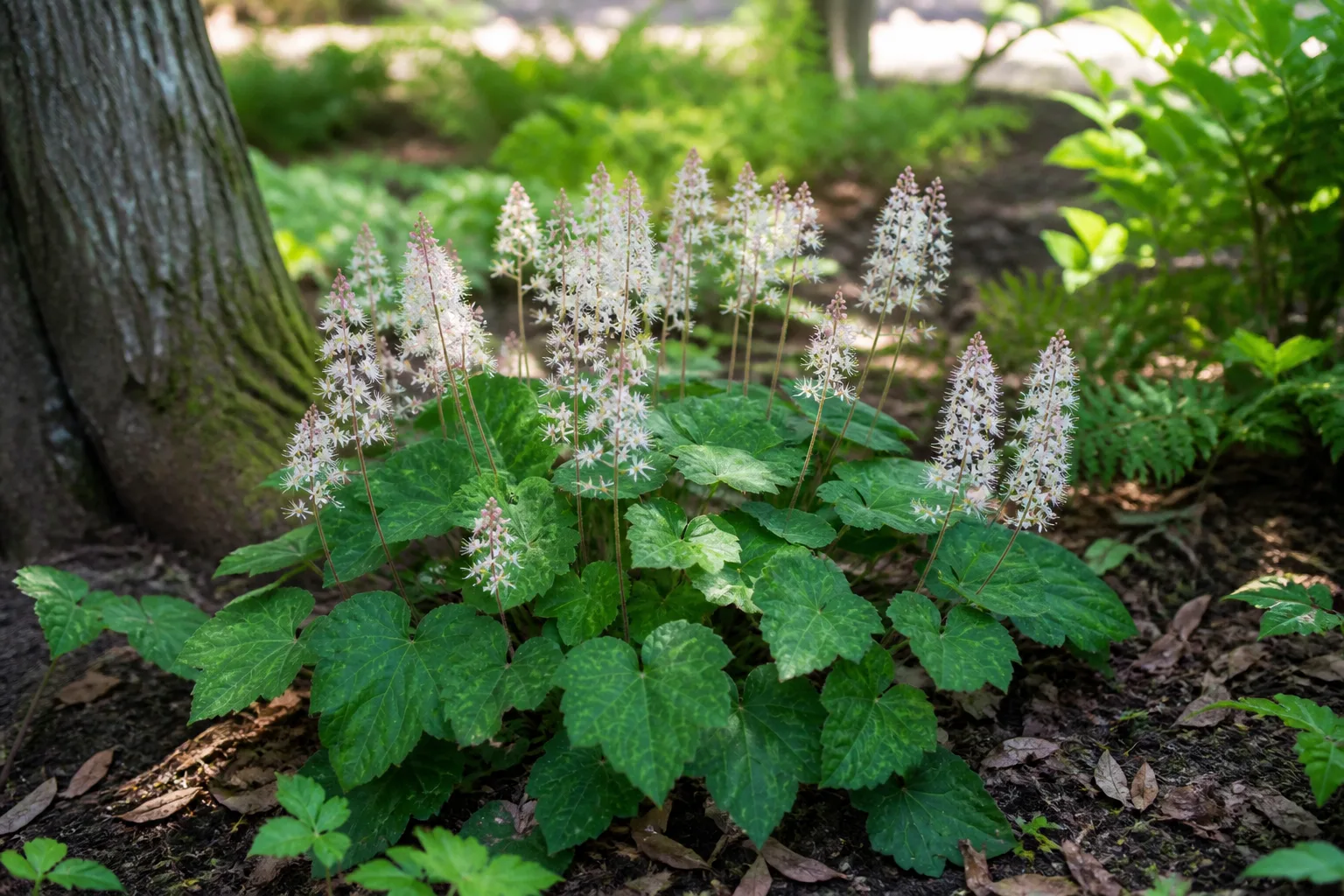
Foamflower (Tiarella cordifolia) is the low, leafy option for a shady bed where the soil stays evenly moist. Dainty white-to-pink flower spikes rise above the foliage in spring, often from April into June, and the plant can spread gradually as a groundcover. It stays around five inches to one foot tall and about one to one and a half feet wide, so it works at the front of a woodland border or beneath taller spring plants.
Do not put foamflower in the same dry shade where a tough groundcover barely survives. It wants humus-rich, well-drained soil that holds moisture without becoming stagnant. NC State Extension’s foamflower profile identifies division and seed as propagation options, but also describes the plant’s need for shade and moisture and warns that black vine weevil can occasionally be destructive.
October is a good time to settle a division or container into a prepared woodland bed. Keep mulch shallow enough that the crown remains visible, and check the plant during dry autumn weather. Choose a cultivar by mature spread and winter foliage if those traits matter to your design; some selections hold bronzy leaves longer than the straight species.
Match the plants to your garden instead of forcing the list
The easiest way to use these seven is to group them by conditions, then stagger their bloom and foliage. Do not plant a shade lover in a sunny bed because its flower color fits your plan, and do not solve poor drainage by adding a little more compost around a plant that needs air at its roots.
A sunny border with average or dry soil
Start with creeping phlox at the edge, then use amsonia farther back where its mound can develop. Golden Alexander fits the middle ground when the soil is average to moist and you like a more natural look. Bee balm can occupy the rear of the bed as the later-season handoff, but give it room and good air circulation.
This combination works best when the bed drains after rain and receives at least six hours of direct sun. Water all four plants while they establish, even the ones that tolerate drought later. The phrase “drought tolerant” describes a mature root system, not a fresh transplant with roots still circling a nursery pot.
A moist woodland edge or shady bed
Use Virginia bluebells and columbine for the early display, then foamflower to knit the ground layer together after the taller flowers fade. Their different heights create a more natural woodland rhythm: bluebells rise and disappear, columbine adds airy flowers, and foamflower keeps foliage close to the soil.
This group needs moisture without standing water. Improve the bed with organic matter across the planting area, protect the soil surface with a restrained mulch layer, and pair the summer-dormant bluebells with plants that emerge later. The apparent gap is part of the plant’s life cycle, not proof that it has died.
After planting, water and mulch for winter
Water every new perennial thoroughly after planting, even if rain is expected. The first watering removes air pockets and pulls soil into contact with the roots. After that, check the bed during dry stretches and water deeply enough to moisten the root zone; do not keep the surface constantly soggy with small daily sprinkles.
Continue watering until the ground begins to freeze, adjusting for rainfall and soil type. A new plant in sandy soil may need attention sooner than one in a moisture-retentive loam, while a plant in heavy clay may need no more water at all if rain has saturated the bed. The Trees.com fall garden guidance similarly emphasizes continued watering for new plantings and placing water at the roots rather than repeatedly wetting foliage.
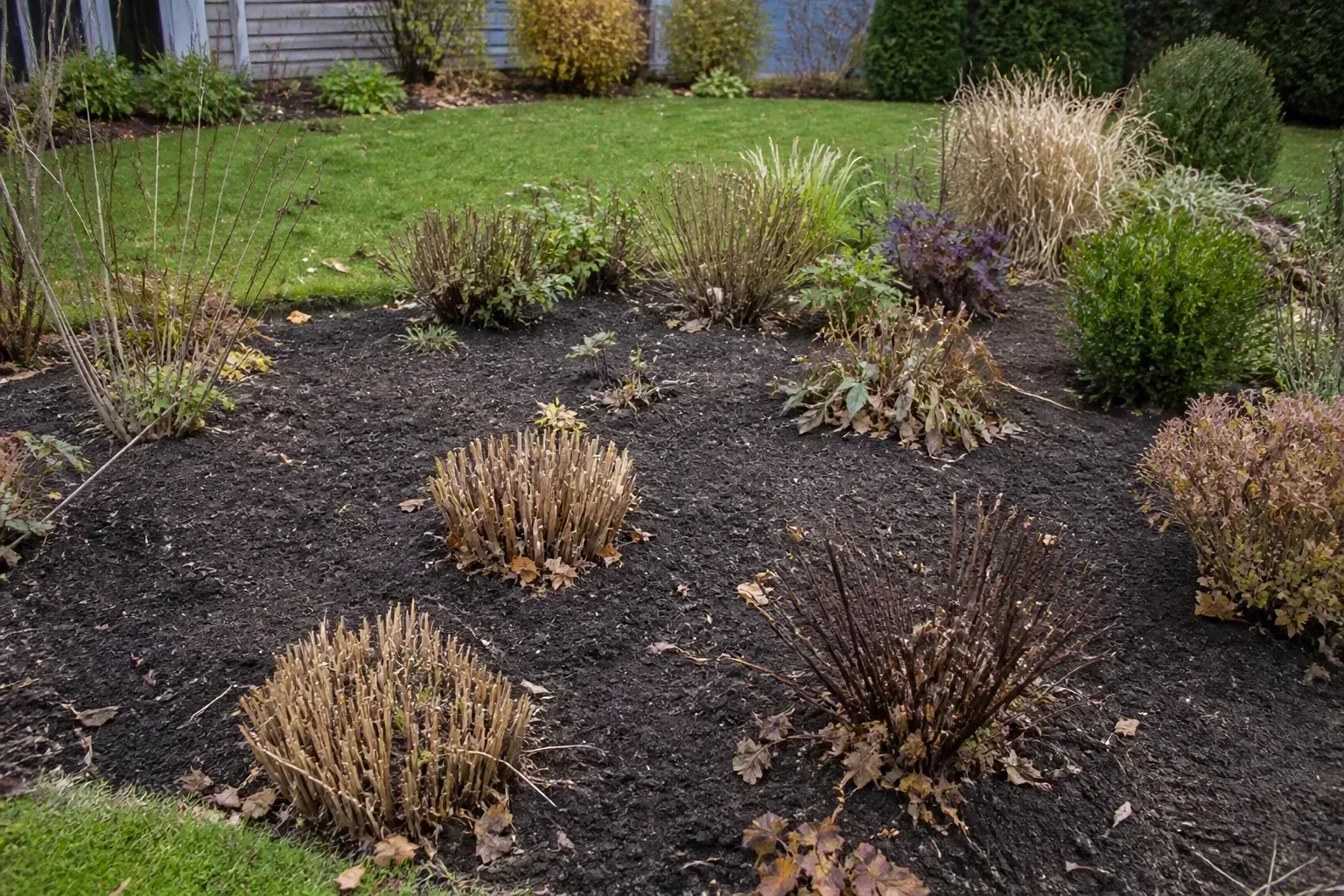
Add about 2 to 3 inches of organic mulch once the soil is cool, keeping it several inches away from crowns and stems. Mulch should moderate temperature and slow moisture loss, not bury the growing point or form a wet collar. The RHS planting advice recommends a 5–7 cm layer and a mulch-free gap around stems; that small gap is an easy way to reduce crown-rot risk.
Do not apply a heavy dose of nitrogen fertilizer to force autumn foliage. The new growth it stimulates may be soft and poorly timed for winter, while most well-prepared perennial beds do not need extra feeding immediately after planting. Let roots establish, then reassess growth and soil fertility in spring.
Common October mistakes that cost you spring flowers
Planting by date instead of frost window is the first mistake. October in a warm zone and October in a cold zone are not equivalent, and a late-November planting in a mild climate may be safer than an early-October planting before a sudden heat wave in a colder one. Use soil condition and the expected freeze as your real deadline.
Burying the crown is another common failure. Gardeners sometimes plant a perennial deeper to “protect” it, but the crown needs oxygen and the shoots need a clear path upward. Follow the nursery label, keep the crown at grade unless the plant’s instructions say otherwise, and settle soil with water rather than packing it down aggressively.
Treating every plant as full sun produces weak, short-lived shade plants and scorched foliage. Columbine, Virginia bluebells, and foamflower each tolerate or prefer lower light for a reason. Conversely, creeping phlox and bee balm need enough sun and air movement to flower well and stay less prone to disease.
Skipping first-year watering is the mistake behind many “failed” fall plantings. Rain can be sporadic, roots may be shallow, and a drought-tolerant species has not earned that label in your bed yet. Check moisture under the mulch, water deeply when the root zone is drying, and stop only when seasonal conditions truly reduce demand.
Over-mulching and over-cleaning can both work against the garden. A deep mulch pile around a crown encourages rot, while cutting every hollow stem to the ground removes winter structure and potential nesting material. Keep diseased debris out, but let healthy stems stand where they provide habitat and shelter.
Conclusion
The best perennials to plant in October are the ones that fit your site and still have time to root before hard winter arrives. Creeping phlox and golden Alexander suit sunnier borders, amsonia adds structure, bee balm carries the display into summer, and columbine, Virginia bluebells, and foamflower make a moist shade garden feel intentional from early spring onward.
Prepare the bed first, plant at the correct crown level, water deeply, and mulch without covering the plant’s growing point. If the ground is frozen, waterlogged, or too close to a severe freeze, wait for spring. A smaller list planted in the right place will give you a better spring garden than seven mismatched plants rushed into the ground on October’s last workable afternoon.



