Essential Oils That Repel Roaches Naturally
Five essential oils can repel cockroaches naturally—but only if you use the right ones, dilute them safely, and pair scent barriers with real IPM steps.
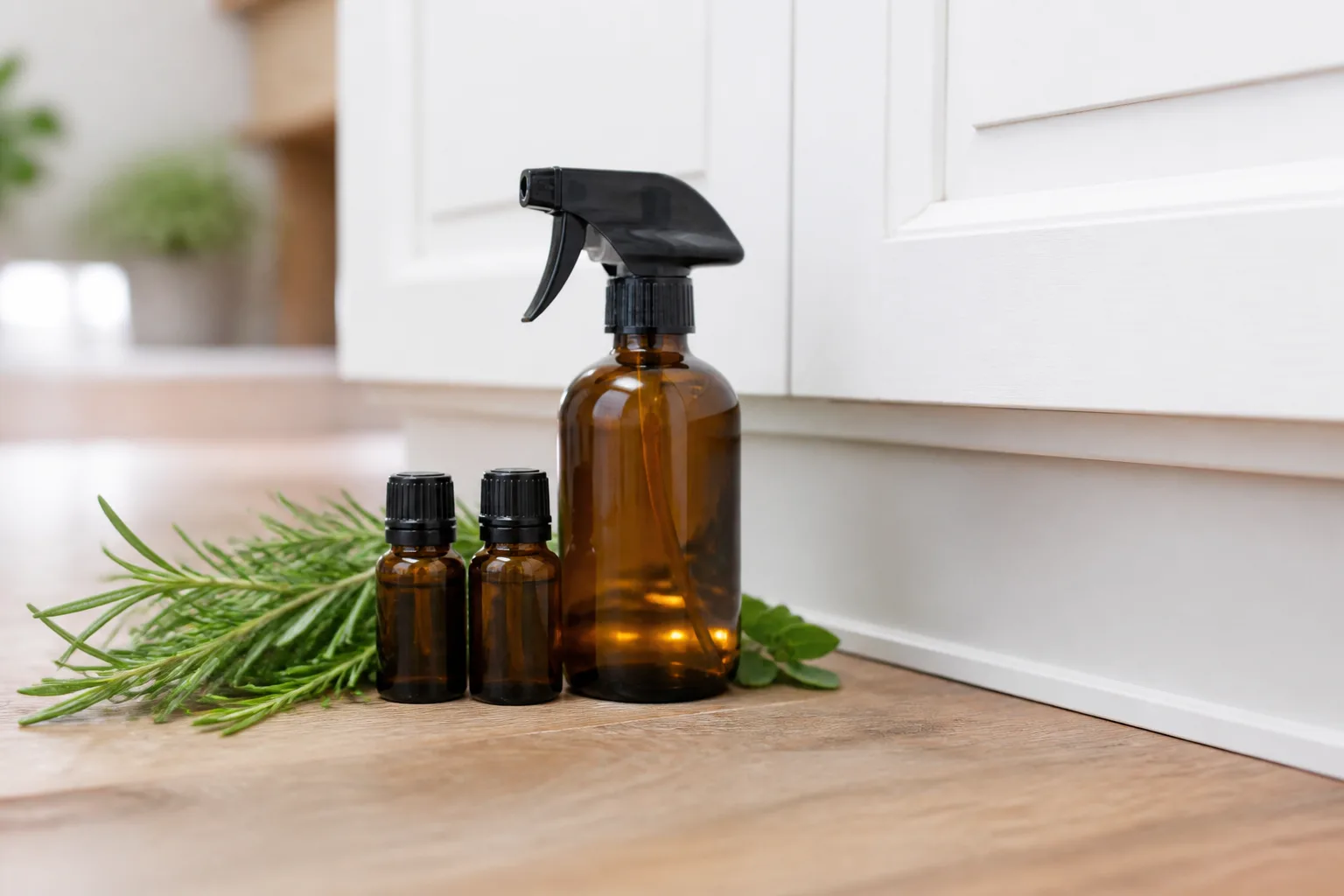
If you want a fast answer, start with rosemary or oregano essential oil diluted in water and applied as a narrow scent barrier along entry points—not as a room fogger. A 2016 laboratory study of brown-banded cockroaches found that rosemary oil produced complete mortality in contact tests, while oregano oil delivered strong repellency that persisted for about a week on treated surfaces. Mint, eucalyptus, and yarrow also showed useful effects, though not equally.
That is encouraging news if you are trying to avoid broadcast sprays. It is also easy to misread. Lab contact tests use controlled doses on a single species. Your kitchen has competing food odors, humidity, pets, and roaches hiding inside motors and wall voids where mist never reaches. Essential oils are best understood as short- to medium-term odor barriers and supplemental deterrents inside a broader integrated pest management (IPM) plan—not as a one-bottle elimination strategy.
The Honest Answer: Oils Repel Surfaces Better Than Infestations
Cockroaches navigate by touch, moisture gradients, and chemical cues. Strong volatile plant oils can disrupt those cues, making a treated baseboard or cabinet corner less attractive. Some oils also carry compounds that are toxic when roaches absorb enough through their cuticle or grooming behavior. In a home, the practical win is usually keeping roaches from crossing a treated lane long enough for you to clean, seal gaps, set monitors, and place bait without repelling foragers away from it.
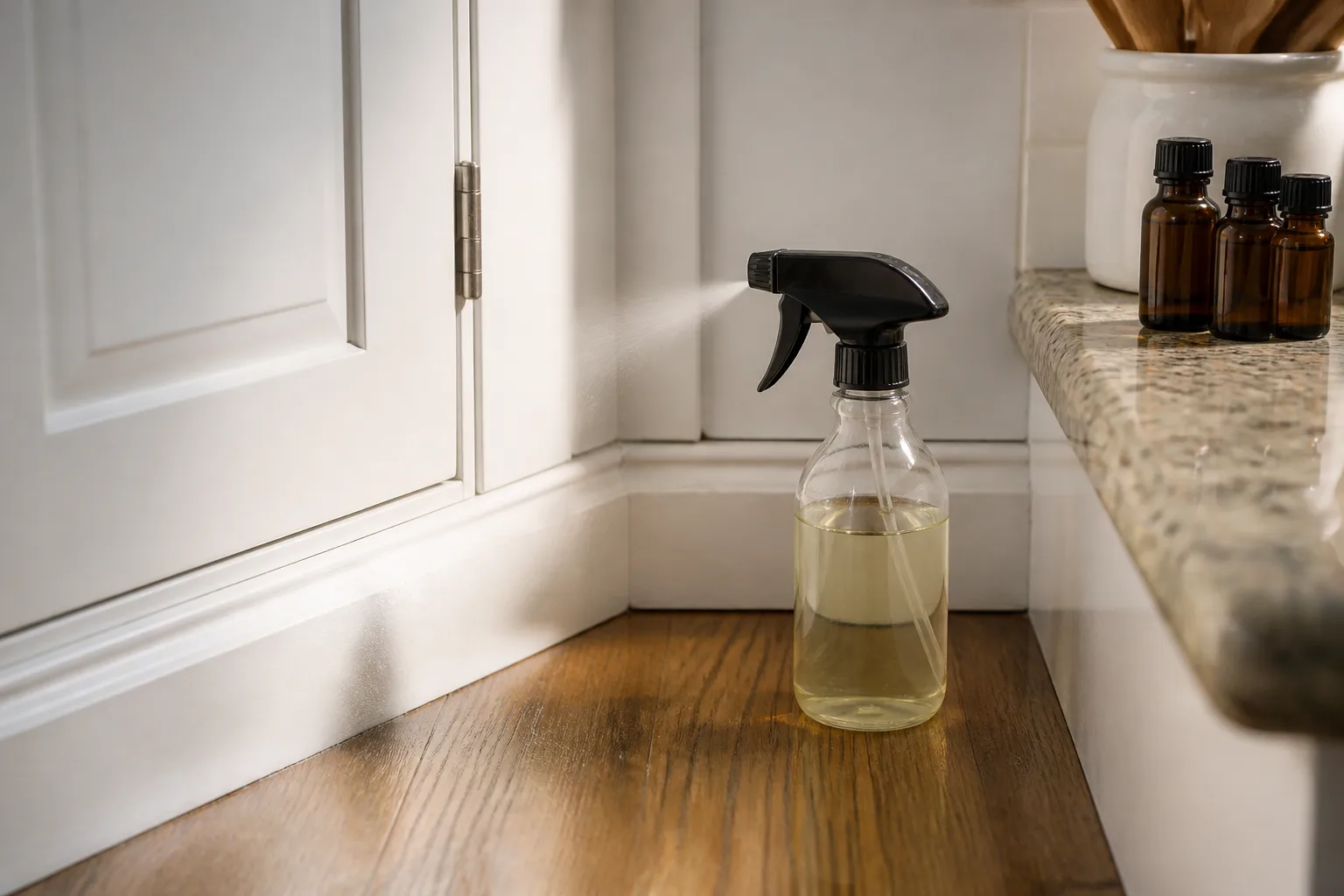
University of California IPM guidance is blunt: insecticide sprays alone do not eliminate cockroaches, and repellent sprays can disperse roaches to new areas without killing them (UC IPM cockroaches). Essential oil sprays fall into that same behavioral bucket unless you are using them with precision. Treat them like a scent fence at doors, pipe chases, and appliance edges, not like fumigation.
What Laboratory Studies Actually Measured
The most cited modern comparison for this exact five-oil list comes from Sharififard and colleagues, who tested rosemary, oregano, eucalyptus, mint, and yarrow essential oils against brown-banded cockroaches (Supella longipalpa), a species that hides in warm, dry, elevated harborages such as closet shelves, electronics, and furniture (PMC5186743). Their work measured contact toxicity and repellency under controlled conditions—not whole-apartment clearance.
Separate research on mint oils has shown both repellent and toxic effects on German and American cockroaches in laboratory settings (Auburn mint oil study). That matters because German cockroaches (Blattella germanica)—the small tan insects with two dark stripes behind the head—are the species most often behind heavy kitchen infestations (UC IPM). Oils that repel one species may perform differently on another. Use oils to support sanitation and baiting, then let sticky monitors tell you whether activity is dropping.
How Essential Oils Affect Cockroaches
Plant essential oils are concentrated hydrophobic extracts rich in terpenes and phenols. For cockroaches, those molecules can interfere with nerve signaling, block respiratory openings, and damage the waxy cuticle when exposure is high enough. In homeowner language, that translates to three separate ideas people often mash together:
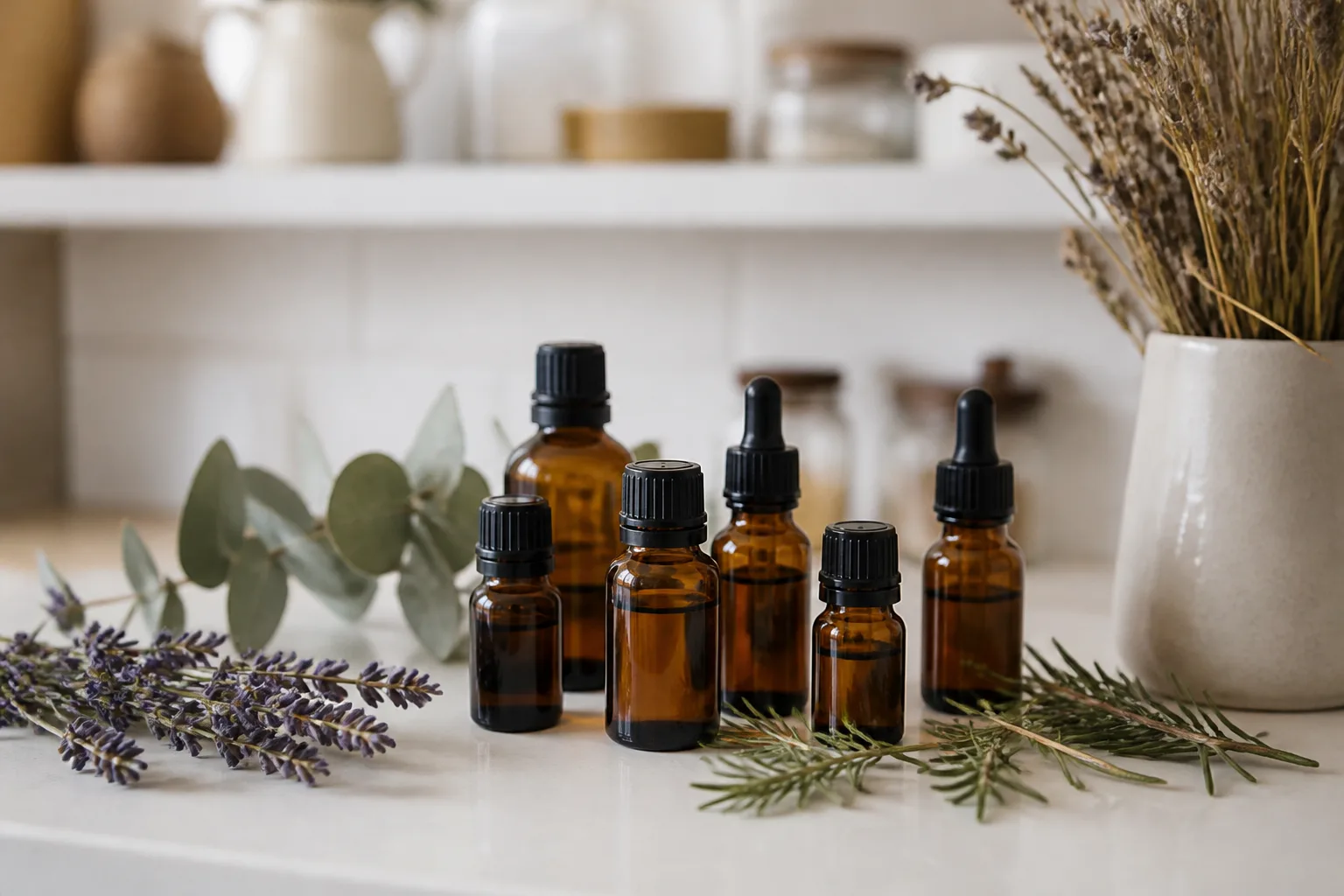
Repellency means roaches avoid treated surfaces. Toxicity means exposed roaches die if the dose and contact time are sufficient. Residual effect means the odor or active compounds remain detectable after application. Oregano stood out for residual repellency in the brown-banded study; rosemary stood out for mortality; eucalyptus and mint sat in the useful middle; yarrow was the mildest of the five but still worth blending.
Repellency, Mortality, and Residual Odor
A spray that smells strong to you is not automatically lethal to roaches. Kitchen air currents, grease films, and daily cleaning strip volatile compounds quickly. Heat and humidity accelerate loss. That is why weekly refresh is a reasonable default for oil barriers in active areas, even though oregano showed longer repellency in a lab dish.
There is another behavioral trap: repellency without kill can push roaches from the stove gap you can see into a wall void you cannot. If you already placed gel bait, a peppermint cloud around the bait station can reduce bait uptake—the opposite of what you want. Apply oils to perimeter barriers and entry points, not around bait placements.
Rosemary Oil: The Strongest Lab Performer
Rosemary essential oil is the headline oil from the brown-banded cockroach study: researchers reported complete mortality in their contact evaluations, even at lower test concentrations (PMC5186743). Rosemary’s sharp, camphor-like profile comes largely from 1,8-cineole and related monoterpenes—compounds implicated in insect neurotoxicity in multiple arthropod studies.
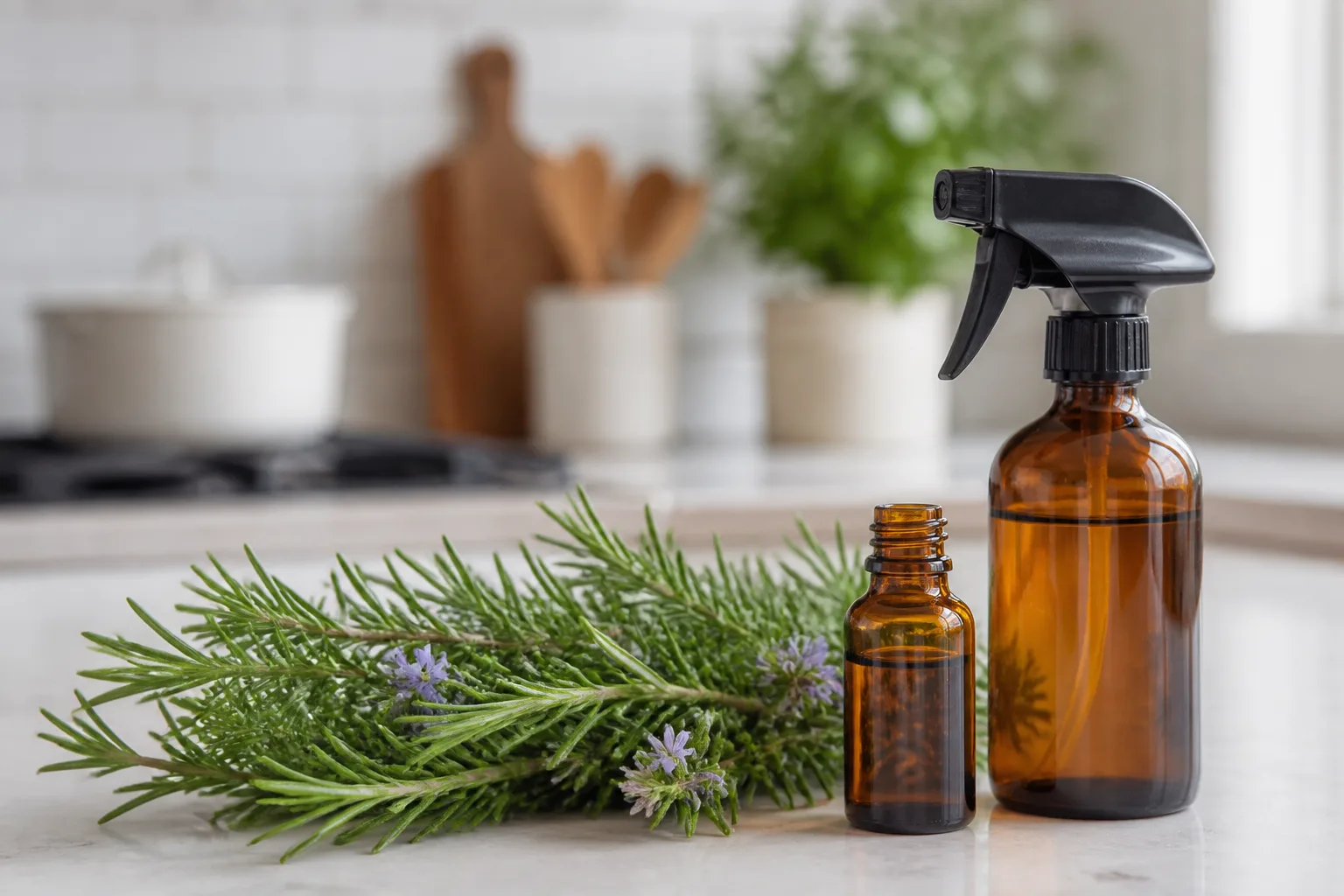
In the kitchen, rosemary is attractive because it smells culinary, not chemical. Fresh rosemary sprigs in a jar may add a light deterrent near a windowsill, but cut stems release far less oil than a labeled essential oil product. For a real barrier, use the oil—properly diluted.
Why Rosemary Ranks First in Contact Studies
Contact studies apply known quantities directly to insects. Your spray bottle delivers an unknown dose across a porous surface. Still, rosemary is a rational first test oil if you want both repellent odor and a better chance of killing stragglers that linger on treated thresholds. It is not a substitute for vacuuming egg cases or fixing a drip under the sink.
Pair rosemary with sanitation first: wipe grease behind the range, dry the dish rack tray, and store pet food in sealed bins. Oils reward clean, dry application sites.
How to Apply Rosemary Oil Indoors
Mix 10–15 drops rosemary essential oil per 8 ounces (240 mL) of water in a labeled spray bottle. Add a few drops of liquid dish soap as a dispersant so oil and water combine briefly; shake before each use. Mist door thresholds, window sash gaps, the garage-to-house door sweep, and the base of pipe penetrations—not countertops, cutting boards, or pet bowls.
Lightly wipe excess so surfaces are not slick. Reapply after mopping or every 5–7 days in high-traffic lanes. If you also grow rosemary, placement of potted plants near entry doors can add a mild secondary cue, but potted herbs alone rarely match bottled oil concentration.
Oregano Oil: Longest-Lasting Repellent in Research
Oregano essential oil brings a sharp, spicy scent from phenols such as carvacrol and thymol—the same family of compounds that make oregano aggressive against many insects. In the brown-banded cockroach study, oregano produced strong repellency with residual effect for about a week on treated substrates (PMC5186743).
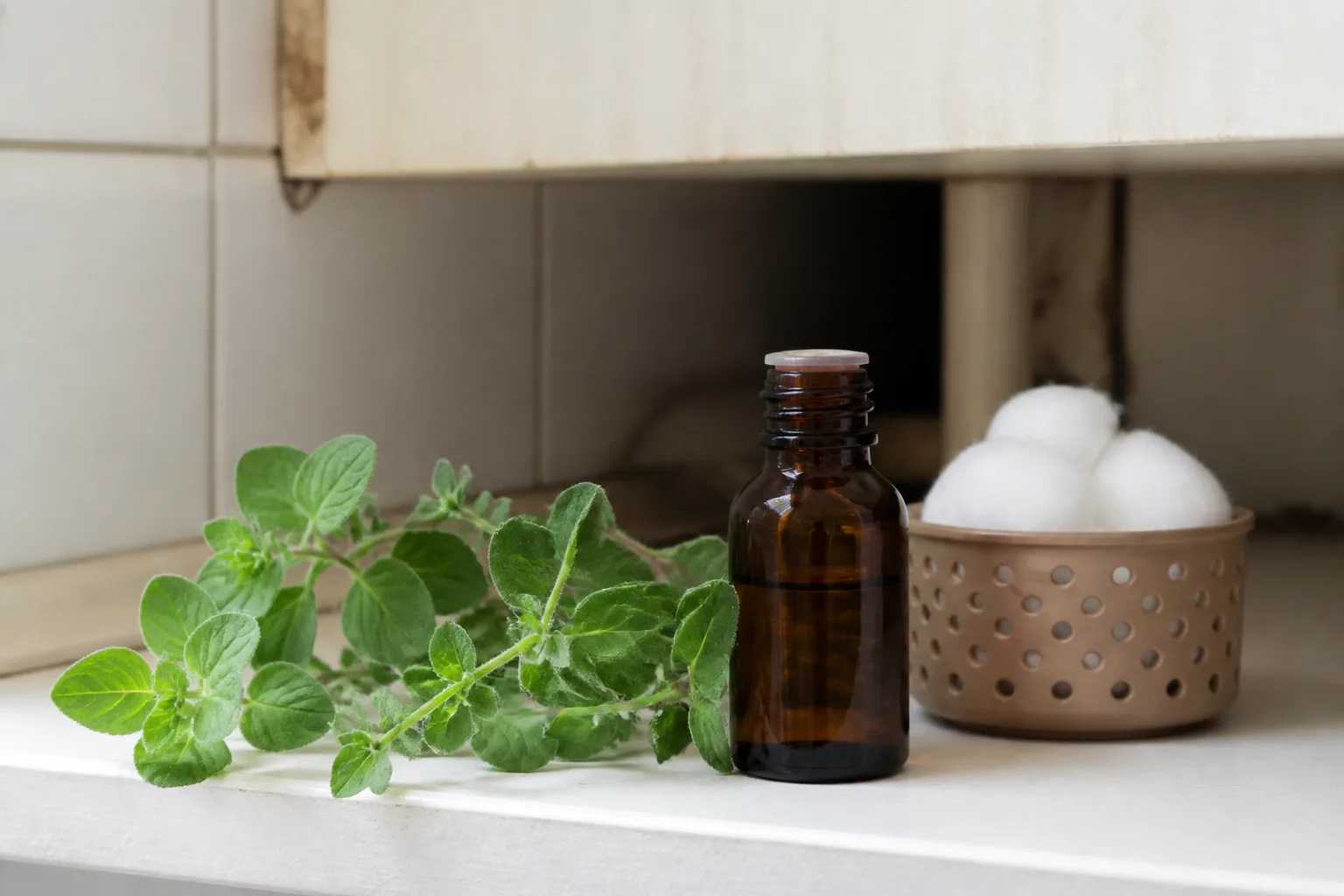
That residual window is the best reason to choose oregano for cotton-ball or cardboard-tab barriers tucked into non-food voids: the back corner of a broom closet, the garage shelf above stored paint cans, or the void behind a utility panel you cannot seal yet.
For application, use the same 10–15 drops per 8 ounces water dilution, or saturate a cotton ball with 2–3 drops undiluted oil placed inside a pierced film canister so pets cannot reach it. Replace cotton barriers weekly or when the scent fades. Oregano is potent—ventilate the room and wash hands after handling.
Mint and Peppermint Oil: Sharp Scent Barriers
The brown-banded study tested mint oil broadly; most homeowners reach for peppermint or spearmint because they are easy to find. Mint’s menthol profile irritates insect chemoreceptors and has shown toxic effects on German and American cockroaches in separate laboratory work (mint oil research).
Mint is excellent for entry-point repulsion—door sweeps, trash-bin lids, and the gap under the dishwasher toe kick—because the scent is familiar and masking kitchen odors is rarely a downside. It is a poor choice to fog the entire apartment if someone in the household has asthma, migraines, or fragrance sensitivity.
Growing peppermint in pots near a patio door can add a living barrier outdoors, but mint spreads aggressively in garden beds; containers are smarter. For indoor roach work, see our broader guide on peppermint oil and bugs for dilution patterns that differ slightly by pest.
Eucalyptus Oil: Moderate Mortality, Useful Repellency
Eucalyptus essential oil sits between rosemary’s mortality and yarrow’s mildness in the brown-banded data set: lower mortality than rosemary and oregano, but still meaningful repellent activity (PMC5186743). Eucalyptus is rich in 1,8-cineole, overlapping chemically with rosemary—useful if you dislike oregano’s heat but want more punch than yarrow.
Eucalyptus pairs well with cleaning: a few drops added to floor rinse water along a laundry-room threshold can leave a residual cue. Do not use this trick on food-prep floors or anywhere toddlers crawl. Never combine essential oils with bleach or ammonia cleaners; chemical conflicts create real respiratory hazards unrelated to roaches.
Pet note: eucalyptus is among the oils flagged for toxicity risk to cats and dogs when concentrated (ASPCA eucalyptus guidance). Treat eucalyptus barriers as off-limits zones for pets until dry, and store bottles in locked cabinets.
Yarrow Oil: The Supporting Blend Oil
Yarrow essential oil was the least potent of the five tested oils against brown-banded cockroaches, but it still showed repellent activity (PMC5186743). Think of yarrow as a blending oil, not your solo first line.
Mix 3 drops yarrow with 7 drops rosemary or oregano per 8 ounces of water when you want a softer herbal scent profile in a bedroom-adjacent hallway. Yarrow alone is unlikely to hold a heavy infestation line; combined with stronger oils, it may improve coverage of different volatile compounds without doubling the oregano dose.
How to Mix and Apply Essential Oil Barriers Safely
A repeatable household recipe:
- Label a 16 oz spray bottle with date and contents.
- Add 1 cup water, 1–2 drops mild dish soap, and 15–20 total drops essential oil (single oil or blend).
- Shake vigorously; mist target zones until barely damp, not dripping.
- Open windows for 15 minutes after application.
For voids, use cotton balls in perforated containers rather than soaking baseboards. Oils stain unfinished wood and can soften some finishes; test a hidden spot first.
Where to treat:
- Door and window thresholds
- Pipe and cable entry plates
- Garage and mudroom transitions
- Trash-bin surrounds and recycling cubbies
- Exterior-facing wall penetrations in basements
Where not to treat:
- Countertops, dishes, or food storage
- Inside ovens, toasters, or appliance motors
- Around gel bait stations or boric acid dust lines
- Pet bedding, litter boxes, or fish-tank stands
Dilution Ratios, Placement, and Reapplication
Stronger is not better. Over-concentrated oils create slippery residues, irritate human airways, and increase pet risk without proportional roach kill in open air. The 10–20 drops per cup of water range is a common starting band cited in extension-style home IPM handouts and aligns with how most DIY barrier guides are structured.
Reapply on a 7-day calendar for kitchens and after any deep clean that removes the scent layer. If sticky monitors (see natural roach control) still catch multiple roaches weekly after three weeks of oil barriers plus sanitation, oils are not your bottleneck—harborage or population size is.
Pet, Child, and Air-Quality Cautions
Concentrated essential oils cause real poison-center calls every year—especially among curious toddlers and cats that groom treated surfaces (Poison Control essential oils). Cats lack certain liver enzymes that process phenols and terpenes efficiently; oregano, rosemary, and tea tree deserve extra caution in cat households.
Rules that keep families safer:
- Store oils child-locked, separate from food bottles.
- Never apply undiluted oil to skin, pet fur, or bedding.
- Keep children and pets out of the room until surfaces are dry.
- If someone swallows oil or develops breathing difficulty, call Poison Control (1-800-222-1222) immediately.
Essential oils sold for aromatherapy are not EPA-registered pesticides. Phrasing like “all-natural pesticide” on a blog does not create a legal safety net. Follow label directions on any commercial botanically based spray that actually carries pest-control registration.
When Essential Oils Are Not Enough
Essential oils lose quickly against:
- Established German cockroach populations with egg cases glued in appliance voids
- Multi-unit building infestations traveling along shared plumbing
- Heavy grease harborages that outcompete scent barriers
- Outdoor species (American or Oriental roaches) entering through structural gaps that need sealing, not misting
Call a professional if you see daytime roaches in multiple rooms, if monitors still fill after two to three weeks of IPM, or if you rent and neighboring units are untreated. Pros typically run targeted gel bait programs, not foggers.
Oils also cannot replace diatomaceous earth or boric acid in dry voids where roaches groom dust onto their bodies. Compare tools honestly: diatomaceous earth and roaches, baking soda bait limits, and why bleach is a poor roach strategy belong in the same decision tree.
Build a Complete Natural Roach Control Plan
Use this sequence instead of oil-only treatment:
- Inspect and identify. German roaches need kitchen-focused work; large reddish American roaches often point to drains or exterior entry (types of roaches).
- Sanitize and dry. Fix leaks, wipe grease, vacuum droppings and visible egg cases with a HEPA vacuum.
- Monitor. Sticky traps along walls map activity before and after treatment.
- Add scent barriers. Rosemary or oregano at entry lanes, refreshed weekly.
- Deploy killers where oils do not reach. Thin boric acid or food-grade DE in dry voids, gel bait in cracks—not on the same lane you just perfumed.
- Exclude. Seal pipe gaps, door sweeps, and window screens; reduce cardboard clutter.
Essential oils earn their keep at step 4—reducing crossings while baits and dusts work in hidden zones. Skipping straight to step 4 is why many homeowners smell mint, still see roaches, and assume natural control failed.
If you are also fighting ant trails in the same kitchen, read how essential oils for ants differ: ant trail disruption and roach harborages need different placement logic, and repellents near ant bait create the same interference problem.
Conclusion
Rosemary, oregano, mint, eucalyptus, and yarrow essential oils have genuine laboratory support as cockroach repellents—and rosemary and oregano in particular showed standout mortality or residual repellency against brown-banded cockroaches. Used as diluted barriers on entry points, refreshed weekly and kept away from bait stations, they are a sensible, pleasant-smelling layer in a natural IPM plan.
They are not a promise to keep roaches away forever, and they are not a replacement for cleaning, monitoring, void dusts, or professional bait programs when populations are established. Start with rosemary or oregano, measure results with traps, and escalate tools when the data—not the scent—tells you to.