Does Bleach Kill Cockroaches? What Works Better
Does bleach kill roaches? Yes on direct contact—but it won't clear an infestation. Learn why bleach fails, safer options, and 5 methods that work better.
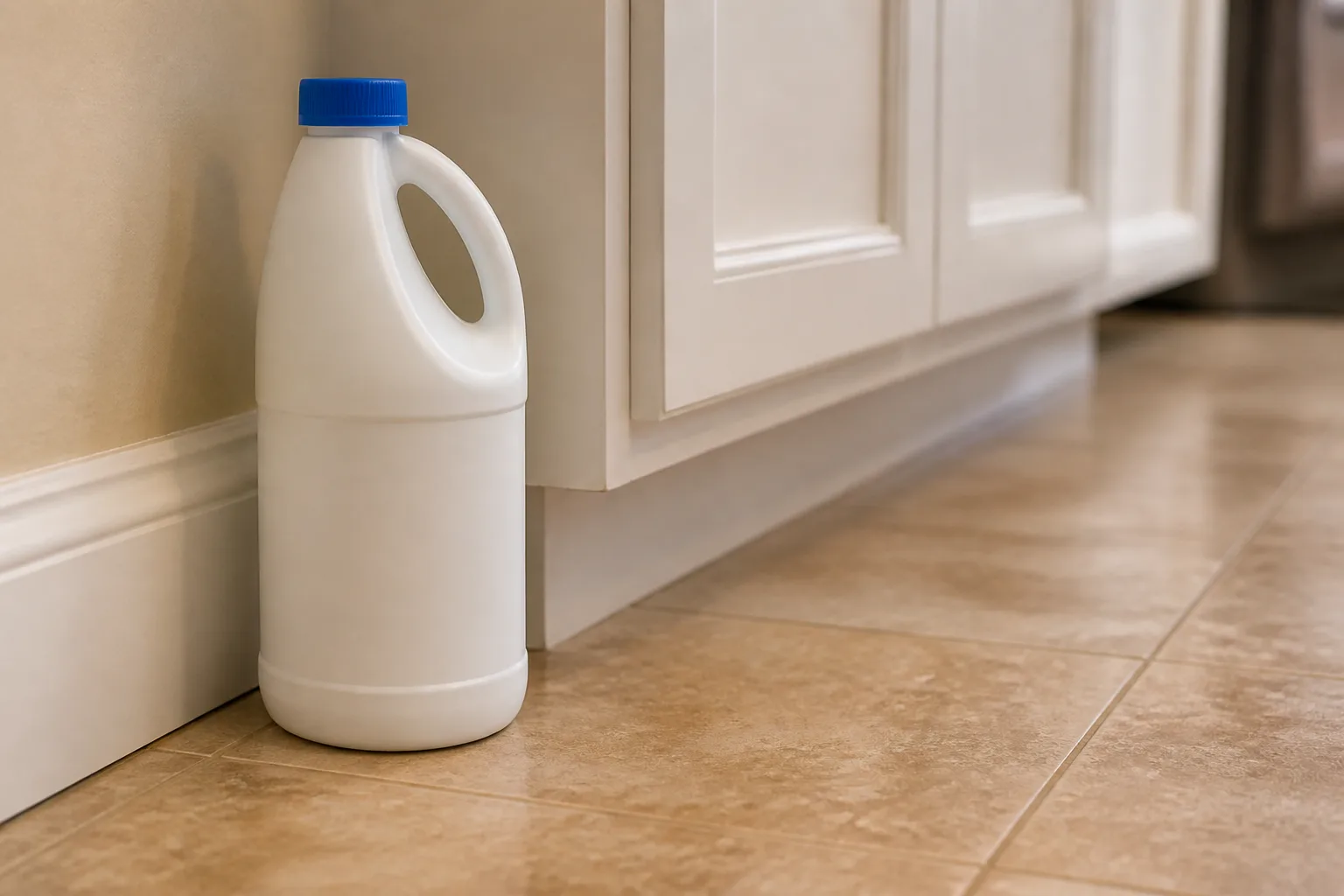
You flip on the kitchen light and a cockroach vanishes under the stove. Your hand is already reaching for the chlorine bleach under the sink—because bleach kills germs, so surely it kills roaches, right? Yes and no. Full-strength sodium hypochlorite bleach can kill a cockroach you soak directly, but it is a terrible primary weapon against hidden colonies, egg cases, and German cockroach populations breeding in wall voids. Treat bleach as a sanitizer and backup contact kill, not the plan that clears your kitchen for good.
The Short Answer: Yes on Contact, No as a Control Plan
Bleach kills cockroaches on direct contact when enough liquid reaches the insect long enough to damage the waxy exoskeleton and disrupt tissues—similar to how it denatures proteins on surfaces. A roach drowned in undiluted bleach will die. A thin dried streak along a baseboard will not reliably kill roaches that scurry across it seconds later, and it will not reach the dozens hiding in the 1/16-inch cracks where German cockroaches spend daylight hours (UC IPM).
University of California Integrated Pest Management is blunt: pesticides alone will not solve cockroach problems, and baits provide better control than sprays when combined with sanitation and exclusion (UC IPM). Bleach is not even a registered roach bait or residual insecticide—it is a disinfectant that evaporates, repels, and damages your home if misapplied. For infestations, gel baits, boric acid dust in voids, targeted labeled sprays, monitoring traps, and desiccant dusts outperform bleach by reaching harborages bleach never touches.
How Bleach Kills Cockroaches—and When It Does Not
Understanding the mechanism saves wasted weekends. Homeowners assume “strong chemical = dead bugs everywhere.” Roaches disagree—they hide where liquid cannot follow and avoid odors that signal danger.
Direct Contact vs Surface Residues
Bleach works when liquid contact is prolonged. Spraying a visible roach may kill it if the stream hits the body and the insect cannot groom it off quickly. Residual films are another story: bleach breaks down, dries, and loses killing power. Roaches groom constantly but do not reliably ingest enough dried hypochlorite from a footprint-wide smear to die—and they often detour around strong-smelling strips, which is why a bleach baseboard treatment can empty a travel lane without killing the colony.
That matters because cockroaches forage along edges—cabinet corners, stove legs, pipe chases—not across open floors (UC IPM). Unless you soak the exact crack they occupy at the moment they occupy it, bleach behaves like a short-lived repellent, not a population tool.
Why Hidden Roaches Never Touch Your Spray
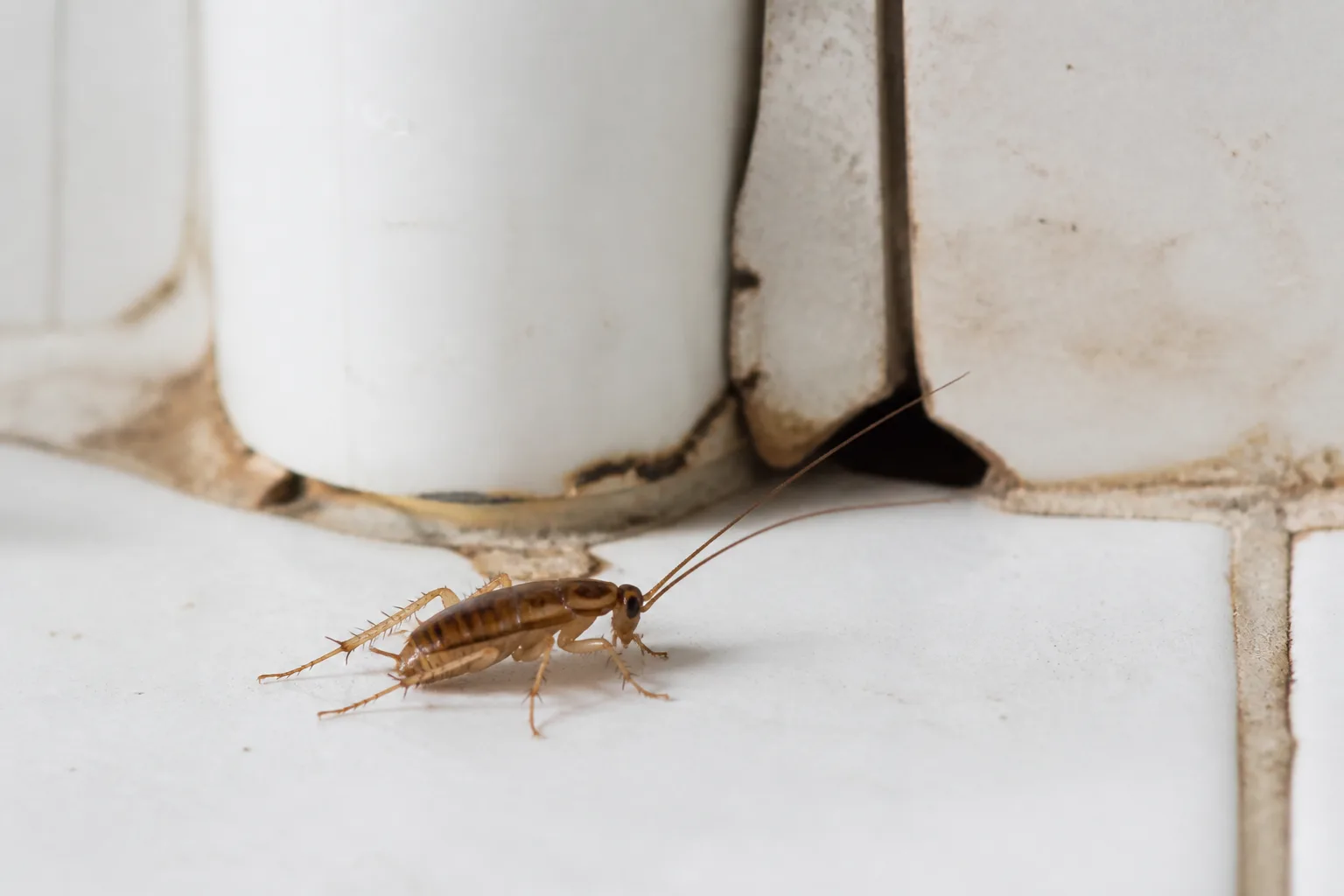
The insects you see are a fraction of the population. German cockroaches live and breed entirely indoors, favoring warm, humid kitchens and bathrooms within arm’s reach of food and water (UC IPM). Adults squeeze into cracks 1/16 inch wide; nymphs use even tighter gaps. Behind the dishwasher motor, inside electrical outlet boxes, under the refrigerator drip pan—these are harborages, not surfaces you can flood with bleach without ruining wiring, finishes, or your lungs.
Bleach also does not penetrate cockroach egg cases (oothecae) glued in protected crevices. Even if you kill every adult you spray, cases already deposited can hatch weeks later. That is why contact kills feel satisfying while the infestation persists.
Why Bleach Fails Against Real Infestations
A single scout after a party is not the same problem as droppings in drawer tracks, multiple life stages, and nightly activity in more than one room. Bleach fails infestations for predictable, fixable reasons—none of which are “you didn’t buy the right brand.”
Egg Cases, Harborages, and Colony Foraging
Female German cockroaches carry egg cases for most of a 30-day incubation, then drop them near food and moisture (UC IPM). Each case can release dozens of nymphs. Bleach sprayed on running adults does nothing to cases tucked behind a cabinet toe-kick or inside an appliance housing.
Roaches also share aggregation pheromones near fecal specks—exactly where UC IPM recommends placing baits, not disinfectant floods (UC IPM). Broadcast bleach contaminates those zones, makes professional gel baits less attractive, and can drive roaches deeper into walls— the opposite of control. Integrated pest management (IPM) wins by combining sanitation, exclusion, and slow-acting baits or dusts that work where insects actually live—not by making the kitchen smell like a pool.
Safety Risks of Fighting Roaches with Bleach
Bleach is corrosive household chemistry, not a gentle “natural” fix. Using it as a roach weapon creates health and property risks that proper baits and void dusts avoid when placed correctly.
Fumes, Surface Damage, and Mixing Mistakes
Chlorine bleach fumes irritate eyes and lungs—especially in small, poorly ventilated kitchens and bathrooms where roaches concentrate. Full-strength bleach bleaches fabric, pits stainless steel, discolors stone, and strikes varnished cabinets. It is harmful if swallowed by pets or children who explore floor-level residues.
Never mix bleach with ammonia, vinegar, or other acids— that combination can release toxic chlorine gas. If you have already sprayed a “kitchen cleaner” or treated drains, read labels before reaching for bleach. For roach droppings and contaminated surfaces, UC IPM recommends cleaning with soap and water or appropriate disinfectants on hard surfaces—then shifting pest control to baits and dusts, not endless bleach loops (UC IPM).
Five Methods More Effective Than Bleach
When bleach stops at the one roach you saw, these five tools address populations, harborages, and monitoring—the parts bleach cannot reach. They are the same categories professionals lean on after inspection, ranked here for typical indoor kitchen infestations.
Gel Baits Along Edges and Cracks
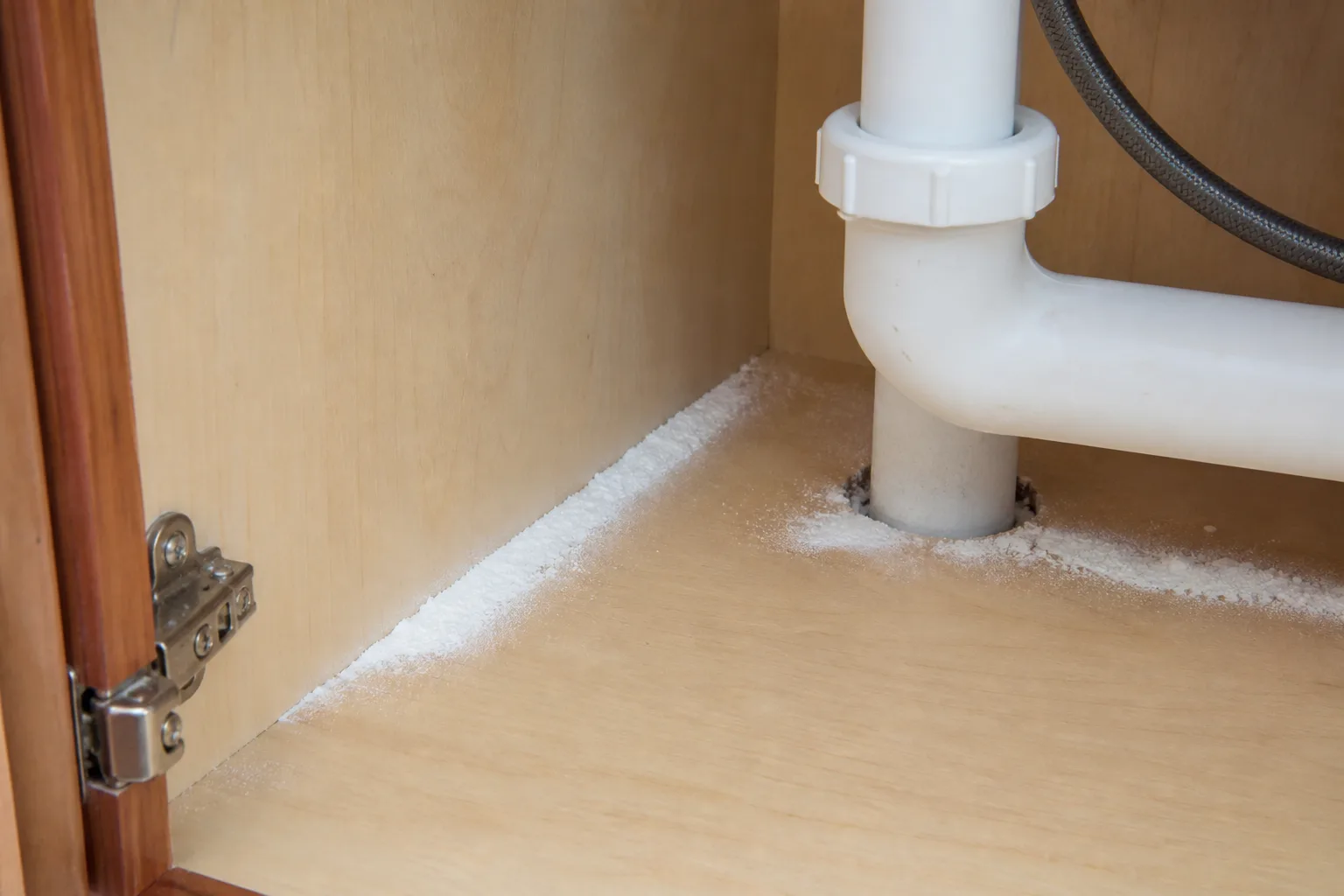
Gel baits are the primary pesticide tool UC IPM highlights for cockroaches (UC IPM). Applied with a syringe, pea-sized dots go in cracks, corners, and cabinet voids where roaches travel—not out in the open where bleach streaks sit.
Baits use slow-acting insecticides mixed with food attractants. Roaches feed, return to harborages, and transfer active ingredient to nestmates through feces and body contact. Effects take seven days or longer— patience is the trade-off for colony-level control. Place many small placements flush to corners and edges; roaches do not travel far to find bait. Do not clean aggressively or spray repellent products over gel placements—that includes bleach right beside a bait dot.
Boric Acid in Voids and Behind Appliances
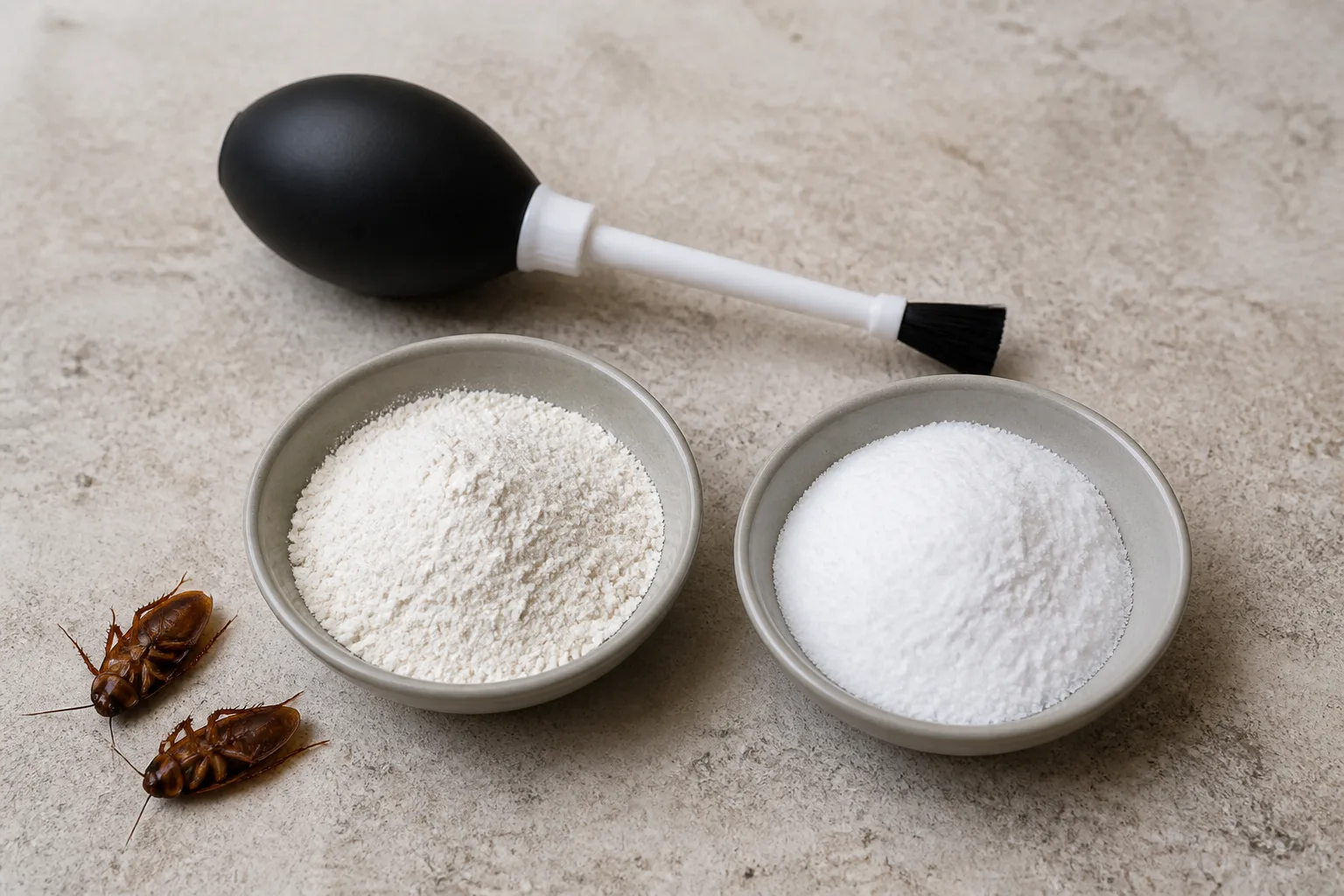
Boric acid remains a standout low-toxicity dust and bait active registered for cockroach control (EPA). Applied as a thin, almost invisible film in voids under refrigerators, behind stoves, and in pipe chases, it clings to roach bodies and is ingested during grooming (UC IPM).
Classic DIY bait mixes equal parts boric acid, flour, and sugar—but treat boric acid like a pesticide, not pantry soda. Never apply on open counters, food prep surfaces, or anywhere children and pets reach. Unlike bleach, boric acid provides residual control in undisturbed voids for weeks when kept dry.
Targeted Insecticide Sprays for Knockdown
Labeled contact sprays for cockroaches belong in cracks and crevices—pipe gaps, baseboard seams, utility chases—not broadcast across countertops. UC IPM warns that aerosol bombs and broad sprays can repel and disperse roaches without killing the colony (UC IPM). Used correctly, a direct stream into a harborage can knock down visible insects faster than bleach without the same surface destruction— if the product label allows that site.
Avoid coating entire rooms or food zones. Sprays are supplements to baits and sanitation, not replacements—and never apply bleach and insecticide to the same zone without label guidance and ventilation.
Sticky Traps for Monitoring Pressure
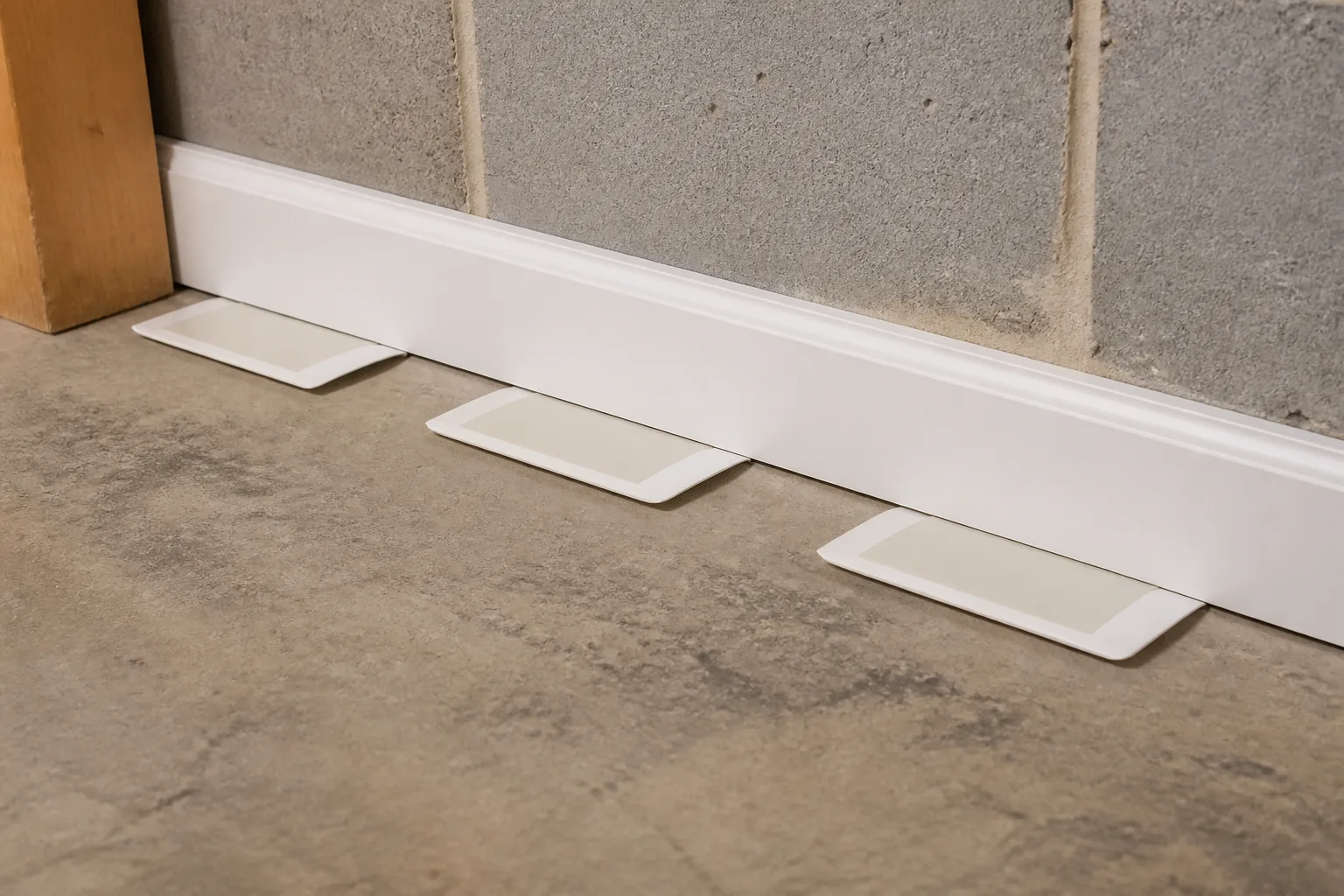
Sticky traps will not eliminate a large infestation alone, but they excel at monitoring: which room has pressure, whether populations fall after baiting, and where travel lanes concentrate. Place traps against walls in dark, sheltered spots—under sinks, behind appliances, in utility closets (UC IPM).
Check every few days. Increasing catch counts mean your bait program or sanitation still has gaps. Zero catches for two weeks after a thorough IPM push suggests you are winning—keep traps out monthly as early warning. Traps also help confirm you are fighting German cockroaches (small, two dark stripes) versus occasional American cockroaches invading from drains—different harborages, different fixes.
Diatomaceous Earth in Dry Travel Lanes
Food-grade diatomaceous earth (DE) kills by desiccation when roaches crawl through a dry, undisturbed dust layer—no ingestion required. It is slower than boric acid or gel baits for heavy German roach infestations but useful in dry voids where gel placement is awkward (UC IPM).
Apply a thin film along pipe chases and behind appliances—not thick piles that roaches walk around. DE fails when wet, so skip steamy dishwasher zones until leaks are fixed. For placement detail and safety, see our guide on does diatomaceous earth kill roaches. Baking soda is another pantry experiment some homeowners try; it requires ingestion and rarely keeps pace with breeding populations— covered in does baking soda kill roaches.
Quick Comparison: Bleach vs Proven Roach Tools
| Method | Mechanism | Reaches hidden colony? | Egg cases | Residual control | Best role |
|---|---|---|---|---|---|
| Chlorine bleach | Contact burn / drown | No | No | Minutes (evaporates) | Sanitize surfaces; backup single-insect kill |
| Gel bait | Ingestion + transfer | Yes | No | Weeks in cracks | Primary indoor control |
| Boric acid dust | Grooming ingestion | Yes (voids) | No | Weeks if dry | Hidden voids, behind appliances |
| Labeled contact spray | Nerve/metabolic knockdown | Partial (into cracks) | No | Days to weeks (label-dependent) | Harborage flush, spot knockdown |
| Sticky traps | Physical capture | No | No | Until full | Monitoring, light capture |
| Diatomaceous earth | Cuticle desiccation | Partial (travel lanes) | No | Until wet/disturbed | Dry voids, supplemental dust |
The pattern is clear: bleach wins one visible duel; baits and dusts win the war when paired with cleanup and sealing.
Sanitation and Exclusion That Make Baits Work
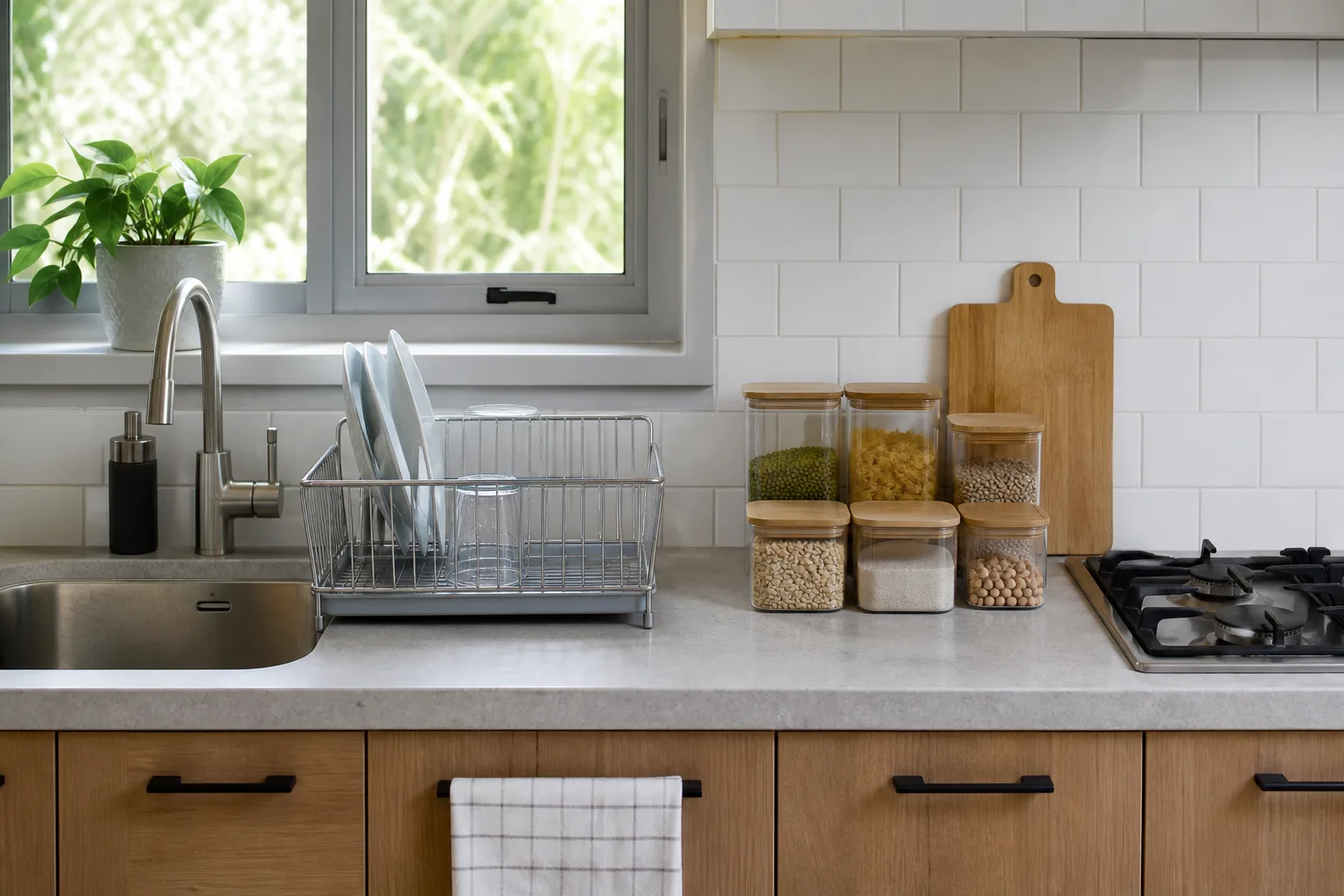
Every tool above—including bleach used correctly—works better when roaches starve and dehydrate between meals. UC IPM stresses that access to food and water slows bait success (UC IPM). Run this checklist before you rely on any pesticide:
- Wash dishes nightly; never leave sinks full of standing water
- Wipe stove grease, including under burners and behind the range
- Store dry goods in sealed containers; discard cardboard under sinks
- Take trash out daily; rinse recyclables; use tight lids
- Pick up pet food overnight; fix drip leaks under sinks and refrigerators
- Vacuum droppings, shed skins, and visible oothecae; empty the vacuum outdoors
- Seal gaps around plumbing, electrical plates, and door sweeps on ground floors
Bleach belongs here as a disinfectant on hard, non-porous surfaces after you remove organic debris—not as a nightly perimeter spray. Clean first, bait second, and keep repellent cleaners away from bait zones.
What to Do the Night You Spot a Roach
Panic makes people flood floors with bleach. A calmer sequence works better:
- Kill the visible insect if you can—shoe, rolled newspaper, or direct labeled spray into the crack it entered. Bleach works only if you actually soak the roach; do not chase with an open bottle across food prep areas.
- Photo or note the location—stove, sink, bathroom, garage—to map pressure later.
- Remove tonight’s food and water: run the dishwasher, wipe counters, take trash out, pick up pet bowls.
- Place gel bait or boric acid (per label) in corners and voids near that sighting—not open floor bleach pools.
- Set one sticky trap flush to the wall in the same zone to monitor catch over the next week.
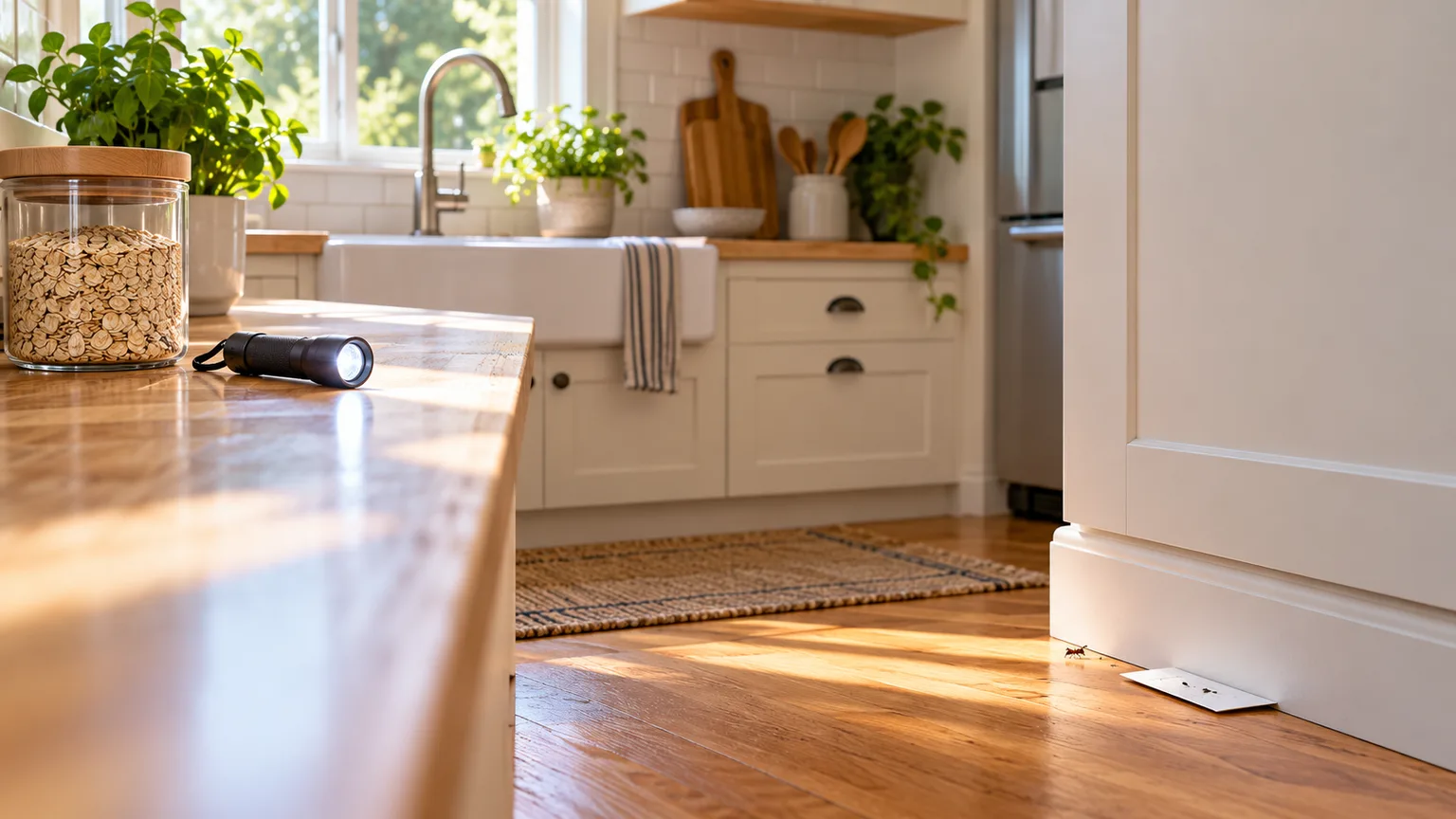
- Re-check after dark with a flashlight along edges before declaring victory.
If you see multiple roaches, nymphs, or droppings within a week, escalate—one bleach kill did not address the breeding population.
When to Call a Pest Control Professional
DIY baits and dusts clear many kitchen infestations, but some situations need inspection, species ID, and void equipment you cannot buy at a grocery store:
- Roaches in multiple rooms or active during daylight (heavy pressure)
- Bait programs fail after 7–10 days of consistent placement plus sanitation
- You rent and cannot access shared plumbing chases or neighboring units
- Asthma or chemical sensitivity makes dusts and sprays risky without professional placement
- Large American or Oriental cockroaches entering from sewer breaks or crawl spaces—often a structural repair job, not a bleach bottle fix
Licensed operators combine monitoring, targeted baits, void dusts, and exclusion advice—and they document harborages so you stop treating the wrong rooms while egg cases hatch behind the dishwasher motor.
Conclusion
Bleach does kill cockroaches when you soak them directly, but it cannot reach hidden colonies, does not kill egg cases, and repels roaches away from the bait zones that actually shrink infestations. Use bleach to sanitize hard surfaces after cleanup—not as your primary roach pesticide.
For real control, run IPM: sanitize and seal, then deploy gel baits along travel lanes, boric acid in dry voids, targeted labeled sprays only where labels allow, sticky traps to monitor progress, and diatomaceous earth in dry chases when gel is awkward. If activity persists after a week of consistent effort—or populations, health risks, or building access outpace DIY tools—call a professional. The bottle under the sink is for disinfection, not domination.