Does Baking Soda Kill Roaches? What You Need to Know
Baking soda can kill roaches if they eat it—but sugar bait alone rarely clears an infestation. Learn how it works, how to bait safely, and what works better.
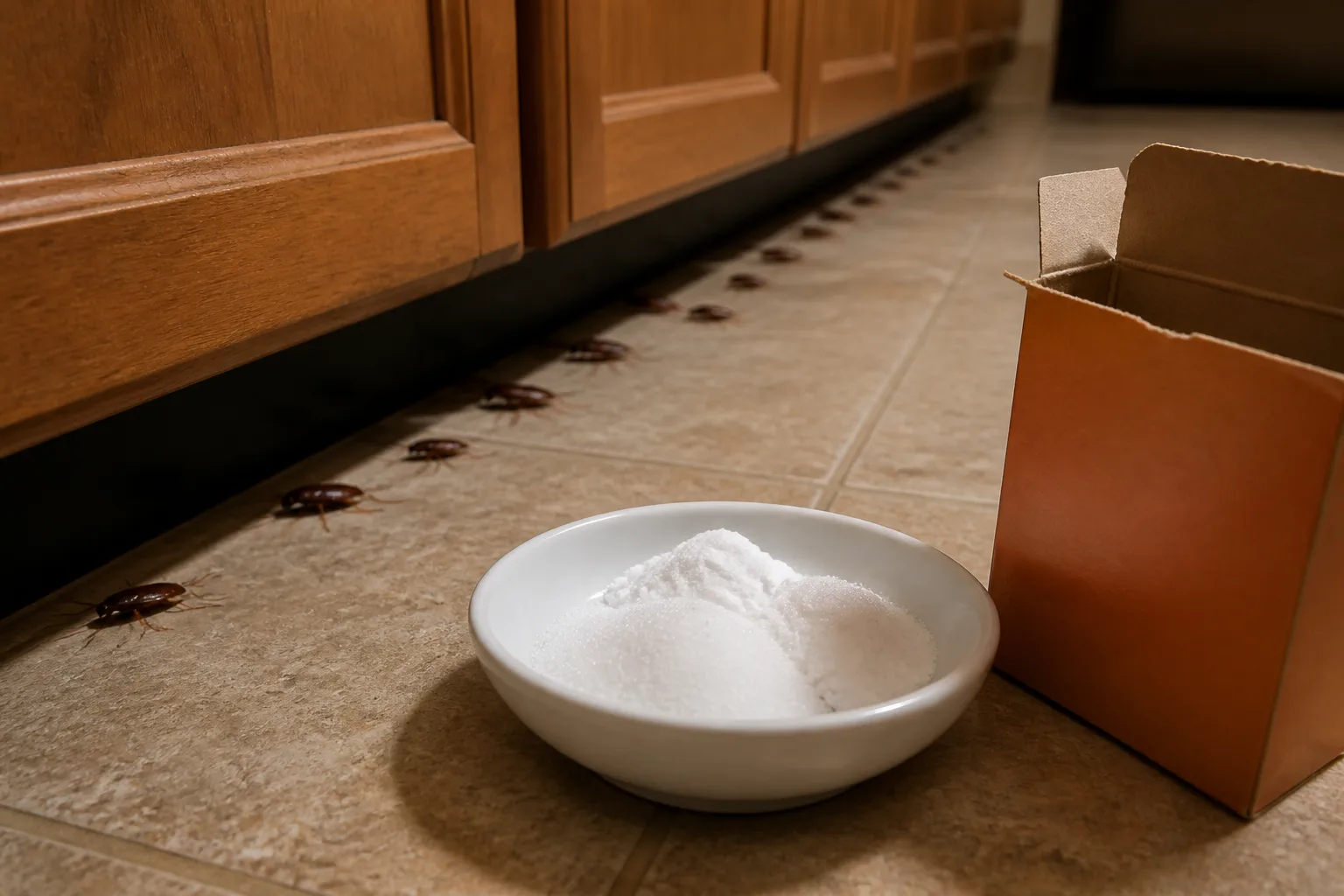
You flip on the kitchen light and a cockroach vanishes under the stove. Before you panic-buy spray, someone in your group chat insists baking soda and sugar will wipe them out—cheap, natural, and safe around the dog. That promise is half true. Baking soda can kill roaches, but only if they ingest enough of it, usually hidden in a sugary bait. It does not work on contact, it does not knock down egg cases, and it rarely keeps pace with a breeding German cockroach population once food, water, and hiding spots stay available.
The Short Answer: Yes, but Roaches Must Eat It
Yes—baking soda can kill individual cockroaches when they eat it, typically mixed with sugar or another palatable bait. Sodium bicarbonate reacts with stomach acid to produce carbon dioxide gas. Roaches cannot burp effectively, so advocates argue internal pressure builds until the insect dies—often within roughly 12 to 24 hours after a meaningful dose, not instantly.
That mechanism is chemically plausible. In practice, success depends on dose, bait acceptance, and how many roaches you are fighting. University of California Integrated Pest Management (UC IPM) emphasizes that sanitation, exclusion, and appropriate baits or dusts control cockroaches—not powders alone—and that pesticides by themselves will not solve a cockroach problem (UC IPM). Treat baking soda as a low-toxicity experiment for light activity, not your only plan when you see multiple roaches, droppings, or egg cases.
Why Homeowners Reach for Baking Soda First
Baking soda wins attention because it feels like the best of both worlds: effective enough to skip a service call, yet gentler than broadcast sprays that drive roaches deeper into wall voids. A box already lives in the pantry. Mixing equal parts sugar and powder takes thirty seconds. Compared with gel bait guns or boric acid labels, soda bait sounds foolproof.
Pantry-Safe Appeal vs Real Infestations
A single roach scouting crumbs after a party is a different problem than an infestation—droppings in drawer tracks, egg cases glued behind the fridge, nymphs under the sink, and activity in more than one room. Pantry baits address individual stomachs, not population growth, hidden harborages, or entry points from plumbing chases and grocery bags. While you wait on sugar bait, German cockroach females can produce new egg cases on a cycle measured in weeks, and nymphs mature quickly in warm kitchens (UC IPM). Baking soda does not shorten that math.
How Baking Soda Is Supposed to Kill Cockroaches
Social media explains roach control like a volcano science fair project: base plus acid equals gas. The real-world version adds cockroach behavior, competing food, and the difference between contact and ingestion.
Sodium Bicarbonate, Stomach Acid, and Gas Pressure
Sodium bicarbonate (NaHCO₃) reacts with hydrochloric acid in the digestive tract to produce carbon dioxide, water, and salts. Enthusiasts argue that because roaches eliminate gas poorly, pressure ruptures internal tissues. A roach that consumes a substantial fraction of its body weight in bait—while also taking in water that speeds the reaction—may die within a day. That is why some DIY guides suggest placing water near bait stations: drinking accelerates gas production in the gut.
Important nuance: lab chemistry is not field reliability. Roaches sample unfamiliar foods cautiously, regurgitate when stressed, and abandon baits that taste wrong. A dead roach near a dish might reflect partial ingestion, dessication, or another control step you forgot—not proof your infestation is gone.
Why Sprinkling Powder Alone Fails
Plain baking soda on the floor does not poison on contact the way boric acid dust clings to the cuticle and is ingested during grooming. Roaches walk through soda, groom it off, and move on unless they eat the powder mixed into bait. Sprinkling soda along baseboards without bait might briefly irritate feet but will not replace targeted bait placement or void dusting where insects travel nightly.
How to Make and Place a Sugar–Baking Soda Bait
If you test baking soda, treat it like a bait trial, not room deodorizer. Your goal is to get foraging roaches to consume the mix along travel lanes—not to carpet the kitchen.
Recipe, Ratios, and Travel-Lane Placement
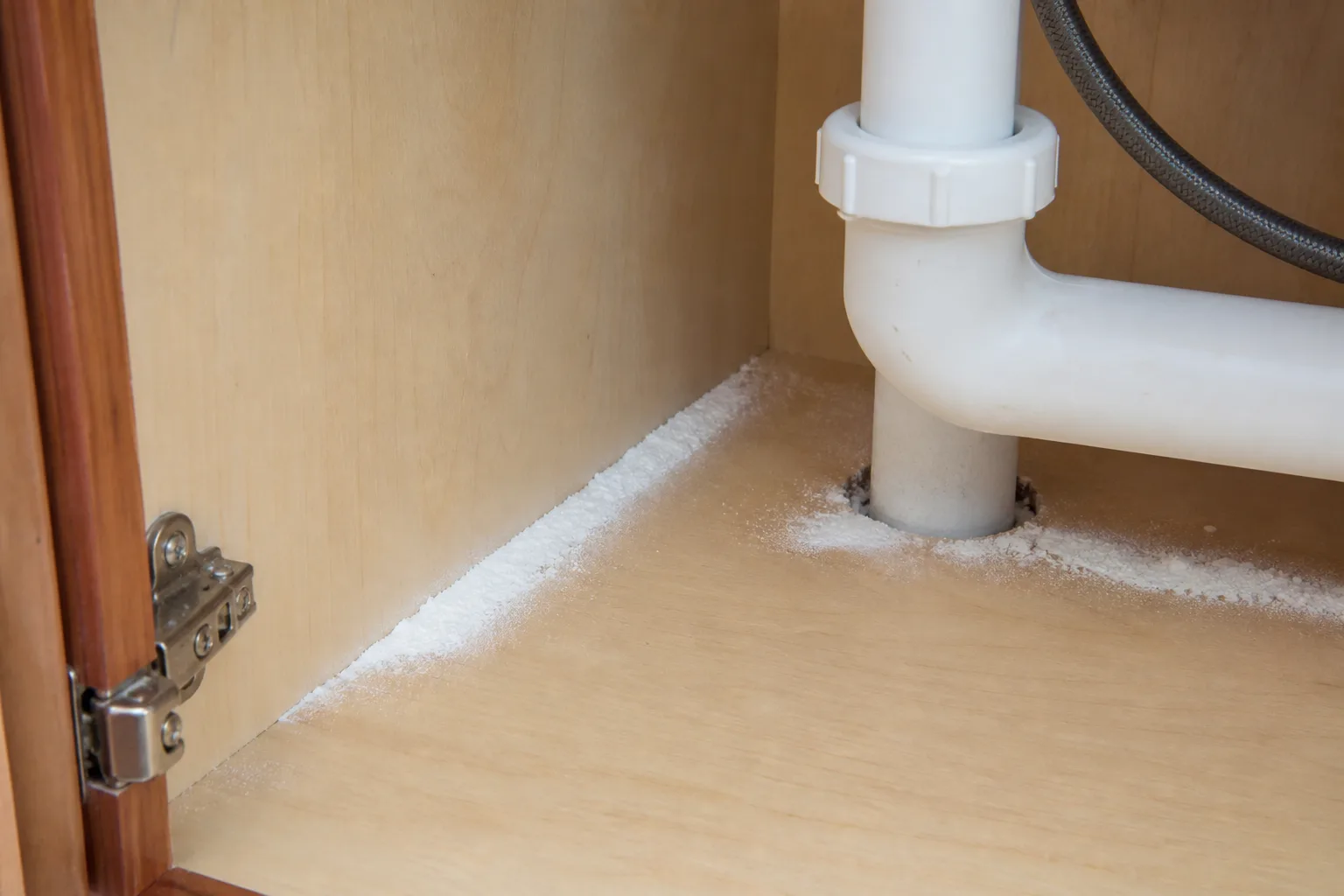
The standard recipe is equal parts granulated sugar and baking soda—often one tablespoon of each per station. Powdered sugar blends more smoothly; some homeowners add a pea-sized smear of peanut butter to bind the mix. Avoid wetting the bait into paste unless you refresh it daily; moisture clumps soda and spoils faster.
Placement beats volume. Roaches follow edges. Set small lids or folded foil squares flush against walls in:
- Under and beside the refrigerator and stove
- Cabinet toe-kick gaps and corners near the dishwasher
- Behind the trash pull-out and under the sink (only if pipes are not actively leaking)
- Utility areas where pet food bowls sit overnight
Use pea-sized amounts, not mounds. Large piles look unnatural and may repel roaches—or attract ants, turning one pest into two (UC IPM). Refresh bait every 24 to 48 hours until you see no live roaches for several nights, then keep monitoring.
Water, Monitoring, and When to Refresh Bait
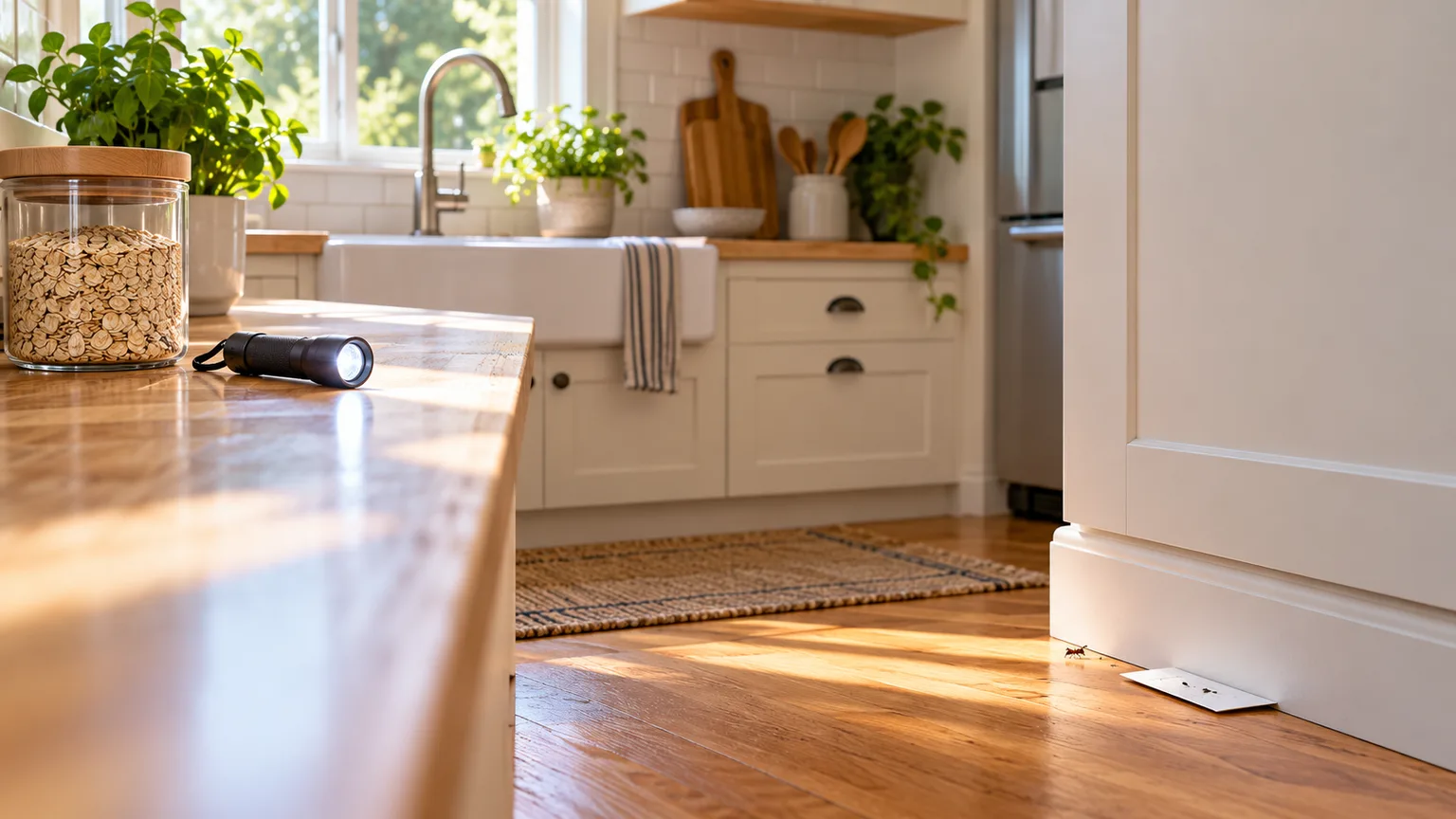
Some guides place a shallow water cap near bait so roaches drink after feeding, speeding the internal reaction. If you try this, use disposable lids inside cabinets—not open bowls on the floor where pets drink. Label stations mentally and check them with a flashlight after dark when roaches forage.
Track evidence, not vibes: smeared bait, fewer live sightings, and no new droppings for a week matter more than one dead insect. If bait stays untouched while roaches run elsewhere, you have a placement or competition problem—crumbs under the toaster beat soda every time until you clean and relocate stations.
How Long Until Roaches Die After Eating Baking Soda?
Expect roughly 12 to 24 hours after a roach eats a meaningful amount of baking soda bait—not seconds like a contact spray. Timing stretches if the roach took a small sample, already had full access to water elsewhere, or groomed powder off without swallowing enough.
Unlike boric acid, which UC IPM notes may take seven days or more for noticeable population effects but transfers through grooming (UC IPM), baking soda has no secondary kill—only roaches that eat your bait are affected. That is fine for spot control, frustrating for breeding populations where you need tools that spread through the colony.
Is Baking Soda Safe Around Pets and Children?
In small amounts, baking soda is low toxicity to pets and children—which is a major reason homeowners try it. PetMD notes baking soda poses no danger to children or pets unless ingested in large amounts (PetMD). A dog that licks a peanut butter–soda mix may get an upset stomach; massive ingestion can cause electrolyte problems—another reason to use tiny stations in hidden gaps, not saucers in the middle of the floor.
Safety is not the same as effectiveness. Keep bait behind appliances and inside locked cabinets where toddlers cannot reach. Pick up pet food overnight so dogs and cats do not compete with—or consume—your roach bait. If a child ingests more than a taste, contact Poison Control with the amount and time.
Where Baking Soda Falls Short Against Cockroaches
Honest limitations save weekends. Baking soda fails most often because infestations are populations, not single insects—and because egg cases keep hatching regardless of what adults ate.
German Roaches Outbreed Slow DIY Baits
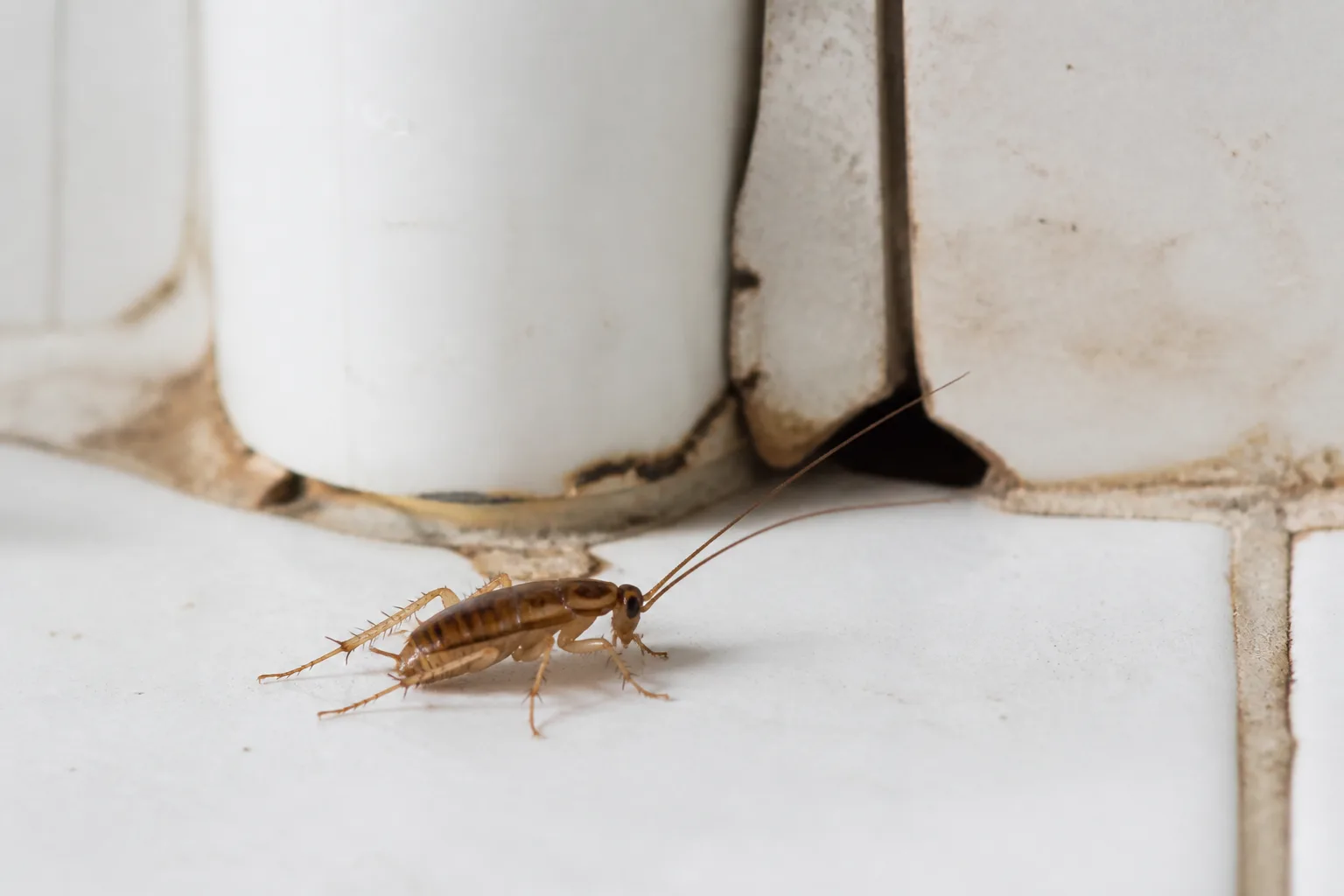
German cockroaches—small tan insects with two dark stripes behind the head—dominate indoor kitchen infestations in much of the U.S. Females carry egg cases until just before hatch, producing dozens of nymphs on a rolling schedule in warm, greasy kitchens. A sugar bait that kills some foragers does not stop new nymphs from replacing them when grease behind the range, drip pans, and cardboard harborages remain.
UC IPM ranks gel baits and boric acid dusts in voids among the most effective indoor tools when combined with sanitation (UC IPM). Baking soda sits below that tier for established infestations—useful as a first-night test, not a month-long strategy.
Bait Does Not Kill Egg Cases
Baking soda does not penetrate cockroach egg cases (oothecae) glued in cracks, inside appliance motors, or behind cabinet frames. Even if every adult ate lethal bait, cases already deposited can hatch weeks later. Vacuum visible cases with a HEPA vacuum (empty outdoors immediately), continue treatment through at least one full nymph generation, and combine ingestion baits with residual tools appropriate to your situation—see the comparison below.
| Method | How it works | Speed | Egg cases | Best use case |
|---|---|---|---|---|
| Baking soda + sugar bait | Ingestion → stomach gas | ~12–24 hrs per eater | No | Light activity, pet-sensitive test |
| Boric acid bait/dust | Contact + grooming ingestion | ~7+ days population | No | Hidden voids, long residual |
| Gel bait | Ingestion + horizontal transfer | Days to weeks | No | German roaches, kitchen cracks |
| Diatomaceous earth | Cuticle desiccation (contact) | ~24–72 hrs per contact | No | Dry travel lanes, void dust |
For a full walkthrough of desiccant dust, see our guide on does diatomaceous earth kill roaches.
Better Options When Baking Soda Is Not Enough
When soda bait stalls after three to five nights—or you see multiple life stages—escalate within integrated pest management (IPM): remove food and water, seal gaps, then use proven baits or dusts.
Boric Acid, Gel Baits, and Diatomaceous Earth
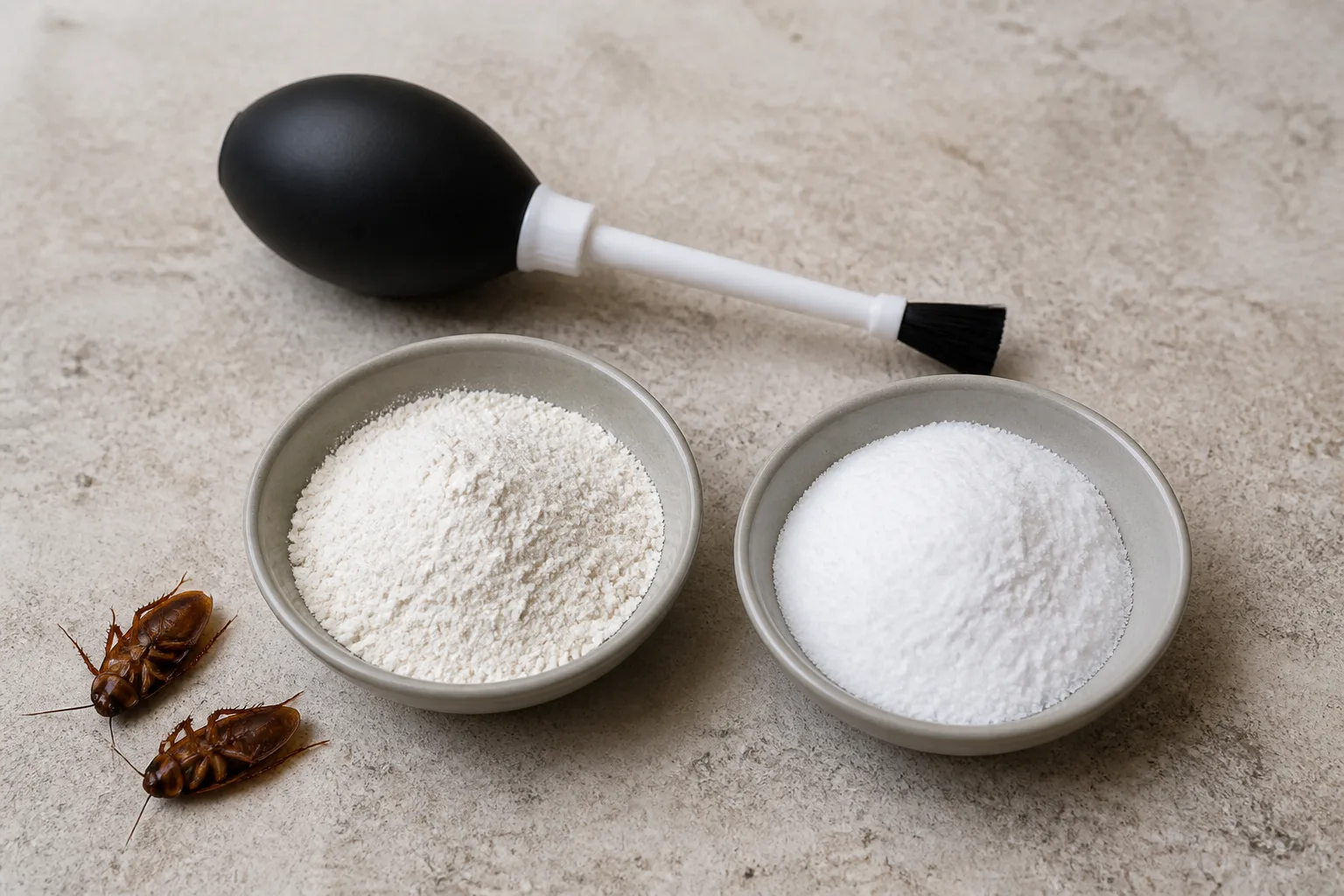
Boric acid remains the standout DIY dust and bait active ingredient UC IPM highlights for cockroaches. Applied as a thin film in voids, it clings electrostatically to roach bodies and is ingested during grooming—not repellent at proper rates (UC IPM). Classic recipes mix equal parts boric acid, flour, and sugar—but never use boric acid on open counters or anywhere children, pets, or food prep occur. Treat it like a pesticide, not pantry soda.
Commercial gel baits (often containing boric acid, fipronil, indoxacarb, or similar actives) let you place pea-sized dots in cracks with a syringe—exactly where German roaches harbor. Gels outperform loose powders in greasy kitchen voids because they stay attractive and do not blow away.
Food-grade diatomaceous earth kills by desiccation when roaches crawl through dry, undisturbed dust—no ingestion required. It is slower and fails when wet, but excellent in dry pipe chases alongside baits. Our diatomaceous earth roach guide covers placement and safety in detail.
Avoid broadcast repellent sprays over baits; sprays contaminate food sources and drive roaches into walls. UC IPM notes sprays should be unnecessary when sanitation, exclusion, and appropriate baits and dusts are used correctly (UC IPM).
Sanitation and Exclusion Steps That Actually Work
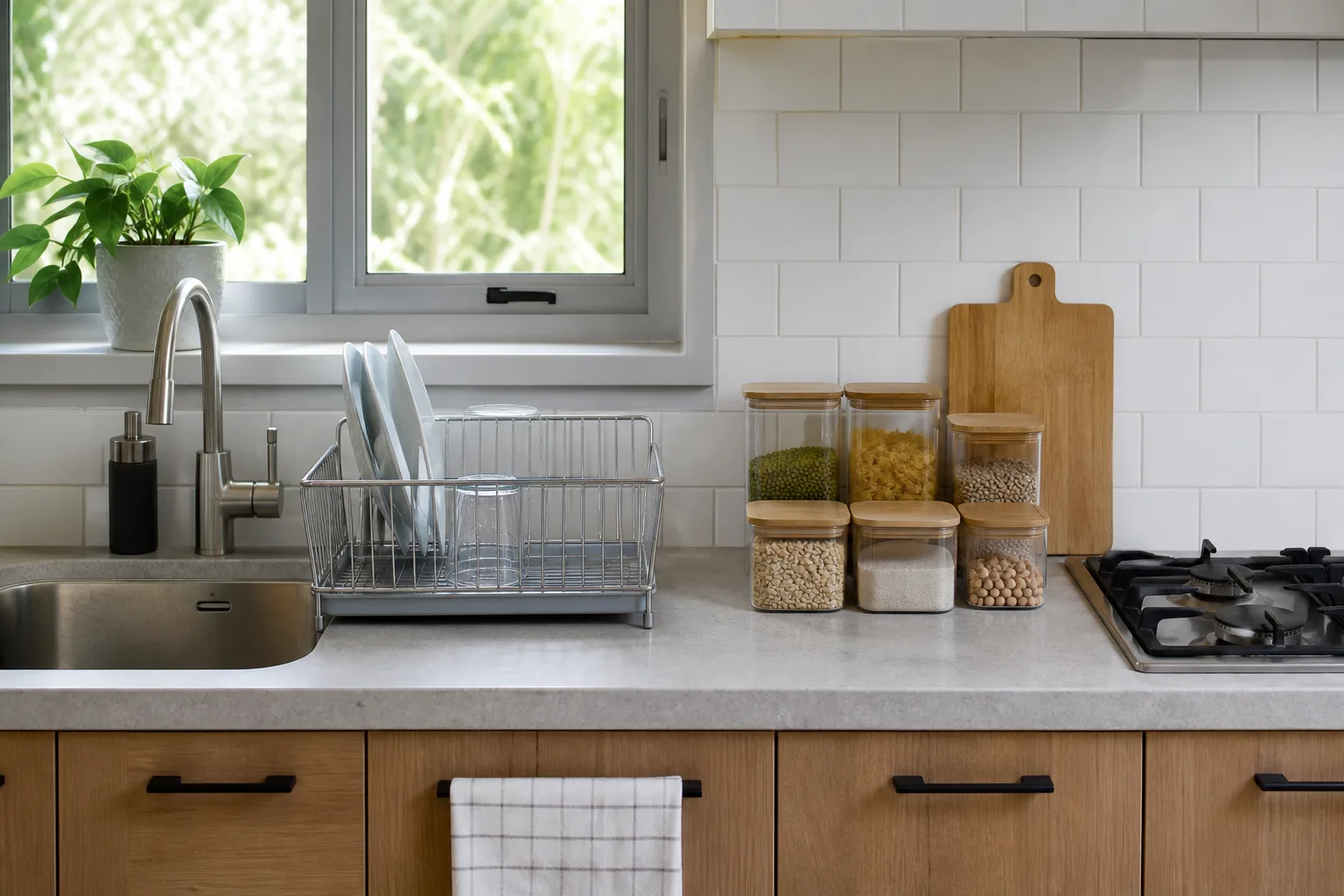
Every effective roach program—baking soda included—starts by removing what roaches eat and drink:
- Wash dishes nightly or run the dishwasher; never leave sinks full of standing water
- Wipe counters and stove grease, including under burner pans and behind the range
- Store dry goods in sealed containers; roaches chew through thin cardboard
- Take trash out daily; rinse recyclables; use tight-fitting lids
- Pick up pet food after meals; fix drip leaks under sinks and around refrigerators
- Declutter cardboard and paper under sinks—prime ootheca glue sites
- Vacuum droppings, shed skins, and visible egg cases; empty the vacuum outdoors
- Seal gaps around plumbing penetrations, electrical plates, and door sweeps on ground floors
Sanitation alone rarely clears a breeding population, but without it, any bait—including soda—loses the competition with midnight crumbs.
When to Call a Pest Control Professional
Call a licensed pest control operator when:
- You see roaches in multiple rooms or during daylight (heavy pressure)
- Bait trials fail after one week of consistent placement and cleanup
- You rent and cannot access wall voids, neighboring units, or shared plumbing chases
- Anyone in the home has asthma worsened by dusts, sprays, or heavy infestations
- You identify large outdoor species (American or Oriental cockroaches) entering from sewer breaks—often a structural repair job, not a pantry fix
Professionals combine inspection, targeted baits, void dusts, and monitoring—and they document species and harborages so you stop treating the wrong zones. That beats sprinkling soda in random corners while egg cases hatch behind the dishwasher motor.
Conclusion
Baking soda can kill roaches when they eat it in a palatable bait—usually equal parts sugar—placed along travel lanes, with results in about 12 to 24 hours per insect that consumes a real dose. It is low toxicity around pets and children in small amounts, which makes it a reasonable first test when activity looks light. It is not a contact killer, does not destroy egg cases, and usually loses against German cockroach infestations once breeding, grease, and clutter stay in place.
Run a careful soda-and-sugar trial for a few nights while you sanitize and seal. If activity persists, step up to gel baits, boric acid in voids, or diatomaceous earth in dry lanes—and call a pro when populations, health risks, or building access outpace DIY tools. The pantry box is a starting point, not the finish line.