8 Types of Roaches and How to Tell Them Apart
Learn to identify the 8 most common U.S. roaches by size, markings, and habitat—plus look-alikes, sticky-trap tips, and what to do after you ID the species.
You saw something skitter under the fridge when you turned on the light. Before you grab the first spray can or dust every baseboard in the house, identify the species. Treatment that works on a basement-dwelling Oriental cockroach can fail completely against German cockroaches breeding inside your dishwasher motor—and misidentifying a pantry beetle as a “baby roach” sends you down the wrong path for weeks.
Roughly 50 cockroach species live in the United States, but only a handful routinely show up in homes, apartments, and yards. This guide covers the eight types homeowners most often encounter, how to separate them by size, color, wings, and location, and what your next step should be once you know what you are dealing with.
Why Roach Identification Matters Before You Spray
Cockroaches share the same basic body plan—flat oval shape, long antennae, six spiny legs, and a shield-like pronotum behind the head—but management differs sharply by species. UC IPM emphasizes that you should identify the cockroach before taking action because effective options vary: some species live and breed entirely indoors, while others live outdoors and wander inside after rain or through gaps around pipes.
German and brown-banded cockroaches are true indoor breeders. They multiply inside kitchens, bathrooms, and wall voids, contaminate food surfaces, and are linked to indoor allergens that can worsen asthma—especially in multi-unit housing. American, Oriental, Turkestan, and smokybrown cockroaches usually live outside in sewers, mulch, water meter boxes, or leaf litter, then migrate indoors when moisture, food, or mating opportunities pull them in. Treating an outdoor invader like an indoor breeder wastes bait in the wrong rooms; treating an indoor breeder with only exterior perimeter sprays leaves the population untouched behind your stove.
Identification also prevents panic over harmless look-alikes. Pantry beetles, conifer seed bugs, and cockroach nymphs all get mislabeled as “baby roaches” every day. Knowing the difference saves money, reduces unnecessary pesticide exposure, and gets you to the right fix faster.
How to Identify a Cockroach in 60 Seconds
If you only get a glimpse, run through this sequence before you assume the worst. Size first, then color and stripes, then where you found it, then whether it flew or ran.
Body Shape, Wings, and Size Quick Checks
Adult cockroaches range from about ½ inch to 2 inches long. Nymphs of large species can look like adults of small species, which is why size alone is not enough—but it narrows the field fast.
Half-inch range (≈13 mm): Likely German, brown-banded, or field cockroach. German adults are light brown with two dark vertical stripes on the pronotum. Brown-banded adults show light bands across the wings and abdomen; males are golden tan, females darker. Field cockroaches resemble Germans but are grayer to olive with a dark stripe between the eyes—common in the Southwest when hot dry weather pushes them inside.
About 1 inch: Oriental, Turkestan, or Australian cockroaches—or large nymphs of bigger species. Orientals are shiny dark brown to black and slow. Turkestan females look similar but carry cream-colored edge markings behind the head and on short wings. Australians resemble smaller Americans with a pale band on the forewing.
1¼ to 2 inches: American, smokybrown, or Florida woods cockroaches. Americans are reddish brown with a pale margin on the pronotum. Smokybrowns are uniform dark mahogany. Florida woods roaches spray a strong defensive odor when disturbed—a giveaway if you got close enough to smell it.
Wing clues: German and Oriental adults have wings but do not fly well (Germans rarely fly; Orientals essentially do not fly). Brown-banded males fly at warm temperatures. American, smokybrown, and male Turkestan cockroaches can fly, especially on humid evenings. If a large insect launched off a porch light, think Periplaneta species, not German.
Movement speed: Germans and brown-banded roaches run fast and vanish into cracks. Orientals move slowly and sometimes end up trapped in smooth sinks or tubs because they cannot climb slick vertical surfaces.
Use Sticky Traps to Catch a Specimen for ID
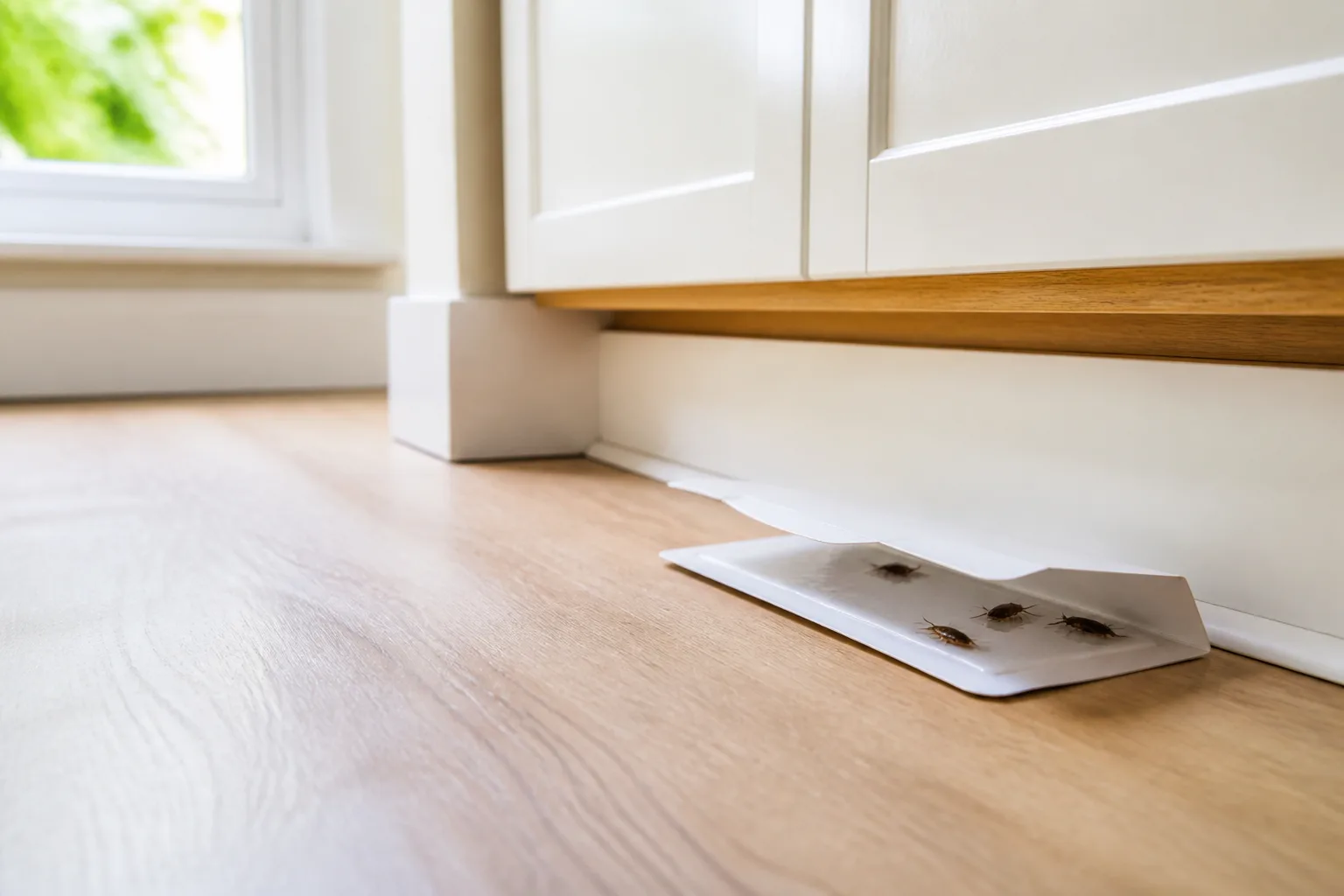
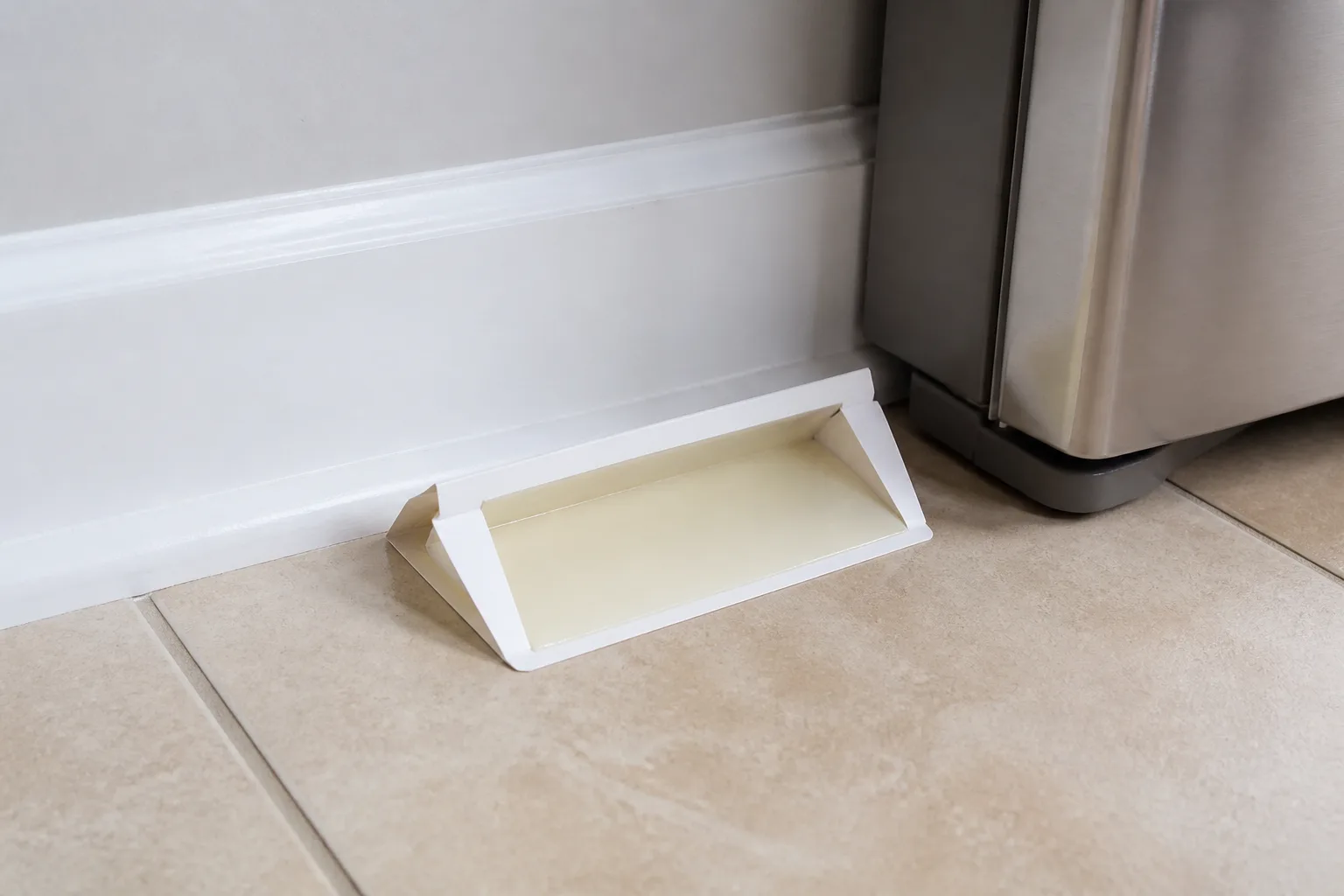
The most reliable ID method at home is a sticky trap or glue board. UC IPM recommends placing traps along wall-floor junctions, behind appliances, under sinks, and near exterior doors. Check them daily for a few days. Traps both confirm species and map activity so you know whether roaches concentrate in the kitchen, bathroom, or garage entry.
When you catch one, photograph it on white paper next to a coin for scale. If populations are heavy or you are in a multi-unit building, bag a specimen and show it to a county extension office or licensed pest professional before committing to a whole-home treatment plan. Nymphs are harder to ID—try to trap an adult.
Indoor Breeders vs Outdoor Invaders
This split drives every control decision. Use it as your first fork after size and color.
| Category | Species | Typical harborage | Infestation risk |
|---|---|---|---|
| Indoor breeders | German, brown-banded | Kitchens, bathrooms, appliance motors, furniture (brown-banded), wall voids | High—populations build entirely inside |
| Outdoor invaders | American, Oriental, smokybrown, Turkestan, Australian, Florida woods | Sewers, mulch, water meter boxes, attics (smokybrown), compost, leaf litter | Lower indoors alone—fix moisture + entry points; heavy indoor counts may need pro |
| Outdoor mis-ID risk | Field cockroach | Leaf litter, yards; enters when hot/dry | Often mistaken for German—check gray color and eye stripe |
Rule of thumb: If sticky traps in the kitchen and bathroom catch roaches nightly for a week, suspect German or brown-banded. If you only see large dark or reddish roaches in basements, crawlspaces, or near floor drains after rain, suspect Oriental, American, or Turkestan invaders from outside.
German Cockroach
The German cockroach (Blattella germanica) is the most common indoor pest cockroach worldwide—and the species behind most apartment and restaurant infestations. Adults are about ½ inch long, light brown to tan, with two dark parallel stripes on the pronotum behind the head. Nymphs are smaller, darker, and wingless but show the same stripe pattern as they grow.
Germans prefer warm (70–75°F), humid spots near food and water: under sinks, behind refrigerators, inside stove and dishwasher housings, and in pantry cracks. They are fast runners and hide in gaps as narrow as 1/16 inch. Females carry a light ootheca (egg case) until just before hatch, dropping up to 30 nymphs per case every few weeks—giving Germans the fastest reproductive cycle of common pest roaches. One female and her offspring can produce tens of thousands of individuals in a year under ideal conditions, according to UC IPM.
Why ID matters here: Germans are often introduced on cardboard boxes, grocery bags, and used appliances. A single egg case hidden in a microwave can seed a building. DIY sprays frequently scatter them into wall voids and worsen resistance. If traps confirm Germans in multiple rooms, start a structured IPM program—deep sanitation, vacuuming harborages, targeted gel baits—or call a professional early. See our guide on natural roach control methods for the full indoor sequence.
Brown-Banded Cockroach
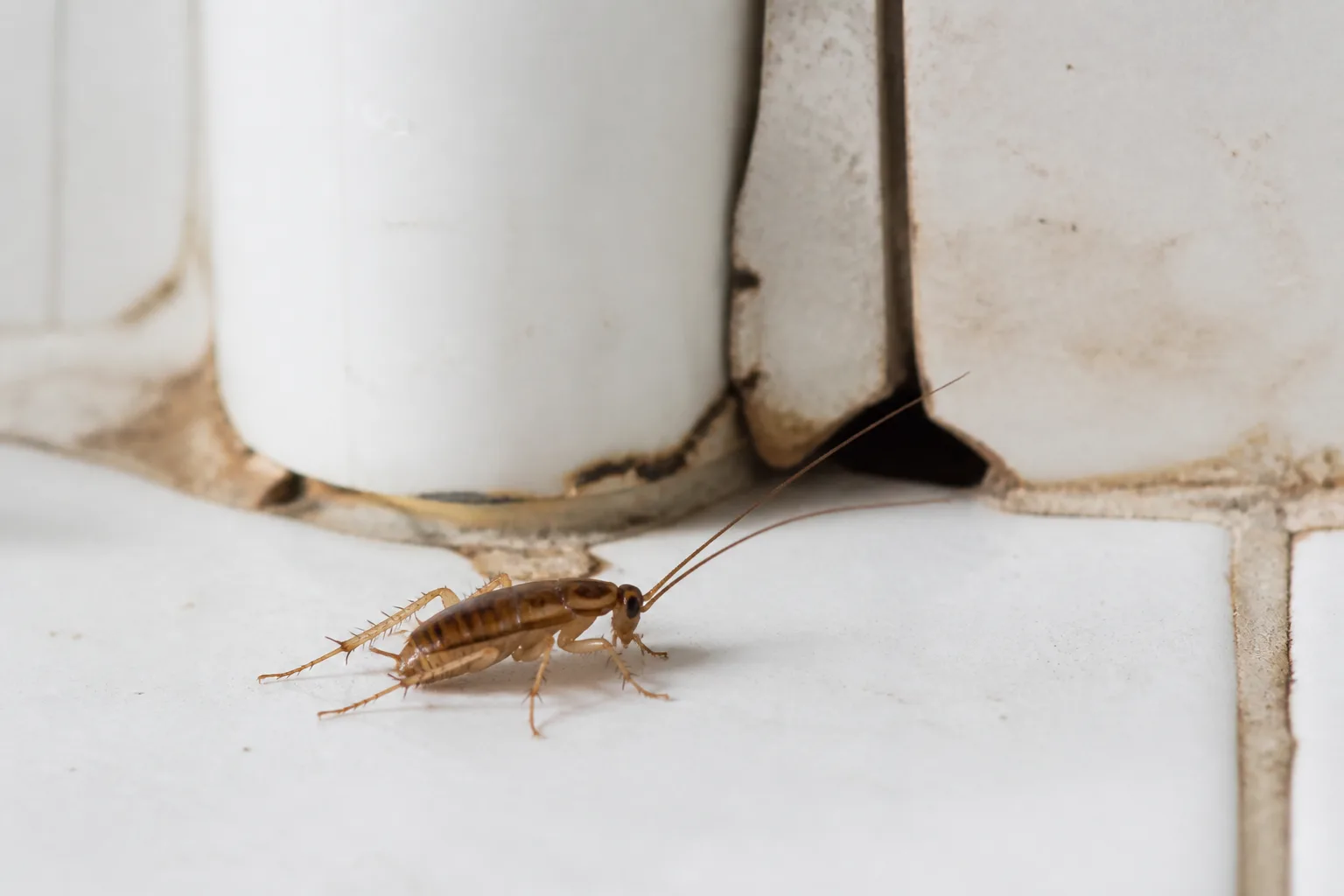
The brown-banded cockroach (Supella longipalpa) is less common than the German roach but shows up in offices, hospitals, apartments, and cluttered homes—often away from kitchens. Adults reach about ½ inch. Males are golden tan and can fly when disturbed at temperatures above 85°F. Females are darker with light bands across the wings, abdomen, and sides of the pronotum—hence the name.
Brown-banded roaches prefer warmer spots (~80°F) than Germans: the warm sides of refrigerators and televisions, behind wall art, in closet corners, and inside furniture. They feed on starch, including stamp glue and book bindings, not just kitchen crumbs. Females glue egg cases to ceilings, furniture undersides, and closet walls; cases may be clustered in deposits.
ID tip: If you see small roaches in bedrooms or living rooms but not the kitchen, brown-banded is more likely than German. Baits work but can be slower on this species than on Germans—patience and multiple bait placements matter.
Oriental Cockroach
The Oriental cockroach (Blatta orientalis) is the classic “water bug” or black beetle cockroach of basements and crawlspaces—not to be confused with true giant water bugs (Belostomatidae), which are a separate insect family. Adults are about 1 to 1¼ inches, shiny dark brown to black, and slow moving. Males have short wings; females have wing stubs and cannot fly.
Orientals love cool, damp, dark sites: floor drains, sump pits, garbage chutes, mulched foundations, and water meter boxes. They migrate indoors at night seeking moisture and may appear in bathtubs and sinks after climbing through dry drain traps. They cannot climb smooth vertical surfaces well, which is why you sometimes find them stranded in porcelain basins.
Females deposit dark reddish-brown egg cases in protected debris; development from nymph to adult can take one to two years in cool conditions—slower than Germans but populations still build in perpetually wet basements. Fix leaks, repair drain traps, and reduce exterior mulch against foundations before baiting. Our water bug control guide covers moisture-first steps for this group.
American Cockroach
The American cockroach (Periplaneta americana) is the largest common pest roach at about 1½ to 2 inches, reddish brown, with a pale yellowish band on the back of the pronotum. In the Southeast and Gulf Coast, people call large Periplaneta roaches “palmetto bugs”—a nickname that also gets applied to smokybrown, Australian, and Florida woods cockroaches, which causes endless confusion.
Americans thrive in warm, humid outdoor harborages: sewer lines, steam tunnels, zoos, barns, and heavy mulch. They enter structures through damaged sewer connections, gaps around plumbing, and door thresholds, sometimes in large numbers after heavy rain flushes them from storm systems. Indoors they stay mostly on ground floors near moisture.
They can transmit food-poisoning bacteria such as Salmonella and Shigella when they contact sewage or animal waste before crawling on surfaces. A lone American in a garage is often a seasonal invader; repeated sightings near drains warrant structural repairs plus exterior baiting in utility boxes—not kitchen foggers.
Smokybrown Cockroach
The smokybrown cockroach (Periplaneta fuliginosa) is a uniform dark mahogany insect about 1¼ to 1½ inches long with long wings. It is common in warm, humid Southern states, especially around the Gulf, though UC IPM notes it is encountered less often today than in past decades.
Smokybrowns need constant moisture to avoid desiccating. Outdoors they nest in mulch, planter boxes, woodpiles, and tree holes. Indoors they favor attics, crawlspaces, and roof lines when moisture intrusion exists—shingle gaps, clogged gutters, or AC condensate problems. Adults fly readily on warm humid nights and are also called palmetto bugs in the South.
Control focuses on reducing exterior harborages, fixing roof and gutter moisture, and placing exterior baits in water meter boxes or along foundation perimeters. Interior sprays alone rarely solve smokybrown pressure if the attic still leaks.
Australian Cockroach
The Australian cockroach (Periplaneta australasiae) looks like a slightly smaller American cockroach—about 1 inch—with a distinctive cream-colored stripe along the front edge of the forewing and pale tan markings on the head. It prefers tropical and greenhouse conditions and appears in Florida, coastal Southeast, and heated indoor plant rooms.
Outdoors Australians live in landscaping and tree holes; indoors they wander from greenhouses, atriums, and pet-rearing facilities. They occasionally damage plants and may chew book covers or fabric when populations are high. Life cycle resembles the American cockroach but on a smaller scale.
If you grow plants indoors year-round in cold climates, check pot saucers and heat mats when you see winged roaches with pale wing margins—Australian cockroaches are a common greenhouse hitchhiker.
Florida Woods Cockroach
The Florida woods cockroach (Eurycotis floridana)—another “palmetto bug”—is 1 to 1½ inches, dark reddish brown, and wingless as an adult. Its signature behavior is spraying a pungent, oily defensive secretion when handled, earning the nickname skunk roach. If you disturbed a large dark roach and smelled something sharp and unpleasant, this species is a strong suspect—in Florida and nearby warm regions only.
Florida woods roaches live outdoors under bark, leaf litter, and mulch. They occasionally wander into homes through open doors or garage gaps but rarely establish indoor infestations because they need outdoor heat and humidity. Sweep or vacuum the occasional intruder and seal entry points; broad indoor pesticide treatments are usually unnecessary.
Turkestan Cockroach
The Turkestan cockroach (Blatta lateralis) is a newer invasive species spreading through California, the Southwest, and parts of the South. Males are about 1 inch, yellowish tan with cream stripes along wing edges, and resemble small American cockroaches. Females are dark brown to black with cream markings behind the head and on short rounded wings—often mistaken for Oriental cockroaches.
Outdoors Turkestan roaches favor compost, leaf litter, water meter boxes, cracks in poured concrete, and sewer access points. They are commonly sold online as reptile feeder insects, which has accelerated spread. Females produce more eggs over their lifetime than Oriental females and are displacing Orientals in some warm, dry regions, according to UC IPM.
Female ID key: Compare edge markings—Turkestan females show cream-colored margins on the pronotum and wing buds; Oriental females are uniformly dark without those pale edge lines. Nymphs differ too: Turkestan nymphs have reddish heads and thoraxes; Oriental nymphs stay darker throughout.
Exterior bait stations in utility boxes and sealing wall penetrations work better than indoor fogging for this species. Heavy female counts indoors still warrant professional inspection.
Common Cockroach Look-Alikes You Might Mistake
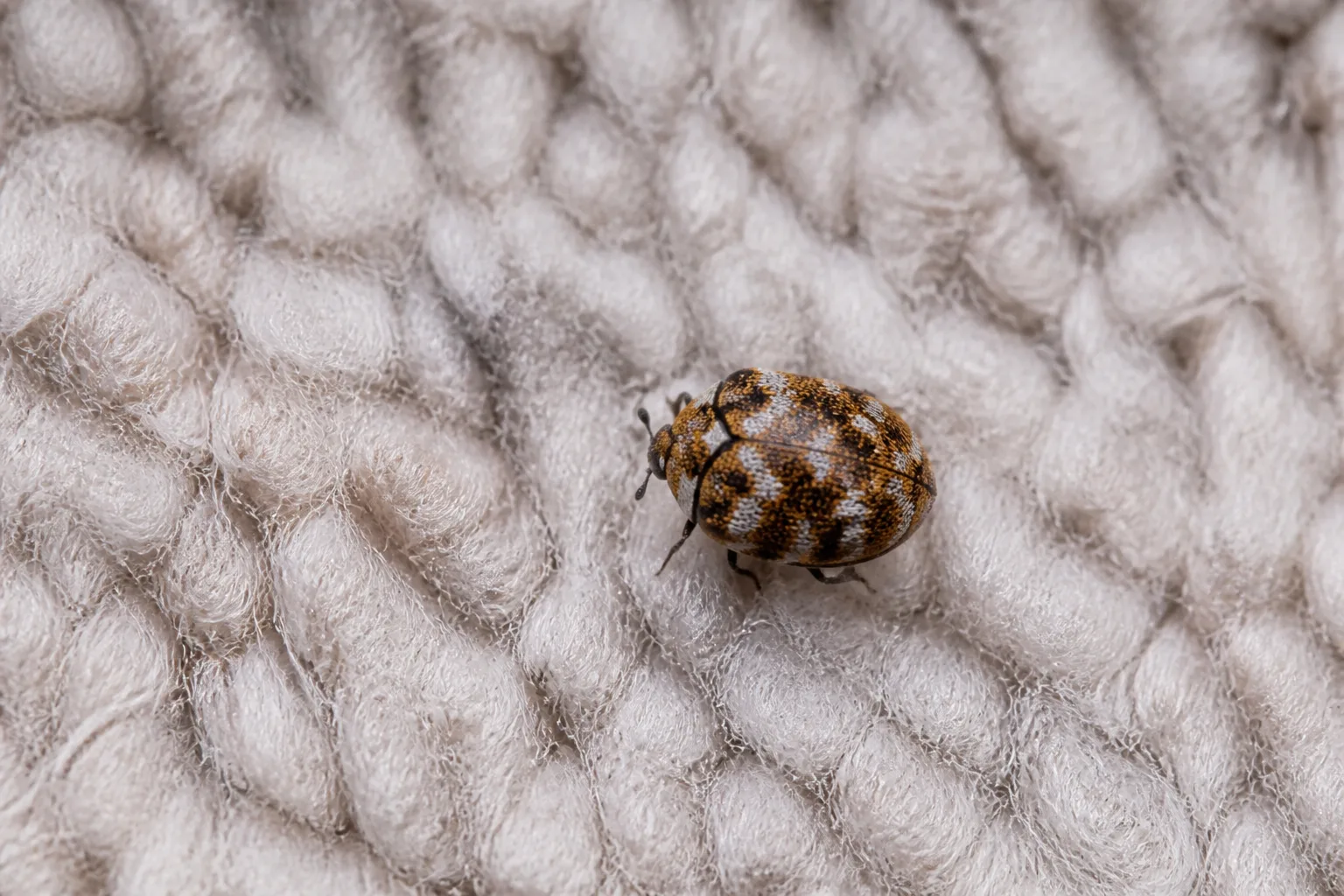
Not every small brown bug is a cockroach nymph. Location tells you as much as shape.
Pantry beetles and weevils infest flour, rice, and cereal in cabinets. They are rounded or hump-backed, often slow, and stay inside food packages—not under the stove. If the bug was in your rice bag, it is not a German cockroach.
Booklice (psocids) are tiny, pale, soft-bodied insects on damp paper, cardboard, or window sills. They indicate humidity problems, not roach infestations, and vanish when you dry the area.
Ground beetles occasionally wander indoors in fall. They have hard wing covers (unlike cockroach membranous wings) and do not breed inside.
Western conifer seed bugs and brown marmorated stink bugs are shield-shaped, slow, and show up at windows and doors in spring and fall. They want out, not your pantry.
Cockroach nymphs vs bed bug confusion: Small tan nymphs near mattress seams trigger bed bug panic. Bed bugs are flatter top-to-bottom, cannot run as fast as German nymphs, and cluster on sleeping furniture. See our bed bug look-alike guide if bedroom ID is the real question.
Field cockroach vs German: In the Southwest, gray-olive roaches with a stripe between the eyes near doors from the yard are often field cockroaches—not kitchen breeders. Check whether traps near the exterior door catch more than kitchen traps.
What to Do After You Identify the Species
Identification is step one; species-matched IPM is step two. Penn State Extension stresses sanitation, exclusion, monitoring, and targeted baits—not broadcast sprays or foggers that repel roaches into new harborages without killing the colony.
If you confirmed German or brown-banded cockroaches indoors:
- Deep-clean grease and crumbs behind appliances; fix leaks.
- Vacuum cracks and crevices; discard vacuum bag sealed outdoors.
- Deploy sticky monitors to track hot spots—see best roach traps for placement patterns.
- Apply gel baits in harborage lanes, not open counters.
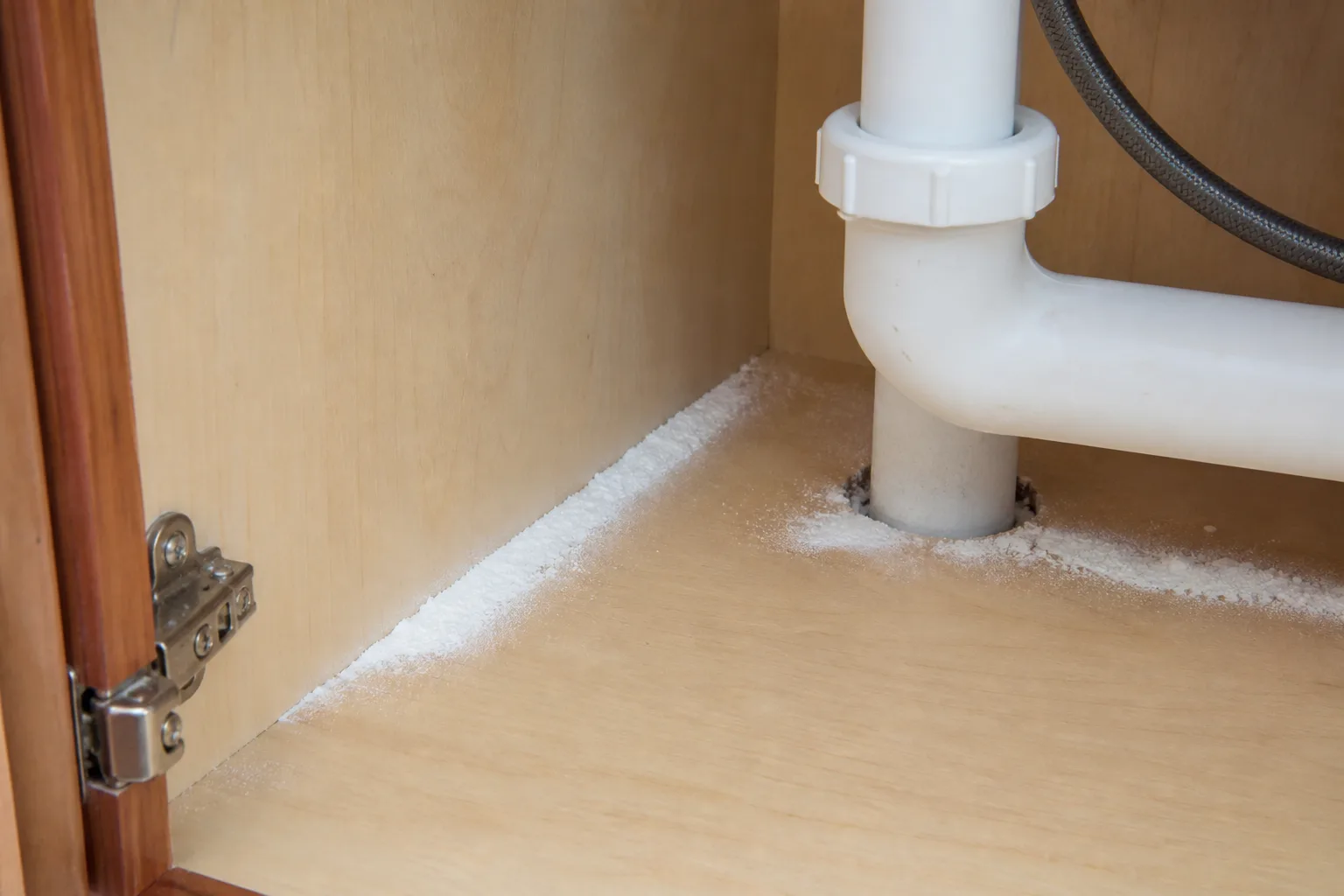
- Add boric acid dust or diatomaceous earth in dry voids only after sanitation—never as a substitute for cleaning.
If you confirmed American, Oriental, Turkestan, or smokybrown invaders:
- Repair door sweeps, screens, and pipe penetrations.
- Restore dry drain traps with water or mineral oil in unused drains.
- Reduce mulch and woodpiles against the foundation.
- Place exterior baits in water meter boxes and utility ports.
- Address sewer backups or broken cleanouts before re-treating indoors.
Skip these traps:
- Foggers and total-release aerosols—they scatter cockroaches and rarely reach egg cases in wall voids.
- Bleach as a primary roach killer—it cleans surfaces but does not resolve hidden populations; read why in does bleach kill roaches.
- Baking soda alone for German infestations—limited reach; details in does baking soda kill roaches.
Call a licensed pest professional when:
- Sticky traps still catch multiple roaches weekly after two to three weeks of thorough IPM.
- You see daytime roaches in several rooms (heavy pressure).
- You live in multi-unit housing and neighbors are untreated.
- You cannot identify the specimen but activity continues nightly.
- Anyone in the home has severe asthma worsened by suspected roach allergens.
Pros should identify species during inspection and use bait-centric programs rather than calendar spraying. Bring your trap photos and specimens—it speeds the diagnosis.
Conclusion
Eight cockroach types account for nearly every homeowner ID question in the U.S.: German and brown-banded roaches breed indoors and demand kitchen-focused baiting and sanitation; American, Oriental, Turkestan, smokybrown, Australian, and Florida woods roaches usually live outside and signal moisture, exclusion, or sewer problems when they appear inside. Size, pronotum markings, flight ability, and where you caught the insect separate them faster than any single photo online.
Run the 60-second field check, confirm with sticky traps, rule out pantry beetles and field cockroaches, then match your species to the right control path. One roach does not always mean infestation—but knowing which roach it was tells you whether you need a deep kitchen IPM campaign, a basement drain repair, or simply to shut the garage door at dusk.



