7 Bugs That Look Like Cockroaches: ID Guide
Found a bug that looks like a cockroach? Compare seven common lookalikes by shape, movement, location, season, and the right next step.
A brown, oval insect on the floor can trigger an instant cockroach alarm. That reaction makes sense: several unrelated insects share a dark color, a low profile, and the habit of appearing when the lights are off. But “brown and fast” is not an identification. A ground beetle may be helping in the garden, a June bug may have followed a porch light, and a bed bug requires a completely different inspection than a kitchen roach.
The safest approach is to identify the insect before you spray. Start with its body shape, movement, and location. Then match the response to the species: monitor and remove food and moisture for a suspected cockroach, leave a beneficial outdoor beetle alone, or report a possible tree pest. Here are seven common cockroach lookalikes and the clues that separate them.
Start With These Three Fast ID Checks
Before you reach for a shoe or pesticide, pause long enough to answer three questions:
- Where was it? A mattress seam, kitchen cabinet, basement drain, lawn, tree trunk, pond edge, and porch light each point toward a different group of insects.
- How did it move? Cockroaches usually run quickly and can squeeze into cracks. Crickets jump, June bugs fly clumsily toward lights, ground beetles run over soil, and true water bugs swim or fly from water.
- What is the outline? Look for a shield, hard wing covers, exceptionally long antennae, powerful hind legs, or a flat apple-seed shape rather than relying on color.
If the insect is still nearby, take a photo from above beside a coin or ruler. A clear picture of the back, plus a second picture showing where you found it, is more useful than a blurry close-up. Avoid crushing an unknown bug on bedding or upholstery; some species leave stains or odor, and the specimen may be needed for confirmation.
Where did you find it, and how did it move?
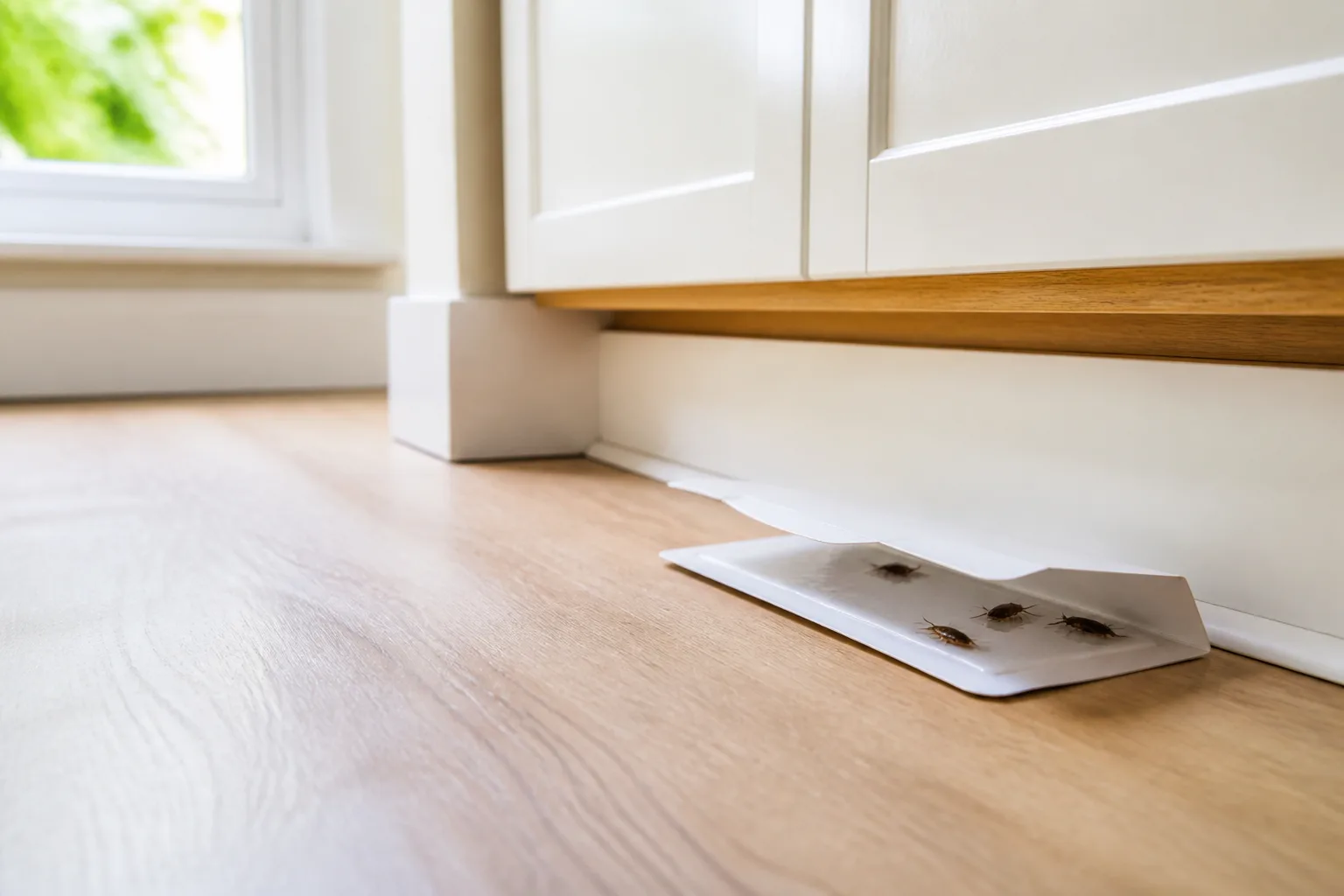
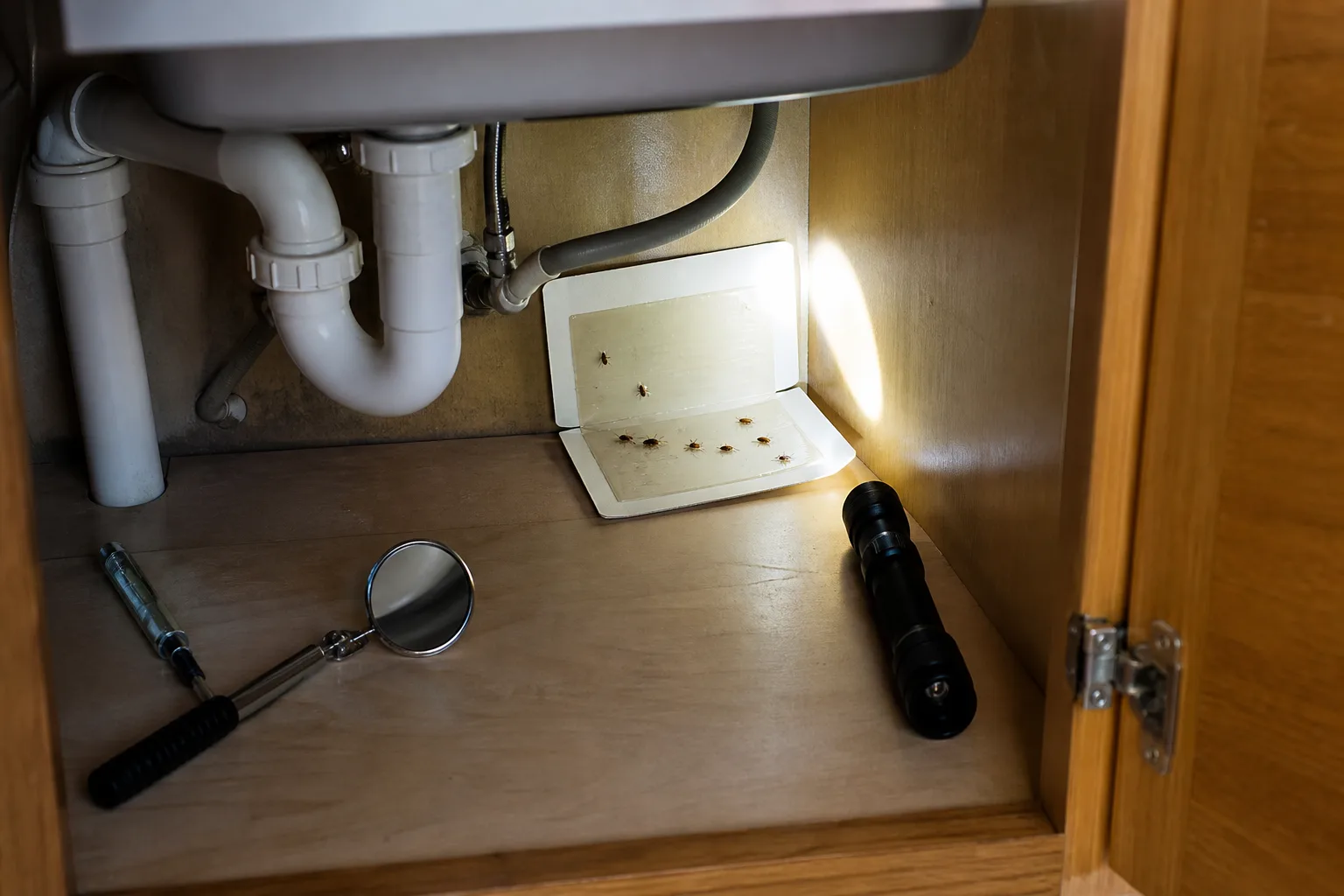
Location is a powerful filter. A roach sighting is most meaningful when it repeats in a warm, dark, food- or water-rich area such as a kitchen, bathroom, under a sink, behind an appliance, or around plumbing. The National Pesticide Information Center recommends glue boards or sticky traps to learn where cockroaches are traveling, along with leak repair, cleaning, exclusion, and careful monitoring as part of integrated pest management (National Pesticide Information Center).
By contrast, an insect under mulch or a stone may be an outdoor beetle. One circling a light on a summer night may be a June beetle. One on a hardwood tree deserves a closer look for Asian longhorned beetle signs. One at a bedroom seam should shift your attention to bed bug evidence rather than a general “roach spray.”
Look at the body, not just the color
Color varies within the same insect group and changes with age, lighting, and whether an insect has recently fed. Instead, check these features:
- Antennae: Cockroaches have long, threadlike antennae, but Asian longhorned beetles have antennae that are strikingly long—often longer than the body—and banded black and white.
- Legs: Crickets have oversized, muscular hind legs for jumping. Giant water bugs have claw-like front legs for grasping. Ground beetles have strong running legs but no cricket-like jumping legs.
- Back: Beetles have hardened wing covers. Stink bugs have a recognizable shield outline. Bed bugs are wingless and broadly oval.
- Behavior: A jump, chirp, flight toward a light, defensive odor, or sudden escape into water can be more diagnostic than a brown shell.
What a Real Cockroach Looks Like
Adult cockroaches generally have a flattened, oval body, six spiny legs, long antennae, and wings folded over the back. Depending on the species, an adult may be black, brown, reddish brown, or tan and may range from about half an inch to nearly two inches. Young cockroaches, called nymphs, are smaller, wingless, and often look darker or more uniformly colored than adults.
The setting matters as much as the silhouette. Roaches seek shelter, food, warmth, and water. Look for additional signs around cracks, cabinets, sinks, appliances, pipes, or wall voids: droppings, shed skins, egg cases, a musty odor, or repeated sightings. One accidental outdoor visitor is not the same evidence as a pattern of nymphs and adults in a kitchen.
“Palmetto bug” is also a regional nickname commonly applied to certain cockroaches, not a separate harmless insect. If an indoor insect fits the roach shape, do not dismiss it because someone calls it a water bug or palmetto bug. For a species-by-species comparison, see our guide to types of roaches.
1. True Water Bugs (Giant Water Bugs)
True giant water bugs are aquatic insects, not household cockroaches. They are much larger and heavier-looking than most roaches—often about 2 to 2½ inches long—with an olive-brown body and powerful, claw-like front legs. They live in or around shallow ponds and lakes and may be drawn to lights, which explains why one can turn up in a yard, parking area, or near a recreation space.
Their behavior is another giveaway. A giant water bug is associated with water and may swim, fly toward a light, or remain still with its front legs ready to grasp prey. University of Minnesota Extension describes these insects as predators and warns that they can deliver a painful defensive jab when handled. Do not pick one up bare-handed. Use a container and stiff card to move it away from a doorway, or simply leave it where it is if it is outdoors.
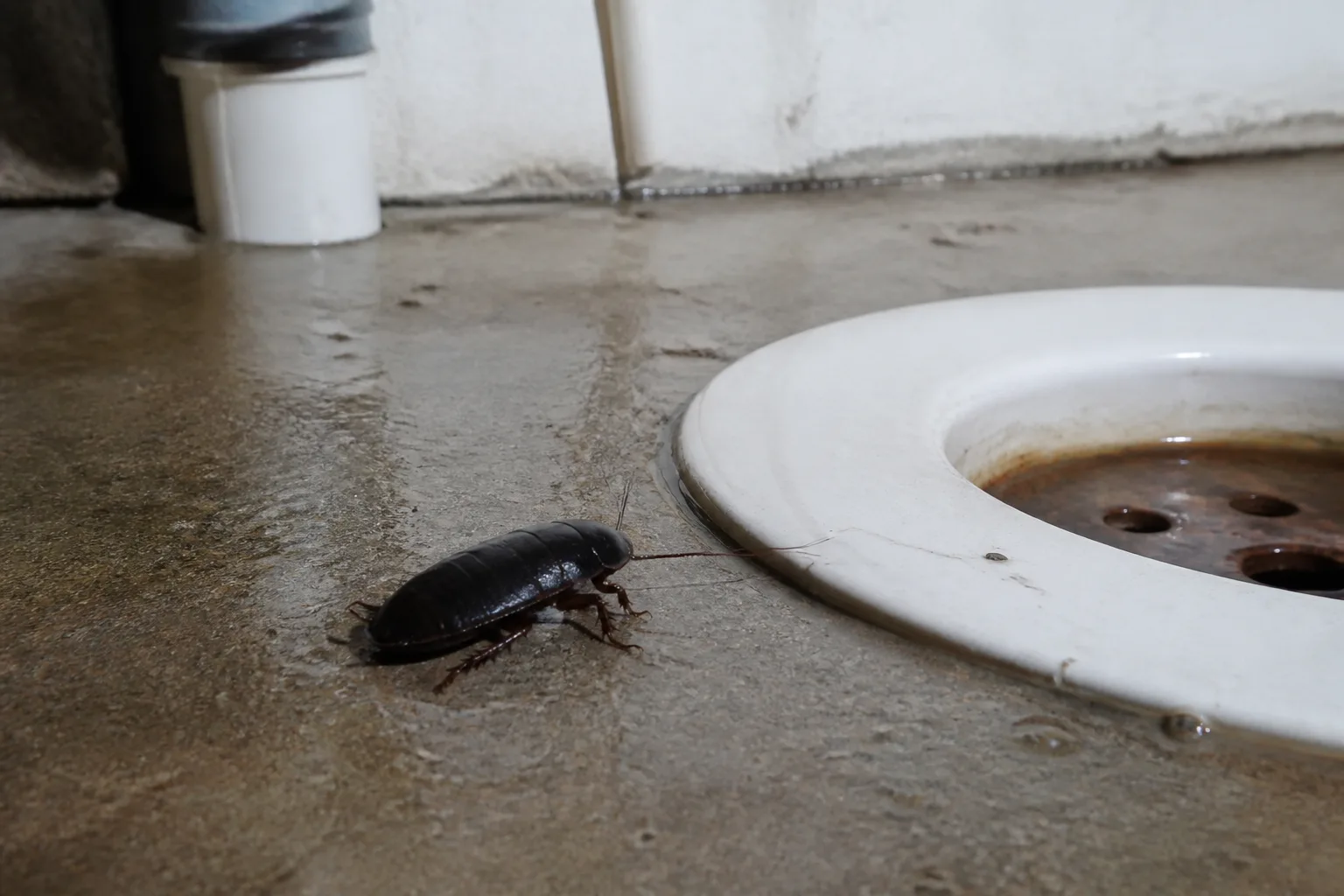
The phrase “water bug” causes a second kind of confusion indoors. In some regions, people use it for an Oriental cockroach or another dark roach found in a damp basement. That insect is not a true giant water bug. If the mystery insect is small enough to hide under a cabinet, has a distinctly roach-like flattened body, and appears repeatedly near drains or leaks, investigate it as a possible cockroach. Our guide on what “water bugs” can mean in a home explains that terminology and the damp-area inspection.
2. Asian Longhorned Beetles
An Asian longhorned beetle is a serious tree pest, but it is easy to mistake at a glance for a large black cockroach. Adults are about 1 to 1½ inches long, shiny black, and marked with irregular white spots on the wing covers. Their most obvious feature is the pair of exceptionally long antennae, typically black and white banded. The body is more elongated and beetle-like than a roach, and the wing covers form a hard shell.
The setting should settle much of the question. Find one on a hardwood trunk, branch, log, or firewood pile and inspect the tree rather than the kitchen. Asian longhorned beetles attack hardwoods such as maple, birch, elm, horse chestnut, poplar, and willow. UConn’s Home & Garden Education Center notes that the insect can leave oval or round pits in the bark, sawdust-like frass, sap, yellowing or drooping foliage, and round exit holes in the wood (UConn Home & Garden Education Center).
The tree warning that changes what you do next
Do not move a suspected Asian longhorned beetle, cut branches, or transport firewood to another property while you are seeking an identification. Photograph the insect and the tree, note the location, and contact your state plant-health agency or the USDA APHIS reporting channel for current guidance. University of Maine Cooperative Extension emphasizes the beetle’s long antennae, white spotting, hardwood hosts, and the importance of not moving firewood (University of Maine Cooperative Extension). This is a reporting and containment situation, not an indoor roach treatment.
3. Ground Beetles
Ground beetles can look roach-like because many are dark, fast, and active at night. Look more closely and you will usually see a shiny, hard-shelled body that is rounded or elongated, shorter-looking thicker antennae, and strong legs built for running. Many are black or brown; others have a metallic green, blue, or bronze sheen. They are usually found on the ground under stones, leaf litter, logs, compost, or mulch rather than deep inside a cabinet.
The Royal Horticultural Society describes ground beetles as mostly soil-dwelling predators that hunt other invertebrates. They can help consume slugs, caterpillars, and other garden prey, so their presence outdoors is often a reason to observe rather than eradicate (Royal Horticultural Society).
Why a ground beetle may be a garden ally
If a ground beetle wanders indoors, vacuum it or guide it into a container and release it outside. Check door sweeps, screens, and gaps if indoor visitors repeat. Outdoors, avoid broad insecticide applications simply because a shiny black beetle is unfamiliar. Mother Earth News notes that ground beetles shelter in soil-surface habitats such as mulch and compost and feed at night on soft-bodied garden pests (Mother Earth News). Their flattened hard back and ground-running behavior are the useful distinction from a cockroach hiding around indoor food and moisture.
4. June Bugs and May Beetles
June bugs and May beetles are stout beetles in the genus Phyllophaga. Adults are commonly about ½ to a little over 1 inch long and may be reddish brown, dark brown, or nearly black. They are most conspicuous on warm nights in late spring and summer, when they fly noisily toward porch lights, windows, and screens. A roach generally prefers dark cover; a beetle repeatedly battering a light is following a very different behavioral clue.
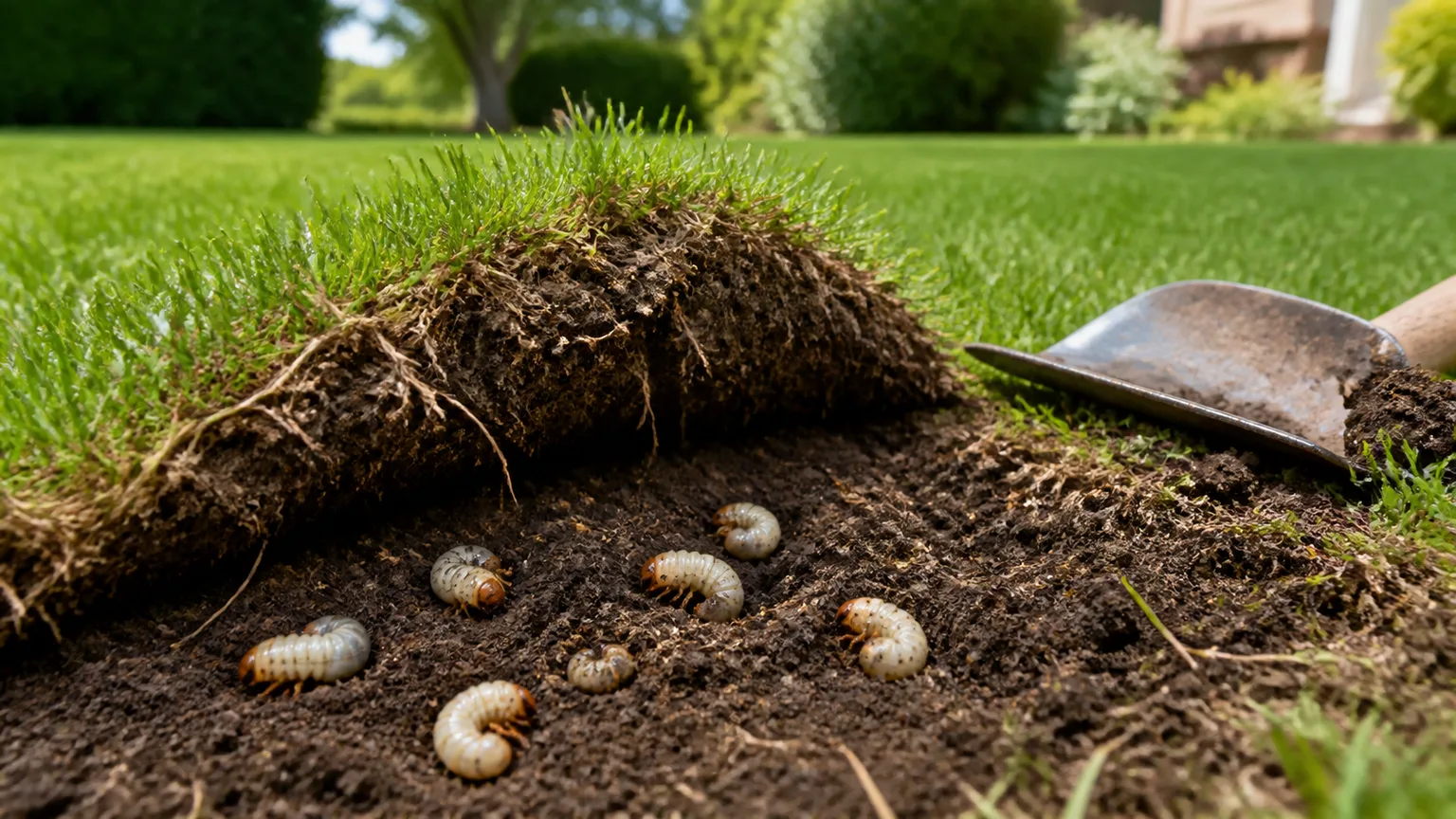
University of Minnesota Extension describes May/June beetles as shiny or hairy beetles that appear in May and June and are harmless to people. Adults may feed on foliage, while the white, C-shaped larvae live in soil and feed on roots. University of Maine Cooperative Extension notes that the larvae can affect turf and that the life cycle may extend over more than one season, depending on the species and conditions (University of Minnesota Extension, University of Maine Cooperative Extension).
One June bug indoors is usually an accidental light-driven visitor. Remove it with a cup and paper, then check screens and exterior lighting. If you are concerned about lawn damage, diagnose the turf and sample for grubs before treating; brown patches have many causes, and killing adult beetles inside the house will not solve a root-feeding problem outdoors.
5. Crickets
Crickets are often confused with roaches because house crickets are brownish, nocturnal, quick, and equipped with long antennae. Their body plan gives them away: the hind legs are enlarged for jumping, the antennae are threadlike, and the body often looks narrower and more arched than a flattened cockroach. House crickets are yellowish brown with dark bands on the head, usually about ¾ to ⅞ inch long, and adults have wings.
The National Pest Management Association identifies chirping as a male house cricket behavior and notes that crickets are attracted to lights and may seek warm, moist shelter as temperatures drop (National Pest Management Association). A cricket that springs away, chirps from a wall void, or gathers near a bright door is not behaving like a hidden kitchen roach.
For recurring indoor crickets, reduce moisture, improve ventilation, move woodpiles and dense debris away from the foundation, repair screens, seal gaps, and make entry points less attractive. Vacuum individual visitors. Avoid using a general indoor spray without identifying the route; exclusion and moisture reduction usually address the reason crickets are entering.
6. Bed Bugs and Cockroach Nymphs
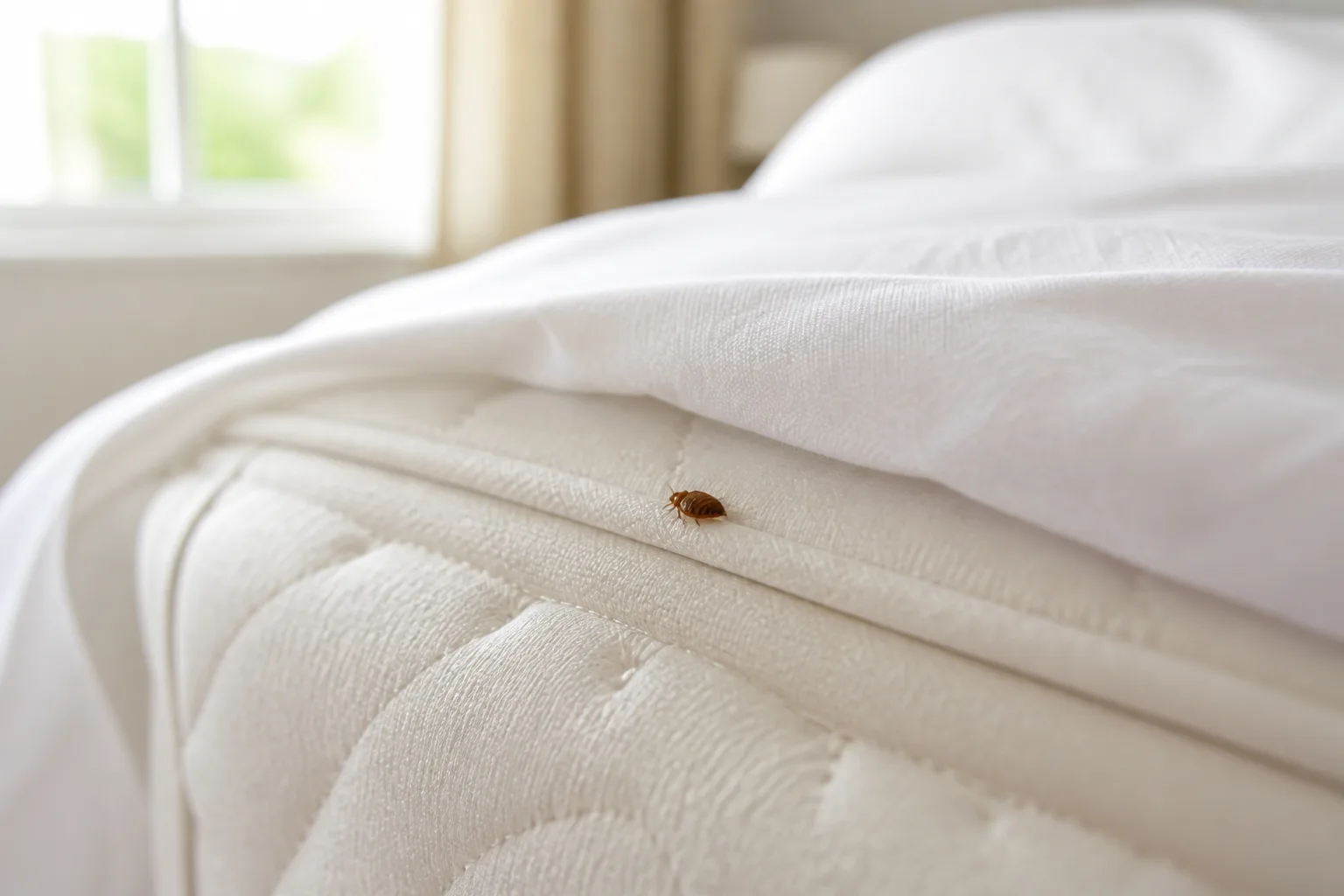
Bed bugs and young cockroaches are a particularly stressful mix-up because both can be small, brown, oval, and wingless. A bed bug adult is about the size of an apple seed—roughly 5 to 7 millimeters—and has a broad, flat, oval body when unfed. After feeding, it becomes more elongated and reddish brown. Bed bugs do not have wings, and they are associated with sleeping areas, upholstered furniture, luggage, and cracks near a bed rather than a kitchen sink.
The U.S. Environmental Protection Agency emphasizes that accurate identification prevents wasted treatment. Look for adults, pale eggs, shed skins, dark fecal spotting, or cast skins around mattress seams, bed frames, and nearby hiding places; do not identify bed bugs from bites alone (U.S. Environmental Protection Agency).
A cockroach nymph is usually more elongated and active-looking, with long antennae and small appendages at the rear. It is more likely to vanish into a crack in a kitchen, bathroom, utility area, or other warm, food-and-water-rich space. These are tendencies, not a substitute for a close photograph or specimen, so save the insect if you can.
Bedroom evidence matters more than a bite
If you find the insect beside a mattress, do not immediately fog or spray the room. Inspect seams, the bed frame, headboard, nearby furniture, and clutter. If you find repeated roach-like insects in the kitchen instead, place labeled sticky monitors along walls and under appliances and use the results to map activity. Our guide to bugs that look like bed bugs can help with the wider comparison, while integrated pest management indoors covers a staged response.
7. Brown Marmorated Stink Bugs
Brown marmorated stink bugs are broad and shield-shaped rather than smoothly oval. Adults are mottled brown and about 17 millimeters—roughly two-thirds of an inch—long. The pale bands on the antennae and the alternating light and dark banding on the rear edge of the wings are useful clues. Nymphs are more colorful and may be red, orange, black, or yellow before they reach the muted adult pattern.
These insects feed on plants outdoors and often gather around buildings in late summer and fall as they search for protected overwintering sites. Epic Gardening identifies them as true bugs in the family Pentatomidae and explains that brown marmorated stink bugs release a foul odor when disturbed or crushed (Epic Gardening). If the insect has a shield outline and smells when handled, it is not a cockroach.
The fall-entry clue and the safe removal
For a stink bug indoors, vacuum it and empty the vacuum contents outside, or use a cup and paper. Do not crush it on curtains, walls, or upholstery. Penn State Extension recommends mechanical exclusion: repair screens and seal cracks around windows, doors, siding, utility penetrations, chimneys, and fascia. It also cautions that indoor foggers are not a durable solution for overwintering stink bugs (Penn State Extension).
If you are finding them on plants, inspect leaves and fruit and remove small numbers by hand. A plant infestation is a different problem from insects sheltering in a wall or attic. Do not treat an entire room or garden solely because one shield-shaped visitor appeared near a light.
What to Do With the Insect You Found
Use the least disruptive response that fits the evidence:
| First clue | More likely match | Best next step |
|---|---|---|
| Repeated flat insects near food, water, plumbing, or appliances | Cockroach | Photograph, place sticky monitors, clean food residue, fix leaks, and seal gaps. |
| Very large olive-brown insect with claw-like front legs near water | Giant water bug | Do not handle bare-handed; move it outdoors with a container. |
| Shiny dark beetle running under mulch or stones | Ground beetle | Leave it outdoors; release an indoor visitor and close entry gaps. |
| Stout beetle flying at porch lights in late spring or summer | June bug/May beetle | Remove it and inspect screens; sample turf before treating for grubs. |
| Long hind legs, jumping, or chirping near a bright entry | Cricket | Reduce moisture, improve exclusion, and vacuum visitors. |
| Small flat oval insect at mattress seams or bed frame | Bed bug | Preserve the specimen and inspect the sleeping area; do not rely on bites alone. |
| Shield-shaped mottled insect, often entering in fall, with odor when crushed | Brown marmorated stink bug | Vacuum or cup-and-card remove it, then seal entry points. |
If you cannot identify the insect, do not compensate for uncertainty with more product. Take two clear photos, record the room or outdoor location, note the date and time, and preserve a specimen in a small container if safe to do so. A local extension office, university insect diagnostic service, or qualified pest professional can often identify a well-lit image.
For a suspected cockroach, inspect first and monitor rather than treating blindly. Put glue boards along walls and behind appliances, check under sinks and around pipes, clean crumbs and spilled drinks, secure pet food, repair leaks, and caulk openings. NPIC’s cockroach IPM guidance recommends combining sanitation, moisture control, exclusion, monitoring, and label-directed treatment instead of depending on a single spray. If monitors show activity, our guide to the best roach traps can help you choose a monitoring approach.
When to save a specimen or call for help
Save a specimen or seek help when the consequence of a wrong identification is high. That includes repeated small roaches or nymphs indoors, multiple insects around a bed, an unusual beetle on a hardwood tree, a large defensive insect near water, or activity in a shared-wall apartment. Ask for help sooner if someone in the home has asthma or allergies, if a child or pet may have contacted a pesticide, or if the infestation is beyond what you can inspect safely.
Never transport suspected Asian longhorned beetles or firewood to another location. For any pesticide, read the current label, keep people and pets away as directed, and avoid indoor foggers as a catch-all response. Identification is not just about naming a bug—it is how you avoid harming a helpful insect, spreading a tree pest, or delaying the right treatment for a real cockroach or bed bug problem.
Conclusion
Seven different insects can look roach-like at a quick glance, but their clues are surprisingly practical. Water bugs point to ponds or, in indoor slang, sometimes a damp-area roach. Longhorned beetles belong on a tree-health watch list. Ground beetles often help in the garden. June bugs follow lights, crickets jump, bed bugs leave bedroom evidence, and stink bugs have a shield shape and a memorable odor.
When in doubt, photograph the insect, record where it was found, and identify before treating. A few minutes spent on shape, movement, and location can turn a frightening mystery into a simple removal—or catch a pest problem while it is still manageable.