10 Bugs That Look Like Bed Bugs (ID Guide)
Found a tiny brown bug in bed? Compare 10 common bed bug lookalikes—fleas, bat bugs, carpet beetles, and more—with field tests, photos, and what to do next.
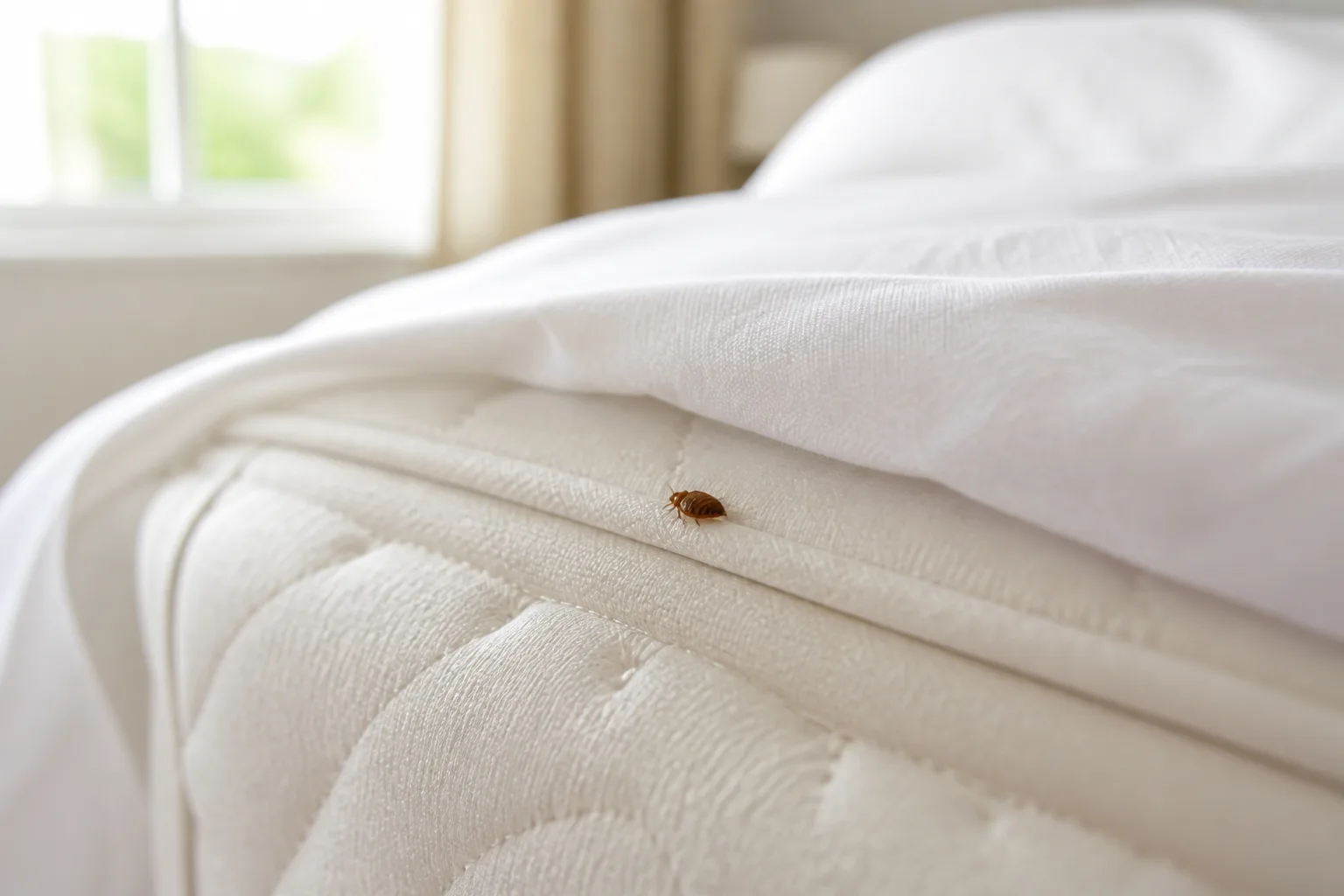
You flip back the sheet and spot a pinhead-brown speck crawling along a seam. Your stomach drops. Bed bugs are the first guess for almost everyone—and sometimes that guess is right. But fleas, carpet beetle larvae, cockroach nymphs, bat bugs, booklice, and several other bed bug lookalikes show up in bedrooms, couches, and pet beds with similar size and coloring. Treating the wrong pest burns cash, delays the real fix, and can make an actual bed bug infestation harder to control later.
This guide walks you through real bed bug field marks, three fast tests you can run in under a minute, and ten insects commonly mistaken for bed bugs—with what each one eats, where it hides, and what to do instead of defaulting to bed bug heat treatment.
Start Here: Is It Really a Bed Bug?
Before you compare lookalikes, lock in what an actual common bed bug (Cimex lectularius) looks like on your mattress, not in a panic Google thumbnail.
Real Bed Bug Field Marks
Adult bed bugs are wingless, six-legged true bugs about 4 to 7 millimeters long—roughly the size of an apple seed or Lincoln’s head on a penny (CDC). Unfed adults are reddish-brown, oval, and very flat top to bottom. After a blood meal they swell, elongate slightly, and turn more red. Immature nymphs are smaller, paler, and nearly translucent until they feed.
Key morphology you can see without a microscope:
- Six legs and two four-segmented antennae
- No wings (only tiny wing pads on adults)
- Short, broad head with a proboscis tucked beneath at rest
- Horizontally flattened body—not compressed side-to-side like a flea
Bed bugs crawl; they do not jump or fly. Purdue Entomology notes they hide in narrow cracks by day and emerge at night to feed (Purdue Extension).
Infestation Signs Beyond the Insect
A lone bug on a windowsill is not the same story as a cluster in sleeping furniture. Look for multiple clues together:
- Dark fecal spots (digested blood) on seams, tags, and box springs
- Pale shed skins from molting nymphs
- Small blood smears on sheets when engorged bugs are crushed
- Live bugs tucked in mattress piping, headboard joints, and nightstand cracks
- In heavy infestations, a sweet, musty, “buggy” odor (UC IPM)
Important limitation: Bites alone cannot confirm bed bugs. Mosquito, flea, and spider bites can look similar, and some people show no reaction at all. UC IPM is explicit: the only reliable confirmation is finding the insect or its signs in the sleeping area (UC IPM).
60-Second Identification Tests
When you only have one bug and shaky hands, run these three checks before you buy mattress encasements or schedule heat treatment.
Count the Legs
Six legs points to insects (bed bugs, fleas, beetles, lice, cockroach nymphs). Eight legs means arachnids—ticks or mites—not bed bugs. This single test eliminates half the midnight confusion.
Watch How It Moves
- Bed bugs: steady crawlers on fabric; no jumping
- Fleas: disappear in a snap—they jump long distances
- Ticks: slow crawlers; may stay attached to skin for days
- Cockroach nymphs: quick scuttlers, often near kitchens or drains
- Booklice: tiny, almost ghost-like on humid paper or moldy window sills
Put the bug on white paper. Tap the paper. Fleas launch; bed bugs lumber.
Check Where You Found It
Location is a cheat code:
| Where you found it | Likely suspects |
|---|---|
| Mattress seam, headboard, sofa where you sleep | Bed bugs, bat bugs, swallow bugs, fleas |
| Pet bed, carpet near dog crate | Fleas |
| Pantry, birdseed, pet food | Spider beetles, grain pests |
| Wool rug, closet, stored sweaters | Carpet beetles (often larvae) |
| Attic, wall void near bat roost | Bat bugs |
| Eaves, barn, abandoned bird nest | Swallow bugs |
| Scalp, behind ears | Head lice—not bed bugs |
| Kitchen, bathroom, under sink | Cockroach nymphs |
| Houseplant soil, damp pot saucer | Oribatid mites |
If the bug was on a kitchen counter and your mattress is clean, think twice before assuming bed bugs.
Fleas
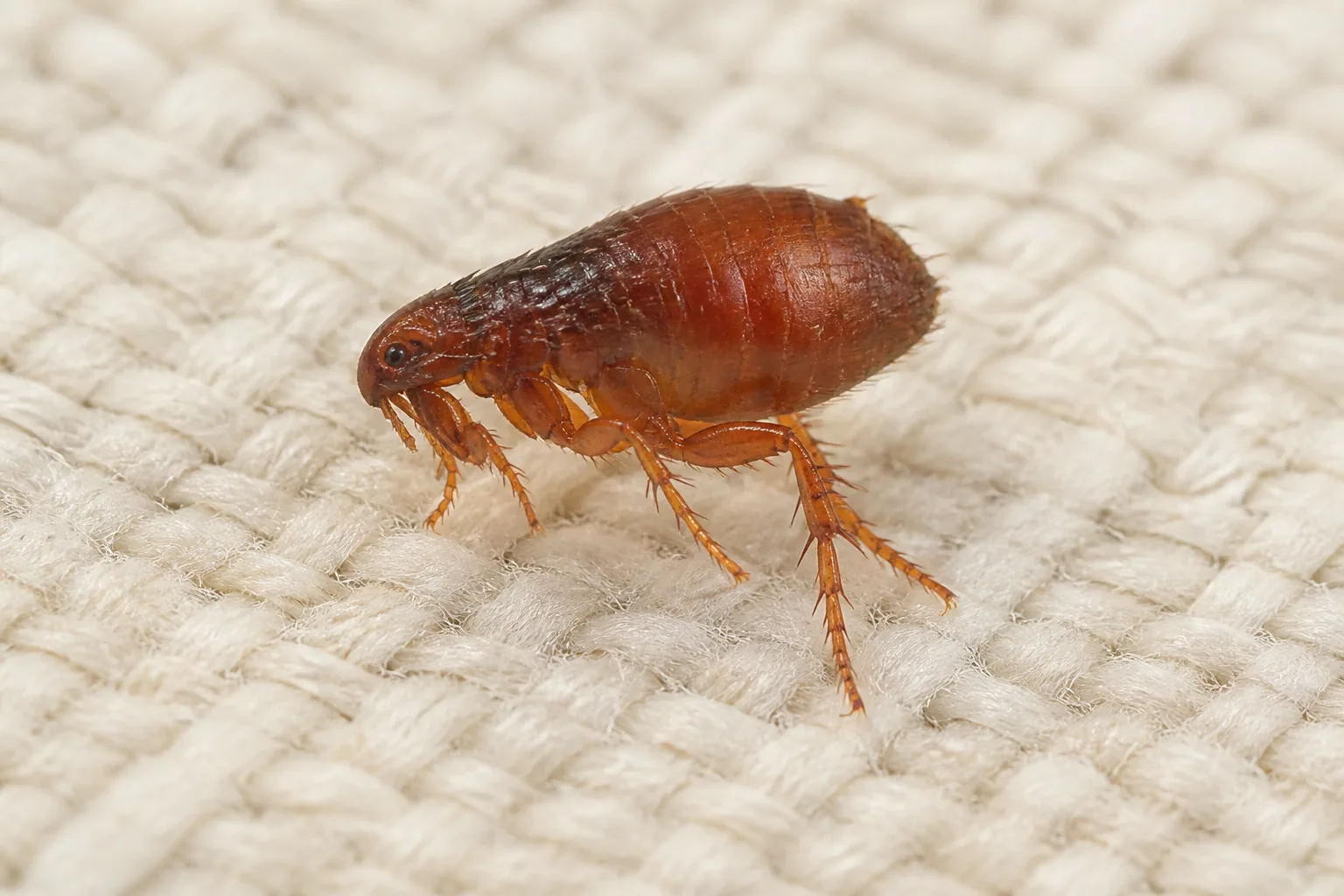
Fleas (Pulex species on pets) are the most common blood-feeding lookalike in homes with cats or dogs. Adults are dark reddish-brown, wingless, and about 1/8 inch long—smaller than most fed bed bugs.
Key distinctions:
- Body flattened side-to-side, not top-to-bottom like a bed bug
- Large hind legs built for jumping
- Often found on pets, pet bedding, and carpet—not clustered in mattress piping
Habits: Fleas jump host to host. Human ankles and waistlines get hit when the pet is the main reservoir.
What to do instead of bed bug treatment: Treat the pet with a vet-recommended flea product, wash pet bedding hot, vacuum daily (empty canister outside), and consider yard treatment if pets go outdoors. Bed bug mattress encasements will not fix a flea population.
Booklice (Psocids)
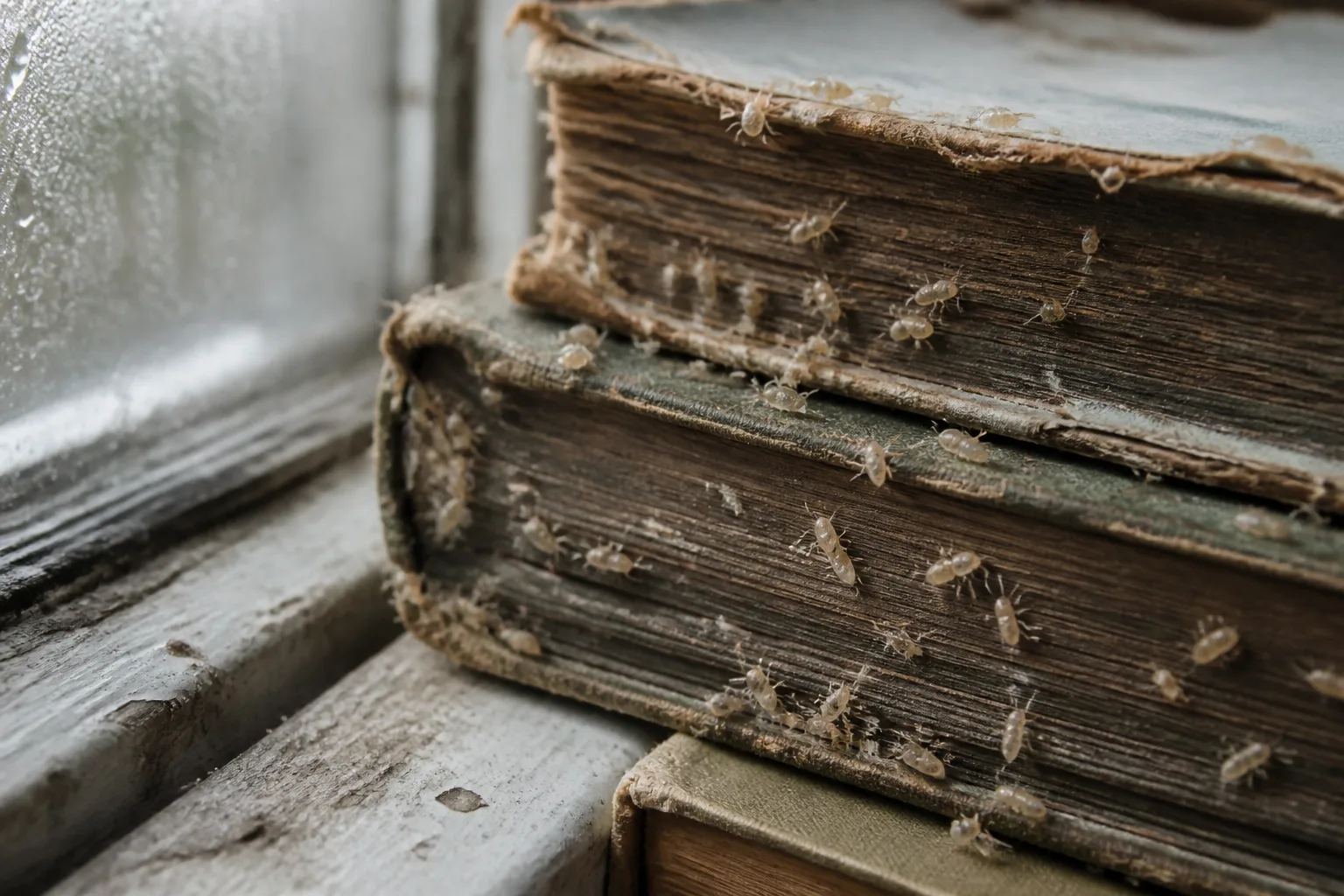
Booklice (order Psocoptera) are not lice and do not suck blood. They feed on mold, mildew, starch, and glue in damp paper, wallpaper paste, and cardboard.
Key distinctions:
- Much smaller than bed bugs—often 1–2 mm, pale gray to yellow
- Soft body, large head relative to thorax; some species have wings
- Found in humid bathrooms, books, stored paperwork, not blood spots on sheets
Habits: Thrive above 50% relative humidity. A bathroom renovation leak or overwintered humidifier can trigger blooms.
What to do instead: Lower humidity (dehumidifier, exhaust fan), discard moldy paper, vacuum cracks, fix moisture. No bed bug pesticide needed; they are a moisture problem, not a biting infestation.
Spider Beetles
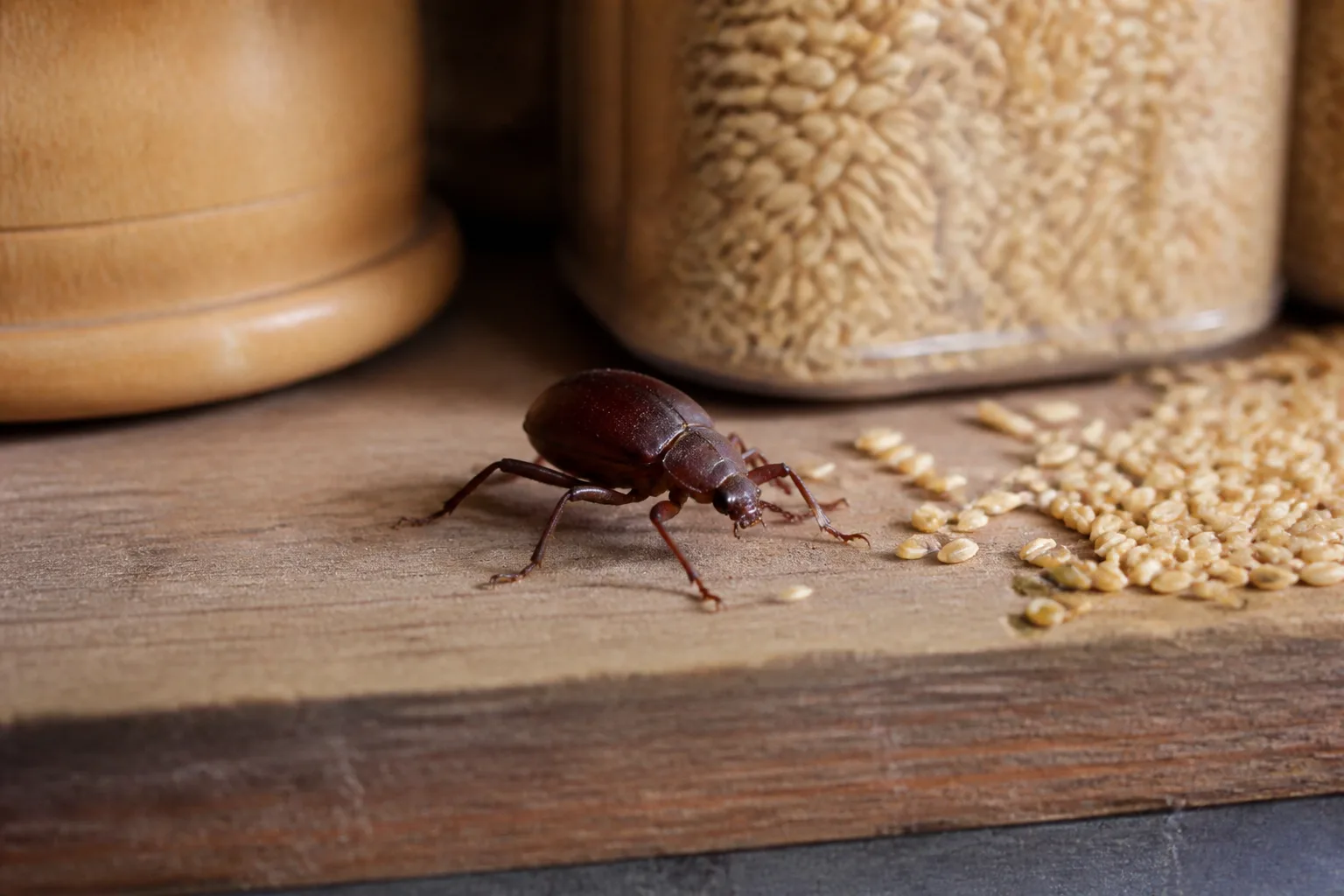
Spider beetles (family Ptinidae) get their name from a globe-shaped abdomen and long legs—they look like tiny spiders at a glance. Color runs shiny brown to reddish-black.
Key distinctions:
- Hard, shiny exoskeleton (bed bugs look duller and softer)
- Head attached directly to body with no obvious “neck”
- Wings present (bed bugs are wingless)
- Found in pantries, attics, rodent nests, and grain spillage—scavengers, not bed parasites
Habits: Feed on dried foods, animal droppings, dead insects, and bird nests. They do not bite humans.
What to do instead: Find and discard infested food, deep-clean shelves, seal cracks, address rodent or bird nest sources in walls. Sticky traps help monitor after cleanup.
Ticks
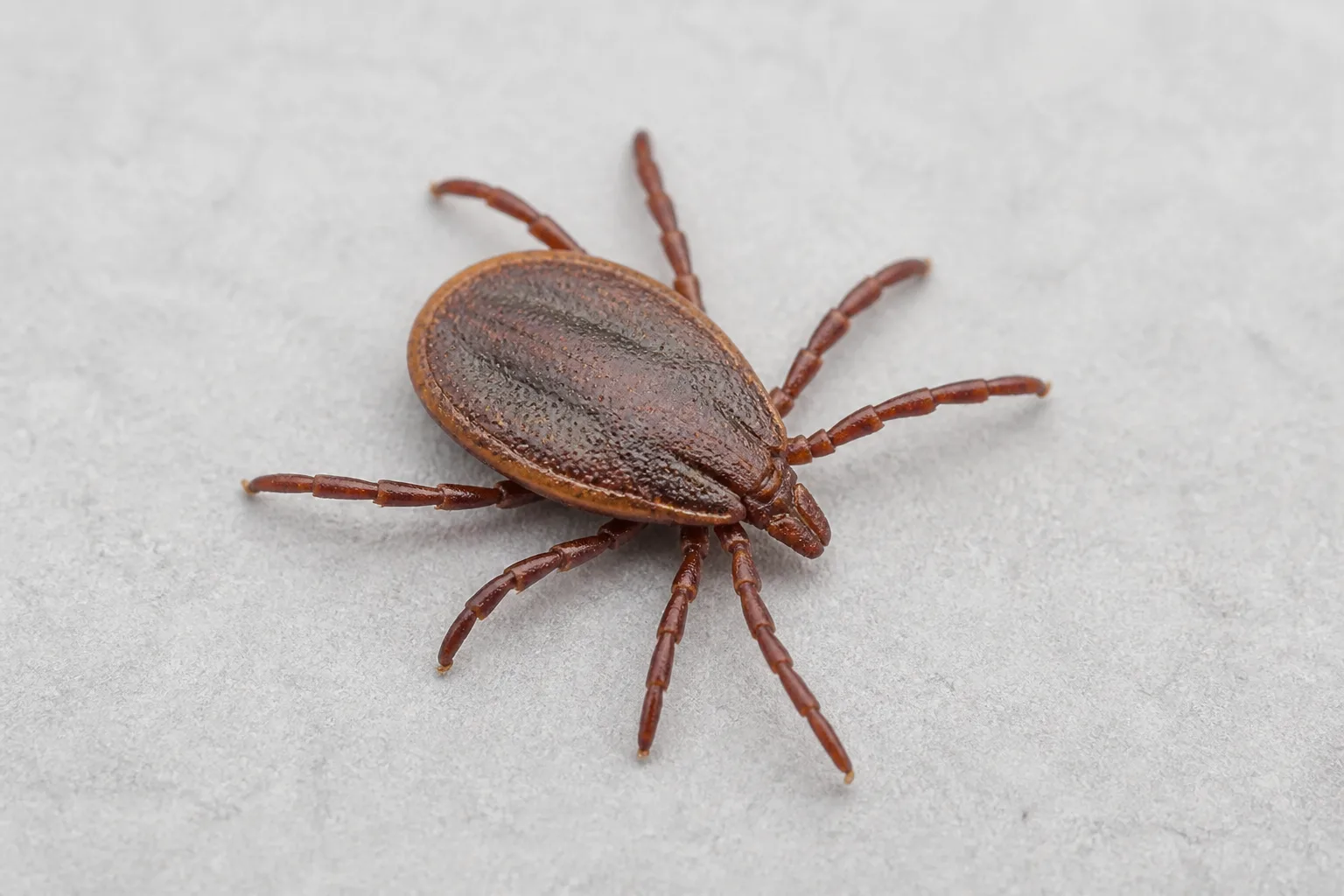
Ticks are eight-legged arachnids, not insects. Unfed, many species are flat and reddish-brown like unfed bed bugs. After feeding, they swell and lighten—opposite of a blood-filled bed bug, which turns darker red.
Key distinctions:
- Eight legs (bed bugs have six)
- Dorsal shield on back; bed bugs show horizontal banding on abdomen
- Often attached to skin for extended feeding; bed bugs feed briefly and leave
Habits: Ticks hitchhike on pets and clothing from grassy or wooded yards. Indoor sightings often trace to a dog bed or clothing pile.
What to do instead: Remove attached ticks with fine-tipped tweezers (pull straight up), save the specimen if illness is a concern, treat pets with vet-directed preventives, and consult a physician if you develop fever or rash. Lyme disease and other tick-borne illnesses make mis-ID here more serious than a bed bug scare (CDC distinguishes bed bugs do not spread disease; ticks do).
Carpet Beetles
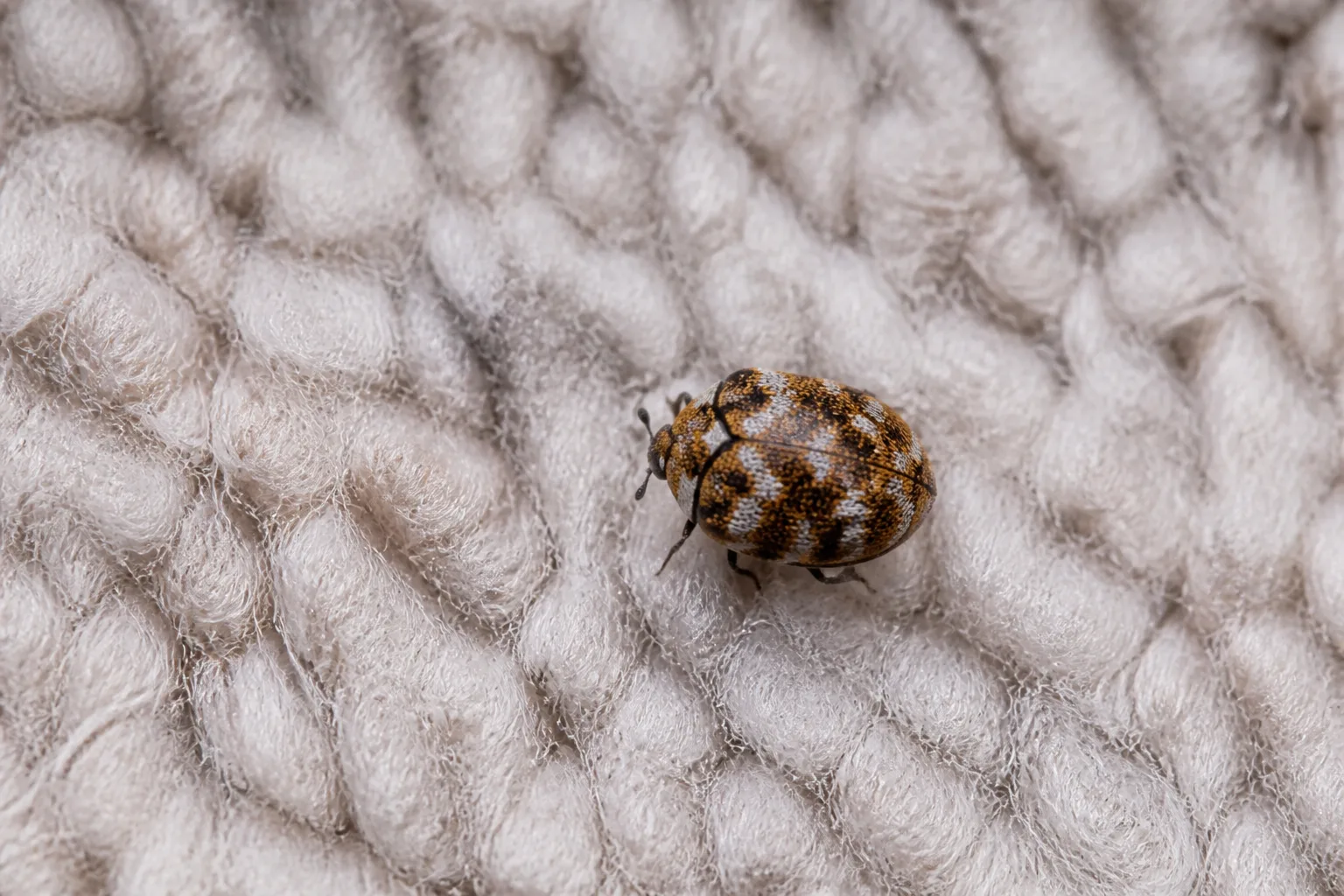
Carpet beetles (family Dermestidae) are fabric pests, not blood feeders. Adults are small oval beetles, often 1/16 to 1/8 inch, with speckled white, brown, orange, or black patterns and visible wings.
Key distinctions:
- Hairy larvae (“woolly bears”) do the damage—not the round adults people spot
- Do not bite; itchy rash-like dermatitis comes from larval hairs on sensitive skin
- Active by day; bed bugs are nocturnal
Ohio State Extension notes larvae crawl room to room behind baseboards and feed on wool, silk, fur, feathers, and stored dry goods (Ohio State Extension).
What to do instead: Vacuum thoroughly (edges, under furniture), launder or freeze suspect textiles, inspect cut flowers and secondhand furniture, and store woolens sealed. Bed bug interceptors under bed legs will not help carpet beetles in your closet.
Bat Bugs
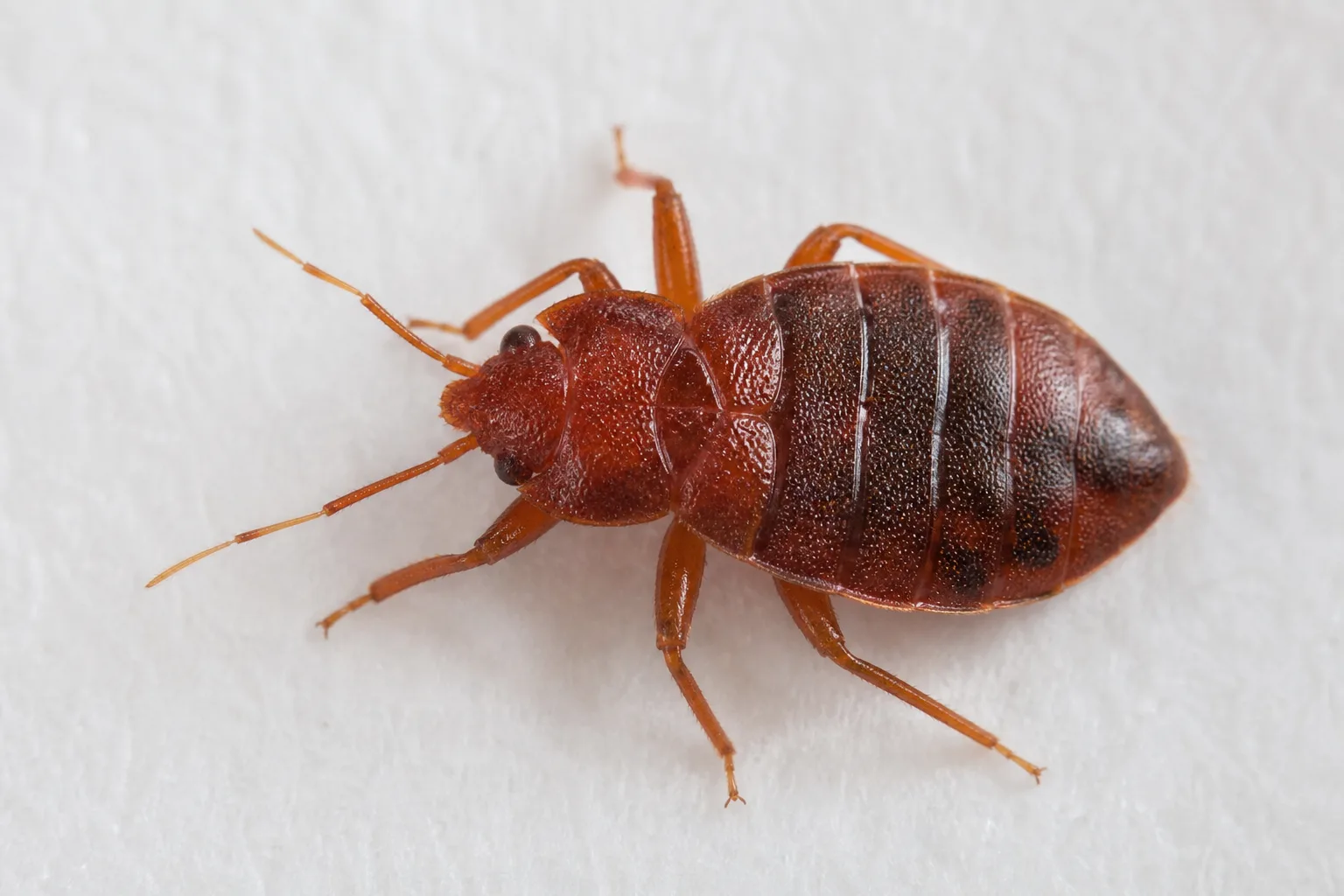
Bat bugs (Cimex pilosellus and related species) are close relatives in the same family as bed bugs. To the naked eye they are virtually identical: size, color, and shape match.
Key distinction (requires magnification): On bat bugs, hairs on the pronotum (the plate behind the head) are longer than the width of the eye. On common bed bugs those hairs are shorter than the eye width (UC IPM; Purdue Extension).
Habits: Feed on bats roosting in attics, wall voids, chimneys, or behind shutters. They wander into living spaces when bats leave or are excluded.
What to do instead: Bat exclusion and roost remediation by a wildlife professional—not bed bug sprays alone. Bat bugs may bite humans temporarily but cannot sustain populations on human blood alone once bats are gone. Collect a specimen for ID if bats were recently removed.
Swallow Bugs
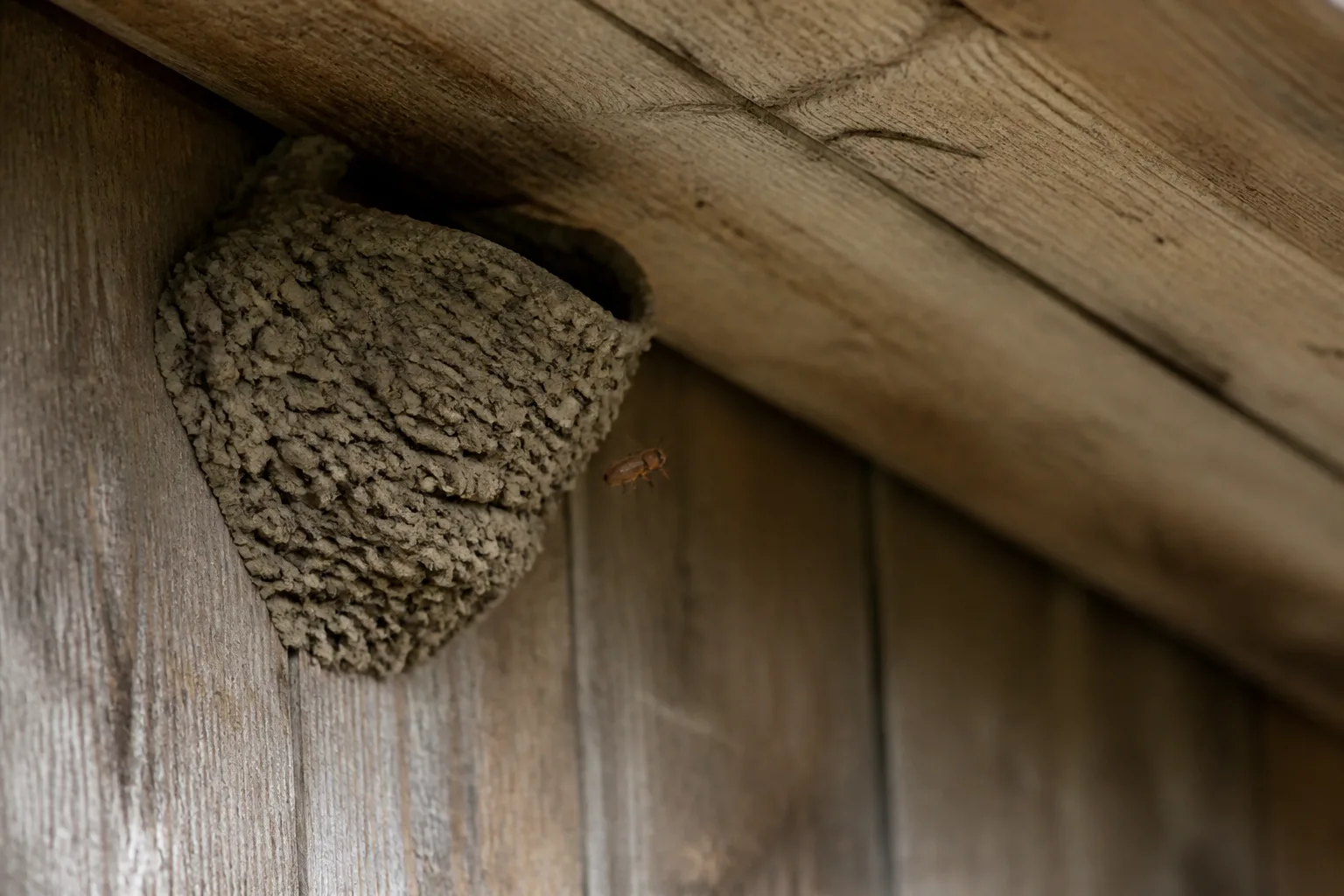
Swallow bugs (Oeciacus vicarius) are another Cimicid cousin that parasitizes cliff swallows and barn swallows. They mirror bed bugs in size and color and also require microscopic hair and antenna segment comparisons for certain ID.
Key distinctions:
- Linked to active or abandoned bird nests on eaves, porches, and outbuildings
- Long, fine body hairs visible under magnification
- Last two antennal segments equal in length (specialist ID feature)
Habits: Feed on nesting birds; will bite humans when birds fledge and nests are abandoned—common in late summer in swallow country.
What to do instead: Remove old mud nests (after confirming no active protected birds), seal entry points, and treat harborages with label-directed residual insecticides if bugs persist indoors. Again, mattress encasements miss the attic source.
Head Lice
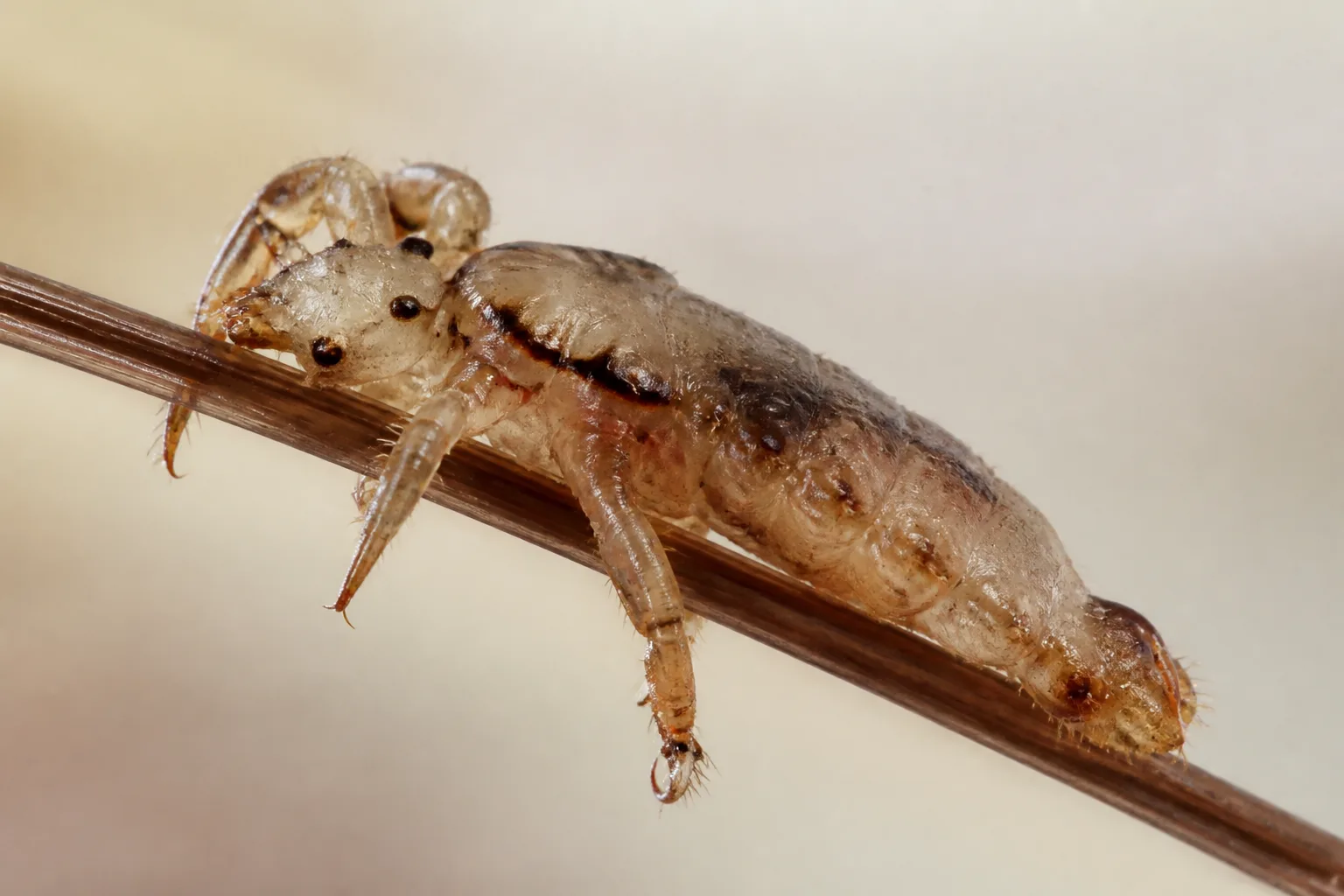
Head lice (Pediculus humanus capitis) are blood-feeding parasites, but they live on human hair, not mattress seams. Finding something on a pillow does not mean it is a bed bug—it may have fallen from hair.
Key distinctions:
- Elongated, sesame-seed-shaped body (less oval than bed bugs)
- Clawed legs for gripping hair shafts
- Tan to grayish-white; nits (eggs) cemented to hair within 1/4 inch of the scalp
Habits: Spread by head-to-head contact, not by jumping or flying.
What to do instead: Over-the-counter or prescription pediculicides, fine-tooth combing, launder bedding hot, and notify close contacts. Pest control companies do not treat head lice—your pediatrician or pharmacist does.
Baby Cockroaches (Nymphs)
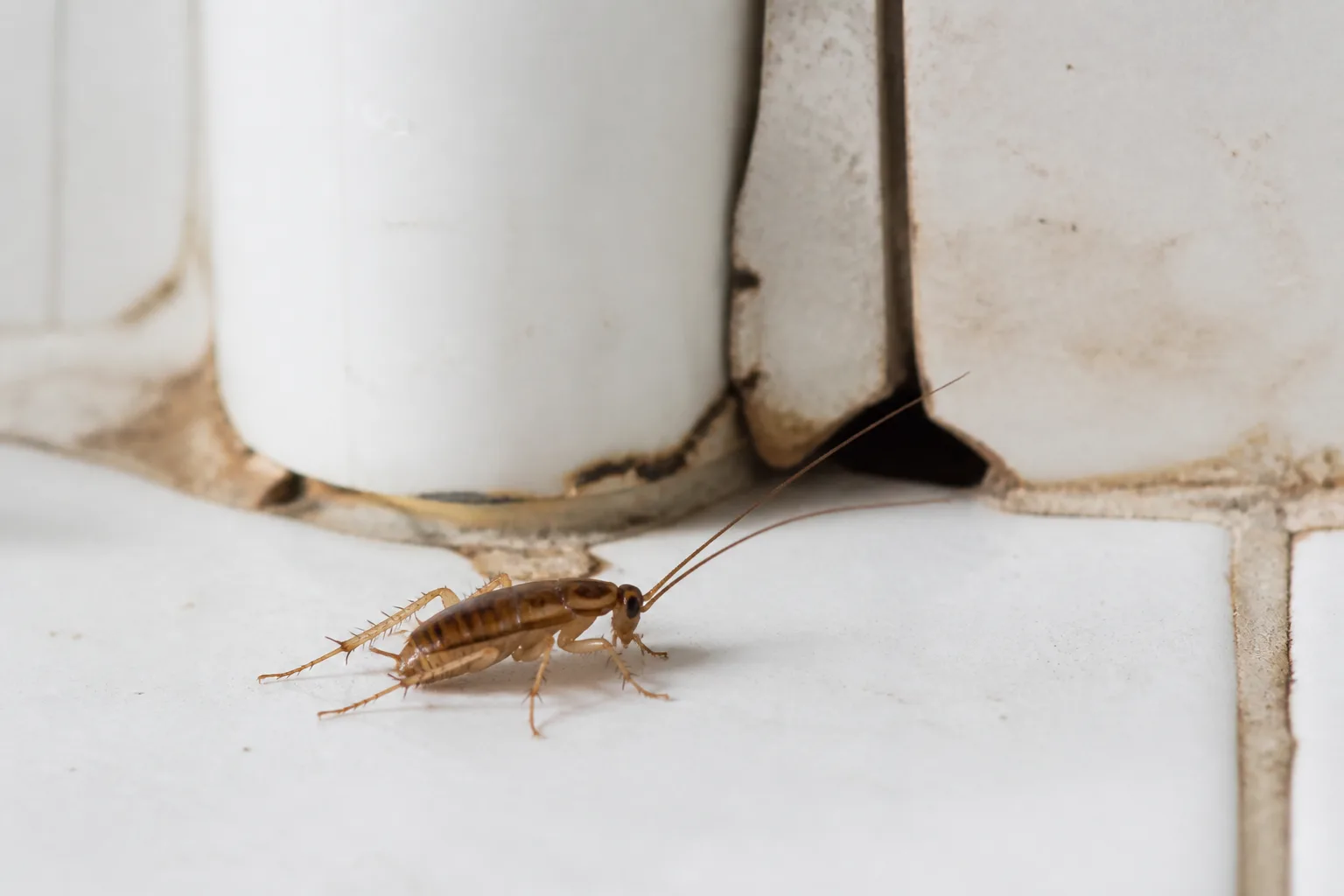
Cockroach nymphs—especially German cockroach early instars—are flat, brown, wingless, and nocturnal, which sends people straight to “bed bug.”
Key distinctions:
- Cylindrical body, not broad oval
- Very long antennae relative to body
- Cerci (paired tail-like appendages) at rear
- Found near kitchens, bathrooms, dishwashers, and pipe chases—moisture and food zones
Habits: Scavengers on crumbs and grease; do not prefer beds unless severe infestation and food scarcity.
What to do instead: Gel baits, sanitation, moisture repair, and crack-and-crevice treatment in kitchen/bath zones—a completely different IPM plan than bed bugs. Seeing one nymph warrants a roach inspection, not mattress disposal.
Oribatid Mites
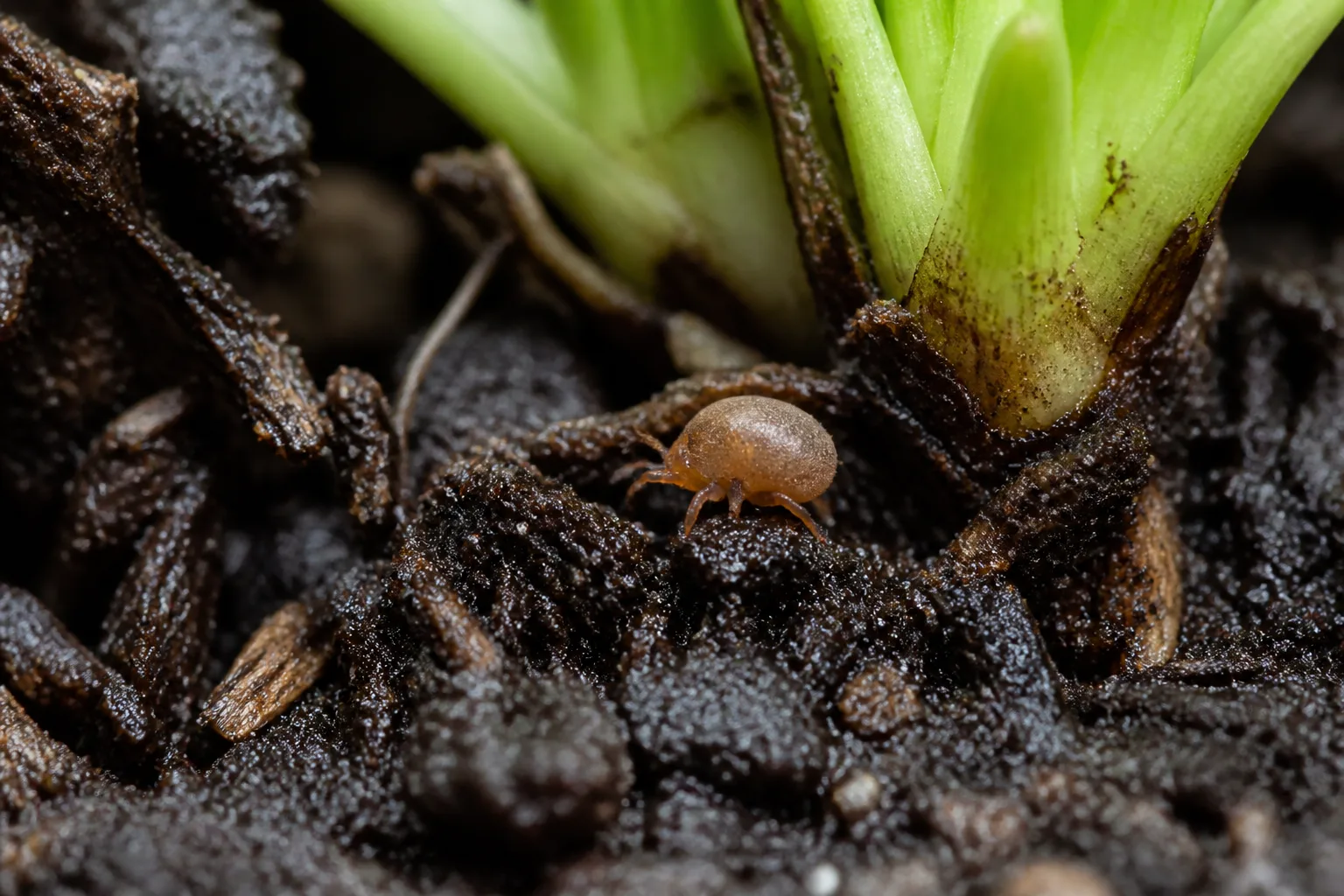
Oribatid mites (often called moss or beetle mites) are eight-legged soil mites that occasionally wander indoors on houseplant pots, damp basements, or organic debris. They are round, brown, and bloated-looking—sometimes confused with engorged bed bugs.
Key distinctions:
- Eight legs and no segmentation like an insect abdomen
- Harmless to humans—feed on fungi, algae, and decaying matter in soil
- Found on potting mix, not blood-stained sheets
What to do instead: Let soil dry slightly between waterings, repot with fresh mix if blooms are heavy, and reduce humidity. No pesticide bed bug protocol required.
What to Do After You Identify the Pest
Step 1 — Preserve evidence. Trap the bug in a jar or zip bag with a corner of tissue. Do not crush it if you may need professional ID—especially for bat bugs vs bed bugs.
Step 2 — Photograph in focus next to a ruler or coin for scale. Email photos to your local extension office or pest control company that offers ID.
Step 3 — Match treatment to pest. Bed bugs need harbor-focused control (mattress seams, furniture joints, clutter reduction, encasements, and often professional heat or chemical protocols). Fleas need pet and carpet focus. Carpet beetles need textile and pantry focus. Booklice need dehumidification.
Step 4 — Avoid random spraying. Broad aerosol “bug bombs” scatter pests and rarely reach bed bug cracks. They will not fix fleas in carpet padding or beetles in wool storage.
When to Call a Professional
Call a licensed pest management professional when:
- You confirm bed bugs with multiple signs in sleeping furniture
- You cannot ID the specimen but bites persist nightly and traps keep catching similar insects
- Bat or bird bugs appear after wildlife in the structure
- Ticks are repeatedly found indoors on family members
- Cockroach nymphs appear in numbers outside the kitchen
The CDC recommends contacting an experienced pest control company for confirmed bed bug infestations rather than relying on single-contact home remedies that only kill visible bugs.
Conclusion
Most bugs that look like bed bugs share only one trait: they are small, brown, and found when you are already on edge. The fix is systematic ID—six legs or eight, jump or crawl, mattress seam or pantry shelf—before you commit to expensive bed bug treatment. Fleas, carpet beetles, booklice, cockroach nymphs, ticks, and the Cimicid cousins bat bugs and swallow bugs each demand a different response. Capture one specimen, run the 60-second tests, and match the pest to the protocol. You will either save thousands on unnecessary bed bug heat treatment—or catch a real infestation early, when it is still containable.