How to Grow and Care for Bobo Hydrangea
Learn how to grow Bobo hydrangea with practical advice on sun, soil, watering, pruning, containers, winter care, blooms, and common problems.
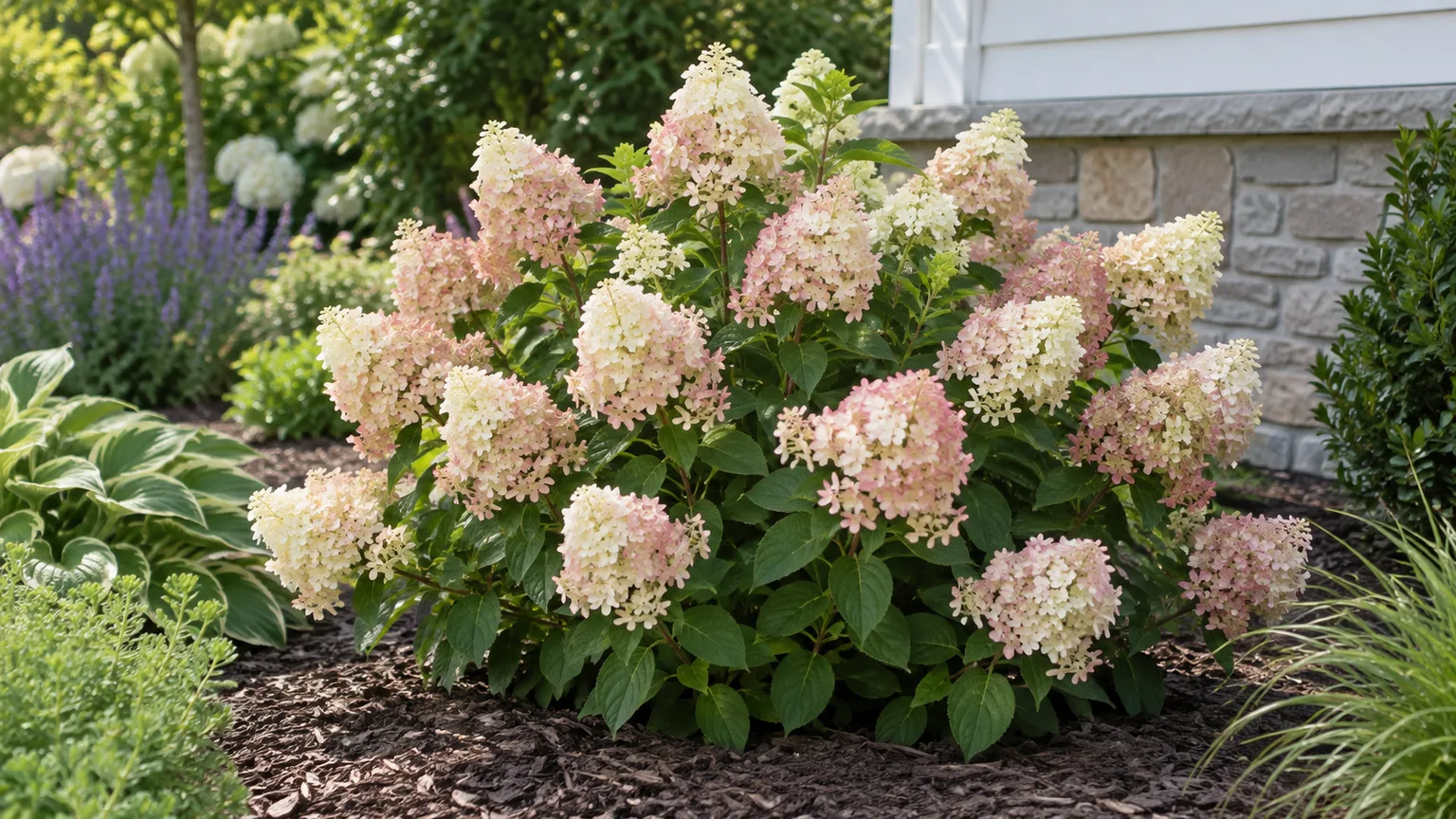
Bobo hydrangea is a compact panicle hydrangea with the flower power of a much larger shrub. Its botanical name is Hydrangea paniculata ‘Ilvobo’; the plant is commonly sold as Bobo® and is known for upright, cone-shaped flower panicles that open white, age to pink, and remain attractive into fall.
The care strategy is simple: give it bright light, evenly moist but well-drained soil, room to reach its mature width, and only the pruning it actually needs. The detail that prevents most mistakes is that Bobo blooms on new wood, so late-winter or very early spring pruning is safer than cutting it back after growth has started.
| Care point | Practical target |
|---|---|
| Mature size | About 30–36 inches tall and 36–48 inches wide |
| Light | Full sun to part sun; protect from harsh afternoon heat in hot climates |
| Soil | Moisture-retentive, rich, and well drained |
| Water | Deeply when the root zone begins to dry; more often during establishment and heat |
| Pruning | Late winter or early spring, before new growth expands |
| Bloom wood | New wood, or current-season growth |
| Flower color | White flowers that develop pink tones; soil pH does not control the color |
| Container use | Possible, but the pot must drain freely and cannot dry out quickly |
What Bobo Hydrangea Is and Why It Fits Small Spaces
Bobo is a deciduous shrub bred for a mounded, dwarf habit rather than a tree form or a sprawling hedge. The Proven Winners cultivar profile lists it at roughly 30 to 36 inches tall and 36 to 48 inches wide, while its spacing guidance allows more room between plants when you want each shrub to keep its outline. Those numbers are a planning range, not a guarantee: soil quality, pruning, climate, and the size of the plant at purchase all affect how quickly it fills out.
Its value is the combination of scale and bloom. Large panicles appear along the stems, often giving the shrub a flower-covered look from the top almost to the ground. Strong stems help the heads stay upright, although any hydrangea can lean after heavy rain, rapid soft growth, or a site that is too shaded.
Size, bloom timing, and flower color
Bobo typically starts flowering in summer and can continue into early fall. The flowers are usually creamy white when they open, then take on blush or pink tones as they mature; late-season heads may fade toward tan. The exact transition depends on weather, plant maturity, irrigation, and how long the heads remain on the shrub.
Do not try to force the color with lime, sulfur, or an acidifying product. That approach is useful for some bigleaf and mountain hydrangeas, but Bobo is a panicle hydrangea, and its white-to-pink progression is a cultivar and aging response rather than a soil-pH color dial. Gardenia’s cultivar profile also distinguishes Bobo’s flower color from the pH-driven color changes associated with other hydrangea groups. (Gardenia explains the cultivar’s size, bloom sequence, and care traits.)
Bobo versus other hydrangeas
The word “hydrangea” is not enough information to choose a pruning date. Bigleaf hydrangeas often bloom on old wood, meaning that their flower buds may already be present before winter; panicle hydrangeas such as Bobo bloom on new wood. Penn State Extension’s species guide uses this distinction to explain why a late-winter cut is appropriate for panicle hydrangeas but can remove the future flowers from old-wood types.
Bobo also differs from the familiar blue-or-pink mophead hydrangea in another important way: it does not need acidic soil to turn blue. It is a better choice when you want a dependable white-to-pink panicle display, a smaller footprint, and more forgiving pruning timing than a traditional bigleaf hydrangea. It is not, however, a shrub that can be planted in any dark corner; bloom quantity still depends heavily on usable light.
Choose a Planting Site Before You Dig
The best planting site solves two competing problems at once: it provides enough sun for flowers while protecting the root zone and foliage from punishing heat and drought. In cooler or moderate climates, Bobo can perform well in full sun. In hot-summer regions, morning sun with light afternoon shade is often the more sustainable choice, especially if the soil is sandy, the bed is next to reflective paving, or the plant cannot be watered consistently.
Sun, heat, and spacing
Aim for at least several hours of direct light, with roughly six hours a useful target for reliable flowering. Part sun can work, but deep shade usually produces a looser plant with fewer panicles. Watch the plant for a full season before moving it: temporary afternoon wilting in extreme heat may be normal, while persistent wilt, scorched margins, or flowers that brown prematurely point to a site that is too hot, too dry, or both.
Use the mature width when deciding where to plant. A single Bobo can sit in a foundation bed, mixed shrub border, or small perennial garden with a little air space around it. For a continuous row, measure from the center of one plant to the center of the next and use approximately 3 to 4 feet as a starting range; choose the wider end where summers are humid or airflow is limited.
Avoid placing it directly beneath a roof edge that dumps water onto one side of the root zone, beside a constantly wet downspout, or in a narrow strip between hot pavement and a south-facing wall. The compact habit makes Bobo useful in tight spaces, but compact does not mean tolerant of bad drainage or reflected heat.
Plant Bobo Hydrangea Correctly
Plant in spring once the soil is workable, or in early fall while there is enough time for roots to settle before the ground freezes. A container-grown shrub can be planted at other mild times if you can keep its root ball evenly moist, but avoid making a small, recently purchased plant endure a heat wave immediately after transplanting.
Soil and planting hole
Bobo prefers soil that holds moisture without staying saturated. Loam or loamy soil with organic matter is ideal, but you do not need to create a pocket of radically different soil around the root ball. A hole that is about twice as wide as the container and no deeper than the root ball encourages outward root growth without burying the crown.
Before planting, slide the shrub from its pot and inspect the roots. If they circle densely around the outside, tease a few loose or make shallow vertical cuts through the outer mat; do not shred the root ball. Set the plant so the top of the root ball is level with, or just slightly above, the surrounding soil. Deep planting is a common cause of slow establishment and chronic wetness around the crown.
Backfill with the soil you removed, breaking up large clods but resisting the urge to create a rich, soft “pot” that stops roots at the edge of the hole. Water slowly until the entire root ball and surrounding soil are wet. If the bed drains poorly, raise the planting area or choose another location rather than trying to correct standing water with fertilizer.
First-season watering and mulch
For the first growing season, check the soil a few inches below the surface rather than watering by calendar alone. New shrubs need a consistent root zone while they establish, but a wet surface does not prove that water has reached the lower roots. In sandy soil, check more often; in clay, water more slowly and allow the surface to dry slightly between deep soakings.
Add a 2- to 3-inch layer of shredded bark, leaf mold, or another stable organic mulch over the root zone. Keep mulch a few inches away from the stems so the base stays dry and visible. Mulch moderates soil temperature and slows evaporation, but it cannot compensate for a site that is waterlogged or a shrub that is planted too high on a rapidly drying mound.
Maintain Bobo Hydrangea Through the Growing Season
Once established, Bobo is easier to manage when you respond to weather and soil instead of following a rigid weekly schedule. A plant in deep, moisture-retentive soil may need little supplemental water during a rainy summer; the same cultivar in a hot container or beside a driveway may need checking every day.
Watering and feeding
Water at the soil line and soak deeply enough to moisten the root zone. A rough benchmark of about 1 inch of water per week can be useful during dry weather, but rainfall, soil type, temperature, wind, mulch, and plant size make a fixed amount imprecise. If leaves droop during the hottest part of the day but recover by evening, check the soil before watering; if the root zone is already wet, adding more water can worsen the problem.
Overhead irrigation is a poor default for hydrangeas because wet foliage and crowded stems dry slowly. A soaker hose or drip line under the mulch delivers water more evenly and keeps leaves drier. White Flower Farm’s panicle-hydrangea guidance likewise emphasizes moist, well-drained soil, mulch, and avoiding overhead sprinklers to reduce fungal disease pressure. (White Flower Farm growing guidance provides the seasonal care rationale.)
Fertilize lightly, if at all. A Bobo planted in fertile soil with an annual compost top-dressing may not need a separate feeding. If growth is weak and a soil test or site history suggests low fertility, apply a slow-release shrub fertilizer in early spring according to its label. Avoid repeatedly applying high-nitrogen lawn fertilizer near the shrub: it can produce lush leaves and long, soft stems at the expense of sturdy flowering growth.
Do not use a high-phosphorus product simply because you want more flowers. Phosphorus should be supplied when a soil test shows a need, not as a universal bloom shortcut. The more reliable bloom levers are sufficient light, a healthy root zone, sensible pruning, and steady moisture during bud and flower development.
Growing Bobo hydrangea in a container
Bobo’s size makes container growing possible, but a container turns small care mistakes into fast stress. Choose a pot with large drainage holes and enough volume to buffer hot days; a tiny decorative pot may look proportional at the nursery and become a twice-daily watering problem by midsummer. Use a quality container mix rather than garden soil, and keep the pot raised enough that water can leave freely.
Place the container where the plant receives strong light but is protected from the worst reflected heat and drying wind. The root zone in a black pot on a sunny patio can become much hotter than garden soil, so light afternoon shade may be necessary even where an in-ground plant could take full sun. Check moisture with a finger or a moisture probe, then water thoroughly when the upper layer begins to dry; do not add a small splash that wets only the surface.
Container Bobo hydrangeas are less winter-hardy than the same plants in the ground because roots are exposed on all sides. If you grow one in a pot in a cold climate, plan to insulate the container, move it to a sheltered unheated space, or sink the pot into the ground before severe weather. The goal is to protect roots from repeated freeze-thaw cycles, not to keep the shrub actively growing indoors.
Prune Without Sacrificing Flowers
Pruning Bobo is mostly a timing and restraint exercise. The plant naturally forms a compact shrub, so yearly shearing is unnecessary and can create a thicket of weak shoots. Prune to remove damage, correct a structural problem, or keep the shrub within its allotted space—not because every stem needs to be shortened.
Timing and technique
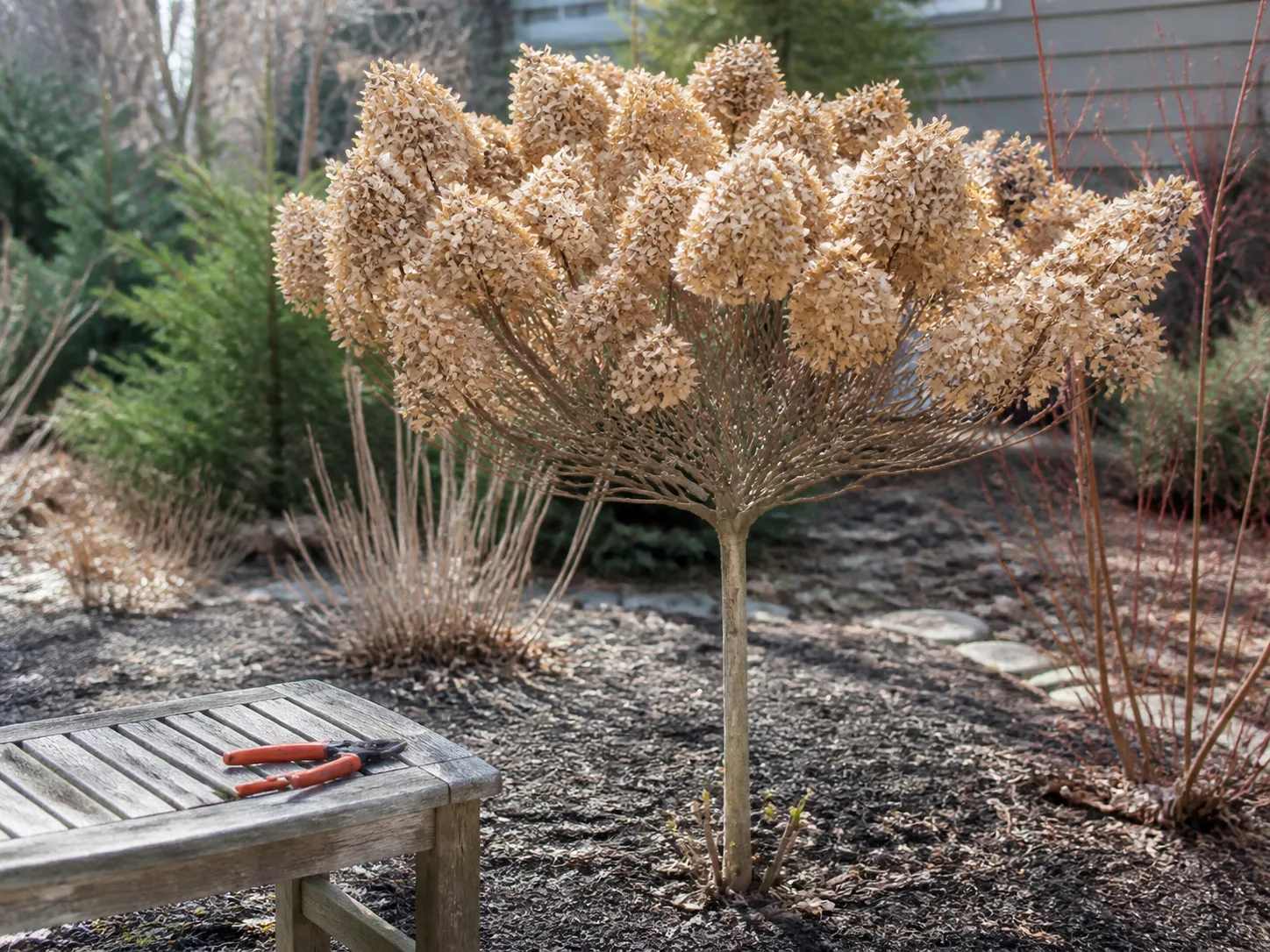
The safest window is late winter to very early spring, before new leaves expand and before the season’s shoots lengthen. Panicle hydrangeas bloom on current-season growth; the University of Georgia Extension’s pruning guide and Penn State Extension both place panicle-hydrangea pruning in this dormant-season window.
Start by removing dead, broken, rubbing, or diseased stems at their base or back to healthy wood. Then look at the shape from several angles. If a branch is far longer than the others, shorten it to a strong outward-facing bud or lateral branch rather than cutting every stem to the same height. A few deliberate cuts preserve the mounded form better than a flat haircut.
If the plant is old, crowded, or producing thin interior growth, remove one or two of the oldest or weakest stems at ground level. Do not remove a large portion of the shrub in one session unless there is a safety or structural reason. A light annual correction usually gives better flowering and a more natural silhouette than drastic rejuvenation.
You can shorten selected stems by about one-third when you want a tighter outline or somewhat larger panicles, but do not assume harder pruning is better. Excessive cutting can delay the season’s display, encourage soft regrowth, and create more stems than the small root system can support. Use clean, sharp pruners, and sanitize them between plants when working around suspicious disease symptoms.
Deadheading and flower stems
Deadheading is optional. Spent panicles can be left on the shrub for fall and winter structure, cut for indoor arrangements, or removed once they look ragged. Removing a flower head in summer will not make Bobo rebloom in the way some repeat-flowering perennials do; it mainly improves appearance and may reduce weight on a bent stem.
If rain has pushed a branch to the ground, cut back to a strong lateral rather than removing an entire healthy stem. If you enjoy dried flowers, let the heads begin to age on the shrub and cut them when the petals feel papery and the color has stabilized. Do not turn fall cleanup into a hard prune: the meaningful shape and size cuts belong in the dormant season.
Troubleshoot the Problems Gardeners Actually See
Most Bobo problems are easier to diagnose by checking the root zone and recent weather before reaching for a product. Ask four questions in order: Is the soil dry, saturated, or reasonable? Has the plant received enough light? Was it pruned at the right time? Is the symptom limited to older leaves, new leaves, flowers, or the whole shrub?
Wilting, yellow leaves, and root stress
Wilting during a hot afternoon does not automatically mean the shrub needs water. Push a finger or trowel into the soil several inches from the stems. If it is dry and the leaves stay limp into the evening, water slowly and deeply; if it is wet, improve drainage and pause irrigation until the surface begins to dry.
Yellow leaves can result from drought, saturated roots, transplant stress, nutrient imbalance, or normal aging of older foliage. Look for a pattern: crispy margins and dry soil suggest drought; soft yellow leaves and a sour or persistently wet root zone suggest excess water; pale new growth with green veins may warrant a soil test rather than a blind fertilizer application. Removing a yellow leaf without correcting the root cause only hides the evidence.
Flowers that brown early may be aging normally, especially during hot weather, but a sudden change can indicate heat, drought, root injury, or a plant receiving reflected afternoon sun. Move a container to a cooler position or add temporary afternoon shade while you check moisture. An established in-ground shrub is usually better served by correcting irrigation and mulch than by cutting off every brown panicle.
Few flowers, browning blooms, pests, and leaf disease
When Bobo does not bloom, begin with light and pruning history. Deep shade, a late-spring haircut, severe winter damage before establishment, or a shrub that is still building roots can all reduce flowers. Excess nitrogen and drought during bud development can also weaken the display.
Pests are usually secondary problems. Aphids may cluster on tender tips, while spider mites are more likely during hot, dry conditions. Start with a strong water spray directed at the undersides of leaves, then reassess. If a product is needed, choose one labeled for the pest and plant, follow the label exactly, and avoid spraying open flowers when pollinators are active.
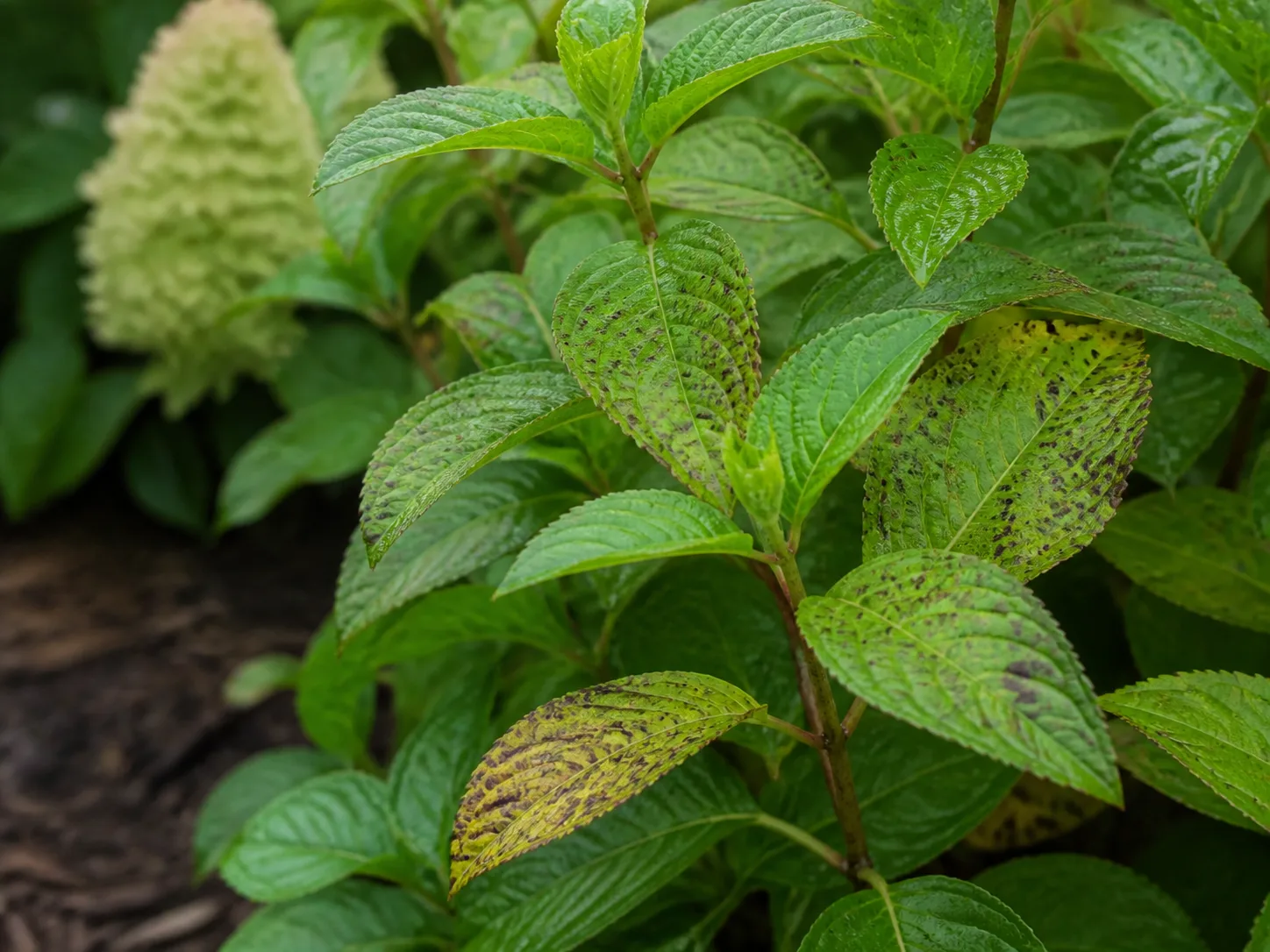
Powdery mildew and leaf spots are more likely when foliage stays damp, air movement is poor, or the plant is crowded. Improve spacing, water at the base, remove badly affected fallen leaves, and avoid wetting the canopy late in the day. Do not diagnose every mark as a fungal disease: minor cosmetic spotting late in the season may not justify repeated treatment on an otherwise vigorous shrub.
Bobo is not reliably deer-proof, and a compact shrub can be browsed heavily before you notice the missing shoots. If deer are present, protect the plant with a physical barrier or a repellent program that matches your local conditions. Gardenia’s Bobo profile also notes common concerns such as aphids, spider mites, powdery mildew, leaf spot, and root rot, which reinforces the value of airflow and drainage before chemical control.
Winter Care and a Seasonal Calendar
In the ground, a Bobo hydrangea established in a suitable site generally needs only a mulch layer and protection from drying wind or browsing. Its new-wood bloom habit means ordinary winter dieback is less likely to erase the entire next season’s flower display than it would on an old-wood hydrangea, although a newly planted shrub can still suffer root or stem injury in severe conditions.
In late fall, remove diseased fallen leaves, keep mulch away from the stems, and leave healthy dried flower heads if you like their winter structure. Do not wrap a healthy in-ground shrub tightly in plastic or force it to stay warm; trapped moisture and poor airflow can create more problems than cold itself. If the plant is newly installed in an exposed site, a breathable windbreak can reduce drying without changing the plant’s dormant cycle.
Use this seasonal rhythm:
- Late winter: Inspect stems, remove dead or crossing wood, and make any modest shape cuts before new growth begins.
- Spring: Finish planting, apply compost or a label-directed slow-release fertilizer if needed, refresh mulch, and establish a deep-watering routine.
- Summer: Check soil during dry spells, water the root zone deeply, watch for heat stress, and avoid routine pruning while flower buds are developing.
- Late summer and fall: Enjoy the color change, deadhead only for appearance, remove diseased foliage, and avoid major cuts.
- Winter: Protect container roots and exposed young plants, but let healthy in-ground shrubs remain dormant outdoors.
Keep pet safety in the plan. The ASPCA lists hydrangea as toxic to dogs, cats, and horses because of cyanogenic glycosides; reported signs include vomiting, depression, and diarrhea, while serious cyanide intoxication is rare. (ASPCA’s hydrangea entry advises contacting a veterinarian or poison-control service if a pet may have ingested the plant.) Keep fallen leaves and pruned material out of reach, especially if a dog or cat habitually chews garden debris.
Conclusion
Bobo hydrangea earns its place in a small garden because it delivers a full-sized summer display from a genuinely compact shrub. Plant it where it gets strong light without relentless heat, give the roots steady moisture and reliable drainage, and use mulch to make the watering routine more forgiving.
The most important pruning rule is simple: Bobo blooms on new wood, so do the meaningful cuts in late winter or early spring and keep summer work light. When the plant struggles, inspect the root zone, light, spacing, and pruning history in that order. Those checks solve more Bobo hydrangea problems than extra fertilizer or a calendar-based watering routine.