Camphor Tree Care: How to Grow, Plant, and Prune It
Learn camphor tree care from planting and watering to pruning, propagation, pests, fruit cleanup, invasive-status checks, and safer site selection.
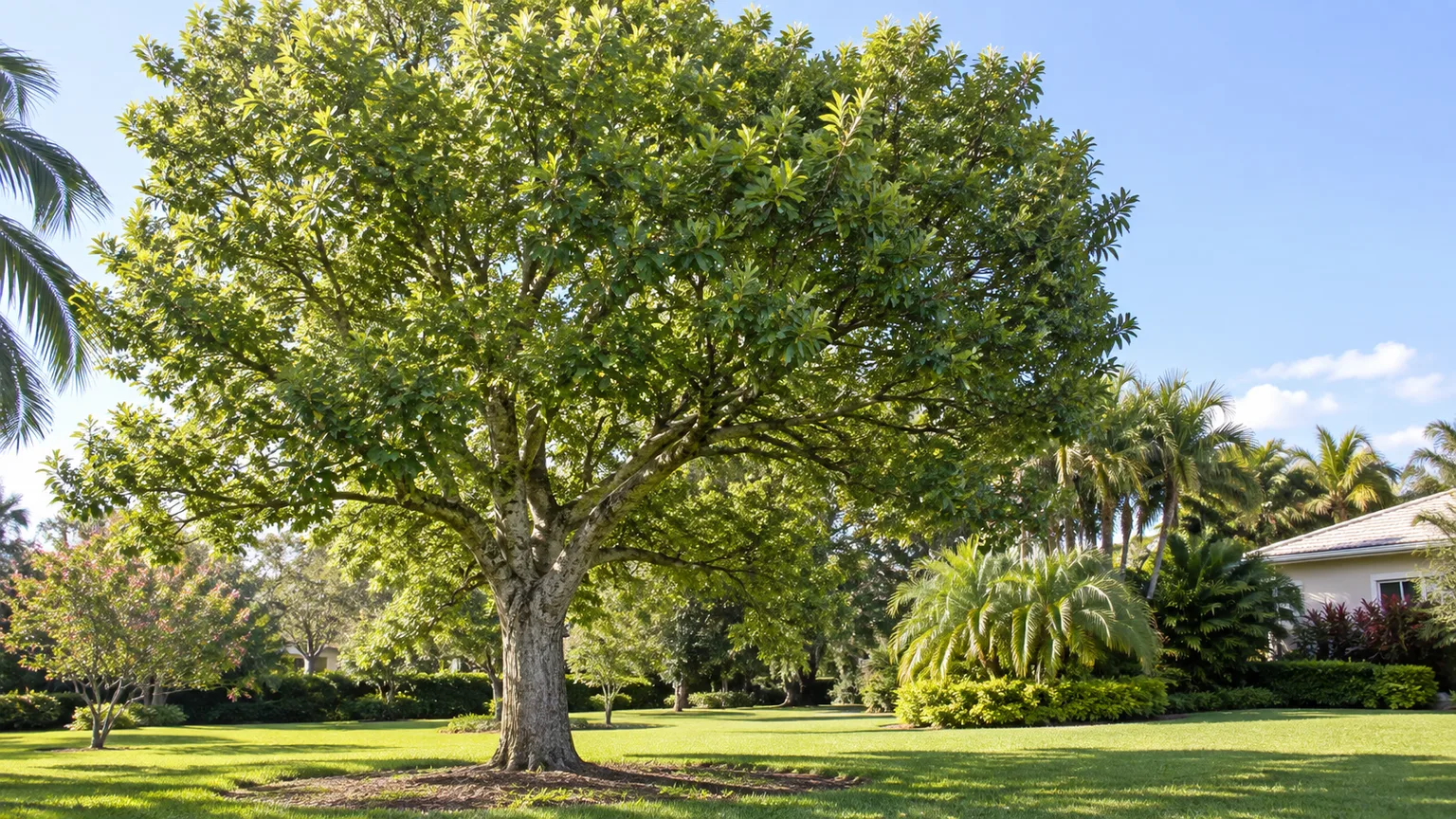
Camphor tree (Cinnamomum camphora) is attractive, fragrant, evergreen, and much larger than a garden-center tag may suggest. Its glossy leaves, rounded canopy, textured bark, spring flowers, and dark fruit can make a memorable shade tree in a warm climate—but the same fast growth, bird-dispersed seed, surface roots, and eventual spread can turn it into a long-term maintenance problem.
The best camphor tree care starts before planting. Confirm that the species is appropriate and permitted in your area, choose a site with room for a very broad canopy, and give the young tree deep watering while its root system establishes. After that, care is mostly about drainage, structural pruning, and watching for the few problems the tree does not shrug off.
Decide Whether a Camphor Tree Fits Your Yard
This is not a small ornamental tree for a narrow foundation bed. North Carolina State Extension lists a typical landscape size of 40 to 50 feet tall and 50 to 70 feet wide, with a rapid growth rate; UF/IFAS notes that trees may exceed 65 feet. Individual trees can vary with climate, soil, pruning, and age, so treat the published dimensions as a planning minimum rather than a maximum.
The tree is a broadleaf evergreen with a dense, rounded, spreading habit. New growth can show reddish tones before turning glossy green. Crush a leaf or young twig and you should notice the characteristic camphor scent, a useful identification clue when comparing it with other members of the laurel family. The leaves also tend to show three prominent veins arising near the base, while small greenish-white flowers appear in spring and mature into round blue-black to purple-black drupes, details documented in the UF/IFAS species overview.
The NC State Extension plant profile describes the tree as tolerant of urban conditions and resistant to breakage, but it also flags messy fruit, surface roots, wet-soil intolerance, and weedy behavior. That combination makes the species better suited to a large private landscape with low foot traffic and a managed edge than to a small city lot, a pool surround, or a property bordering a natural area.
Identify the tree and its mature scale
Before you buy, look at an established specimen in your region—not just a nursery container. Observe where the canopy reaches, whether roots lift paving, how much fruit collects below, and whether seedlings appear beyond the mulched bed. A young camphor tree can look perfectly proportioned beside a driveway and still be a poor match once its shade reaches roofs, wires, paths, and neighboring plants.
Do not confuse the name with bay laurel or cinnamon. Camphor tree is grown for ornamental value and, historically, for camphor oil and timber; it is not a substitute for culinary bay. Never add unidentified leaves to food or make a home remedy from a tree because it smells medicinal. If a household member or pet chews plant material, contact a medical professional, poison center, or veterinarian rather than guessing from the common name.
Why local status changes the recommendation
Camphor tree is not equally problematic everywhere. UF/IFAS classifies it as a Category I invasive plant in Florida and says it is invasive in North and Central Florida, while South Florida is treated as a caution area. Its profile records naturalization across several regions of the United States, including parts of the Southeast, Gulf Coast, and California. Alabama Cooperative Extension also describes local spread in southern counties and explains why the tree becomes abundant along roadsides, fencerows, fields, and other disturbed ground.
The mechanism is straightforward: a mature tree produces abundant fleshy fruit, birds eat the fruit and carry seed, and seedlings establish readily in open or disturbed places. UF Gardening Solutions specifically advises against planting this tree in North and Central Florida and recommends managing existing landscape trees in its caution area. Even if your local government does not prohibit the tree, check your state invasive-plant assessment and county extension advice before purchasing one. If the tree is invasive where you live, choose a native shade tree instead and manage existing specimens so they do not add seed to nearby habitat.
Choose a Planting Site Before You Buy
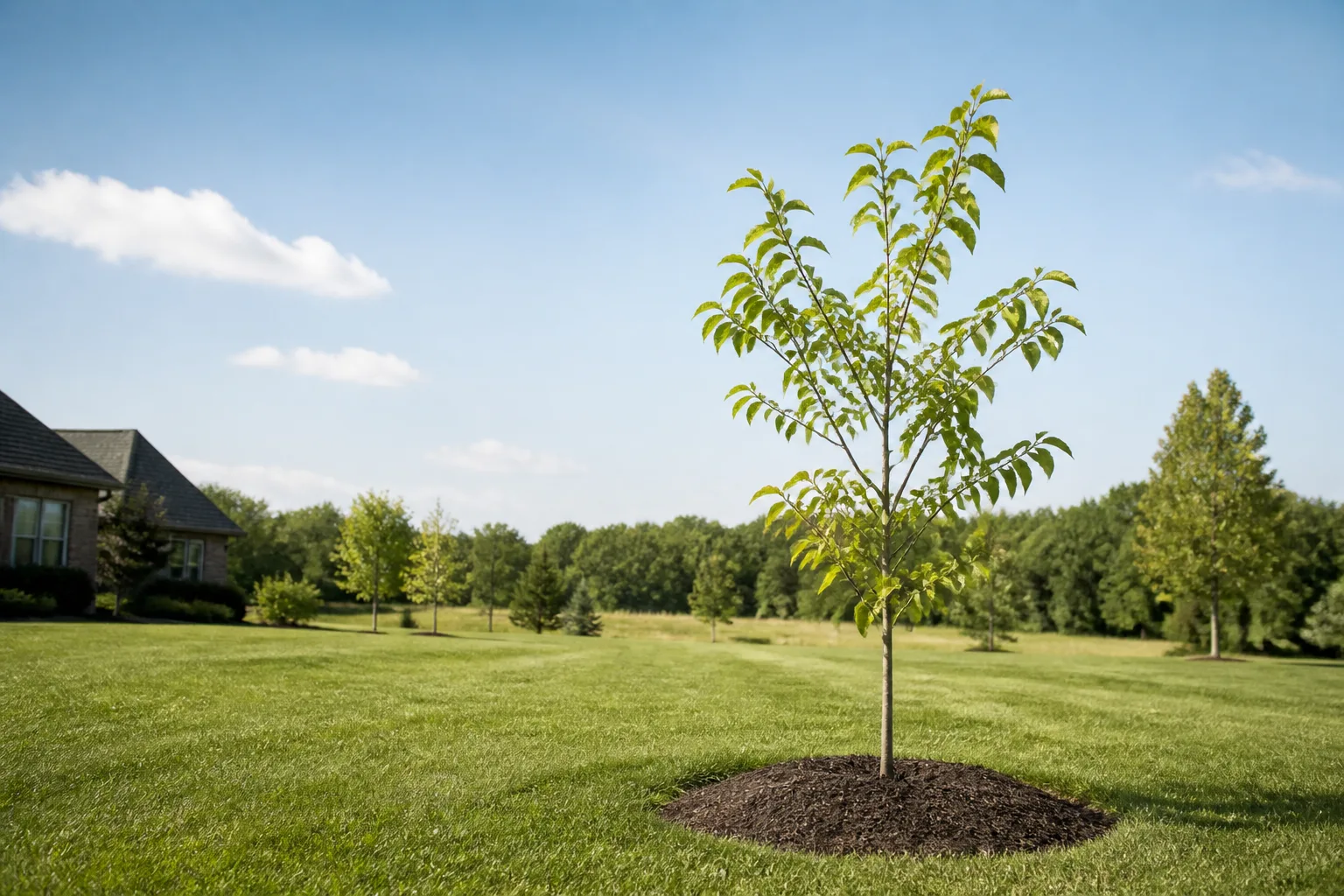
Site selection is the most important part of camphor tree care because an established tree is difficult to move without major root disturbance. A site that is merely sunny and attractive today may be unsafe or expensive when the tree is mature. Leave enough clearance for the full canopy, trunk flare, vehicles, sidewalks, septic infrastructure, overhead wires, and any future structures.
Light, canopy room, and surface roots
Camphor tree grows in full sun or partial shade, but a sunny site produces the strongest, fullest canopy. Aim for at least six hours of direct sunlight if you want rapid, balanced growth. Partial shade is tolerated, particularly in hot climates, but do not use shade as a strategy for keeping the tree small; a tree planted too close to a building will still seek space and may develop an uneven crown.
Use the mature width—not the nursery height—to set planting distance. Keep the trunk well away from foundations, paving, drains, fences, and utility lines, and do not put the main root zone where repeated digging will be necessary. NC State Extension warns that surface roots can become a location issue, while Gardening Know How notes that the tree’s roots are sensitive to disturbance and extend far from the trunk.
Fruit is another placement issue. The dark drupes can stain hard surfaces and create a slick cleanup zone when they drop. Avoid planting directly beside a front walk, play area, outdoor dining space, pool deck, or parking pad. A broad lawn or mulched area that can be raked and mowed is easier to manage.
Soil, drainage, and root space
The goal is moisture that moves through the soil, not soil that stays wet. NC State Extension lists sand, loam, and clay as possible soil textures when drainage is good and notes that the tree tolerates soils that are occasionally dry. Gardening Know How gives a broad pH range of about 4.3 to 8, but pH is rarely the limiting factor in a landscape where the roots remain saturated.
Test drainage before planting. Dig a hole about 12 inches deep, fill it with water, let it drain, then fill it again and watch the second fill. If water sits for hours or the site remains puddled after ordinary rain, do not “fix” the problem by placing the tree in a shallow mound over compacted soil. Improve the site’s drainage only if you can create a genuine outlet, or choose a different location and species.
Do not make a small planting hole in hard ground and fill it with a pocket of rich compost. A sharply different pocket can hold water and encourage roots to circle within the amended area. Loosen a wide area of compacted soil, keep the backfill close to the native soil, and reserve compost or mulch for a thin surface layer. The tree needs room for roots to move outward, not a bathtub around the original root ball.
Plant It Step by Step
Timing and tree selection
Plant during a mild, non-drought period when the soil can be worked and the tree will not immediately face extreme heat or a hard freeze. In USDA Zones 9b through 11b, which NC State Extension lists for the species, planting in the cooler part of the growing calendar is usually easier than planting at the height of summer. Your local extension service can adjust that window for rainfall and frost patterns.
Choose a healthy, well-rooted nursery tree with a visible root flare, a straight trunk, and branches that are not tightly packed or rubbing. Reject a tree with circling roots that cannot be loosened, a buried trunk flare, a sour-smelling root ball, or damaged bark. Smaller trees often establish more predictably than oversized specimens because they lose less of the root system relative to their canopy during digging and transport.
Planting method that protects the root flare
- Mark the final canopy zone and utilities before digging. Confirm the site is appropriate for the species’ regional status.
- Dig a broad, shallow hole. The top of the root ball should finish level with or slightly above the surrounding soil, never several inches below it.
- Remove the container, burlap, and wires as appropriate, then inspect the outer roots. Straighten or cut only roots that circle tightly; do not shred the root ball.
- Set the tree so the first major roots and trunk flare remain visible. Turn the best side toward the view, but do not bury the flare to make the tree appear taller.
- Backfill with the excavated soil, firming lightly to remove large air pockets. Do not tamp it into concrete or build a raised wall around the trunk.
- Water slowly over the entire root ball and surrounding loosened soil. Add a two- to three-inch mulch layer over the root zone, keeping mulch several inches away from the trunk.
- Stake only if the tree cannot stand securely or the site is unusually windy. Use flexible ties and remove them once the roots hold the tree; permanent staking can restrict trunk development.
The first watering should settle soil around the roots, not create a permanent basin that stays wet. Over the next weeks, check the soil several inches down and adjust for rainfall, heat, wind, and the tree’s actual growth rather than following a rigid calendar.
Water and Feed It Without Forcing Weak Growth
Establishment watering for the first two years
“Drought tolerant” describes a rooted, established tree, not a newly planted one. For the first growing season, water deeply whenever the root ball begins to dry, wetting the original root ball and the surrounding soil. A small tree may need several gallons per irrigation; a larger container tree needs more. The correct volume depends on root-ball size and drainage, so verify moisture rather than copying a gallon number from another site.
During hot, dry weather, inspect the soil two or three times a week. Water slowly enough that it infiltrates instead of running off. As new roots move outward, widen the watered area rather than concentrating every irrigation against the trunk. In the second year, extend the interval between deep waterings as rainfall and root spread increase, but continue watering during prolonged drought.
Leaves that wilt in the afternoon are not automatically a signal to water immediately. Check the soil first. A dry root zone needs a thorough drink; a wet root zone needs drainage and time, because adding water to oxygen-poor soil can worsen root decline. Mulch helps reduce evaporation, but it does not turn poorly drained soil into well-drained soil.
Established-tree watering and fertilizer decisions
Once established, camphor tree can tolerate periods of dry soil, especially in a well-drained site. Water during unusually long droughts, when the canopy shows persistent stress, or when the tree is recovering from root disturbance. Soak the outer root zone slowly and avoid frequent shallow sprinkling that keeps only the surface damp.
Fertilizer is not a default requirement. NC State Extension describes the tree as adaptable and flags drainage and structural concerns that are more important than routine feeding. If growth is weak or leaves are unusually pale, first check light, soil moisture, root damage, pests, and soil pH or nutrient status. A soil test is more useful than a guessed fertilizer application.
If a test or clear deficiency supports feeding, use a slow-release tree fertilizer in spring and follow the label rate. Do not pile fertilizer against the trunk, fertilize drought-stressed roots, or assume more nitrogen will solve a site problem. Excessive lush growth can create long, weak shoots that demand more pruning without correcting the underlying cause.
Prune for a Strong, Manageable Structure
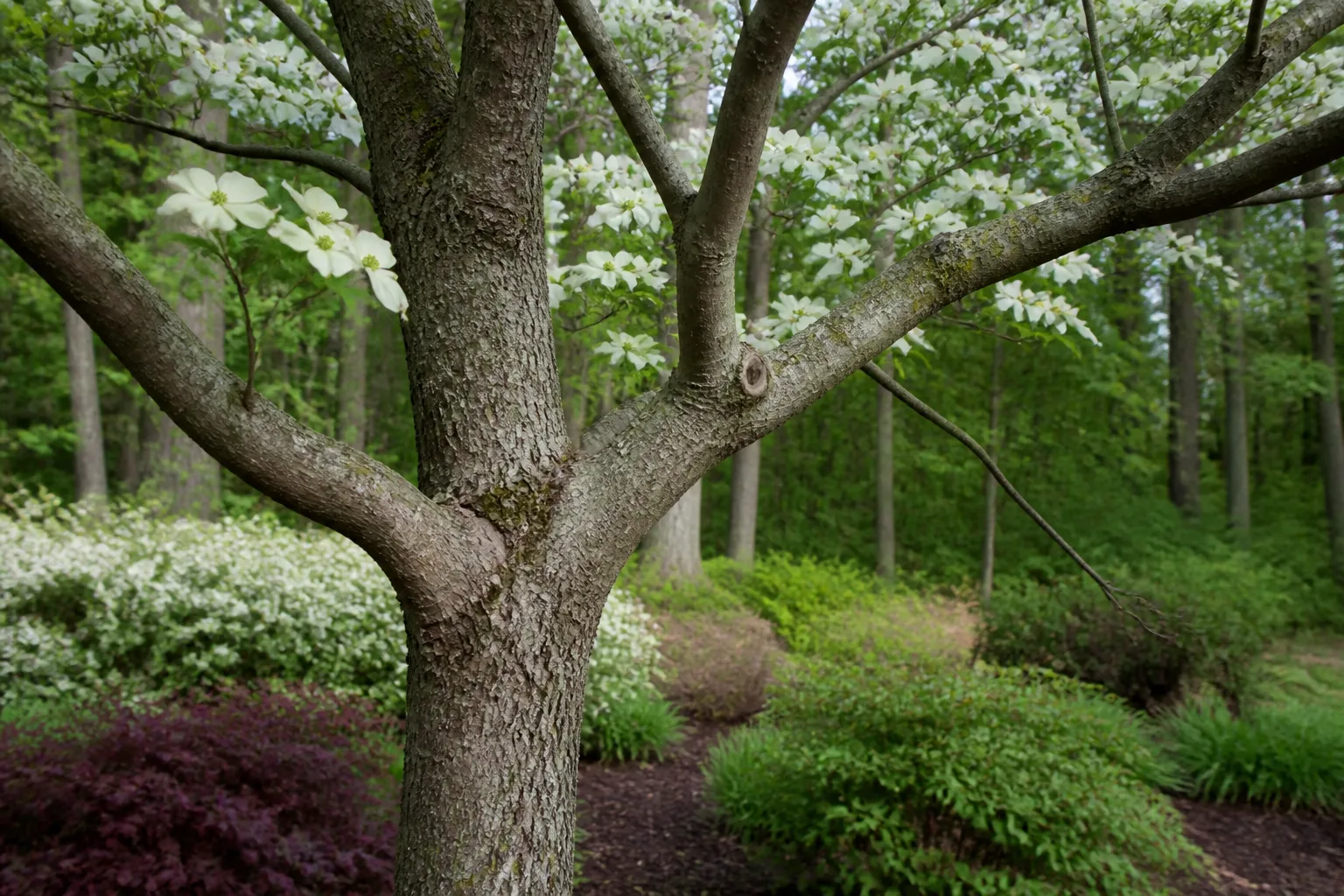
Camphor tree does not need annual shearing to look healthy. Prune to establish a durable framework, remove damaged or crossing branches, maintain clearance, and address a specific hazard. NC State Extension recommends developing major branches and spacing branches along the central trunk roughly 18 to 30 inches apart; that is a structural target, not a reason to strip the trunk bare in one session.
Formative pruning while the tree is young
Inspect the tree during the dormant or slower-growth period in your climate, then make a short plan before cutting. Keep one clear central leader when the species and tree form support it, or select well-spaced permanent scaffold branches for a naturally spreading tree. Remove competing leaders, narrow branch unions, suckers at the base, and branches that rub or point into the future walkway.
Make each cut just outside the branch collar. Do not leave long stubs, and do not flush-cut into the trunk. Remove no more foliage than necessary in one year, especially on a recently planted tree. Smaller cuts close more predictably than large amputations, and gradual training gives the tree time to add callus and redistribute growth.
For a mature tree, hire a qualified arborist for high limbs, cables, storm damage, or branches near utilities. Topping is not a size-control strategy: it creates large wounds and a flush of weakly attached regrowth. If the canopy is already too large for the site, removal and replacement is often safer than repeated severe pruning.
Propagate Camphor Tree from Seed or Cuttings
Choosing between seed and cuttings
Seed is the most straightforward route when you have access to a correctly identified, healthy parent tree and local regulations allow propagation. The tree’s fruit is readily eaten and dispersed by birds, which is useful for natural regeneration but exactly why you should not distribute seed casually in an invasive range.
Collect mature, undamaged seed, clean away fruit pulp, and sow it in a small container of well-drained medium. Keep the medium evenly moist but never saturated, label the pot, and be patient: germination can take months. Transplant a seedling only after it has a strong root system and is large enough to handle, and move it into its final site before the root system becomes tightly circling. Never plant seedlings in a wild edge or give them away without explaining the species’ regional status.
Semi-ripe cuttings taken in summer can also be attempted from healthy new-to-partly hardened growth. Use clean, sharp pruners, take several cuttings to improve your odds, remove lower leaves, and place them in a sterile, airy rooting medium kept lightly moist. High humidity and bright, indirect light help cuttings avoid desiccation, but a sealed, constantly wet container invites rot. Rooting success varies, so seed is often the more practical method for a home grower.
Diagnose Pests, Diseases, and Common Problems
Camphor tree is generally resistant to many pests and diseases, but “resistant” is not “immune.” NC State Extension lists scale insects, mites, and laurel wilt among the concerns. Wet soil can cause root rot, while fruit, seedlings, and surface roots are management problems rather than diseases.
A practical troubleshooting sequence
Start with the pattern and the timeline. A few old leaves dropping while new growth remains healthy may be ordinary evergreen turnover; sudden whole-canopy wilt is more urgent. Check the soil moisture, root flare, recent construction or digging, irrigation changes, and whether symptoms are concentrated on one branch or spread across the tree.
Yellowing, wilting, or dieback after wet weather: inspect drainage and roots before adding fertilizer. Persistent saturation reduces oxygen around roots and can lead to root rot. Improve the site’s drainage if possible, stop unnecessary irrigation, and have a professional inspect severe decline. Do not excavate major roots around an established tree as a first response.
Fine stippling, bronzing, or webbing: look closely at leaf undersides for mites, especially during hot, dry weather. Wash small trees with a strong but gentle water spray and improve overall plant stress conditions. For any pesticide, identify the pest, confirm the product is labeled for the tree and site, and follow the label exactly; broad, repeated spraying can kill beneficial organisms and may not solve a moisture or heat problem.
Raised bumps, sticky residue, or sooty mold: examine stems and leaf veins for scale. A light infestation may be managed by pruning a small affected twig or physically removing insects where practical. A large tree, heavy infestation, or treatment near pollinators calls for an arborist or extension recommendation rather than an improvised oil mixture.
Sudden wilt and branch death: treat possible laurel wilt as a professional diagnosis, not a home spray problem. Do not move firewood or pruning debris from a suspect tree, and contact your county extension office or an arborist familiar with the disease. The right response depends on confirmation and local management guidance.
Fruit, seedlings, or roots becoming a nuisance: rake fallen drupes before they are carried or germinate, pull small seedlings while the soil is moist, and monitor disturbed ground around the tree. Cutting larger trees without a follow-up plan can produce vigorous resprouts. Alabama Cooperative Extension explains that saplings and larger trees may resprout after cutting or fire and that control needs to be matched to tree size; chemical control should be handled only with current local labels and professional guidance.
Camphor itself is also a safety concern in concentrated form. Pet Poison Helpline warns that camphor in topical products can be absorbed through skin and cause serious poisoning in dogs and cats, including gastrointestinal and neurologic signs. Keep camphor products and homemade extracts away from animals and children, do not apply camphor oil to a pet, and seek immediate veterinary or poison-control help after a suspected exposure. That warning is not permission to consume camphor tree leaves, berries, or oil.
Conclusion
Camphor tree care is simple only after the hard decisions are made correctly. Plant it only where the climate, local invasive-plant guidance, mature canopy, roots, fruit, and maintenance burden all fit. Give a young tree deep, consistent water in well-drained soil; then taper irrigation as the root system expands. Feed only when a site assessment or soil test gives you a reason.
Train the structure early with small, well-placed cuts, protect the root zone from disturbance, and treat sudden wilt or wet-soil decline as a diagnostic problem rather than a fertilizer problem. In regions where camphor tree is invasive, the most responsible care may be monitoring and removing existing seedlings—or choosing a native shade tree instead of planting another one.