When to Stop Fertilizing Annuals
Learn when to stop fertilizing annuals, how containers differ from beds, and what to do about salt buildup, yellow leaves, weak blooms, and early frost.
The short answer: stop when growth, not the calendar, slows
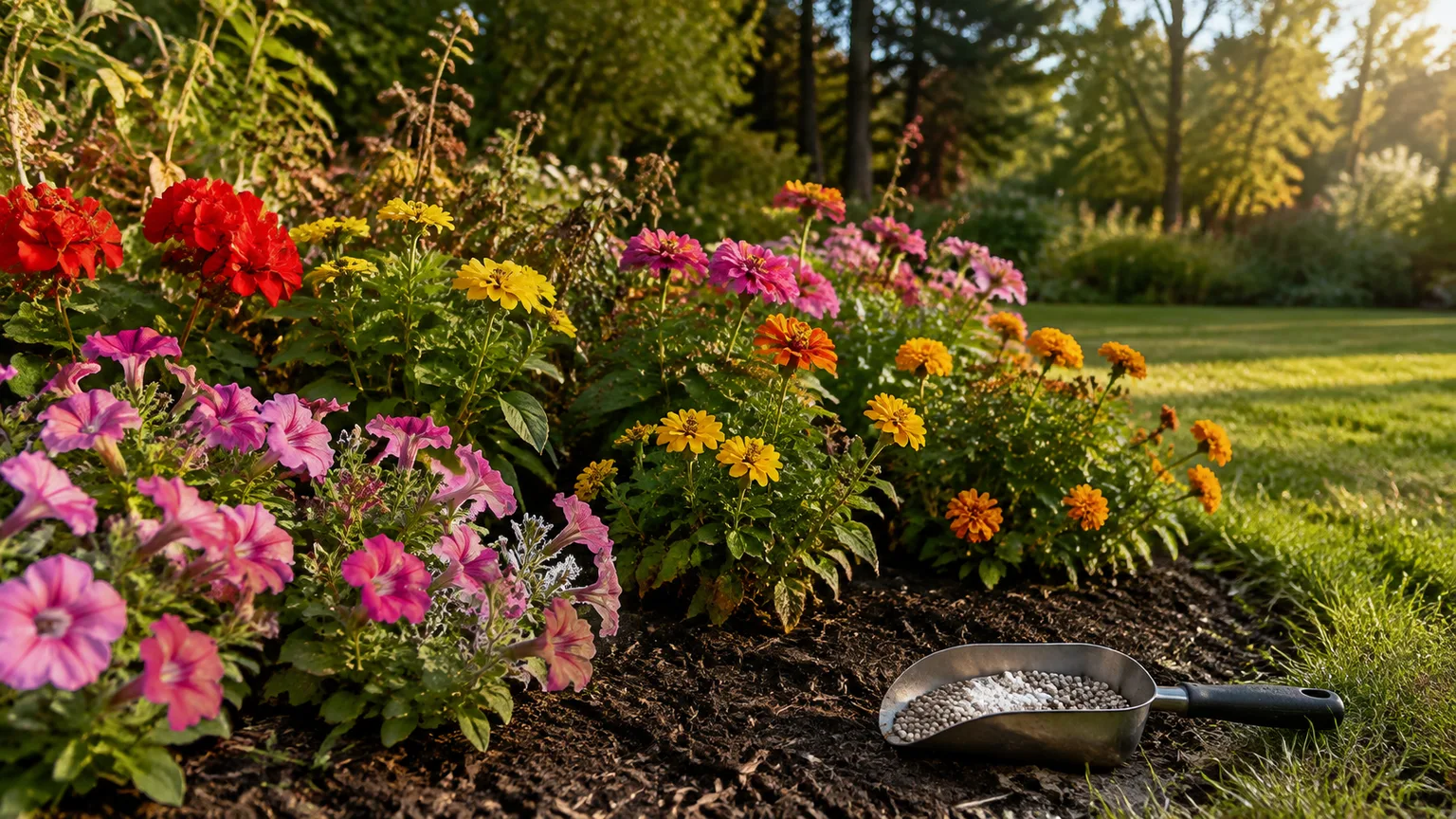
The best time to stop fertilizing annuals is when the plant has reached the end of its useful active growth for your conditions—not a universal date printed on a calendar. For a warm-season annual in a garden bed, that often means ending regular feeding in late summer as nights cool, flowering slows, or the forecast begins to point toward frost. A container petunia in a long, warm season may need a little longer; an annual already stressed by heat, drought, salt, or disease may need a fertilizer break immediately.
That distinction matters because annuals are not automatically hungry just because they are still green. Fertilizer supplies nutrients, but it does not replace light, water, healthy roots, or the temperatures a plant needs to use those nutrients. If growth has slowed, an extra application can sit in the root zone, raise salt concentration, encourage soft new shoots, or mask the real problem.
Use this quick rule: feed only while the plant is actively producing useful new leaves, stems, buds, or flowers, and only at the interval on the product label. When the plant is winding down, switch to moisture management and observation. The exception is a cool-season annual that is still establishing in a climate where it will grow through fall and winter; that plant may need a different schedule.
Annuals and perennials follow different late-season rules
The word “annual” describes a life cycle, not a fertilizer requirement. A zinnia, marigold, petunia, or impatiens is likely to complete its season when cold ends its growth, so you are not trying to push it into a winter dormancy that will preserve next year’s stems. A perennial, shrub, or overwintering tender plant has a different job: it must finish growth, harden tissues, and prepare structures that will survive a dormant season.
That is why advice that says “stop feeding everything in late summer” is too blunt, but advice that says “feed annuals until frost” can also be harmful. The plant’s setting changes the answer. A warm-season annual in a pot may genuinely run out of nutrients after months of watering, while a cool-season pansy or snapdragon may still be building roots and foliage in autumn. Identify the plant, its container or bed, and the temperatures it is actually experiencing before you reach for fertilizer.
Why late fertilizer can reduce the show
Late feeding can backfire in two different ways. The first is biological: nutrients, especially abundant nitrogen, can redirect energy toward foliage and soft shoots when the plant should be maintaining mature growth and flowers. The second is chemical: unused fertilizer salts can accumulate in a small root zone and make it harder for roots to take up water.
Neither problem requires an obviously huge mistake. Repeated label-rate applications in a small pot, fertilizer sprinkled onto dry mix, or liquid feed applied while roots are heat-stressed can create a bad root-zone environment even when the foliage initially looks lush. University of Maryland Extension describes excess fertilizer or salt damage as a cause of marginal browning, wilt, yellowing, and stunting, so those symptoms should prompt diagnosis rather than an automatic “feed it more” response. (University of Maryland Extension)
Nitrogen can push tender growth
Nitrogen is essential for leaves and stems, and a deficiency can make an annual pale and weak. More nitrogen is not automatically more flowers, though. On a plant that has already filled its space and is approaching cooler weather, a late flush of succulent shoots may be poorly matched to the remaining light and temperature window. Those shoots can be more vulnerable to cold snaps, wind, drought, and breakage than the mature growth below them.
The practical risk is greatest when a gardener tries to revive a tired annual with a strong, frequent dose. A plant that looks tired may be responding to a hot root zone, compacted mix, pests, poor drainage, or normal age. If you stimulate new growth before correcting that limitation, the plant spends resources on tissue it cannot support well. Late feeding also does not erase old flower damage or create enough light for a shaded container.
Salts can damage roots before leaves tell the story
Fertilizer salts are not the same thing as table salt, but soluble fertilizer products do add dissolved salts to the root zone. When concentration becomes too high, roots can be injured and water movement into the plant can become more difficult. Washington State University Hortsense lists overfertilization as one cause of leaf-tip or marginal necrosis and shoot dieback, and recommends moderate fertilization. (Washington State University Hortsense)
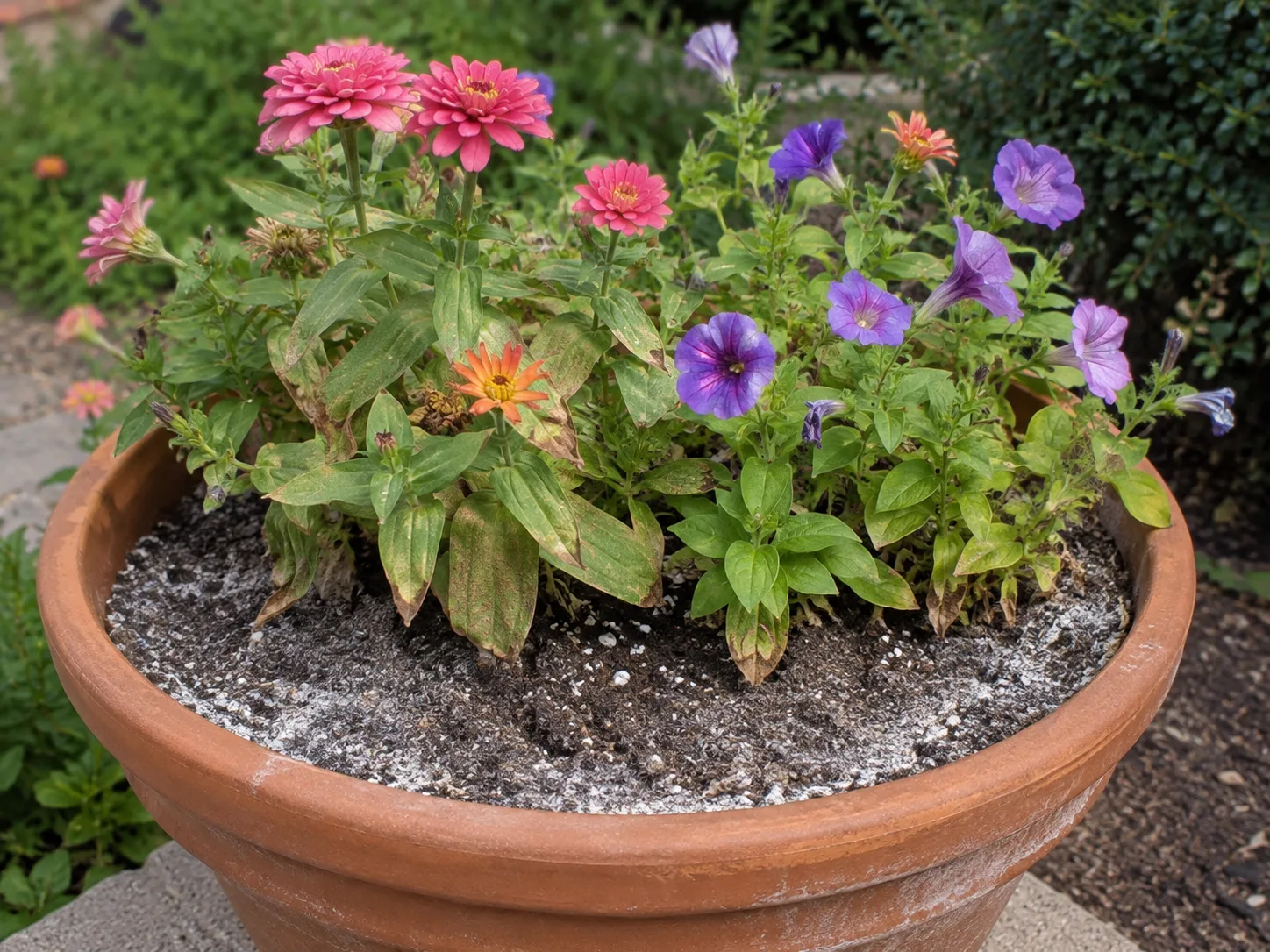
Containers are more exposed to this problem because there is less soil to dilute an application and less rainfall moving through the mix. A pale white crust on the potting mix or around a pot’s drainage holes is a useful warning, but its absence does not prove the root zone is fine. Roots can be stressed before salts become visible, especially if the pot dries hard between waterings or drainage is restricted.
Set the cutoff by garden setting
The same annual can need different feeding decisions depending on whether it is rooted in open soil or confined to a basket. Use the calendar as a prompt to inspect the plant, not as permission to apply one last dose by habit. The nearer you are to a true slowdown in growth, the more conservative the decision should be.
Annuals planted in garden beds
In a reasonably fertile bed, many established annuals need less supplemental fertilizer than gardeners expect. Their roots can explore a larger volume of soil, organic matter releases nutrients gradually, and rainfall or irrigation moves dissolved nutrients beyond the immediate root zone. If plants are still vigorously expanding and your product label calls for another application, a modest, correctly applied feeding may be reasonable during the active season.
As late summer turns toward fall, stop regular feeding when warm-season annuals have reached mature size and new growth is slowing. Stop sooner if the bed is dry, waterlogged, heavily mulched against the stems, or showing fertilizer-burn symptoms. A bed does not need to be flushed simply because the season is ending; routine heavy irrigation can damage roots, erode soil, and leach nutrients into places they are not wanted.
Annuals in containers and hanging baskets
Pots and baskets are the main case where an annual may remain hungry after a bed-grown plant has slowed. Frequent watering can carry nutrients out of the mix, while heavy bloomers such as petunias, calibrachoa, and geraniums may keep producing foliage and flowers for weeks in a warm, bright location. Proven Winners recommends feeding annuals during the growing season and notes that container heavy feeders can need more consistent nutrition than plants in the ground. (Proven Winners)
That does not mean “feed until frost” is a safe universal rule. Continue only while the plant is actively growing, the pot drains freely, and the weather gives it time to use what you apply. Once nights are consistently cool, the plant has stopped making meaningful new growth, or a frost is approaching, stop routine feeding. If the container is still lush but you see crust, crispy margins, wilt despite moist mix, or stalled blooms, pause fertilizer and inspect the roots and drainage instead.
Diagnose the plant before adding another dose
Fertilizer is a treatment for a nutrient need, not a general-purpose plant stimulant. Before feeding a struggling annual, check the moisture several inches down, feel whether the pot is draining, look under leaves for pests, and compare new growth with old growth. Also ask whether the plant is simply aging or reacting to a sudden change in sun and temperature.
Leaf scorch, crust, and wilting point to salt stress
Salt injury often appears first as brown, dry leaf margins or tips, followed by yellowing, wilt, stunting, or dieback. A white or gray crust on the surface makes excess salts more plausible, particularly in a pot that has been fertilized repeatedly. The pattern can be confusing because drought also causes crispy edges and wilt; salt-stressed roots may leave a plant wilted even when the mix feels damp.
If the symptoms began soon after a feeding, the product was mixed more strongly than directed, or fertilizer was applied to dry soil, stop feeding while you investigate. Remove loose fertilizer granules from the surface without disturbing roots. For a container with a drainage hole, slowly run plain water through the mix until it drains freely from the bottom, empty the saucer, and repeat once if the potting mix accepts water evenly. Do not do this to a pot with no drainage or a bed that stays saturated; improve drainage or repot instead.
Flushing can remove soluble salts, but it cannot repair dead roots or reverse tissue that is already brown. Let the mix drain and partially dry according to the plant’s needs before watering again, and remove only leaves that are fully dead. Do not respond to a flush with a concentrated “recovery” fertilizer.
Yellowing, stunting, and few flowers have several causes
A yellow leaf is not a fertilizer diagnosis. Older leaves yellowing while new growth is healthy may reflect normal aging or a temporary stress, while widespread yellowing can come from saturated roots, drought, low light, pests, temperature shock, or nutrient imbalance. Too much nitrogen can also produce lots of green growth with fewer flowers, but a plant that is not blooming may simply lack light or may need deadheading.
Stunting is equally non-specific. Inspect roots if a container remains wet for days, check for insects clustered on new growth, and look for fungal spots or distorted leaves before assuming a nutrient shortage. If the plant is healthy green, flowering, and growing, feeding it “just in case” is more likely to add salts than solve a problem.
Match the cutoff to the fertilizer type
The last day you apply liquid fertilizer is not necessarily the day the plant stops receiving nutrients. Read the product label and account for the material already in the pot or bed. The two most common timing mistakes are topping up a slow-release product with more fertilizer before it has finished working and using a water-soluble product at the same strength as the season’s peak growth continues to decline.
Water-soluble fertilizer
Water-soluble fertilizer is easy to control because each application is a discrete event. Mix it according to the label, apply it to already-moist root-zone soil, and direct the solution toward the roots rather than treating fertilizer as a leaf spray. Proven Winners specifically warns against sprinkling water-soluble fertilizer dry on top of soil because concentrated material can burn plants; follow the product’s directions for dilution and frequency. (Proven Winners annual-feeding guidance)
For a warm-season annual, the final liquid feeding should be early enough that the plant can use it during active growth. In a long, frost-free season, that may be later than in a short northern season; in a shaded or heat-stressed pot, it may be earlier. If growth has slowed, reducing or stopping liquid feed is usually more useful than switching to a stronger “bloom booster.”
Slow-release and continuous-release fertilizer
Pellets and coated granules continue releasing nutrients after you stop pouring liquid feed. Release can depend on the product, moisture, temperature, and coating, so do not assume that a second top-dress is needed because the surface looks empty. Proven Winners explains that slow-release products depend partly on soil microbes and that continuous-release products are influenced by temperature, with label durations ranging from a few months to longer periods. (Proven Winners annual-feeding guidance)
The useful late-season move is often to stop adding, not to remove every pellet. If the annual is in a small pot and showing salt injury, remove accessible granules and leach the mix only if drainage is good. For next season, choose a release period that fits the plant’s expected growing window rather than layering several products whose release periods overlap.
What to do after the final feeding
Stopping fertilizer is not abandoning the plant. It is a handoff from pushing growth to protecting the roots, flowers, and remaining leaves long enough for the season to finish well. A simple maintenance plan is more valuable than another application made from anxiety.
Water the root zone without keeping it wet
Check moisture before watering and water thoroughly when the root zone is dry enough for that plant, allowing excess to drain from a container. Potted annuals can dry quickly in sun and wind, but watering on a fixed daily schedule can be just as damaging as neglect. Mulch in a bed can moderate swings in moisture, provided it is kept off the stems.
After a salt flush, do not keep the pot constantly wet. Roots need both water and air, and a saturated mix can create a second problem that looks like fertilizer damage. If water runs down the side of the root ball or sits in a saucer, repot into fresh, well-drained mix or correct the container’s drainage before resuming normal care.
Deadhead, scout, and protect the remaining display
Deadhead faded flowers when the annual responds with more buds, but do not prune aggressively just to force a new flush as cold weather approaches. Remove broken or diseased material, keep fallen leaves from smothering the crown, and inspect new growth for aphids, whiteflies, mites, or chewing damage. Water and pest control can preserve an existing display; fertilizer cannot compensate for a damaged leaf canopy.
If a frost is forecast, use the plant’s value and portability to decide what to do. Move a container to a sheltered spot when practical, cover outdoor plants only with a breathable frost cloth that does not rest heavily on them, and remember that protection buys time rather than changing a warm-season annual into a perennial. Cool-season annuals may tolerate or welcome cooler nights, but their cultivar and local forecast still matter.
When one last feeding can make sense
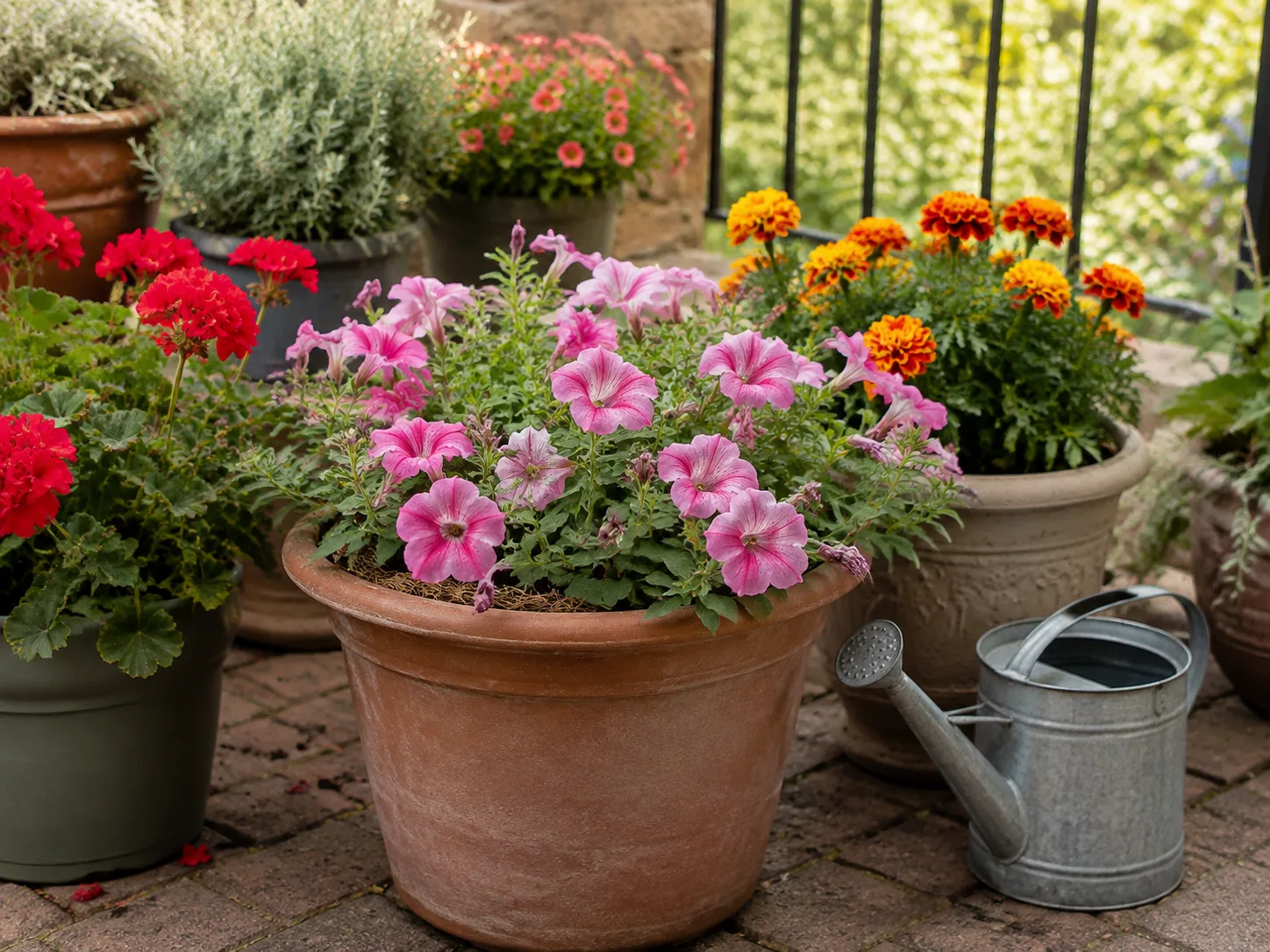
One last feeding can be reasonable when the plant is clearly still growing, the root zone is healthy, the product’s label interval has arrived, and the local season provides enough warm, bright weather for the plant to use the nutrients. This is most plausible for a vigorous container annual in a long season, or for a cool-season annual that is actively establishing rather than shutting down. Apply the label rate; “last feeding” is not a reason to double it.
Do not feed solely because flowers are fewer, leaves look tired, or the plant has survived another week. First check light, water, roots, pests, and temperature. If the plant is within days of a hard frost, is already salt-stressed, or has stopped making healthy new growth, the safer choice is maintenance and protection—not a final burst of fertilizer.
Conclusion
When to stop fertilizing annuals is a growth decision shaped by the plant, the container or bed, the fertilizer already present, and the weather ahead. Warm-season annuals usually need regular feeding only while they are actively building and blooming; as growth slows, continued applications can encourage tender tissue or concentrate salts around roots. Containers deserve closer inspection because small volumes and frequent watering make both nutrient loss and salt buildup more likely.
Use the final feeding as a transition point. Check moisture, drainage, roots, pests, and light before treating a symptom; flush only a well-drained container when salt injury is plausible; then maintain water, deadhead selectively, scout, and plan for frost. That approach lets healthy annuals finish their season with less stress and keeps a late-season fertilizer mistake from becoming the problem you are trying to fix.



