When to Plant Fall Kale: Timing and Care
Learn when to plant fall kale using frost dates, maturity days, and a cool-weather buffer, plus seed, transplant, watering, harvest, and protection tips.
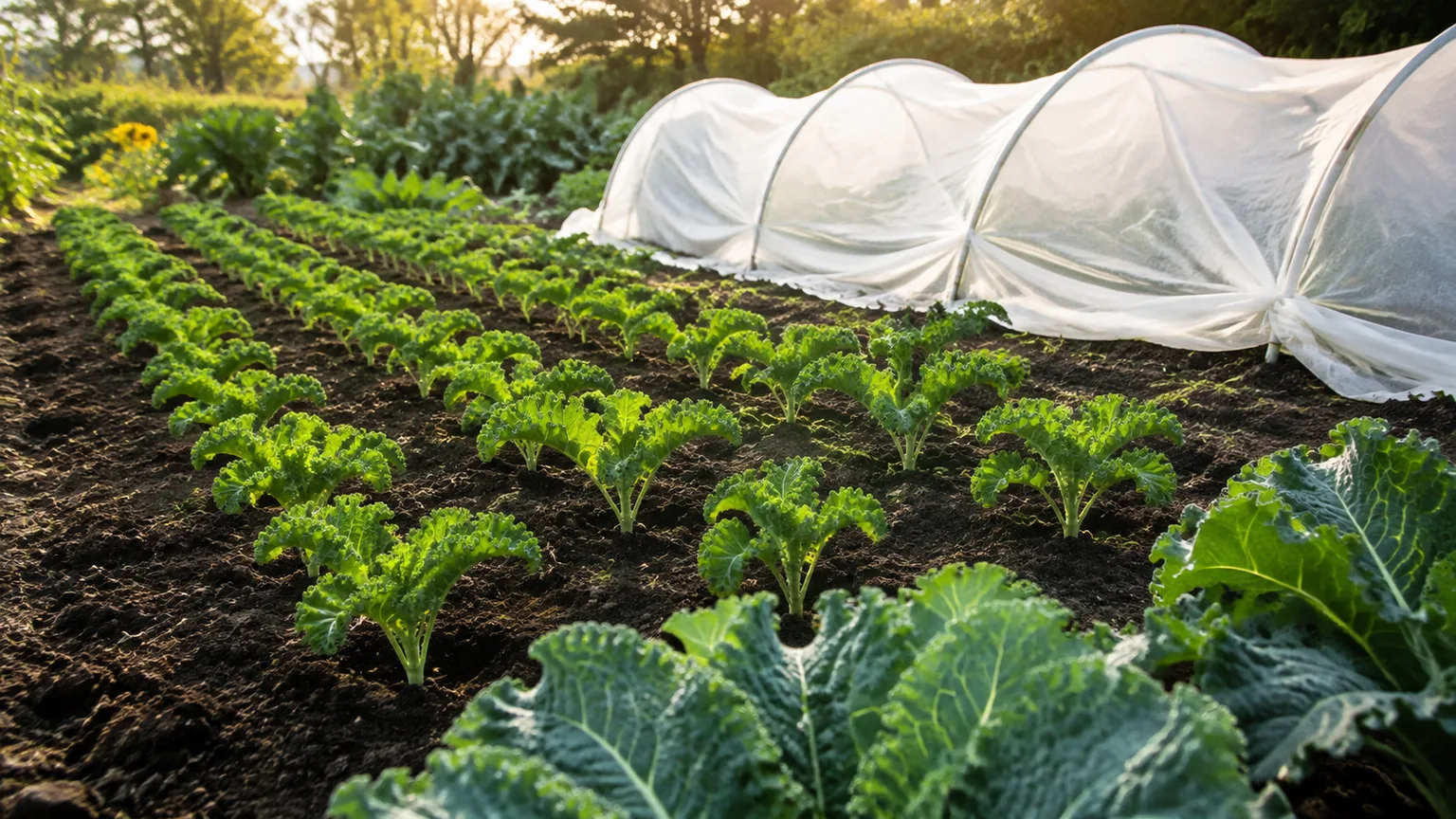
Fall kale is one of the most forgiving crops in the vegetable garden, but it is not immune to bad timing. Start it too early and seedlings struggle through heat, dry out, or bolt before the weather turns. Start it too late and the plants may survive the first frost without ever making enough leaves to harvest.
The practical answer is to count backward from your first expected hard freeze, using the variety’s days to maturity and adding extra time for shortening days. In many gardens, seeds go in about eight to ten weeks before that freeze and transplants go out about four to six weeks before it. The exact window shifts with your climate, variety, soil, and whether you want baby leaves or full-size plants.
The short answer: plant backward from a freeze
First find your local average first frost date, then decide whether your “finish line” is a bowl of baby kale, a full-size plant, or a crop you want to hold through winter. For full-size leaves, count backward from the expected first hard freeze by the seed packet’s days to maturity, then add 7 to 14 days because autumn light and temperatures usually slow growth. Add another week if the seed will germinate in hot, dry soil or if your garden routinely has long stretches below the variety’s preferred temperature.
For example, if a kale variety needs 60 days and your first hard freeze is usually October 25, a safe seed date is roughly August 22 to 29 after adding a buffer. A nursery transplant that is already four to six weeks old can be planted later, often in mid-September, because the indoor seedling stage is already complete. If you are content with baby leaves, you can sow closer to the freeze and harvest young foliage rather than waiting for a mature rosette.
This is a planning rule, not a guarantee. A hard freeze is different from a light frost, and neither date predicts every cold snap. A south-facing bed beside a wall may stay usable longer than an exposed low spot, while a wet raised bed can feel colder than a well-drained one. Keep a note of the first frost in your own garden; your records will become more useful than a generic calendar after a few seasons.
Pick the right fall window for your climate
Kale is a cool-season crop. It grows best when days are moderate rather than hot, and it can tolerate frost once it is established. Utah State University Extension reports that kale grows best when temperatures do not exceed about 75°F, that young plants tolerate temperatures down to roughly 25°F, and that mature plants are substantially hardier. Those thresholds describe plant stress and survival, not a promise that the plant will keep growing quickly in cold weather. (Utah State University Extension)
In hot-summer regions, fall kale is often started in late summer under shade cloth or in a sheltered nursery spot, then planted out as nights cool. In cool-summer regions, you may sow earlier because the soil is already within a workable temperature range. In mild-winter areas, a fall crop can become a winter crop; in places with early deep freezes, the realistic goal may be a late-fall harvest under cover.
The Oregon State University Extension fall-gardening guidance is a useful reminder that late-summer seedlings need several weeks of growth before winter temperatures arrive. That is why a calendar phrase such as “plant in August” is less useful than knowing your freeze date and the time your crop needs to establish. (Oregon State University Extension, Fall Gardening in the Vegetable Patch)
Seed vs transplant: choose based on days remaining
Use direct sowing when the soil is workable, the bed can be kept evenly moist, and you have enough warm days for germination plus establishment. Seeds are economical and avoid transplant shock, but the tiny seedlings are vulnerable to crusted soil, flea beetles, slugs, birds, drying, and a sudden heat wave. They also take longer than the number printed on the packet suggests because that number usually assumes favorable growing conditions.
Use transplants when your season is already tight or when late-summer soil is too hot for dependable germination. Choose compact plants with sturdy stems, four to six true leaves, and roots that hold the potting mix together without being a dense circling mat. A large, root-bound plant is not automatically a better bargain; it may pause after planting while it repairs stressed roots.
If you are within about four weeks of a hard freeze, plant healthy starts and plan for baby or medium leaves. If the freeze is only two weeks away, skip a full-size expectation and sow a quick baby-leaf patch only if your climate normally has a mild autumn, or devote that bed to a crop meant to overwinter rather than mature before winter.
What “days to maturity” really means in fall
Seed packets are not all measuring the same milestone. Some count from sowing, others from transplanting, and some describe the size at which the variety is considered mature. Read the small print before making a date. A variety listed at 55 days from transplant will need more calendar time if you are starting it from seed, while baby kale can be ready in roughly three to four weeks under good conditions.
Shortening daylight is the hidden variable. A seedling may have warm enough soil but still produce leaves slowly once the sun is low. Harvest plans should therefore be flexible: expect baby leaves first, then outer full-size leaves, then slower winter growth. Harvest to Table recommends about ten weeks before the first expected fall frost for a seed-grown fall crop, while also noting that local climate and the intended harvest stage change the schedule. (Harvest to Table)
Choose a variety for the harvest you want
Choose the variety by use instead of buying the first packet labeled “kale.” Red Russian is mild, tender, and relatively quick, making it a strong choice for salads and a late start. Lacinato, also called Tuscan or dinosaur kale, has long, textured leaves that are excellent when picked young and can hold through cool weather. Siberian types are valued for mild leaves and cold tolerance.
Curly Scotch types such as Vates or Winterbor are compact, productive, and dependable in a cold garden. Their crinkled leaves can trap soil, so mulch and careful washing matter. BBC Gardeners’ World Magazine also highlights curly and ornamental-looking cultivars that remain attractive in winter, while its basic growing advice supports sowing in modules and transplanting later. (BBC Gardeners’ World Magazine)
For a late sowing, favor an early variety with a short maturity window. For an overwintering bed, favor a cold-hardy, compact variety and install protection before the forecast becomes severe. If salads are the goal, prioritize leaf texture and mild flavor over maximum plant size. If soups and braises are the goal, a slower, sturdy plant can be more useful than a fast baby-leaf type.
Prepare the bed before you sow
Remove spent summer crops and weeds, but do not plant where a diseased brassica has recently collapsed. Kale is in the brassica family, so rotating away from a bed that recently held cabbage, broccoli, cauliflower, collards, or kale can reduce the chance of carrying over soil-borne problems. Clear diseased leaves from the garden rather than burying obvious disease in a shallow planting trench.
Work the soil when it crumbles instead of smearing. Kale prefers fertile, well-drained soil rich in organic matter, but a wet, compacted bed can be more damaging than a merely average bed. Mix in a modest amount of finished compost, rake the surface smooth, and make sure irrigation can reach the whole row. Utah State University Extension recommends using a soil test to guide fertilizer decisions rather than guessing from leaf color.
Give fall kale the brightest site you have. Six or more hours of direct light is a useful target, and low autumn sun makes nearby trees, fences, and summer crops more obstructive than they were in June. A narrow bed that is easy to cover and reach is often better than a larger bed that stays shaded or waterlogged.
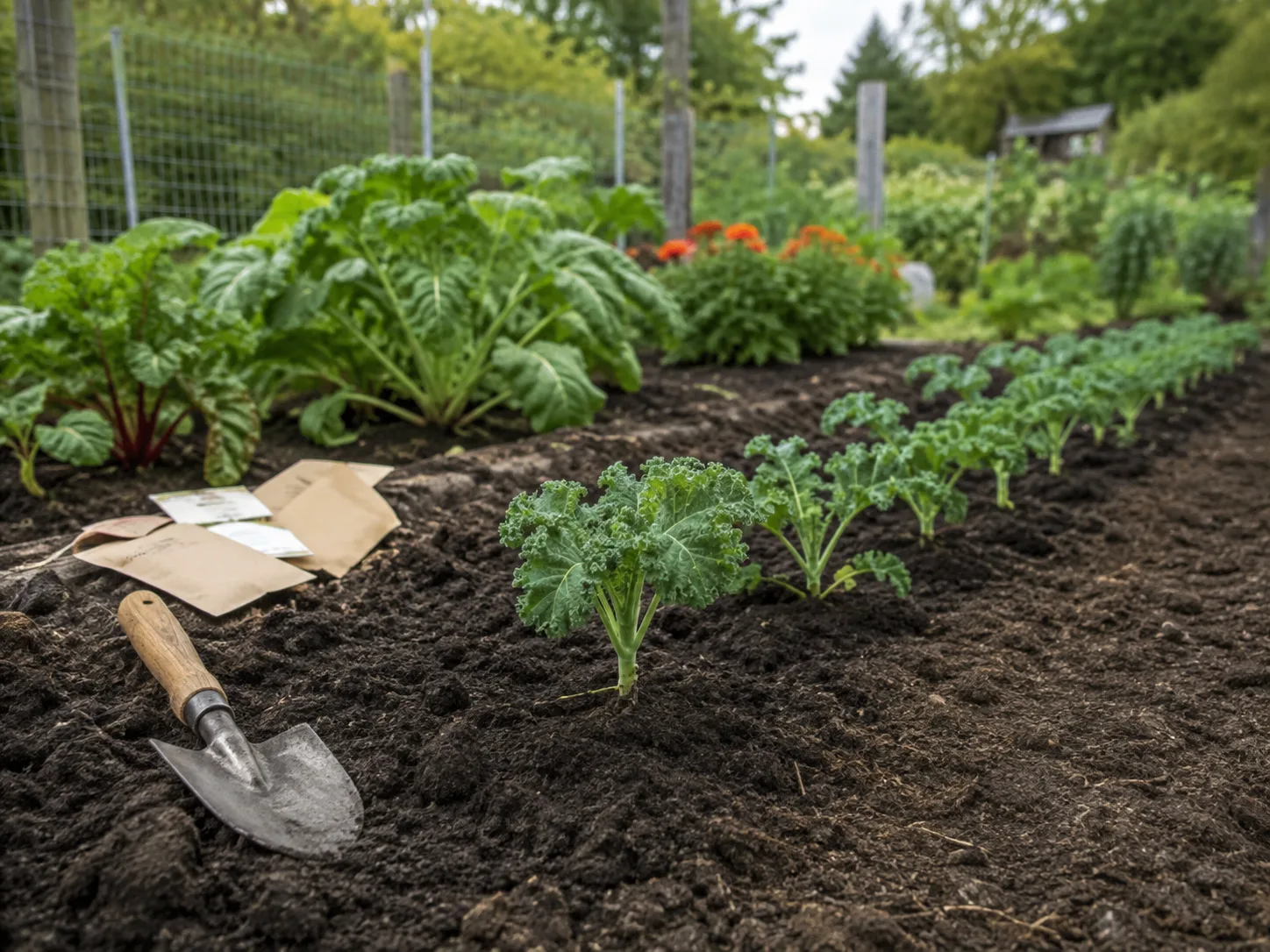
Plant fall kale step by step
Plant on a calm, mild day when the bed is moist but not saturated. Have row-cover hoops ready before sowing or transplanting; waiting until the first freeze is forecast usually means scrambling to protect plants that have not yet been anchored well.
Direct sowing in garden soil
Make a shallow furrow about ¼ to ½ inch deep and sow seeds a little apart rather than scattering a dense carpet. Cover lightly with fine soil and water with a gentle spray so the seed does not wash to one end of the row. Keep the surface evenly moist until seedlings emerge, which may take longer in cool soil and may be erratic if the bed alternates between baking and drying.
Once seedlings have three or four true leaves, thin them. For full-size plants, leave roughly 12 to 18 inches between plants with about two feet between rows if you have room. For baby-leaf production, closer spacing is possible because you will harvest the plants young, but crowded foliage stays damp and is harder to inspect for pests.
Do not throw away every thinning. The smallest seedlings may not transplant well, but sturdy thinnings can be moved immediately into a damp hole. Water them in and shade them briefly if the afternoon is hot. Treat this as a rescue opportunity, not as a reason to sow too densely.
Transplanting starts without stalling growth
Water the seedlings before planting and set them at the same depth they were growing, or slightly deeper if the stem is long and healthy. Firm soil around the root ball, water slowly, and give the plants temporary afternoon shade if temperatures are still high. Remove only damaged lower leaves; stripping a transplant bare reduces the leaf area it needs to rebuild roots.
Space plants so mature leaves can dry after rain and so a cover can sit over them without crushing the foliage. If you are planting into a bed that held a heavy-feeding summer crop, do not automatically add a large dose of nitrogen. Excessively lush growth can be more attractive to chewing insects and more vulnerable to wind, while a soil test or a modest compost application gives you better control.
Keep seedlings moving through late-summer heat
The hardest part of a fall kale crop is often not the cold; it is getting a young plant through the last hot weeks of summer. Place seed trays where they receive bright light but relief from the hottest afternoon sun, or use a light shade cloth over direct-sown seedlings. Shade should reduce heat stress without turning the bed dim and stagnant.
Check the soil with a finger before watering instead of following a rigid clock. The surface may dry quickly while the root zone stays wet, especially under mulch. Water deeply enough to moisten the root zone, then allow excess water to drain. A seedbed that dries repeatedly may fail to emerge; a saturated seedbed may produce weak roots and damping-off.
Harden off indoor-grown transplants over several days. Start with bright shade and a short outdoor period, then increase morning sun and exposure to wind. A transplant moved directly from a protected shelf into hot sun can wilt even when the soil is damp, and that setback costs the exact days you were trying to save.
Water, thin, mulch, and feed for tender leaves
Kale needs consistent moisture while it is establishing. Utah State University Extension gives about 1 to 2 inches of water per week as a general requirement, adjusted for rainfall, soil, temperature, and drainage. The goal is not a permanently wet bed; it is to avoid the repeated dry-to-soaked cycle that produces tough leaves and uneven growth. Drip irrigation or a soaker hose keeps foliage drier and makes a covered row easier to manage.
Add mulch after seedlings are established rather than burying their crowns on planting day. A thin layer of clean straw, shredded leaves, or another suitable organic mulch cools the root zone, slows evaporation, and reduces weed competition. Leave a small gap around the stem so the crown stays dry and visible.
Feed according to the soil and the plant’s growth, not by habit. Pale, slow plants in poor soil may benefit from a balanced vegetable fertilizer or a light side-dressing, but fertilizer cannot replace light, water, or warmth. Avoid applying a strong nitrogen dose just before a cold spell; plants need functioning roots and growing conditions to use it.
Protect kale from frost, wind, and winter wet
A light frost is usually a flavor event, not an emergency. Cold can make kale taste sweeter because the plant’s metabolism changes as temperatures fall, but sweetness does not mean every leaf is protected from every freeze. A hard freeze, drying wind, frozen soil, or repeated freeze-thaw cycles can still damage leaves and roots.
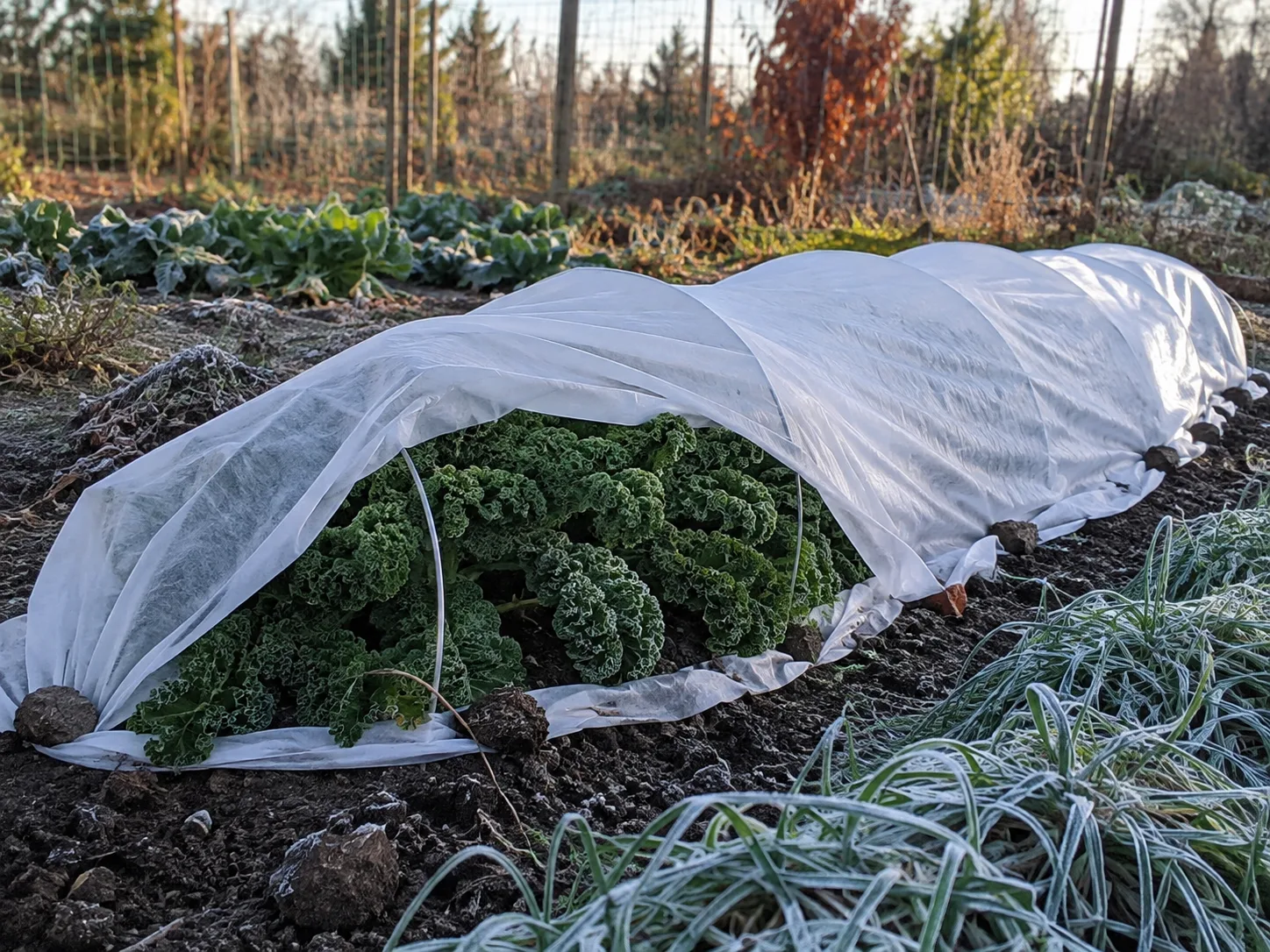
Use hoops and floating row cover before the cold arrives. The fabric should be secured at the edges so wind cannot lift it, and it should leave enough space for the plants to grow. A low tunnel or cold frame gives more protection than a loose sheet, but it must be vented on sunny days; trapped heat and condensation can create a new set of problems.
Water dry soil before a forecast freeze, preferably earlier in the day so leaves are dry by evening. The moist soil stores more heat than powder-dry soil, but do not turn a poorly drained bed into a pond. Once the ground has cooled, add a light mulch for root protection. Do not pile wet leaves tightly against the crown.
If your area has long periods of deep cold, treat overwintering as a separate project. Harvest a good portion before the severe weather, cover the healthiest plants, and check them during thaws. Remove damaged or rotting leaves, ventilate covers, and resume watering only when the soil is thawed and plants can use it.
Harvest baby leaves and full-size greens
Baby kale is the best insurance for a late planting. Pick individual leaves when they are large enough to use, often three to four weeks after sowing in favorable conditions. Harvest a few leaves from each plant instead of stripping one plant bare, and leave the center growing point intact.
For full-size greens, start with the oldest outer leaves and work upward. Harvest when leaves are firm, crisp, and richly colored, before they become coarse. BBC Gardeners’ World Magazine describes kale as a cut-and-come-again crop that can be left in the ground for winter picking, while Utah State University Extension also recommends removing older leaves first so younger leaves continue developing.
Pick in the morning when practical and chill leaves soon after harvest. Use fresh kale quickly for the best texture, or blanch and freeze a surplus. A covered plant may continue producing slowly through winter, but growth can pause when daylight is weak; do not interpret a dormant plant as dead unless the crown is soft, rotting, or completely collapsed.
Troubleshoot the problems that derail fall crops
Most fall-kale failures trace back to one of four conditions: the crop was started too late for the intended harvest, seedlings were stressed by summer heat, roots stayed too wet, or young plants were not protected from pests. Diagnose the pattern before adding fertilizer or pesticide. One bad leaf is not a diagnosis.
Holes, chewed edges, and curled leaves
Tiny shot holes in young leaves often point to flea beetles, while larger ragged holes suggest caterpillars, slugs, or snails. Inspect undersides and the soil surface at dawn or dusk. Floating row cover installed immediately after sowing can prevent many insects from reaching seedlings, but it must be secured and removed or opened when plants need access to pollinators later in the season.
Caterpillars hide along ribs and beneath leaves. Handpick them when practical, and if you use a biological or labeled product, follow the product label and observe its harvest interval. Aphids cluster on tender growth and undersides; a strong but non-damaging water spray can dislodge small colonies, while badly curled new growth may need more attention.
Birds can shred a small planting even when no insect is visible. Netting or a properly supported cover helps, but never leave loose mesh where birds or small animals can become trapped. Utah State University Extension lists aphids, cabbage worms and loopers, and flea beetles among common kale pests. (Utah State University Extension pest guidance)
Slow growth, yellow leaves, and bitter flavor
Slow growth immediately after transplanting is normal if roots were disturbed, but a plant that remains stalled for weeks needs a root-zone check. Feel below the mulch: dry soil, standing water, compacted soil, and severe root binding can all look like “needs fertilizer.” Correct moisture and drainage first.
Yellow lower leaves can be ordinary aging, especially after repeated harvest, but widespread pale new growth suggests stress, low fertility, or root trouble. If the bed is wet and plants wilt during the day, stop adding water and improve drainage. If leaves are pale while the soil is dry and the plant is small, restore even moisture before feeding lightly.
Bitter or tough kale usually reflects heat, drought, overmaturity, or slow growth rather than a single missing amendment. Harvest younger leaves, shade plants during the last hot stretch, and keep the root zone evenly moist. Frost may improve flavor, but it cannot reverse leaves that have already become old and fibrous.
Conclusion
The best time to plant fall kale is the date that leaves enough time for your chosen variety to establish and produce usable leaves before your first hard freeze. Start with the local freeze date, count backward from the variety’s maturity estimate, add a week or two for autumn slowdown, and choose seeds or transplants based on the days you truly have.
Then make the crop easier on itself: use a bright, well-drained bed; keep seedlings evenly moist through late-summer heat; thin for airflow; protect the row before severe weather; and harvest from the outside in. If the calendar has already moved past the ideal window, switch the goal to baby leaves or an overwintering crop instead of forcing a full-size harvest that the season cannot support.



