Pansy Care Guide: Growing Viola × wittrockiana in Cool
Viola × wittrockiana
Learn how to grow pansies with cool-season timing, bright light, evenly moist well-drained soil, and simple steps to prolong flowering.
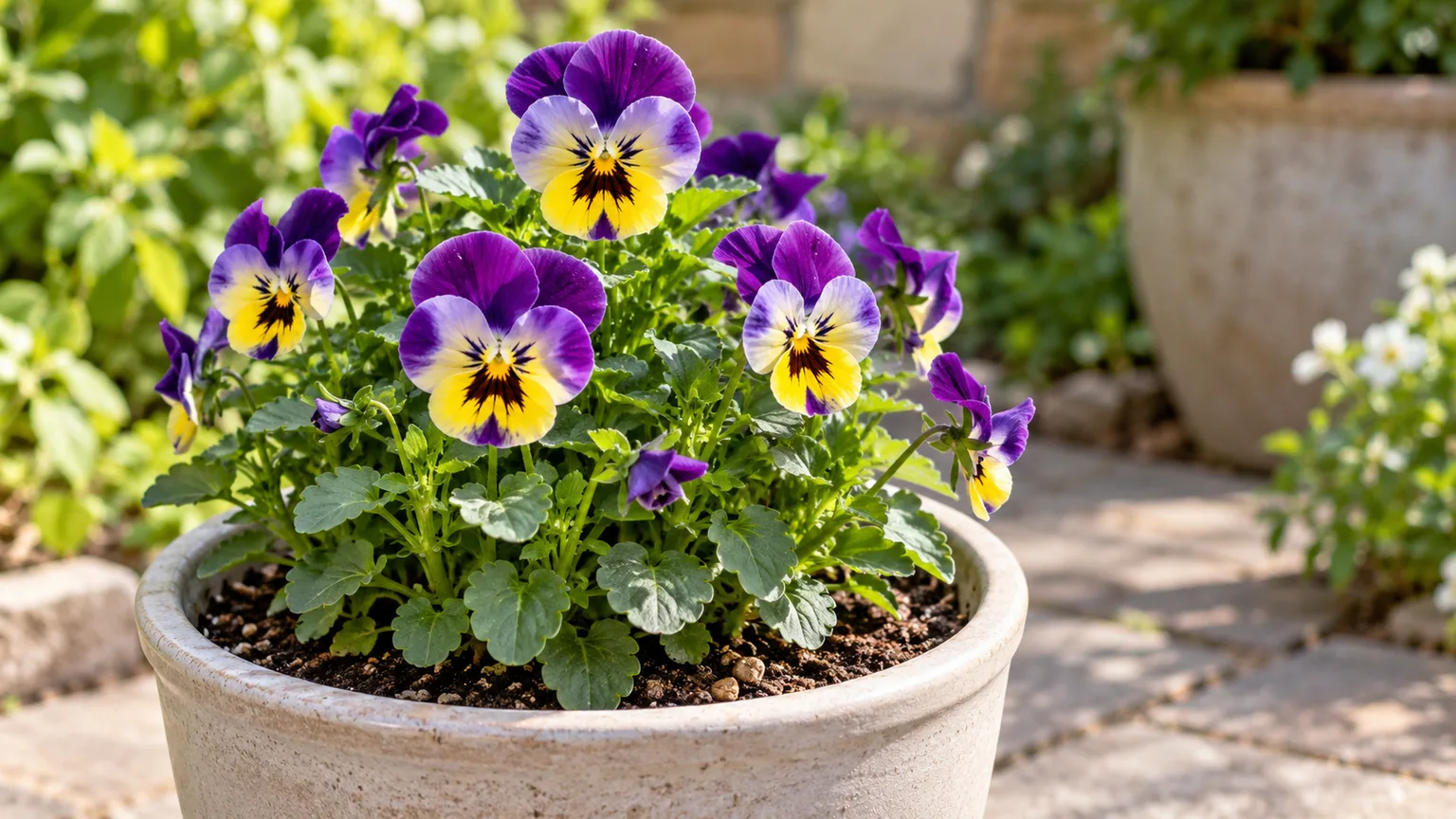
Pansy Care Guide
Start with wateringThe most common care mistake for PansyPansy watering guide →Pansy care essentials
Light
Full sun to partial shade; afternoon shade can extend flowering in warm weather
Water
Keep the root zone evenly moist while pansies are actively growing, but never leave the soil soggy. Water at the soil line when the surface begins to dry, then let excess drain. Containers and hanging baskets dry faster than garden beds, so check them more often. Reduce supplemental watering during cool, rainy weather rather than following a fixed calendar.
Soil
Choose fertile, humus-rich soil that holds light moisture but drains freely. For pots, use a fresh, quality container mix in a pot with open drainage holes. Pansies do poorly when roots sit in waterlogged soil.
Humidity
Temperature
Fertilizer
About Pansy
Pansy is native to European garden hybrid developed from violet species with European and Asian ancestry, typically reaches Usually 6–9 in (15–23 cm) tall and 9–12 in (23–30 cm) wide; trailing cultivars spread farther indoors, with fast during cool weather; growth and flowering decline as heat builds growth. Pansy has a low, compact or trailing, short lived herbaceous perennial commonly grown as a cool season annual or biennial growth habit and part of the Violaceae family. It is also known as Garden Pansy and Lady's Delight.
| Detail | Information |
|---|---|
| Also known as | Garden Pansy, Lady's Delight |
| Native region | European garden hybrid developed from violet species with European and Asian ancestry |
| Mature size | Usually 6–9 in (15–23 cm) tall and 9–12 in (23–30 cm) wide; trailing cultivars spread farther |
| Growth rate | Fast during cool weather; growth and flowering decline as heat builds |
| Growth habit | Low, Compact Or Trailing, Short Lived Herbaceous Perennial Commonly Grown As A Cool Season Annual Or Biennial |
| Scientific name | Viola × wittrockiana |
| Family | Violaceae |
How to care for Pansy?
How much light does Pansy need?
Full sun to partial shade; afternoon shade can extend flowering in warm weather. Partial shade. Bright morning sun with afternoon shade. direct sun
- Full sun to partial shade - Full sun to partial shade; afternoon shade can extend flowering in warm weather.
- afternoon shade can extend flowering in warm weather - Full sun to partial shade; afternoon shade can extend flowering in warm weather.
- Partial shade - Partial shade.
- Bright morning sun with afternoon shade - Bright morning sun with afternoon shade.
- direct sun - direct sun.
When should you water Pansy?
Keep the root zone evenly moist while pansies are actively growing, but never leave the soil soggy. Water at the soil line when the surface begins to dry, then let excess drain. Containers and hanging baskets dry faster than garden beds, so check them more often. Reduce supplemental watering during cool, rainy weather rather than following a fixed calendar.
- Feel the soil about an inch (2–3 cm) below the surface. It should feel lightly moist - Keep the root zone evenly moist while pansies are actively growing, but never leave the soil soggy.
- not wet. If it is dry - Water at the soil line when the surface begins to dry, then let excess drain.
- water the root zone and let the pot or bed drain - Water at the soil line when the surface begins to dry, then let excess drain.
- Drain excess water - Water at the soil line when the surface begins to dry, then let excess drain.
What soil works best for Pansy?
Choose fertile, humus-rich soil that holds light moisture but drains freely. For pots, use a fresh, quality container mix in a pot with open drainage holes. Pansies do poorly when roots sit in waterlogged soil.
- Use humus-rich - Choose fertile, humus-rich soil that holds light moisture but drains freely.
- well-drained garden soil or a quality potting mix for containers - For pots, use a fresh, quality container mix in a pot with open drainage holes.
- Add compost to improve poor garden soil - Pansies do poorly when roots sit in waterlogged soil.
- but do not let the bed remain saturated - Choose fertile, humus-rich soil that holds light moisture but drains freely.
- Keep drainage holes clear and empty standing water from pot saucers. - For pots, use a fresh, quality container mix in a pot with open drainage holes.
Grower notes for Pansy
Plan pansies around cool weather
Garden pansies are most rewarding in the cool part of the year. NC State Extension describes fall planting for winter and early-spring bloom, while UC IPM notes that pansies in very hot areas often become ragged and need to be removed in summer. In warm climates, treat them as a seasonal display and plant when local temperatures are cooling.
Give them sun without trapping summer heat
Full sun to partial shade works well. A sunny site supports flowers in cool weather, while afternoon shade can help the display last longer as days warm. Deep shade may stretch the stems and reduce bloom, so move containers into brighter light rather than trying to fix legginess with extra feeding.
Keep moisture steady and drainage open
Pansies prefer consistently moist, well-drained soil. Check the surface before watering and pay extra attention to pots, which dry faster than beds. Wet soil is not a substitute for regular moisture: UC IPM recommends regular water, and NC State Extension stresses both moisture and drainage.
Let the plant tell you when to stop
Pansies naturally lose vigor as hot weather arrives. Gardening Know How reports that rising temperatures can make stems leggy and stop flowering; additional water or fertilizer cannot turn them into heat-season annuals. Replace them with plants suited to the coming warm season when the display fades.
Remove spent flowers during the cool-season display
Pinch off faded flowers and seed pods to encourage continued flowering and keep the planting tidy. NC State Extension and UC IPM both note that removing old flowers can extend the bloom period; this simple check is more useful than cutting back healthy foliage on a fixed schedule.
Check nursery treatment before using flowers as food
NC State Extension describes pansy flowers as edible but cautions that nursery or garden-center plants may have been treated with systemic pesticides. Do not eat ornamental flowers unless the grower confirms that the plants were raised for food and treated accordingly.
Pansies and pets: check the exact violet identity
ASPCA describes pansies as non-toxic under the name Viola tricolor var. hortensis, while NC State identifies the garden hybrid covered here as Viola × wittrockiana. Because these sources do not confirm that the names refer to the same taxon, this hub does not label this plant pet-safe. Prevent chewing and contact a veterinarian or animal poison service if a pet eats it.
ASPCA's fall-plant article calls pansies (Viola tricolor var. hortensis) non-toxic to pets. NC State's garden-pansy profile uses Viola × wittrockiana; this hub keeps pet status under review because the sources do not establish that exact botanical match. Do not infer pet safety from the human edible-flower note, and do not infer toxicity from the similarly named pansy orchid.
Watering Pansy
For Pansy, feel the soil about an inch (2–3 cm) below the surface. It should feel lightly moist, not wet. If it is dry, water the root zone and let the pot or bed drain. and water check soil moisture every few days during active growth and more often in containers or dry, windy weather. Water thoroughly when the upper soil starts to dry; skip watering when rain or cool conditions have kept the bed moist. Water transplants after planting and keep them evenly moist as roots establish. Pansies use less supplemental water in cool, rainy weather, while pots need closer checks when sunny conditions dry the mix quickly. Heat shortens their display season; extra water will not restore flowering once summer heat sets in.
| Detail | Information |
|---|---|
| How often | Check soil moisture every few days during active growth and more often in containers or dry, windy weather. Water thoroughly when the upper soil starts to dry; skip watering when rain or cool conditions have kept the bed moist. |
| How to check | Feel the soil about an inch (2–3 cm) below the surface. It should feel lightly moist, not wet. If it is dry, water the root zone and let the pot or bed drain. |
| Seasonal changes | Water transplants after planting and keep them evenly moist as roots establish. Pansies use less supplemental water in cool, rainy weather, while pots need closer checks when sunny conditions dry the mix quickly. Heat shortens their display season; extra water will not restore flowering once summer heat sets in. |
Signs of overwatering
- Soil remains wet for days or drainage holes stay submerged.
- Leaves yellow or collapse while the root zone is still wet.
- Foliage diseases or root problems appear in crowded, poorly drained beds.
Signs of underwatering
- The upper root zone is dry and foliage wilts during the day.
- Container mix dries quickly between checks, especially in sun or wind.
Soil & potting for Pansy
Use a mix of Use humus-rich, well-drained garden soil or a quality potting mix for containers., Add compost to improve poor garden soil, but do not let the bed remain saturated., Keep drainage holes clear and empty standing water from pot saucers. for Pansy. Good drainage is essential; avoid compacted beds and water-holding saucers. Target soil pH around A University of Georgia Extension guide gives a soil pH of 5.4–5.8 for landscape pansies; use a soil test before trying to change pH in a home bed. Repot pansies are usually seasonal bedding plants rather than permanent indoor houseplants. Replace plants when heat ends the cool-season display; repot only when a container-grown plant is being kept for another cool season or its roots have filled the pot., ideally in at the start of the local cool growing season, before planting or refreshing containers.
| Detail | Information |
|---|---|
| Recommended mix | Use humus-rich, well-drained garden soil or a quality potting mix for containers., Add compost to improve poor garden soil, but do not let the bed remain saturated., Keep drainage holes clear and empty standing water from pot saucers. |
| Drainage | Good drainage is essential; avoid compacted beds and water-holding saucers |
| Soil pH | A University of Georgia Extension guide gives a soil pH of 5.4–5.8 for landscape pansies; use a soil test before trying to change pH in a home bed. |
| Repotting frequency | Pansies are usually seasonal bedding plants rather than permanent indoor houseplants. Replace plants when heat ends the cool-season display; repot only when a container-grown plant is being kept for another cool season or its roots have filled the pot. |
| Best season to repot | At the start of the local cool growing season, before planting or refreshing containers |
Signs it needs repotting
- Roots fill the container and water runs through without moistening the mix.
- The plant has outgrown its pot or the old mix has compacted and drains poorly.