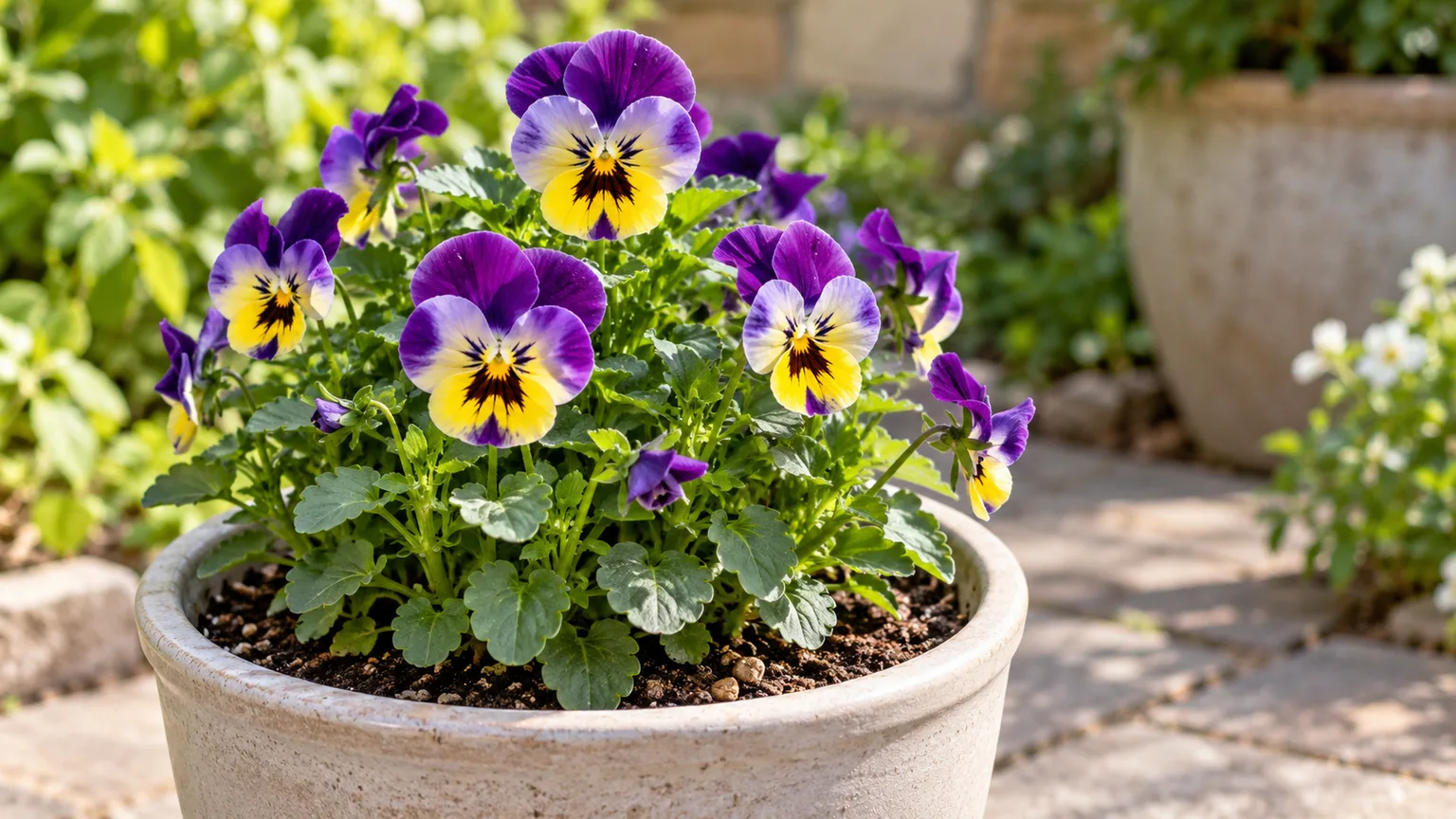
Plant them at the start of the cool growing season. NC State Extension recommends fall planting for winter and early-spring flowers; local timing depends on when temperatures begin to cool.
Do pansies need full sun?
They grow in full sun or partial shade. Bright light encourages flowering in cool weather, while some afternoon shade can help protect the display as days warm.
How often should I water pansies?
Water when the upper soil starts to dry, keeping it lightly moist rather than soggy. Check containers more often because they dry faster than beds.
Will pansies flower through summer?
Usually not in hot climates. Heat commonly makes pansies leggy and ends flowering, so use them as cool-season plants and replace them when the display fades.
Can I eat pansy flowers?
NC State Extension describes pansy flowers as edible, but warns that nursery plants may have been treated with systemic pesticides. Eat flowers only when the grower confirms they were produced for food and treated appropriately.
What light does Pansy need?
Pansy grows best in full sun to partial shade; afternoon shade can extend flowering in warm weather. It also tolerates Partial shade, Bright morning sun with afternoon shade. Avoid deep shade, which can make stems stretch and reduce flowering.
Is Pansy toxic to pets?
Pansy is toxic to cats and dogs. Keep out of reach of curious pets and choose pet-safe alternatives for accessible spots.
Written by Sai AnanthLead content writer at LeafyPixels. B.Pharmacy graduate from Andhra University with a background in pharmacognosy, turned indoor gardening writer after a long-time plant hobby became a research-led resource for home growers.View Sai Ananth's profile · Reviewed by LeafyPixels Review Board
This Pansy problems problem guide was researched and written by Sai AnanthLead content writer at LeafyPixels. B.Pharmacy graduate from Andhra University with a background in pharmacognosy, turned indoor gardening writer after a long-time plant hobby became a research-led resource for home growers.View Sai Ananth's profile. Problems symptoms on Pansy, lookalike causes, and step-by-step fixes are cross-checked against extension pest, disease, and care references before publication.
We prioritize sources that hold up under scrutiny:
University cooperative extension bulletins and fact sheets (Penn State, Clemson, UMD, NC State, and similar programs)
Botanical garden and horticultural society publications
Peer-reviewed plant science and veterinary toxicology references where pet safety matters (including ASPCA Animal Poison Control)
Established reference works on indoor plant culture
The LeafyPixels editorial team then reviews the draft for clarity, step-by-step usefulness, and fit with real apartment and home conditions-not ideal greenhouse setups. When guidance changes materially, we update the page and note the revision date.
Sources used
ASPCA Animal Poison Control — Popular Fall Plants: Which Ones Are Pet-Friendly? (n.d.) Reports pansies (Viola tricolor var. hortensis) as non-toxic to pets; exact taxonomic match to Viola × wittrockiana remains unresolved here. [Online]. Available at: https://www.aspca.org/news/popular-fall-plants-which-ones-are-pet-friendly (Accessed: 1 March 2024).
Gardening Know How — Best Care For Pansies: How To Best Care For Pansies For Bounteous Blooms (n.d.) Practical seasonal planting, day and night temperature preferences, moisture, container checks, legginess, and fading in heat. [Online]. Available at: https://www.gardeningknowhow.com/ornamental/flowers/pansy/pansies-care.htm (Accessed: 1 March 2024).
NC State Extension Gardener Plant Toolbox — Pansy (Viola × wittrockiana) (n.d.) Scientific identity, family, plant size, cool-season habit, light, moist well-drained soil, flowering season, deadheading, heat decline, and edible-flower pesticide caution. [Online]. Available at: https://plants.ces.ncsu.edu/plants/viola-x-wittrockiana/ (Accessed: 1 March 2024).
UC Statewide Integrated Pest Management Program — Pansy, Violet (n.d.) Full sun or partial shade, regular water, flowering period, seasonal removal in hot climates, and deadheading. [Online]. Available at: https://ipm.ucanr.edu/home-and-landscape/pansy-violet/ (Accessed: 1 March 2024).