How to Grow and Care for Violas in Garden Beds and Pots
Learn how to grow violas in beds and pots, time spring and fall planting, water correctly, start seed, and keep flowers going through cool weather this season.
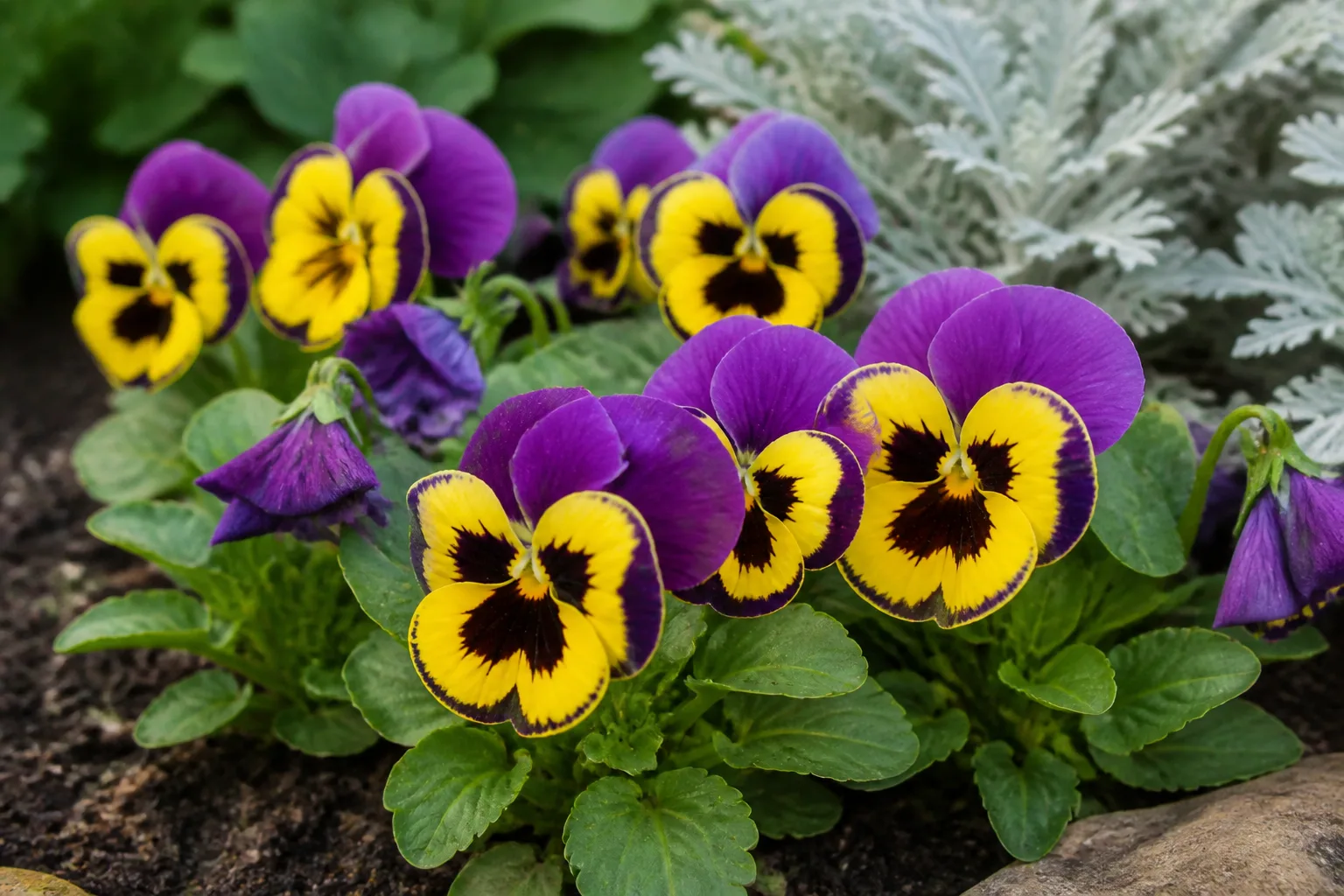
Violas give a garden color when many warm-season flowers are resting, but success depends more on season than on a complicated care routine. They grow best when roots stay lightly moist, drainage stays open, and plants get enough sun in cool weather without being forced through punishing summer heat.
The name covers a large genus, from compact bedding hybrids and pansies to wild violets that return year after year. Start by identifying which kind you have, then use the season, your climate, and whether the plant is in a bed or pot to choose a planting date and care plan.
Understand Which Viola You Have
Garden labels use viola, pansy, and violet inconsistently. In everyday bedding-plant language, pansies usually have larger flowers and violas smaller flowers in greater numbers; Iowa State Extension’s guide to pansies and violas describes this as a useful garden distinction, not a strict botanical boundary. The garden pansy, Viola × wittrockiana, is a hybrid, while Johnny-jump-up (V. tricolor), horned violet (V. cornuta), and sweet violet (V. odorata) refer to different species or groups with their own habits.
That distinction matters because a compact hybrid sold for one season is not managed like a spreading woodland violet. Check the label for the botanical name, mature spread, and whether the selection is annual, biennial, or perennial. The same genus can include plants that reseed readily, short-lived bedding plants, and clump-forming perennials; the broad label “viola” alone cannot tell you how long a plant will live or how much it may spread.
Bedding Violas, Pansies, and Johnny-Jump-Ups
Most nursery six-packs and colorful seasonal containers contain pansies or small-flowered viola hybrids chosen for dense bloom. They are commonly grown as cool-season annuals even if a cultivar can survive more than one year, because heat, legginess, and declining flower quality often make replacement more practical. Johnny-jump-ups are smaller and can reseed around beds, path edges, and gaps between stones. Iowa State Extension notes in its growing guide that these volunteers may persist from year to year by reseeding or overwintering, but they can be pulled while young where they are not wanted.
Perennial Violets and Wild Species
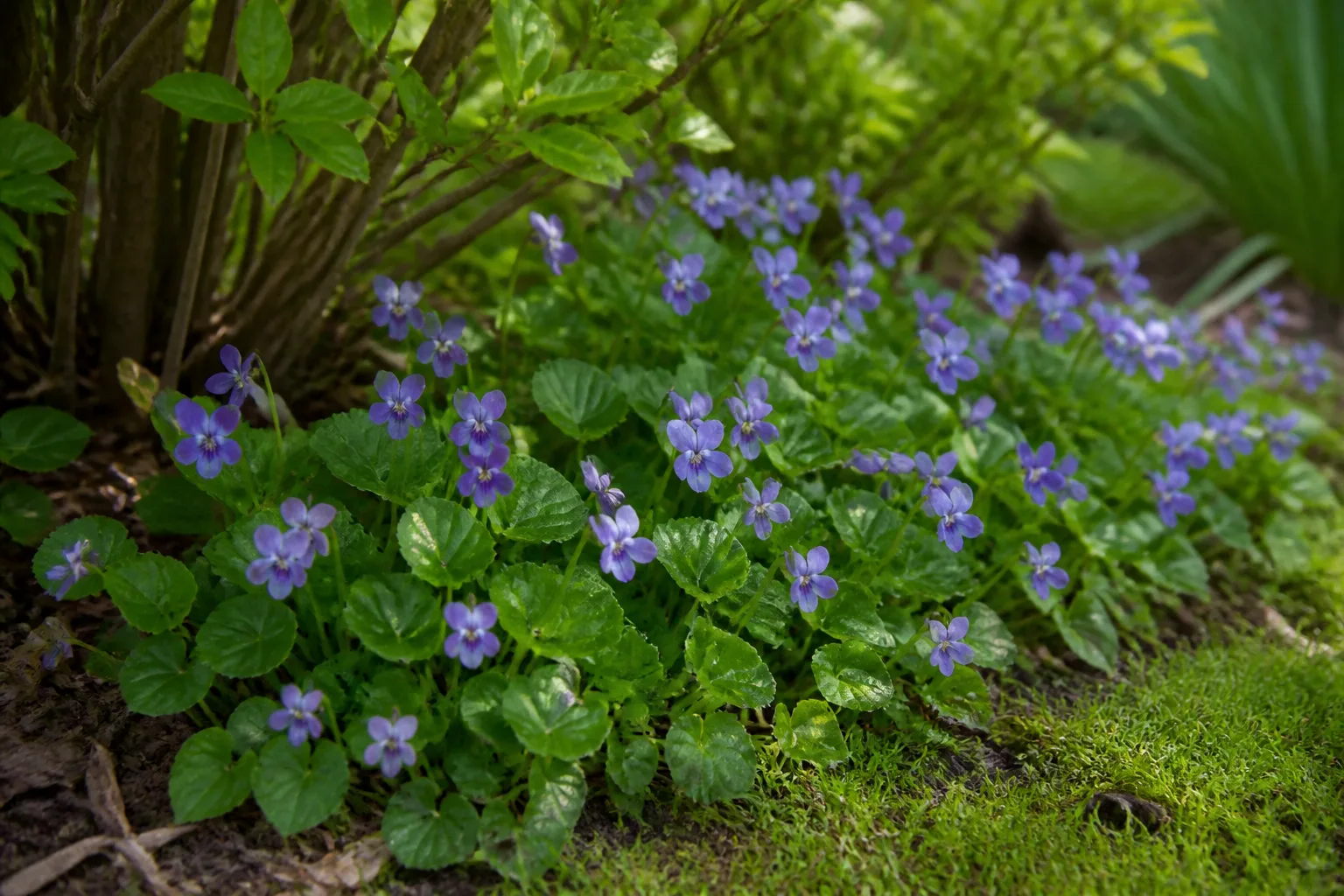
Common blue violet, Viola sororia, is a North American native that often appears in lawns and shaded garden edges. It spreads by seed and underground growth, so it can be welcome as a groundcover or troublesome in a carefully edited border. Sweet violet and other perennial species also have different moisture and shade preferences than bedding hybrids. If you are planting a native or species violet, use a species-specific profile rather than copying a pansy schedule; some native violets prefer woodland conditions and will be unhappy in a hot, dry container.
Treat Violas as Cool-Season Flowers
In regions with cold winters and warm summers, plant nursery violas in early spring for a short display before summer annuals take over, or in early fall for color through autumn and, depending on the cultivar and weather, into winter. Iowa State’s timing guidance for its climate is to plant outdoors in early to mid-April for spring color and early September for fall color; those calendar dates are regional examples, not universal rules. The useful cue is soil and air that are cool enough for establishment, with enough time for roots to settle before severe heat or deep freezes.
In mild-winter climates, fall is often the main planting season, and plants may flower through winter and into spring. In warm regions, spring planting can put violas straight into heat stress, so buy or sow them as temperatures begin to fall. Conversely, a short spring display in a cold climate can be easier than trying to carry bedding plants through a humid summer. The UF/IFAS pansy profile reflects this regional difference: in Florida, pansies are planted in cooler months, with the planting window varying by location. For practical timing by season, Homes & Gardens’ viola guide likewise distinguishes spring displays from late-summer or fall planting for autumn flowers.
Use the nursery tag and local extension advice for cultivar-specific frost tolerance. “Cool-season” does not mean every flower remains undamaged in every freeze, nor does a plant that survives winter necessarily tolerate hot summers. Hardiness describes winter minimums; it does not tell you how long blooms last in heat. A fall planting that looks modest before cold weather can still be well established and ready to resume growth when temperatures rise.
Choose Light Around the Season
Violas flower best with good light, but the ideal exposure shifts as temperatures change. In cool spring or fall weather, a site with several hours of direct sun can produce compact growth and abundant flowers. Where afternoons become hot, morning sun with light afternoon shade often reduces heat load and slows rapid wilting. Iowa State recommends full to part sun, with part sun preferred when temperatures are warm; the RHS profile for a bedding viola likewise lists both full sun and partial shade.
Do not put every viola in deep shade to protect it from summer heat. Too little light can leave stems stretched, reduce flowers, and keep wet foliage from drying. Instead, follow the daily sun across the bed: a spot beneath a high-canopy tree may offer spring brightness before leaves fill in, while a west-facing wall or paved patio can intensify afternoon heat. In containers, move pots as the season changes or use a location that receives morning sun and afternoon protection.
Build Moist, Well-Drained Soil
The practical soil goal is a fertile root zone that holds some moisture but drains after rain or watering. In garden beds, loosen compacted soil and mix in mature compost where the structure is poor; avoid planting crowns in a low pocket that stays saturated. In pots, use a quality container mix and a vessel with open drainage holes. Do not add gravel to the bottom as a substitute for drainage: water must be able to leave the pot, and the mix itself must retain enough air for roots.
Avoid chasing an exact soil pH unless a test identifies a real problem. Violas are grown across a range of ordinary garden soils; the RHS profile for one bedding cultivar lists clay, loam, and sand and allows acidic, neutral, or alkaline pH. That is a reminder that drainage and consistent moisture are more reliable starting points than automatically adding peat or acidifiers. If leaves are persistently pale despite good light and watering, test the soil before adding amendments or fertilizer.
Plant Transplants Without Burying Crowns
Choose compact nursery plants with firm foliage and several buds rather than plants already stretched, yellowing, or coated with pests. Water the cell pack before planting so the root ball comes out intact. Set each plant with the top of its root ball level with the surrounding soil; burying the crown in heavy, wet soil can encourage rot, while leaving the root ball exposed lets it dry too quickly. Water after planting to settle soil against roots, then keep the bed evenly moist as new roots grow.
For mounding types, a starting spacing of about 6 to 8 inches suits many small bedding cultivars; UF/IFAS lists 6 to 12 inches for pansies, reflecting variation in plant size. Wider spacing improves air movement and allows each plant to fill out, while closer spacing creates a faster, more continuous display but dries the bed more slowly after rain. Trailing forms in hanging baskets or window boxes need room to spill, so use the mature width on the label rather than applying one spacing number to every viola.
Use Violas in Beds, Pots, and Food Gardens
Their low mounds make violas useful along a path, at the front of a border, or in a pot that can be viewed up close. Trailing cultivars soften the edge of a window box or hanging basket; upright pansies make stronger blocks of color in a bed. Pair them with other plants that tolerate the same cool conditions, or tuck them between spring bulbs where they can flower as bulb foliage begins to fade. Leave enough space for air to circulate instead of packing the plants tightly for an instant full look.
If you grow flowers for the kitchen, use only positively identified edible viola or pansy flowers raised without pesticides not labeled for food crops. University of Illinois Extension’s edible-flower guidance identifies pansies and violets as edible garnishes and specifically cautions gardeners who plan to eat them to grow the flowers without chemical treatment. Do not assume every plant sold under a broad common name is suitable for the plate, and never eat flowers from a florist or nursery unless the grower confirms they were raised for consumption. Harvest clean blooms, wash them gently, and use them soon after picking.
Water the Root Zone, Not the Foliage
Keep the root zone evenly moist while plants establish and during active flowering, but do not keep it waterlogged. In a bed, check the soil below the surface rather than watering because the leaves look soft at midday; heat can cause temporary drooping even when roots have enough water. If the soil is dry a finger-depth down, water thoroughly. If it is already wet, pause and check drainage, recent rainfall, and whether the bed is shaded and crowded.
Pots dry faster than beds, especially in wind, sun, or small containers. Check them more often rather than following a fixed daily schedule: water until excess drains from the holes, then empty a saucer that holds standing water. Water near the soil line in the morning when possible. Keeping foliage wet overnight in cool weather favors fungal problems, while overhead watering in strong sun can leave flowers battered and containers unevenly soaked. For winter containers, check the mix during dry spells too; cold weather slows drying but does not eliminate it.
Fertilize for Steady Growth
Start with healthy soil and a modest feeding plan. Compost incorporated before planting may be enough for violas in a garden bed, while container plants can use nutrients more quickly because watering leaches them from a limited volume of mix. Iowa State notes in its pansy and viola growing advice that light fertilization can benefit pansies, especially in containers. Follow the product label for ornamental flowering plants, and apply fertilizer to moist soil rather than concentrated around dry roots.
More fertilizer is not a shortcut to more flowers. Heavy nitrogen can favor soft leafy growth over a compact display, and feeding a plant with soggy roots or heat-damaged foliage will not fix the underlying stress. If plants are pale or slow, first confirm the cultivar, light, drainage, and watering pattern. Feed only during active growth; a plant resting through summer heat or cold is not asking for a stronger dose.
Deadhead Strategically to Prolong Bloom
Remove faded blooms when you want the plant to keep making flowers rather than putting energy into seed. Pinch or snip the flower stem back near its base, taking care not to pull up the shallow crown. This is easiest on larger pansies; small-flowered violas can be tedious to deadhead one bloom at a time, so remove tired flower stems or lightly shear a leggy mound after a flush instead. The RHS profile recommends deadheading its bedding viola to prolong flowering, and the UF/IFAS pansy profile also advises removing old flowers before seed forms. Horticulture.co.uk’s practical viola guide adds the useful trade-off: leave some flowers to mature when you want self-sown replacements.
Deadheading is optional when your aim is natural reseeding or seed collection. Leave a few healthy flowers to mature, but remove the rest if you want the current display to continue. A plant that has stopped flowering because weather is too hot will not be coaxed into a long bloom season by more frequent snipping; pruning can tidy it, but temperature remains the limiting factor. Use deadheading as a way to manage bloom and seed, not as a cure for every decline.
Grow Violas From Seed
Seed is an economical way to raise many plants and gives you more control over planting dates, but it takes planning. Start with fresh seed from a named cultivar if color and habit matter; saved seed from a hybrid may not produce plants identical to the parent. For spring planting in a cold climate, sow indoors roughly 8 to 10 weeks before outdoor planting. For autumn flowers in a warm-winter region, count backward from the expected cool-season planting window rather than using a spring schedule.
Start Seedlings on the Cool Side
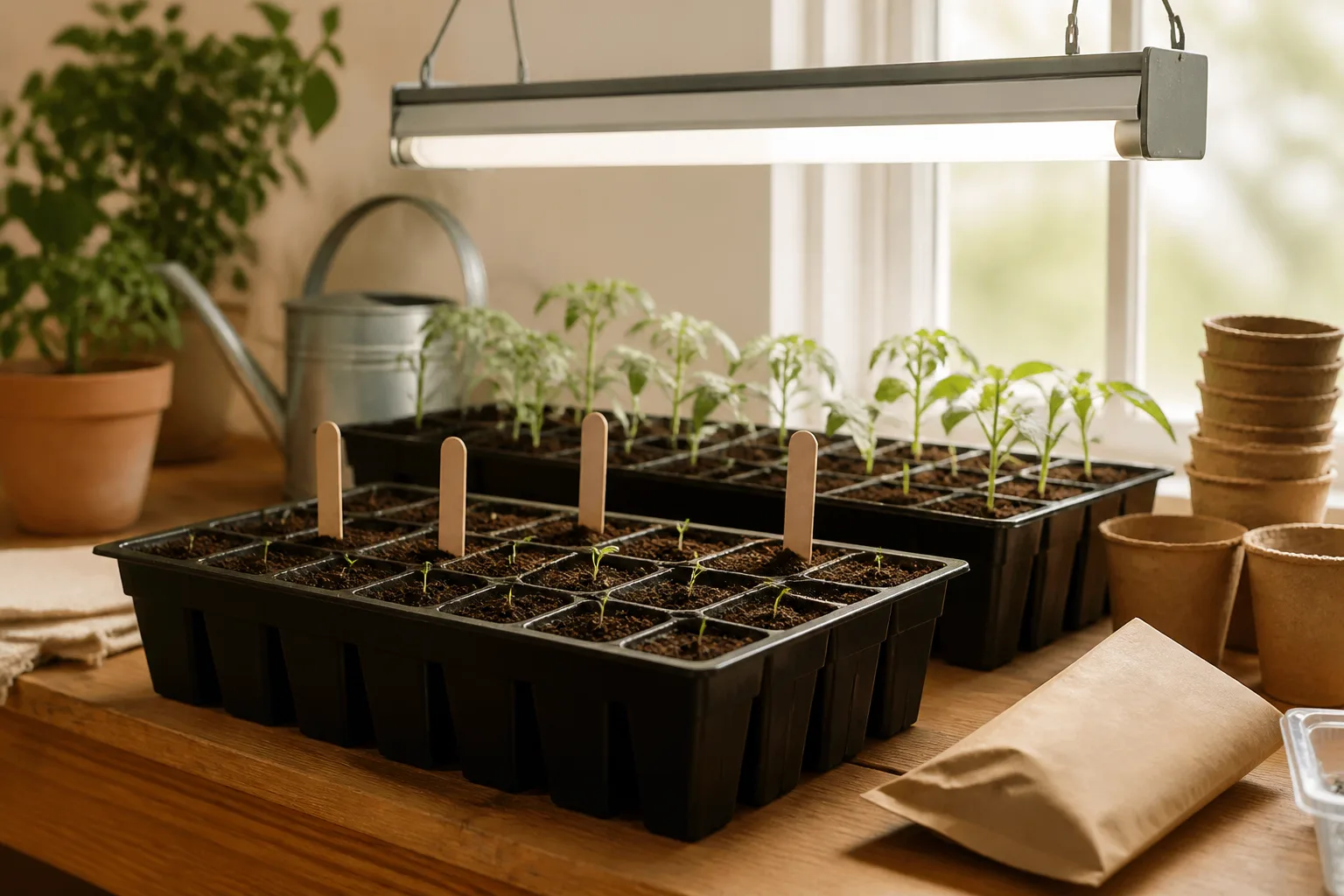
Use clean cells or a shallow tray filled with sterile seed-starting mix. Sow seeds according to the packet depth; pansy seed is commonly covered because darkness supports germination. UF/IFAS reports that pansy seed germinates in about 10 to 14 days at 65 to 75°F when covered, while Iowa State advises cool growing-on conditions and notes that warmth or poor light can make seedlings lanky. Cultivars and species can vary, so use the seed supplier’s instructions if they differ from a general pansy guideline.
Keep the medium moist, not saturated, and avoid letting a sealed cover trap stagnant water against the seedlings. As soon as seedlings emerge, give them bright light and cooler growing conditions; a sunny window may not provide enough light in winter, so a grow light positioned close above the tray can keep growth compact. Once true leaves appear, thin crowded cells to the strongest seedling, pot up if roots fill the cell, and gradually expose plants to outdoor conditions over about a week before transplanting. This hardening-off step reduces the shock of wind, bright sun, and temperature swings.
Direct-Sow or Save Self-Sown Volunteers
Direct sowing works best when temperatures are cool and the bed can be kept evenly moist. Prepare a fine, weed-free surface, sow at the packet’s depth, and thin seedlings after they are large enough to handle. It avoids transplant shock but gives less control over placement and can be unreliable where spring turns hot quickly. For small urban spaces or a dense color scheme, seed trays are easier to manage; for a naturalized edge, direct sowing lets seedlings find suitable gaps.
Many violas will reseed if flowers are allowed to mature. Leave a few seed-bearing stems where you want volunteers, then pull unwanted seedlings while their roots are small. A seedling may differ from the parent, especially when a hybrid was involved or several cultivars flowered together, so treat self-sowing as a source of variation rather than a way to preserve a named cultivar exactly. If you want predictable color next year, collect seed from a stable open-pollinated type or buy fresh seed.
Prevent and Manage Pests and Diseases
Check plants when you water, especially the undersides of leaves, young growth, and shaded areas where air moves slowly. Aphids cluster on tender shoots and buds; slugs and snails leave ragged holes or slime trails and often feed overnight. UF/IFAS lists mites, cutworms, and several leaf diseases among pansy problems. Begin with the least disruptive response that matches what you see: remove a few pests by hand, reduce hiding places for slugs, and isolate or discard a badly affected seasonal plant before using any pesticide.
Fungal problems are more likely when foliage stays wet, plants are crowded, or cool damp weather persists. Watering at soil level, giving plants adequate spacing, and removing fallen leaves reduce conditions that favor some leaf spots and mildews; Horticulture.co.uk’s guide also recommends watering at soil level to limit wet foliage. The RHS lists downy mildew, leaf spot, powdery mildew, and rust among diseases to which violas may be susceptible. A fungicide is not a default fix: identify the likely problem first, check whether the plant is worth saving, and use only a product labeled for the crop and site if treatment is truly needed.
Diagnose Spots and Drooping Before Treating
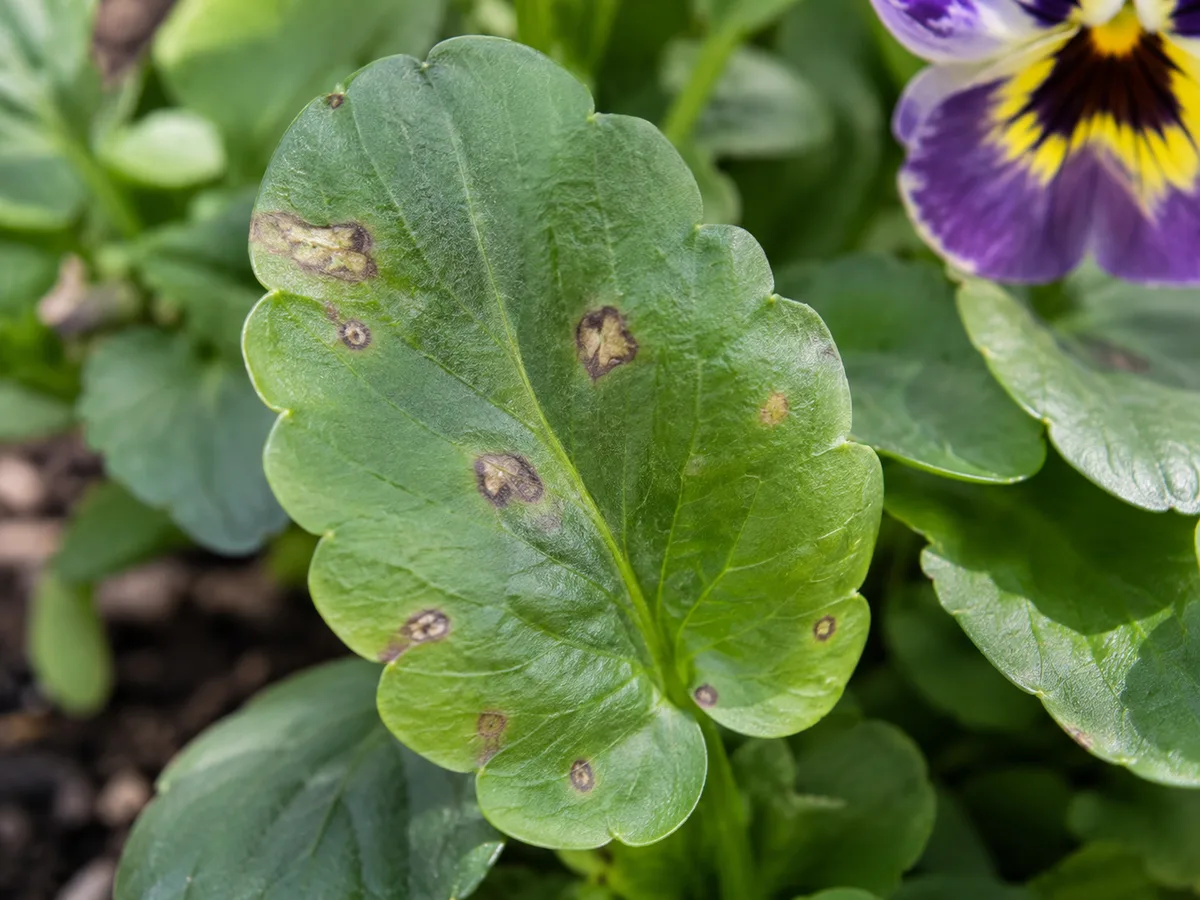
Start with the pattern. A few damaged older leaves after rough weather may be cosmetic; spots spreading onto new growth, merging into larger lesions, or appearing on both leaves and flowers deserve closer attention. UF/IFAS describes anthracnose and other leaf spots on pansies, but a photograph alone cannot confirm the cause. Remove fallen or badly spotted foliage with clean shears, keep leaves dry when watering, and watch whether new leaves emerge clean before reaching for a treatment.
Drooping is a symptom, not a diagnosis. Feel the soil and inspect the crown: dry mix points toward a watering gap, while wet mix with a soft or dark crown suggests drainage trouble. If the plant perks up after a thorough watering, the root ball may have dried; if it stays limp in saturated soil, adding more water is likely to make matters worse. Also consider temperature, root crowding, and recent transplanting. Correct one likely cause at a time and reassess after a day or two so you do not stack fertilizer, water, and sprays onto the same stressed plant.
Manage Summer Fade and Winter Cold
When temperatures rise and flowering slows, decide whether the plant is resting or truly failing. In hot-summer regions, violas often become sparse, stop blooming, or die back even when basic care is sound. Move a container to afternoon shade, trim away damaged stems, and keep the root ball from drying completely if you want to see whether it recovers when cool weather returns. In a small pot that is repeatedly wilting or carrying disease, replacement with a heat-tolerant annual may be the more sensible use of space. Iowa State Extension similarly notes that many violas struggle or “melt” in summer heat and that replanting can be easier than keeping them going until fall.
In cold weather, well-established cultivars can tolerate light freezes, but survival depends on the cultivar, exposure, soil moisture, and whether the plant is in a bed or container. A pot’s roots are more exposed to cold than roots in the ground, so place containers near shelter during severe cold and keep drainage open. A light mulch over in-ground plants can buffer temperature swings, but do not bury the crown under a wet, heavy layer. Remove damaged leaves after a freeze and wait for new growth before deciding that the plant is dead. Where winter is harsh, treat bedding violas as seasonal color rather than assuming they will return.
Conclusion
The simplest reliable viola plan is to match the plant to the season: plant in cool weather, give it bright light with shade during hot afternoons, and keep its root zone moist without leaving it waterlogged. A bed needs good structure and occasional feeding; a pot needs more frequent moisture checks and working drainage holes.
Then tailor the extras to your goal. Deadhead for a longer display, leave selected flowers to seed, start indoors when you want control over timing, and replace heat-worn bedding plants when recovery is unlikely. Identify the species before assuming a viola is perennial, edible, or suitable for a shady spot; that small check prevents most of the avoidable disappointments.



