How to Grow and Care for Hawthorn Trees
Hawthorn care depends on the species. Find a suitable site, plant at the right depth, establish roots, prune safely, and spot common problems.
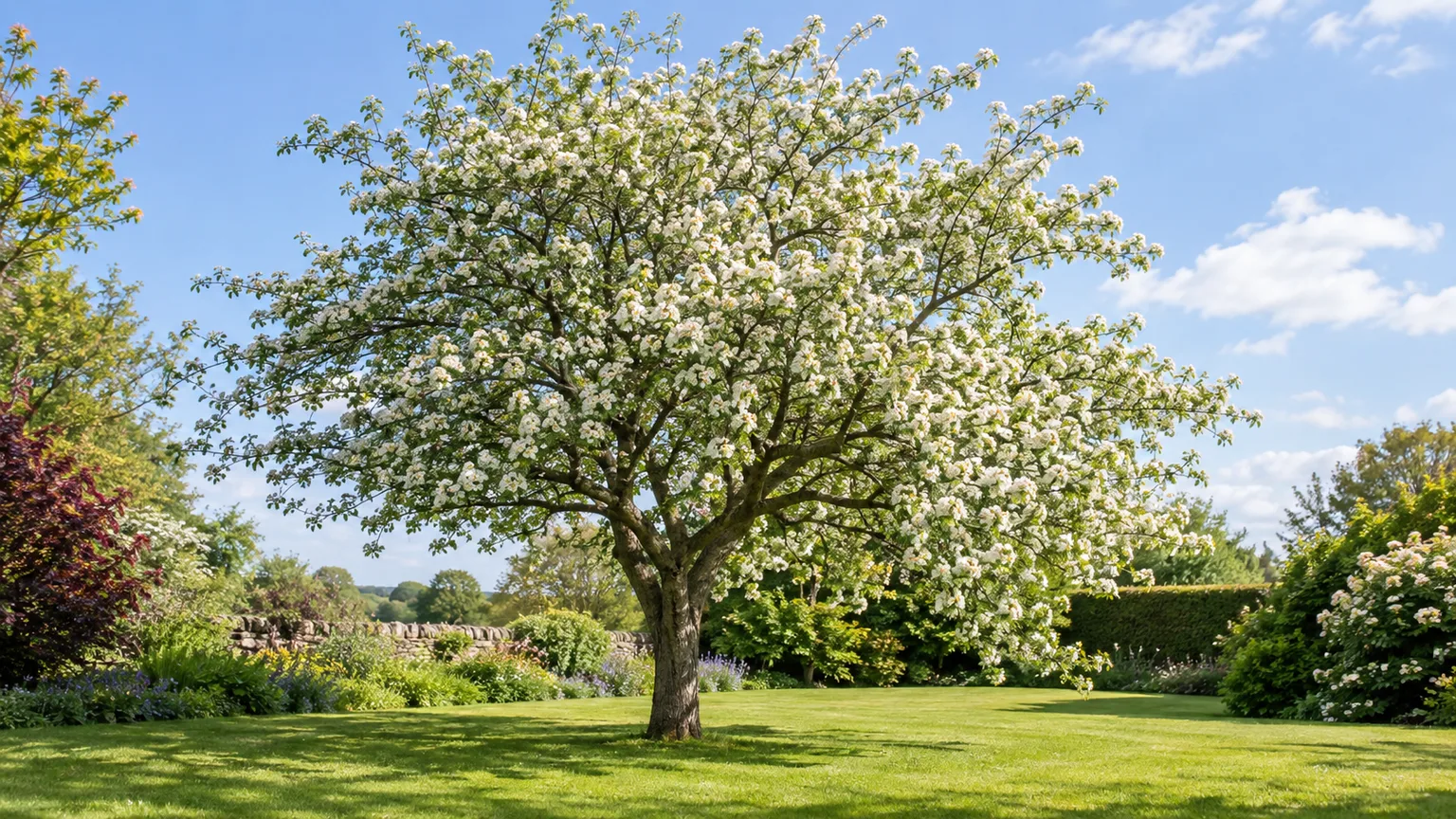
Hawthorn can be a small flowering tree, a broad thorny shrub, or a clipped hedge, depending on which Crataegus you buy and how you train it. The genus offers spring flowers, fall fruit, and useful cover for wildlife, but its spines and mature size deserve as much planning as its bloom. Start by identifying the species or cultivar on the nursery label: “hawthorn” alone does not tell you the tree’s eventual height, width, hardiness, or disease resistance.
Once the right tree is in the right place, care is usually simple. Give it sun for the best flowering, keep newly planted roots from drying out, mulch without piling material against the trunk, and prune only to solve a clear structural or safety problem. The most common avoidable failures are planting too deep, underestimating the thorny canopy, watering by the calendar instead of the soil, and treating every spotted leaf as a reason to spray.
What “Hawthorn” Means—and Why the Name Matters
Hawthorns are deciduous trees and shrubs in the genus Crataegus, within the rose family. Many have lobed leaves, clusters of white or pink spring flowers, thorny branches, and small apple-like fruits called haws. That description is useful for recognition, but it is not a care specification: species and named cultivars differ in size, bloom timing, thorniness, fall color, and disease response. The RHS growing guide lists hawthorn trees from roughly 16 to 33 feet tall, as well as smaller selections that work as large shrubs.
Before you choose a tree, decide what job it should do. A specimen tree needs room to spread and should be selected for its mature crown; a hedge needs a species that responds well to repeated trimming; a wildlife planting may prioritize native status and persistent fruit. A hawthorn can be low-maintenance without being maintenance-free: its spines complicate access, and a tree that outgrows its allotted space is difficult to correct with heavy pruning later.
Choose by mature size and purpose
Read the botanical name and cultivar, then compare the listed mature height and width with your space. Washington hawthorn (Crataegus phaenopyrum) commonly reaches about 25 to 30 feet tall with a 20- to 25-foot spread; North Carolina State Extension’s profile describes its low branching, red fruit, long thorns, and more upright cultivars such as ‘Princeton Sentry’ and ‘Fastigiata.’ Those measurements matter more than a young nursery plant’s current pot size.
If thorns near people are a concern, ask whether a cultivar is genuinely reduced-thorn; do not assume every hawthorn is safe to brush past. Green hawthorn ‘Winter King’ is often selected for its ornamental display and fewer thorns, but N.C. State notes that occasional small thorns can still occur. Get the full cultivar name before buying, especially for a narrow planting strip, playground edge, or dog run.
Match the species to your region and disease pressure
Choose a species recommended for your region rather than relying on one hardiness range for the whole genus. Washington hawthorn is native to the eastern United States and tolerates urban pollution; N.C. State’s green hawthorn profile notes leaf-rust resistance, not immunity. Common hawthorn (C. monogyna) is a familiar European hedge plant, but a plant native in one country may be unsuitable elsewhere. Ask a local extension service or native-plant nursery which Crataegus belongs in your area.
Also separate two plants often confused by their common names: Indian hawthorn is Rhaphiolepis indica, an evergreen shrub, not a Crataegus tree, and its climate needs differ. When ordering, confirm the Latin name, mature dimensions, local hardiness, and whether the tree is grafted. Seedlings may vary and take longer to flower or fruit, so this check avoids buying a thorny deciduous tree when you expected a compact evergreen shrub.
Where to Plant a Hawthorn Tree
Give a hawthorn a sunny position with enough open ground for its eventual crown. Full sun—about six or more hours of direct light—usually gives the strongest bloom and fruit set, while part shade is workable but can reduce both. The tree can suit a lawn, mixed border, or larger wildlife garden, but keep it far enough from paths, patios, play areas, and gates that people will not brush against thorny branches as the canopy expands. Leave room for pruning access too; do not plant a thorny tree where reaching the trunk requires pushing through the crown.
Check what grows nearby and how the site drains. Some hawthorns tolerate a broad range of soils and exposed conditions, but prolonged standing water can suffocate or rot roots. Low spots that remain saturated after rain are poor choices unless you select a species adapted to that site and correct drainage. Keep the tree away from overhead wires and allow for its full spread; the RHS advises checking the selected tree’s ultimate dimensions rather than applying one spacing number to every species.
Thorns can shelter wildlife, but they create maintenance and injury trade-offs. Plant thorny forms where cover is welcome and foot traffic is limited. Gardener’s Path’s growing guide likewise cautions against planting near places children and pets play. The ASPCA lists Crataegus as non-toxic to dogs and cats, but that does not remove the risk of puncture wounds from thorns. Protect the trunk from mower strikes with a mulch ring, and inspect a flowering plant’s scent before placing it near a door or sitting area.
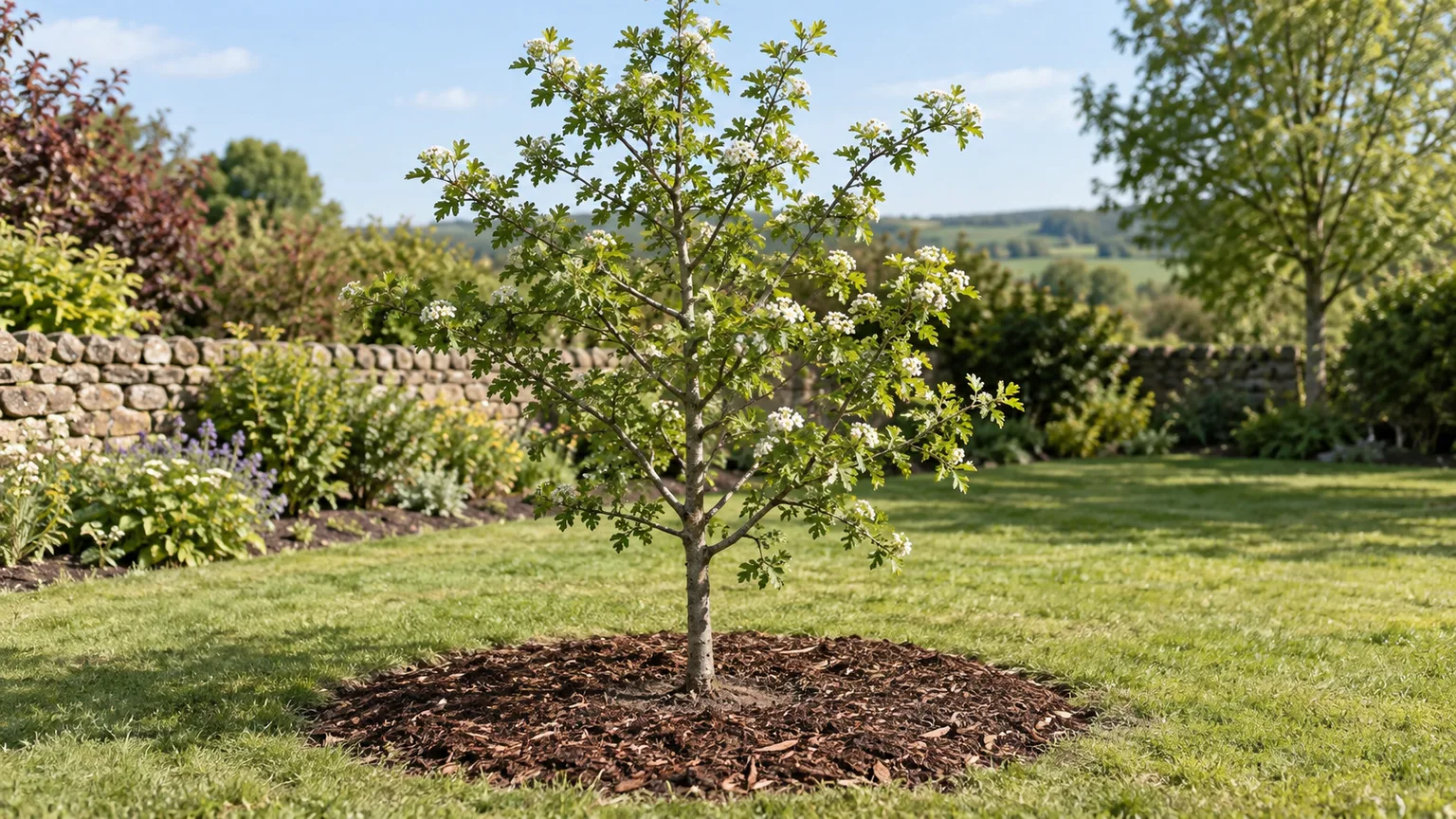
Choose the position for the mature canopy and thorn clearance, not the small size of the nursery tree.
Planting Hawthorn: Set the Roots at the Right Depth
Bare-root hawthorns are normally sold while dormant and are planted in the cool season; container-grown trees can be planted more flexibly, but they are easier to establish in mild weather when the soil is workable. Avoid frozen ground, saturated soil, or hot, dry weather that would make consistent aftercare difficult. If a bare-root tree cannot go into the ground right away, keep its roots covered and moist rather than leaving them exposed to wind. Before planting, remove broken roots and soak dry bare roots according to the nursery’s instructions.
Dig a broad hole, not a deep one: it should be no deeper than the roots and wide enough for them to spread. Find the first major roots at the trunk base and set the root flare level with the finished soil surface. The RHS tree-planting guide warns that deep planting restricts root aeration and leaves the lower trunk vulnerable to disease. If potting mix hides the flare, scrape some away before measuring.
Backfill with the excavated soil and firm gently, then water slowly and check the flare again after settling. Skip fertilizer in the hole and do not put compost under the root ball, where it can decompose and let the tree sink. Stake only a large, top-heavy, or exposed tree; let the trunk flex slightly and check that ties do not cut into bark. Guard the trunk from browsing or mower damage where needed.
Hawthorn Care at a Glance
| Need | Practical starting point | Adjust when |
|---|---|---|
| Light | Full sun for best flowering and fruiting | Part shade is acceptable if reduced bloom is fine |
| Soil | Moist, well-drained soil; many types tolerate a range | Avoid persistent waterlogging; match unusual sites to species |
| Water | Water deeply when the root zone begins to dry during establishment | Soil, rainfall, wind, and tree size change the interval |
| Feeding | No fertilizer in the planting hole; assess vigor first | Use a soil test or local advice if growth is weak |
| Pruning | Remove dead, broken, diseased, or crossing branches | Hedge trimming and fire-blight sanitation use different timing |
| Clearance | Allow for mature crown and thorns | Reduced-thorn cultivars still need verification and room |
This table is a starting point, not a substitute for the species label. Hawthorn is a genus, so a small cultivar in one region and a large native tree in another will not share identical water, spacing, or winter needs. If your plant’s label conflicts with generic advice, follow verified species-specific guidance from a regional nursery or extension service.
Light, Soil, and Climate
Most ornamental hawthorns flower best with a generous amount of sun. If the tree is healthy but makes leaves and little else, first ask whether buildings or taller trees shade it for much of the day. A little afternoon shade can help in very hot climates, but heavy shade tends to produce a thinner crown and fewer flowers. The right balance depends on the species, local summers, and whether the main goal is shade, bloom, or fruit.
Hawthorns are adaptable to many ordinary garden soils, including some clay and alkaline or acidic conditions, but “tolerant” does not mean indifferent to drainage. A soil that remains wet around the root ball for days can cause decline even in a species described as tolerant of wet ground. Conversely, a sandy site may drain so quickly that a young tree needs more frequent attention. Before planting, observe the area after heavy rain and compare that with the species’ needs. Improve broad soil structure when necessary; do not try to fix a poorly drained site by filling the planting hole with rich compost, which can create a water-holding pocket.
Cold, heat, and humidity tolerance also vary. Confirm the plant’s local suitability instead of treating “hawthorn” as one climate category, and check whether a nonnative species is invasive or likely to escape cultivation. An adapted choice is easier than compensating later with extra fertilizer or pruning.
Watering: Establishment Versus Long-Term Care
During establishment, water deeply enough to moisten the root ball and nearby soil, then let the surface begin to dry before watering again. A fixed weekly gallon amount cannot fit every tree and soil. Check moisture several inches down near the root ball; a dry surface can hide wet soil, while a light shower may wet only the top layer.
Pay closest attention during the first growing seasons, especially in hot, dry, windy weather. The RHS hawthorn guide recommends monitoring in dry spells for the first three growing seasons, then reducing supplemental watering once an established tree grows well. That is a framework, not a deadline: drought-prone soils, large specimens, and unusually dry summers may extend the need. In clay, check before each soak.
Once established, a suitable hawthorn usually needs little irrigation outside prolonged drought. If leaves wilt after watering, do not immediately add more: saturated roots, heat, transplant stress, and disease can look similar. Check the soil and planting depth before deciding what is wrong.
Mulch and Fertilizer
Spread organic mulch over the root zone to conserve moisture and suppress weeds, but keep it a few inches from the bark and root flare. A pile against the trunk traps moisture and hides damage. Replenish mulch as it decomposes, and keep competing turf clear around a young tree.
Do not fertilize automatically every year. A new hawthorn does not need fertilizer in its planting hole, and excess nitrogen can push tender growth vulnerable to fire blight. If growth is weak, check water, planting depth, roots, weeds, and light first; use a soil test or local advice to confirm a nutrient shortage. The RHS hawthorn guide notes that hawthorns are not heavy feeders and feeding can stop once an established tree grows well.
Avoid trying to force flowers with a bloom-boosting fertilizer. A tree may fail to flower because it is juvenile, shaded, pruned at the wrong time, stressed, or simply a less floriferous cultivar. Extra fertilizer cannot correct those causes and may worsen soft, vigorous growth. A soil-based correction is useful; a routine dose without a diagnosed need is not.
Pruning Hawthorn Safely
Hawthorn generally needs less pruning than a fast-growing hedge or fruit tree. For a specimen, begin with a clear goal: remove a broken limb, reduce a rubbing branch, retain a stable leader, or gradually raise the canopy for access. The RHS recommends pruning hawthorn trees during dormancy and limiting ordinary work to broken, crossing, or diseased growth. A Homes & Gardens guide also stresses a light touch; local climate and disease diagnosis can change timing, particularly when fire blight is suspected.
Wear sturdy gloves, long sleeves, and eye protection before handling a thorny crown; thorns can catch clothing and injure eyes during even a small cut. Use sharp tools that suit the branch diameter and cut just outside the branch collar. The RHS pruning guide advises against removing more than one-fifth of a tree’s canopy in a year; spread renovation over seasons or hire an arborist.
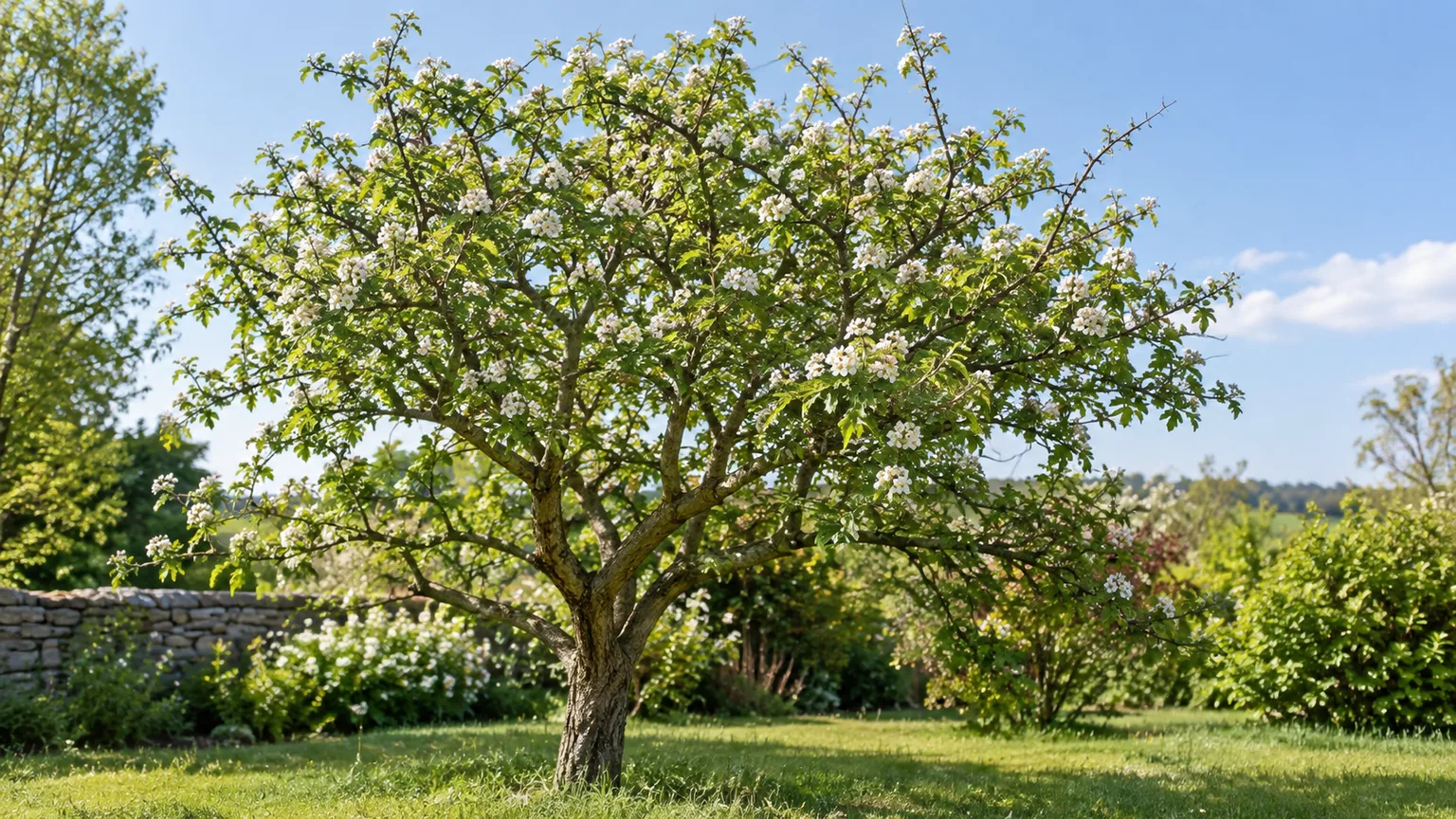
A light structural prune preserves the tree’s natural form and avoids trying to control a mature crown with repeated topping.
Train a young tree gradually
Decide whether you want a single-trunk tree or a naturally multi-stemmed shrub while the plant is young. To develop a tree form, keep the strongest central leader and select well-spaced scaffold branches; remove competing leaders and damaged or crossing shoots over time. Do not strip all low branches from a young tree in one session. Lower limbs contribute to trunk development, and removing too much foliage at once can slow establishment. If you prefer a dense screen or wildlife thicket, retain the lower branching instead of forcing a standard tree shape.
The species itself influences habit. A hawthorn that naturally forms a low, broad crown may never become a narrow street tree through pruning alone. University of Maryland Extension’s hawthorn guidance emphasizes that Crataegus is diverse and recommends pacing corrective work rather than removing a large share of the canopy at once. Use the nursery’s mature form as the plan; pruning should refine it, not fight it.
Maintain a mature tree or hedge
For an established specimen, inspect after storms and remove dead, damaged, and crossing branches first. Dormant-season pruning makes branch structure easier to see, but avoid large cuts simply to keep a tree smaller than its natural spread. If the canopy is already beyond reach, branches are heavy, or a limb overhangs a roof or wire, contact a certified arborist instead of climbing into thorny branches with a pole saw. A badly placed mature tree is a relocation or replacement decision, not a reason to top it repeatedly.
Hedges have a different maintenance pattern. A formal hawthorn hedge may need repeated trimming to hold its shape, while a looser hedge can be cut less often to retain more flowers and berries. Check for active bird nests before cutting and follow local wildlife rules and seasonal restrictions. Hedge plants can tolerate stronger shaping than a specimen tree, but repeated clipping still removes flowers or fruit and can leave the base bare if the sides are wider at the top. Keep the bottom slightly broader so light reaches lower growth.
When a Hawthorn Does Not Bloom or Fruit
Start with the tree’s age and identity. A seed-grown hawthorn may take several years to flower, while a young transplant may spend early seasons building roots. Grafted cultivars can flower sooner, but not on a guaranteed schedule; confirm the expected bloom period with the nursery first.
Next, look at light and pruning history. Heavy shade commonly limits flowers, while pruning that removes the branch tips carrying developing buds can reduce the next bloom. A hedge cut after flowering will naturally produce fewer haws than one left untrimmed through fruit set. Drought stress, root damage, waterlogged soil, and too much nitrogen can also shift growth toward leaves or weaken the tree. Change one likely cause at a time rather than adding fertilizer, water, and pruning all at once.
If the tree blooms but does not hold fruit, consider flowering weather, pollinator access, cultivar, and fruit drop. Frost or prolonged rain can affect flowers, while birds may eat fruit quickly. Note when buds, flowers, and fruit appear for a season before treating normal variation as a recurring problem.
Common Hawthorn Pests and Diseases
Many hawthorns tolerate urban conditions, but they are not immune to pests or disease. Aphids, scale, lace bugs, caterpillars, mites, and leaf-mining insects can damage foliage; fungal leaf spots and powdery mildew may appear in damp or stressed conditions. Identify the symptom before acting. A few chewed leaves rarely threaten a mature tree, and broad-spectrum insecticides can harm pollinators or beneficial insects without addressing the cause. Improve airflow where branches are crowded, water the root zone rather than the foliage, and remove fallen infected leaves when a local extension service recommends sanitation.
Two disease problems deserve more attention because their symptoms can be mistaken for ordinary damage. Cedar-hawthorn rust may mark leaves, fruit, petioles, and young twigs; fire blight can blacken blossoms and shoots. Neither diagnosis should be made from one vague color change. Compare the affected tissue, recent weather, and spread pattern, then consult a local extension diagnostic service if major branches are involved or the signs are unclear.
Cedar-hawthorn rust
Cedar-hawthorn rust is a fungal disease that requires two host groups to complete its life cycle: susceptible junipers and hawthorns or related rose-family plants. In wet spring weather, orange gelatinous structures on juniper galls release spores that can infect nearby hawthorn. On hawthorn, symptoms include yellow to nearly black spots on leaves, fruit, leaf stalks, or new twigs; some infected fruit and twigs develop conspicuous growths. The Missouri Botanical Garden’s diagnostic guide explains that the disease rarely kills a tree, although it can disfigure it, and that the fungus can persist on juniper hosts.
This is why a single spray after spots appear is unlikely to solve the problem. Fungicides are preventive, not curative, and timing depends on local disease pressure, the product label, and whether bloom is underway. The Missouri Botanical Garden recommends removing diseased branches, considering resistant varieties, and following pesticide labels; University of Maryland Extension cautions that repeated preventive sprays may be impractical and can expose pollinators during bloom. Tolerate modest spotting on a healthy tree, and seek local advice before starting a spray program.
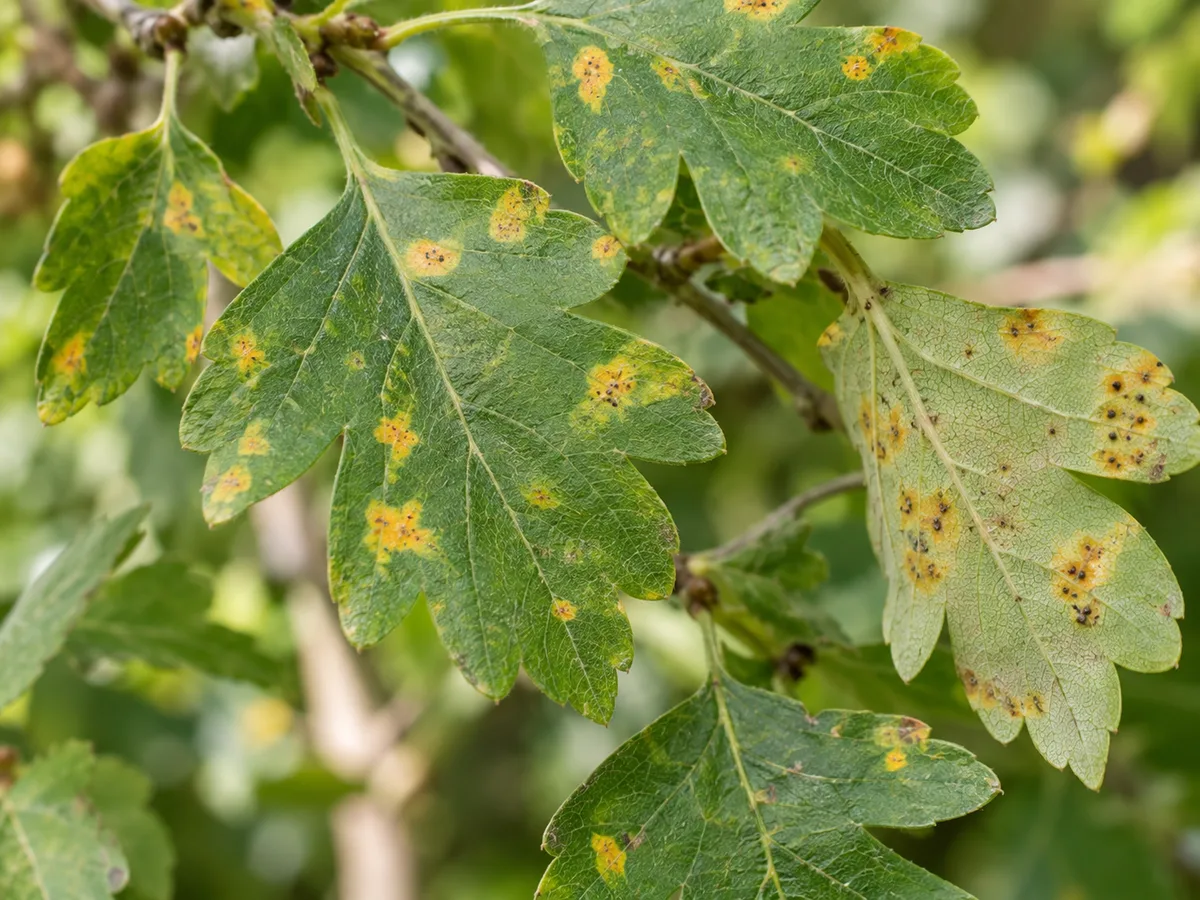
Cedar-hawthorn rust can mark leaves, fruit, stalks, and young twigs; similar spots can have other causes, so confirm the diagnosis before treating.
Fire blight, leaf spots, and insects
Fire blight is a bacterial disease of rose-family plants, including hawthorn. Infected blossoms and young shoots can wilt, darken, and remain attached, giving the branch a scorched look; shoot tips may curl into a hook. Warm, wet spring weather increases risk, and vigorous soft growth can be more susceptible. University of Missouri Extension and UC IPM describe fire blight as difficult to manage once established. Do not respond with heavy pruning or a general-purpose spray: timing and cut placement matter, and fungicides do not cure bacterial infection.
If only a small shoot is affected, photograph it and ask your local extension service how and when to remove the wood in your region. UC IPM’s fire-blight guidance describes pruning when the pathogen is not actively spreading, while fast-moving infections may require a different response. Large cankers, trunk infections, or a declining mature tree call for professional diagnosis. Avoid excess nitrogen and heavy pruning that encourages vigorous shoots; tool disinfection cannot replace the correct cut.
Leaf spots, powdery mildew, and minor insect feeding are often more cosmetic than fatal. Note whether symptoms begin on old or new leaves, occur on one branch or throughout the crown, and follow wet weather or drought. Take clear photos of both leaf surfaces and affected stems to a cooperative extension clinic if symptoms recur or worsen. Do not apply insecticidal soap or fungicide by default; hawthorn can be sensitive to some products, and a misidentified problem can make the foliage worse.
Propagating Hawthorn
You can grow common hawthorn from seed, but it is slow and seedlings may not match the parent. Dormancy makes germination uneven, so seed is better for raising a group than reproducing a named cultivar. The RHS guide describes preparing haws before sowing and notes that named trees are usually grafted to preserve cultivar traits.
For a dependable landscape tree, buy a correctly labeled plant. A grafted cultivar gives a more predictable size, flower color, or thorn profile. If you sow seed, record its source and protect seedlings from weeds, browsing, and drying; it may take years to evaluate their final form.
Seasonal Care Calendar
Late fall through early spring: Plant bare-root stock while dormant whenever the soil is workable and not saturated or frozen. Replenish mulch without covering the trunk, inspect stakes and ties, and make planned structural cuts while the tree is dormant. In regions with bird-nesting protections, check local restrictions and inspect for nests before pruning.
Spring: Watch for leaf-out, flowers, and signs of fire blight or rust. Keep new trees watered during dry spells, especially when wind is drying the soil. Avoid feeding automatically; assess growth and soil first. If a disease appears, photograph the pattern and seek local advice before using a pesticide.
Summer: Water the root zone during extended dry weather, particularly for the first few seasons after planting. Keep weeds and turf from competing immediately around a young tree. Observe the canopy for drought stress, pest activity, or leaf spots, but do not confuse normal seasonal changes with a crisis. A hedge can be trimmed to shape if local wildlife rules allow it; a specimen tree usually needs little work.
Fall: Note fruit set, foliage color, and any recurring disease symptoms. Water a new tree if autumn is dry and the ground is not frozen, then check that mulch and protective guards are still in place. Use the season to decide whether the plant’s actual size and thorniness fit the site before those problems become harder to correct.
Conclusion
The best hawthorn care starts before planting: identify the species, check its mature spread, and decide whether thorns fit the location. Give the tree sun, well-drained soil, and correct planting depth; water it through establishment, then reduce routine care as roots settle in. Most specimen hawthorns need only occasional structural pruning, while hedges follow a separate trimming schedule.
When growth disappoints, check age, light, water, and pruning history before reaching for fertilizer. When foliage changes, distinguish rust, fire blight, and harmless leaf damage with help from a local extension service instead of spraying on guesswork. A well-sited hawthorn can provide flowers, fruit, fall color, and protected habitat for many years, with fewer interventions than a poorly chosen tree ever will.



