24 Winter Flowers for Cold and Mild Climates
Explore 24 winter flowers for cold and mild climates, with bloom windows, light needs, hardiness notes, and practical planting advice for a colorful winter garden.
A winter flower list only helps if the plants match your winter. Snowdrops and hellebores can push flowers up in cold regions, while camellias and bougainvillea need comparatively mild conditions; the same word, “winter,” can describe a frozen bed in Maine or a cool growing season in coastal California. Use the plants below as a climate-filtered menu, then check the plant’s species and cultivar against your local hardiness and exposure before buying.
A hardiness zone estimates whether a perennial or shrub is likely to survive typical winter lows; it does not promise a flower on a particular date. Bloom depends on species, cultivar, accumulated cold, sunlight, moisture, and the timing of warm spells and freezes. Some picks flower in late fall or early spring at the edge of winter, so the calendar windows below are guides, not guarantees.
Winter flowers depend on where you garden
Gardeners in cold-winter regions can build a display from bulbs, hardy perennials, and a few cool-season bedding plants. In mild-winter regions, evergreen shrubs and subtropical flowers can carry the show for months, but many will be damaged by a hard freeze. Before treating any plant as a winter bloomer, verify the botanical name on its label: “jasmine,” “cyclamen,” and “heath” each cover plants with different habits and hardiness.
Best winter flowers for cold-winter gardens
These low-growing options fit beneath deciduous trees, along paths, or in front-of-border pockets where you can see their flowers from indoors. Most bulbs and perennials listed here are planted or established before the coldest weather; purchasing a blooming pot in midwinter is not the same as asking a fresh transplant to root in frozen ground.
Snowdrops and winter aconite
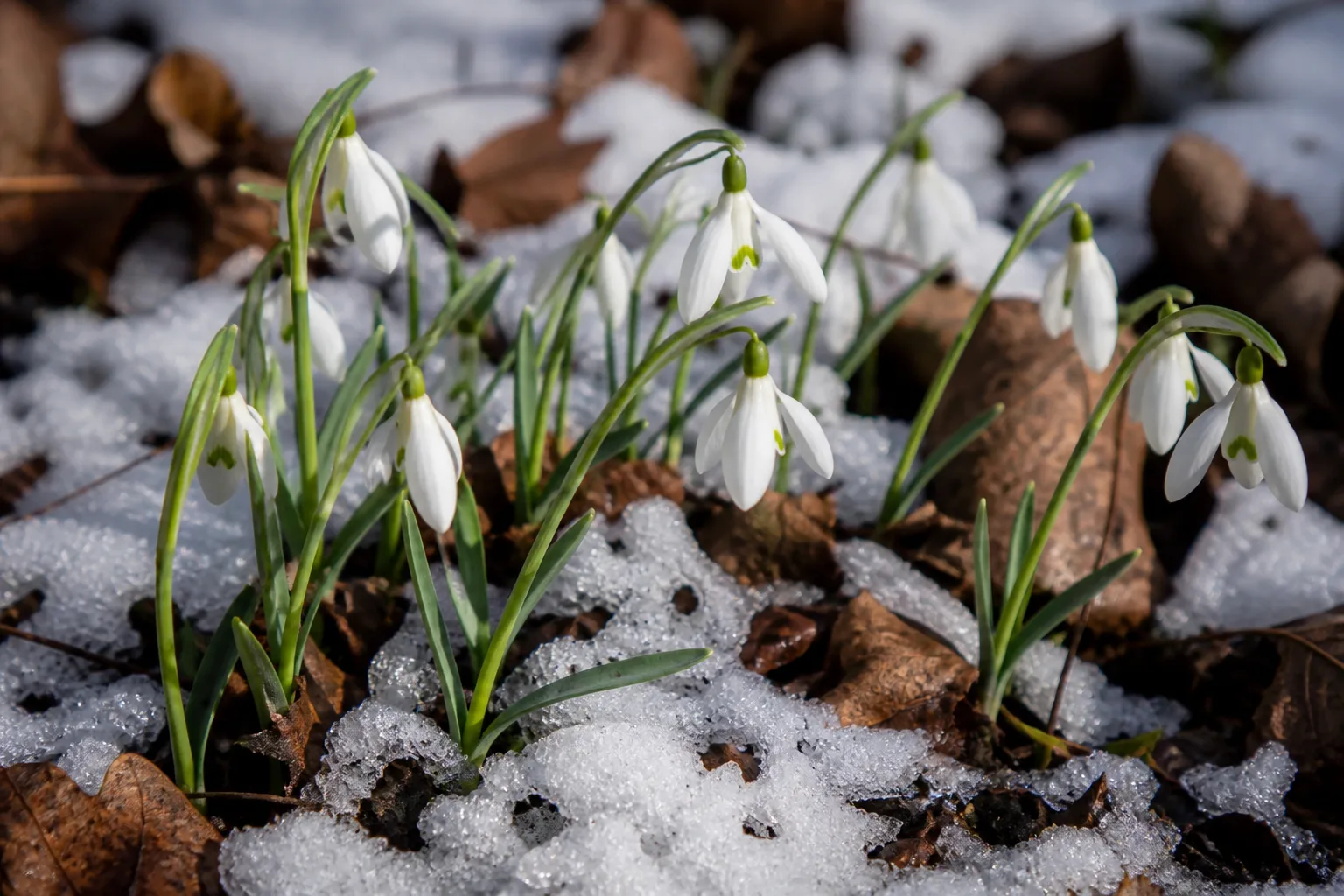
1. Snowdrops (Galanthus nivalis) are among the most dependable signals that winter is loosening its grip. Their white, nodding flowers can appear while the garden is still cold, often in late winter, and clumps slowly expand where the soil stays moist but drains well. Plant bulbs in fall as soon as possible after purchase because they dry out; if available, “in the green” plants can be easier to establish than long-stored dry bulbs. The RHS lists snowdrops among its winter-interest plants, while Penn State’s garden guidance emphasizes matching evergreen and early-season plants to drainage and winter exposure.
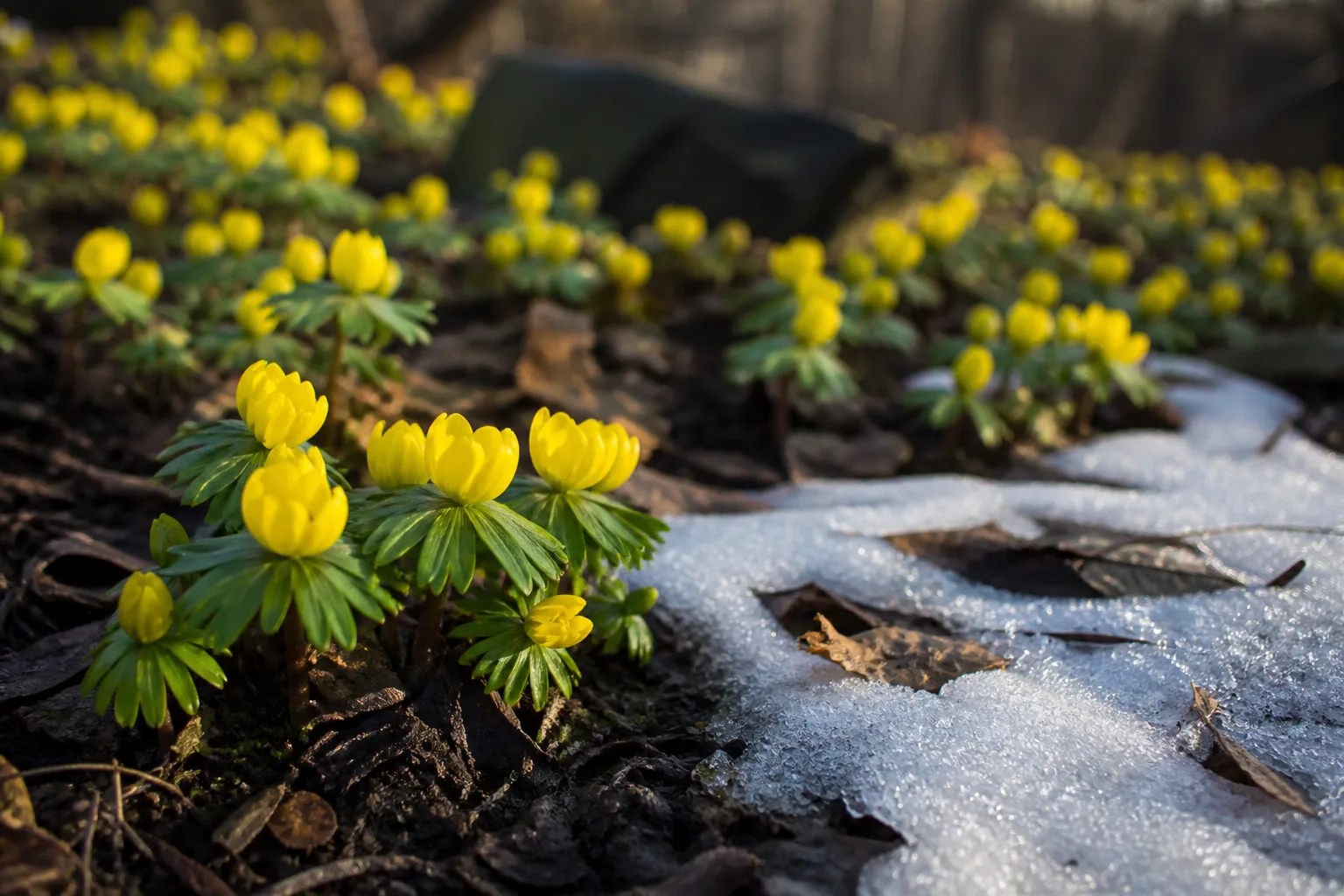
2. Winter aconite (Eranthis hyemalis) makes a low golden carpet, often flowering around the same late-winter window as snowdrops. It suits deciduous shade because it can use spring light before the canopy fills in, then disappear underground after flowering. Let foliage fade naturally so the small tubers can recharge; avoid repeatedly digging or hoeing through the patch once it settles in.
Crocus, hardy cyclamen, and hellebores
3. Crocus (Crocus spp.) often flowers from late winter into early spring, with species and cultivars varying in timing. Plant corms in fall in sunny, well-drained soil or beneath deciduous trees; a lawn is suitable only if you can delay mowing until leaves yellow. Crocus cups close during cold, cloudy weather, so a closed flower is not necessarily a failed bloom.
4. Hardy cyclamen (Cyclamen coum) brings pink, magenta, or white flowers to partial shade, often when little else is blooming. It is a tuberous perennial for well-drained soil, not the florist’s tender indoor cyclamen, and it is vulnerable to sitting wet through winter. A spot under a deciduous shrub can provide winter light and summer shade; Gardeners’ World likewise recommends hardy Cyclamen coum at the base of small shrubs and trees for late-winter to early-spring flowers. Heavy clay may need a raised planting area or a different plant.
5. Hellebores (Helleborus spp.) are long-lived choices for dappled shade, with leathery foliage and flowers that commonly open in late winter or early spring. The blooms can last well after opening, but the foliage may look battered after a severe winter; remove damaged leaves carefully before new stems rise, not by cutting blindly through the crown. Hellebores suit a shade border better than a hot, dry wall, and their leaves, stems, and roots are poisonous if eaten, according to NC State Extension.
The Penn State Extension overview of winter perennials explains why evergreen foliage can lose water when the ground is frozen and why winter drainage matters. That distinction is useful with hellebores: a little protective leaf litter or mulch can help moderate soil, but a waterlogged crown under a thick, wet blanket is a different problem.
Primrose, pansies, and winter heath
6. Primrose (Primula vulgaris) is a compact flower for cool weather, best used where summers are not scorching and soil remains evenly moist without becoming soggy. In cold climates, planting it in a sheltered bed or a container that can be protected gives it a better chance than leaving a small pot exposed to repeated freeze-thaw cycles. Many primroses are spring bloomers, so choose a winter-flowering selection rather than relying on the common name alone.
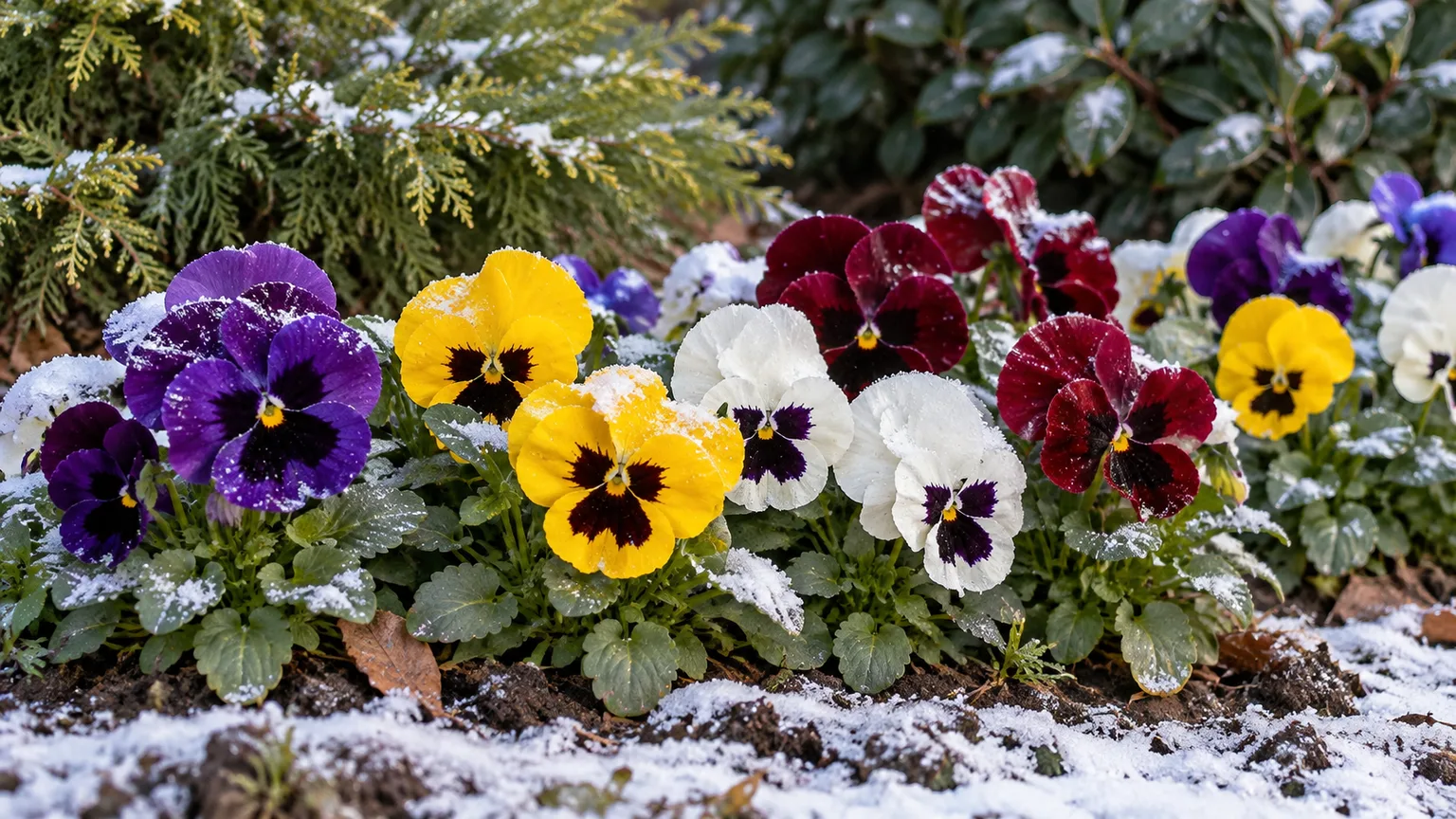
7. Winter pansies (Viola × wittrockiana) and violas are bedding plants that can flower through cool weather and rebound after ordinary frosts. They are useful for window boxes and front paths because their faces stay visible from close range; they may pause during extreme cold, and a severe freeze can still injure them. In a University of Georgia Extension guide, pansies and violas are recommended for winter color in Georgia, with the reminder that placement and local conditions matter. A LawnStarter winter-flower overview quotes Ohio State horticulture professor Laura Deeter on pansies’ cold tolerance; even hardy bedding plants can still need temporary cover during an unusually severe freeze. Plant nursery starts in fall while roots can establish, rather than waiting for the first snow.
8. Winter heath (Erica carnea) forms a low evergreen mat with tiny bell-shaped flowers in shades of pink, purple, or white. It is a practical choice for sunny, sharply drained areas where taller shrubs would block a view, but it dislikes waterlogged soil and can decline if planted in heavy clay that stays wet. Select a cultivar listed for your region; the name “winter heath” does not mean every heath is winter-hardy everywhere. Gardeners’ World also highlights winter-flowering heathers for containers, provided the pot has suitable drainage and protection for local conditions.
Winter-flowering shrubs for late-season color
A shrub gives winter color at eye level and can carry fragrance across a path or entrance. Check mature width before planting: these are long-term structures, and squeezing a large shrub into a narrow foundation strip often leads to repeated pruning that removes the very branches carrying next year’s flowers.
Winter jasmine and witch hazel
9. Winter jasmine (Jasminum nudiflorum) carries bright yellow flowers on mostly bare, arching stems in late winter. It works as a sprawling groundcover or can be trained on a support, but it is not the strongly scented climbing jasmine many people picture. It roots where stems touch soil and can spread beyond its intended patch; NC State Extension notes that it flowers on old growth, so prune just after blooming if you need to control size.
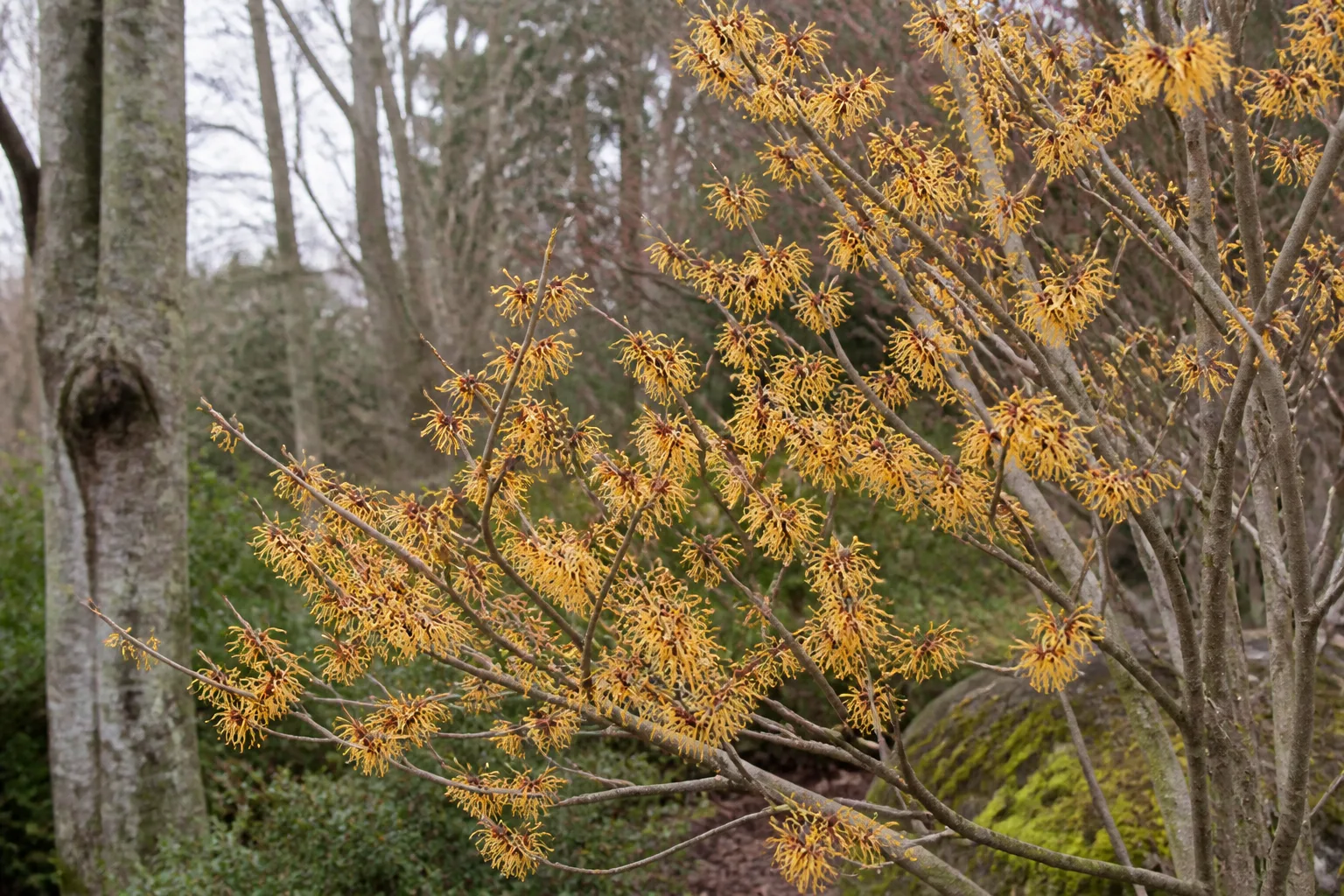
10. Witch hazel (Hamamelis spp.) offers ribbon-like, often fragrant flowers on bare branches. Species differ: native H. virginiana can flower in fall into early winter, while Asian species and hybrids are typically late-winter performers. Plant it where a visitor can appreciate the scent and branch structure, in sun to light shade with adequate moisture; NC State Extension’s profile of Hamamelis virginiana notes best flowering in full sun and a preference for moist, well-drained soil. It is a slow-growing focal shrub, not a quick hedge.
Camellias and Japanese pieris
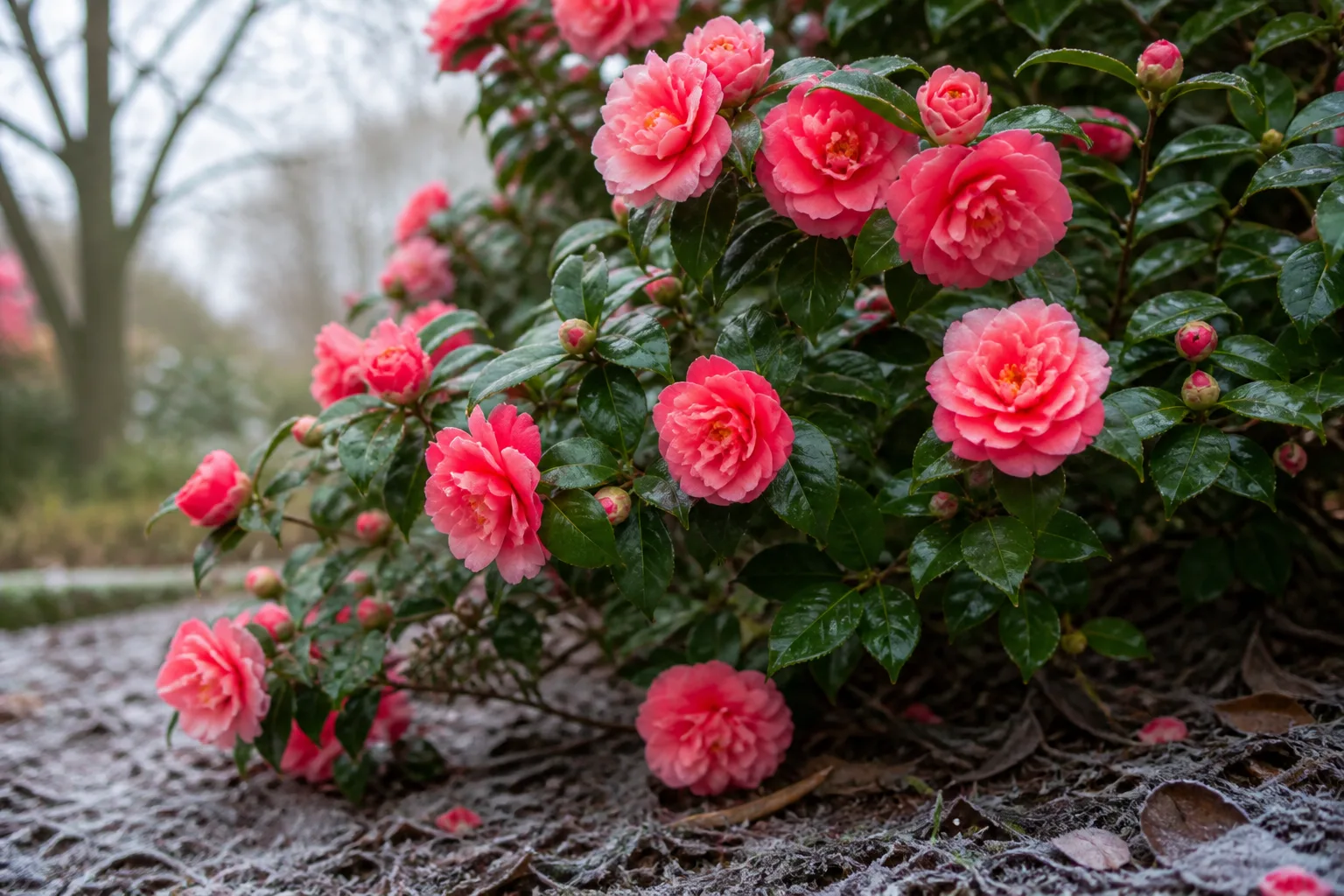
11. Camellias (Camellia japonica and C. sasanqua) are evergreen shrubs for mild-winter gardens, with flowering windows that vary by species and cultivar. Sasanqua types often start earlier, while japonicas are associated with midwinter to early spring in suitable regions. They do best with protection from harsh afternoon sun and drying wind, acidic soil, and consistent moisture; a late cold snap can brown open flowers even when the shrub survives. UGA Extension describes camellias blooming from fall into spring depending on cultivar, so buy by named bloom season rather than assuming all camellias peak in January.
12. Japanese pieris (Pieris japonica) is an evergreen shrub with drooping clusters of white or pale pink, bell-like flowers in late winter or early spring. It suits woodland-style beds and acidic soil, but flower buds can be lost to unusually cold weather, so it is not the safest choice for a frost pocket or exposed north-facing site. Give it room to mature and avoid alkaline soil; the plant’s long-term success depends more on the site than on extra fertilizer.
Winter daphne, mahonia, and wintersweet
13. Winter daphne (Daphne odora) is grown for intensely fragrant pink-and-white clusters on a compact evergreen shrub. It is best for sheltered, mild-winter spots with excellent drainage, and it can be temperamental if roots stay wet or are disturbed. Treat it as a siting-sensitive specimen rather than a carefree filler, and do not plant it where children or pets are likely to chew foliage or berries.
14. Mahonia (Mahonia spp.) supplies evergreen structure plus clusters of yellow flowers, often in late winter. The genus includes multiple species with different sizes and hardiness, so check the specific name before assigning it a place; some have spiny leaves that are awkward beside a narrow walkway. Its upright, architectural foliage can make a shady border feel purposeful even when the flowers are between flushes.
15. Wintersweet (Chimonanthus praecox) is a deciduous shrub whose small yellow flowers with purple centers appear on bare stems in winter. The scent is its main advantage, so place it beside a path or door rather than at the back of a large bed. It suits regions with relatively mild winters and requires enough space to develop an open, arching framework; prune after flowering, because cutting it in fall removes buds.
Silk tassel bush and manzanita
16. Silk tassel bush (Garrya elliptica) is an evergreen West Coast shrub valued for long, dangling gray catkins rather than conventional petals. Male plants usually have the more conspicuous tassels, so verify sex when buying for display. It is a regional option for mild, dry-summer climates, and its large mature size makes it better as a specimen or screen than a small courtyard accent.
17. Manzanita (Arctostaphylos spp.) covers a diverse group of evergreen shrubs and small trees native to western North America. Many produce urn-shaped white or pink flowers in winter, but height, cold tolerance, and soil preferences vary substantially by species. Most need sharply drained soil and resent frequent summer irrigation once established; choose a locally adapted species rather than assuming all manzanitas behave alike.
Winter flowers for mild climates
These plants are useful where winter is cool or rainy but hard freezes are infrequent. In colder areas, several can grow in containers and move under cover, but that changes the care equation: you must protect roots, reduce water as growth slows, and keep the plant from drying beside a heater or bright indoor window.
Algerian iris, coral aloe, and laurustinus viburnum
18. Algerian iris (Iris unguicularis) sends lavender-blue flowers up from grass-like evergreen leaves through the cool season in mild climates. It prefers sun and good drainage, and the flowers are easiest to enjoy when planted near a path where they do not disappear behind taller growth. It is an unusual winter iris, not a substitute for the familiar bearded iris care routine.
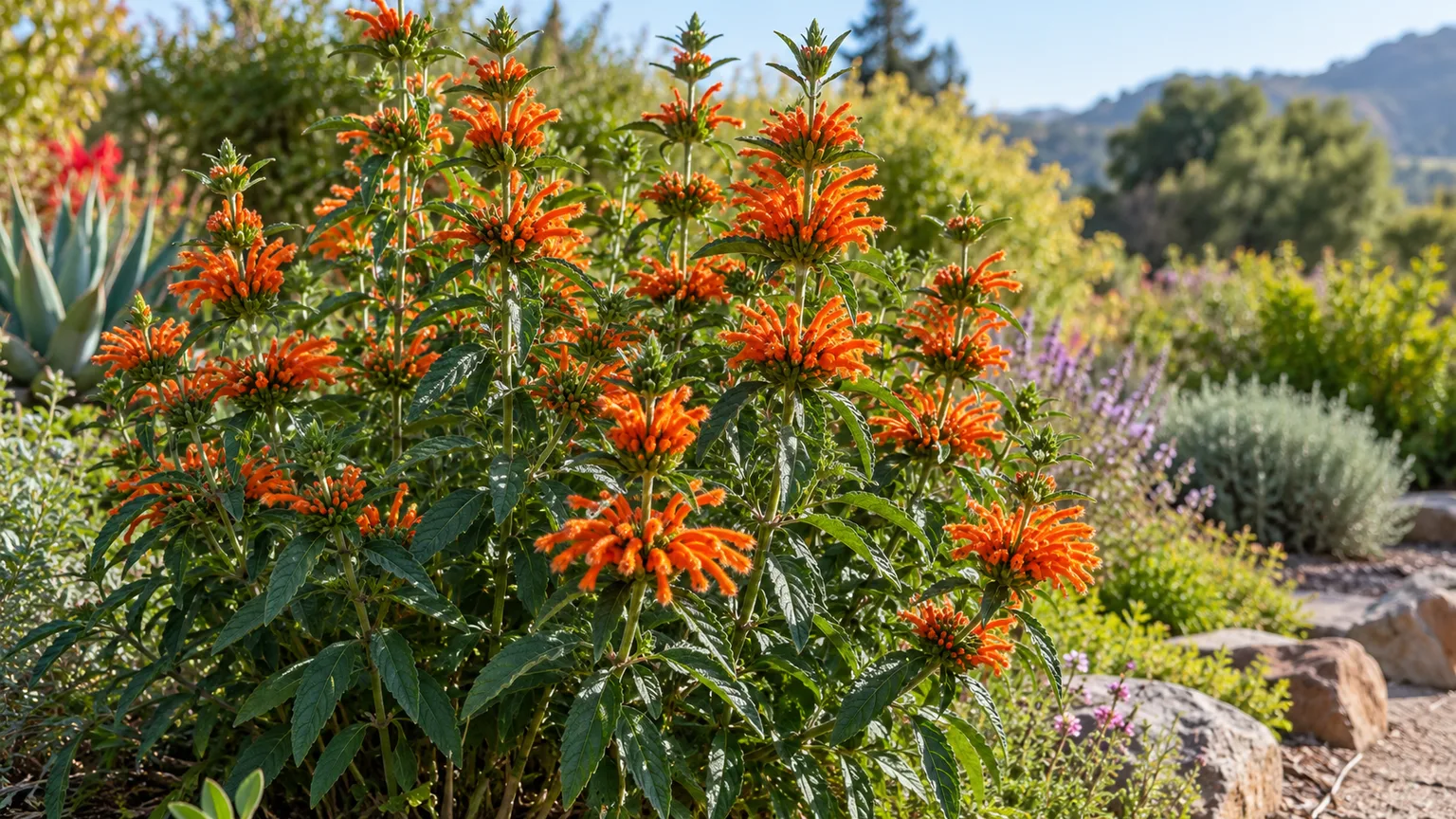
19. Coral aloe (Aloe striata) produces coral-orange flower spikes in late winter or early spring in frost-free or nearly frost-free gardens. Its smooth, broad leaves make it an attractive drought-tolerant accent once established, but cold wet soil can be more damaging than a brief cool night. Use a raised, gritty planting area or a pot with a drainage hole; do not treat its winter flowering as proof that it can handle freezing ground.
20. Laurustinus viburnum (Viburnum tinus) is an evergreen shrub with pink buds opening into white flower clusters during the cooler months. It is a useful screen or background shrub in mild climates, although its final size can exceed what a small foundation bed can hold. Flowering can slow after a cold spell, and a plant grown in deep shade may produce fewer blooms than one with several hours of sun.
Grevillea, firespike, bougainvillea, and Carolina jessamine
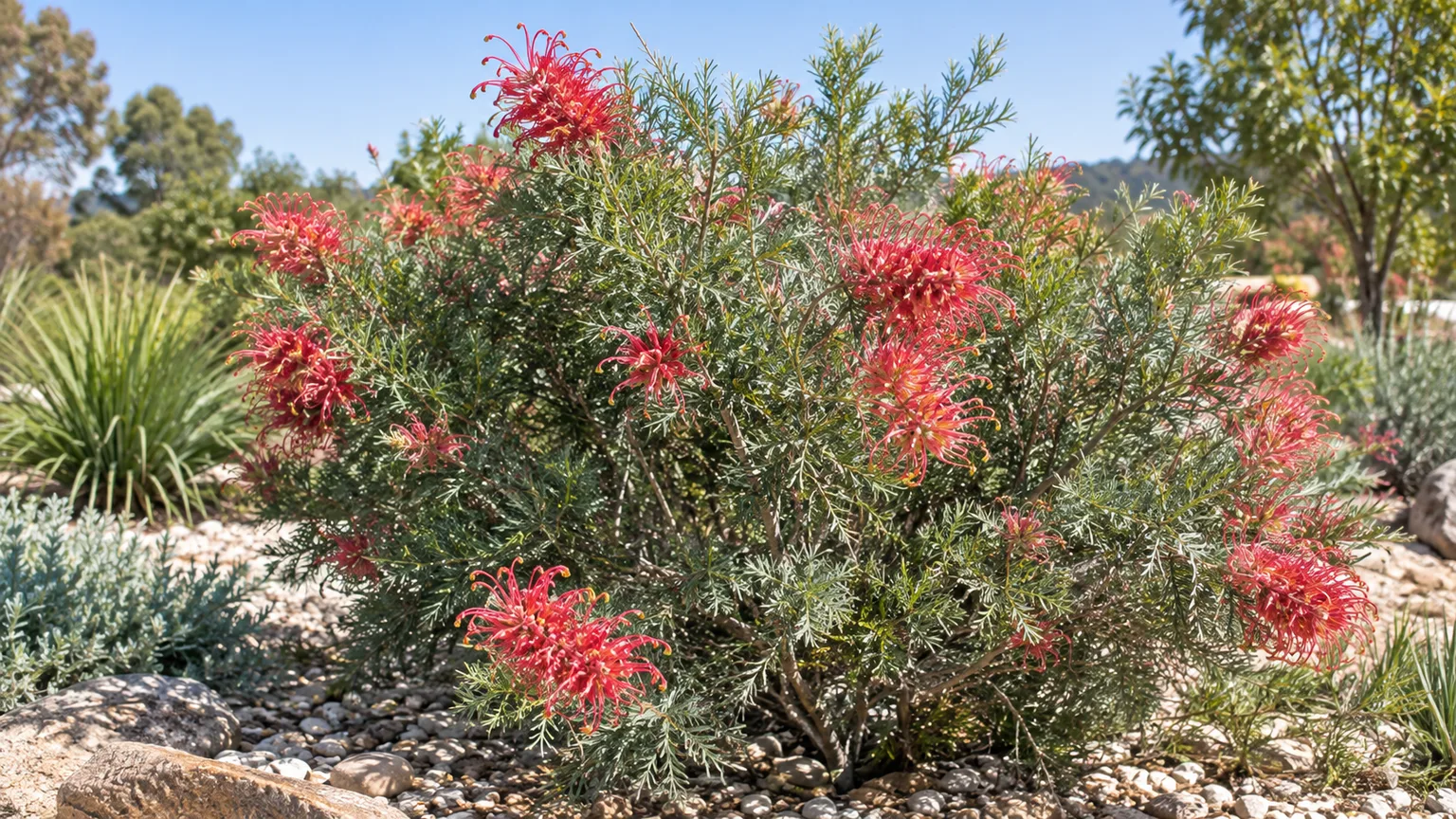
21. Grevillea (Grevillea spp.) ranges from groundcovers to large shrubs and can bloom for extended periods in warm, sunny climates. Species vary, so ask a local native-plant nursery which are appropriate and whether their soil needs are compatible with your site. Many prefer excellent drainage and relatively low-phosphorus conditions; avoid applying a general-purpose fertilizer unless its label and local guidance fit the species.
22. Firespike (Odontonema cuspidatum) bears red tubular flower spikes that attract hummingbirds in warm regions, with the main bloom period often in fall and winter. It is a tropical perennial that may die back or be killed by frost, so it should not be sold to yourself as a cold-climate perennial. In frost-prone areas, grow it in a movable container or choose a genuinely hardy flower instead.
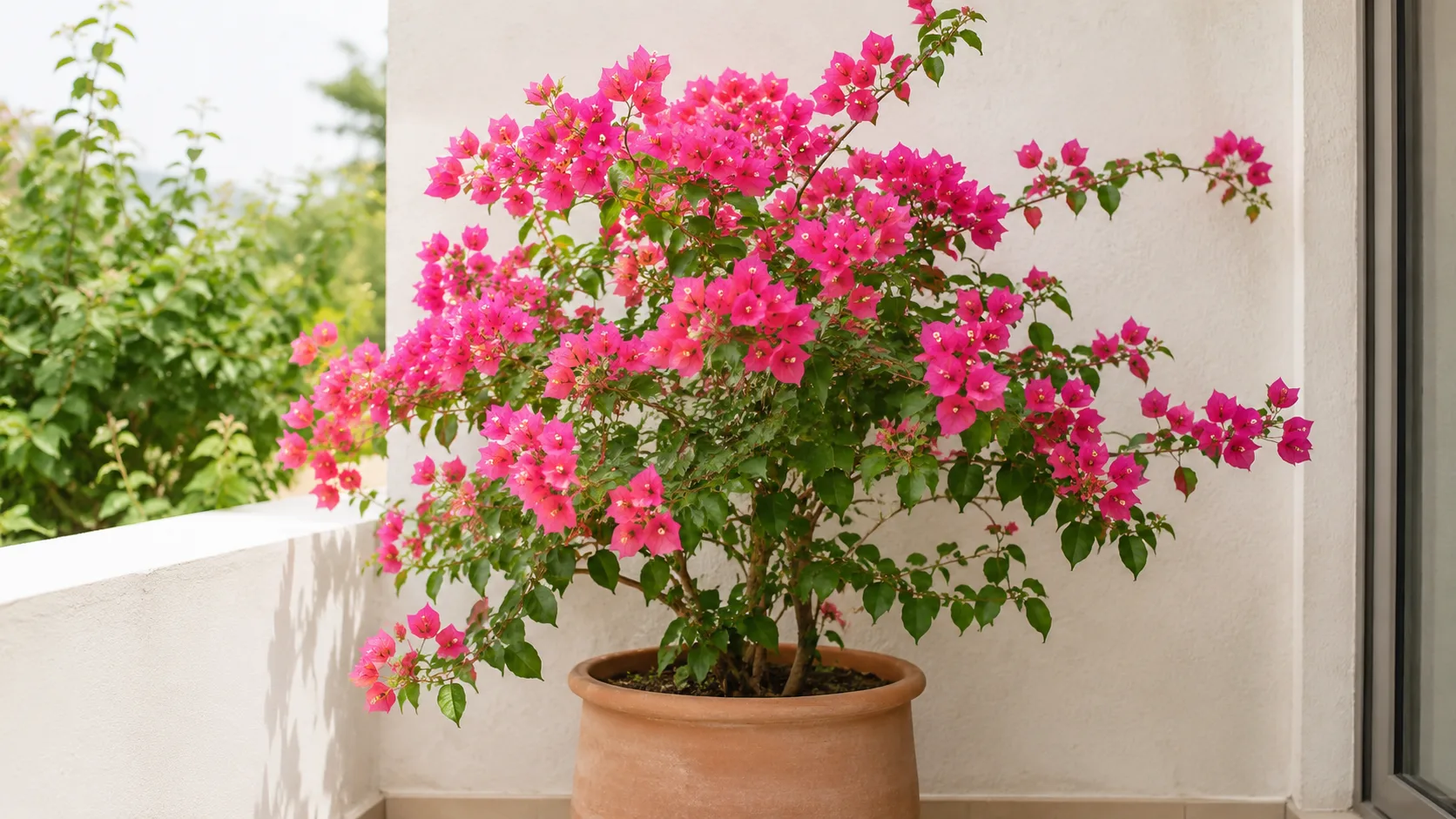
23. Bougainvillea (Bougainvillea spp.) can provide winter color where temperatures stay mild, especially when grown in a sunny, sheltered spot. The vivid show comes from colorful bracts around small true flowers, and bloom can pause after cold weather or when the plant receives too much water and nitrogen. In places with frost, a container lets you move it to protection, but it still needs strong light and careful watering indoors.
24. Carolina jessamine (Gelsemium sempervirens) is an evergreen native vine that opens fragrant yellow, trumpet-shaped flowers in late winter or early spring in suitable regions. Train it along a sturdy trellis or let it spill over a slope, but do not put it where children or pets might ingest it: all parts are poisonous. The NC State Plant Toolbox provides identification and toxicity details, so use the scientific name when checking safety information.
Choose flowers by the conditions you can offer
Start with the site, then choose the flower. This short list is a better first filter than color because the wrong moisture or winter temperature can eliminate a plant before its bloom season begins.
| Garden condition | Strong starting choices | What to check |
|---|---|---|
| Cold winter, deciduous shade | Snowdrops, winter aconite, hellebores, hardy cyclamen | Drainage and whether the plants receive spring sun before trees leaf out |
| Sunny, cold-winter border | Crocus, pansies, winter heath | Whether the soil drains quickly and bulbs can be left undisturbed |
| Mild winter, evergreen structure | Camellia, mahonia, laurustinus viburnum | Mature width, soil pH, and exposure to drying wind |
| Warm, frost-free patio | Coral aloe, bougainvillea, firespike | Minimum winter temperature and container drainage |
| Fragrance by an entrance | Winter daphne, wintersweet, selected witch hazels | Mature size and whether the species is suited to local winter lows |
| Tiny bed or balcony | Pansies, primroses, crocus in a pot | Root-zone insulation and the ability to keep water from pooling |
For every shrub or perennial, check the exact species or cultivar against the USDA Plant Hardiness Zone Map, then ask a local extension office or nursery about the site. The RHS winter-interest guidance is useful for flower combinations and seasonality, but UK hardiness ratings do not map directly to U.S. USDA zones. Treat location-specific advice as a clue, not a conversion chart.
How to plant winter flowers successfully
Plan the display in reverse: identify the months when your yard is usually colorless, then layer bloom windows around them. A sequence might begin with winter jasmine or witch hazel, continue with snowdrops and aconite, and hand off to crocus and hellebores as days lengthen. The University of Georgia Extension winter-flower guide offers a regional example of combining bedding annuals with shrubs and perennials; your sequence should use plants suited to your own climate.
Plant bulbs such as snowdrops, crocus, and winter aconite in fall, while soil is workable and before it freezes solid. Plant nursery-grown shrubs in a mild period when roots can establish, often fall or spring depending on local rainfall and winter severity. Water new plants during dry spells even in cool weather—the goal is evenly moist soil, not saturated ground—and keep mulch away from crowns and stems.
Containers need more root protection than beds
A plant can be hardy in the ground yet fail in a pot because the container exposes roots to cold on all sides. Choose a pot with drainage, use a size that does not dry instantly, and group containers near a sheltered wall; in severe cold, move them into an unheated protected space or insulate the pot. Do not bring every outdoor plant into a warm living room: low light and indoor heat can disrupt dormancy and encourage weak growth.
For seasonal color in a small space, pansies and primroses are easy to replace, while crocus and hardy cyclamen can return if their pots drain and receive the right summer conditions. Shrubs like camellia or daphne need a large enough pot and more consistent attention than bedding annuals. Container growing is flexible, but it is not automatically lower-maintenance.
Protect blooms and avoid common winter mistakes
A sudden freeze may flatten pansies or close crocus flowers without killing the plant. Wait until the weather warms before removing damaged-looking leaves; foliage often recovers, and cutting healthy leaves too early can reduce the energy available for next season. For vulnerable blooms on shrubs, a sheltered planting site is more reliable than wrapping the whole plant every time frost is forecast.
The most common failure is confusing cold tolerance with wet-soil tolerance. Snowdrops and winter heath may handle cold, but persistent winter water can rot bulbs or roots; conversely, a broadleaf evergreen can lose moisture to wind while frozen soil prevents uptake. Penn State Extension describes this winter-burn and drainage problem for evergreen perennials, which is why the best prevention is proper siting and mulch rather than extra fertilizer.
A second mistake is buying by flower color while ignoring the botanical name. Primroses and jasmines include plants with different seasons, and grevilleas vary widely in climate fit. Confirm the mature size, winter low tolerance, expected bloom window, light, soil drainage, and any toxicity before planting; if you garden with pets or young children, keep known poisonous species out of chewing range and use a veterinary poison-control resource for an exposure question.
Conclusion
The best winter flowers are the ones that bloom in your actual winter, not the one on a catalog cover. For snowy or freezing gardens, begin with snowdrops, winter aconite, crocus, hellebores, hardy cyclamen, pansies, primroses, and the right winter heath; for mild regions, consider camellias, witch hazel, winter jasmine, and locally adapted shrubs. Warm-climate plants such as bougainvillea, firespike, and coral aloe need protection where frost is possible.
Before planting, match the species to your hardiness zone, drainage, sunlight, and available root protection, then treat bloom dates as a range. A small group of well-sited plants with staggered flowering will give a more reliable winter display than a larger collection of mismatched flowers.