12 Types of Spider Plants for Your Home
Compare 12 spider plant types—from classic Vittatum stripes to curly Bonnie and orange Fire Flash—with light, size, and care notes so you pick the right cultivar.
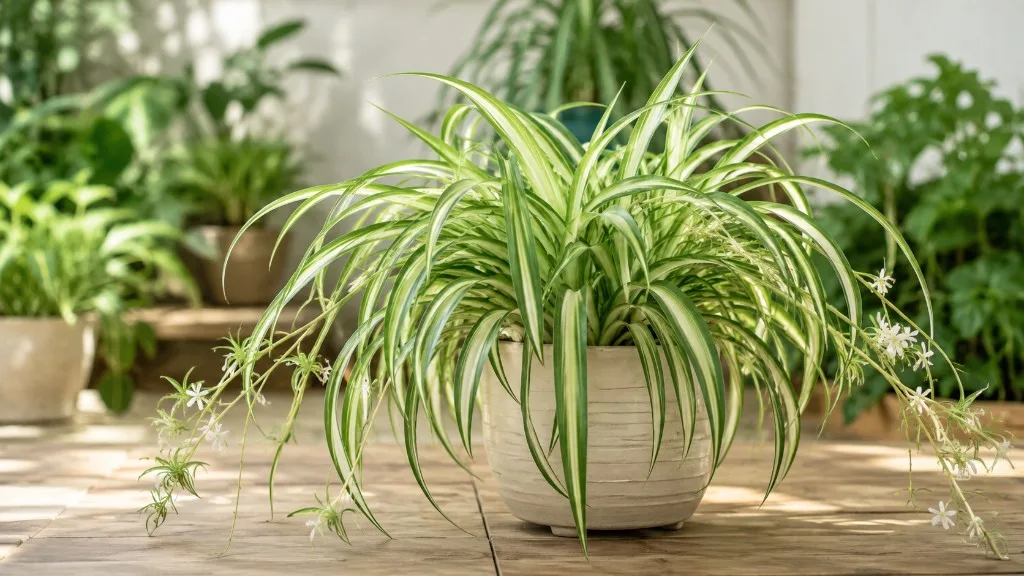
Walk into any plant shop and you will see arching grass-like leaves tagged “spider plant” with wildly different stripes, curls, and sizes. Most of those pots are cultivars of Chlorophytum comosum—the classic spider plant, airplane plant, spider ivy, and ribbon plant are all the same species under different nicknames. A few shelves mix in close cousins such as Chlorophytum laxum or Chlorophytum amaniense, which share the grassy look but behave differently indoors.
This guide compares twelve spider plant types worth growing at home: what each looks like, how big it gets, which window it prefers, and how it differs from the others. Use it to choose a cultivar before you buy, then open the spider plant hub or spider plant care guide when you need watering, soil, and propagation detail.
Why Spider Plant Cultivars Look So Different
Spider plants became a global houseplant because Chlorophytum comosum tolerates average indoor light, forgives missed waterings, and produces dangling plantlets (spiderettes) that root easily. Breeders and collectors selected sports with new stripe patterns, leaf curl, and compact habits. Retail labels rarely stay consistent—one nursery’s “variegated spider plant” may be center-striped Vittatum, while another sells margin-striped Variegatum under the same sign.
Same Species, Different Paint Jobs
Within C. comosum, cultivar differences are mostly foliage pattern and growth habit, not hardiness. The North Carolina Extension Gardener Plant Toolbox lists named clones including ‘Bonnie’, ‘Bonnie Variegated’, ‘Hawaiian’, ‘Milky Way’, ‘Picturatum’, ‘Variegatum’, ‘Vittatum’, and ‘White Stripe’. Stripe direction, leaf width, and curl change how the plant reads in a room—wide center white on Vittatum screams “retro hanging basket,” while tight curly Bonnie fits a small shelf.
Variegated clones usually need brighter filtered light than solid green forms to keep crisp contrast. Too little light fades stripes (especially on Hawaiian, where NC State notes new leaves may variegate but older foliage greens out). Too much direct sun scorches leaves—a problem shared across types.
When a “Spider Plant” Is Another Chlorophytum Species
Not every grassy Chlorophytum in trade is C. comosum. Bichetii and Zebra types are often sold as spider plants but belong to Chlorophytum laxum—clumping, often without the long stolons of comosum. Fire Flash (orange spider plant) is Chlorophytum amaniense—broad leaves, orange petioles, no spiderette parade. Buying for the classic dangling babies? Confirm the Latin name on the tag or ask staff; laxum and amaniense will not behave like Vittatum on a macramé hanger.
How to Pick the Right Spider Plant Type
Start with where the pot will live and what you want it to do—trail from a hanger, sit compact on a desk, or add orange stem color on a bright table. Popularity is not permission to stick a sun-loving variegated clone in a dim hallway.
Match Light to Stripe and Curl
Bright indirect light is the default for most variegated C. comosum cultivars. Solid green Green Shamrock and many laxum types tolerate moderate light better, though growth slows. Reverse variegation (Variegatum) and center stripe (Vittatum) both need enough brightness to hold white bands; if stripes bleach or shrink, back off from hot direct sun. If stripes disappear, move closer to the window or add a grow light.
Fire Flash needs the same bright indirect tier but higher humidity than classic comosum—dry forced-air rooms brown leaf edges faster on amaniense. Bonnie’s curl tightens in good light; in deep shade leaves may flatten and lose the bonfire-tumble look.
Size, Habit, and Display Style
For ceiling-height trailers, choose Vittatum or Variegatum in a hanging basket—the stolons can reach several feet with plantlets at the tips. Bonnie, Atlantic, Ocean, and Mandaianum stay shorter and wider, better for mantels, bathroom shelves, or clustered tabletop arrangements. Bichetii (laxum) clumps densely and works as a groundcover outdoors in frost-free zones or as a low indoor pot.
The Wisconsin Horticulture program notes spider plants excel in hanging baskets where leaves and stolons cascade (Wisconsin Horticulture spider plant profile). Match pot weight to habit: a mature Vittatum in a lightweight plastic hanger can tip unless the hook is sturdy.
Pets, Kids, and Chewing Risk
Spider plants are among the safer classics for pet households. The ASPCA lists spider plant (Chlorophytum comosum) as non-toxic to cats and dogs. That does not make them cat grass—many cats chew the strap leaves and vomit mildly. Hang baskets high, offer approved grass, and call your veterinarian if a pet shows repeated vomiting or lethargy after eating any plant.
Classic Stripe Spider Plants
These are the backbone of the genus in shops: green blades with white or cream markings. Stripe location is the fastest ID clue.
Vittatum (Center-Striped Variegated)
Name: Chlorophytum comosum ‘Vittatum’
Look: Arching medium-green leaves with a wide creamy white stripe down the center; stolons often pale. This is the photo most people picture as “variegated spider plant.”
Size: Typically 12–24 inches tall and wide; trailers longer in hangers.
Light: Bright indirect; avoid harsh midday sun on the window glass.
Water: Water when the top inch of potting mix feels dry—avoid fixed “every four days” schedules that ignore season and pot size.
Best for: Hanging baskets, bright living rooms, beginners who want obvious plantlets.
The RHS awarded Vittatum and Variegatum the Award of Garden Merit—recognition that these clones perform reliably as houseplants. Vittatum is the default choice when you want maximum contrast and a long waterfall of spiderettes.
Reverse Spider Plant (Variegatum)
Name: Chlorophytum comosum ‘Variegatum’ (also sold as reverse spider plant, airplane plant)
Look: Green center with white or cream margins along the leaf edges—the mirror image of Vittatum. Stolons are usually green. Often slightly smaller overall than Vittatum.
Size: Roughly 1–2 feet in pot height; spreads with stolons.
Light: Bright indirect; margins burn in direct sun.
Water: Same dryness test as Vittatum; reduce frequency in winter when growth slows.
Best for: Hanging displays, mixed planters, collectors who already own center-striped forms.
The NC State profile for ‘Variegatum’ stresses that over-fertilizing cuts back plantlet formation—a common reason reverse spider plants look healthy but never produce babies. If you want offsets, skip heavy monthly feeding and prioritize steady light instead.
White Lightning and Milky Way
White Lightning pushes a bold central white stripe—sometimes brighter than Vittatum—with labels occasionally claiming “full sun.” Indoors, treat that as marketing: bright indirect still beats baking on a south sill. Milky Way (listed by NC State) has a broad white or cream center with green margins—visually close to a high-contrast Vittatum sport. Retail names blur; compare stripe width on the actual leaf, not the pot sticker.
Both belong in the same care tier as Vittatum: bright filtered light, well-drained mix, and fluoride-aware watering if tips brown repeatedly.
Curly and Compact Cultivars
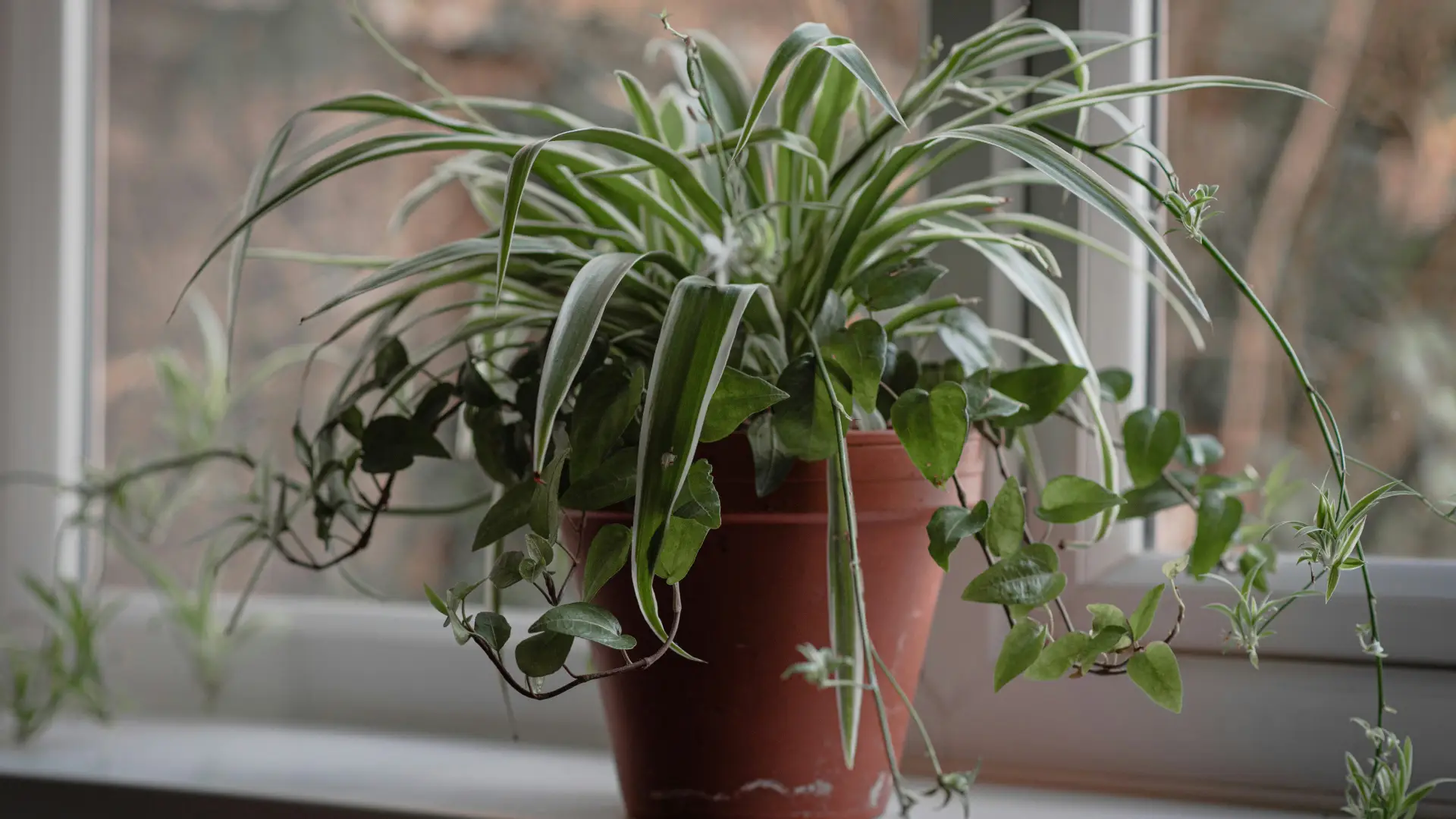
When you want texture without a three-foot stolon cloud, these cultivars shrink the silhouette.
Bonnie Curly Spider Plant
Name: Chlorophytum comosum ‘Bonnie’ (variegated and green forms exist)
Look: Curled, twisted leaves—green with light yellow or cream tones in the variegated clone. Compact mound instead of a flat arch.
Size: About 6–8 inches tall and 10–12 inches wide in many pots—verify at purchase because nursery age varies.
Light: Bright indirect to light shade; curl loosens in dim rooms.
Water: Every 5–7 days is only a starting guess—check soil dryness.
Best for: Small shelves, bathroom corners, desks where a full-size Vittatum would overwhelm.
Bonnie is the answer when someone asks for a curly spider plant that still produces plantlets, though offsets may be fewer than on flat-leaf parents. Pair with a hanging pot if you want the curls to spill slightly over the rim.
Atlantic, Ocean, and Other Short-Leaf Forms
Atlantic and Ocean are trade selections with shorter, sometimes wavy leaves and a spiky, dense look compared to classic Vittatum straps. Atlantic often shows dark green margins with lighter central bands; Ocean emphasizes short, wide variegated blades. Mature height in shop labels commonly lands around 4–8 inches for the foliage mound before stolons extend.
Treat them like compact comosum: bright indirect light, let mix dry partway between waterings, and expect smaller but still charming plantlets. Availability swings by region—these are not always stocked alongside Vittatum, so grab one when you see a healthy clump with no mushy roots at the crown.
Dwarf Mandaianum
Name: Chlorophytum comosum ‘Mandaianum’ (dwarf spider plant)
Look: Miniature habit with dark green leaves and a yellow or chartreuse central stripe; one of the smallest comosum cultivars in trade.
Size: Often 4–6 inches tall and only a few inches wide in young pots—confirm mature width on the label.
Light: Bright indirect; yellow stripe dulls in shade.
Water: Slightly more frequent than large hangers because small pots dry fast—still never leave sodden mix.
Best for: Terrarium-style displays, fairy-garden pots, windowsill collections.
Dwarf does not mean disposable: Mandaianum still forms tuberous roots and will need repotting when roots circle the pot. It is the pick for small spaces when you want true spider plant genetics without a 24-inch leaf arc.
Solid Green and Golden Types
Monochrome and golden-center clones suit modern interiors and often handle slightly lower light than heavy variegation—though no spider plant thrives in a dark closet.
Green Shamrock (Solid Green Comosum)
Name: Non-variegated Chlorophytum comosum (Green Shamrock, solid green spider plant)
Look: All-green strap leaves without white stripes—rarer on shelves than variegated clones but easy to propagate from self-rooted plantlets of green parents.
Size: Standard comosum—12–24 inches in pot, longer stolons in time.
Light: Bright indirect to moderate; tolerates a bit less light than Vittatum but grows slower.
Water: Same as other comosum; green leaves still brown at tips from fluoride or salt stress.
Best for: Minimalist rooms, low-contrast plant walls, collectors completing a cultivar set.
Solid green is not a separate species—just the non-variegated form of comosum. It can be harder to find because nurseries push striped sports, but plant swaps and spiderette gifts often surface green clones for free.
Hawaiian / Golden Glow
Name: Chlorophytum comosum ‘Hawaiian’ (Golden Glow)
Look: Dark green leaves with yellow-lime and cream striping toward the center—tropical brightness without orange stems.
Size: 12–24 inches tall, potentially wider spread than Bonnie.
Light: Bright indirect; NC State notes variegation on new leaves may fade with age, which is normal—not always a care failure.
Water: Slightly less frequent than fast growers in huge hangers—roughly weekly in a medium pot if mix dries appropriately.
Best for: Warm-toned rooms, pairing with golden pothos or lime-accent decor.
If Hawaiian loses glow, increase light modestly and avoid nitrogen-heavy fertilizer that pushes pure green growth. Do not confuse with Fire Flash—the Hawaiian stays in the comosum leaf shape without orange petioles.
Related Chlorophytum Species Worth Growing
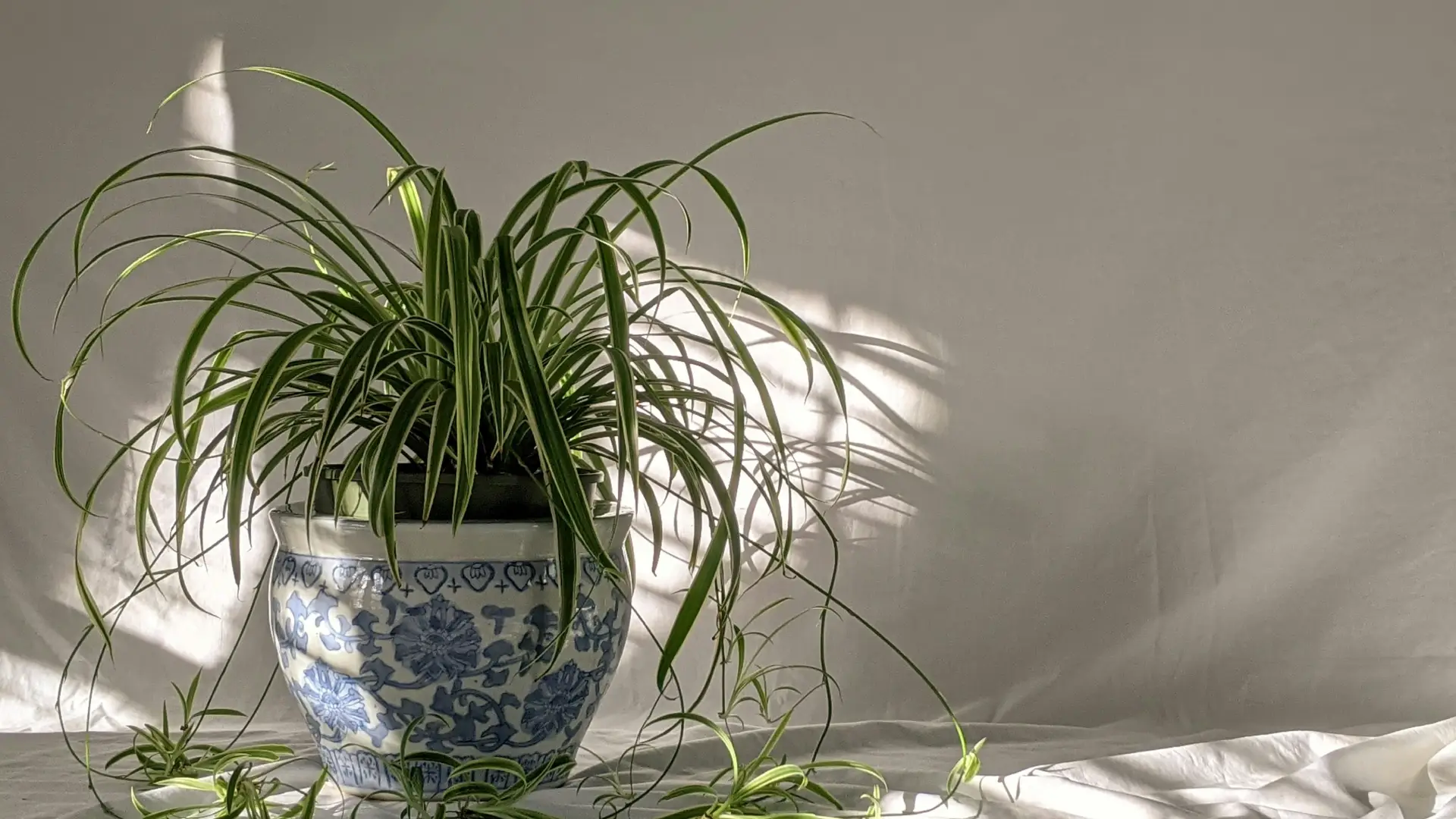
Two “spider plant types” on this list are different species that share shelf space with comosum. They belong on a spider-plant roundup because retailers and searchers lump them together—but your care card should not.
Bichetii and Zebra (Chlorophytum laxum)
Names: Chlorophytum laxum ‘Bichetii’; C. laxum ‘Zebra’ (Zebra grass)
Look: Grass-like clumping leaves with creamy white banding on margins or center; Zebra emphasizes dark green with white edges. Flowers are small white stars—often overlooked indoors.
Size: laxum grows 8–12 inches tall and 18–24 inches wide in a clump (NC State laxum profile).
Light: Medium to low compared to Vittatum; avoid direct sun.
Water: Let soil dry between waterings; sensitive to overwatering and root rot.
Best for: Tabletop grass texture, shaded patios in zones 10–11, groundcover where comosum stolons would wander.
Bichetii is not a comosum baby—it rarely produces the iconic long stolon with dangling spiderettes. Choose it for dense filler, not for a baby-plant factory. Zebra laxum is also distinct from margin-striped Variegatum comosum; check species on the tag.
Fire Flash / Orange Spider Plant (Chlorophytum amaniense)
Names: Chlorophytum amaniense—Fire Flash, Mandarin plant, orange spider plant
Look: Broad, pointed dark green leaves on bright orange hairy petioles (leaf stems)—the “fire” is stem color, not flower hue.
Size: 12–24 inches in many indoor pots.
Light: Bright indirect; no direct hot sun on leaves.
Water: Every 5–7 days in active growth for a mid-size pot—adjust down in winter.
Humidity: Higher than comosum; misting is optional if you use a pebble tray or humidifier.
Best for: Color collectors, bright kitchens, mixed tropical tables.
Joy Us Garden’s mandarin plant notes emphasize warmth and even moisture for amaniense—cold drafts and dry air cause faster decline than on classic spider plants (Joy Us Garden mandarin plant care). Do not expect airplane-style plantlets; propagation is usually division or careful stem cuttings, not pinching stolons.
Care Basics Every Type Shares
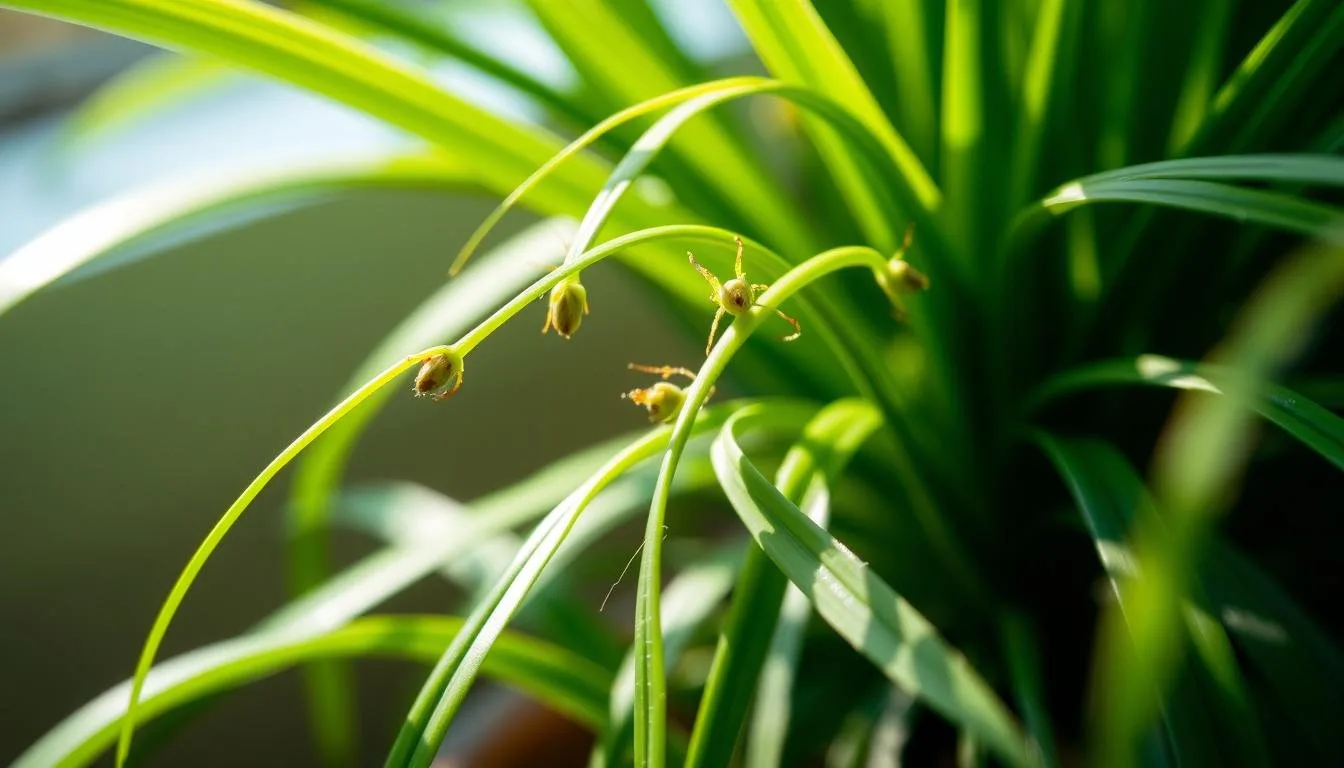
Regardless of cultivar name, spider plants in the comosum group share a few rules that prevent the generic “low maintenance” label from becoming dead plants.
Soil and drainage: Use loose, well-drained potting mix—peat or coco-based blends with perlite work. NC State recommends moist soil during the growing season but reduced water in winter. Waterlogged tubs kill tuberous roots faster than brief dryness.
Water quality: Fluoride and chlorine in tap water cause brown leaf tips on comosum. If tips persist after fixing dryness swings, switch to filtered or rainwater for a month and compare new growth (NC State comosum care notes).
Temperature: Keep above about 45°F (7°C); ideal indoor range roughly 65–90°F (18–32°C). Do not leave hangers against cold window glass in winter.
Plantlets: Stolons and spiderettes respond to short days—less than about 12 hours of light daily for at least three weeks—according to NC State. Bright summer nights with room lights on can delay offsets. Slight root binding and modest feeding encourage babies; heavy fertilizer suppresses them.
Pests: Watch for spider mites, aphids, and scale on stressed plants. Rinse foliage and improve airflow before escalating sprays.
Propagation: Pin plantlets into moist mix while still attached, or cut and pot when aerial roots form. Division of crowded tubers refreshes old pots every few years.
When a single variety needs deeper troubleshooting—brown tips, no babies, repot timing—use the dedicated spider plant care guide rather than guessing cultivar-by-cultivar.
Conclusion
The twelve spider plant types worth growing this year span center-striped Vittatum, margin-striped Variegatum, curly Bonnie, compact Atlantic and Ocean, dwarf Mandaianum, solid Green Shamrock, golden Hawaiian, White Lightning, laxum Bichetii and Zebra, and orange-stemmed Fire Flash. Most are Chlorophytum comosum cultivars that differ in stripe direction, curl, and size; laxum and amaniense add clumping grass texture and stem color without replacing the classic dangling spiderette show.
Pick Vittatum or Variegatum for macramé hangers in bright rooms, Bonnie or Mandaianum for small spaces, Green Shamrock for monochrome shelves, and Fire Flash only if you can offer warmth and humidity. Confirm the Latin name when you want babies—laxum will not stolon like comosum. Match light to variegation, water when soil dries, protect tips from harsh tap water, and let short autumn days trigger the spiderettes that make these plants cheap to share. With the right type on the right sill, one purchase becomes a lifetime of offsets for your home and everyone you know who still kills a pothos.