Does Peppermint Oil Repel Bugs? Facts and Limits
Does peppermint oil repel bugs? Learn what research shows, where it may help, why it fades fast, and safer ways to manage mosquitoes and pests.

Peppermint oil can make a treated spot less attractive to some insects for a short time. It is best understood as a temporary scent-based repellent, not a bug killer, nest treatment, or dependable substitute for a labeled mosquito repellent.
That distinction matters because a peppermint spray can smell powerful while doing very little against the pest that is actually bothering you. The result depends on the insect, the oil concentration, how the oil is formulated, where it is applied, and whether wind, sun, rain, or cleaning removes it.
The short answer: sometimes, briefly, and only for the right job
Peppermint oil is worth considering for a small, low-stakes nuisance on a hard surface—such as a few ants exploring a windowsill—after you clean the area and close the entry point. It is a poor first choice when you need protection from mosquito-borne disease, are dealing with a growing infestation, or want to spray living plants without risking leaf injury.
| Situation | Practical verdict | Better first move |
|---|---|---|
| A few insects near an indoor crack | May provide a short scent barrier | Clean, seal, and monitor the entry point |
| Mosquitoes biting outdoors | Unreliable as a homemade skin repellent | Use an EPA-registered product as directed |
| Aphids or other pests on leaves | Do not spray concentrated or unlabelled oil | Identify the pest and use physical or labelled control |
| Roaches, termites, bed bugs, or a nest | Not a solution | Inspect, use targeted control, or call a professional |
| A pet can lick or knock over the bottle | Skip it or keep it completely inaccessible | Use exclusion and pet-safe pest management |
For mosquitoes, the CDC recommends EPA-registered repellents and says the effectiveness of non-registered repellents, including some natural products, is unknown. That does not mean peppermint oil has no repellent activity; it means a homemade mix should not be treated as verified protection against disease-carrying bites.
What peppermint oil actually does to insects
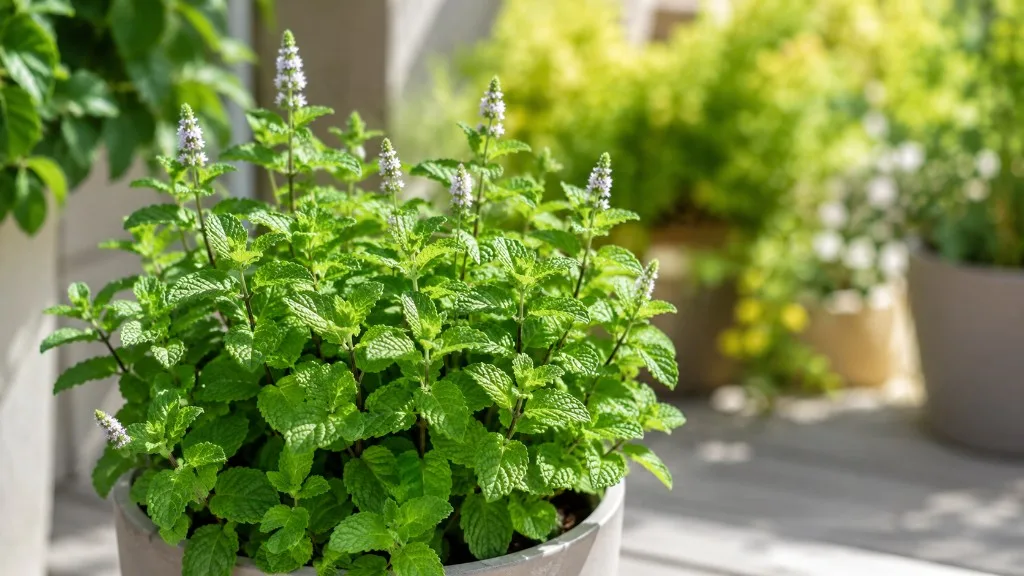
Peppermint oil is the concentrated volatile oil of peppermint, Mentha × piperita. Its strong aroma comes from a mixture of compounds, including menthol, but the exact chemical profile can vary by plant material, growing conditions, extraction, and supplier. A bottle of “peppermint oil” is therefore not automatically equivalent to the formulation used in a research trial.
Insects use odor cues to find food, hosts, shelter, and mating opportunities. A strong volatile odor can interfere with those cues or make a treated area less appealing. The effect is closer to turning down a signal than building an invisible wall: when the odor thins out, the barrier can disappear.
Repellent is not the same as insecticide
An insect repellent changes where or how an insect moves. An insecticide is a product intended to kill or control a pest, and a fumigant works through a vapor in a defined setting. Peppermint oil may repel some insects under certain conditions, but that does not prove it will kill them, sterilize a nest, destroy eggs, or stop a breeding cycle.
This is why spraying the visible ants, flies, or roaches can feel like progress while the underlying problem continues. The insects may move around the smell, use another entry point, or return after the volatile compounds dissipate. Treat the scent as an optional layer of a plan, not as the plan itself.
What the research says—and what it does not prove
The strongest useful evidence here is narrower than the internet’s broad “peppermint repels bugs” claim. A 2023 Scientific Reports study tested 20 essential-oil ingredients against female Aedes aegypti mosquitoes and blacklegged ticks in controlled contact-repellency assays.
The researchers did not spray a random homemade mixture around a backyard. They made a 10% volume-to-volume lotion emulsion, applied it to human skin, and measured complete protection time in a lab test. That difference—oil in a defined lotion versus oil floating in water—is central to interpreting the result.
Mosquito evidence is real but short-lived
In that study, the peppermint formulation protected against mosquito bites for more than 30 minutes. Several other oils performed longer, and a 10% DEET control protected for up to six hours under the study conditions. The test also drew on earlier work in which peppermint reduced mosquito attraction for about an hour in an odor-choice assay.
Those findings support a careful conclusion: peppermint oil can repel at least some mosquitoes for a limited time when used in a tested formulation. They do not establish a reliable protection time for a water-based spray, a cotton ball, an outdoor patio, or a particular brand of essential oil.
The same study is also a useful warning against generalization. Peppermint did not perform like the best oils in the tick assay, and the researchers emphasized that efficacy and duration can vary dramatically with the active ingredient and formulation. A result for Aedes aegypti is not a result for every mosquito species, tick species, ant, spider, aphid, or cockroach.
Why one test cannot stand in for every bug
“Bugs” are not one biological target. A mosquito searching for a blood host, an aphid feeding on a leaf, an ant following a pheromone trail, and a cockroach hiding near food respond to different cues and occupy different spaces. Even within one category, species, life stage, temperature, humidity, and prior exposure can change behavior.
The practical evidence from established home-and-garden publications is more modest than the strongest marketing claims. Bob Vila’s guide and Family Handyman’s overview both frame peppermint as a temporary deterrent that should be used with cleaning, exclusion, and realistic reapplication—not as a stand-alone cure for an infestation.
Is peppermint oil more useful indoors or outdoors?
Peppermint oil is generally easier to use as a short-lived indoor scent barrier because a room or sheltered entry point has less air movement than an exposed yard. Even indoors, ventilation, wiping, heat, and the size of the space determine how quickly the odor falls below a level an insect can detect.
Indoor entry points and small nuisance problems
If you see occasional ants or a few flies near one window, start by cleaning crumbs, sugar, grease, and pet-food residue. Then check the sill, baseboard, pipe opening, or door gap where the insects are entering. A small amount of a properly labelled product—or a short-term peppermint scent on a hard, non-food-contact surface—can be a secondary measure after that work.
Popular home recipes use a small number of drops in water, sometimes with a surfactant to help the oil disperse. There is no universal, evidence-based “peppermint oil per cup of water” rate that guarantees indoor pest control. If you experiment with a homemade spray, shake it before each use, make only a small amount, test an inconspicuous spot, and treat the scent as temporary.
Do not spray food, dishes, cutting boards, children’s toys, bedding, electrical outlets, or surfaces that a pet licks. Keep the bottle and any saturated cotton balls out of reach, and remove them if the smell causes coughing, irritation, or headaches. A strong smell is not evidence that the pest has been controlled.
Outdoor air, sun, rain, and wind
Outdoor conditions work against volatile oils. Sunlight, heat, wind, rain, irrigation, and the large volume of moving air all reduce how long a scent remains concentrated near a doorway, deck, plant, or person. Frequent reapplication may keep the smell noticeable, but it can also increase plant exposure, runoff, residues, and contact with non-target organisms.

For mosquitoes in a yard, fix the habitat first. The CDC advises checking water-holding containers weekly, repairing screens, using air conditioning where available, and wearing protective clothing. Those steps reduce exposure more reliably than repeatedly misting a patio with a homemade essential-oil spray.
How to use peppermint oil more safely
The safest use depends on the surface and the goal. Essential oil intended for aromatherapy is not automatically a pesticide, a skin repellent, a plant treatment, or a pet product. Use a product only for the site and pest listed on its label; the UC Integrated Pest Management program explains that pesticide labels are legal directions and that applying a product contrary to the label can cause injury or pollution.
Hard surfaces and entry points
For a minor indoor nuisance, clean first, seal second, and use scent only as an optional third step. A cotton ball or lightly applied solution on a removable, non-porous surface is easier to control than saturating a wall, floor, fabric, or garden border. Test first because essential oils can stain finishes, soften some plastics, and damage coatings.
Do not assume that adding more oil makes the method better. Concentrated oil increases the chance of skin irritation, residue, and surface damage without proving a longer-lasting repellent effect. A targeted application near a suspected entry point is more sensible than fogging an entire room.
Garden foliage and human skin need extra caution
Avoid spraying undiluted peppermint oil on leaves. Even diluted essential-oil mixtures can injure tender foliage, and heat or direct sun can make damage more likely. The UC IPM guidance on pesticide use advises identifying the pest, following the label for the plant or site, and recognizing that some products can cause phytotoxicity—chemical injury that may look like scorch, spotting, or a burned edge.
Do not use a homemade peppermint mixture on edible crops unless the product is specifically labelled for that crop and pest, with any required harvest interval. A recipe from a blog is not a substitute for a crop label. If you are testing a labelled garden product, follow the label, test a small area, avoid heat and direct sun when the label warns against it, and protect pollinators from unnecessary exposure.
For skin, skip homemade peppermint oil if the purpose is protection from mosquitoes or ticks. The CDC’s registered-repellent guidance provides a better safety and efficacy baseline, while NCCIH notes that topical peppermint oil can cause rashes and irritation. Never apply undiluted essential oil to a child’s face or use a household mixture on a pet.
The Pet Poison Helpline’s essential-oil guidance explains that risk depends on the oil, concentration, dose, and route of exposure, with cats and birds especially vulnerable to essential-oil poisoning. Store bottles securely, keep treated cotton balls away from animals, and contact a veterinarian or animal poison service after a possible exposure rather than trying another home remedy.
Peppermint oil will not solve an active infestation
If you are seeing pests every day, finding droppings, hearing activity in walls, watching a plant decline, or noticing a nest or colony, a repellent alone is the wrong level of intervention. It may scatter the visible insects and make inspection harder while the source remains protected behind a wall, under a pot, in a drain, or near standing water.

Use the pest’s biology to choose the next move. Ants require trail and entry-point management; cockroaches require sanitation, exclusion, and targeted baits or professional treatment; aphids may be dislodged with water while you protect beneficial insects; mosquitoes require water management and personal protection; termites, bed bugs, and stinging-insect nests often warrant professional identification and control.
Peppermint oil cannot remove a food source, repair a screen, drain a container, kill a hidden colony, or verify that a bite came from the insect you suspect. If a repellent makes the symptoms less visible without changing the cause, it is cosmetic control rather than resolution.
Build a better integrated pest-management plan
Integrated pest management, or IPM, is a sequence rather than a single product. UC IPM recommends confirming the pest, considering nonchemical methods, and choosing the least-toxic effective option only when control is justified. That framework works well for deciding whether peppermint oil deserves a place in your plan.
Identify the pest, remove what it needs, then monitor
- Identify before treating. Take a clear photo, note where and when you see the pest, and look for damage, droppings, webbing, trails, or larvae. Beneficial insects are sometimes mistaken for pests.
- Remove food and water. Wipe spills, store grains and pet food in sealed containers, empty saucers and buckets, repair leaks, and remove rotting plant material.
- Block access. Repair screens, caulk cracks, add door sweeps, trim vegetation away from walls, and reduce clutter near foundations or storage areas.
- Use physical controls. A strong spray of water can dislodge some soft-bodied plant pests; traps, nets, vacuuming, and hand removal can solve small problems without broad spraying.
- Choose targeted control if needed. Use only a product labelled for the identified pest and site, at the labelled rate. Avoid blanket applications that expose pollinators, pets, waterways, and beneficial predators.
- Monitor the result. Set a check-in date. If sightings, damage, or captures do not decline, reassess the identification and escalate rather than simply increasing peppermint oil.
Peppermint oil can fit as a small, reversible experiment after the basics are in place. It should never be the reason you delay a reliable repellent during disease risk, ignore a worsening infestation, or spray an entire garden without knowing what is being affected.
Common mistakes and when to skip peppermint oil
The most common mistake is treating “natural” as a synonym for “safe.” Concentrated essential oils are chemically active, volatile substances. They can irritate skin, damage plants or finishes, expose pets, and affect non-target insects even when the bottle has a familiar kitchen or garden ingredient on its label.
Other mistakes are just as costly:
- Using a study concentration as a DIY recipe. A 10% lotion emulsion is not the same as drops in water, and its result cannot be copied by volume alone.
- Spraying leaves in heat or full sun. Oil and heat can increase leaf injury; a hidden test leaf is not permission to coat the whole plant.
- Treating visible insects instead of the cause. Repelling a few ants does not close a crack or remove the food trail.
- Applying it to skin or pets because it smells gentle. Human and animal exposure has different safety requirements, and children and pets can be more vulnerable.
- Assuming a stronger smell means stronger control. Odor intensity is not a validated measure of protection time.
- Ignoring beneficial insects. Broad or repeated outdoor spraying can affect pollinators and predators that help regulate pests.
- Using an outdoor product indoors. Outdoor formulations can behave differently in an enclosed room; follow the label and never improvise the site.
Skip peppermint oil entirely when you need dependable mosquito or tick protection, when a child or animal may contact the treated area, when the target is an edible crop without a labelled product, or when the pest may be termites, bed bugs, a dangerous stinging nest, or a structural infestation. In those situations, identification and a proven control method are more valuable than a pleasant scent.
Conclusion
Peppermint oil can repel some insects for a limited time, especially in a controlled formulation and a sheltered location. The evidence does not support treating it as a universal bug spray, a long-lasting outdoor barrier, or reliable protection from mosquito-borne disease.
Use it, if at all, as a cautious add-on for a small nuisance on a hard surface. Clean and seal entry points, remove food and standing water, protect plants and pets, choose labelled products for higher-stakes jobs, and call a qualified professional when the pest problem is persistent or hazardous. That approach gives peppermint oil a realistic role—and keeps a strong smell from being mistaken for pest control.



