When to Fertilize Hydrangeas (and When to Stop)
Learn when to fertilize hydrangeas, what late or excessive feeding can do, how to spot fertilizer burn, and how to help a stressed shrub recover safely.
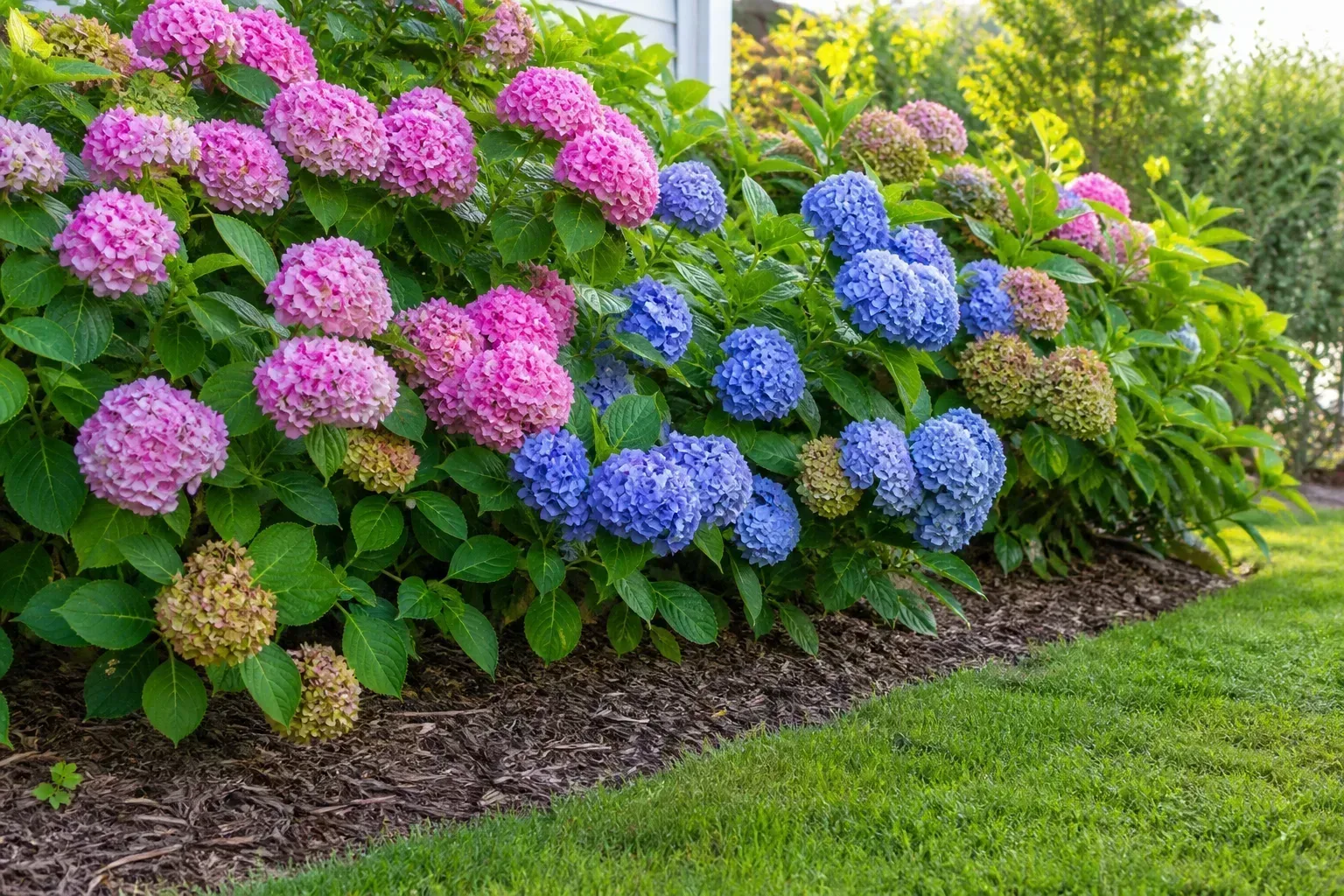
Fertilizing hydrangeas at the wrong time usually does not kill an otherwise healthy shrub in one afternoon. The more common outcome is a plant that puts energy into soft leaves and stems instead of flower buds, or a root zone that becomes too salty for roots to take up water normally. The risk rises when the soil is dry, the dose is heavy, or the application lands just before heat, drought, or cold.
The useful question is not only “Was the date wrong?” It is what product did you apply, how much reached the root zone, and what is the plant doing now? A late spring application with no symptoms calls for restraint and observation. A pile of soluble granules against the crown, followed by crispy leaf edges, calls for a recovery response.
The short answer: wrong timing changes the growth you get
For most established hydrangeas, the safest default is one light, label-directed application in early spring as active growth begins, followed by no routine feeding once the shrub is approaching dormancy. Some young or nutrient-hungry plants may receive a second light application later in spring or early summer, but the product label and your local growing season matter more than a universal calendar.
Fertilizing in late summer or fall can keep a hydrangea producing tender new growth when it should be hardening for winter. That growth is more vulnerable to frost and may not have time to mature. Feeding at the wrong time can also be a waste: nutrients applied after growth has slowed are more likely to remain in the soil, move away with water, or contribute to salt buildup than to create flowers on demand.
The other common mistake is assuming that more fertilizer fixes a hydrangea that is not blooming. The Royal Horticultural Society’s hydrangea guide says established plants generally do not need regular feeding, and that too much fertilizer encourages excessive soft, leafy growth and increases frost risk. Plants growing in light, sandy soil may benefit from a spring application, but a mature shrub in fertile soil may need compost mulch and steady moisture more than a stronger fertilizer dose. RHS guidance on feeding and growing hydrangeas supports that less-is-more approach.
Late feeding and excess fertilizer are different problems
“Wrong time” and “too much” often overlap, but they are not the same diagnosis. Timing mainly affects what kind of growth the plant makes and whether that growth has time to mature. Dose and placement determine whether fertilizer salts can injure roots and leaves.
Late feeding can create soft new growth
Nitrogen encourages vegetative growth. That is useful when a shrub is waking up and building leaves and stems, but it is not a shortcut to bigger flower heads. A late dose can stimulate pale, lush, flexible growth that is easily damaged by a cold snap. The following spring, the visible result may be dieback or fewer flowers—not because the fertilizer directly erased every bud, but because the plant made growth at a season when it could not protect it well.
This is especially important for bigleaf, mountain, and oakleaf hydrangeas, which form flower buds on older stems. Late feeding is only one possible reason for a poor bloom season, but it can add soft growth and winter injury to a plant already carrying next year’s flowering wood. A late application on a panicle or smooth hydrangea may be less likely to remove next year’s flower potential through pruning, but it still does not make fall feeding a good default.
Excess fertilizer can injure roots and leaves
Fertilizer is a concentrated source of soluble salts. When too much is applied, the soil solution can become more concentrated than the fluid inside root cells. Water then becomes harder for roots to absorb, and the plant can look wilted even though the soil is wet. Root injury also makes a hydrangea more sensitive to heat and drought.
Common signs of fertilizer burn include brown or crispy leaf margins, scorched tips, sudden wilt after feeding, premature leaf drop, stunted growth, and a white or tan residue where granules dissolved. Symptoms may begin on the leaves closest to the application area. A shrub that is simply fed late but receives the correct label dose may show none of these signs.
The Missouri Botanical Garden describes a similar pattern for salt injury: marginal burn, reduced vigor, smaller leaves or flowers, and premature defoliation. Its guidance also makes an important distinction for recovery—leaching works in well-drained soil, but heavy watering is not effective when soil is compacted or water cannot move through the root zone. Missouri Botanical Garden’s salt-injury guidance is a useful reason to check drainage before reaching for the hose.
Brown leaves and few flowers have other causes, too
Fertilizer is only one explanation for hydrangea trouble. A plant can wilt in afternoon heat and recover at dusk, scorch in reflected sun, or develop brown edges after its root ball dries. Persistently wet soil can cause root problems that look like drought because damaged roots cannot supply the leaves. Leaf spots, insect feeding, frost injury, and pruning the wrong type of hydrangea can all reduce flowers without any fertilizer being involved.
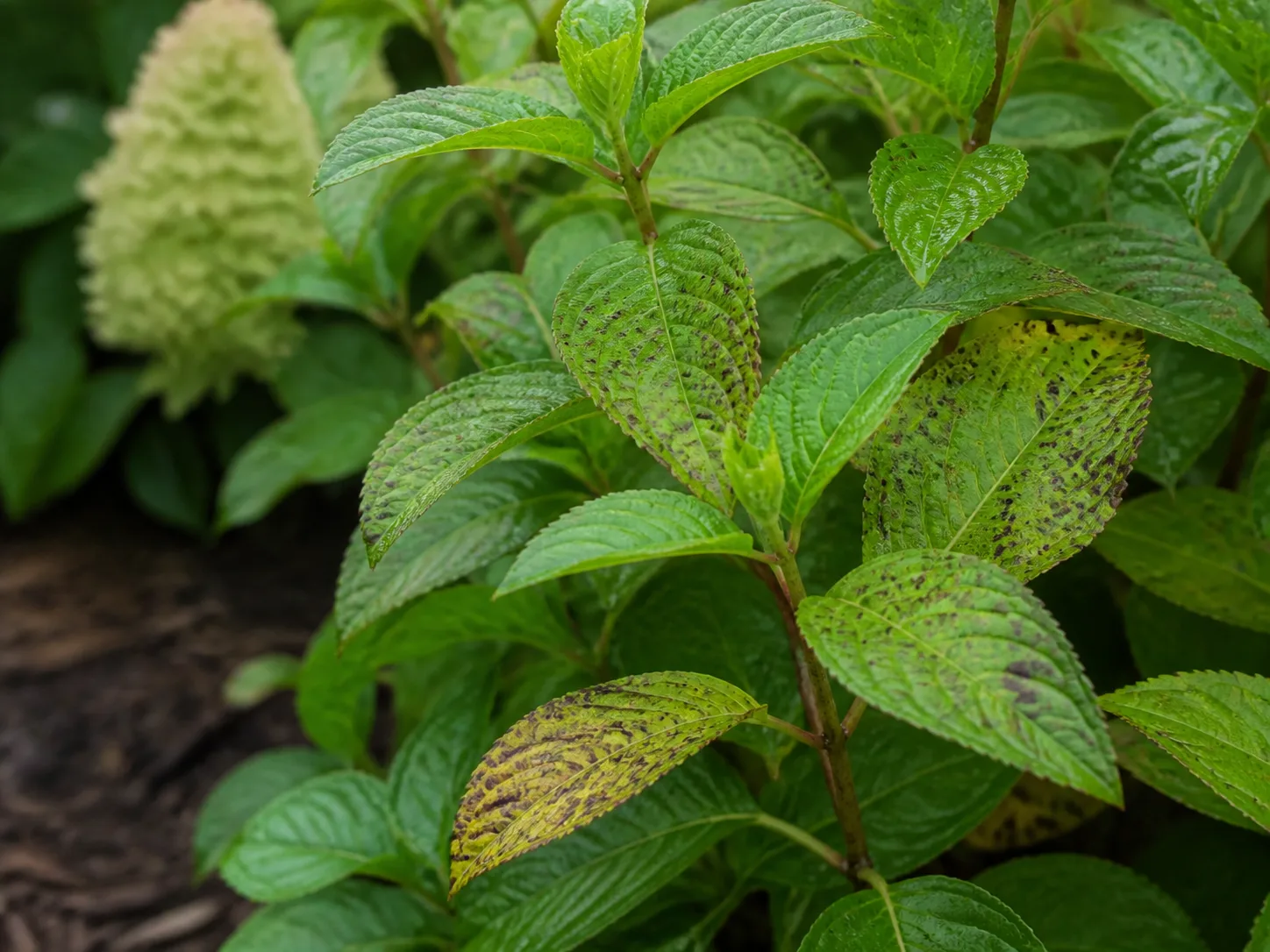
The timing of the symptom is useful evidence. Brown edges that appear within days of a heavy application point more strongly toward salt or root stress. A few leaves that wilt only at midday point more toward heat. Round or irregular lesions that spread across otherwise well-watered leaves point toward a disease or pest investigation. Do not add fertilizer simply because a hydrangea looks pale; feeding an unknown problem can make the diagnosis harder.
The best fertilizing window for hydrangeas
Spring is the default window
Apply fertilizer when the plant is beginning active growth and the soil is workable, not frozen, waterlogged, or bone dry. For many gardens, that means early to mid-spring as buds swell and new leaves emerge. Water the shrub normally before feeding if the soil is dry, then apply the product around the root zone according to its label.
A slow-release granular product may be intended for one spring application. A fast-release liquid or soluble fertilizer may be used more than once, but only at the dilution and interval on the label. The practical advice from Gardening Know How’s hydrangea fertilizing guide is to treat spring as the main feeding period and stop around August, with the exact cutoff adjusted for the local climate and product.
Newly planted hydrangeas deserve extra caution. Nursery plants may already have fertilizer in their potting mix, and roots damaged during planting need time to establish. Adding a strong dose at planting can waste fertilizer or stress the root ball. Improve the planting soil with organic matter and keep moisture even; wait to feed until the plant is established unless a local recommendation or the product label says otherwise.
The cutoff depends on climate, product, and hydrangea type
Use the plant’s growth stage as the final check. Stop routine feeding when new shoots are slowing, flowers are aging, nights are cooling, or your region is moving toward its first frost window. In a cold climate, late July or early August may be a sensible last chance for a light, label-directed application. In a long, warm growing season, the date may move slightly, but feeding through late fall is still a poor default.
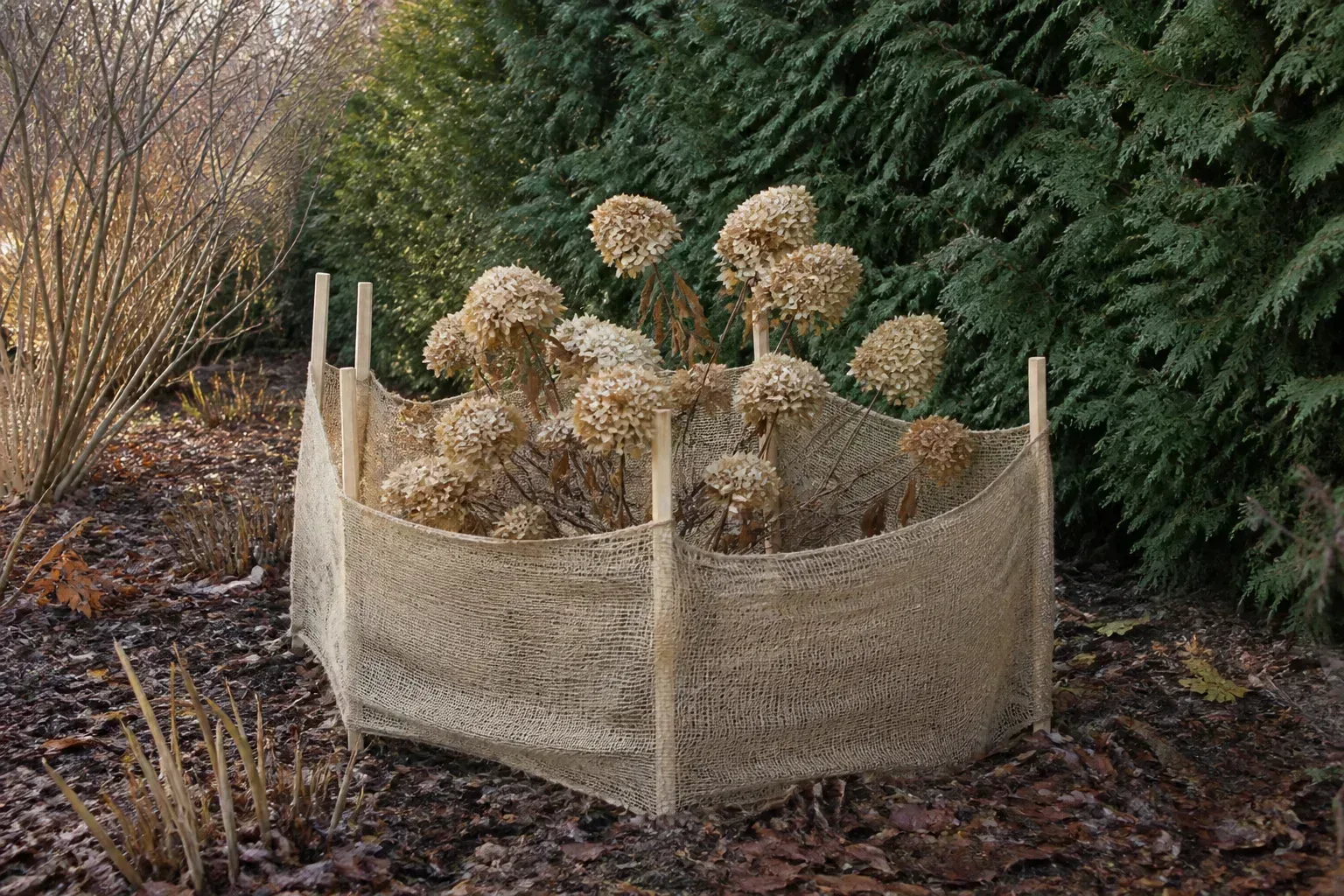
Do not use “fall fertilizer” as a rescue for a hydrangea that did not bloom. If the plant is healthy but flowerless, first identify its species or cultivar, check whether it blooms on old or new wood, review pruning, and consider light, moisture, and winter damage. A late dose cannot replace flower buds that were pruned off or killed by frost.
Choose the formula and apply it safely
Read N-P-K as a dose, not a promise
The three numbers on a fertilizer bag show the relative analysis of nitrogen, phosphorus, and potassium. They do not rank how “powerful” or “bloom boosting” the product will be for your exact hydrangea. A high first number can push leaves and long shoots; a high middle number is not automatically the answer to poor flowering, especially if the soil already has adequate phosphorus.
Start with a soil test when poor growth persists or you are considering repeated amendments. For routine care, choose a fertilizer intended for flowering shrubs or a balanced product that fits the label’s hydrangea directions. The dose, placement, water, and application interval matter as much as the printed ratio. Never combine a fertilizer with a pH amendment just because both are marketed for hydrangeas.
Flower color needs its own explanation. Bigleaf and mountain hydrangeas can shift between blue, purple, and pink as soil acidity changes aluminum availability. UMass Amherst’s hydrangea color and fertilizing guidance recommends starting with the hydrangea type and soil conditions rather than treating fertilizer as a color switch. White-flowered cultivars generally do not become blue just because more fertilizer is added.
Match the fertilizer form to the application you can control
Slow-release granules are forgiving when applied evenly at the label rate, but they can burn if piled beside the crown or left sitting on foliage. Liquid feed acts faster and is easier to spread evenly, but measuring the concentrate incorrectly can deliver a much stronger dose than intended. Spikes can create a concentrated pocket near roots and are difficult to distribute through a broad shrub’s root zone.
For most landscape hydrangeas, granules should go around the drip line, roughly beneath the outer reach of the branches, not against the stems. Sweep stray granules from leaves and hard surfaces. Cover the product lightly only if the label calls for it, and water it in according to the directions. Do not fertilize a wilted shrub in an attempt to revive it; restore moisture and diagnose the stress first.
What to do after a mistimed or excessive application
If the shrub looks normal
If you applied the correct amount during active growth and the hydrangea still looks healthy, do not try to “balance” the mistake with extra water or a second product. Write down the product, rate, and date, then pause feeding until the next label-recommended interval. Keep watering consistent, maintain a thin mulch layer away from the stems, and watch the newest leaves for burn or abnormal softness.
If the application was late but not excessive, the most useful response is usually to stop feeding and help the plant enter dormancy naturally. Do not prune healthy late-season shoots simply because they are new; wait until winter damage is visible or use the pruning window appropriate for the type. Protect the root zone with mulch, but do not keep the soil saturated.
If you see burn, wilt, or leaf drop
First, stop all fertilizer and remove any visible granules from the soil surface, mulch, stems, and leaves. Do not scrape deeply around the roots. If the product was liquid, note the concentration and whether the soil was dry when it was applied; this helps explain the severity.
Next, check drainage. In a well-drained bed, give the root zone a slow, deep watering with plain water so excess soluble salts can move below the active roots. Let the soil drain between waterings. In clay, compacted, or already soggy soil, repeated flooding can remove oxygen and worsen root damage, so improve drainage or contact a local extension service before attempting aggressive leaching.
Brown tissue will not turn green again. Remove only leaves that are fully dead or interfering with air movement, and leave partially green leaves to support recovery. Do not fertilize again until the plant is making healthy new growth; if injury was severe or the soil was repeatedly overfed, test the soil before resuming a routine.
If granules spilled or the soil drains poorly
A concentrated spill is more urgent than an application spread at the correct rate. Scoop or sweep up what you can without mixing it deeper into the soil. Rinse fertilizer off foliage with plain water, then assess whether water can move through the bed instead of pooling around the crown.
For a container hydrangea, move it where drainage is clear, remove the saucer, and run plain water through the pot slowly enough that it exits the drainage holes. Do not leave the container standing in the runoff. For an in-ground hydrangea, do not assume that “more water” is always safer: a poorly drained root zone needs oxygen as well as salt removal.
A practical recovery plan for the next month
Today: Stop feeding, remove accessible product, rinse fertilizer from foliage, and record the product and amount. Check whether the shrub is in a hot, dry, compacted, or waterlogged site.
Over the next week: Keep moisture even but not soggy. In a well-drained bed, leach a suspected salt buildup with a slow plain-water soak; in heavy soil, stop before water pools and get local advice. Do not add compost tea, lime, sulfur, iron, or another fertilizer as a countermeasure.
During weeks two and three: Inspect the newest growth, not only the damaged older leaves. Healthy new leaves and firm stems are better recovery signals than a quick return of color to burned foliage. If symptoms continue to spread while moisture is stable, inspect roots, look under leaves for pests, and compare the damage pattern with heat or leaf-spot symptoms.
By week four: If the plant is stable, resume ordinary seasonal care without fertilizer. If it is still declining, take a soil sample and clear photos of the whole shrub, the newest leaves, and the soil surface for a local extension diagnosis. Recovery time cannot be promised because it depends on dose, soil, weather, root damage, and the hydrangea’s stage of growth.
Check for look-alike problems before feeding again
Heat stress often causes a hydrangea to droop or curl its leaves during the hottest part of the day, then recover when temperatures fall. Check the soil several inches down and look again at dusk before watering repeatedly. Mulch and a better afternoon shade position can help more than fertilizer.
Iron chlorosis is another common trap. New leaves may be yellow between green veins when the soil pH is too high or roots cannot access iron. That is not a signal to pour on a general fertilizer. Test the soil and confirm the hydrangea type before changing pH, applying sulfur, or using a chelated iron product.
Root rot can produce yellow leaves and wilt even when the soil is wet. A sour smell, persistently saturated soil, slow growth, or dark, soft roots points away from fertilizer burn. Improve drainage and avoid repeated watering until the root-zone problem is understood.
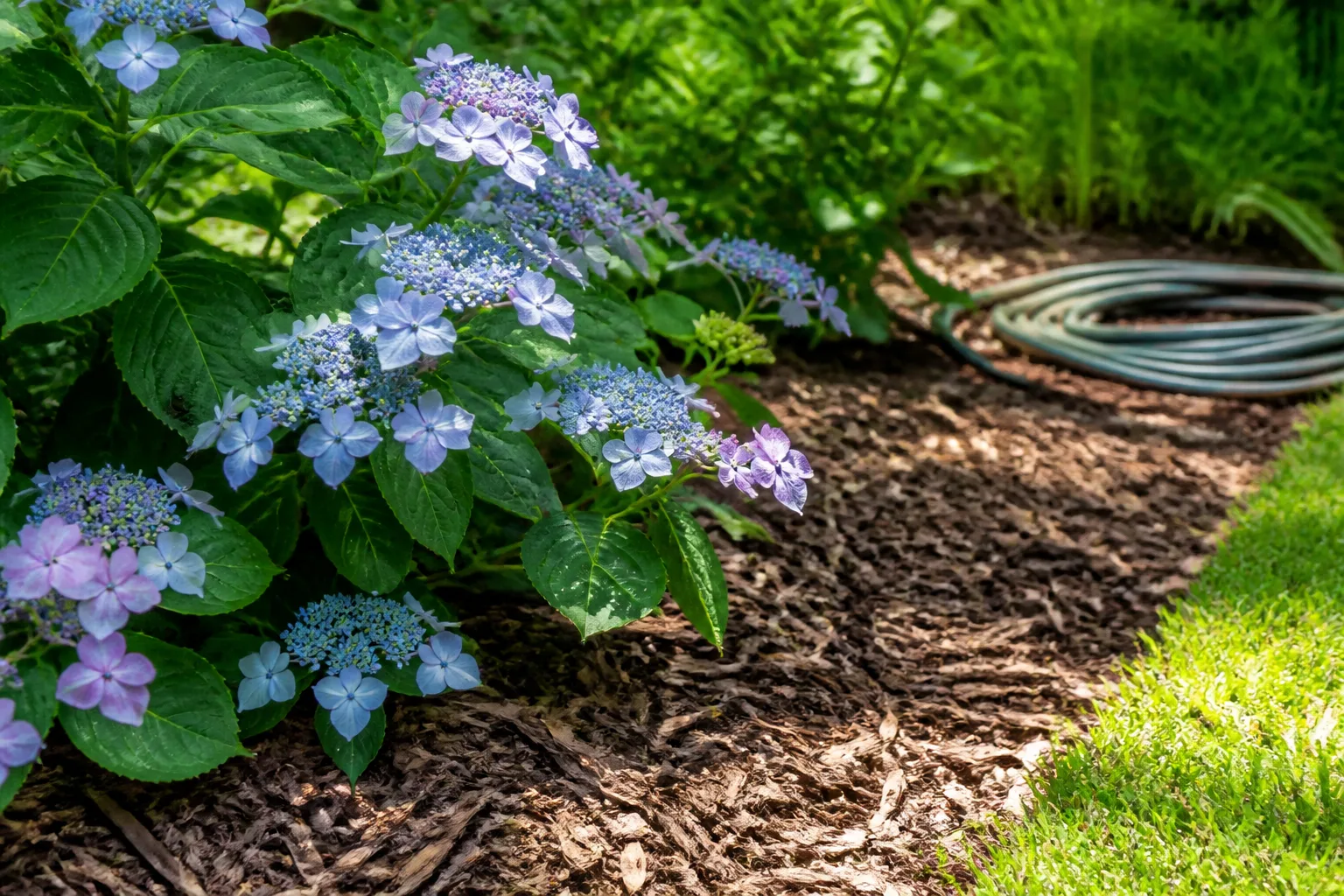
Finally, check pruning and winter history. Bigleaf, mountain, and oakleaf hydrangeas may lose flowers after late pruning or cold damage to old wood. Panicle and smooth hydrangeas flower on new wood, but they can still fail after drought, poor light, or root stress. A fertilizer label cannot tell you which of those problems is present.
Hydrangea-type exceptions that change the decision
The basic feeding window is similar across hydrangeas, but the consequences of a mistake are not identical. Bigleaf and mountain hydrangeas may change flower color with soil pH and aluminum availability, so a gardener trying to make flowers blue may accidentally add several amendments at once. Test first, change one variable at a time, and do not assume a color shift proves the plant needs more nutrients.
Panicle hydrangeas such as ‘Limelight’ and smooth hydrangeas such as ‘Annabelle’ flower on new wood. They can tolerate more routine pruning in the correct season, but that does not make them immune to fertilizer burn or late-season soft growth. Keep feeding tied to active growth and the product label.
Oakleaf hydrangeas flower on older stems and also benefit from avoiding late pruning and late-season growth pushes. Container hydrangeas need closer monitoring because a small volume of potting mix can dry quickly and accumulate salts quickly. Their drainage holes, not the pot’s decorative appearance, determine whether flushing is safe.
The NC State Extension Plant Toolbox profile for bigleaf hydrangea is a useful reference for the species’ shade, moisture, drainage, color, and old-wood versus reblooming behavior. Use the plant’s identity to refine pruning and color decisions, but keep the fertilizer rule simple: feed active growth lightly, then stop before the shrub is preparing for dormancy.
Conclusion
Fertilizing hydrangeas at the wrong time most often creates one of two problems: late, tender growth that is vulnerable to cold, or excess fertilizer salts that stress roots and scorch leaves. A late application is not automatically an emergency, and a brown leaf is not automatically fertilizer burn.
Start with the evidence in front of you. If the shrub looks normal, stop adding products and return to a label-based spring schedule. If you see crisp margins, sudden wilt, leaf drop, or spilled granules, remove what you can, leach only where the soil drains well, and protect the root zone from additional heat or drought. If the symptoms do not fit the timing, investigate moisture, pH, disease, pests, pruning, and winter damage before feeding again.
The most reliable hydrangea fertilizer routine is deliberately modest: a soil-aware spring application when the plant is actively growing, careful placement around the drip line, consistent moisture, and no late-season attempt to force flowers. Healthy roots and correctly timed growth do more for next year’s blooms than a stronger dose.



