How to Cut Your Lawn Before Winter for a Healthier Yard Next Spring
Learn when to stop mowing, the safe final height for cool- and warm-season grass, and how to combine leaf cleanup for a healthier spring lawn.
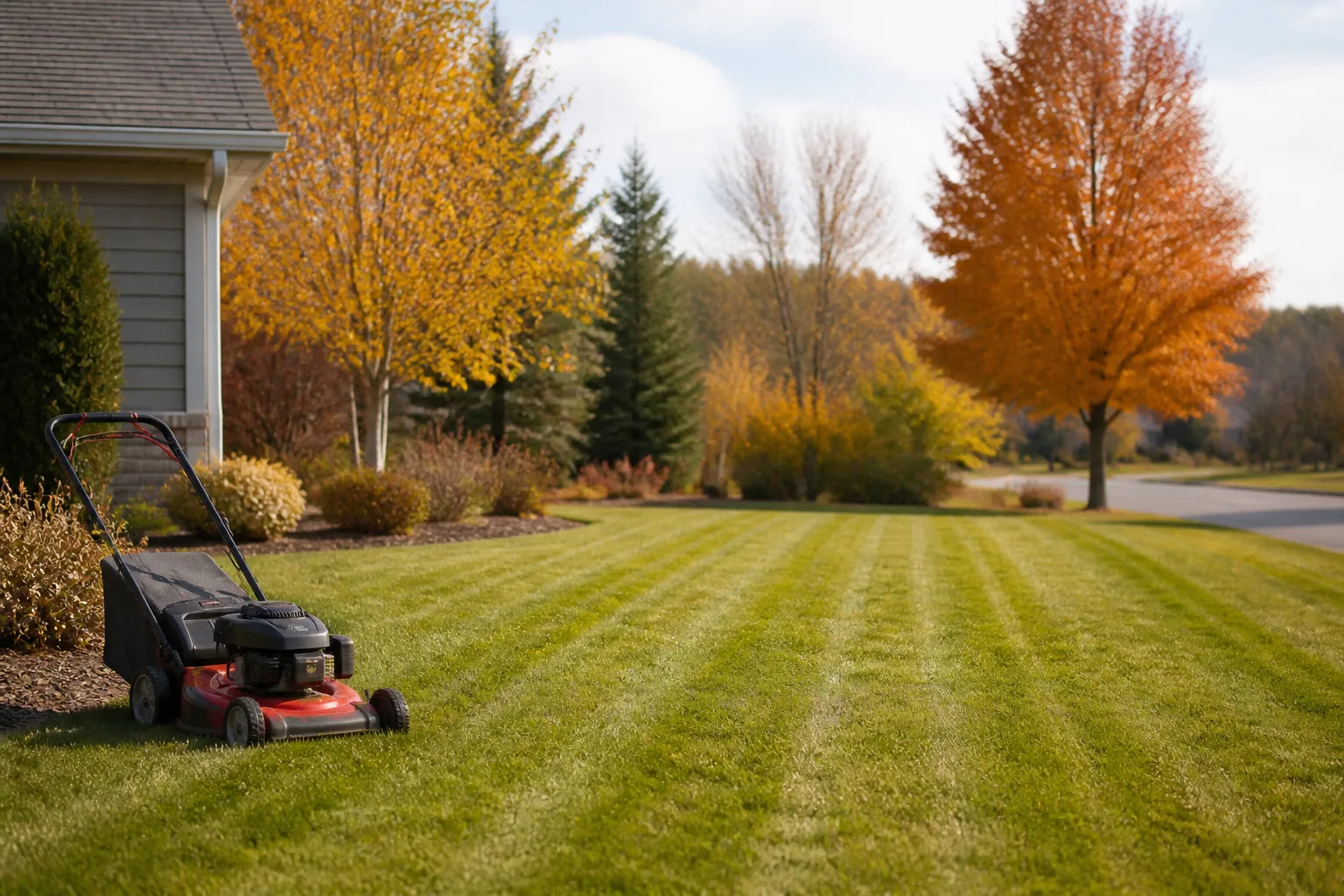
You do not need a perfect lawn in November. You need a final cut that leaves turf short enough to survive snow and long enough to protect crowns—then a clean handoff to the other fall jobs that still matter after the mower goes into the shed. Get the height and timing wrong and spring shows up as matted tan patches, vole tunnels, or thin strips that never greened evenly. Get them right and most cool-season lawns wake up looking like themselves again without a rescue renovation.
The Quick Answer: Your Final Cut Sets Next Spring’s Baseline
Stop mowing when the grass stops growing, not when the calendar says so. For cool-season lawns—Kentucky bluegrass, tall fescue, fine fescue, perennial ryegrass, and the mixes common in the Northeast, Upper Midwest, and Pacific Northwest—that usually means soil temperatures settling into the low 40s °F and the lawn holding the same height for one to two weeks after a cut. Your final mowing height on those lawns should land around 2 to 2.5 inches, reached gradually over the last two or three passes—not chopped in a single scalping session.
Warm-season lawns—bermudagrass, zoysia, St. Augustinegrass, centipedegrass—follow the opposite height logic going into dormancy. Finish the season slightly higher than your summer setting (often about 2.5 to 3 inches depending on species), not shaved to the crown. Warm-season turf stores carbohydrates in stubble before brown-off; cutting it lawn-golf short in fall weakens winter survival where cold snaps hit.
Whatever grass you grow, the last mow is never the whole story. Leaves, late fertilizer, watering until freeze, and aeration while grass is still actively growing all belong in the same fall plan. This guide walks through how to cut your lawn before winter in the right sequence so you are not redoing the job in mud next March.
Why Fall Mowing Height Matters More Than Summer Height
Summer mowing is about weekly maintenance and weed suppression. Fall mowing is risk management. The blade height you carry into winter decides how much air and light reach the crown zone under snow, whether leaves mat into a wet blanket, and how quickly fungi like gray and pink snow mold find a foothold when the ground stays cold and damp for weeks.
Turf physiologists and extension specialists agree on the broad pattern: grass that enters winter too tall is more likely to lodge, mat, and hold moisture against leaf tissue. Grass that enters winter too short loses the insulation and photosynthetic tissue crowns need during open, windy winters. Fall is the narrow window where you trade a little summer-style lushness for structural resilience.
Snow Mold, Matting, and the Risk of Leaving Grass Too Tall
Snow mold is not a single disease—it is a winter symptom cluster driven mainly by prolonged snow or wet cover on unmowed or matted turf. Penn State Extension describes gray snow mold (Typhula incarnata) as producing large tan, matted patches where snow lingered; the fungus typically kills leaf blades but often spares crowns on mature cool-season turf. Pink snow mold (Microdochium nivale) can injure crowns more deeply and is the one that more often pushes you toward spring overseeding on thin lawns.
You cannot mow your way out of every snow mold season—deep drifts, piled plow snow, and weeks of cover still create problems—but a final cut in the 2 to 2.5 inch range on cool-season grass removes the floppy top growth that folds flat and traps humidity. That is the same reason raking leaves matters: anything that smothers blades in a damp, dark layer all winter invites the fungi described in our guide on what snow mold is and how gray and pink types differ.
Tall fall grass also gives voles and field mice cover to tunnel under snow and chew crowns—a damage pattern you may not notice until melt reveals runways and dead strips. If you have ever found spring turf that looks mysteriously thin along fence lines or under old snow piles, overwintering rodents on long grass are a common culprit.
Scalping and the Opposite Problem—Grass Cut Too Short
Scalping—dropping the deck several notches in one pass to “finish for the year”—is the most expensive fall shortcut. It exposes crowns to winter desiccation, reduces root reserves, and on cool-season turf can create thin spots that weed seeds exploit the following spring. University of Minnesota Extension emphasizes removing no more than one-third of leaf blade length per mowing; violating that rule in late fall is worse than in June because recovery slows as temperatures drop.
The fear of snow mold pushes some homeowners to cut below 2 inches. On most Kentucky bluegrass and tall fescue lawns, that is unnecessarily aggressive unless you are deliberately managing a low-cut athletic turf program and have been stepping down all season. Below about 2 inches, you gain little additional snow-mold protection while increasing crown exposure—especially on uneven ground where the mower deck already rides low in dips.
If you missed weeks of mowing and the lawn is overgrown, the fix is staged lowering, not one heroic cut. If winter arrives before you reach 2.5 inches, prioritize dry weather and the one-third rule over hitting a perfect number once. Our winter lawn care for long grass guide covers the recovery path when the ground freezes before you finish.
Cool-Season vs Warm-Season: Different Winter Rules
Grass type is the first fork in the road. Treating bermudagrass like Kentucky bluegrass in November is how transition-zone homeowners end up with spring dead patches and a confused search history.
Final Heights for Kentucky Bluegrass, Fescue, and Ryegrass
Cool-season species share a similar fall target band but not identical summer ranges:
| Grass type | Typical summer mowing height | Final fall target before dormancy |
|---|---|---|
| Kentucky bluegrass | 2.5–3.5 in | 2–2.5 in |
| Tall fescue | 3–4 in | 2–2.5 in |
| Fine fescue (shade mixes) | 2.5–3.5 in | 2–2.5 in; mow high in shade until step-down |
| Perennial ryegrass | 2–3 in | 2–2.5 in |
How to get there: Over the last two or three mowings while growth is still active, lower the deck about ½ inch per pass until you reach the target band—never more than one-third of blade length removed at once. If you normally mow tall fescue at 3.5 inches, a reasonable sequence might be 3.5 → 3.0 → 2.5 → 2.25 across four weeks, weather permitting.
Fine fescue in heavy shade is the main exception within cool-season turf: keep it toward the upper end of the fall range if the site is dark and trees hold leaves late. Shade-stressed grass needs more leaf area, not less.
What to Do With Bermudagrass, Zoysia, and Other Warm-Season Lawns
Warm-season lawns brown and go dormant on a different clock—often slowing sharply once soil temperatures fall into the mid-50s °F, weeks before cool-season turf in the same zip code looks finished. For these grasses, the final cut raises or holds height, not lowers it:
| Grass type | Typical summer height | Final fall approach |
|---|---|---|
| Bermudagrass | 1–2 in | Finish ~½ in higher than summer; avoid scalping before dormancy |
| Zoysia | 1–2 in | Similar slight raise; do not shave before first hard frost |
| St. Augustinegrass | 2.5–4 in | Maintain upper end of range into dormancy in frost-free zones |
The logic is carbohydrate storage: warm-season species need blade tissue to photosynthesize until growth stops. A slightly taller stubble blanket also moderates crown temperature swings during the first frosts. Once fully dormant and brown, do not scalp trying to “clean up” the yard—you are cutting dead leaf tissue off living crowns for cosmetic neatness and creating entry points for winter weeds on thin turf.
In the Deep South and Gulf Coast where warm-season grass may never fully stop growing, shift to a longer mowing interval (every 10–14 days) rather than chasing a single “last mow” date.
When to Stop Mowing (and When One More Cut Is Due)
The reliable rule across regions: mow until growth stops, then make sure height is where you want it for winter. Picking Halloween, Thanksgiving, or the first frost as a universal stop date fails in both directions—warm autumns need November cuts in Minneapolis; early cold years may finish growth by mid-October in the mountains.
Soil Temperature and Growth Signals That Beat the Calendar
Iowa State University Extension ties late-season turf growth to soil temperature more than air temperature. For cool-season grass, shoot growth slows sharply once soil at a 2-inch depth holds in the low 40s °F and effectively stalls below about 40 °F. A simple soil thermometer—or a probe thermometer pushed a few inches into open soil—beats guessing from a weather app that only reports air temps.
Visual signals that confirm the last mow window:
- The lawn looks the same height 7–14 days after mowing.
- Daytime highs trend below 50 °F for a sustained stretch, not one cold weekend.
- Grass color dulls from active summer green to late-fall olive or bronze before full dormancy.
- Perennials and woody plants in your yard are finishing their fall show—often overlapping with peak leaf drop.
Warm-season lawns tell you earlier: growth becomes patchy, frost browns leaf tips, and mowing frequency naturally stretches from weekly to biweekly to “not worth firing up the mower.”
After the First Frost: Still Mowing or Too Late?
A light frost is not a stop sign. Cool-season turf often keeps growing through occasional frosts when afternoons warm above freezing. The dangerous combination is mowing while blades are frozen or frost-coated—ice crystals make tissue brittle, and mower wheels and blades tear rather than cut cleanly. You get brown footprints and tire tracks that persist into spring.
Safe practice: wait until afternoon thaw on a dry day, confirm blades bend without snapping, and mow then. If your schedule only offers frozen mornings until the ground freezes solid, skip the cut and accept spring cleanup rather than damaging crowns for a marginal height gain.
If a warm spell in late November or December pushes new growth after you stored the mower, that was not your final mow. Grass that adds an inch or more still needs one more dry pass before persistent freeze—otherwise you carry exactly the matting risk you were trying to avoid. Check the lawn every week or two until the ground freezes.
How to Execute the Final Cut Without Stressing Turf
The last pass should look like your best summer mow: even height, sharp blade, dry turf, clippings dispersed—not clumped wet mats along the wheel lines.
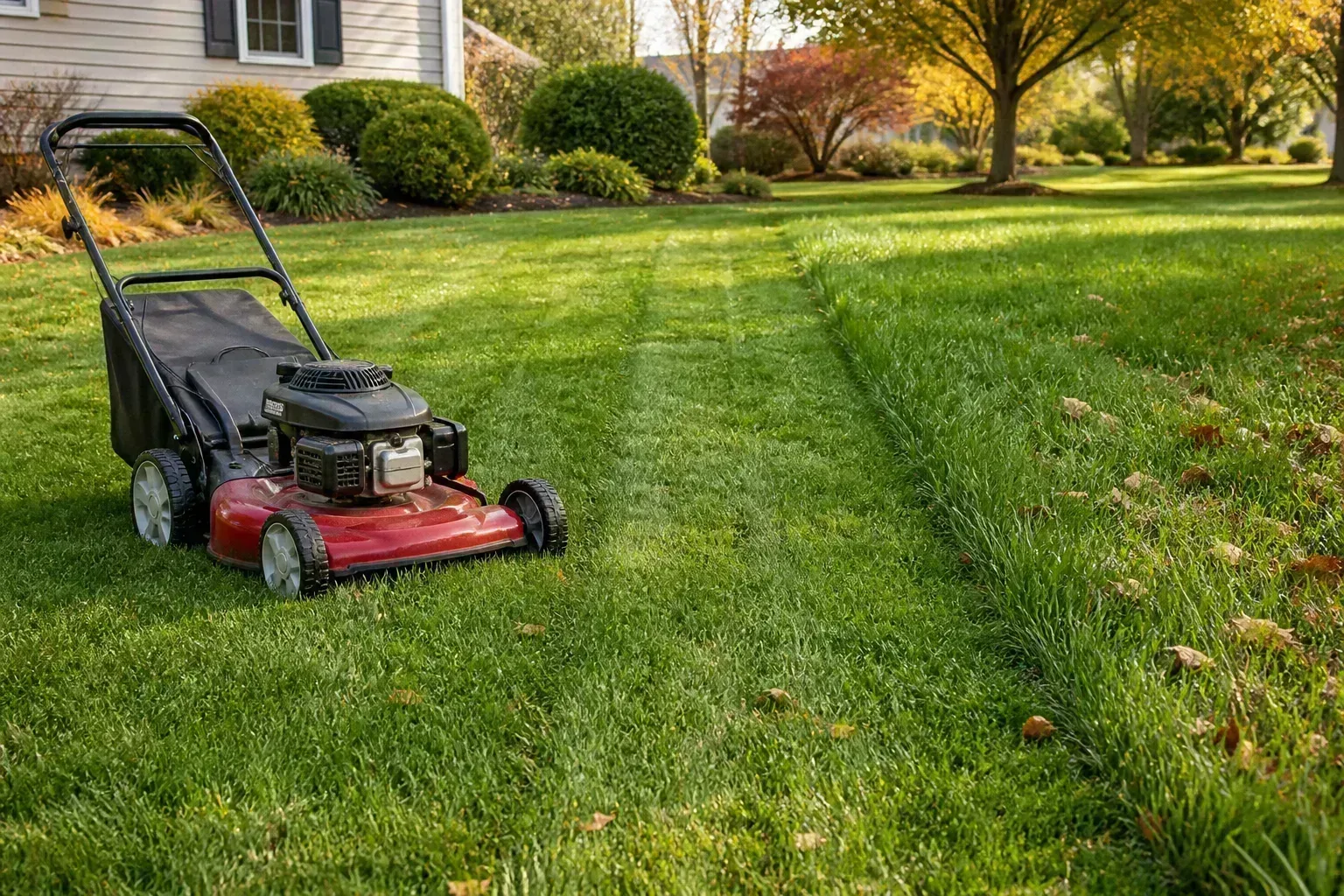
Step Down Gradually Using the One-Third Rule
The one-third rule means never removing more than one-third of the visible blade length in a single mowing. If grass is 4.5 inches tall and your winter target is 2.25 inches, you cannot get there in one cut without stress. Work backward:
- First pass: 4.5 → ~3.0 in
- Second pass (several days later, if still growing): 3.0 → ~2.0 in
- Touch-up only if growth continues and height creeps above 2.5 in before freeze
When time is short before a forecast hard freeze, prioritize dry conditions and partial lowering over perfect final height. A lawn left at 3 inches through winter is easier to fix in spring than a scalped lawn at 1 inch with exposed crowns.
Mower Settings, Sharp Blades, and Dry-Grass Rules
Sharpen or replace blades before the last cut of the year. Dull blades fray leaf tips, and frayed tissue loses water faster going into winter—plus it browns cosmetically even when crowns are healthy. University of Minnesota Extension mowing guidance treats sharp blades as basic disease prevention, not a pro-only detail.
Mow dry. Wet fall grass clumps, smothers strips, and loads the deck unevenly. If dew is heavy, wait until early afternoon. If leaves are wet, either wait or bag instead of mulching—wet leaf paste on turf is worse than unmowed height for a few days.
Change direction from your previous pass to reduce wheel rutting on soft fall soil. Keep the discharge chute aimed so clippings spread thinly; double-cut only when clippings are small and dry.
Skip the cut when soil is saturated and ruts easily—you will pay for compaction all next year. One week of extra height beats ruts.
Combine Mowing With Leaf Cleanup the Smart Way
Fall mowing and leaf removal are the same calendar problem: both must happen while grass is still standing and preferably before persistent wet cover. You have three efficient paths:
Mulch in place with a mulching mower when leaves are dry and the layer is thin—roughly less than an inch deep before you mow. Shredded pieces filter between blades and break down faster than whole leaves. Stay ahead of drop; trying to mulch a deep maple dump in one pass smothers turf exactly like leaving whole leaves untouched. For thickness rules and when to bag instead, see our comparison of mulching vs bagging vs leaving leaves.
Bag while you mow when leaves are wet, heavy, or already thick. The bagger collects whole and shredded material for compost or municipal yard-waste programs without leaving a suffocating mat.
Rake or blow first, then mow when trees dump faster than your weekly schedule. Clearing the majority before a height-lowering pass keeps the deck from plowing wet packs into the soil line.
Whatever method you choose, the goal is identical: no continuous leaf or clipping blanket into winter. Snow on top of a leaf mat is one of the fastest routes to gray snow mold circles in spring—the tan crusted patches described in our signs snow damaged your lawn guide.
What to Do Before and After Your Last Mow
Mowing is the visible finish line; several fall tasks bracket it.
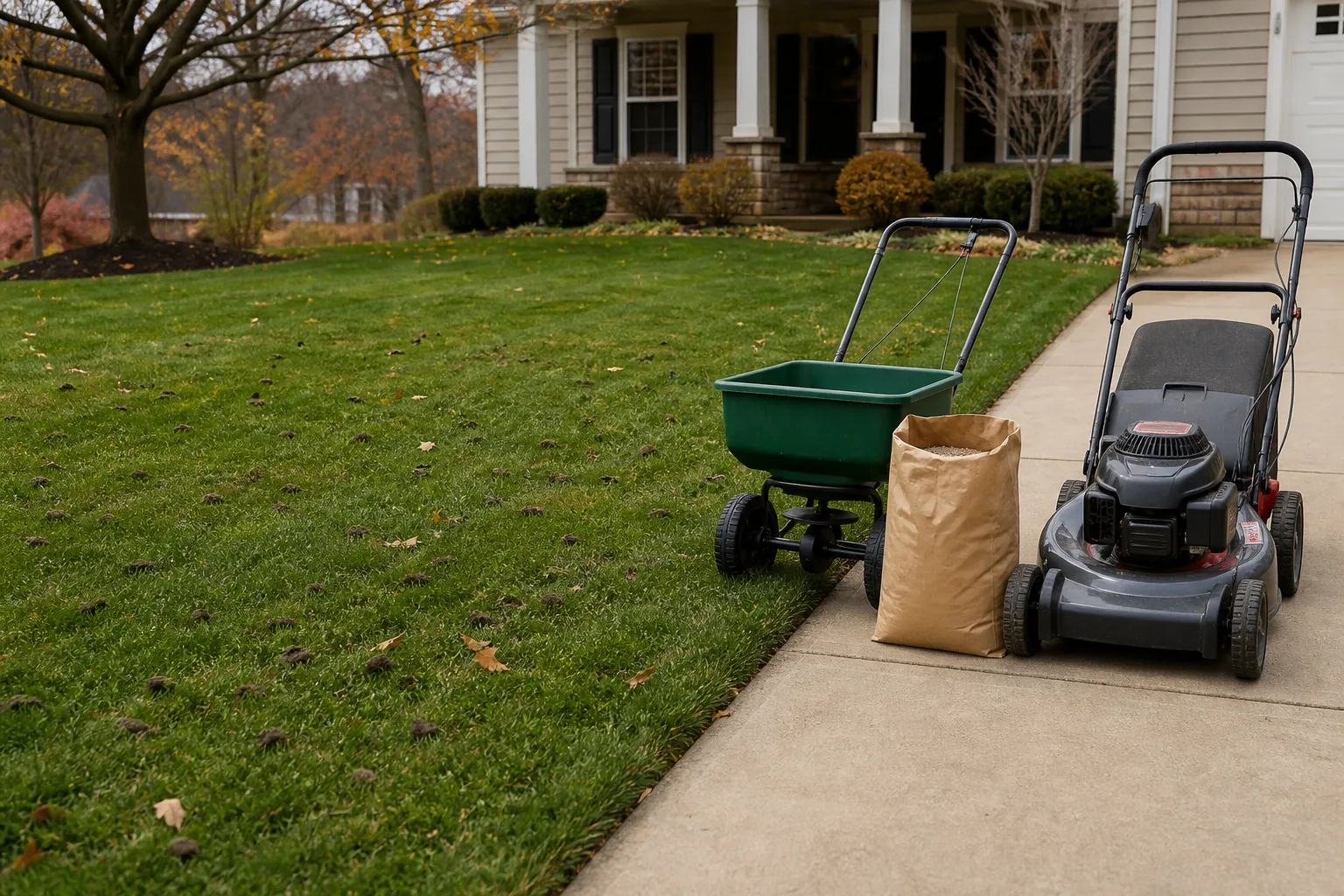
Before the final cut, consider core aeration if your lawn is compacted, thick with thatch, or saw heavy foot traffic all summer. Aerate while cool-season grass is still actively growing—typically early to mid-fall in northern zones—so holes heal before freeze. Aerating frozen or fully dormant turf wastes effort and can tear crowns.
Aeration, Fertilizer, and Watering Timing
Fall fertilizer (winterizer) works best when roots are still taking up nutrients but top growth is slowing—often the same two-week window when you are making your last height adjustments. Use a slow-release or labeled winterizer product rather than a heavy dose of fast-release nitrogen right before snow. University of Wisconsin–Madison Extension notes that late surges of succulent growth from high nitrogen can increase Typhula blight (gray snow mold) susceptibility because tissue does not harden off before cold, wet cover arrives.
Keep watering until the ground freezes if rainfall is scarce. Crowns enter dormancy dehydrated more often than homeowners expect—especially after dry Octobers on sandy soil. Once irrigation systems are winterized, a hose deep-watering on warm late-fall days still helps if soil is powder-dry.
After the last cut:
- Continue leaf patrol until trees are bare or snow covers the ground.
- Winterize the mower: clean deck, stabilize fuel or run battery storage protocol, note blade condition for spring.
- Avoid traffic on frost-frozen turf—walking the same path daily creates spring brown lines.
- Plan spring triage, not panic: most established cool-season lawns recover from imperfect fall cuts with modest nitrogen and spot overseeding.
Common Fall Mowing Mistakes Homeowners Regret in April
Choosing a calendar date instead of growth. Warm Novembers need another cut; cold Octobers may finish early. Watch the lawn, not the holiday schedule.
One-pass scalping after vacation. The brown stubble you see in November is still visible as thin turf in May. Step down or accept slightly tall grass over crown damage.
Mowing frosted turf for convenience. Tire tracks do not heal until spring green-up replaces damaged tissue.
Mulching a foot of wet leaves. You create the smothering layer you thought mulching would prevent.
Ignoring a post-“final” warm week. An inch of late growth before freeze is worth one more dry mow.
Fertilizing like it is still July. Fast nitrogen on lush late growth trades a dark green weekend for snow mold risk and mower fuel spent cutting tissue that should have hardened off.
Skipping sharp blades because “the season is over.” The last cut is when clean tissue matters most.
Conclusion
Cutting your lawn before winter is less about finding a mythical “last mow day” and more about reading when growth actually stops, lowering cool-season height to roughly 2 to 2.5 inches in stages, holding warm-season turf slightly higher into dormancy, and pairing the cut with leaf management, sane late fertilizer, and water until freeze. Sharp blades, dry grass, and respect for the one-third rule matter as much in November as in June—maybe more, because recovery time is gone.
Do those jobs in order and spring starts with green-up instead of snow mold archaeology. Miss the window and you still have options: our guides on long grass through winter, snow damage signs at melt, and snow mold identification pick up where fall timing left off. The best spring lawn still begins with the last fall pass you make when the thermometer—and the grass—tell you the season is actually done.



