Should You Remove Weeds Before First Frost?
Should you remove weeds before first frost? Learn which weeds to pull, which frost will kill, how to protect soil, and how to dispose of roots safely.
If you skip fall weeding, your garden will not suddenly fail when the first frost arrives. Some tender summer annuals will collapse on their own, and a few plants you call weeds may actually be welcome volunteers. But leaving every weed in place is a poor gamble: seed-bearing plants can replenish the soil seedbank, perennial weeds can keep their roots alive underground, and cool-season weeds may already be preparing for an early spring start.
The useful answer is not “pull everything before a particular date.” It is to remove the weeds that can create a bigger problem, leave plants that serve a purpose, and stop when cold or wet soil makes the work damaging. That approach gives you most of the benefit of fall cleanup without turning the last mild days of the season into a frantic attempt to make the garden perfectly bare.
The short answer: remove the risky weeds, not every plant
You should remove weeds before the first hard freeze when they are flowering, carrying seed, spreading through roots, or competing with plants you want to keep. Fall is often a practical time to do this because the soil may be softened by rain, summer vegetation is thinning, and many weeds are easier to see before leaves cover the bed.
The best timing is therefore based on plant stage and soil condition, not a calendar date. A small chickweed rosette in damp soil, a dandelion with a deep root, and a dry crabgrass plant that has already completed its life cycle deserve different decisions. The Royal Horticultural Society’s advice similarly emphasizes identifying how an unwanted plant grows before choosing whether and how to remove it (RHS: How to weed a bed).
If you have only 20 minutes, do not spread that time thinly over every square foot. Cut or pull seed heads first, remove the most persistent living perennials next, and finish by covering the exposed soil. That sequence protects the following spring more effectively than cosmetic tidying alone.
What frost does—and doesn’t—do to weeds
Frost is a useful filter, but it is not a garden cleanup crew. It can kill the foliage of tender summer annuals, yet the seeds those plants dropped may remain viable in the soil. It can also make a perennial look dead while its crown, taproot, rhizomes, or other underground structures remain capable of producing new growth.
Colorado State University Extension notes that several broadleaf and grassy summer annuals, including purslane, knotweed, pigweed, crabgrass, and foxtail, may be killed by a couple of hard frosts. The same guidance says that other weeds, such as dandelion, plantain, thistle, and bindweed, can remain targets for fall control. This distinction is especially important in mixed garden beds, where a brown top does not tell you what is happening below ground (PlantTalk Colorado: Fall lawn weed control).
Seed heads can turn one missed plant into spring work
The most urgent fall weed is often the one that is already setting seed. Pulling a seed-bearing plant after the seeds are mature may remove the parent but still leave a crop of future seedlings behind. The Royal Horticultural Society gives groundsel as a striking example: a large plant can release about 38,000 seeds, which is why autumn bed clearing is a chance to stop seed production before it spreads (RHS: Saying goodbye to weed seeds).
Look for upright stems, spent flowers, fluffy seed structures, burs, or seed capsules. If you cannot identify the plant, avoid shaking it over the bed. Cut the seed head into a bag or bucket first, then remove the rest of the plant with as little disturbance as practical. That small change in handling prevents the cleanup itself from scattering the material you are trying to contain.
Perennial roots can survive after the tops collapse
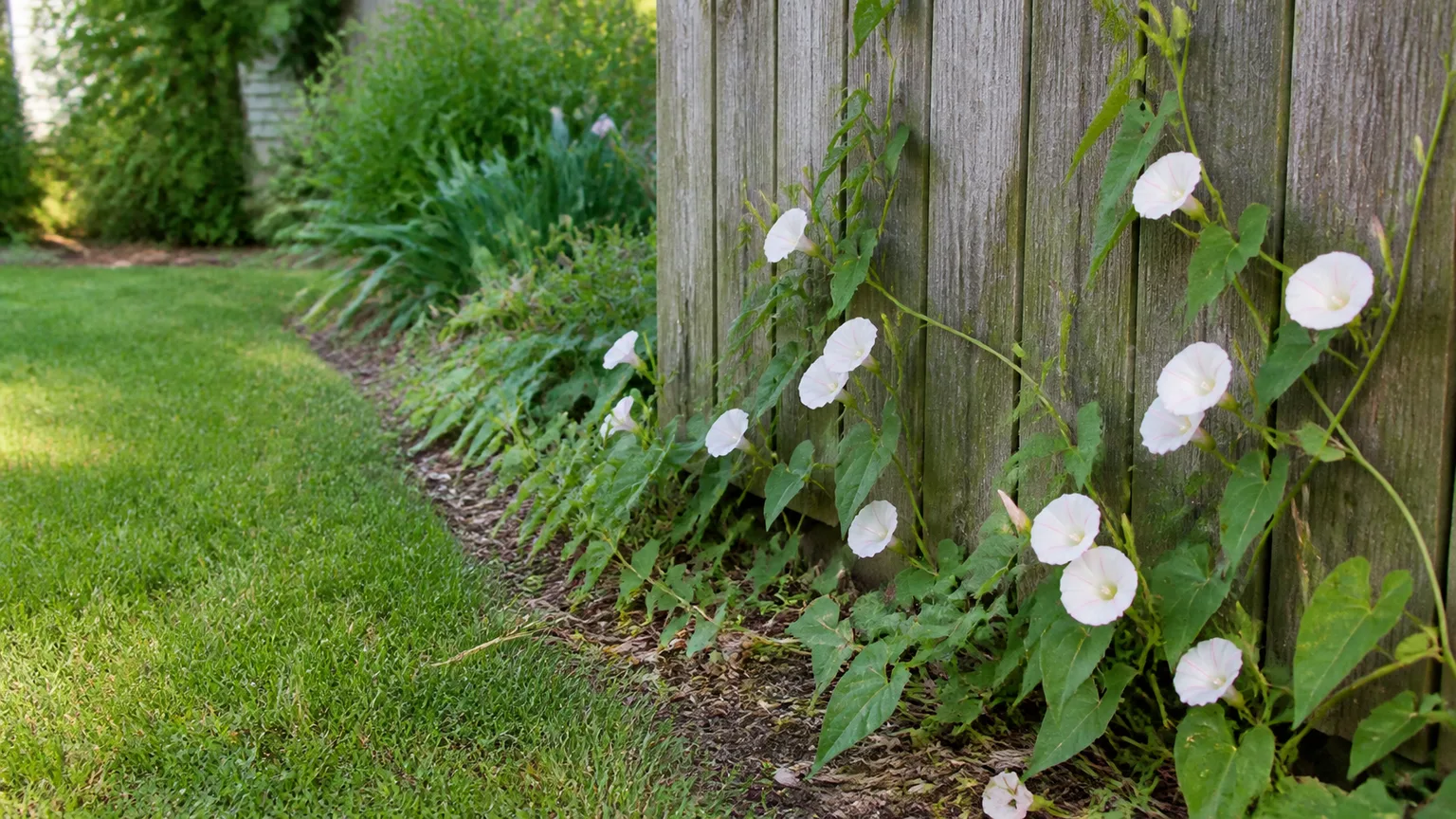
Perennial weeds return from living crowns, taproots, rhizomes, or creeping stems. Dandelion, bindweed, thistle, and quackgrass are familiar examples, but the important feature is not the name; it is the presence of a persistent underground system. A frost-damaged top may be less visible while the root remains ready to grow when temperatures and moisture improve.
For a small infestation, fall is a good time to loosen the soil and remove as much of the root system as you can. Use a hand fork rather than chopping through the root with a spade. The RHS warns that some perennial weeds can regrow from root sections, so lifting the plant carefully is more useful than breaking it into several pieces. If the weed is woven through a prized perennial, repeated cutting of the shoots may be safer than tearing apart both root systems.
Do not interpret one successful dig as eradication. Persistent perennials often need follow-up checks in spring and summer. Your fall goal is to reduce the root mass and prevent seed production, not to promise that a difficult patch will disappear after one afternoon.
Winter annuals may already be established
Some weeds use the cooling season as their growing season. Chickweed, hairy bittercress, henbit, purple deadnettle, and annual bluegrass can germinate in fall, remain small through winter, and grow rapidly as soon as spring conditions return. By the time a gardener sees them flowering, they may already be competing with early vegetables and ornamentals.
This is why “the frost will kill them” is an unreliable rule. A hard freeze may damage a plant’s leaves without ending its life cycle, and cold exposure can be part of the trigger that helps some seeds germinate later. Kansas State University Extension describes fall-germinating broadleaf weeds as small plants that overwinter and then flower quickly in spring, making the young stage easier to manage (K-State: Fall is the time to control broadleaf weeds).
In vegetable beds, the practical move is to inspect the surface after harvest and again after the first cool rains. Pull small rosettes before they root deeply, or hoe them just below the soil surface on a dry day. In an established border, remove winter annuals only where they compete with a desirable plant or are likely to seed heavily.
A clear bed is easier to inspect and protect
Fall weeding also improves the quality of the work you do afterward. When weeds are out of the way, you can see damaged stems, volunteer seedlings, irrigation problems, rodent holes, edging failures, and plants that need support. You can apply mulch evenly instead of laying it over a hidden mat of living weeds.
That benefit is about access and visibility, not soil sterilization. A bare, repeatedly cultivated bed is not automatically healthier than a planted or mulched one. Once the priority weeds are out, protect the surface rather than continuing to disturb it. Mulch, a suitable cover crop, or an intentional groundcover can reduce new opportunities for weed seedlings while leaving soil structure more stable.
Which weeds deserve priority before frost
Use this order when time is limited: seed-bearing plants first, persistent perennials second, and small winter annuals third. Then revisit the bed only if the soil remains workable and the plants are still growing. This ranking captures the biggest likely consequence of waiting without pretending that every weed is equally urgent.
Pull or cut anything flowering or carrying seed
An annual weed that has not flowered is usually a simpler problem than the same plant with mature seed. Remove it before the seed stage whenever possible. If it is already carrying seed, contain the top before pulling, and do not toss the entire plant onto bare soil where it can dry, shed, or root again.
Seed-bearing weeds are not limited to tall plants. Low growers can flower beneath vegetable leaves, and a plant less than a foot tall may still set viable seed. Walk the edges of beds, compost bays, fence lines, and paths where weeds escape notice. The goal is to interrupt reproduction, not merely to make the center of the garden look neat.
Dig persistent perennial weeds while soil is workable
Moist soil gives a hand fork or narrow weeder a better chance of lifting a root intact. Work slowly around the crown, follow the root down, and loosen the soil before pulling. If a long root breaks, remove the visible pieces and mark the spot for a spring check rather than assuming the problem is solved.
Avoid broad tilling as a shortcut in a bed containing bindweed, mint, quackgrass, or other weeds that can regenerate from fragments. Chopping roots may make more planting pieces than it makes dead weeds. The practical alternative is targeted digging, repeated removal of new shoots, or a light-blocking cover where the bed can remain unused for a period.
If you are considering an herbicide, do not transfer lawn advice directly to a mixed border or vegetable plot. University extension recommendations are crop-, weed-, product-, and timing-specific. Fall applications can work best on some actively growing perennial weeds, but cold, drought, frost damage, dormant foliage, drift, and label restrictions all matter; read the current product label and use the narrowest appropriate treatment. The U.S. EPA describes integrated pest management as combining methods, which is a better starting point than reaching for a spray as the first response (EPA: Lawn and garden pest management).
Keep intentional natives and useful volunteers
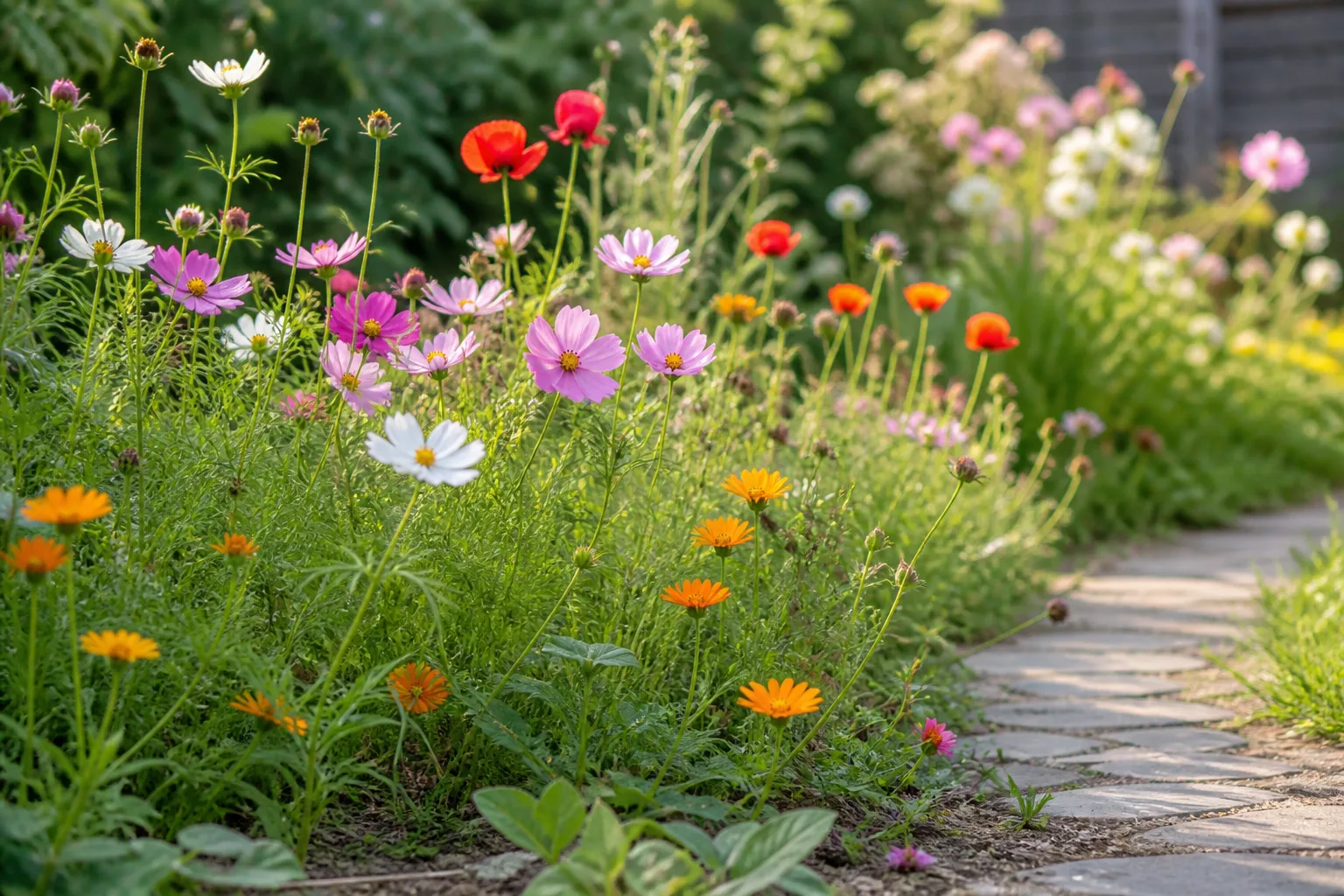
“Weed” means a plant growing where it is not wanted, not a botanical category. A native aster seedling in a wildlife border, clover in a low-competition area, or a self-sown flower you want to keep may be worth protecting. The RHS notes that some unwanted plants provide pollinator-friendly flowers and that certain legumes can contribute ecological benefits.
The decision changes when a volunteer shades a young plant, crowds a food crop, spreads beyond its intended area, or is difficult to identify. Keep the plants you can name and have chosen; remove the ones that are competing, invasive in your region, or likely to spread where they do not belong. If you want to save seed from a desirable annual, label it mentally or physically before cleanup so it is not mistaken for a weed.
When fall weeding is no longer worth forcing
Fall cleanup has a stopping point. Working frozen soil can damage roots and tools, while walking repeatedly on saturated beds can compact the surface. A late pass is also less useful when plants are fully dormant and you cannot remove them without disturbing desirable crowns.
Let frost finish truly tender summer annuals
If a summer annual is already brown, has no meaningful seed head, and is not harboring a disease problem, you may not gain much by chasing every last stem before frost. Let the weather finish it, then remove the residue during a dry spell. This is particularly reasonable in an ornamental bed where the plant is not competing with a living perennial.
That exception does not cover mature seed heads. Nor does it cover a plant that has become a host for a documented disease or pest issue. In those cases, contain and remove the material according to local disposal guidance rather than leaving it in place simply because the leaves have browned.
Stop when the soil is frozen, saturated, or unsafe
Do not force a root-pulling session when the ground is hard enough that your fork cannot enter, or wet enough that each step smears and compacts the soil. Wait for a workable day if the season allows. If it does not, cut off seed heads, remove what pulls easily, and mark the remaining patches for the next suitable window.
The first frost is not a deadline after which gardening becomes pointless. A light frost may leave the soil workable for weeks, while a freeze can arrive early in some climates. Use the condition of the ground, the health of the weed, and the risk of spreading seed as your decision criteria.
A low-effort fall weeding plan that works
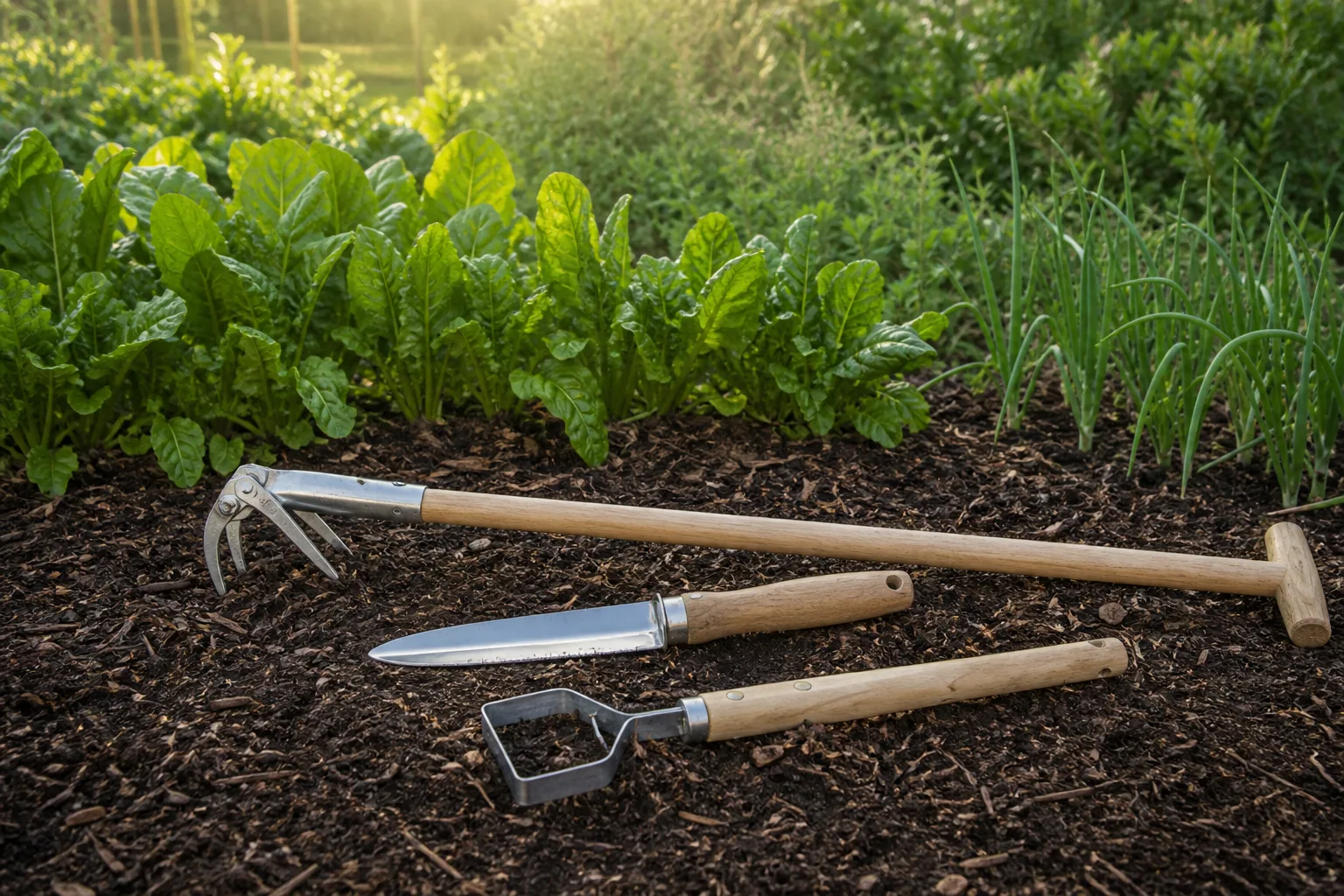
You can finish a useful pass without emptying the entire garden. Set out a bucket for seed heads, a hand fork or hori hori for roots, a hoe for tiny annuals, and a separate container for anything you do not want in home compost. Work one bed at a time so removed weeds do not get dragged through clean areas.
Triage seed heads, edges, and the biggest roots first
Start with a slow visual scan. Remove seed heads before brushing past them, then clear the bed perimeter, fence line, and spaces beneath fading crop foliage. Next, target the largest perennial crowns and any weed growing directly into a young plant’s root zone.
This order is more efficient than beginning with the easiest patch. A handful of tiny annual seedlings can wait for a later hoeing pass; a mature plant dispersing seed cannot. Likewise, a deep-rooted weed beside a small perennial is more consequential than a shallow volunteer in an empty corner.
Match the tool and method to the weed
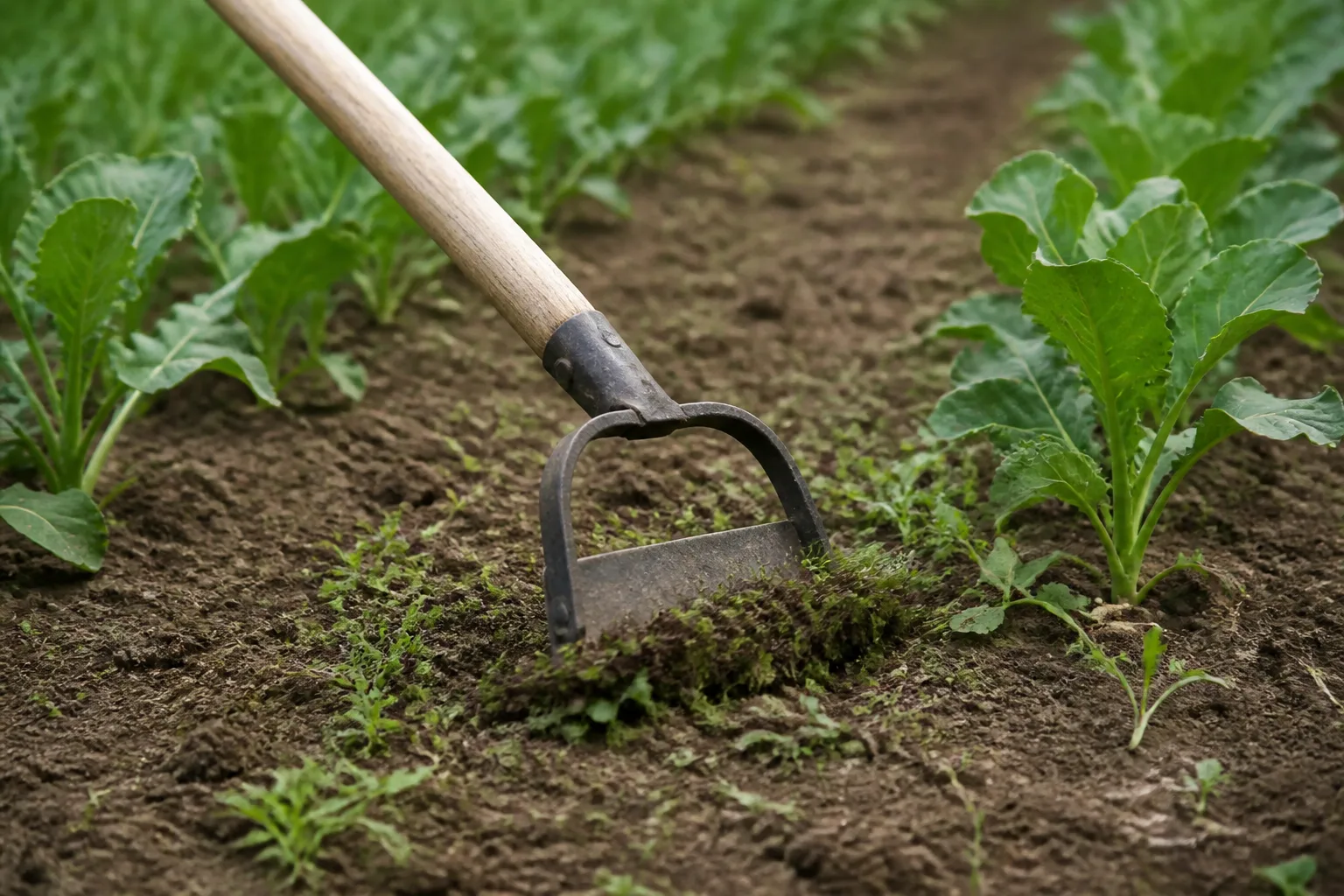
Use your hands for small weeds in loose, damp soil when you can grasp below the crown. Use a hoe on young annuals, moving the blade just beneath the surface so you sever roots without turning over a deep layer of soil. Use a hand fork for taproots and spreading perennials that need careful lifting.
For a practical tool sequence, horticulture writer Jerad Bryant also recommends using moist autumn soil to uproot young weeds before they flower and seed, then choosing a hoe or hand tool according to root depth (Epic Gardening: 5 fall weeding tips). The useful principle is precision: disturb only the soil you need to reach the weed.
The method should also protect the plant you want to keep. Hand removal is slower but precise around bulbs and crowns. Smothering with a light-excluding cover can help on an unused patch, but it is not an instant fix and must not bury the stems of plants you intend to grow. Recheck treated areas instead of assuming one pass prevents all regrowth.
Cover the soil after removal
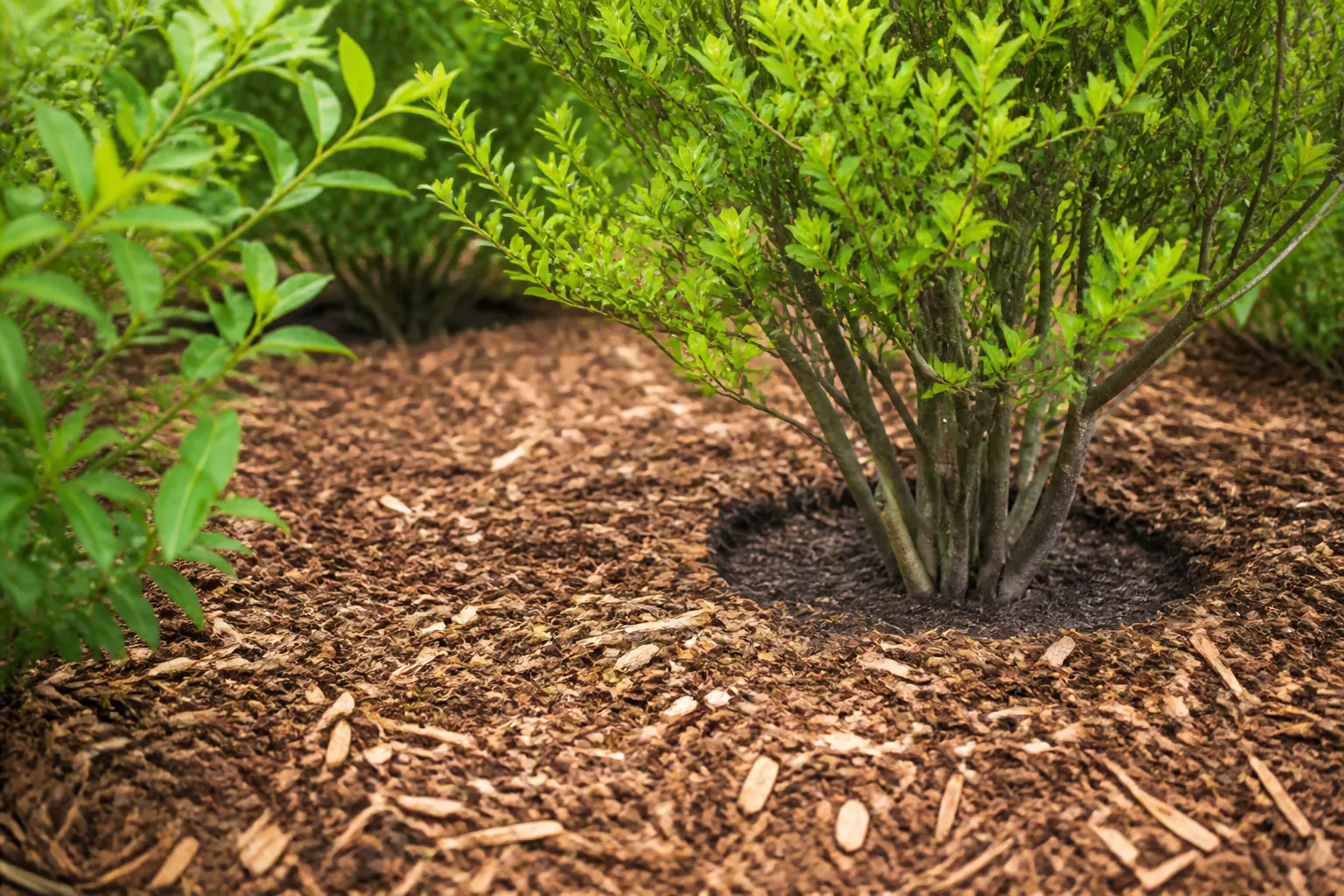
Once a section is clean, do not leave it exposed as an invitation to new seedlings. Apply a roughly 2- to 3-inch layer of suitable organic mulch around established plants, leaving crowns and woody stems uncovered. Shredded leaves, leaf mold, well-rotted compost, straw, and wood chips can all have a role, but match the material to the bed and use clean, disease-free inputs.
Mulch suppresses weeds by reducing light at the soil surface and makes later seedlings easier to pull. It does not kill an established perennial that is already pushing through, and a thin, scattered layer will not perform like a continuous cover. The RHS recommends mulching or dense planting to limit the opportunities for weeds to return, while its autumn guidance cautions against using fresh compost or manure as a winter surface layer where nutrients can be washed away (RHS: Saying goodbye to weed seeds).
Homes & Gardens’ practical fall-cleanup guidance likewise recommends a 2- to 3-inch mulch layer after weeds are removed, particularly to reduce light for winter-annual seedlings (Homes & Gardens: Do you need to get rid of weeds before frost?). Treat that as a starting depth, not a license to bury plant crowns or create a wet collar around stems.
If you are managing an empty vegetable bed, a locally appropriate cover crop can protect the soil instead of leaving it bare. Choose one that fits your climate and rotation, and learn how it should be terminated. A cover crop is a planned plant, not a reason to stop identifying what is growing in the bed.
Dispose of pulled weeds without spreading the problem
Soft, non-seeding annual weeds can often go into a well-managed home compost system. Do not automatically add mature seed heads, invasive plants, or persistent perennial roots. Many household compost bins do not reach or maintain enough heat to reliably destroy roots and seeds, so the finished compost can become a delivery system for the same weed.
The RHS specifically cautions against adding the roots of pernicious perennials such as ground elder and bindweed to ordinary home compost. Letting those roots rot in a sealed container or taking them through an approved high-temperature green-waste system may be safer, depending on local rules. Controlled invasive plants, including some species regulated in particular regions, need special handling; check your municipality or extension service before moving them.
Keep diseased plant debris separate from clean material, and never leave seed-bearing weeds on top of mulch as if they were harmless green fertilizer. If you must pause mid-job, place the weeds in a bucket or bag rather than on the edge of the bed. A few minutes of containment protects the benefit of the work you have already done.
Conclusion: a short fall pass buys a calmer spring
Skipping fall weeding does not doom a garden, but skipping the right weeds can create avoidable work. Frost may remove tender summer foliage, yet it does not erase seeds already dropped, living perennial roots, or winter annuals that have established during cool weather.
The practical compromise is simple: contain seed heads, lift the perennial weeds you can reach while the soil is workable, remove small winter annuals where they compete, and leave intentional native or wildlife-supporting plants in the places where they belong. Then cover the soil and dispose of the debris according to its risk.
If the ground is frozen or saturated, stop. A thoughtful partial cleanup followed by a spring check is better for the garden than forcing a late-season excavation. Your future self does not need a spotless bed; they need fewer seeded weeds, fewer persistent roots, and a clear surface from which to start.



