6 Things to Throw Out Before You Put Up Your Christmas Tree
Clear toys, dated decor, and scent clutter before the tree arrives. Six expert-backed categories to toss, donate, or relocate so your tree has room to shine.

A Christmas tree is not just another decoration. It is a four- to six-foot footprint in the one room where your family already piles coats, toys, mail, and half-finished projects. If you set the tree into clutter instead of clearing space first, the tree looks cramped, ornaments get lost on busy shelves, and the whole room reads chaotic instead of festive.
Professional organizers treat pre-tree decluttering as a spatial problem, not a moral one. You are not trying to Marie Kondo the entire house in November. You are making room for the tree to be the focal point — and for the gifts, guests, and baking chaos that follow. These six categories are where that space usually hides.
Why Decluttering Comes Before Decorating
Decorating on top of clutter is like wrapping a gift in crumpled paper. The tree goes up, but the room still feels tight. Worse, you lose the one window of clarity you get each year: the moment fall decor comes down and the tree spot is empty.
Decluttering before the tree arrives solves three problems at once. You reclaim floor space for the stand and presents. You clear surfaces so garlands and stockings have somewhere to land. And you create donation bags before holiday schedules swallow your weekends.
The Tree-Spot Zone Audit
Before you touch a single bin, walk the room where the tree will live and mark three zones on paper or in your phone notes:
Zone A — the footprint. Measure the tree stand location plus two feet of clearance on every side for watering, presents, and walking paths. Anything sitting in that circle moves or leaves.
Zone B — sight lines. Stand where you usually sit and look toward the tree wall. Shelves, side tables, and large plants in that sight line compete with ornaments and lights. Relocate or remove them.
Zone C — gift overflow. Identify one closet shelf, under-bed bin, or guest-room corner for incoming gifts. If that space is full of last year’s unworn sweaters or broken toys, the December mail pile wins.
This audit takes ten minutes and prevents the most common mistake: purging the guest bathroom while the living room still cannot fit a seven-foot tree.
How to Run a Two-Hour Pre-Tree Declutter Session
You do not need a empty Saturday. A focused two-hour block beats a vague “someday” whole-house purge. Set four labeled bags or boxes: Keep, Donate, Trash/Recycle, and Relocate (for items that belong elsewhere in the house).
Work in 25-minute bursts with five-minute breaks. Start with Zone A, then B, then tackle the six categories below in the order that matches your home — toys first if you have kids, seasonal decor first if your ornament tubs live in the tree room.
Keep, Donate, Trash — and the “Just in Case” Pile You Skip
Organizers call “just in case” the clutter tax. That cracked snow globe, the puzzle missing three pieces, the candle with a quarter-inch of wax — they sit in limbo for years. For pre-tree prep, use a one-touch rule: pick it up once, decide once.
If an item is broken, stained, expired, or missing essential parts, it goes to Trash/Recycle — not donate. Donation centers spend staff time sorting refuse, and stained goods often end up in landfill anyway at the store’s expense. If it is usable but you have not touched it in twelve months and feel no pull when you hold it, Donate. Everything else Keep or Relocate.
1. Children’s Toys That Steal Floor Space
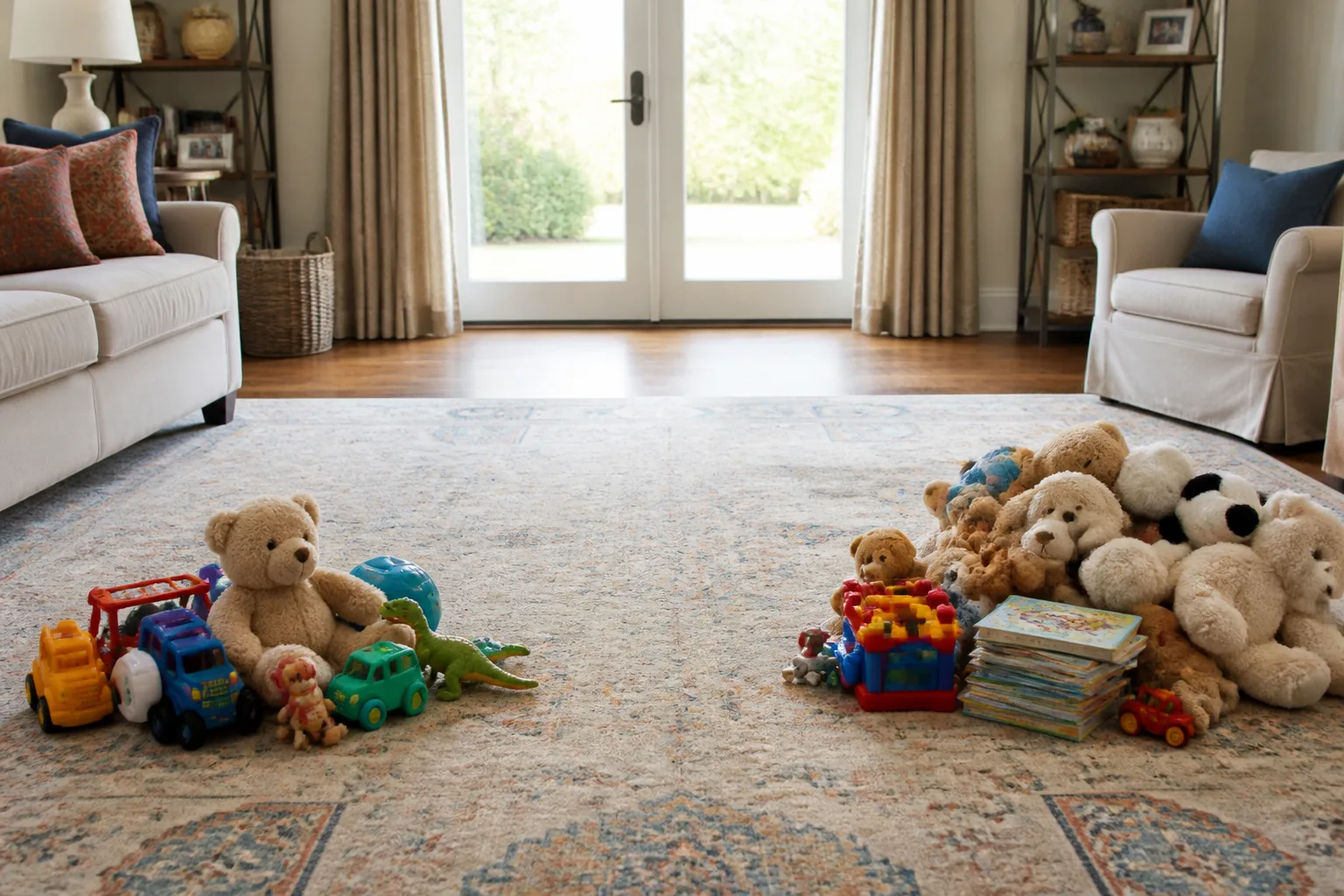
Toys are the number-one floor-space thief in homes with kids — and December adds more. If the play area shares a wall with the tree, a pre-holiday toy purge is not optional.
Gather every toy into one pile on the floor. Yes, all of it. Sort into keep, donate, and trash. The 90-day test works well here: if nobody has played with it since early fall, it is a donate candidate. Missing pieces, dried-out markers, and fast-food prizes go straight to trash.
The One-In-One-Out Rule Before New Gifts Arrive
Ask each child to choose one or two gently used toys to pass on before new gifts arrive. Frame it as making room for what is coming, not as punishment. Younger kids respond to a visible empty bin labeled “for another kid.” Older kids often care more about which shelf stays clear.
Bag donations the same day. A trash bag sitting in the garage for three weeks tends to get “rescued” back into the playroom. Check that battery compartments are clean, stuffed animals are washable, and games have all pieces — the Salvation Army accepts clean, complete toys for resale in Family Stores, but not broken or incomplete sets.
2. Seasonal Decor You Will Not Use This Year

The best time to edit holiday decor is while you unpack it, not when you pack it away in January. As fall wreaths come down and Christmas tubs open, notice what you skip over. If you did not reach for it last year, you will not reach for it this year.
Broken Ornaments, Dead Lights, and Duplicate Villages
Throw out without guilt:
- Glass ornaments with cracks or missing caps — cut risk outweighs nostalgia
- String lights that fail the plug-in test after one bulb swap
- Tinsel that sheds plastic strands (and attracts pets — see our guide on keeping cats out of your Christmas tree if you have climbers)
- Duplicate items: three identical reindeer, two villages you never set up, extra tree skirts from old color schemes
Donate decor in good shape that simply does not fit your style anymore. Seasonal items are accepted at most thrift stores when clean and complete.
While you are editing, note whether your tree trimmings need a refresh. If you are still hanging outdated tinsel or matchy plastic sets, our guide on outdated Christmas tree trimmings walks through what designers retire and what to keep.
3. Arts and Crafts Supplies Past Their Prime
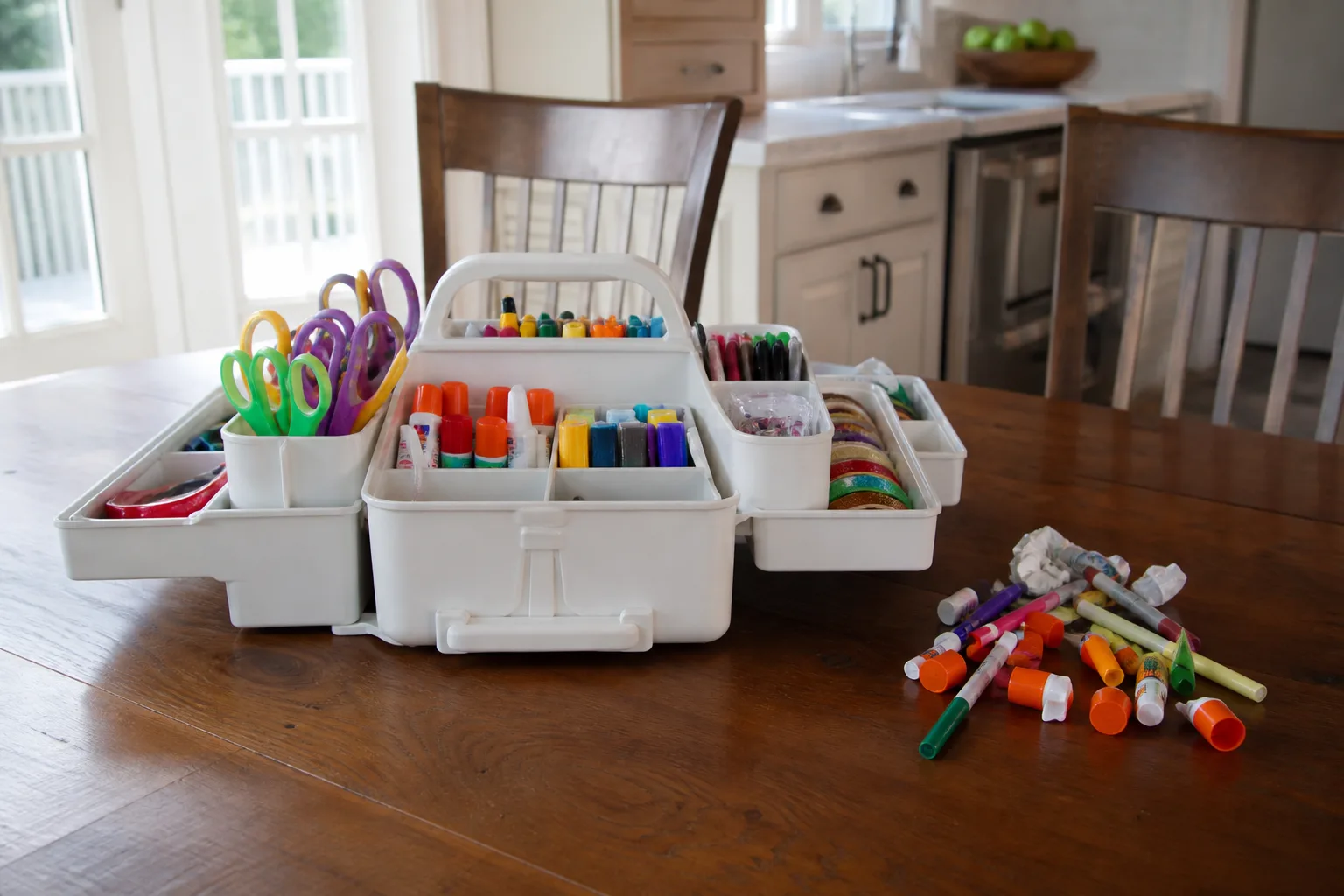
Craft bins multiply in November. School projects, gift-wrap stations, and rainy-day activities all add scissors, glue sticks, and half-used paint sets. Before the tree and the gift-wrapping explosion, edit the craft stash.
Open every container. Toss dried glue, hardened clay, markers that skip, and paint tubes that separated years ago. Recycling rules vary by municipality; empty plastic bottles usually recycle, but glitter glue and foam sheets often go to trash.
Keep one active caddy with working supplies for holiday cards and kid projects. Store the rest in a labeled bin in a closet, not on the coffee table where the tree skirt should sit. Bonus: seeing what you own prevents duplicate purchases during Black Friday craft sales.
Dried-Out Glue, Mystery Markers, and Half-Finished Projects
Half-finished projects are decision fatigue in cardboard form. Either schedule one evening to finish the wreath or photo album, or photograph it for memory and recycle the materials. A “someday” pile on the dining table is the fastest way to lose space for a tree in an open floor plan.
4. Knick-Knacks and Everyday Greenery Blocking the Tree Spot
Daily clutter — mail stacks, souvenir magnets, empty candle jars used as catch-alls — makes holiday decor feel chaotic even when the tree itself is beautiful. Walk every flat surface in Zone B and ask: Does this earn its spot during December?
Toss chipped ceramics, promotional freebies, and anything you would not dust. Donate decor you liked five years ago but never display. Relocate sentimental items to a bedroom shelf for the season.
Where to Move Houseplants When the Tree Moves In

If your usual tree corner held a fiddle-leaf fig or a cluster of pothos, you need a light plan, not just a shuffle. Most houseplants cannot survive a dark closet for six weeks. Move them to the brightest alternative spot — a south-facing bedroom, a bathroom with a window, or a plant stand in the kitchen.
Group plants that share water needs so holiday travel does not kill them. Skip fertilizing until you move them back in January; growth slows in lower winter light anyway. If a plant was already struggling in that corner, consider this the push to repot, prune, or pass it on rather than squeezing it back after the tree comes down.
5. Scented Candles and Diffusers Competing With the Tree

Holiday scent is part of the experience — fresh evergreen, orange and clove, cookies baking. Everyday room scents fighting that palette make the tree room smell muddled. Braun-style organizing advice applies here: one scent story per room.
Gather every candle, reed diffuser, wax melt, and room spray from the tree room and adjacent hallway. Toss jars with less than a half-inch of wax, diffusers with cloudy or separated oil, and sprays you dislike but kept anyway. Store fall-scented items (pumpkin, apple cinnamon) in a sealed bin for next autumn.
Storing Fall Scents and Topping Up Nearly Empty Jars
During tree season, lean on neutral or woodsy scents that complement real or artificial greenery — unscented beeswax, pine, cedar, or vanilla. Save heavy gourmand candles for the kitchen. If you use a live tree, let the needles provide the base note; a single quality candle on a side table beats three competing diffusers.
Never leave candles within three feet of branches or drapes. Battery-operated flameless candles on mantels give glow without competing with tree lights or fire risk.
6. Wardrobes That No Longer Fit Your Life
Closet clutter feels unrelated to a Christmas tree until you need space for guest coats, wrapping paper towers, and new sweaters under the tree. A fast wardrobe pass frees hangers and mental bandwidth.
Pull items that do not fit, have irreparable damage, or have not been worn in a full calendar year. Donate wearable clothing clean and on hangers when possible. Textiles with holes or heavy staining belong in textile recycling, not a donation bag — stores reject them and pay disposal fees.
Closet Space for Holiday Guest Gear and New Clothes
Reserve one shelf for guest toiletries and spare blankets before visitors arrive. If kids will receive clothing gifts, clear one drawer now so new items have a home on Christmas morning. Knowing what you already own also sharpens your own wish list and reduces duplicate gifts.
Donation Triage: What Centers Will and Will Not Take
Loading the car feels productive; unloading rejected bags at the donation door does not. According to Salvation Army Family Store guidelines, commonly accepted items include clean clothing, working small appliances, complete toys, books, holiday decor in good condition, and furniture that is structurally sound.
Commonly refused items include mattresses and box springs, car seats and helmets, cribs manufactured before 2011 safety standards, recalled products, broken electronics, paint and chemicals, and clothing with stains or holes. Policies vary by location — call your local drop-off before hauling a couch.
Sort donations in the driveway: Grade A on hangers or in boxes, Grade B textile recycling, Grade C trash. Keep a donation receipt for tax purposes; fair-market value guides are published on satruck.org.
Room Order: Where to Declutter First
If two hours is all you have, work in this sequence:
- Living room tree zone — footprint and sight lines
- Entryway — coats and shoes that will multiply with guests
- Toy area — if children live in the home
- Seasonal decor unpack station — edit as you pull from storage
- Primary closet — quick hanger purge for gift overflow
- Kitchen counter — one clear surface for cookie cooling and card signing
Skip the garage, attic, and junk drawer until January unless they block access to ornament tubs. A partial job in the tree room beats a perfect job in the laundry room.
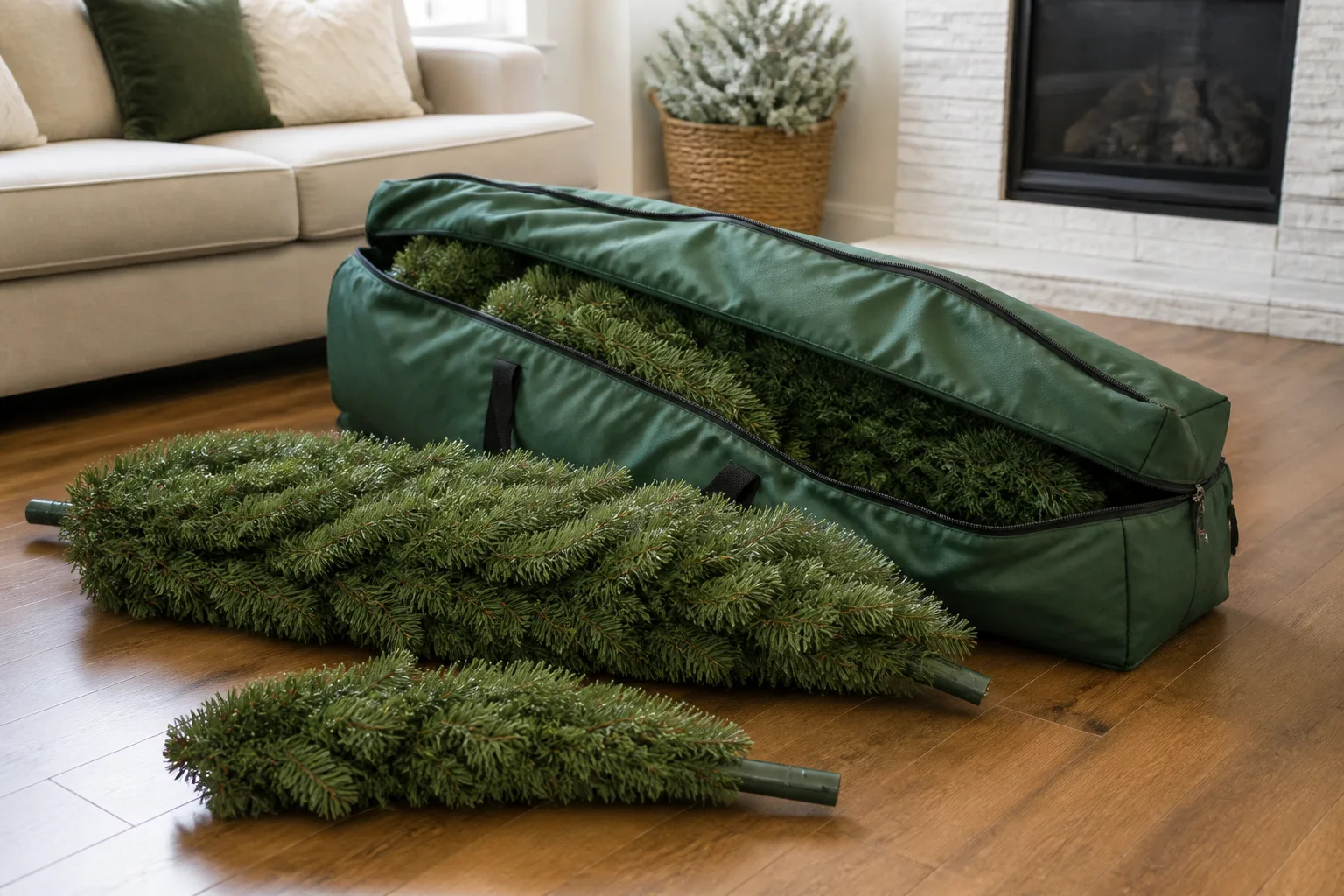
Once the tree is up, protect your work: anchor the stand, plan ornament placement, and if pets share the space, read how to keep cats out of your Christmas tree. When the season ends, storage solutions for artificial Christmas trees keep next year’s unpack faster than digging through a mixed tub.
Conclusion
Putting up a Christmas tree is easier when the room is already breathing. You do not need a minimalist home — you need six targeted passes: toys, seasonal decor, craft supplies, surface clutter and plants, competing scents, and wardrobe dead weight. Run the tree-spot zone audit, sort with four labeled bins, and donate only what centers will actually accept.
The tree should be the brightest object in the room, not the thing you squeeze between boxes. Clear the space first, decorate second, and you will notice the difference the moment you plug in the lights.



