12 Popular Dogwood Trees and Shrubs
Compare 12 dogwood trees and shrubs by mature size, light, soil, berries, flowers, winter stems, and the yard conditions each one handles best.
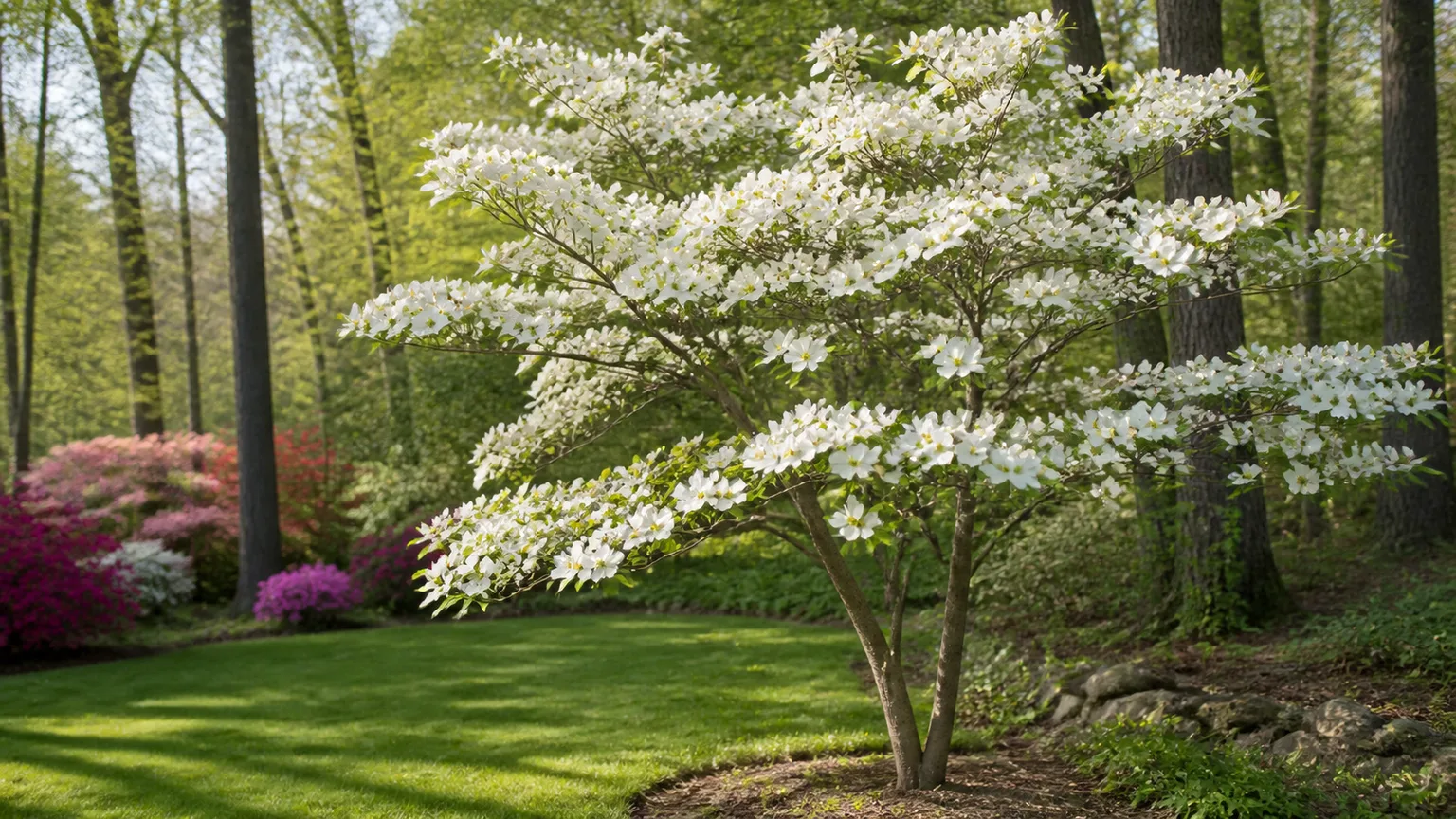
Dogwood is not one look or one care profile. The genus Cornus includes flowering understory trees, spreading shrubs, wetland thickets, edible-fruited small trees, winter-stemmed shrubs, and tiny woodland groundcovers. That range is the reason dogwood can fit both a suburban front yard and a cool, acidic woodland garden—and also the reason a generic “plant it in partial shade” recommendation is not enough.
The right choice starts with the job you want the plant to do. Pick the tree for spring bracts, the shrub for winter stems, the small tree for fruit, or the groundcover for a cool woodland site; then check mature spread, soil drainage, summer heat, and disease pressure. The North Carolina State Extension plant profiles and the New York Botanical Garden’s dogwood guide both emphasize that site conditions matter as much as the name on the tag. (North Carolina State Extension: Cornus; New York Botanical Garden: Dogwood)
Choose a dogwood by the job it must do
Use this short list before you fall for a flower color:
- Best classic flowering tree: Flowering dogwood (Cornus florida) gives a native eastern woodland look, red fall fruit, and strong spring bracts, but it needs a protected site and deserves careful disease screening.
- Best flowering tree for a more open lawn setting: Kousa dogwood (Cornus kousa) flowers after the leaves emerge, develops attractive mottled bark, and is generally more disease-resistant than flowering dogwood.
- Best small tree with useful fruit: Cornelian cherry dogwood (Cornus mas) blooms very early and produces tart red fruit that can be cooked, but it can sucker and become much wider than a nursery plant suggests.
- Best winter display: Red-twig dogwood (Cornus sericea) is grown for young red stems, not for showy flowers. It needs renewal pruning and room to spread.
- Best wet-site shrub: Red-twig, gray, or stiff dogwood can handle moist ground better than a flowering tree, but “wet-tolerant” does not mean “plant in stagnant water.”
- Best architectural native shrub or small tree: Pagoda dogwood (Cornus alternifolia) has horizontal tiers and alternate leaves, but it dislikes hot, dry summers and does not transplant easily.
- Best cool woodland groundcover: Canadian bunchberry (Cornus canadensis) or Swedish cornel (Cornus suecica) suit specialist conditions, not an exposed, irrigated lawn edge.
Many dogwoods are valuable to birds and pollinators, but the presence of fruit does not automatically make a plant edible for people. Cornelian cherry is the food-oriented exception in this group; identify the species before tasting any dogwood fruit, and keep unknown berries away from children and pets.
At-a-glance comparison of 12 dogwoods
The sizes below are useful planning ranges, not guarantees. Cultivars can be smaller, wider, more upright, or more vigorous than the species, and local climate changes both growth and survival. Confirm the botanical name and mature dimensions on the nursery tag before planting.
| Dogwood | Approximate mature size | Best fit | Main trade-off |
|---|---|---|---|
| Canadian bunchberry (C. canadensis) | 6–12 in. tall | Cool, acidic woodland groundcover | Sensitive to heat, drought, and poor site matching |
| Common dogwood (C. sanguinea) | 5–15 ft. tall | Informal shrub border or naturalized edge | Spreads and may need frequent size control |
| Cornelian cherry (C. mas) | 15–25 ft. tall | Early flowers and edible-quality fruit | Broad habit, suckering, and tart fruit |
| Flowering dogwood (C. florida) | 15–25 ft. tall | Protected eastern woodland-style specimen | Drought stress and disease can shorten its performance |
| Kousa dogwood (C. kousa) | About 20–30 ft. tall | Flowering specimen with bark and fall color | Fruit can drop heavily and seedlings may appear |
| Gray dogwood (C. racemosa) | 10–27 ft. tall | Native thicket, screen, or moist edge | Rhizomes create colonies that can outgrow a small bed |
| Mountain dogwood (C. nuttallii) | 30–40 ft. tall | Cool western woodland or large property | Large eventual size and anthracnose risk |
| Pagoda dogwood (C. alternifolia) | 15–25 ft. tall, often wider | Layered branching in a cool woodland | Shallow roots, heat stress, and poor transplanting |
| Red-twig dogwood (C. sericea) | 6–9 ft. tall | Wet edge, erosion control, and winter stems | Spreads vigorously and loses color on old wood |
| Rough-leaf dogwood (C. drummondii) | 6–15 ft. tall | Tough naturalized or wildlife planting | Suckering and coarse foliage are not formal-border traits |
| Stiff dogwood (C. foemina) | 10–25 ft. tall | Southeastern wet or moist naturalized site | Flowers are small and can have an unpleasant odor |
| Swedish cornel (C. suecica) | 2–9 in. tall | Arctic, alpine, or cool bog-like garden | Very specialized; difficult in warm, dry landscapes |
The genus spans roughly ground-hugging subshrubs to trees around 40 feet tall, with different species adapted to different continents and habitats. Gardenia’s comparative overview is helpful for seeing that the familiar spring-flowering trees are only one branch of the dogwood story. (Gardenia: Cornus dogwoods; Plantura: Dogwood species and varieties)
How to identify a dogwood in the landscape
Start with the leaves and branching pattern, not the flower color. Most familiar dogwoods have opposite leaves with veins that curve toward the margins, but pagoda dogwood and giant dogwood are notable exceptions with alternate leaves. That one detail can quickly separate a tiered pagoda dogwood from a young flowering dogwood.
Next, inspect what the plant offers in the season when you notice it:
- Spring: Showy “petals” on flowering, kousa, and mountain dogwoods are bracts around small true flowers. Cornelian cherry opens yellow flowers on bare branches earlier than most dogwoods.
- Summer and fall: Fruit is usually a drupe rather than a botanical berry. It may be red, white, blue-black, or raspberry-like, and it may be welcome wildlife food, messy beneath a patio, or suitable for cooking depending on the species.
- Winter: Red-twig dogwood is identified by its young red stems, while kousa and some other tree dogwoods offer exfoliating or mottled bark.
Size is another diagnostic clue. A low mat of opposite-leaved stems in a cool forest is likely a bunchberry, while a shrub forming a dense colony is more likely to be a twig or gray dogwood than a small flowering tree. When identification matters for a disease, a purchase, or fruit safety, photograph the leaves, stems, flowers, and fruit together and verify the scientific name with a regional extension service.
Flowering dogwood
Flowering dogwood (Cornus florida) is the classic eastern North American dogwood: a small, low-branching understory tree that usually reaches about 15 to 25 feet. Its four white, pink, or red bracts appear around the small central flowers, followed by red drupes and red fall color. North Carolina State Extension notes its value for pollinators and songbirds, but also describes it as a challenging tree in some urban settings. (North Carolina State Extension: Flowering dogwood)
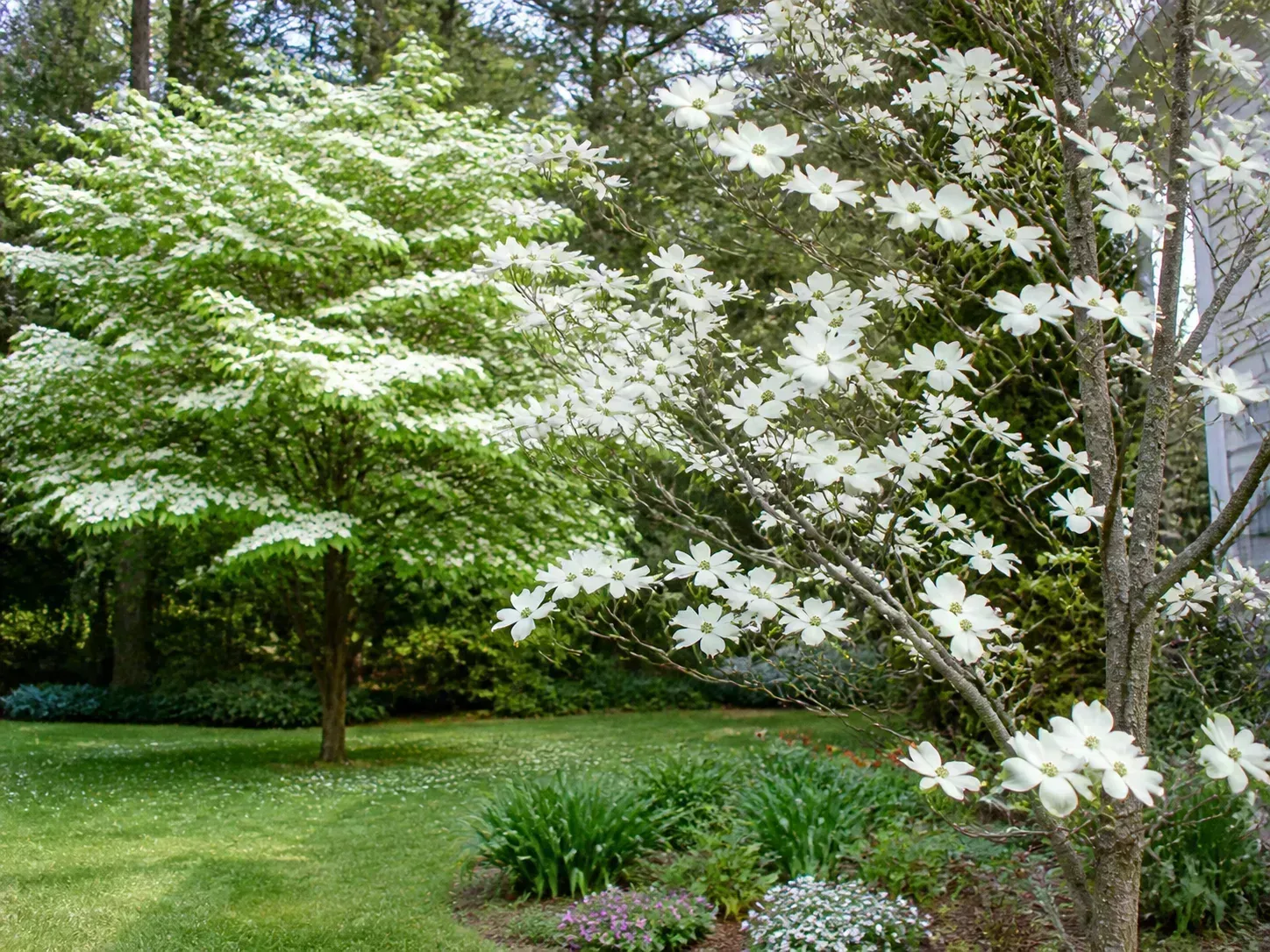
Give it morning sun or bright dappled light, organic soil that drains well, and relief from reflected late-afternoon heat. It can tolerate more sun once established when moisture is dependable, but a hot, compacted strip beside pavement is a poor substitute for its woodland-edge habitat. Keep a 2- to 4-inch mulch layer over the root zone without piling mulch against the trunk.
Flowering dogwood is the species to choose when native habitat value and the traditional spring silhouette matter more than the lowest-maintenance option. If your yard has a history of dogwood anthracnose, repeated drought, poor airflow, or severe summer heat, compare kousa dogwood or a documented disease-resistant cultivar before committing to a young tree.
Kousa dogwood
Kousa dogwood (Cornus kousa) is an Asian cousin with a different rhythm and shape. It flowers later, after the leaves have opened; its pointed bracts often look especially crisp against green foliage. The tree begins upright and vase-shaped, then develops broader horizontal branches, mottled exfoliating bark, reddish-purple fall color, and pink-to-red fruits that resemble raspberries.
Kousa is usually the more forgiving flowering-tree choice for an open lawn or suburban landscape. North Carolina State Extension describes it as more drought- and cold-tolerant and less susceptible to anthracnose than native flowering dogwood, while also warning that shallow roots make transplanting difficult and fallen fruit can attract yellow jackets. (North Carolina State Extension: Kousa dogwood)
Choose kousa when you want a specimen with bark, fruit, and fall color as well as flowers. Leave enough room beneath the canopy for fruit cleanup, and do not plant it where a dense carpet of seedlings or dropped fruit would be a nuisance.
Mountain dogwood
Mountain dogwood (Cornus nuttallii), also called Pacific dogwood, is the western counterpart people often compare with flowering dogwood. It is a much larger tree, commonly listed around 30 to 40 feet, with large white bracts and yellow, orange, or red fall color. It belongs in a cool western setting with room to mature, not in a small foundation bed.
Its main limitation is disease and site sensitivity. If anthracnose is common locally or the planting area is hot, dry, and exposed, another dogwood will probably be a more reliable choice. Ask a regional native-plant nursery or extension office whether the tree is well adapted to your elevation and summer conditions before buying.
Pagoda dogwood
Pagoda dogwood (Cornus alternifolia) earns its name from branches arranged in horizontal tiers. The form is architectural even without flowers, and its alternate leaves make it one of the easiest dogwoods to distinguish. Creamy flower clusters, bluish-black fruit on reddish stalks, and red fall color extend the display through the year.
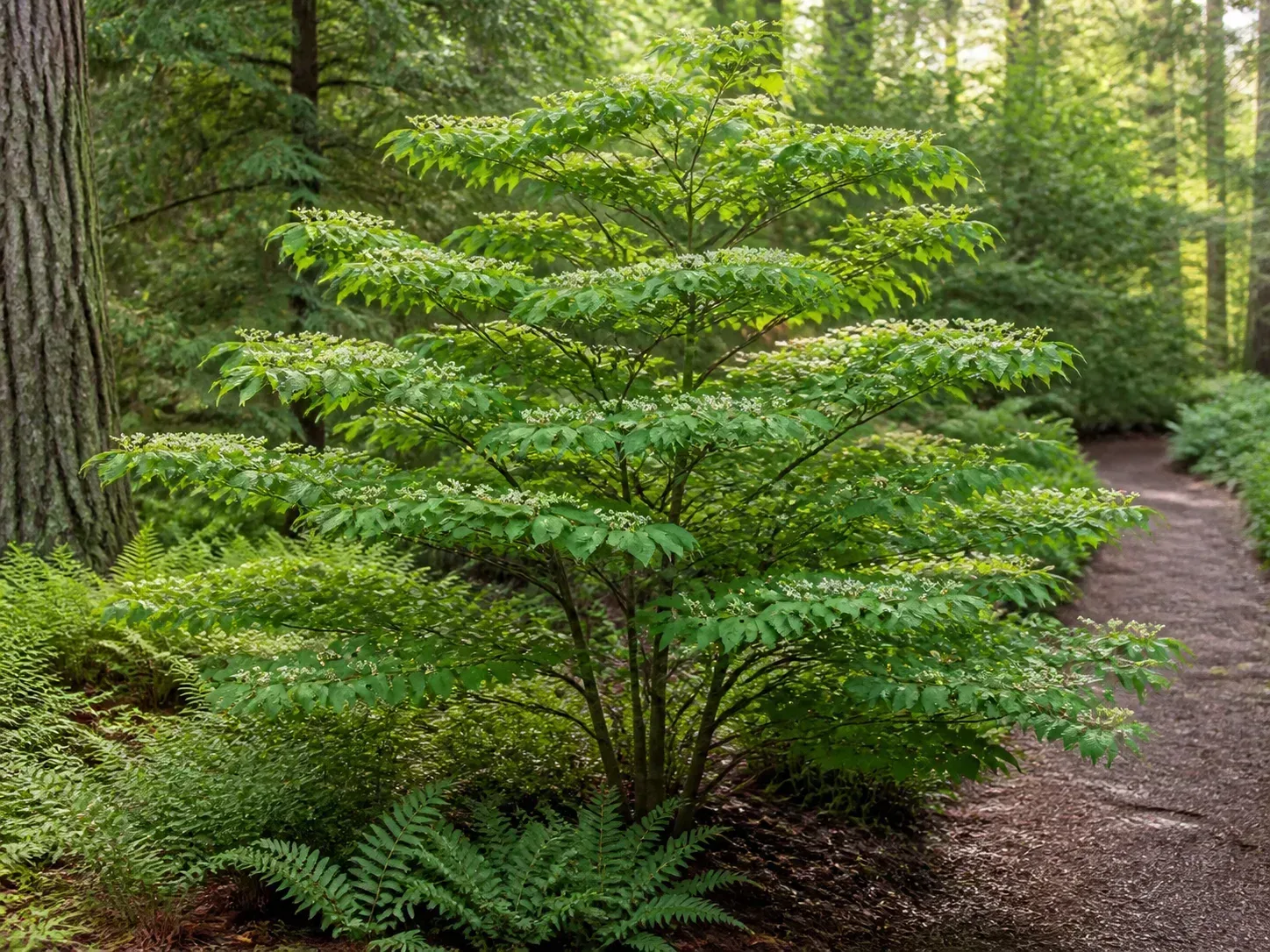
Plant it where the soil stays evenly moist but drains after rain, ideally in a cool woodland edge with morning sun or filtered light. North Carolina State Extension reports that it can reach 15 to 25 feet tall and 20 to 32 feet wide, has shallow roots, and performs poorly in hot summer climates unless the root zone is shaded and mulched. (North Carolina State Extension: Pagoda dogwood)
Do not squeeze pagoda dogwood into a narrow strip and expect pruning to preserve its natural tiers. Give it horizontal room, protect it from salt and mechanical damage, and plant a container-grown specimen carefully because its shallow root system does not appreciate repeated disturbance.
Cornelian cherry dogwood
Cornelian cherry dogwood (Cornus mas) is a large shrub or small tree that can reach about 25 feet tall and 20 feet wide. It opens small yellow flower clusters on bare branches in late winter or early spring, often before the first leaves. Dark red, olive-shaped fruits ripen in mid-summer and are valued for preserves, sauces, and other cooked preparations because the raw flesh is tart.
This is a strong choice when early bloom and fruit matter more than a dramatic fall display. North Carolina State Extension describes it as adaptable, tough, resistant to dogwood anthracnose and the dogwood borer, and prone to producing suckers that need removal if you want a clean tree form. (North Carolina State Extension: Cornelian cherry dogwood)
Plant it in full sun to partial shade with rich, moist but well-drained soil. Give it space to become a broad shrub, or select a named cultivar for a more deliberate habit and larger fruit. Even with an edible-fruited cultivar, do not assume every fruit on a plant sold simply as “dogwood” is equivalent; confirm the species and cultivar first.
Red-twig dogwood
Red-twig dogwood (Cornus sericea), also called red-osier dogwood, is the winter-interest specialist. It forms a 6- to 9-foot multi-stemmed shrub, tolerates wet soil and heavy clay better than many tree dogwoods, and produces white flower clusters and pale berries for wildlife. The leaves turn red or orange before the stems take over the show.
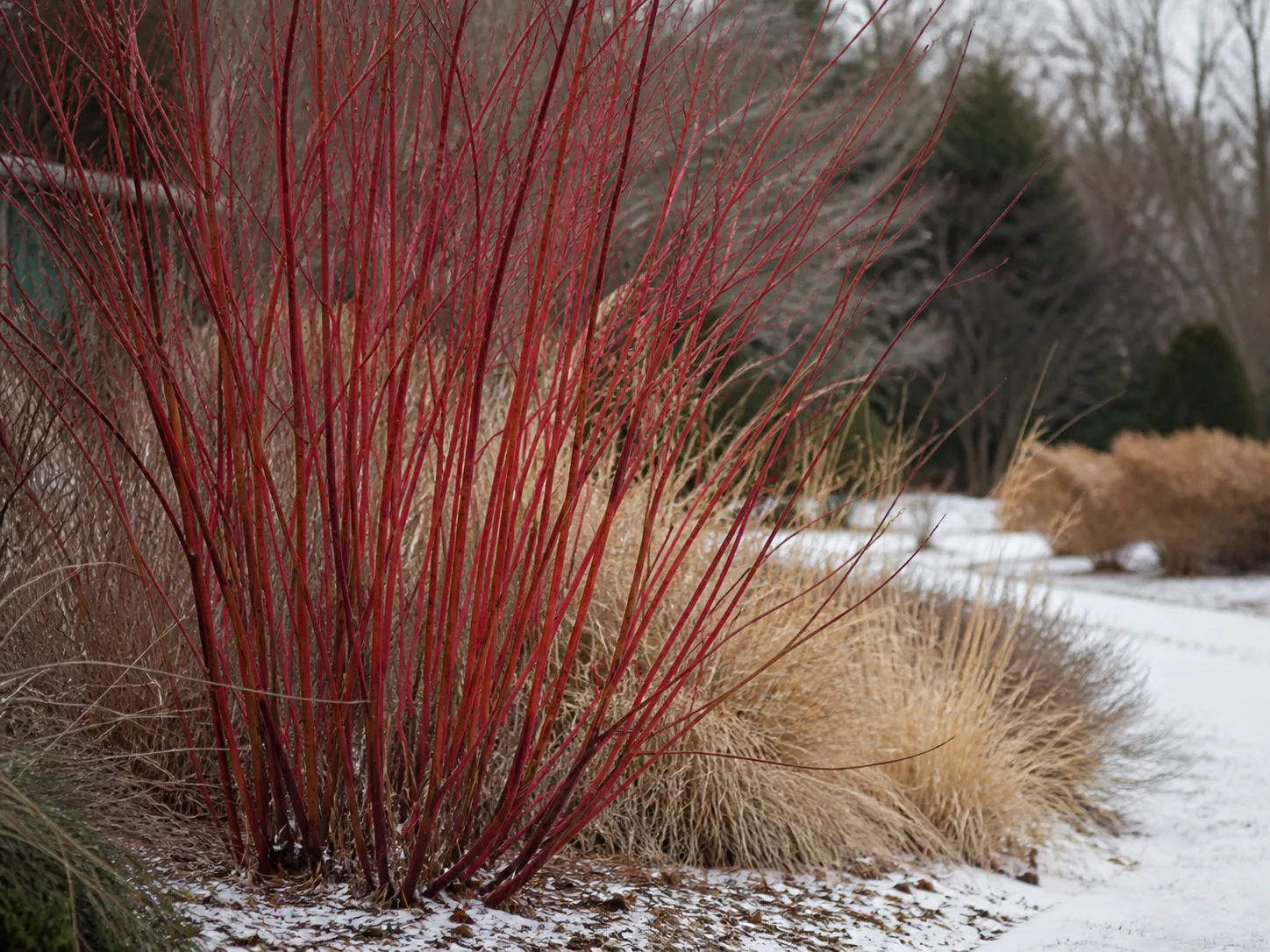
The color is strongest on young wood. North Carolina State Extension recommends early-spring pruning to stimulate new stems and warns that the shrub spreads by underground stems, sometimes forming a weedy colony. Root-prune with a spade or choose a compact cultivar when the planting bed has a hard edge. (North Carolina State Extension: Red-twig dogwood)
Use red-twig dogwood in a low spot, rain-garden edge, streamside planting, or massed shrub border where spread is useful. It is a poor choice for a tiny formal bed unless you are willing to renew the stems and control the roots every year.
Common dogwood
Common dogwood (Cornus sanguinea), also called bloodtwig or European dogwood, is an upright deciduous shrub from Europe and western Asia. Its small pale flowers are followed by dark fruit, while young stems can show red color that is often less vivid or less persistent than the best red-twig cultivars. It typically reaches about 5 to 15 feet and can spread.
Choose it for an informal hedge, wildlife edge, or naturalized planting where yearly pruning is acceptable. If the main goal is brilliant winter color, compare the cultivar’s stem performance rather than relying on the common name; a named selection may be a better purchase than an unidentified seed-grown shrub.
Gray dogwood
Gray dogwood (Cornus racemosa) is a North American shrub that commonly forms thickets through underground rhizomes. Its white flower clusters, pale fruit, purplish-red fall color, and gray older bark make it useful for naturalized screens and wildlife plantings, especially where a colony is an advantage.
Give it room to spread or install a clear root boundary before it becomes established. It can work along a large property edge, but it is not the tidy, single-trunk specimen for a small front border. Remove unwanted suckers while they are young rather than waiting for a mature network of stems.
Rough-leaf dogwood
Rough-leaf dogwood (Cornus drummondii) gets its name from the coarse, hairy texture of its leaves. It is a medium shrub, usually about 6 to 15 feet tall, with white flowers and fruit that support wildlife. It can handle more sun and some dry conditions once established, yet it may also sucker and form colonies.
Use it where toughness and habitat value outrank polished foliage. A full-sun site generally produces more flowers and fruit than shade, but do not read “drought tolerant once established” as permission to neglect a new planting. Water the root ball deeply while it is establishing, then judge the site by how quickly the soil dries after rain.
Stiff dogwood
Stiff dogwood (Cornus foemina) is a southeastern large shrub or small tree that reaches roughly 10 to 25 feet. It has small white flower clusters, blue fruit, and burgundy to purple fall color. The flowers are not its strongest ornamental feature and may have an unpleasant odor, so it belongs in a naturalized or wildlife-oriented setting rather than beside an outdoor seating area.
Choose it when a moist southeastern site needs a native shrub with fruit and fall color. In a dry, highly maintained landscape, a better-behaved cultivar of another species will usually provide more predictable form and fragrance.
Low-growing bunchberries
Canadian bunchberry (Cornus canadensis) and Swedish cornel (Cornus suecica) are not miniature versions of the landscape trees. They are low subshrubs adapted to cool, often acidic woodland or bog-like conditions. Canadian bunchberry spreads by rhizomes, makes a carpet of veined leaves, produces white bracts and red fruit, and is generally listed for cool northern zones. Swedish cornel is even more specialized, associated with arctic or alpine habitats and rarely a practical choice outside a cool rock or woodland garden.
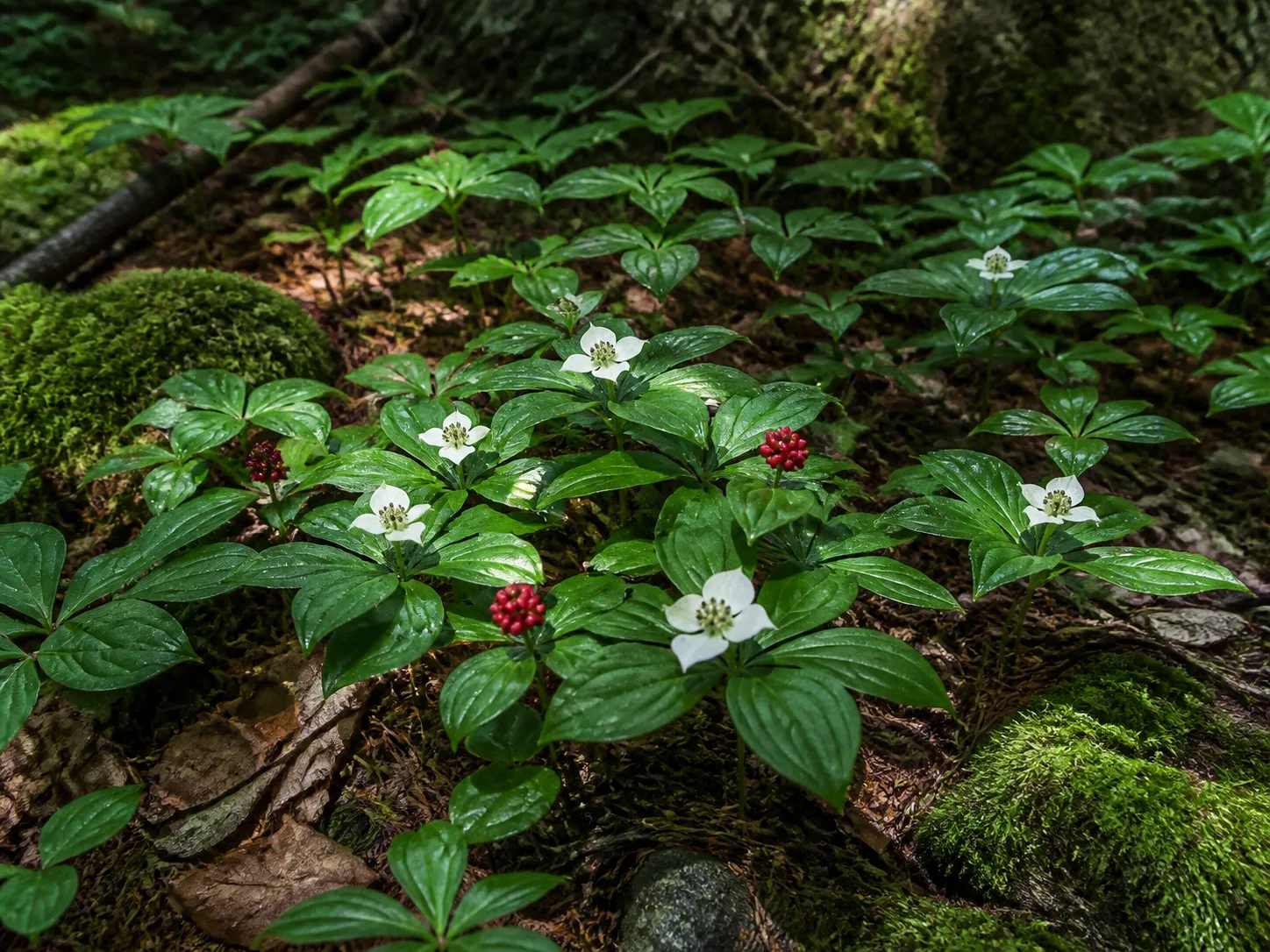
Plant bunchberry only when the site already resembles its habitat: cool soil, reliable moisture, organic matter, and protection from harsh afternoon heat. A lawn edge that dries, heats, and receives compacting foot traffic may look “shady” but still be completely wrong. Specialist plants fail from mismatch more often than from a lack of fertilizer, so improve the location or choose a more adaptable groundcover.
Planting and care rules that fit most dogwoods
Dogwoods share a useful middle ground: they prefer moisture, but most do not want stagnant water around their roots. A well-drained, organic soil with a cool root zone is safer than either bone-dry sand or a saturated hole. The New York Botanical Garden recommends gently sunny, protected sites for flowering and kousa dogwoods, noting that airflow and foliage that dries after rain can reduce fungal pressure. (New York Botanical Garden: Dogwood)
Plant in early spring or fall while the soil is workable. Dig a hole at least two to three times wider than the root ball and no deeper than the root ball’s height; the top of the root ball should sit at or slightly above grade, especially in heavy soil. Backfill with the native soil, water slowly to settle it, and spread mulch over the root zone while leaving an open ring around the trunk.
For the first growing season, check moisture by hand below the surface instead of relying on a calendar. Water deeply when the root ball begins to dry, and water more often during heat, wind, or a long rainless period. Keep grass and competing groundcovers away from the trunk and do not let string trimmers or mowers scar the bark.
Fertilizer is rarely the first fix for a weak dogwood. Test the soil when growth is poor, correct a documented deficiency, and avoid high-nitrogen lawn products drifting into the root zone. Too much soft, fast growth can worsen the imbalance between what the canopy needs and what stressed roots can supply.
Pruning for flowers versus colored stems
Prune dogwood trees sparingly. Remove dead, damaged, crossing, or diseased wood first, and preserve the natural branching pattern. For flowering and kousa dogwoods, prune soon after flowering when a size or structure correction is necessary; late pruning can remove next year’s flower buds, while heavy cuts reduce fruit.
Twig dogwoods have a different goal. Red-twig dogwood is brightest on young stems, so remove a portion of the oldest stems near the base in late winter or early spring, or cut a well-established shrub back more strongly when its cultivar and site can handle renewal. Do not shear every shrub into a flat hedge if the winter display is the reason you planted it.
Use clean, sharp tools, make cuts just outside the branch collar, and do not paint ordinary pruning wounds. If a tree has a large trunk wound, severe dieback, or a canker, a certified arborist can assess whether pruning is enough.
Disease, drainage, and drought failure modes
Dogwood anthracnose is the disease concern most associated with native flowering and mountain dogwoods, but it is not the only problem. Penn State Extension describes anthracnose and decline as leaf, bract, twig, and branch symptoms that can progress over years; it also lists powdery mildew, spot anthracnose, septoria leaf spot, and crown canker among dogwood diseases. The same guidance identifies kousa and kousa-flowering dogwood hybrids as more resistant choices for replacing trees lost to anthracnose. (Penn State Extension: Dogwood diseases)
Start with prevention: match the species to the climate, keep the root zone from swinging between drought and saturation, give the canopy air movement, and remove badly affected twigs during dormancy. Avoid overhead irrigation that keeps leaves wet overnight, rake diseased leaves when practical, and do not reach for a fungicide until the symptoms and label fit the situation. A brown leaf edge after heat is not proof of anthracnose, and a white coating late in summer may be powdery mildew rather than a watering problem.
If a young tree declines despite correct planting, inspect the trunk for mower damage, the root collar for buried bark, and the soil for persistent wetness. A plant that was planted too deeply or kept in a downspout’s runoff zone can fail even when its leaves look attractive for the first year.
How to choose one for your yard
Use the following sequence:
- Measure the space at maturity. If you have less than a broad tree canopy’s worth of room, start with cornelian cherry, kousa, or a shrub rather than flowering or mountain dogwood by default.
- Watch the site for a full day. Morning sun with afternoon protection is very different from dense shade or reflected heat beside a wall.
- Check drainage after rain. Choose red-twig, gray, or stiff dogwood for a moist edge; choose a tree dogwood for moist but well-drained soil, not standing water.
- Pick the season you value most. Bracts point toward flowering or kousa dogwood, early yellow flowers toward cornelian cherry, and red stems toward red-twig dogwood.
- Decide whether spread is a benefit. Rhizomatous shrubs can stabilize a bank or build a screen, but they can also invade a small bed.
- Ask about local disease pressure. In an anthracnose-prone area, compare kousa, resistant cultivars, and alternative native trees before buying a vulnerable specimen.
- Buy by botanical name. Common names overlap, cultivars vary, and a tag that says only “dogwood” does not tell you enough about fruit, size, or habitat.
The most reliable dogwood is the one whose natural habitat resembles your planting site. A healthy red-twig shrub in a wet low spot is a better result than a struggling flowering tree chosen only for its spring photograph.
Conclusion
The 12 dogwoods in this guide divide into clear landscape jobs. Flowering dogwood and kousa are specimen trees; mountain dogwood needs a cool, spacious western setting; pagoda dogwood supplies layered branches; cornelian cherry combines early flowers with tart fruit; red-twig, common, gray, rough-leaf, and stiff dogwoods are shrubs with different levels of spread and moisture tolerance; and bunchberries belong in cool woodland conditions.
Choose the site first, verify the species second, and treat mature spread, drainage, disease pressure, and pruning needs as part of the plant—not as afterthoughts. That simple order turns a long dogwood list into a planting decision you can live with for years.