Identify Rats vs. Mice Before You Buy the Wrong Trap
Rat or mouse? Compare droppings, behavior, and nesting habits for house mice, Norway rats, and roof rats—then choose the right trap strategy.
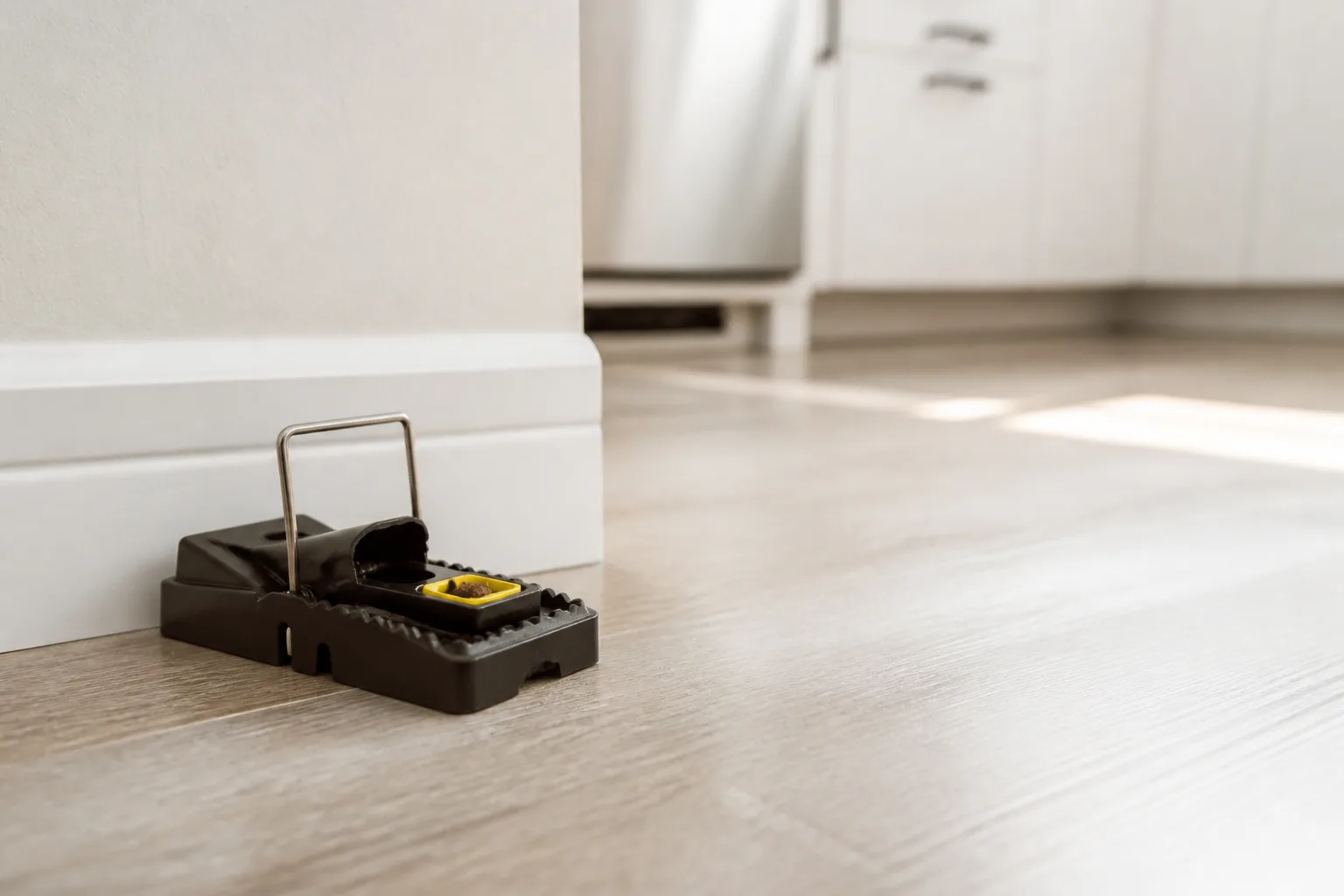
Scratching in the walls at 2 a.m. does not tell you whether you need a dozen mouse snap traps along the kitchen baseboard or heavy rat traps in the attic and crawl space. Rats and mice are both rodents, but they are not interchangeable pests. Treat a roof rat like a house mouse and you will arm sensitive traps in the wrong rooms, skip pre-baiting, and wonder why nothing dies while grease marks spread along your rafters.
The identification step is not academic. Droppings size, nest height, gnaw mark scale, and how quickly the animal approaches a new object determine trap type, placement height, bait choice, and whether poison belongs on the table at all. Get the species right first. Everything else follows.
Start With Droppings, Not a Flashlight Chase
You rarely need to see the live animal to know what you are dealing with. Fresh droppings are the fastest, most reliable field clue—and they are usually where food and travel lanes meet: under sinks, along baseboards, on pantry shelves, in garage corners, and near pet food stations.
House mouse droppings are about ¼ inch (6 mm) long, narrow, and pointed at both ends—like dark grains of rice scattered along a runway. Rat droppings are ½ to ¾ inch (12–19 mm) long, thicker, and blunt or capsule-shaped, often clustered in piles rather than scattered. Norway rat feces tend toward the larger end; roof rat droppings fall between mouse and Norway size but still dwarf anything a mouse produces.
Wear gloves, never vacuum dry droppings (that aerosolizes pathogens), and follow CDC cleanup guidance: ventilate, spray droppings with disinfectant, let soak, then pick up with paper towels. If droppings are old, gray, and crumble to dust, you may be looking at a past infestation—but seal entry points anyway before new rodents arrive.

The Three Rodents Behind Most Home Infestations
North America hosts dozens of rodent species, but three commensal types—animals adapted to living alongside people—drive most residential calls: the house mouse, the Norway rat, and the roof rat. They do not interbreed. They do not share identical habits. And in larger buildings, Norway rats and roof rats can occupy the same structure on different floors.
House Mouse (Mus musculus)
The house mouse is small and fast: roughly 5 to 7 inches long including its 3- to 4-inch tail, weighing about ½ ounce, with relatively large ears, a pointed snout, and small black eyes (UC IPM). Color runs light brown to gray. The tail is thin and nearly hairless.
Mice are omnivorous nibblers—they may take 200 small meals per night—but gravitate toward grains, seeds, and pantry goods. They nest in hidden warm spots within about 30 feet of food: wall voids, cabinet backs, insulation, stored boxes, and appliance voids. A musky odor often accompanies established infestations.
Norway Rat (Rattus norvegicus)
The Norway rat (brown rat, sewer rat) is stocky and burrowing, with a blunt muzzle, small ears that do not reach the eyes when folded forward, and a tail shorter than the head and body combined. Adults commonly weigh 7 to 18 ounces (UC IPM).
Norway rats dig burrows along foundations, under woodpiles, beneath compost, and in crawl spaces. Indoors they favor basements and ground floors, though they can appear in ceiling voids. They are strong swimmers and may enter through broken sewer lines or toilets—uncommon but documented. Foraging ranges stretch 100 to 500 feet when food is scattered, but they stay tight to nest sites when pantry access is easy.
Roof Rat (Rattus rattus)
The roof rat (black rat, ship rat) is sleeker and more agile than the Norway rat, with a pointed muzzle, large ears, and a tail longer than the head and body—often dark and uniformly scaly. Adults typically weigh 5 to 10 ounces, lighter than Norway rats but still far larger than mice.
Roof rats climb. They nest above ground in attics, wall voids near the roofline, dense ivy, and tree canopies. They travel utility lines and fence tops at dusk, forage up to 300 feet, and prefer fruit, nuts, and slugs when available—though they will eat pantry goods indoors. Neophobia—fear of new objects—is often more pronounced in roof rats than in Norway rats, which matters when you set traps.
Field Identification Chart: Mouse vs. Norway Rat vs. Roof Rat
Print this mentally before you shop for traps.
| Feature | House Mouse | Norway Rat | Roof Rat |
|---|---|---|---|
| Body size | 5–7 in. including tail | Large, robust | Sleek, medium |
| Weight | ~½ oz | 7–18 oz | 5–10 oz |
| Snout | Pointed, triangular | Blunt | Pointed |
| Ears | Large vs. head | Small; don’t reach eyes | Large; reach past eyes |
| Tail vs. body | Long, thin, hairy | Shorter than head + body | Longer than head + body |
| Droppings | ~¼ in., pointed ends | ~¾ in., blunt ends | ~½ in., spindle-shaped |
| Typical nest site | Near food, low voids | Burrows, crawl space, basement | Attic, rafters, trees |
| Gnaw marks | Fine scratches (~2 mm) | Coarse (~4 mm) | Coarse (~4 mm) |
| Entry gap | ¼ in. | ½ in. (may gnaw wider) | ½ in.; climbs to entry |
| Trap behavior | Investigates new traps quickly | Avoids new traps days to weeks | Avoids new traps; climbs |
Young rats trip people up. A juvenile rat can look mouse-sized, but the head and feet look oversized relative to the body compared with an adult mouse (UC IPM). When in doubt, measure droppings—not the animal you glimpsed.
Deer mice (Peromyscus spp.) are not house mice: they have white bellies with a sharp color line, larger eyes, and furry bicolored tails. Deer mice in rural cabins carry hantavirus risk; handle droppings with extra caution and consult local health guidance if you are outside typical urban commensal rodent territory.
Behavior That Changes Everything: Curious Mice, Cautious Rats
Size tells you what animal it is. Behavior tells you how to catch it.
Neophobia and Why Rat Traps Sit Empty for Days
Rats explore constantly but avoid new objects placed on established runways—traps, bait stations, even a moved box. This neophobia can last several days to weeks after initial trap placement (UC IPM). A homeowner who arms rat traps on day one, sees zero catches, and declares “traps don’t work” often has rats, not defective hardware.
The fix is pre-baiting: place unset, baited traps (or bait-only sites) along grease-marked runways until bait is taken reliably, then arm traps in the same positions. For heavy infestations, UC IPM suggests leaving multiple baited-but-unset traps until some remain untouched overnight, then setting all traps—a way to avoid training rats around triggered snaps.
Why Mice Walk Into Traps the First Night
House mice are curious. They investigate new objects quickly, which is why unset pre-baiting is less critical for mice than for rats—though pre-baiting still helps when mice are trap-shy after a near miss. Place armed traps flush along walls where droppings appear, trigger toward the baseboard, spaced no more than 10 feet apart in active areas (UC IPM house mouse guidance).
If mouse traps stay empty despite fresh droppings, consider three possibilities: traps are in the room center instead of on runways, you actually have young rats (upgrade to rat traps), or the infestation is so heavy mice avoid crowded zones—add more traps rather than moving one trap daily.
Rats kill and eat mice. Rat odor alone can suppress mouse activity in the same building. You are unlikely to sustain large populations of both species in one kitchen—but Norway rats below and roof rats above in a three-story home is plausible.
Where Each Species Nests Indoors and Out
Nest location confirms species when droppings alone are ambiguous.
Mice build softball-sized nests of shredded paper, insulation, or fabric in secluded low spaces: behind refrigerators, inside seldom-opened drawers, in garage clutter, and within wall voids near heat sources. They rarely burrow outdoors but may nest in woodpiles and ground cover within crawling distance of doors.
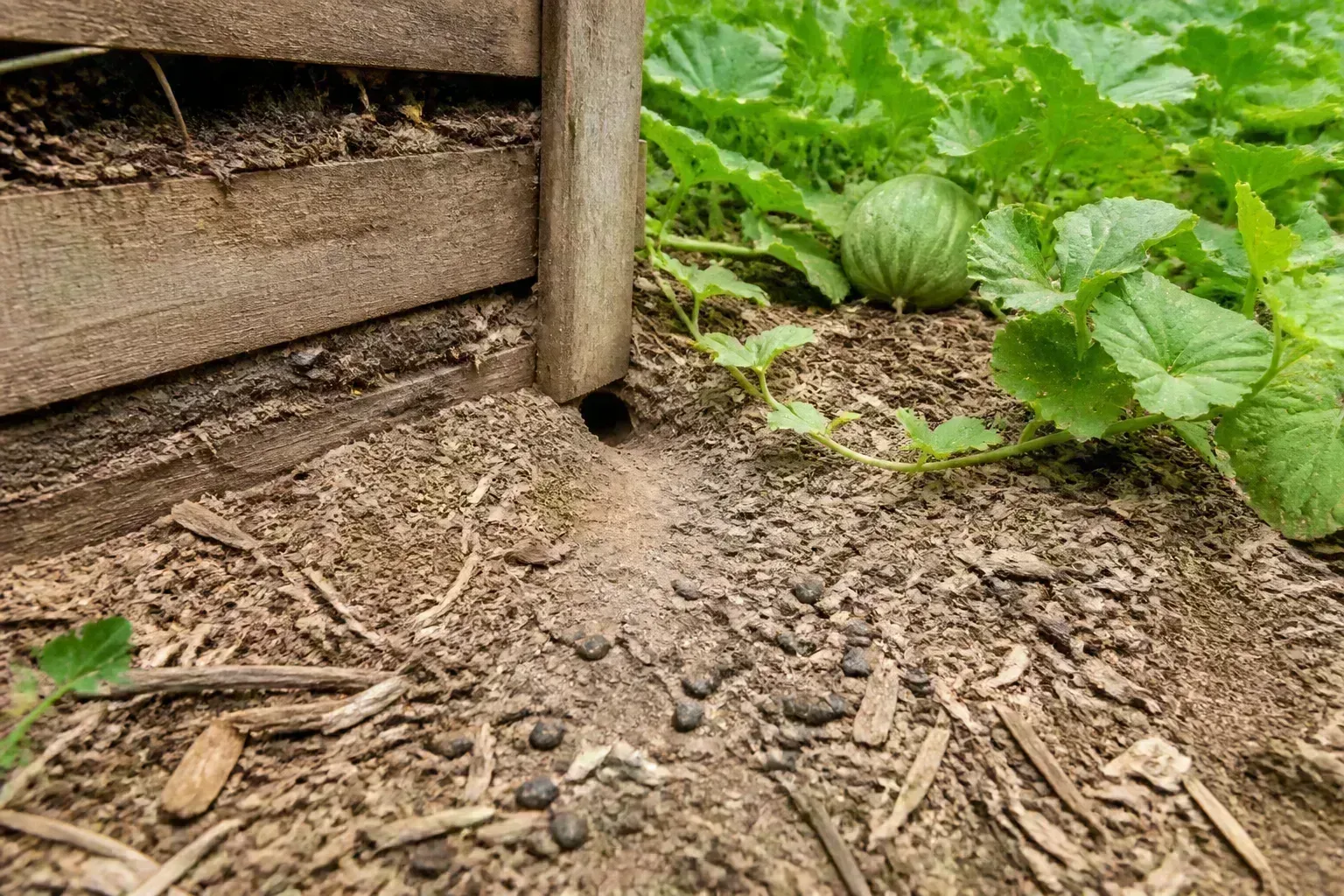
Norway rats burrow—look for 2- to 4-inch entrance holes along foundations, under sheds, beside compost bins, and beneath shrub roots. Indoors they stay low: crawl spaces, basements, ground-floor wall voids, and garage corners. Grease rub marks along floor-level runways are common.
Roof rats nest high: attics, false ceilings, cabinet tops, and tree hollows. You may hear scrambling overhead rather than along the floor. Outdoor signs include hollowed citrus rinds, gnawed fruit still on branches, and rats running fence lines at dusk.
When both rat species share a building, Norway rats usually claim lower floors while roof rats take upper levels (UC IPM). Your control plan may need ground traps and attic traps simultaneously—not one size fits all.
Gnaw Marks, Grease Trails, and Burrows
Rodents gnaw to wear down ever-growing incisors. The width of tooth marks helps ID species: mice leave fine ~2 mm scratches; rats leave ~4 mm gouges (UC IPM). Mice chew dime-sized holes in cardboard and soft plastic; rats can gnaw through wood, soft metals, and plastic pipe given time.
Grease marks (smudge marks) appear where oily fur contacts walls, beams, and pipes along habitual routes—mostly a rat sign because of body bulk, though heavy mouse traffic can mark tight corners. Fresh smudges wipe dark on a white cloth; faded marks suggest older routes that may still be useful for trap placement.
Burrows with multiple openings, packed runways, and food caches point to Norway rats. Roof rats occasionally burrow in insulation but more often leave elevated nests with shredded material. Mice do not dig lawn burrows; if you see surface runways in grass with clipped blades, suspect voles instead—see our vole vs. mole guide before buying rodent traps for the yard.
Entry Gaps: Dime-Sized for Mice, Quarter-Sized for Rats
Exclusion fails when you seal the wrong size gap.
House mice slip through openings ¼ inch tall and ⅜ inch wide—roughly a dime’s thickness (UC IPM). Norway and roof rats need about ½ inch to start, but rats gnaw wood, foam, and plastic to enlarge holes. Lightweight expanding foam, rubber, and plastic vent covers are not long-term fixes for either species.
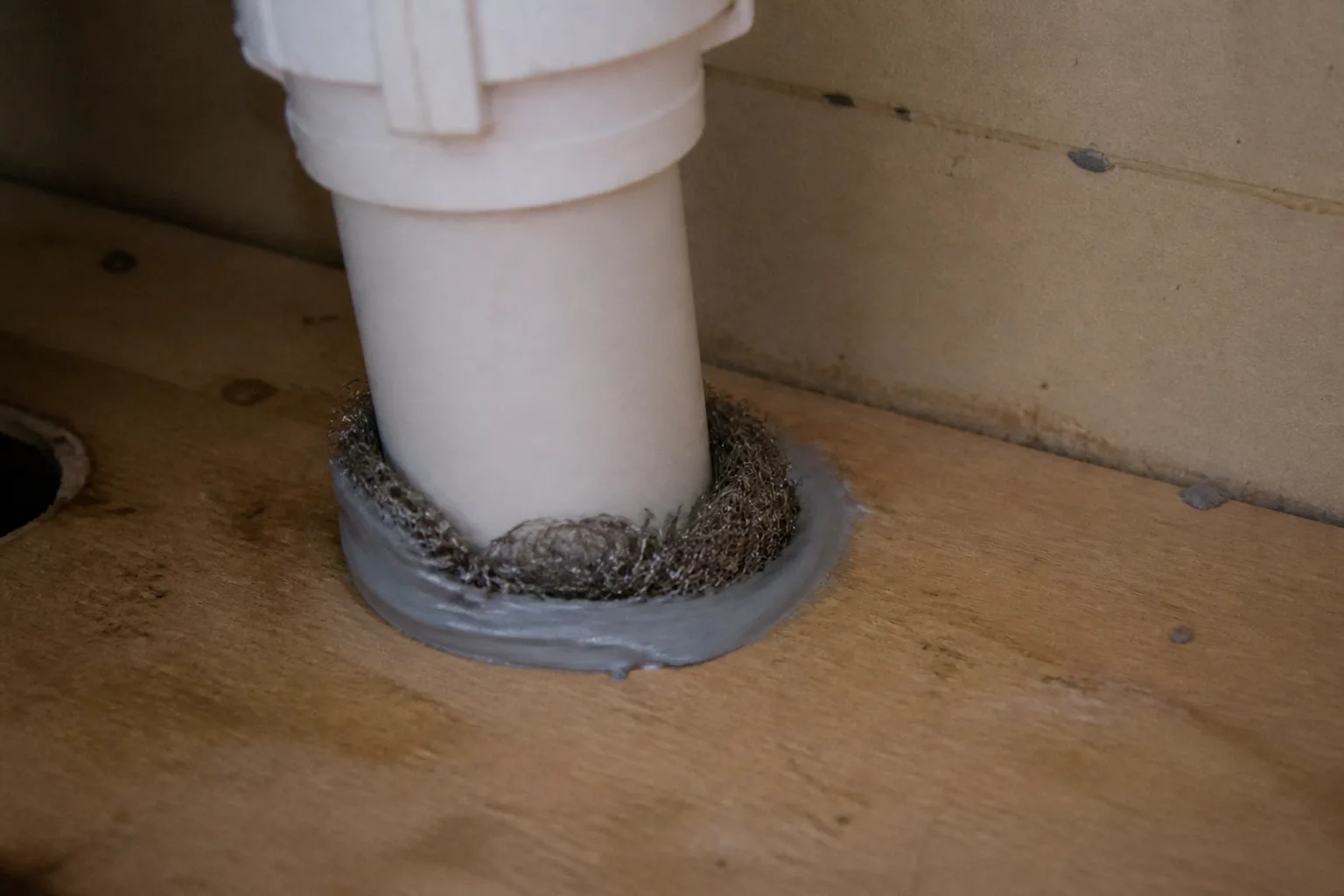
Durable exclusion uses ¼-inch hardware cloth, galvanized sheet metal, concrete patch, or coarse steel wool in small gaps (steel wool rusts—treat as temporary). Prioritize utility penetrations, garage door seals, crawl space vents, soffit gaps, and pipe chases. For roof rats, prune limbs within 3 feet of the roof and strip climbing ivy from walls (UC IPM rats Quick Tips).
The CDC “Seal Up” step belongs in every rodent plan: identify gaps with a bright flashlight from inside and outside, seal after trapping reduces interior population (sealing live rodents inside walls creates new problems).
Breeding Speed and Why “Just One” Is a Warning Sign
Rodents do not wait for you to finish researching trap brands.
A female house mouse can produce 5 to 10 litters per year of about 5–6 pups, with young breeding as early as 5–6 weeks (UC IPM). Lifespan averages 9–12 months indoors. One pregnant mouse in a pantry wall can become dozens within a season.
Norway rats average 4–6 litters annually with 6–12 young, breeding as early as 3 months. Roof rats produce 3–5 litters of up to 8 pups. Rats live about one to two years in favorable conditions. Populations compound fastest when food, water, and harborage stay available—pet food left out, birdseed in the garage, leaky outdoor faucets, and cluttered storage.
Seeing one rodent or a small pile of droppings warrants immediate trapping and sanitation, not a wait-and-see week. Early intervention uses fewer traps and less bait overall (UC IPM rat management).
Health Risks Worth Taking Serious
Both rats and mice contaminate food, damage wiring, and carry pathogens—but scale and behavior affect risk profile.
House mice transmit salmonella, leptospirosis, and lymphocytic choriomeningitis (LCM) through urine, droppings, and nesting material (UC IPM). Mouse urine is a documented allergen linked to asthma sensitization in children. Rats add typhus, foodborne illness, and rat-bite fever to the list (UC IPM rats). Commensal rats and mice in the U.S. are not rabies vectors, but they do not need rabies to make a kitchen unsafe.
Gnawed electrical wires create fire risk—especially in attics where roof rats nest undetected. Vehicle engine wiring in garages is a common, expensive casualty.
None of this requires panic. It requires gloves, disinfectant, sealed food storage, and prompt population reduction without stirring dry waste into the air. If you find rodent activity in a child’s sleeping area or a food-prep zone with heavy soiling, escalate cleanup and trapping immediately.
Control Strategy Differs by Species
Sanitation, exclusion, and trapping form the core for both—but the details diverge.
Trapping Mice Effectively
For most homes, snap traps are the first choice for mice (CDC trap-up guidance). Use mouse-sized traps, not rat traps—small mice may not trigger heavy rat snaps, while rat traps maim without killing.
Place traps along walls, behind objects, and beside droppings, trigger perpendicular to the wall so mice run over the plate. Use pea-sized bait: peanut butter, cotton nesting material, or whatever food the mice already steal. Set six to twelve traps in moderate infestations; extension sources often recommend far more in heavy cases. Check daily. Our best mouse traps guide compares snap, electronic, and humane options with placement diagrams.
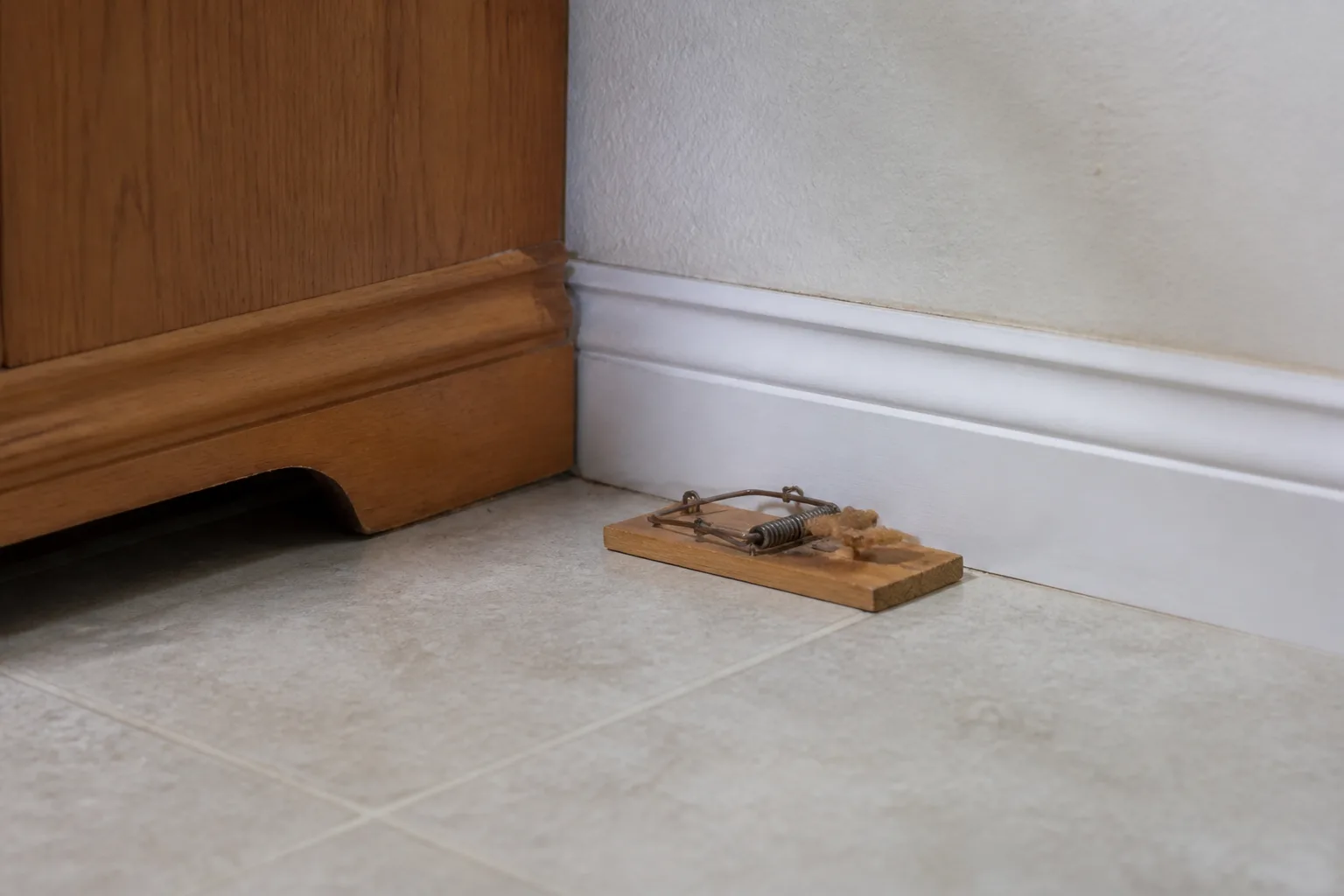
Avoid glue boards as a default: they catch mostly juveniles, cause prolonged suffering, and create messy disposal (UC IPM). Ultrasonic plug-in devices show little reliable evidence for established infestations.
Trapping Rats Effectively
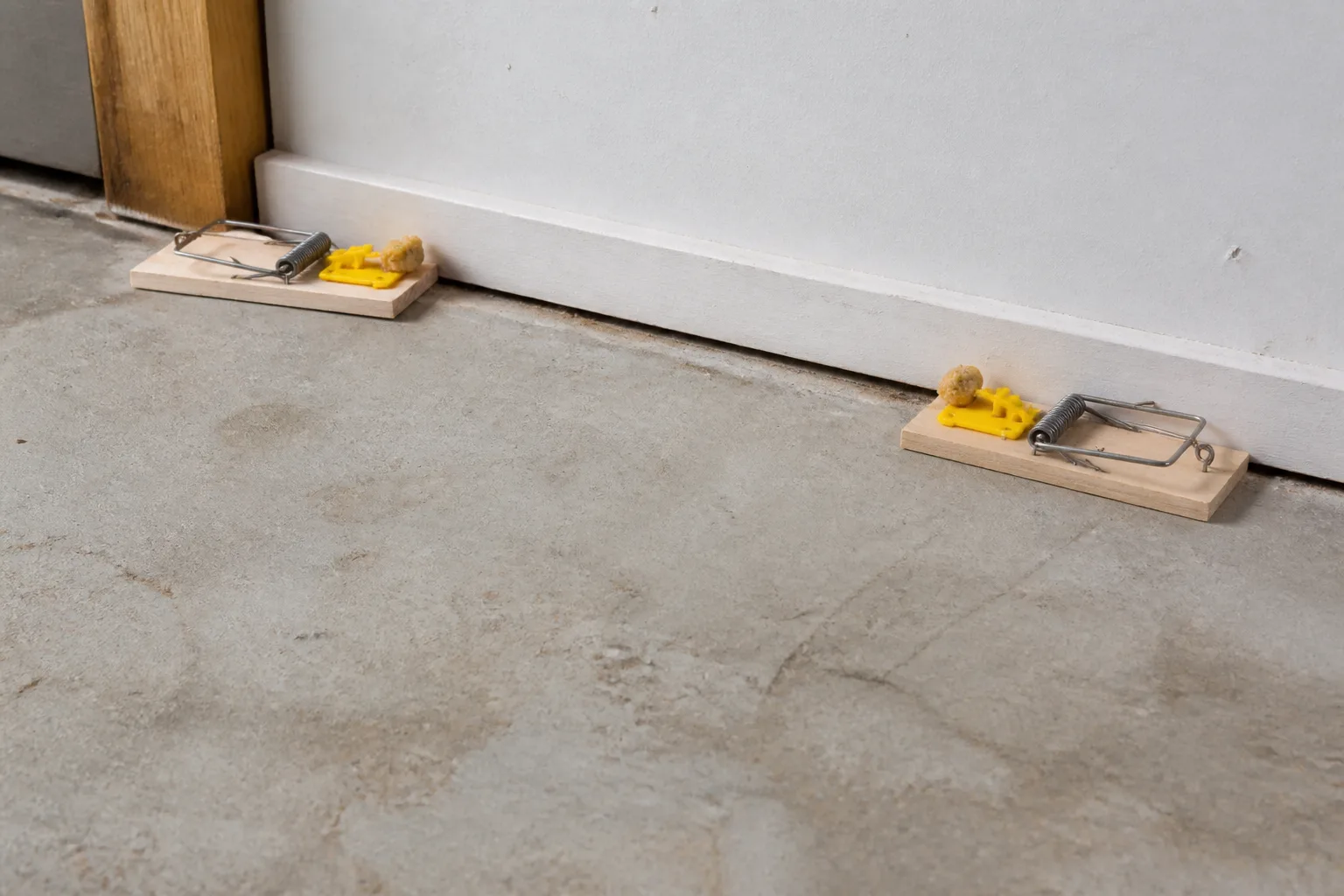
Use rat-sized snap traps along floor runways for Norway rats—trigger end nearly touching the wall, traps extending at right angles. For roof rats, set traps off the ground on ledges, beams, pipes, and branches where grease marks and droppings appear. Pre-bait unset traps until bait uptake is consistent, then arm.
A dozen or more traps may be necessary in heavy rat infestations (UC IPM). Space traps 10 to 20 feet along major runways. If a rat fires a trap without dying, relocate strategy— that individual may be trap-shy for good.
Rodenticides belong inside tamper-resistant bait stations, usually after trapping and exclusion efforts, and preferably with professional oversight (EPA rodenticide information). Poisoned rats can die in walls, causing odor and secondary poisoning risk to predators and pets. Never toss loose bait in the attic.
Peppermint oil and other repellents may briefly disturb rodents but do not replace trapping and sealing; see peppermint oil for mice for an honest order-of-operations breakdown.
Prevention That Works for Both Species
Prevention is the same playbook with species-specific sealing emphasis:
- Store food in glass, metal, or thick plastic with tight lids—pet food included. Feed pets only what they finish in one sitting.
- Remove harborage: clutter, cardboard on garage floors, dense ground cover against foundations, firewood stacked against siding.
- Manage moisture: fix leaks, clear clogged drains, empty saucers that feed outdoor rats.
- Secure garbage and compost in rodent-proof containers; rats gnaw plastic lids.
- Trim vegetation so shrubs sit at least 2 feet from walls and from each other; remove ivy ladders on buildings.
- Inspect seasonally: autumn cooling drives rodents indoors; spring garden cleanup reveals burrow entrances.
High-frequency repellers, mothballs, and baking-soda myths do not substitute for the CDC sequence: Seal Up, Trap Up, Clean Up. Do those in order, adjusted for species behavior.
When Professional Help Makes Sense
Call a licensed pest professional when:
- Droppings and damage persist after two weeks of correct trapping and sealing
- You cannot safely access attics, crawl spaces, or drop ceilings where activity concentrates
- You smell decay but cannot reach a carcass
- Wiring, gas lines, or structural wood show active gnawing
- You need commercial kitchens, multi-unit buildings, or schools brought into compliance
- You are unsure whether you have rats, mice, or a protected native species
Professionals identify species, deploy tamper-resistant bait stations legally, and perform exclusion at heights homeowners should not climb. DIY is reasonable for a few mice with clear droppings; it is risky when roof rats share attic wiring with insufficient ladder safety.
Conclusion
Rats and mice differ in size, droppings, nesting height, gnaw mark scale, and—most critically—how they respond to traps. Start with droppings and runway location, confirm species with the chart above, then match trap size and placement to biology: arm mouse traps immediately along walls; pre-bait rat traps before setting; put roof rat traps overhead as well as on floors.
Seal ¼-inch mouse gaps and ½-inch rat gaps with metal and concrete, not foam alone. Remove food and clutter before populations compound. The difference between rats and mice is not trivia—it is the difference between control that ends in a week and traps that sit baited while rodents breed behind your walls.