How to Get Rid of Carpenter Bees Fast: 4 Proven Methods
Carpenter bees drilling your deck or fascia? Learn the correct treat-plug-paint sequence, four fixes that work, ID tips, prevention, and when to call a pro.
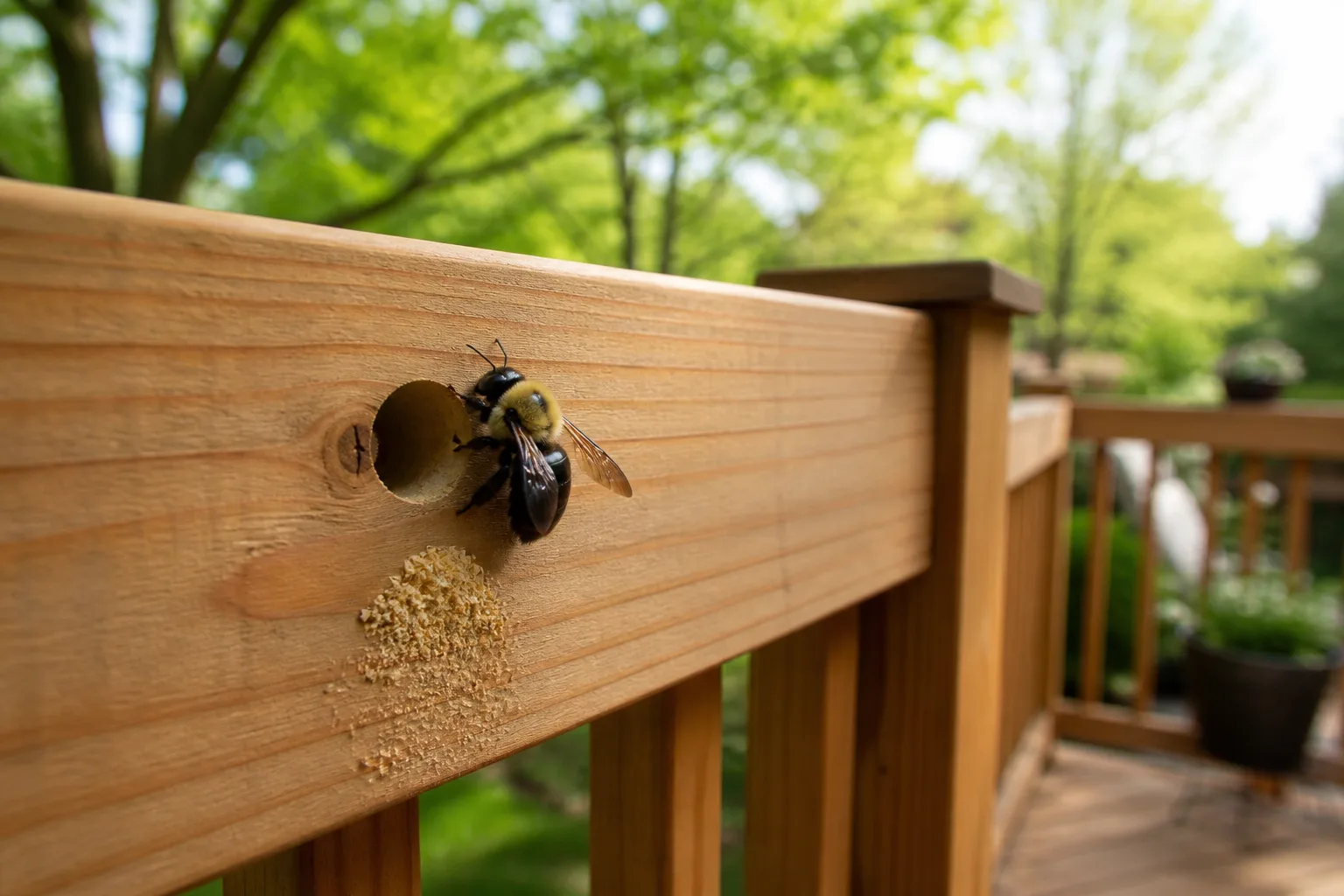
A shiny black bee hovering at your head while you walk under the deck is unnerving—even though the male doing the buzzing cannot sting you. The real problem is the perfectly round hole in your fascia and the coarse sawdust pile beneath it. Carpenter bees (Xylocopa virginica in much of the eastern U.S.) are solitary native pollinators that excavate galleries in bare, untreated wood. They do not eat the lumber; they tunnel into it to raise young. Left alone on structural trim year after year, those galleries branch, stain the siding below, and sometimes invite woodpeckers to rip the board apart hunting larvae.
The fastest reliable fix is not a random spray. It is a short integrated pest management (IPM) sequence: treat active holes with insecticidal dust, leave entrances open long enough for bees to contact the product, plug and repair the wood, then paint or seal exposed surfaces so next spring’s females choose somewhere else (Penn State Extension). Below are four methods that work—plus the order that keeps them from coming back.
The Quick Answer: Treat the Gallery, Then Repair the Wood
To get rid of carpenter bees fast, puff a labeled insecticidal dust into each active entrance hole at dusk, leave the hole open 24–48 hours, then seal it with a dowel or exterior filler and paint the wood. A wasp-and-hornet aerosol can knock down flying males if you must work in daylight. Do not plug holes first—a live bee will chew a new exit along the grain. For heavy infestations on second-story fascia or structural beams, hire a licensed pest control operator. Prevention—oil- or polyurethane-based paint on all exposed wood, including end grain—is what stops repeat damage more reliably than any single-season chemical (Gardening Know How).
What Carpenter Bees Are (and Why They Drill Your Deck)
Carpenter bees are large, solitary bees—not social colony builders like honey bees. Each mated female drills her own nest. She chews a nearly round entrance about ½ inch across, tunnels roughly 1 inch inward, then turns 90 degrees to follow the wood grain, creating a gallery with brood cells provisioned with pollen. Adults overwinter inside those tunnels and often return to the same wood the next spring, enlarging old galleries or starting branches. One bee’s first-season tunnel is minor; several bees reusing one entrance over years can weaken rails, fascia, and porch beams (Penn State Extension).
They prefer soft, unpainted wood at least 2 inches thick—deck rails, window trim, pergola posts, fence caps, and wooden lawn furniture in full sun. Pressure-treated lumber is less attractive but not immune if end grain stays bare. They also defecate below the hole, leaving yellow-brown streaks on siding or patio furniture that many homeowners notice before they spot the bee.
Carpenter Bee vs. Bumble Bee: ID You Can Do in Five Seconds
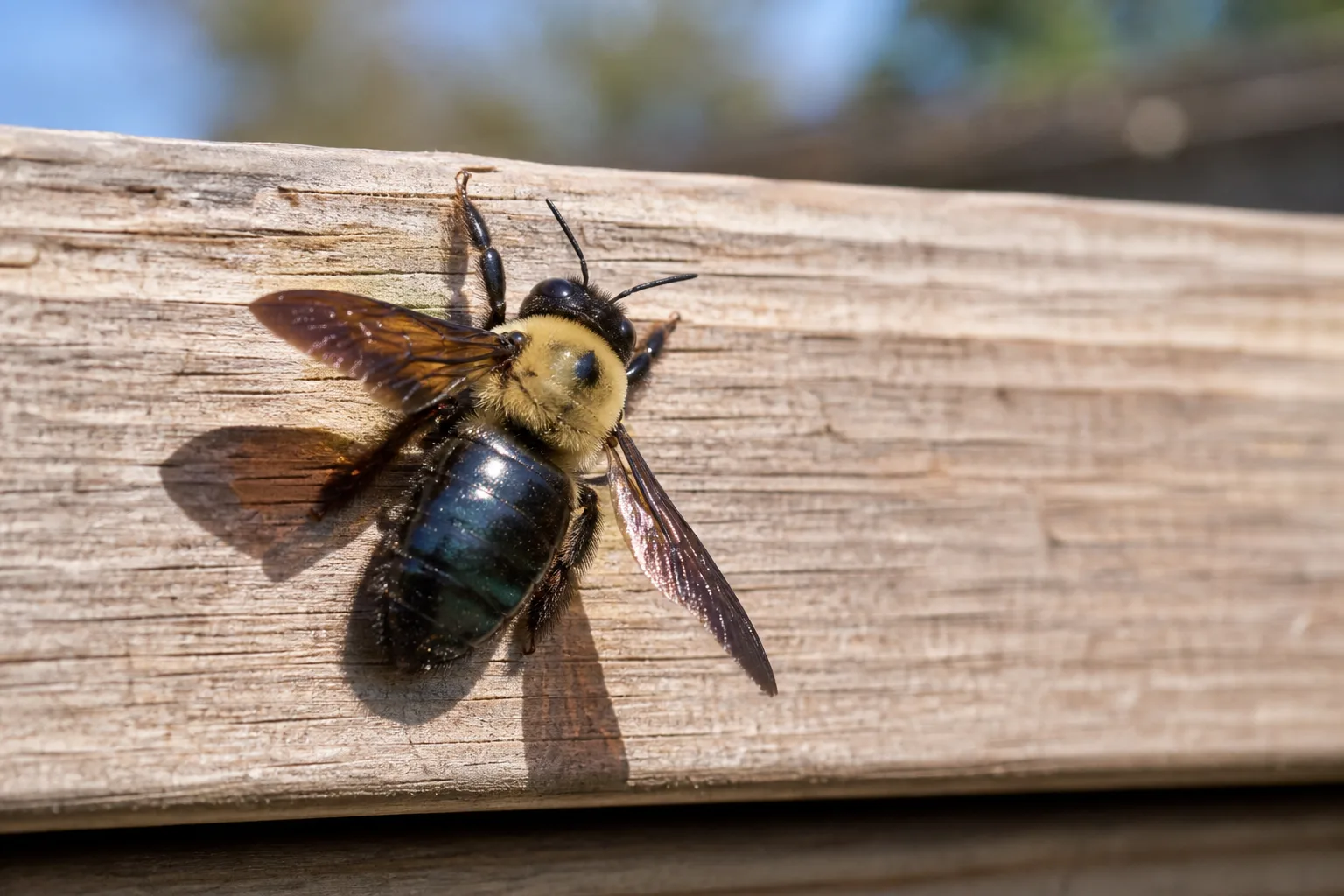
Both insects look big and buzz loudly in spring, but the abdomen tells the story instantly. Bumble bees have a fuzzy abdomen with yellow bands and nest underground in old rodent burrows or dense grass. Carpenter bees have a smooth, shiny black abdomen (sometimes with a green or purple sheen in light) with hair mainly on the head and thorax only. If you see round holes in wood and a bee patrolling the eaves, it is almost certainly a carpenter bee—not a bumble bee, paper wasp, or termite.
| Feature | Carpenter bee | Bumble bee |
|---|---|---|
| Abdomen | Smooth, glossy black | Fuzzy with yellow bands |
| Nest site | Round hole in wood | Ground nest |
| Social structure | Solitary female per gallery | Social colony |
| Hovering at eaves | Common (males guarding) | Unusual near wood |
Male vs. Female Behavior—and Real Sting Risk
The bee that darts at your face is almost always a male. Males lack a stinger and cannot hurt you—they are bluffing. Females can sting but rarely do unless grabbed, trapped in clothing, or poked directly at the nest opening (Penn State Extension). Children and pets should not poke active holes, but everyday walking under a deck is low risk. Your urgency should track wood damage, not sting panic.
Signs You Have Carpenter Bees (Not Termites or Wasps)
Before you treat, confirm the pest. Termites eat wood from inside and leave irregular, muddy galleries—not clean round surface holes with fresh sawdust. Paper wasps build open umbrella-shaped nests under eaves; they do not drill into lumber. Carpenter ants leave frass that looks like fine sawdust mixed with insect parts, and you may see workers on trails—not large bees hovering in place.
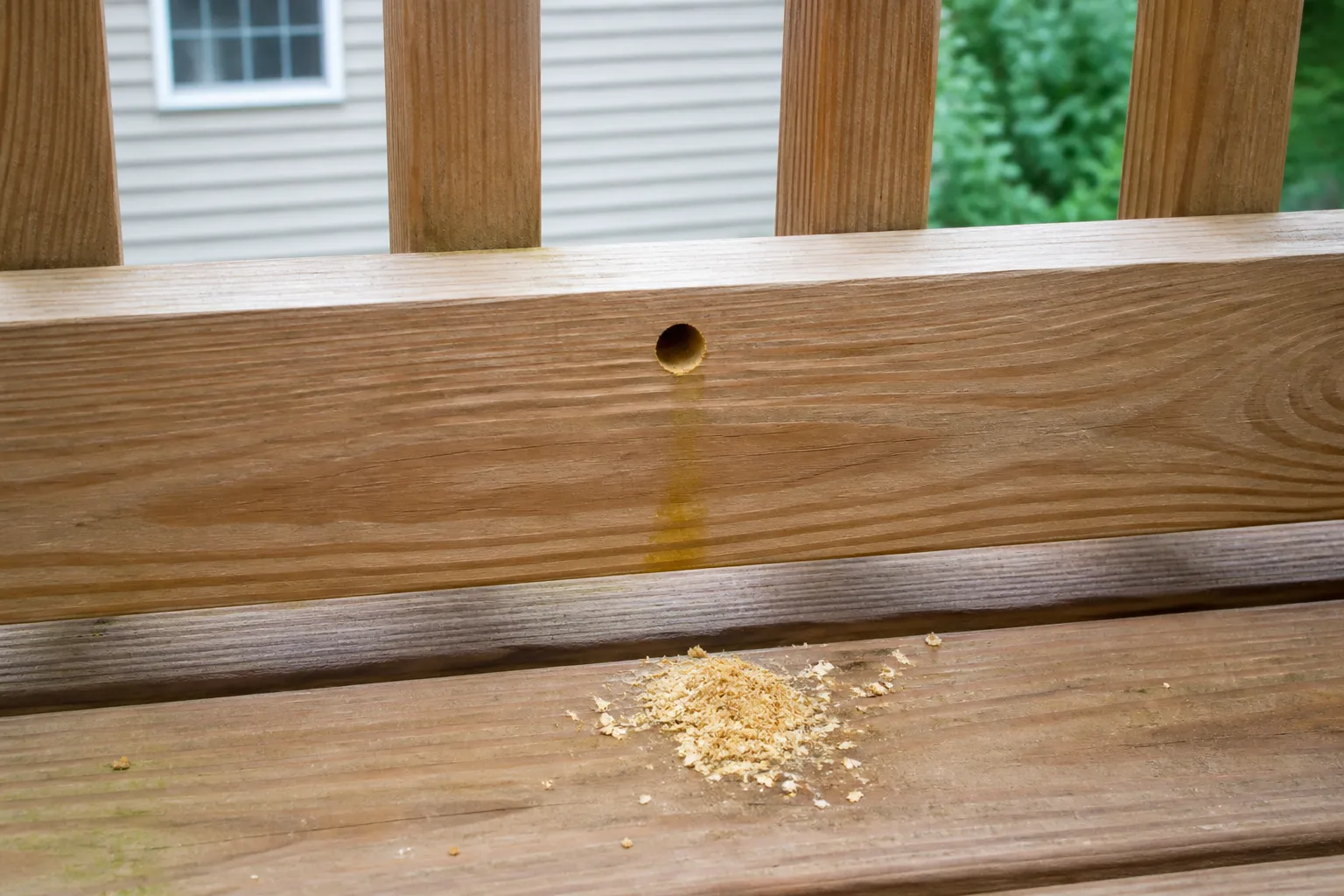
Active carpenter bee signs include one or more perfectly round holes on the face or underside of boards, coarse sawdust directly below the opening, yellow staining streaking downward, and males hovering near the hole on sunny afternoons. Listen on quiet mornings—you may hear chewing inside the wood when a female is excavating.
What the Holes, Sawdust, and Stains Look Like
The entrance looks machine-drilled: smooth, circular, about the diameter of your pinky tip. Inside, the gallery runs with the grain, sometimes 6 inches or more in a season. Sawdust is coarse and fresh when drilling is active; old piles may blow away. Stains come from bee feces deposited on the surface below—annoying on painted siding and a clue that the hole above is current, not historic.
If woodpeckers have shredded the fascia beside a hole, you are seeing secondary damage from larvae inside—repair and paint after treatment, or the birds will return (Gardening Know How).
Four Fixes That Actually Work (In the Right Order)
Think of these as four tools in one workflow, not interchangeable one-off tricks. Skipping steps—or doing them out of order—is why many homeowners still have holes every May.
Trick 1: Insecticidal Dust in the Open Hole
Insecticidal dust applied directly into the nest opening is the fastest, most reliable kill method for bees inside the gallery (Penn State Extension). Use a bulb duster to puff labeled dust—products containing carbaryl (Sevin), cyfluthrin, or boric acid around the hole are commonly recommended for carpenter bee galleries (Gardening Know How)—so the tunnel walls coat as bees enter and exit.
Work at dusk or after dark when bees are inside. Cover the flashlight lens with red cellophane or film—bees do not see red well, but you can still spot holes. Wear gloves, goggles, and a dust mask; the powder goes airborne easily. If you must treat in daylight, use a pyrethrum or wasp-and-hornet spray to knock down flyers first, then dust.
Leave the hole open after dusting. Penn State recommends treating when bees first appear in spring, again in mid-summer for bees that missed the first pass, and a third time in early fall before overwintering adults settle in—then fill holes with wood putty or dowels and paint in fall (Penn State Extension). Plugging immediately traps live bees that chew new exits.
Read and follow pesticide label directions exactly. Store products away from children and pets, and launder contaminated clothing separately.
Trick 2: Carpenter Bee Traps Where Females Shop for Nest Sites
A carpenter bee trap is a wooden box with angled ½-inch entrance holes and a clear jar below. Females investigating a nest site follow the tunnel toward light, enter the jar, and cannot find the exit. Hang traps early in spring, high and sunny—near gable ends, roof peaks, or last year’s damage—not in shade on a random fence post.
Traps intercept prospecting females before they drill your fascia. They do not clear galleries already provisioned inside your deck rail. Treat existing holes with dust and use traps as a supplement, not a substitute. They are lethal to pollinators—use them on wood you truly need to protect, not blanketed across the whole yard. For broader IPM thinking on when to kill vs. exclude pests, see our integrated pest management indoors guide—the hierarchy (monitor → physical fix → targeted treatment) applies to exterior wood, too.
Trick 3: Citrus and Peppermint Sprays as Short-Term Repellents
Citrus, peppermint, tea tree, and eucalyptus oils mixed with water and sprayed on bare wood may discourage carpenter bees from landing. They do not kill bees inside sealed galleries and wash off with rain within days. Use them as a temporary bridge while you schedule dust treatment and painting—not as standalone control.
Apply to unfinished wood surfaces you plan to paint anyway, and reapply after heavy rain until paint goes on. If you prefer low-toxicity options near active holes, pyrethrin sprays derived from chrysanthemums can repel around entry points before sealing, following label directions (Gardening Know How). Essential-oil mixes are gentler but weaker.
Trick 4: Replace, Plug, and Paint Vulnerable Wood
Replacing heavily tunneled boards removes nest sites that dust alone cannot fully reach after years of branching. Cut out damaged sections of rail, fascia, or furniture slats, install pressure-treated or composite replacements where practical, then finish properly.
After bees are dead and activity stops—typically 36–48 hours after dust, or in fall if you skipped chemical treatment—plug each hole with a wooden dowel and exterior glue, or exterior-grade filler, sand flush, and paint or varnish the entire surface, not just the patch (Gardening Know How). Stain and clear sealer penetrate wood rather than forming a surface film, so they repel carpenter bees less effectively than paint (Penn State Extension). End grain on deck boards and fence posts is the most vulnerable spot—seal it.
What Not to Do (WD-40, Early Plugging, Spray-Only Plans)
Do not plug holes while bees are alive. The female tunnels around the plug and opens a fresh hole inches away—often worse than before. Do not pour WD-40, gasoline, or motor oil into galleries. Direct spray may kill a bee on contact, but it is not a labeled pesticide, leaves flammable residue on wood, and harms beneficial insects visiting nearby flowers. It does not replace dust, repair, and paint.
Surface sprays alone fail because bees inside the tunnel never receive a lethal dose from drilling into treated wood—the residual deterrent lasts only about two weeks, making endless re-spraying impractical (Gardening Know How). A pest company’s recurring spray program that never fills holes or paints fascia buys you another season of damage, not a fix.
Ultrasonic repellers and bug zappers do not address gallery nesting. Leaving every carpenter bee alone is reasonable on a back-fence post with no structural role—but not on load-bearing trim you cannot afford to hollow out.
When to Call a Pest Pro or Carpenter
DIY dust treatment works for a handful of reachable holes on first-story trim. Call a licensed pest control operator when:
- You count more than a dozen active holes or damage spans overhead soffits and second-story fascia where ladder work is unsafe
- Galleries are in structural members—rafters, headers, beam ends—where wood integrity matters
- Woodpeckers have opened long runs of siding and you need carpentry repair, not just dust
- You are allergic to stings and cannot tolerate any treatment risk near active nests
A good pro dusts galleries on a schedule, documents activity, and tells you when wood is ready to plug and paint. For stinging insects that build exposed nests rather than drilling wood, see our wasp repellent guide—different pest, different tools.
How to Prevent Carpenter Bees From Coming Back
Prevention is maintenance, not a one-time trap purchase. After repair, shift to habits that remove the bare wood females seek each spring.
Paint Beats Stain for Bare Wood
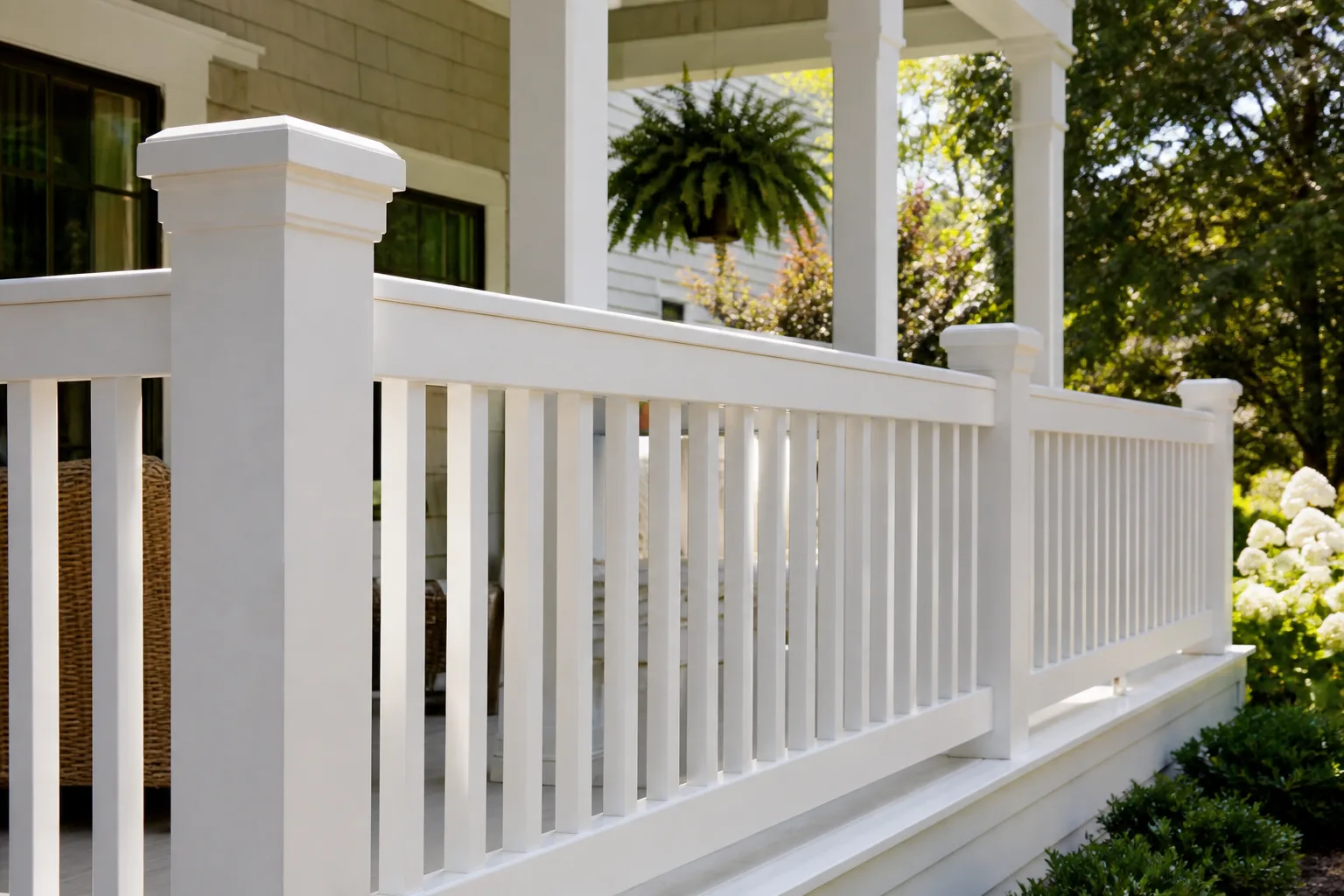
Paint all exposed wood—fascia, soffits, railings, pergola beams, furniture—with oil- or polyurethane-based exterior paint. Maintain the film; chipped end grain is an open invitation. If your deck is stained only, expect weaker protection—plan to paint vulnerable rails and caps even if field boards stay stained. Some painters add insecticide additives to paint for extra repellency; follow product labels and local regulations.
Pressure-Treated Lumber and Non-Wood Alternatives
Use pressure-treated lumber for new outdoor builds, and seal every cut end after installation—factory treatment rarely reaches fresh cuts. Where carpenter bees are chronic, consider composite, vinyl, or aluminum railing and trim. Store firewood away from untreated decks and siding so bees do not nest in logs then migrate to the house. Keep doors and windows screened in early spring when females search for nest sites near interior trim.
Inspect each February or March in warm climates (later in cold regions) for fresh sawdust before galleries deepen. One new hole treated and painted in year one costs less than a fascia board replaced in year five.
Conclusion
Carpenter bees are important pollinators but expensive houseguests when they choose your bare deck rails. The four fixes that actually work—dust, traps, repellent sprays, and wood repair—share one rule: kill or wait out the gallery, leave the hole open during treatment, then plug and paint. Males may buzz your head, but it is the female’s tunnel that threatens your wood. Treat on a spring–summer–fall schedule if activity persists, skip WD-40 and premature caulking, and invest in paint and sealed end grain so next year’s bees shop somewhere else. When holes climb out of reach or into structural timber, a licensed pro or carpenter is the safe next step—not another can of surface spray.