How to Prune Salvias in Summer for More Flowers
Learn when and how to prune salvias in summer: deadhead spent spikes, trim leggy stems, and match cut severity to herbaceous versus woody types.
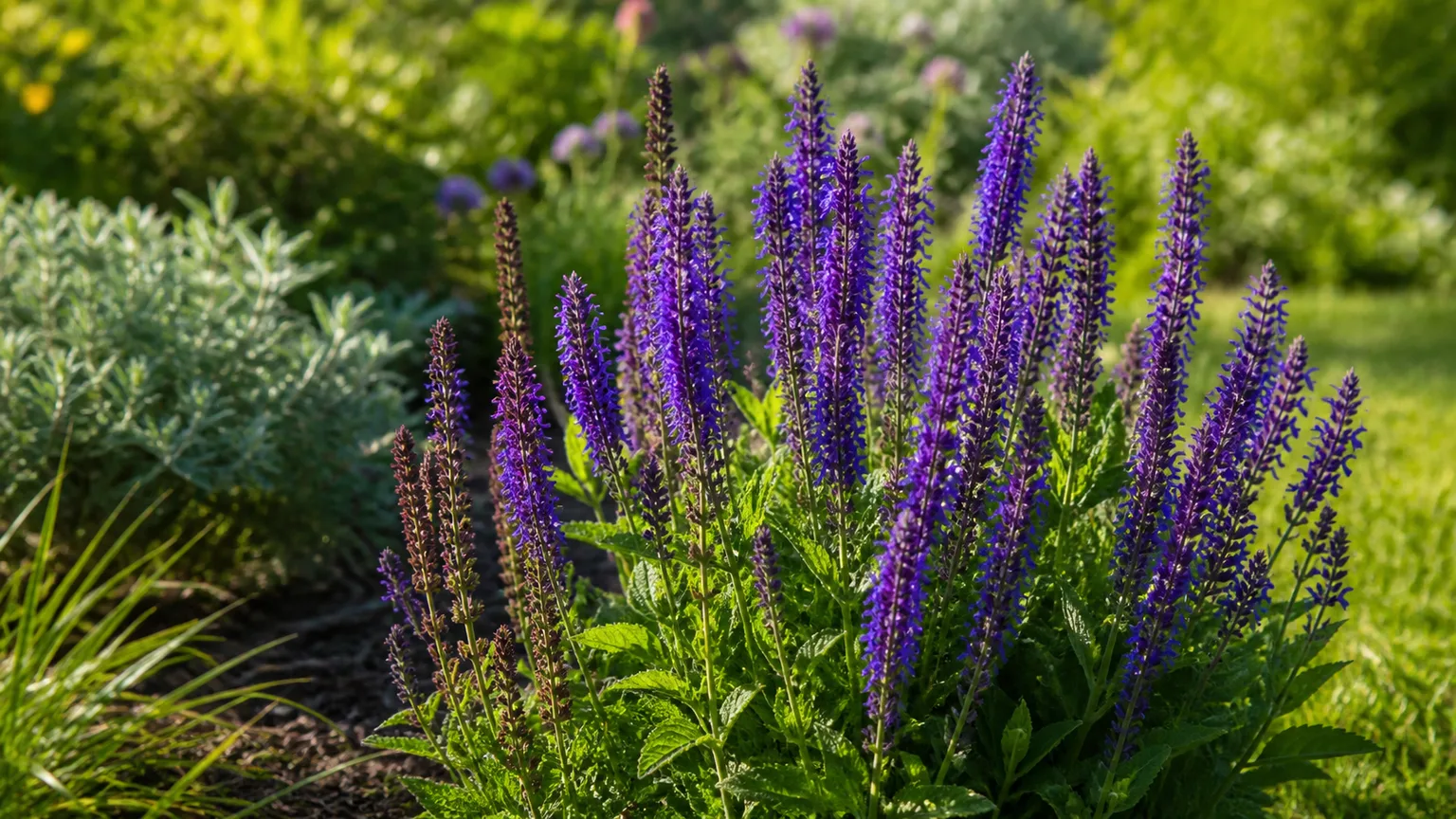
Summer is when salvias earn their keep: spiky flowers in blue, purple, red, pink, and white, often humming with bees, and usually still going when other perennials look tired. The plants are forgiving, but they respond sharply to how you cut them. Prune salvias in summer with the wrong severity on the wrong type and you get bare stubs instead of a second flush. Match the cut to the plant and you redirect energy from seed-making and leggy stems back into flowers and compact growth.
This page is about that summer workflow: when to deadhead, when to shear a soft-stemmed clump after its first flush, when to give a woody salvia only a light trim below faded blooms, and when to put the shears down entirely. If you need step-by-step cut-point photos for individual spent spikes, see our guide on how to deadhead salvia. Here the focus is the broader pruning decisions that keep a border looking full through July, August, and early fall.
The Direct Answer: Match the Cut to Your Salvia Type
Yes, you should prune salvias in summer if you want the longest, neatest display—but summer pruning usually means deadheading and light shaping, not a ground-level chop on every plant. All salvias can have spent flower spikes removed as they fade. That alone often extends bloom on repeat-flowering types.
The cut gets bigger only when you know the habit. Soft-stemmed herbaceous border salvias such as Salvia nemorosa and Salvia × sylvestris can be cut near the ground after their midsummer flowers fade to push fresh foliage and a second bloom cycle. Shrubby semi-evergreens such as Salvia greggii, S. microphylla, and many S. × jamensis cultivars need a lighter touch: trim just below faded flowers or lightly shape leggy tips while keeping the woody framework. Annual and bedding salvias stay on a deadheading schedule through the season.
If you remember one rule, make it this: follow the spike down to live leaves or buds before you cut, and never remove woody stems below visible green growth in summer. Everything else is timing and degree.
Know Your Salvia Before You Cut
“Salvia” covers hundreds of species sold as annual color, hardy border perennials, tender shrubs, culinary sages, and biennials. They do not share one pruning calendar. A technique that rejuvenates S. nemorosa ‘Caradonna’ can stall or damage a woody ‘Hot Lips’ plant cut too low.
Start with the base, not the flower color. Does the plant die back to a soft crown each year, or does it keep a permanent branchy frame with barky lower stems? Is it labeled annual at your garden center because your winters kill it, even though it behaves as a perennial farther south? A photo of the crown, the nursery tag, or a cultivar name search saves more plants than any generic “cut it back” advice.
The Royal Horticultural Society’s salvia growing guide splits salvias into annuals, border perennials (herbaceous and shrubby), and tender types needing winter protection. That framework is the backbone of every summer cut below.
Herbaceous Border Salvias That Tolerate a Hard Summer Reset
Border salvias such as S. nemorosa, S. pratensis, S. verticillata, and S. × sylvestris send up flower stems from a low crown or clump. After the first big flush—often around July—the whole clump can look like a field of brown spikes above a ring of tired leaves.
The RHS advises cutting these herbaceous types near ground level when flowers fade in midsummer to encourage a second flush of foliage and flowers. In cold or exposed gardens, it recommends delaying the harder autumn cut until spring so top growth protects the crown over winter; summer is still the right moment for the post-flush reset while the plant is actively growing. (RHS)
Before you shear, look for small basal shoots. Cut above them when they are visible rather than scalping blindly. A stressed, drought-wilted clump should get water and recovery time before a hard cut, even if the spikes are ugly.
Shrubby Salvias With Woody Lower Stems
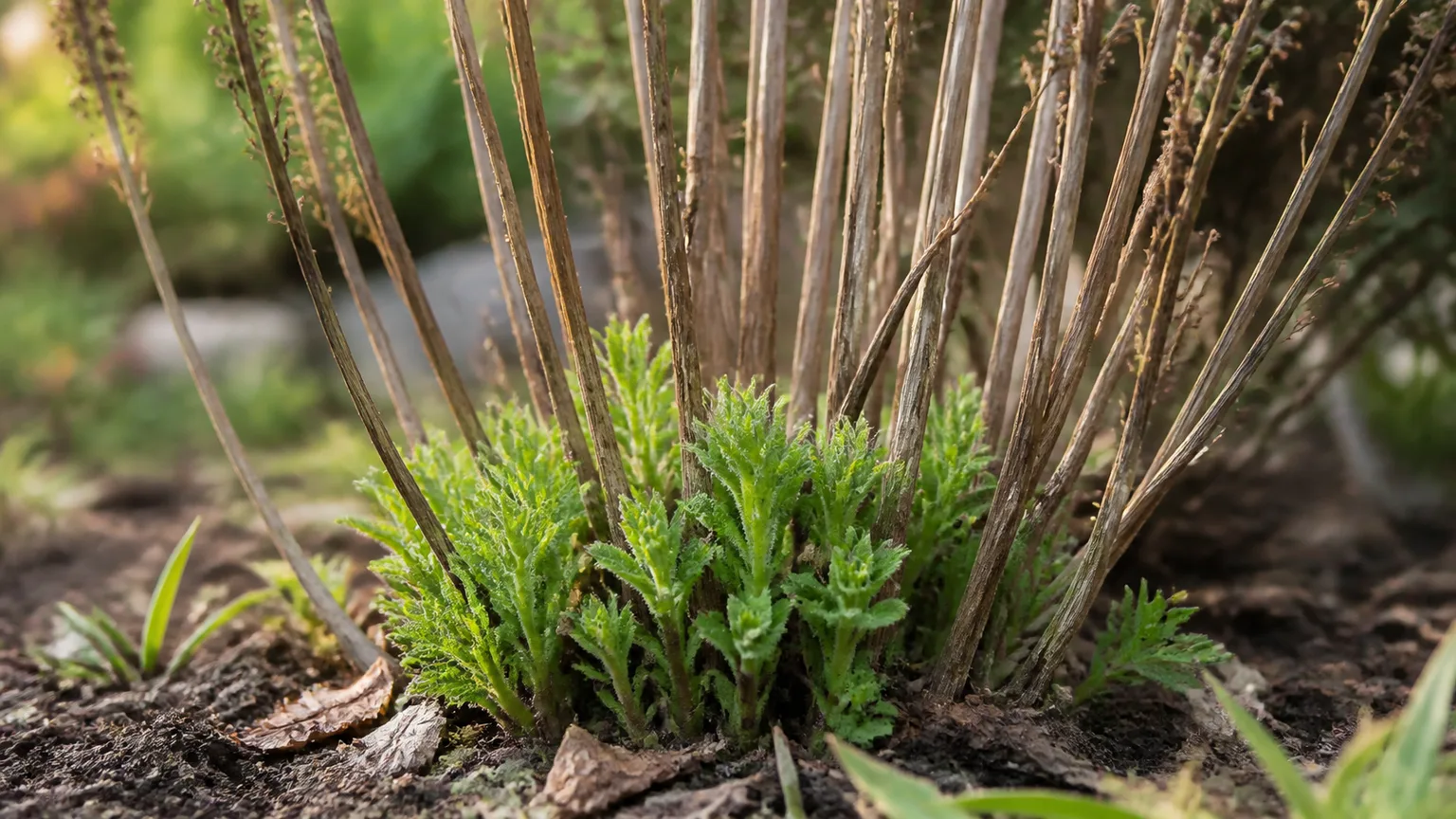
Salvia greggii, S. microphylla, and their hybrids—including many bicolor ‘Hot Lips’ types—build a small woody skeleton. Flowering stems look soft at the tips, but the lower plant is a real shrub. These plants tolerate regular deadheading all summer and, if bloom stalls in midsummer, an additional light trim cutting just below faded flowers to encourage another flush. (RHS)
They do not tolerate being cut to bare wood in summer the way herbaceous clumps do. Joy Us Garden notes the same risk on woody S. greggii: stems cut below live buds may not resprout well. When you cannot see healthy leaves or side shoots below your proposed cut, stop higher. A slightly open shrub in August is easier to correct at the mid-spring structural prune the RHS recommends—cutting woody stems to about 10 cm (4 in.) to keep these shrubs compact—than a shrub with no viable growth left.
Mexican bush sage (Salvia leucantha) and similar soft-stemmed but shrub-forming types often benefit from light summer shaping to control floppy stems, yet they still need you to preserve leafy framework. Treat them like shrubby salvias unless you know your cultivar tolerates harder renewal.
Annual, Bedding, and Tender Salvias
Bedding salvias and true annuals— including many scarlet sage (S. splendens) selections—do not need structural pruning. Deadhead spent spikes through summer and pinch overly long stems if they flop. The RHS notes that regular deadheading on annual salvias encourages flowers after the initial flush. (RHS)
Tender perennials such as mealycup sage (S. farinacea) blur the line. NC State Extension describes it as a tender herbaceous perennial that blooms intermittently from spring to frost and notes that pruning after a long bloom period can help it grow thicker, less-leggy foliage. (NC State Extension) In a frost-free garden, lightly groom during bloom. Where it is grown as an annual, deadhead for appearance and flowers, but do not apply winter-shrub logic to a plant you will replant next spring.
Biennial salvias flower once in their second year and finish their life cycle. Summer deadheading may tidy the display but will not create the endless rebloom loop you expect from S. nemorosa. Know which camp you are in before investing effort.
Deadheading Versus Summer Pruning
These jobs overlap but are not identical. Deadheading removes a spent flower spike back to healthy leaves or a live side shoot. It is the default summer task on almost every repeat-blooming salvia and the smallest cut that still changes bloom behavior.
Summer pruning changes plant size, density, or structure: shearing an herbaceous clump after a flush, trimming leggy branches on a shrubby salvia, or cutting stems that block a path. Pruning can include deadheading, but deadheading alone does not always fix a plant that has finished an entire wave of bloom on mostly bare stalks.
Use the smallest effective cut. If the plant is leafy, compact, and still sending up buds, deadhead spike by spike. If an herbaceous clump is mostly brown stems after a flush, a renewal shear is more efficient than snipping dozens of individual spikes. If a woody salvia has only a few faded tips above a healthy frame, remove those tips—not half the shrub.
UF/IFAS Gardening Solutions recommends light pruning during flowering to keep salvias neat, with heavier cutting back when foliage dies or after freeze damage—not arbitrary mid-season scalping on every type. (UF/IFAS Gardening Solutions) That distinction keeps summer work proportional.
When to Prune Salvias During Summer
Timing matters as much as technique. Cut too early and you remove buds still opening. Wait until a spike has mostly faded and you avoid unnecessary work. Wait too long on an herbaceous clump and the plant commits energy to seed while the border looks tired for weeks.
After the First Major Bloom Flush
For herbaceous border salvias, the clearest summer pruning window opens when the first major flush is largely spent—often late June through July in many temperate gardens, earlier in hot climates and later where spring started slow. Brown spikes, fewer fresh flowers, and still-green basal foliage are your cues.
This is when the RHS “near ground level” reset applies to types such as S. nemorosa and S. × sylvestris. The goal is not punishment; it is renewal. Fresh leaves and a second flower wave usually follow within weeks if the plant has full sun, decent drainage, and enough season left.
Shrubby salvias may also stall after a heavy spring show. If flowering slows in midsummer, the RHS suggests cutting just below faded flowers rather than rebuilding the whole plant. That lighter July trim is the shrub equivalent of the herbaceous shear—same season, different depth.
When Stems Turn Leggy or Flop
Leggy salvias stretch toward light, lean out of crowded plantings, or simply age with long bare lower stems and flowers only at the tips. Summer is a reasonable time to trim back the longest stems by up to one-third, cutting to a side shoot or leaf pair that faces the direction you want growth to go.
Do not confuse legginess with normal height on tall cultivars. S. leucantha and some S. guaranitica types are supposed to be airy and tall. Trim only when stems flop into paths, smother neighbors, or flower weakly because the plant put all its energy into length.
Improve the underlying cause when you can. Salvias flower best with at least six hours of direct sun; UF/IFAS notes reduced flowering in part shade. (UF/IFAS Gardening Solutions) Spacing crowded clumps, moving a pot into stronger light, or thinning competing foliage often prevents the same leggy regrowth after you cut.
When Growth Spreads Where You Do Not Want It
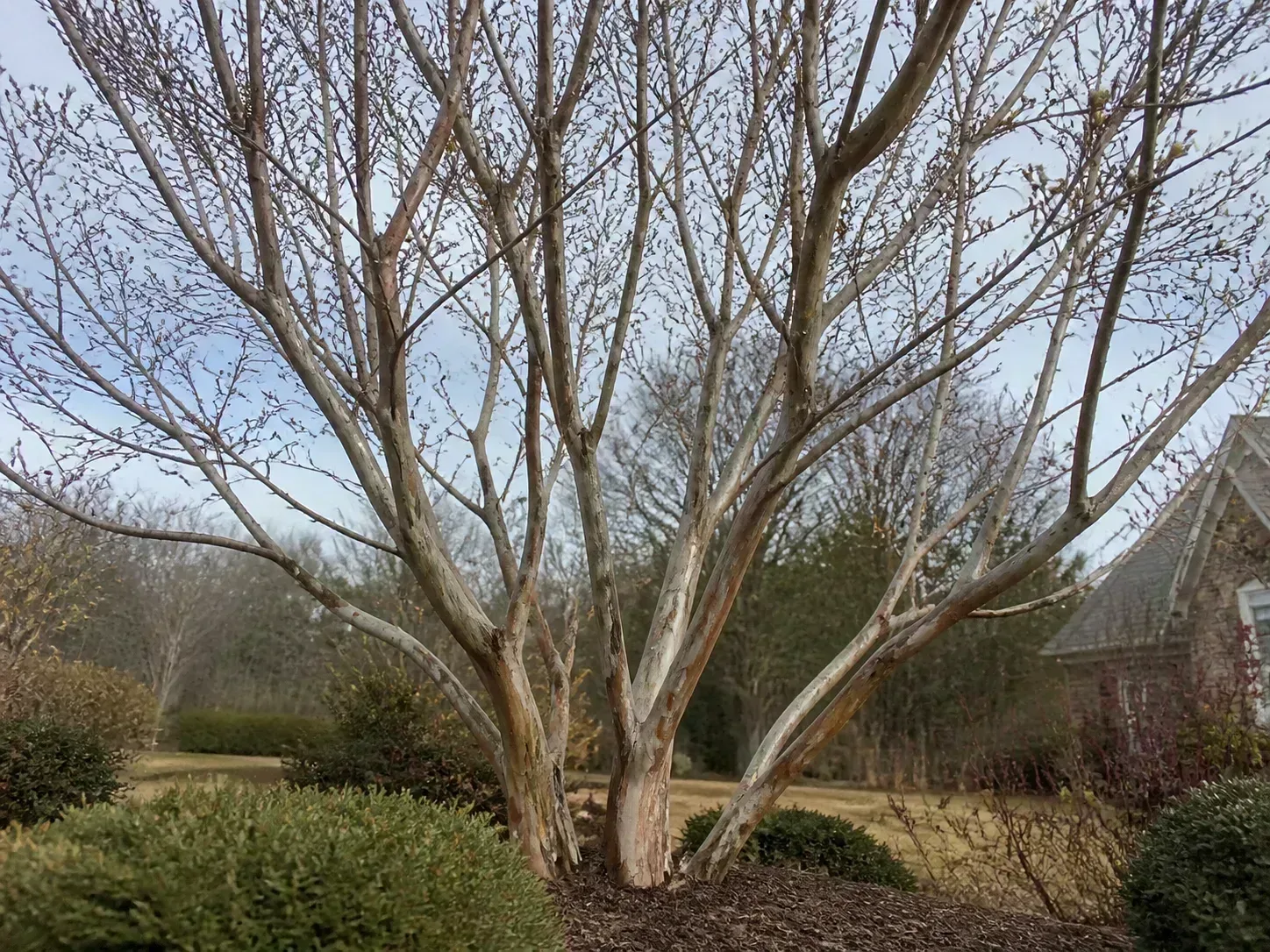
Salvias make excellent border and pathway plants until they do not. Stems arching across a walk, leaning into a seat, or growing through a lower companion plant are fair summer pruning targets. Cut back to a branching point inside the clump rather than leaving a stub that will flop again.
Some spread by suckers or self-seeding. Removing wayward shoots at soil level during summer keeps the planting readable and gives you divisions or cuttings to share. That is different from deadheading, but it is still summer maintenance that protects the display you planned.
Avoid a hard perimeter shave on woody salvias unless you accept delayed bloom on the cut sides. Shape gradually over several weeks if the plant is large and still in active flower.
How to Make Each Summer Cut
Good summer pruning is boring in the best way: sharp tools, visible live tissue below the cut, and no rushing through a heat-stressed plant.
Tools, Angle, and Clean Cuts
Use bypass hand pruners or snips sized to the stem. Bypass blades crush less than anvil pruners on green growth. Reserve hedge shears for large sweeps on soft herbaceous clumps only—not for precise work on woody frameworks.
Cut just above a leaf pair or side shoot, angled so water runs off the stub without pooling on the bud below. Wipe blades when moving from a plant with spotted or dieback stems to a healthy neighbor. Ragged tears and crushed stems heal slowly and look messy for the rest of the season.
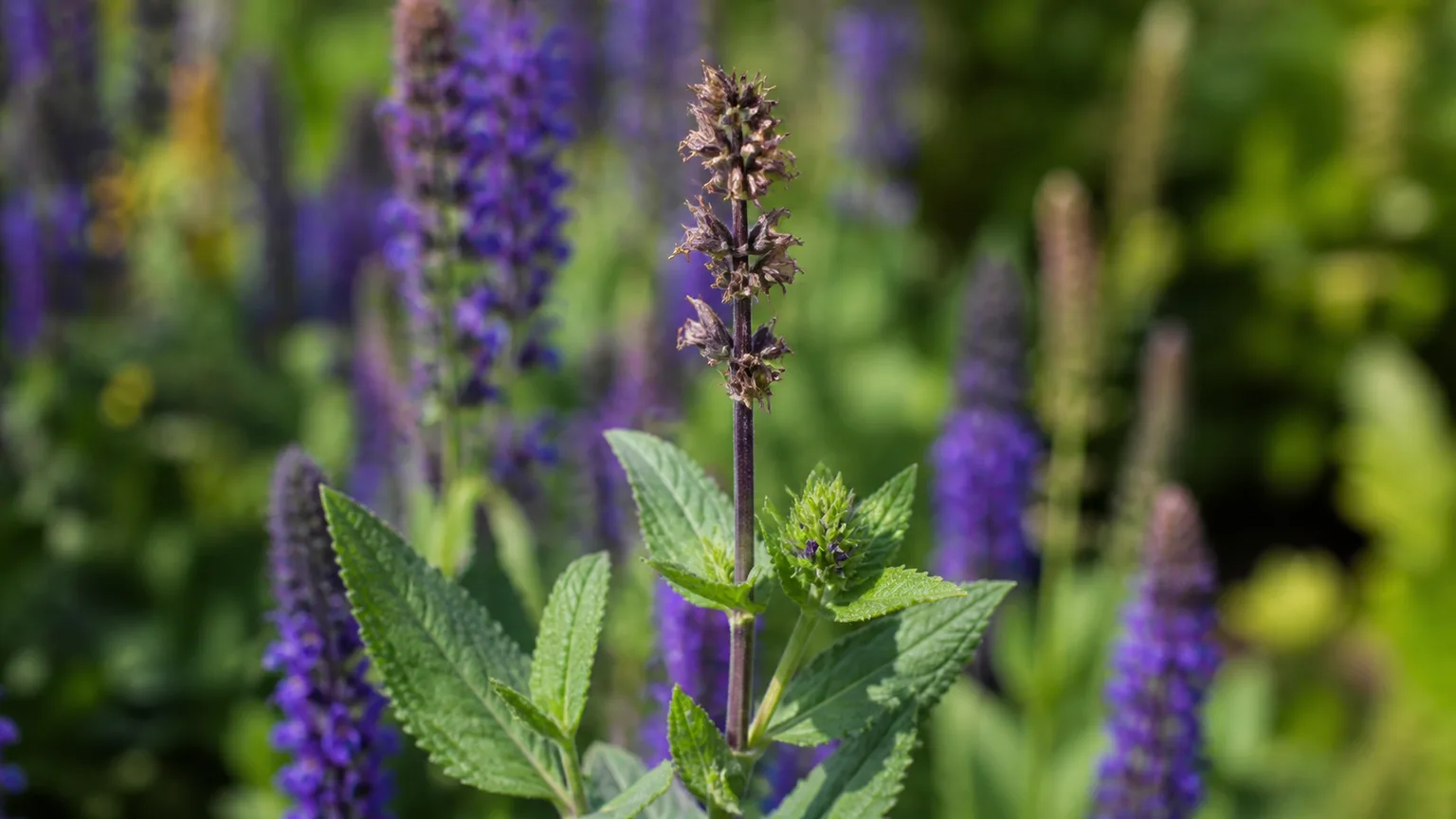
For individual spent spikes, trace the stem downward until you find the first strong leaves or a small side branch carrying buds. That cut point—not the faded flower tip—is where rebloom usually starts. Our deadheading salvia guide walks through that decision with photos if you want a visual check.
The Shear-Back Sequence for Herbaceous Clumps
When an herbaceous salvia clump has mostly finished its first flush, work in a short sequence instead of one blind chop.
First, remove any clearly spent spikes individually if a few remain among fresh ones. Second, step back and assess basal growth: new shoots at the crown tell you the plant is ready to regenerate. Third, shear or cut remaining old stems down to within a few inches of the crown, leaving those basal shoots intact. Fourth, rake out matted cut debris from the center so air reaches the crown.
Water deeply if the soil is dry, then wait. Do not fertilize immediately “to help it bounce.” A healthy salvia in good soil usually needs only time and sun. High-nitrogen feeding after a hard cut can push soft foliage at the expense of flowers.
On shrubby types, substitute “shear the clump” with tip-by-tip removal below faded flowers or selective shortening of the longest leggy stems. Stop when you still see plenty of leafy framework remaining.
What to Do Immediately After Pruning
Think recovery, not rescue. After summer pruning, water if the root zone is dry, especially for container plants that heat up faster than bedded ones. Let excess drain; salvias dislike soggy crowns. NC State emphasizes well-drained soil and good air circulation for mealycup sage, which is prone to mildews when crowded and damp. (NC State Extension)
Skip the impulse to feed right away. UF/IFAS describes salvias as generally low-maintenance ornamentals that benefit from well-drained soil and occasional grooming—not constant fertilizer. (UF/IFAS Gardening Solutions) If you fertilize once, do it at spring start, not after every haircut.
Mulch lightly if your soil dries quickly, but keep mulch off the crown itself. Watch for new shoots over the next two to three weeks. No fresh growth after a moderate cut on an otherwise healthy plant usually means the cut was too low, the plant lacks sun, or roots are stressed by wet soil or drought—diagnose that before cutting again.
Keep Salvias Flowering Between Pruning Sessions
Pruning opens bloom; culture keeps it going. Salvias are among the best long-blooming perennials when sited correctly, but they are not magic in shade or standing water.
Give them full sun and sharp drainage. Allow the soil to dry between waterings once plants are established; summer rain may be enough in many beds. Pinch shoot tips on young shrubby salvias in spring and early summer if you want bushier plants, accepting a slight delay to first flowers—a trade the RHS recommends for fuller long-term form. (RHS)
Deadhead on a rolling basis rather than waiting for the entire plant to brown. Leave a few spikes if you want seed or pollinator continuity; remove the rest. Thin dense clumps that stay wet after rain so air moves through stems.
Remember the calendar does not end in August. Herbaceous types may need a light autumn tidy in mild climates, while cold gardens should delay the hard fall cut until spring so old stems insulate the crown. Shrubby salvias get their major resize in mid-spring, not during the hottest week of summer. Summer work keeps the show going; spring and fall decisions protect the framework.
Common Summer Pruning Mistakes
The most expensive mistake is cutting woody salvias below live buds because an herbaceous shear worked on a neighbor plant. If stems stay brown and leafless weeks after a deep cut, you likely went too low. Next year, prune in spring to living tissue only.
The second mistake is never escalating beyond deadheading when an herbaceous clump is all spent stems. Snipping individual brown spikes on forty stems takes forever and still leaves a tired plant. Match effort to the actual condition.
Third, pruning during clear stress— wilted drought plants, heat-scorched new growth, recent transplant shock, or active mildew—asks for replacement tissue the roots cannot support. Fix water, drainage, or spacing first; remove only what is definitively dead.
Fourth, shearing everything to one height for tidiness removes opening buds and leaves pollinators nowhere to feed. Work spike by spike on mixed plants, or shear only when the flush is genuinely over.
Fifth, expecting instant rebloom in late summer from a heavy cut made when nights are already cooling. Some plants will flower again; some will put on leaves and wait for next year. That is biology, not failure—unless you also cut too hard on the wrong type.
When Not to Prune Salvias in Summer
Do not perform optional pruning on a salvia that is clearly drought-stressed or sitting in saturated soil. Wilted leaves with dry soil need water first. Yellowing lower leaves with a pot that never dries out need drainage attention, not another trim.
Skip major cuts during extreme heat waves if you can wait a week for cooler mornings. Plants already losing turgor recover poorly from additional foliage loss.
Do not deadhead every spike if your goal is seed collection or gentle self-sowing. Mark the stems you want to mature and groom the rest.
Avoid a late-season hard reset on herbaceous salvias in short-season climates if frost is only weeks away. A light deadhead is fine; a ground-level shear with no warm weeks ahead may give you leaves but not flowers.
Finally, do not prune biennial or finished annual displays as if they were repeat-blooming border perennials. Know when the plant’s run is ending and spend your effort on types that will actually respond.
Conclusion
Prune salvias in summer by deadheading spent spikes on every repeat bloomer, then choose depth by habit: herbaceous border types can be cut near the ground after the first midsummer flush; shrubby salvias get a light trim below faded flowers or a modest legginess correction while keeping woody stems leafy; annuals stay on a deadheading rhythm.
Use sharp bypass tools, cut above live leaves or buds, water dry plants after larger trims, and resist fertilizing your way out of a bad siting problem. When bloom still stalls, check sun, drainage, and spacing before you cut again—and save the big structural rebuild for spring on woody plants or for spring protection decisions on cold-garden herbaceous crowns. Done this way, summer pruning is not extra work piled onto a tired plant; it is the habit that keeps salvias flowering cleanly until the season turns.



