How to Deadhead Salvia: Timing, Cut Points, and Care
Deadhead salvia without guessing: identify your plant type, cut above fresh growth, protect cold-climate crowns, and encourage another bloom flush.
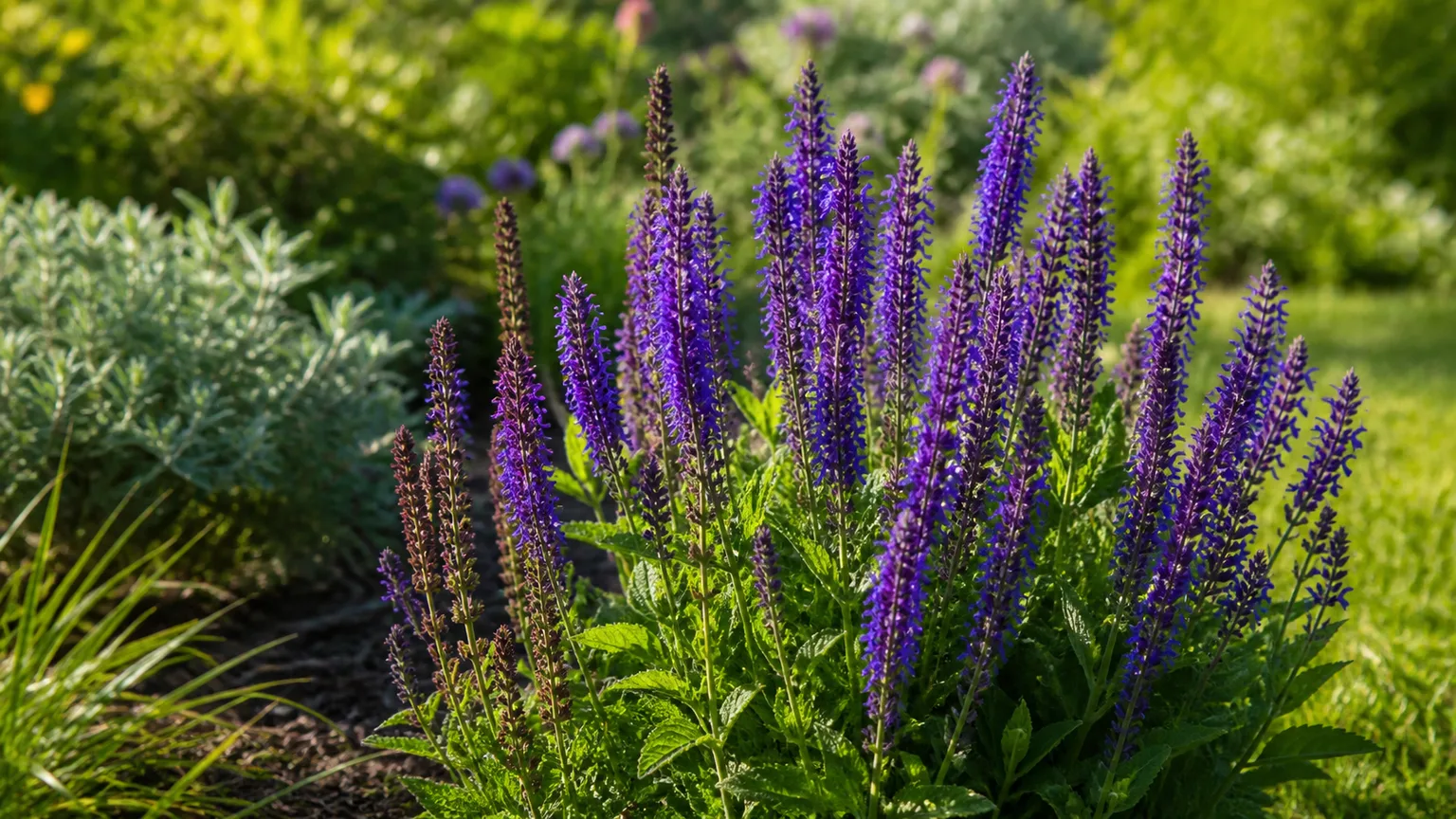
The Direct Answer: Remove Spent Salvia Flowers, With Exceptions
Yes—deadhead salvia when a flower spike has faded if you want the plant to look tidier and have the best chance of another bloom flush. The safe default is not to shear the whole plant. Follow one spent spike down to healthy leaves or a live side shoot and cut just above that growth. That preserves the part of the stem most likely to make the next flowers.
The exception matters as much as the rule. “Salvia” covers annual bedding plants, soft-stemmed herbaceous perennials, shrubby plants with woody lower stems, tender sages, and biennials. They do not share the same winter-cutback schedule. The Royal Horticultural Society’s salvia guide separates these groups and gives different pruning directions for each, which is the reason a one-line instruction such as “cut it to the ground” can be excellent advice for one plant and ruinous for another.
Deadheading is a maintenance cut, not a promise of endless flowers. It can encourage a repeat bloom in a plant that has enough light, moisture, growing season, and healthy foliage to respond. It cannot make a drought-stressed, shaded, root-bound, or seasonally finished salvia perform like it is June again. Treat the cut as one part of good care, not a rescue technique for every sparse plant.
Use this quick decision rule at the plant. If there are just a few brown spikes above vigorous green leaves, deadhead those spikes. If an herbaceous clump has finished a whole flush and is mostly bare stalks, it may be ready for its type-appropriate summer cutback. If the plant has a woody base, take only the faded tips and wait to make a larger shape correction until you know the cultivar and season. If the foliage is limp, yellowing, spotted, or the soil is saturated, diagnose that problem before pruning more.
One more distinction prevents disappointment: a dead flower is normal; a suddenly brown flower display can be a stress signal. Normal spent flowers dry from the bottom of a spike upward while the plant continues to make green leaves and buds. Flowers that collapse while leaves spot, stems soften, or the whole clump wilts call for a closer look at water, air circulation, pests, and root health. Removing damaged blooms is fine, but the next step is not automatically a bigger cut.
Identify Your Salvia Before Making a Larger Cut
If the plant label is still in the pot, keep it. If it is gone, search the cultivar name before moving beyond individual faded spikes. Look at the base as well as the flowers: does the plant make soft new shoots from the crown, or does it have a permanent branchy frame with bark-like stems? That is more useful than trying to decide by flower color.
When you cannot identify it, make the conservative cut. Remove only a spent flower stem back to the nearest healthy leaves and leave the main structure alone until spring growth reveals the habit. Photos from the side and base, a nursery receipt, or a local extension plant database can often resolve the question. A salvia sold as an annual may be a tender perennial in a warmer garden, so the retailer’s seasonal display is a clue, not a pruning instruction.
Soft-Stemmed and Herbaceous Border Salvias
Border salvias such as Salvia nemorosa and S. × sylvestris make a low crown or clump and send up flower stems through the growing season. Their old stems are usually soft and die back rather than forming a permanent shrub. The RHS advises cutting these herbaceous types near ground level after their midsummer flowers fade to encourage new foliage and flowers; in cold or exposed gardens, it advises delaying the autumn cut until spring so the top growth helps protect the crown over winter. (RHS)
That makes this group forgiving in summer. If the whole first flush is brown and the plant is still actively growing, a fuller cutback can be more useful than snipping dozens of bare stalks one by one. It is still worth checking for small basal shoots first. Cut above them when they are visible rather than blindly scalping a stressed clump.
Shrubby Salvias With a Woody Framework
Salvia greggii, S. microphylla, and many S. × jamensis cultivars—often sold as ‘Hot Lips’ types—develop a small woody framework. Their flowering stems can look soft at the tips while the lower plant is a real shrub. These need a different instinct: remove a faded flowering tip or make a light trim below the flowers, but do not assume that a ground-level cut will sprout from old bare wood.
The RHS recommends a mid-spring cutback for semi-evergreen shrubby salvias and a light midsummer trim below faded flowers if blooming stalls. (RHS) Practical experience from Joy Us Garden points to the same risk: a woody S. greggii cut too low may not recover well. When you cannot see healthy leaves or buds below the proposed cut, stop higher. A slightly leggy shrub is easier to correct next spring than a shrub with no viable growth left.
Bedding, Annual, Biennial, and Tender Salvias
Bedding salvias and annuals usually benefit from regular removal of spent spikes during their display season. The RHS notes that annual salvias do not require structural pruning, while regular deadheading can encourage flowers after the initial flush. Biennial salvias are different: many flower once in their second year and then complete their life cycle, so a campaign to force rebloom is not the point. (RHS)
Tender perennials sit between these categories. Mealycup sage (S. farinacea), for example, is a tender herbaceous perennial in warmer climates but is often grown as an annual where winters are colder. NC State notes that it blooms intermittently from spring to frost and that pruning after a long bloom period can help it grow thicker, less-leggy foliage. (NC State Extension) In a frost-free garden, preserve its framework and lightly groom it during bloom. In a garden where it is an annual, deadhead for appearance and flowers but do not spend winter-protection energy on a plant that will be replanted.
When to Deadhead a Salvia Flower Spike
Deadhead when the lower flowers on a spike are brown, dry, or dropping and the stem no longer looks like an active flower display. You do not have to wait until every flower on the plant has faded; working spike by spike keeps the remaining blooms available to pollinators and prevents the plant from becoming a tangle of seed heads and bare stems.
For a typical repeat-blooming border or bedding salvia, check every week or two during the main flowering season. Annie’s Annuals & Perennials recommends removing a spike once most of the flowers on that stem have faded, taking it back to healthy leaves or a lower branch. That is a sensible visual threshold, not a stopwatch. Heavy rain can spoil flowers early; a heat wave may speed fading; and a plant with a few fresh flowers above a still-productive spike can wait.
Do the cut on a dry day when practical. Wet foliage is not a reason to panic, but cutting and handling a crowded, damp plant is harder to do cleanly and makes it easy to overlook soft or spotted stems. If blooms are turning brown and mushy rather than simply drying, inspect the surrounding foliage and crown before assuming you merely need to deadhead.
How to Deadhead Salvia Without Removing New Buds
Find the Right Cut Point
Start at the faded flower spike and trace it downward with your fingers. Your target is usually the first strong pair of leaves or a small side shoot below the spent portion. On many salvias, that side growth is the next flowering opportunity. Make the cut a little above it rather than leaving a tall, leafless stick.
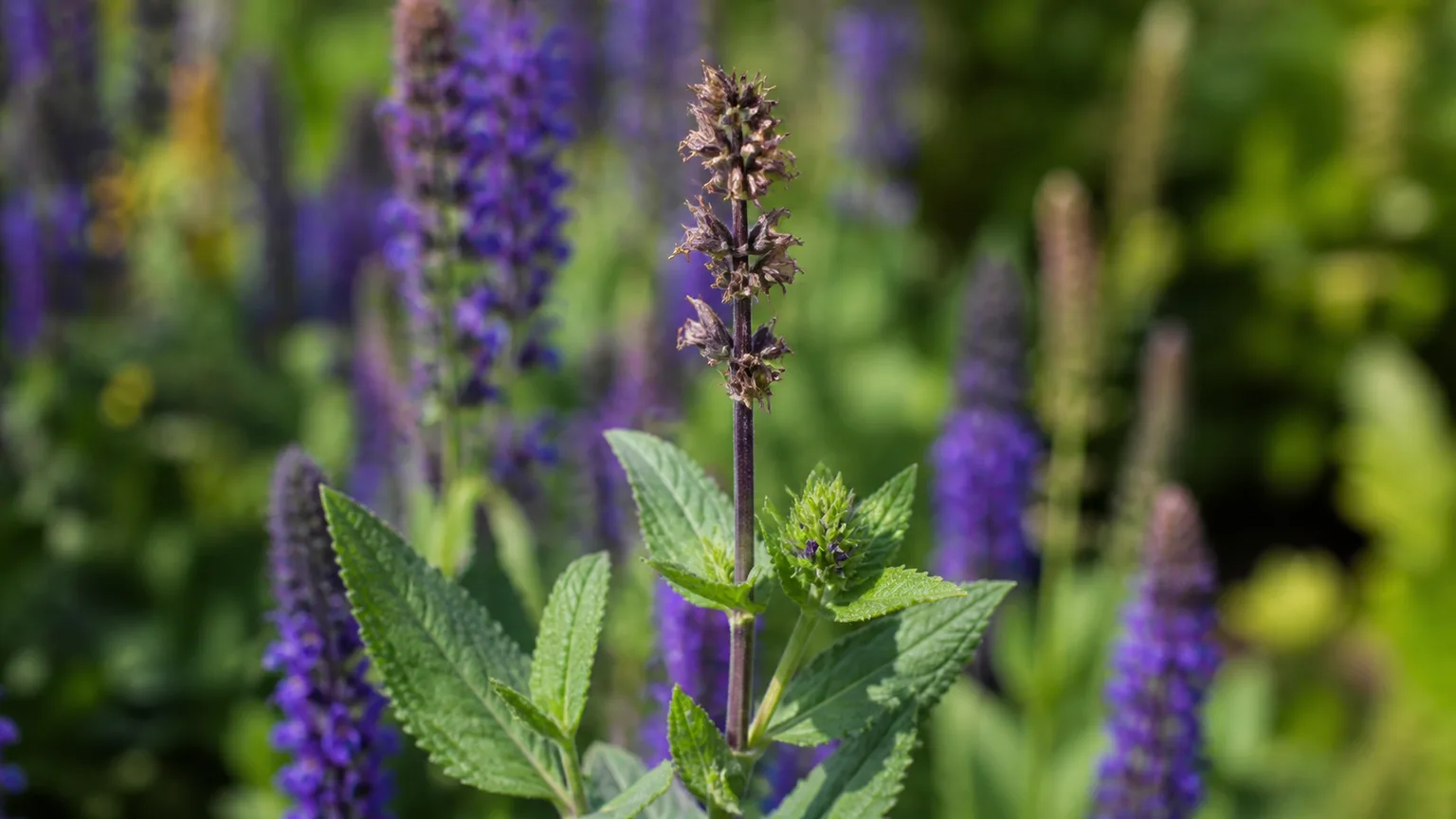
If the spike forks into two smaller flower stems, follow each faded branch back to the fork or the healthy leaf pair beneath it. Do not cut through a green side shoot just because it sits close to the old spike. A plant with several stems can be worked through slowly: remove the spent ones, leave the opening buds, then step back and make sure the clump still has an even shape.
This is where deadheading differs from simply pinching off brown petals. Removing petals may make the plant look better for a few days, but the flower stalk and developing seed head can remain. Removing the spent stem down to active growth is the more useful cut for plants that are capable of a repeat flush.
For a large planting, work in passes instead of trying to make every stem identical. First remove only clearly spent spikes. Then stand back a few steps and look for a few stems that are much taller or flopping away from the clump; take those back to a lower branching point if that improves the shape. Finally, leave any spike with open flowers, obvious green buds, or a pollinator still feeding on it. This keeps the display looking natural and avoids the blunt, shaved look that results from mowing across every stem at one height.
Container salvias need the same cut points but a more cautious follow-up. Their roots warm and dry faster than a bed, so check the pot before pruning a substantial amount of foliage in hot weather. Water a genuinely dry container deeply, let excess water drain, and make the trim when the plant is no longer limp. Conversely, a pot that remains heavy and wet for days needs drainage and watering attention before you ask the plant for new growth.
Make the Cut and Clean Up Correctly
Use sharp snips or bypass pruners sized for the stem, not hedge shears. Wipe off sticky sap and soil before moving from a plant with questionable spotting or dieback to a healthy one. A clean tool will not solve every disease issue, but ragged, crushed cuts are never an advantage.
After cutting, collect the fallen blooms if they are trapped in the center of a dense plant. Then pause. Do not automatically fertilize or drench the plant because you deadheaded it. UF/IFAS recommends well-drained soil and light pruning during flowering to keep salvias neat, with cutting back when foliage dies or after freeze damage. (UF/IFAS Gardening Solutions) If the plant has adequate sun and is not drought-stressed, ordinary care is usually the better follow-up than a burst of high-nitrogen feed.
Deadheading Versus Pruning: Use the Smallest Effective Cut
Deadheading removes a spent flower spike. Pruning changes the size, density, or structure of the plant. The two overlap because a long, faded salvia stem can need a modest trim to reach live leaves, but they should not be treated as identical jobs.
Use deadheading when the plant is otherwise compact, leafy, and still flowering. Use a light trim when it has finished a flush and the flowering stems make the plant lanky, but there are leaves or buds below the cut. Use a seasonal renewal cut only when you know the plant belongs to a soft-stemmed herbaceous group that regenerates from the crown, or when its species-specific guidance calls for it.
A common mistake is responding to weak bloom with a harder cut. First check the basics. Salvias generally flower best with plenty of sun; UF/IFAS notes that flowering is reduced in part shade. (UF/IFAS Gardening Solutions) A plant that is stretching toward light or repeatedly drying out in a small pot needs a growing-condition correction more than it needs another haircut.
A Seasonal Salvia Cutting Calendar
Summer After the First Bloom Flush
This is peak deadheading season. Remove individual spent spikes as they fade, or lightly shear soft-stemmed repeat bloomers after the first broad flush if the whole clump is full of brown stems. Leave enough green foliage for photosynthesis, water a dry plant before making a larger trim, and do not make a hard renovation cut in the middle of exceptional heat or drought.
For shrubby salvias, take the least aggressive route: faded tips back to leafy or budding growth. The goal is to encourage a later display while keeping the plant’s woody framework intact. Homes & Gardens similarly distinguishes routine spent-flower removal from a bigger seasonal prune and cautions against treating autumn cleanup as a universal rule.
Autumn in Mild Versus Freezing-Winter Gardens
Mild winters give gardeners more flexibility, but cold winters change the job. In a frost-free or protected climate, you can continue deadheading while the plant is actively flowering and make the type-appropriate light cleanup after its display. UF/IFAS notes that some salvias have woody lower stems with age and can be pruned, particularly after foliage dies or a freeze causes damage. (UF/IFAS Gardening Solutions)
Where hard freezes are normal, avoid a late-season severe cut on herbaceous border salvias just to make the bed look tidy. Leaving the old top growth through winter can shelter the crown and makes it easier to see where the plant is. You may still remove clearly diseased or broken material and lightly deadhead a final ragged spike, but save the major reset until spring. Do not pile a wet, dense mat of cut debris directly over the crown; it can hold moisture where you want air movement.
Late Winter and Spring Renewal
Wait until growth patterns tell you what survived. New shoots at the base of a soft-stemmed salvia are your green light to remove old stalks above them. For S. nemorosa and similar herbaceous types, cut old growth near the ground while protecting those new shoots. For shrubby S. greggii and S. microphylla types, remove winter-killed tips and shorten into living, leafy framework rather than cutting bare stumps.
Do not judge winter survival by the calendar alone. In a sheltered patio, new shoots may appear weeks ahead of the same cultivar in an exposed border. After a late frost, wait until you can distinguish truly dead brown stems from buds that were slowed by cold. When in doubt, lightly scratch a thin stem with a fingernail: green, moist tissue beneath the surface suggests you should leave that section; dry brown tissue can be removed back to living growth. Avoid digging around the crown repeatedly, which can break the emerging shoots you are waiting for.
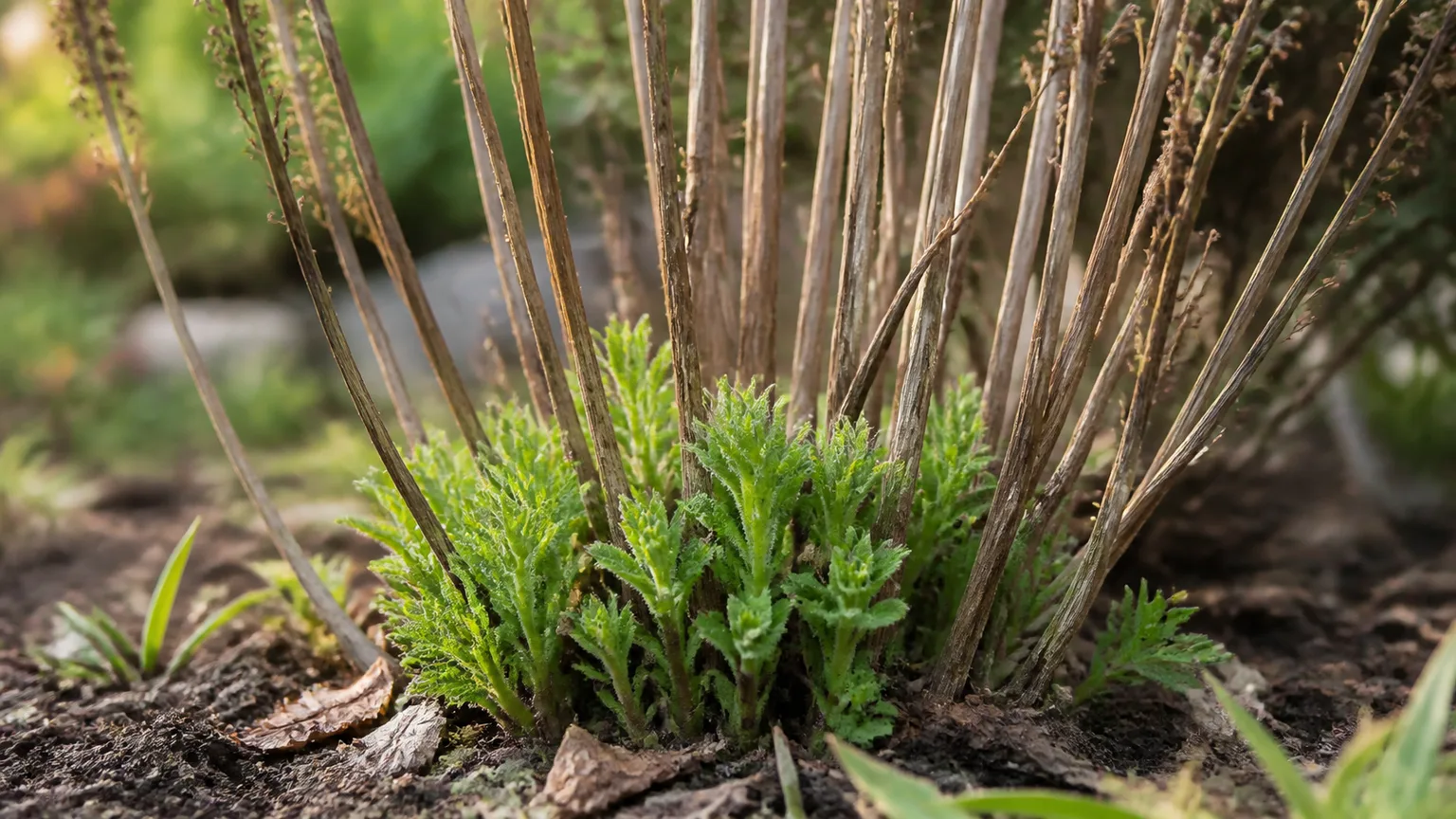
The RHS gives a useful named example: semi-evergreen shrubby salvias can be cut back in mid-spring to keep them compact, while deciduous shrubby S. yangii is cut to a low framework in spring just above new basal shoots. (RHS) That distinction is why a nursery tag or cultivar search is worth two minutes before you prune.
When to Leave the Flowers or Postpone Cutting
Do not deadhead every spike automatically if your priority is seed. Leaving a few mature stems can let you collect seed or allow a species that self-sows gently in your garden to reseed. The trade-off is fewer tidy-looking flowers and less incentive for that stem to make another flush. Choose deliberately: deadhead most spikes for a long display, or mark a few of the healthiest for seed once they dry.
Also postpone nonessential cutting when the plant is under clear stress. Wilted foliage with dry soil, scorched new leaves, a pest outbreak, root rot symptoms, or recent transplant shock should change the order of operations. Correct water, drainage, light, or pest pressure first. Then remove only the parts that are definitely spent or damaged. A severe cut asks a weakened plant to replace tissue when it may not have the roots or weather to support that response.
Finally, do not force a biennial salvia to repeat bloom after its one flowering year. And do not assume a hardy perennial will behave as one in your climate. NC State describes mealycup sage as reliably perennial only in warmer parts of its region and commonly annual elsewhere. (NC State Extension) Plant identity and local winter minimums belong in the decision.
Why a Deadheaded Salvia May Not Bloom Again
First, inspect the cut. If you removed a whole stem below visible leaves or side shoots, the plant may need time to replace vegetative growth before it can flower again. If you only removed petals, it may still be putting energy into a seed head. Neither outcome means the plant is permanently damaged; it simply changes the timetable.
Then work through the larger causes. Insufficient sun is the most common reason a healthy-looking salvia makes leaves but fewer spikes. Dryness can shorten a bloom cycle, while constantly wet soil can weaken roots and promote disease. NC State lists good air circulation and well-drained soil as important for mealycup sage, which is susceptible to mildews and damping-off. (NC State Extension) Crowded plants that stay damp deserve thinning and spacing attention, not just a deeper cut.
Timing also matters. A late-summer deadhead in a cold climate may leave too little warm weather for a second substantial flush. Some varieties naturally bloom in cycles; some annuals are nearing the end of their seasonal run; and some woody salvias need a spring structural prune more than repeated summer clipping. The useful question is not “How many times should it bloom?” but “Does this plant have healthy, sunlit new growth and enough season left to make another spike?”
Use the answer to set a proportionate correction. Move or thin nearby shade if practical, water deeply only when the root zone has dried appropriately, improve drainage rather than watering on a schedule, and remove diseased material with clean tools. If the plant is otherwise healthy but lanky, a small trim after flowering is reasonable. If it has little healthy growth and the weather is turning cold, protect the crown and postpone renovation. That sequence is more reliable than cutting, feeding, and spraying all at once, because it lets you see which condition was actually limiting bloom.
Conclusion
Cutting off dead salvia flowers is usually worthwhile, but the best cut is specific: remove a spent spike back to healthy leaves or a live side shoot, then stop. That small move keeps a repeat-blooming plant tidy without sacrificing the buds that may make the next flush.
Before you make a bigger cut, identify whether your salvia is soft-stemmed, woody, annual, tender, or biennial—and let your winter climate decide whether the major pruning belongs in autumn or spring. Deadhead with a purpose, leave seed heads when you want seed, and solve light, water, or disease problems before asking a stressed plant to bloom again.



